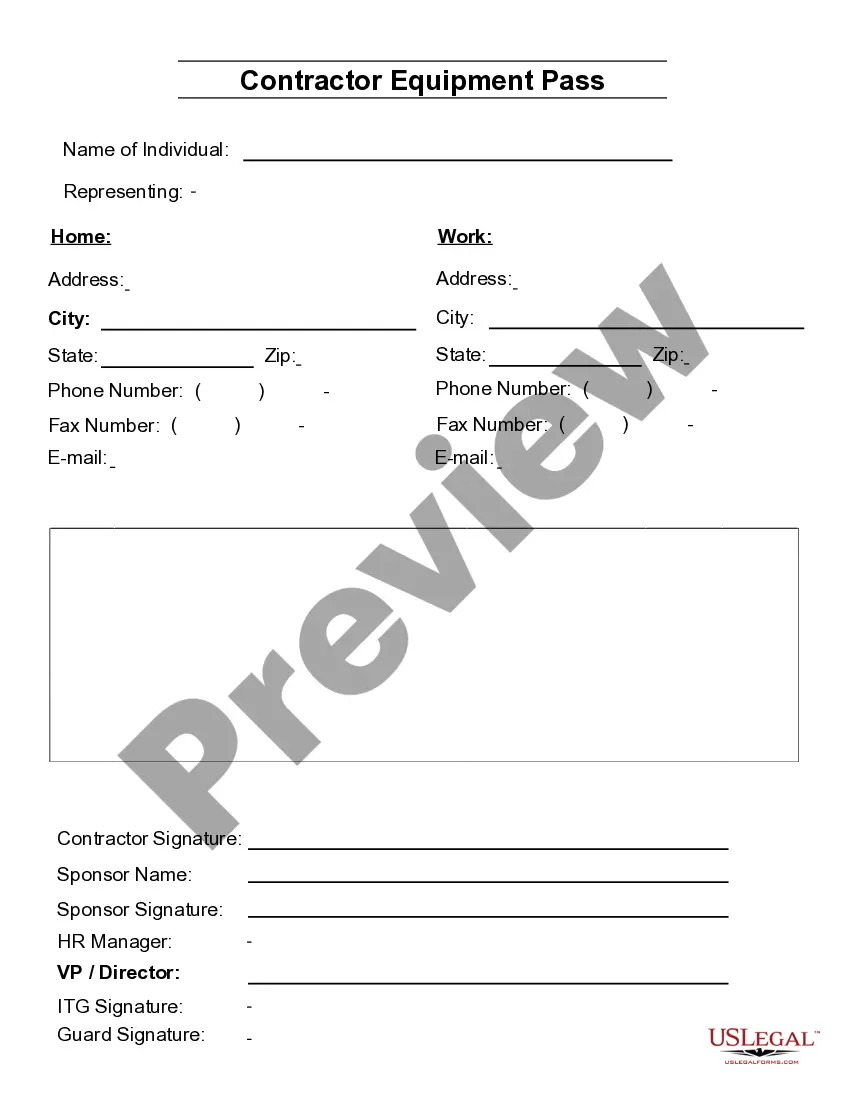
South Dakota Contractor Equipment Pass
Description
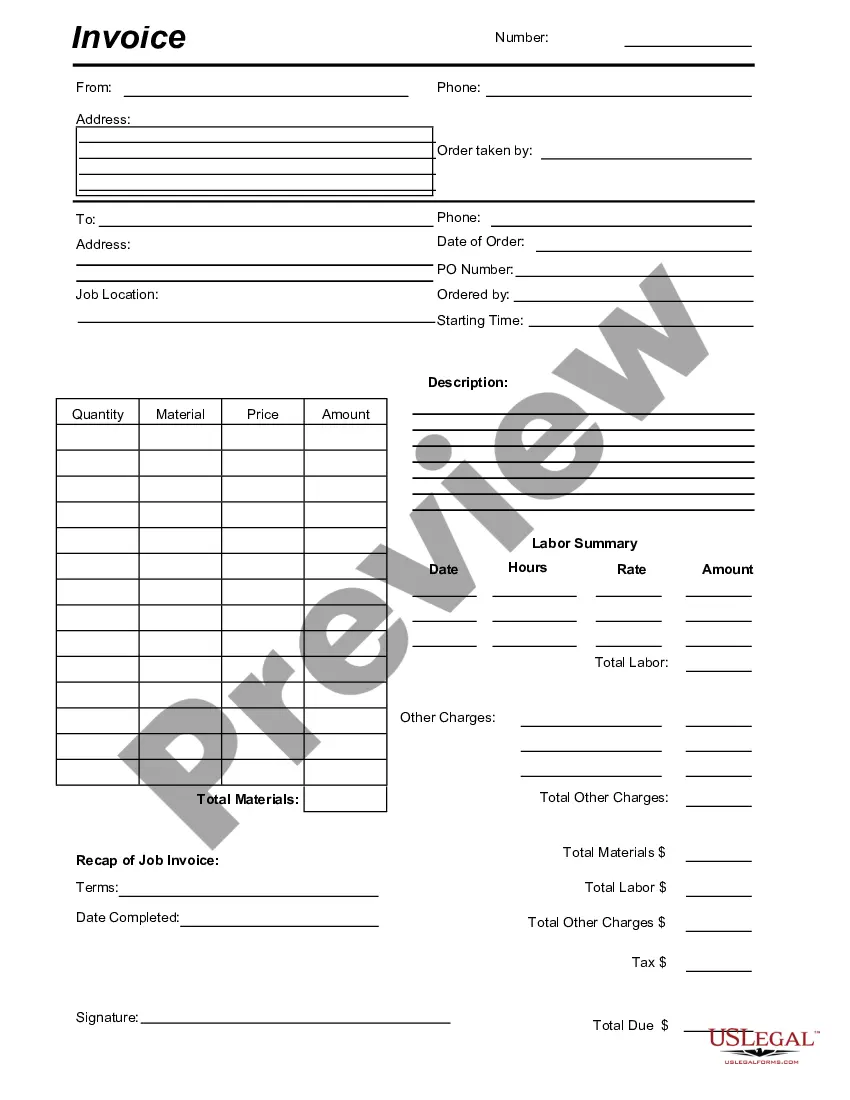
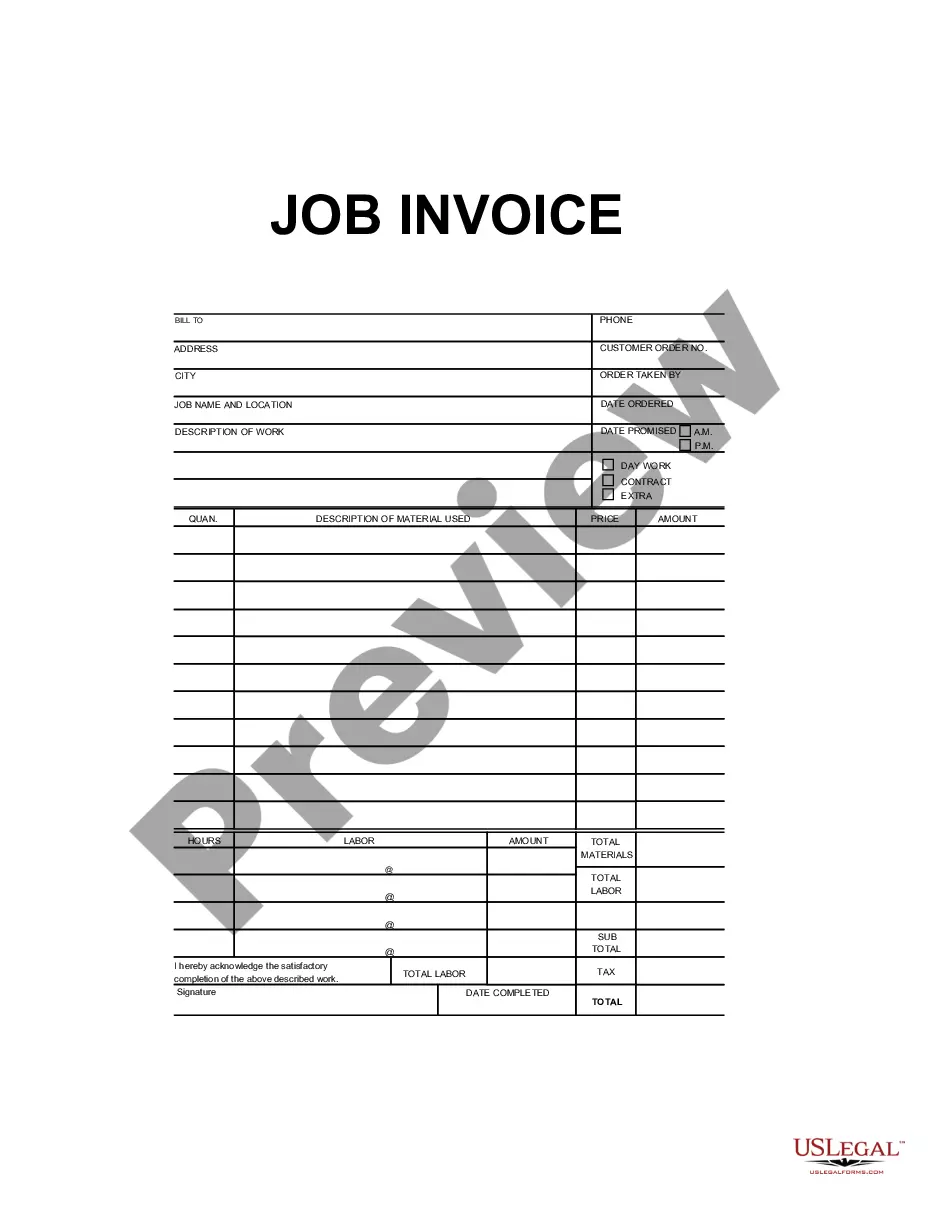
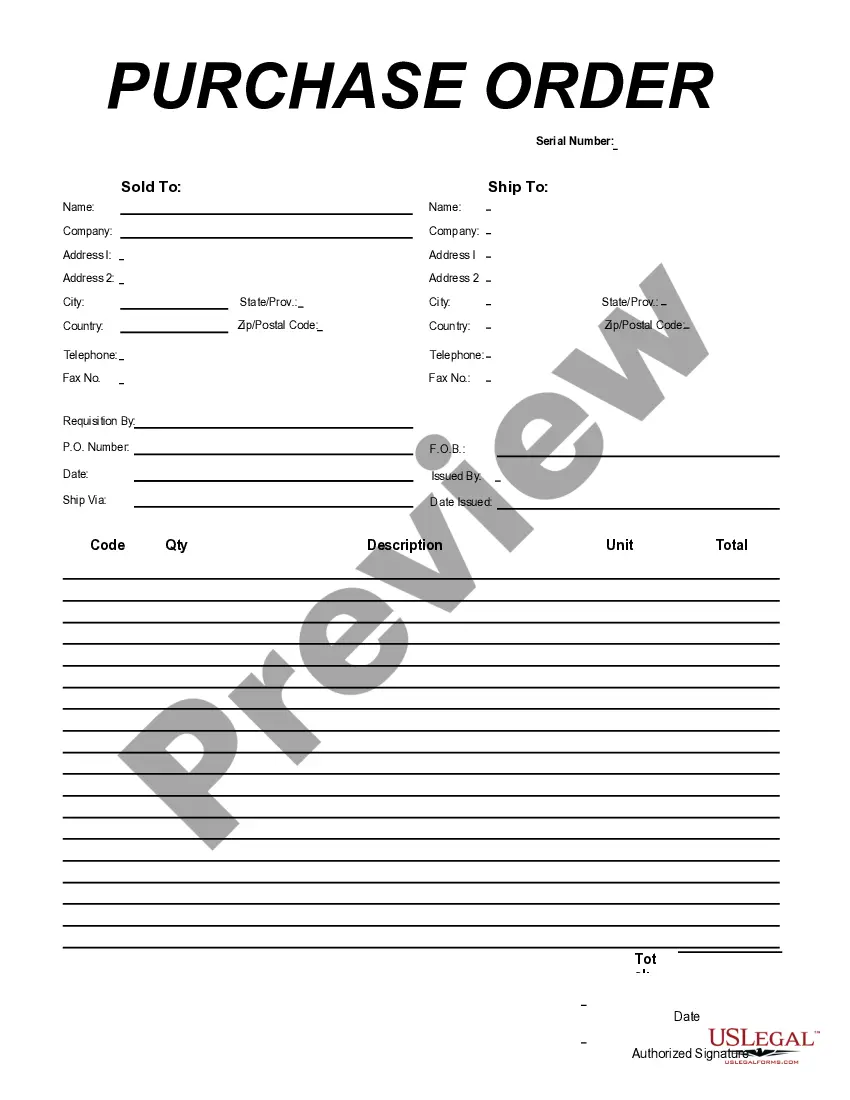
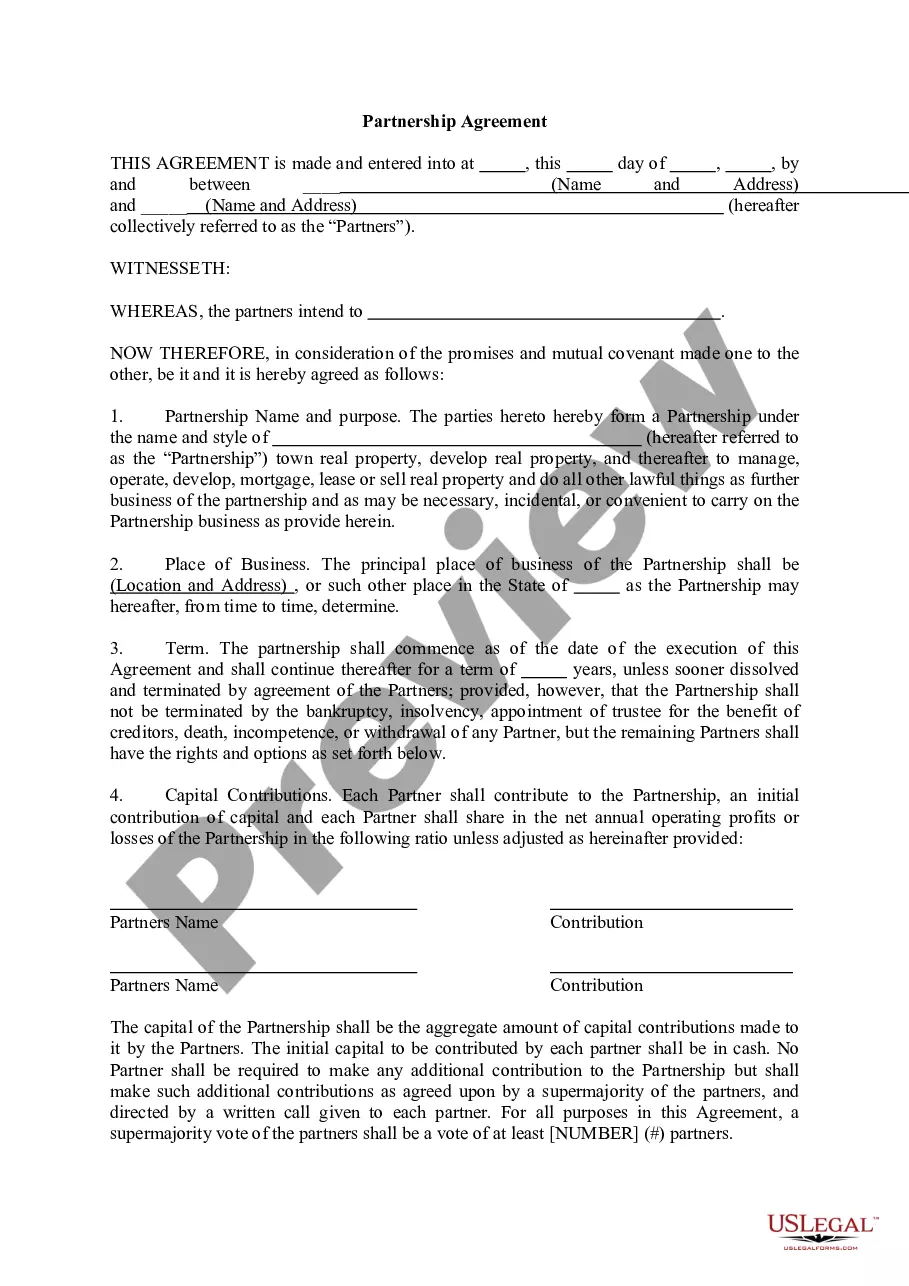

How to fill out Contractor Equipment Pass?
US Legal Forms - one of the most prominent collections of legal templates in the United States - provides an assortment of legal document formats that you can download or print.
By utilizing the website, you will acquire a vast array of forms for business and personal purposes, categorized by classifications, states, or keywords.
You will find the latest versions of forms such as the South Dakota Contractor Equipment Pass in moments.
If the form doesn’t meet your requirements, utilize the Search field at the top of the screen to find one that does.
Once satisfied with the form, confirm your selection by clicking the Purchase now button. Then select your preferred pricing plan and provide your credentials to register for an account.
- If you presently hold a subscription, Log In and download the South Dakota Contractor Equipment Pass from the US Legal Forms library.
- The Download button will appear on every document you view.
- You can access all previously downloaded forms within the My documents section of your profile.
- If you intend to use US Legal Forms for the first time, here are straightforward instructions to assist you.
- Ensure you have selected the appropriate form for your city/state.
- Click the Review option to evaluate the contents of the form.
Form popularity
FAQ
Getting a contractor's license in South Dakota involves several steps, starting with meeting eligibility criteria. You will need to fill out an application, provide proof of your experience, and submit to background checks. Once complete, you may need to take and pass a licensing exam. Remember to leverage resources like the South Dakota Contractor Equipment Pass for assistance.
A handyman typically falls under the home improvement or maintenance business category. This classification allows them to perform a variety of repair and installation tasks. Depending on the services offered, a handyman may work under different regulations and needs for licenses. It is beneficial to understand how the South Dakota Contractor Equipment Pass fits into your business structure.
To obtain a contractor license in South Dakota, you must first meet the necessary qualifications, which usually include demonstrating work experience. Next, you complete the application and provide references, as well as proof of insurance. Additionally, preparing for and passing an exam may be necessary. The South Dakota Contractor Equipment Pass can support your application process.
In South Dakota, handyman services typically do not require a license for most small jobs. However, state regulations can vary and some larger projects may need licensed contractors. It's essential to check local laws to understand specific requirements. If you plan to tackle larger work, consider obtaining a South Dakota Contractor Equipment Pass.
Yes, a handyman can obtain insurance without a license. However, having insurance protects against potential liabilities, especially in case of accidents. It is wise to invest in liability insurance for peace of mind and credibility. If you're working on projects needing a South Dakota Contractor Equipment Pass, proper insurance becomes even more crucial.
While both contractors and handymen provide services, they differ in scope and licensing. Contractors typically handle larger projects and require licenses, while handymen take on smaller jobs that often do not need formal credentials. Depending on the task, you may need a South Dakota Contractor Equipment Pass for contractor work.
States vary in licensing difficulty, but many consider California to pose the greatest challenge. The extensive requirements and the amount of documentation needed can be overwhelming. Texas and New York also have rigorous processes. Understanding these complexities can help you plan better when applying for the South Dakota Contractor Equipment Pass.
Yes, South Dakota requires contractors to be licensed. This helps ensure that contractors meet specific standards and demonstrate their expertise. To comply with regulations, contractors must obtain the appropriate licenses for their work, ensuring safety and quality. The South Dakota Contractor Equipment Pass can streamline this process.
Certain vehicles may be exempt from South Dakota's excise tax, including those used exclusively for agricultural or government purposes. Additionally, vehicles that qualify for specific exemptions or possess special plates may also be excluded from taxation. It's vital to verify your vehicle's eligibility status to avoid unexpected costs. US Legal Forms can help clarify which vehicles qualify for these exemptions.
In South Dakota, the responsibility for paying the excise tax typically falls on the purchaser of the equipment. When acquiring equipment for construction or contracting, you become liable for this tax. It's crucial to understand how this impacts your overall project budget. For more insights on managing excise tax obligations, US Legal Forms can provide valuable resources.