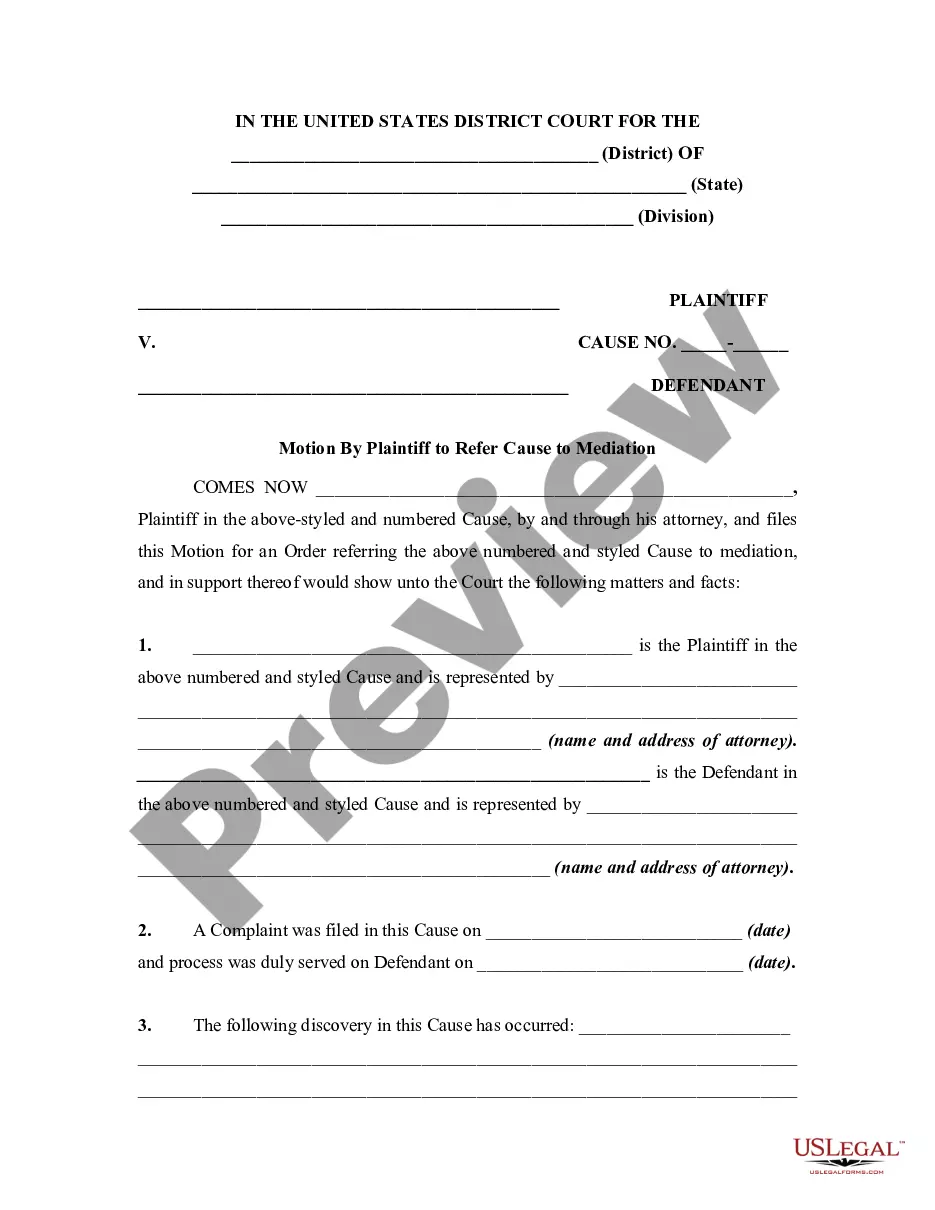
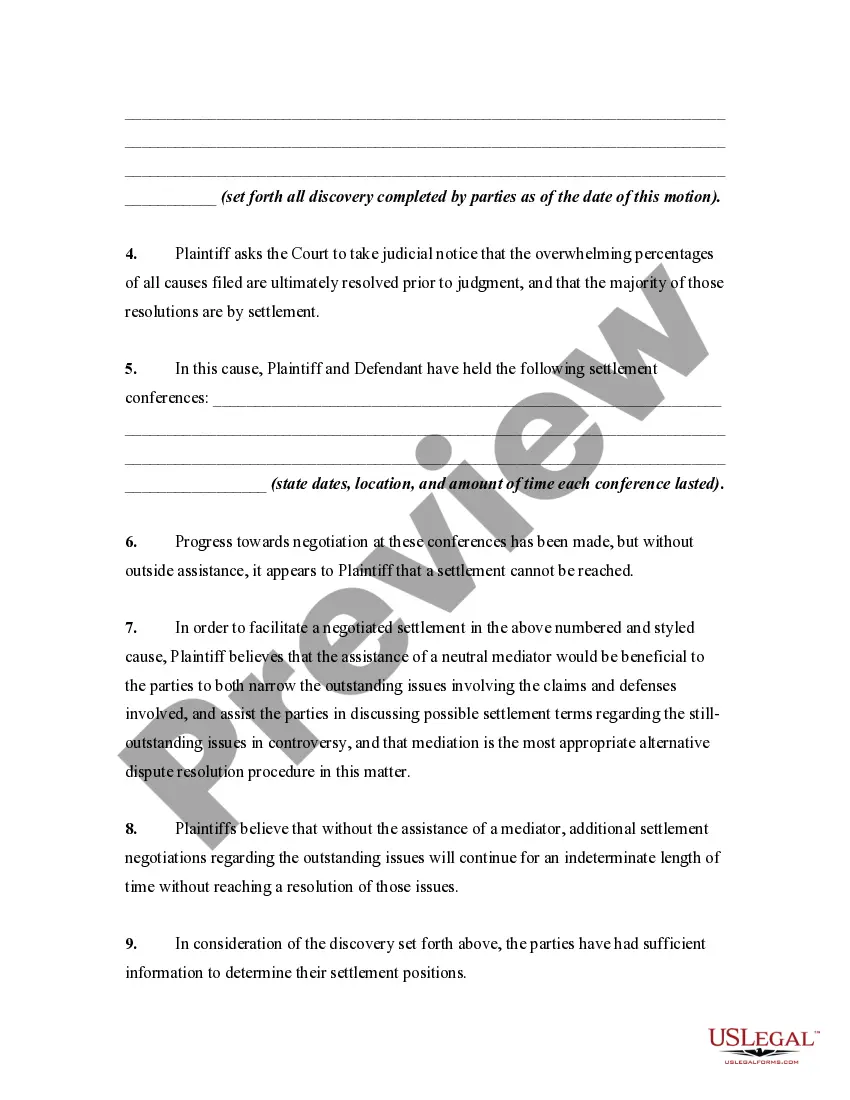
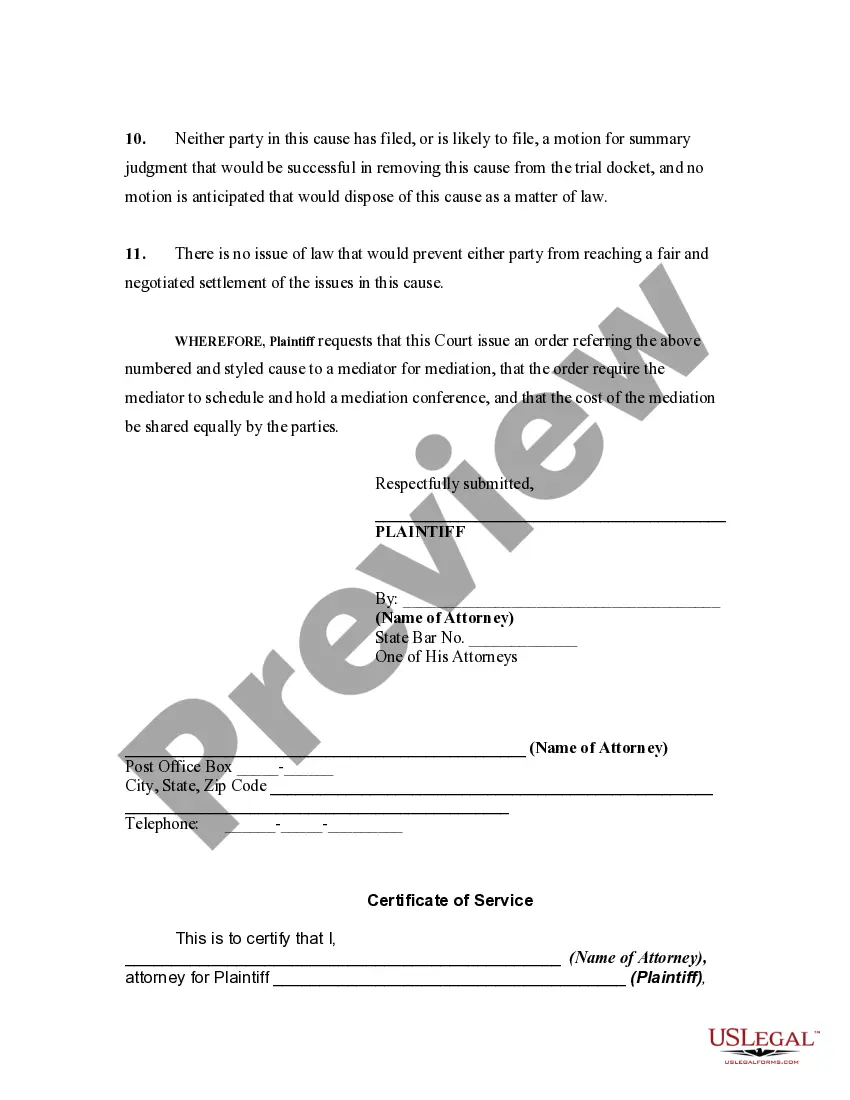
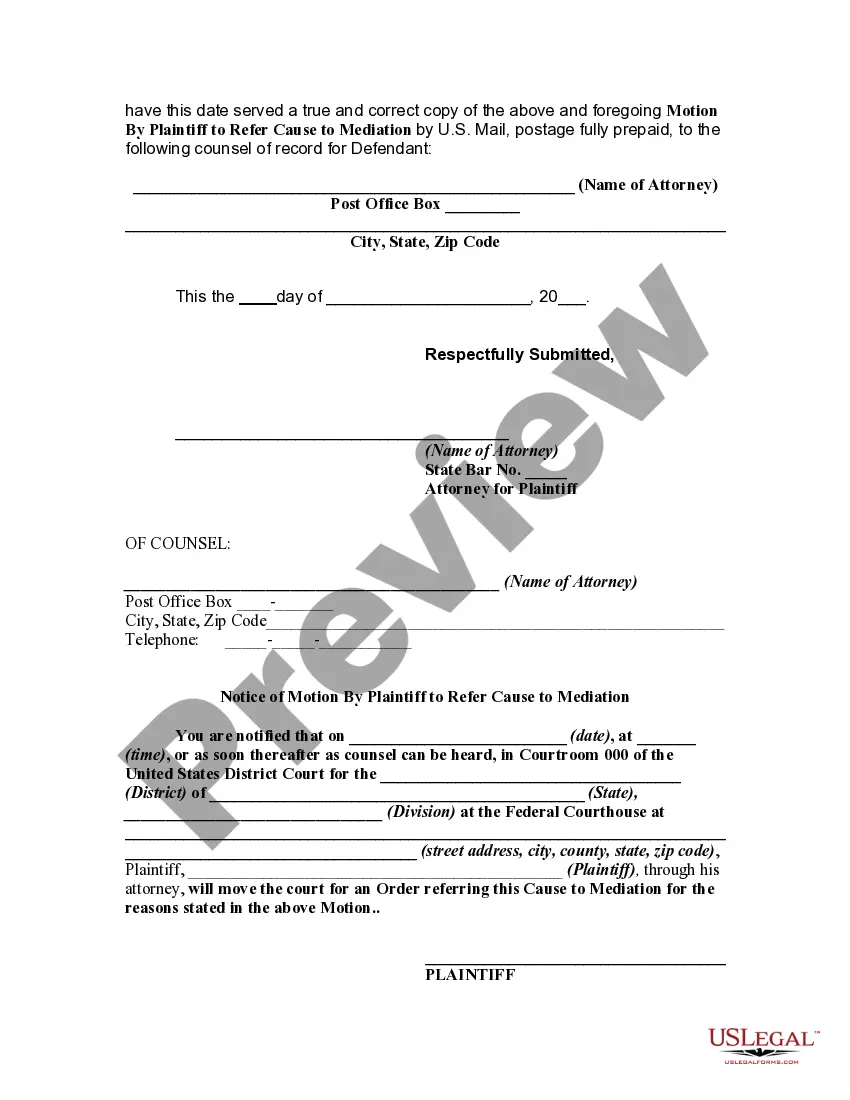
Mediation is nothing more than a process by which parties in a dispute negotiate a settlement of their claims against each other through the assistance of a trained, neutral mediator. It is a non-adversarial process. Mediation is entirely voluntary and non-binding. The mediator has no power to render a decision nor force the parties to accept a settlement. The mediator generally does not give an opinion or render an award. Because it is voluntary and non-binding, it is attractive to parties who do not want to litigate, yet who cannot negotiate directly. It is considered to be non-threatening.
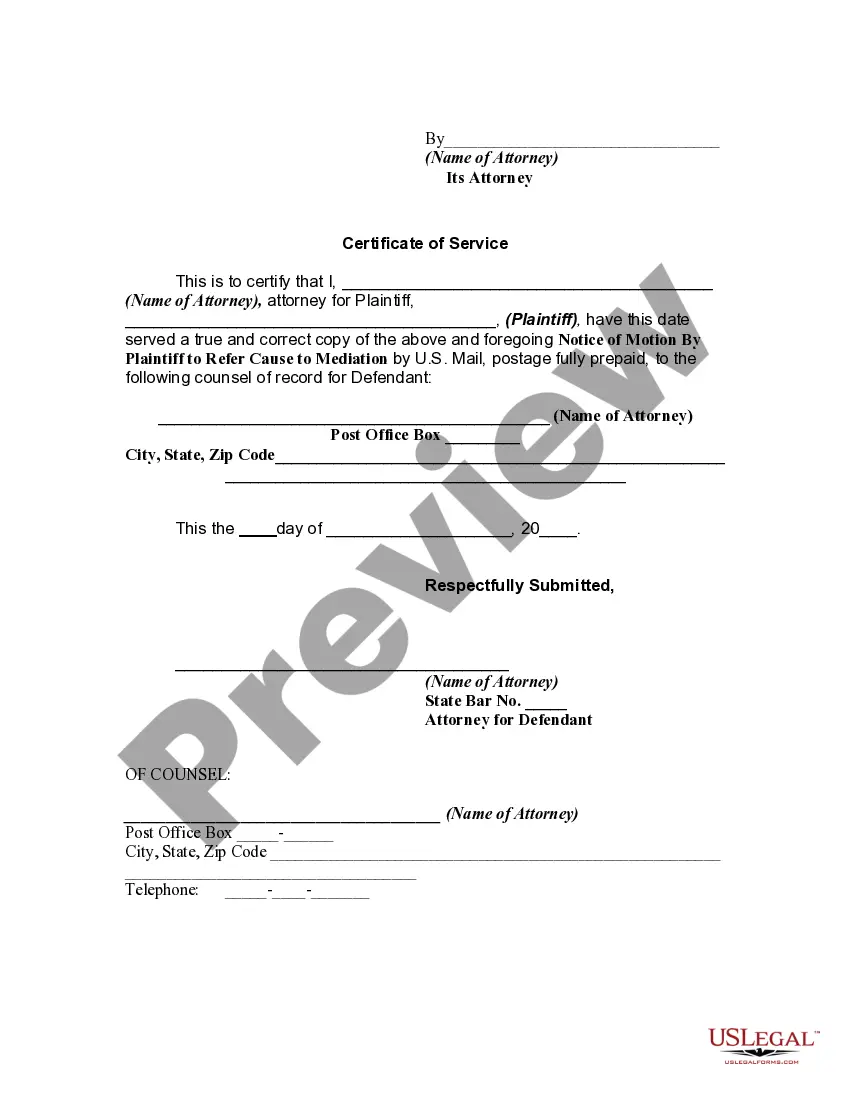
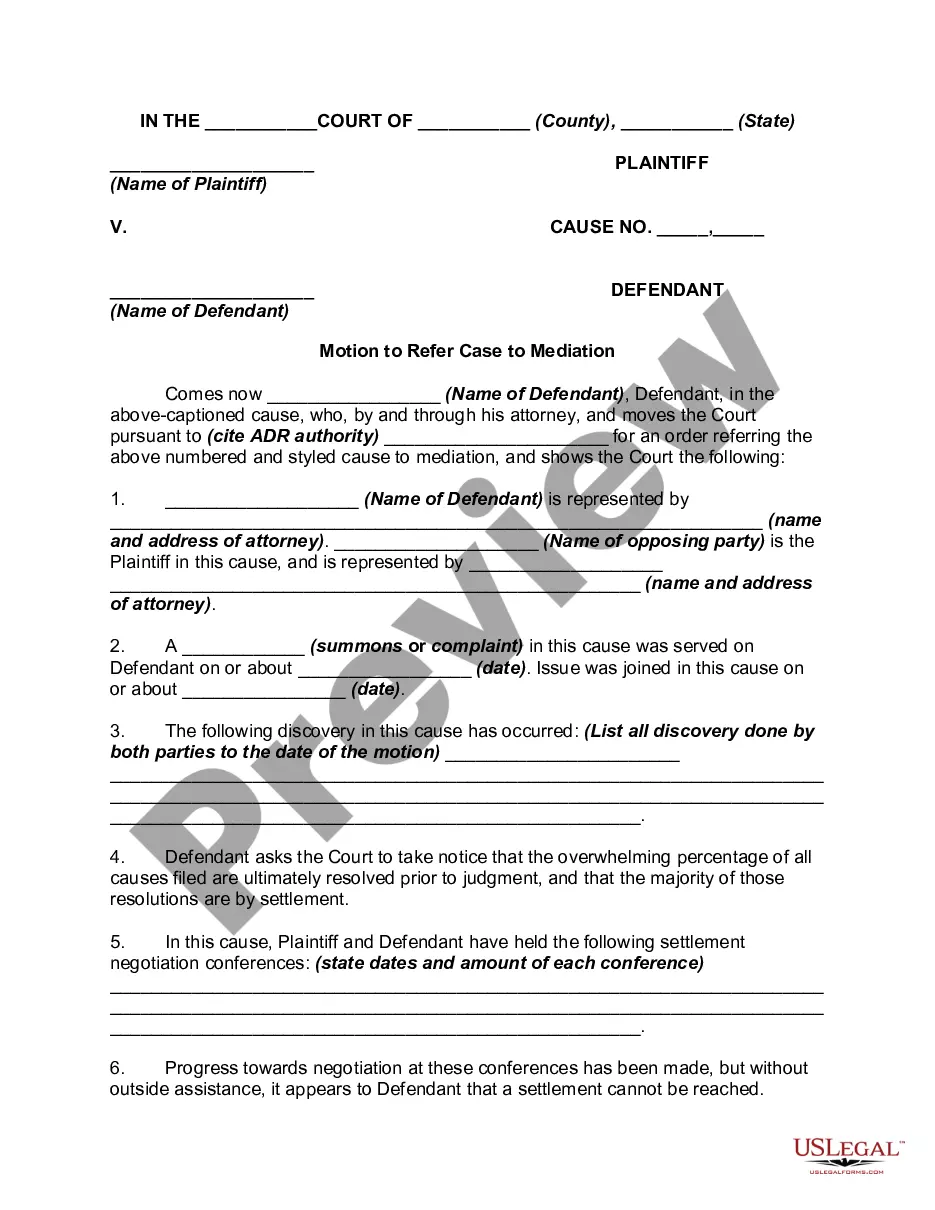
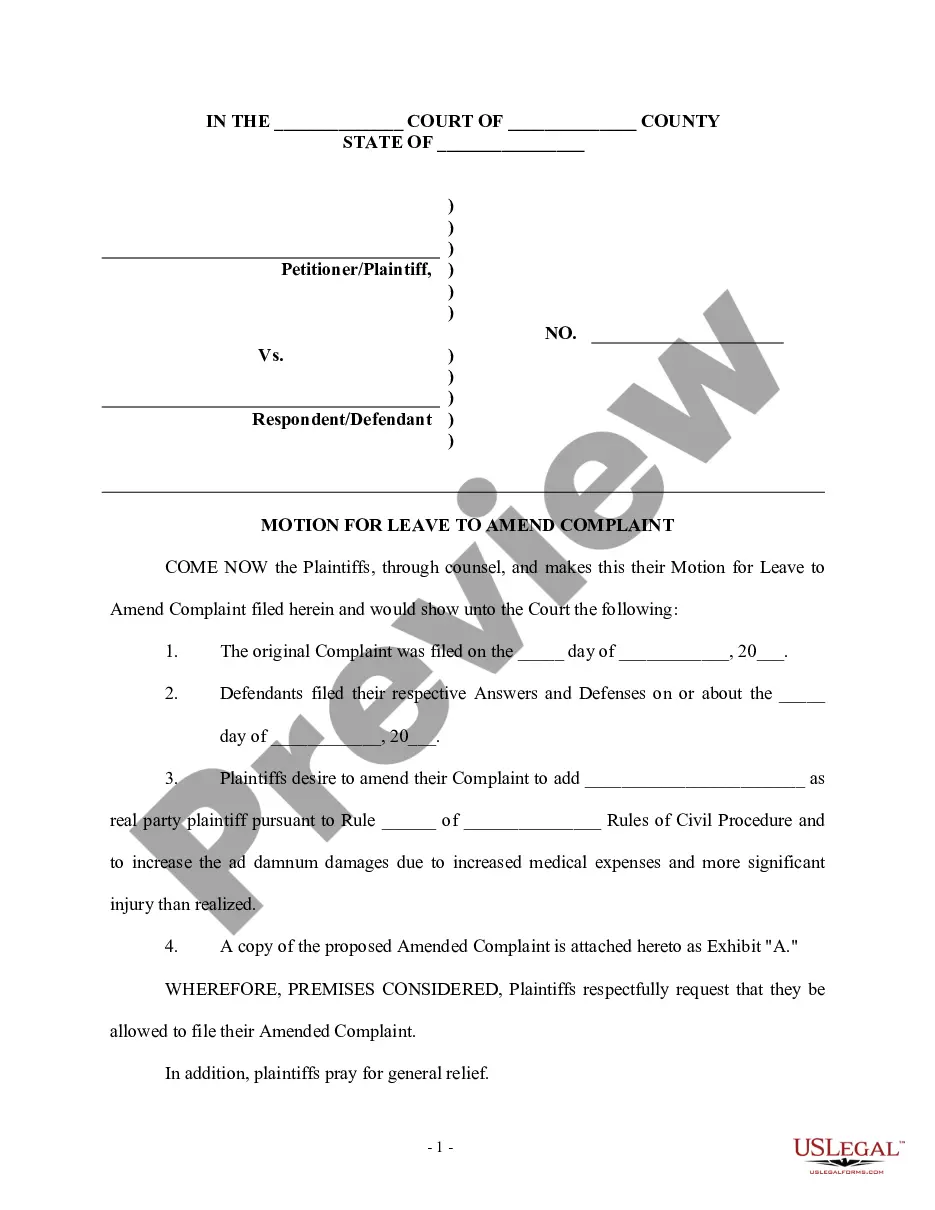
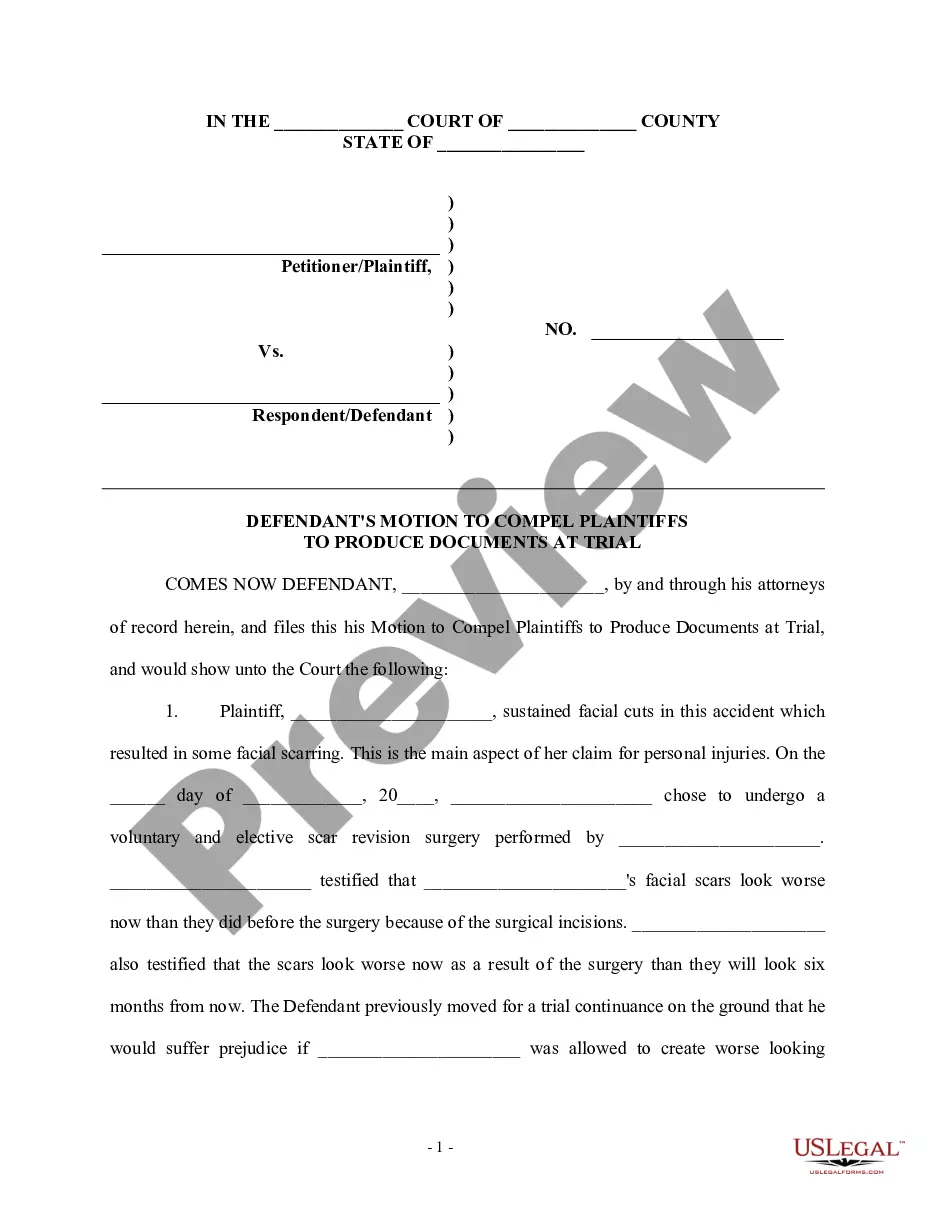
South Dakota Motion By Plaintiff to Refer Cause to Mediation
State:
Multi-State
Category:
Control #:
US-01006BG
Format:
Word;
Rich Text
117 downloads
Description
Free preview
Get your form ready online
Our built-in tools help you complete, sign, share, and store your documents in one place.
Built-in online Word editor
Make edits, fill in missing information, and update formatting in US Legal Forms—just like you would in MS Word.
Export easily
Download a copy, print it, send it by email, or mail it via USPS—whatever works best for your next step.
E-sign your document
Sign and collect signatures with our SignNow integration. Send to multiple recipients, set reminders, and more. Go Premium to unlock E-Sign.
Notarize online 24/7
If this form requires notarization, complete it online through a secure video call—no need to meet a notary in person or wait for an appointment.
Store your document securely
We protect your documents and personal data by following strict security and privacy standards.

Make edits, fill in missing information, and update formatting in US Legal Forms—just like you would in MS Word.

Download a copy, print it, send it by email, or mail it via USPS—whatever works best for your next step.

Sign and collect signatures with our SignNow integration. Send to multiple recipients, set reminders, and more. Go Premium to unlock E-Sign.

If this form requires notarization, complete it online through a secure video call—no need to meet a notary in person or wait for an appointment.

We protect your documents and personal data by following strict security and privacy standards.
Looking for another form?
How to fill out Motion By Plaintiff To Refer Cause To Mediation?
If you wish to be thorough, download, or create legal document templates, utilize US Legal Forms, the largest collection of legal forms available online.
Employ the site's straightforward and user-friendly search to find the documents you need. Various templates for business and personal purposes are organized by categories and states, or keywords.
Use US Legal Forms to acquire the South Dakota Motion By Plaintiff to Refer Cause to Mediation within a few clicks.
Step 5. Complete the payment. You can use your credit card or PayPal account to finalize the transaction.
Step 6. Select the format of your legal form and download it to your device. Step 7. Complete, modify, and print or sign the South Dakota Motion By Plaintiff to Refer Cause to Mediation. Each legal document template you obtain is yours indefinitely. You have access to every form you downloaded in your account. Click the My documents section and choose a form to print or download again. Finish and download, and print the South Dakota Motion By Plaintiff to Refer Cause to Mediation with US Legal Forms. There are countless professional and state-specific forms available for your business or personal needs.
- If you are currently a US Legal Forms user, Log In to your account and click on the Download option to obtain the South Dakota Motion By Plaintiff to Refer Cause to Mediation.
- You can also access forms you previously downloaded from the My documents tab of your account.
- If you are using US Legal Forms for the first time, follow the steps listed below.
- Step 1. Ensure you have selected the form for the correct city/state.
- Step 2. Use the Review option to check the form's content. Make sure to read the description.
- Step 3. If you are not satisfied with the form, use the Search field at the top of the screen to find other versions of the legal form template.
- Step 4. Once you locate the form you need, click the Get now option. Choose the pricing plan you prefer and enter your information to register for the account.
Form popularity
FAQ
Negotiation is the most flexible of all the ADR mechanisms; it is completely under the control of the parties. Mediation while still flexible is a process which the parties are undertaking in the presence of a third party.
Comparison Between Arbitration & Mediation ArbitrationMediationAdjudicationExpedited negotiationArbitrators control the outcome.Parties control the outcome.Arbitrator is given power to decide. Final and binding decision.Mediator has no power to decide. Settlement only with party approval.10 more rows
Arbitrator listens to facts and evidence and renders an award. Mediator helps the parties define and understand the issues and each side's interests. Parties present case, testify under oath. Parties vent feelings, tell story, engage in creative problem-solving.
Our mediators have different rates. On average, parties to mediation can expect fees anywhere from $300.00 to $1,000.00, divided 50/50 between the parties. Because the parties divide the fees equally between them, mediation is generally less expensive than going to court.
The court often orders mediation to be completed after discovery is completed and before the pre-trial conference. Mediation is usually only successful if both sides have all the information possible regarding the subject of the lawsuit.
Arbitration is typically an adversarial process where the parties present their case to the arbitrator. Conciliation is more collaborative, focusing on finding common ground and resolving disputes amicably. Arbitration can be relatively quicker than litigation but may take several months or years.
Mediation involves the intervention of a third person, or mediator, into a dispute to assist the parties in negotiating jointly acceptable resolution of issues in conflict. The mediator meets with the parties at a neutral location where the parties can discuss the dispute and explore a variety of solutions.
Arbitration is a form of alternative dispute resolution (ADR) that offers parties involved in a legal dispute an alternative to traditional courtroom litigation. Unlike litigation, where disputes are resolved in court, arbitration takes place in a private setting, typically chosen by the parties involved.