South Carolina Waiver and Release From Liability For Minor Child for Archery Range
Description
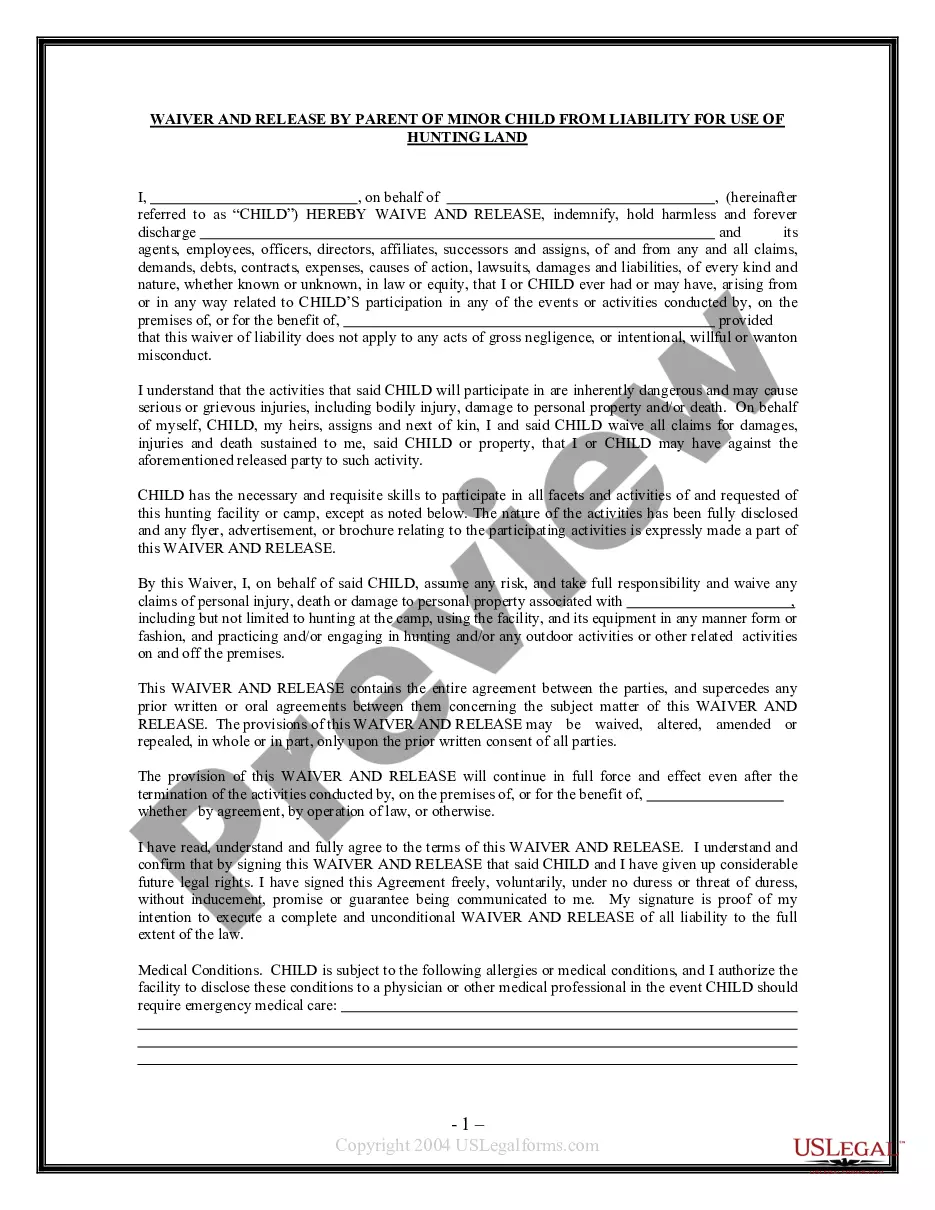
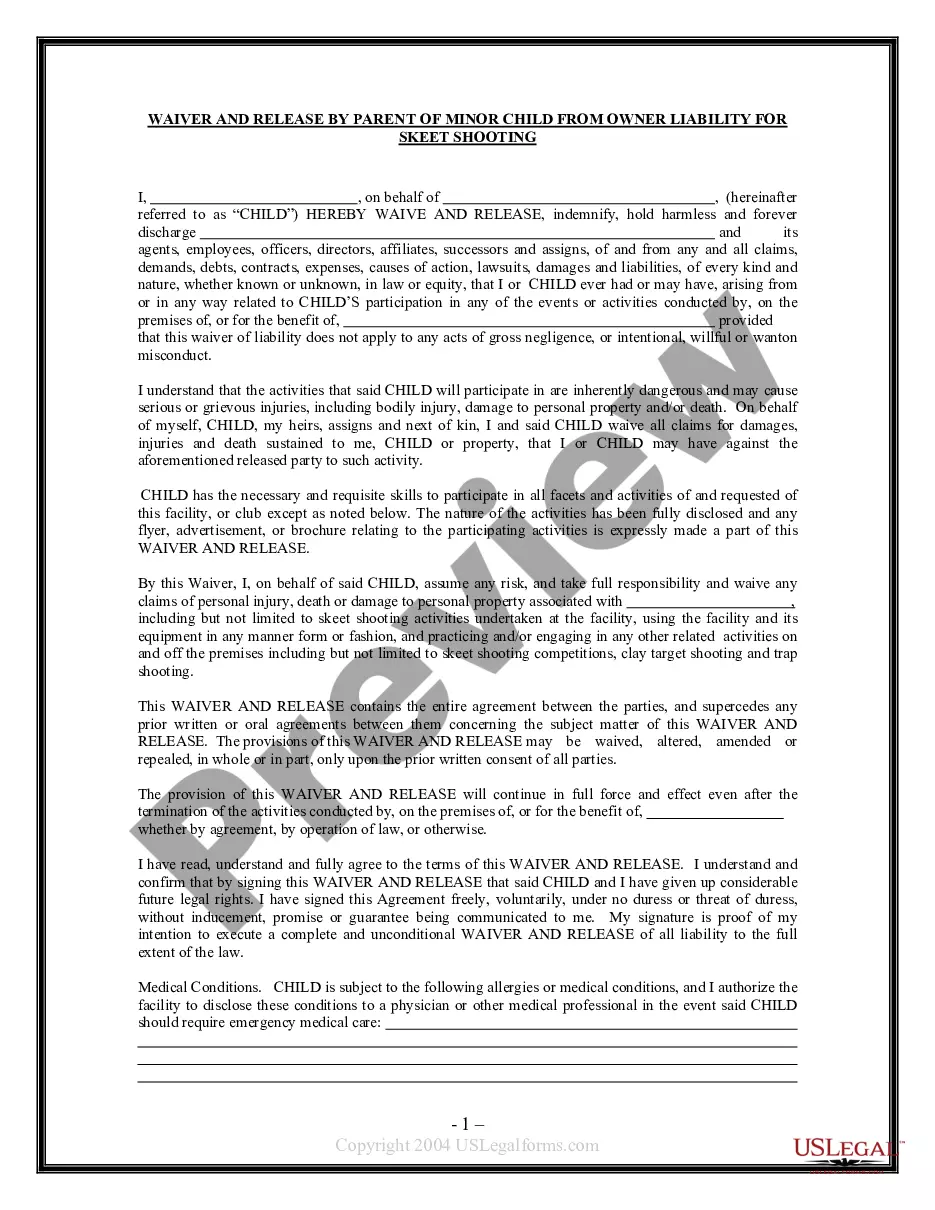
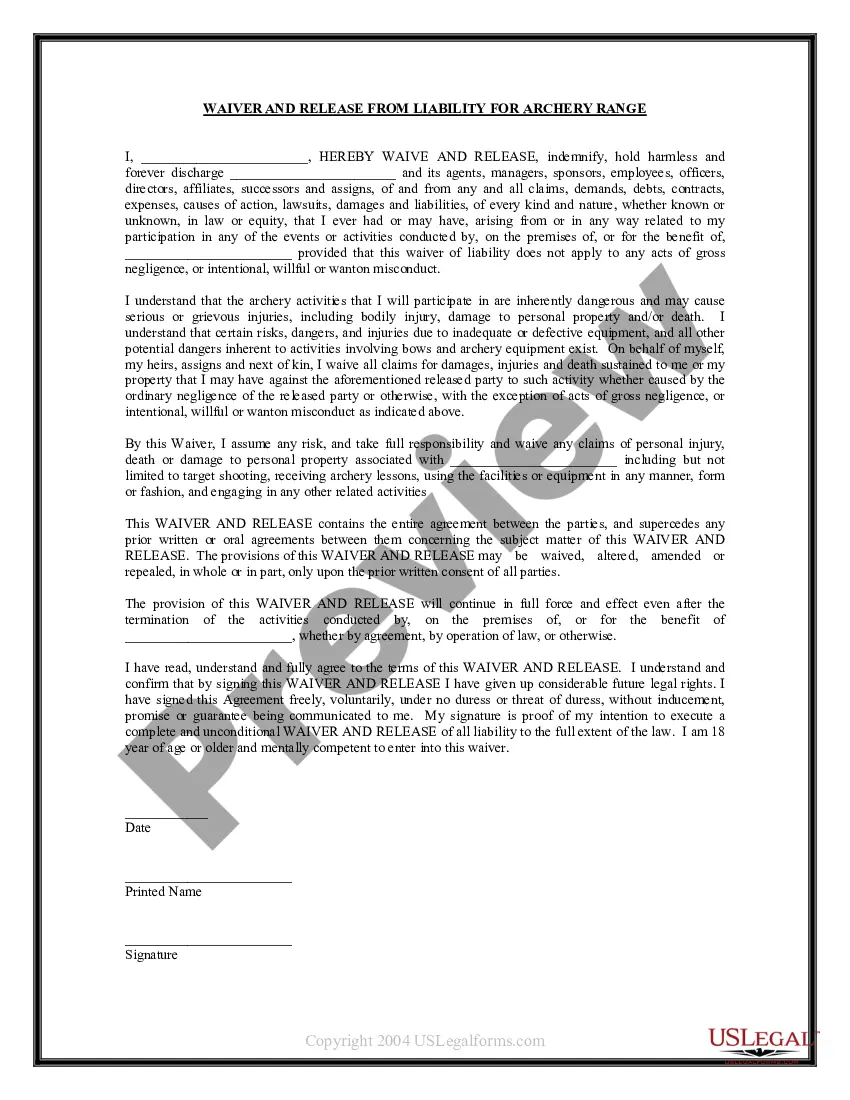
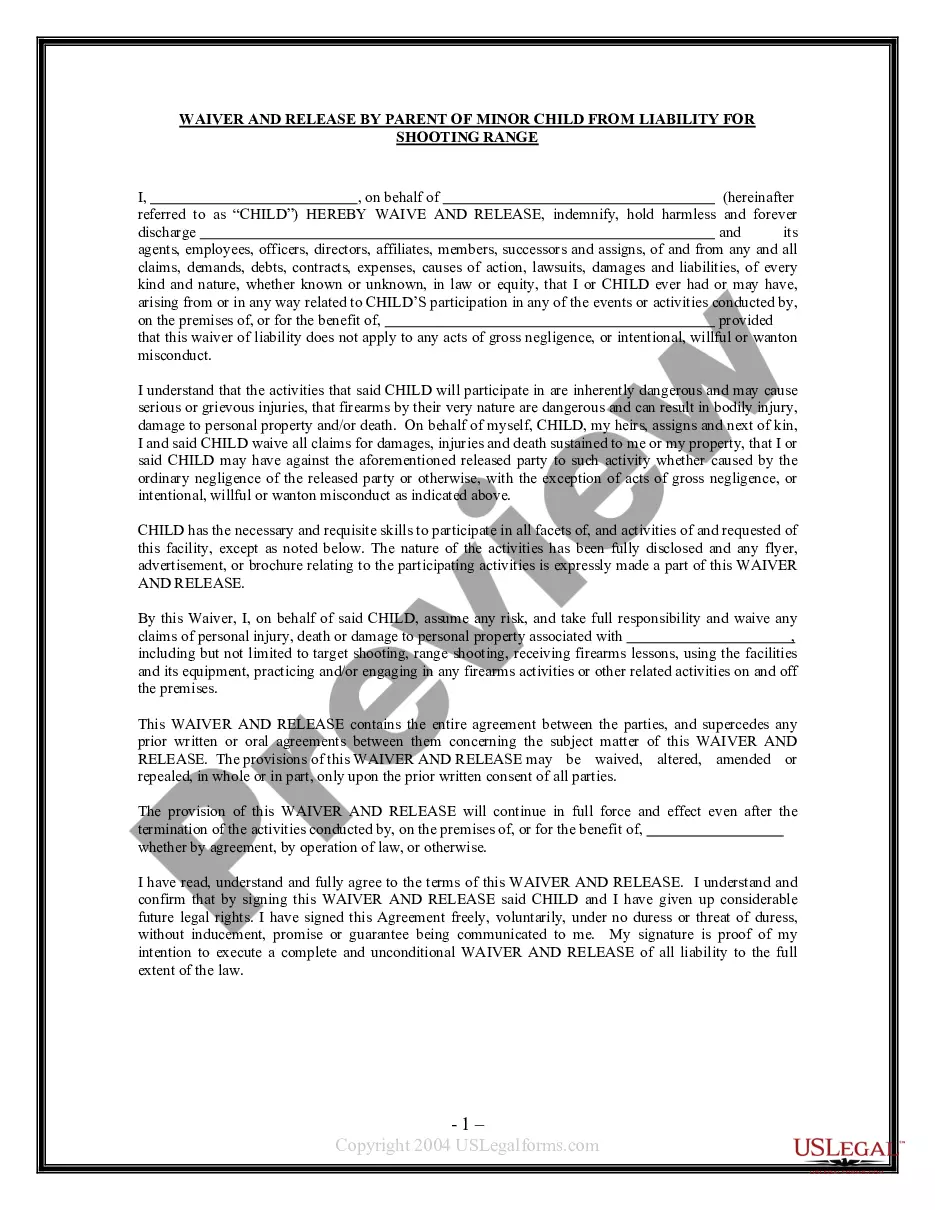
How to fill out Waiver And Release From Liability For Minor Child For Archery Range?
You can dedicate multiple hours online searching for the legal document template that meets the state and federal requirements you need. US Legal Forms provides a vast array of legal forms that can be reviewed by experts.
You can easily download or print the South Carolina Waiver and Release From Liability For Minor Child for Archery Range from the service. If you already have a US Legal Forms account, you can Log In and then click the Acquire button. After that, you can complete, modify, print, or sign the South Carolina Waiver and Release From Liability For Minor Child for Archery Range.
Every legal document template you purchase is yours forever. To obtain an additional copy of any purchased form, go to the My documents tab and click the relevant button. If you are using the US Legal Forms website for the first time, follow the simple instructions below: First, ensure that you have selected the correct document template for your county/region of choice. Read the form description to confirm you have chosen the right form. If available, utilize the Preview button to view the document template as well. If you wish to find another version of the form, use the Search section to locate the template that suits your needs and requirements. Once you have found the template you need, click on Purchase now to proceed. Choose the pricing plan you want, enter your details, and sign up for an account on US Legal Forms. Complete the transaction. You can use your credit card or PayPal account to purchase the legal form. Select the format of the document and download it to your system. Make adjustments to the document if necessary. You can complete, modify, sign, and print the South Carolina Waiver and Release From Liability For Minor Child for Archery Range.
- Obtain and print numerous document templates using the US Legal Forms site, which offers the largest collection of legal forms.
- Utilize professional and state-specific templates to address your business or personal needs.
Form popularity
FAQ
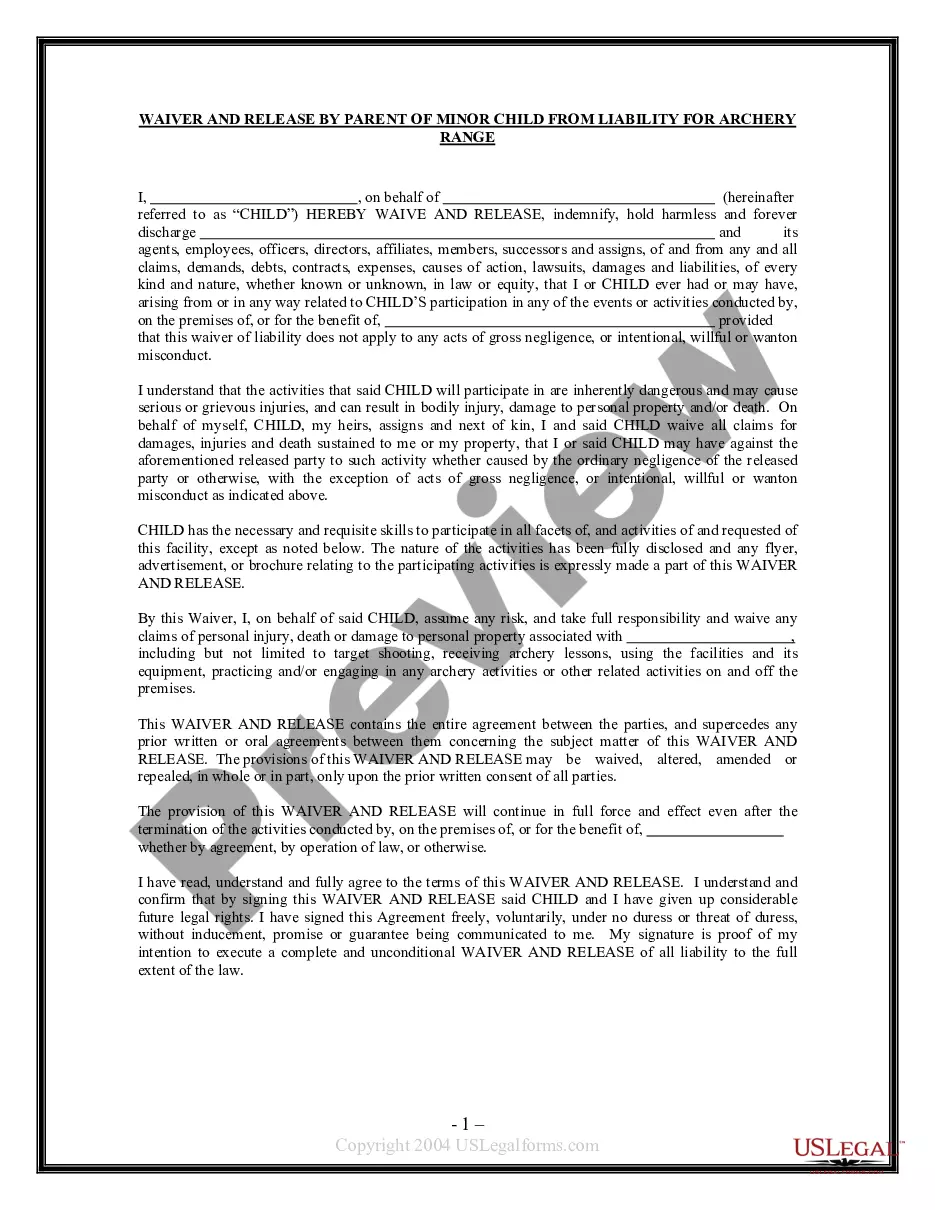
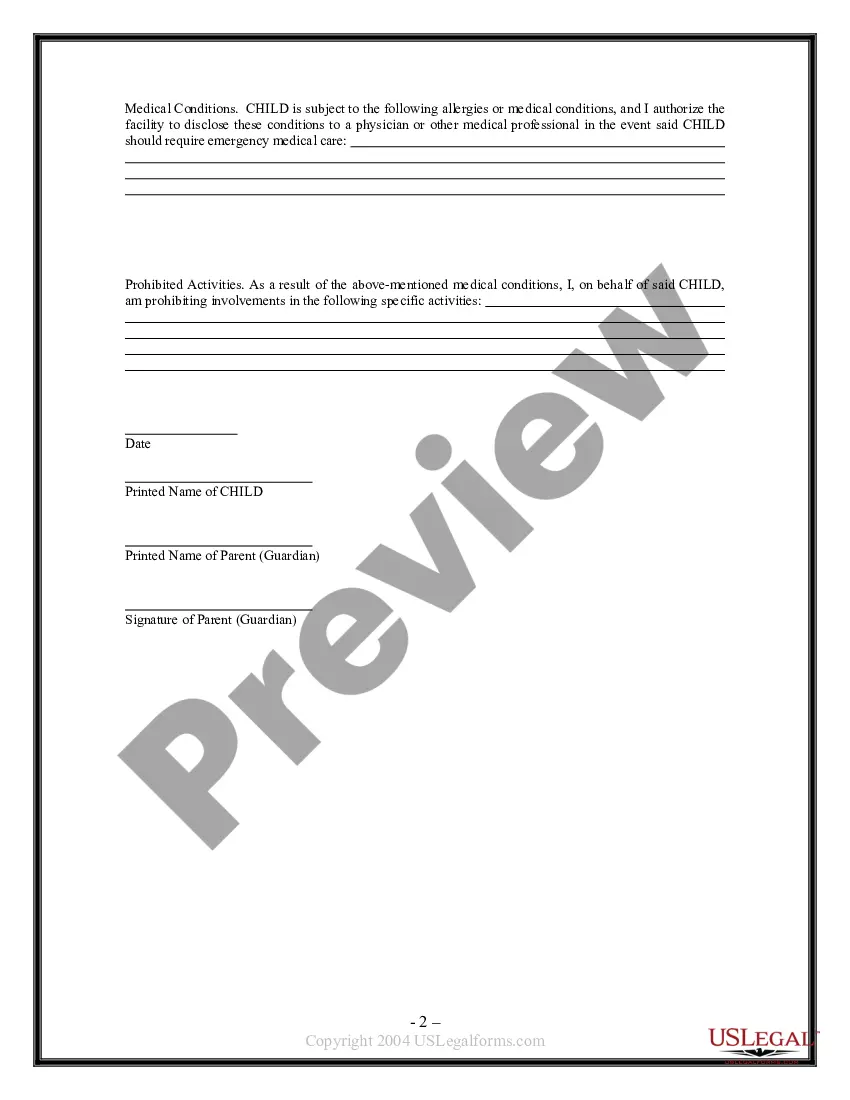
Writing a release of liability waiver involves several important steps. Begin by clearly stating the intent of the waiver, followed by a detailed description of the activities and the associated risks. For a comprehensive South Carolina Waiver and Release From Liability For Minor Child for Archery Range, include sections for both the parent’s consent and acknowledgment of risks. You can also consider using US Legal Forms to access professionally crafted templates that simplify the process.
A parental release of liability form is a document that protects organizations from legal claims made by parents on behalf of their minor children. This form is essential when engaging minors in activities like archery, as it ensures that parents acknowledge the risks involved. Utilizing a South Carolina Waiver and Release From Liability For Minor Child for Archery Range can provide peace of mind for both parents and organizers.
Yes, you can create your own liability waiver, but it is crucial to ensure that it meets legal standards. A well-drafted South Carolina Waiver and Release From Liability For Minor Child for Archery Range should clearly outline the risks involved and seek the consent of the parent or guardian. However, using a specialized platform like US Legal Forms can help you avoid common mistakes and provide templates that are tailored to your needs.
Waivers signed by minors typically do not hold up in court due to the inability of minors to form legally binding contracts. Instead, a parent or guardian must sign the waiver to ensure it is enforceable. The South Carolina Waiver and Release From Liability For Minor Child for Archery Range provides a framework where a guardian's signature is required. This approach helps protect both the minor and the archery range from potential liability.
Generally, signatures from minors are not considered legally binding because minors lack the legal capacity to enter into contracts. However, a parent or guardian can sign on behalf of a minor to ensure that the waiver is enforceable. The South Carolina Waiver and Release From Liability For Minor Child for Archery Range requires a parent or guardian's signature to be valid. This protects both the child and the organization hosting the activity.
Creating a liability waiver involves outlining the risks associated with the activity and clearly stating the rights being waived. You should include essential details like the event date, participant information, and signatures. Using a template like the South Carolina Waiver and Release From Liability For Minor Child for Archery Range from US Legal Forms simplifies this process. This platform provides easy-to-use forms that ensure compliance with local laws.
The duration of a waiver of liability can vary based on the specific terms outlined within the document. Generally, a waiver remains effective as long as the risks associated with the activity are present. For the South Carolina Waiver and Release From Liability For Minor Child for Archery Range, it is advisable to specify an expiration date or duration for clarity. Periodically reviewing and renewing waivers can help maintain their relevance.
Not all waivers are legally binding, but many can be if they meet certain criteria. To be enforceable, a waiver must clearly outline the risks involved and be signed voluntarily. The South Carolina Waiver and Release From Liability For Minor Child for Archery Range is designed to be legally binding, provided all legal standards are met. It's important to consult legal advice to ensure that your waiver is valid.
A hold harmless agreement protects organizations from liability when a child participates in activities like archery. This agreement ensures that the parent or guardian acknowledges potential risks involved in the sport. By signing the South Carolina Waiver and Release From Liability For Minor Child for Archery Range, parents agree not to hold the organization responsible for injuries that may occur. This agreement fosters a safer environment for all participants.
Waivers may not be enforceable due to various legal reasons. For instance, if the language in the South Carolina Waiver and Release From Liability For Minor Child for Archery Range is unclear or ambiguous, a court might reject it. Additionally, if the waiver attempts to release liability for gross negligence or willful misconduct, it may not hold up in court. It’s crucial to ensure that your waiver complies with state laws and is properly drafted to maximize its enforceability.