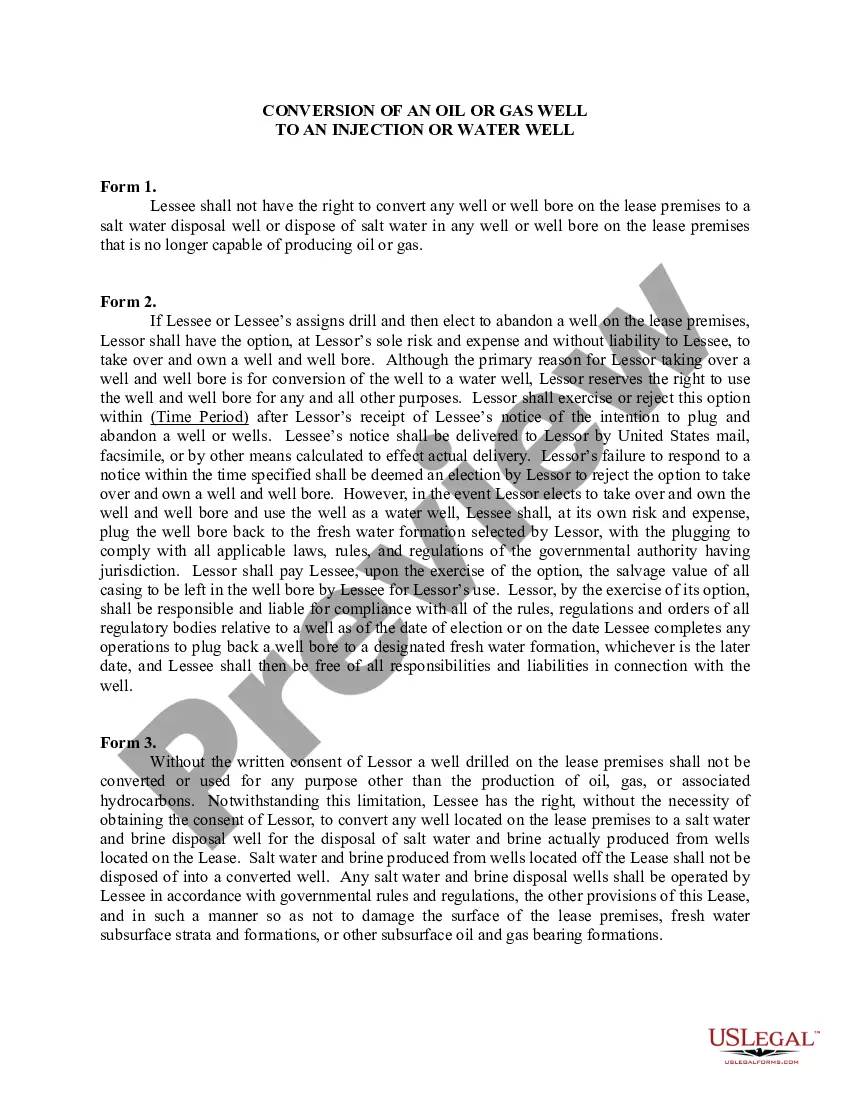
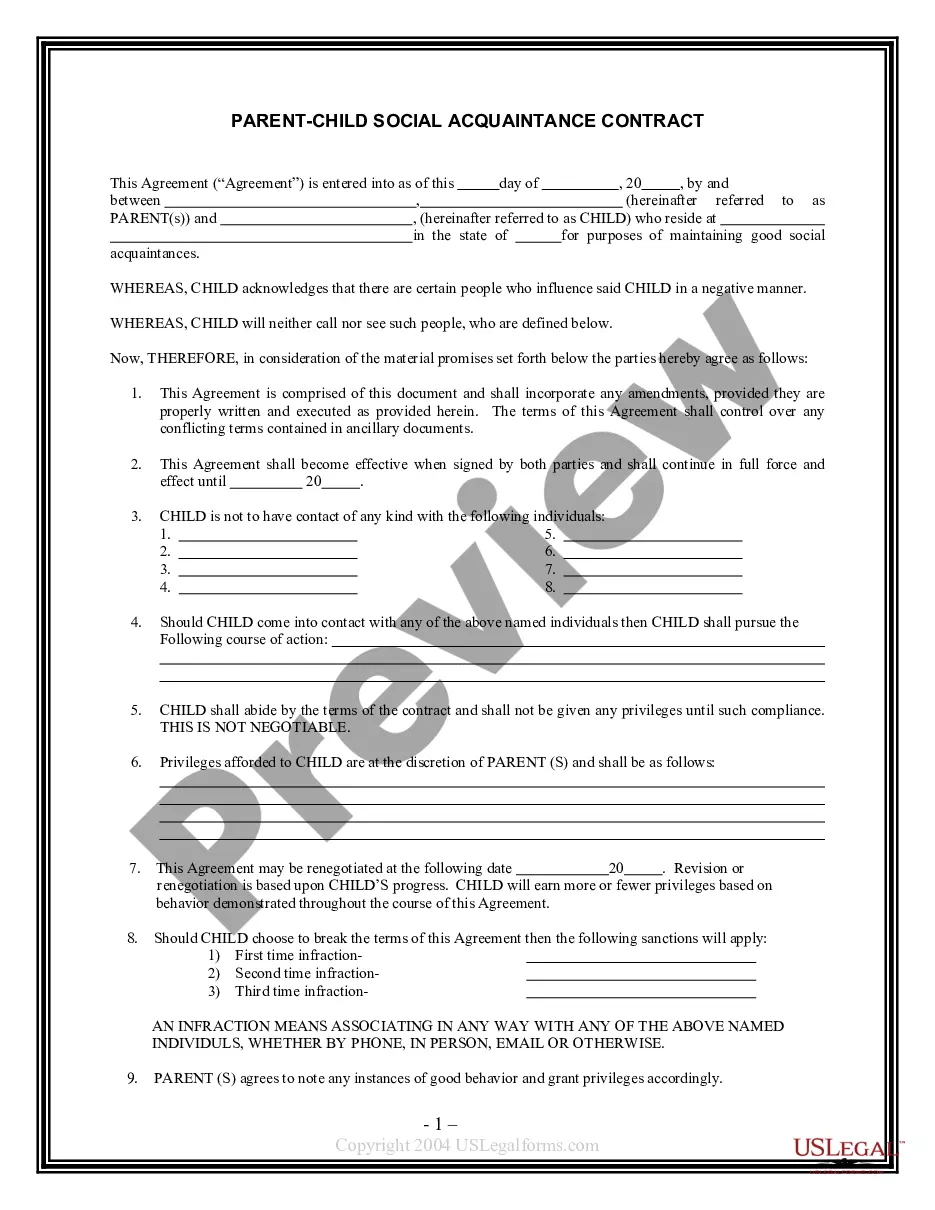
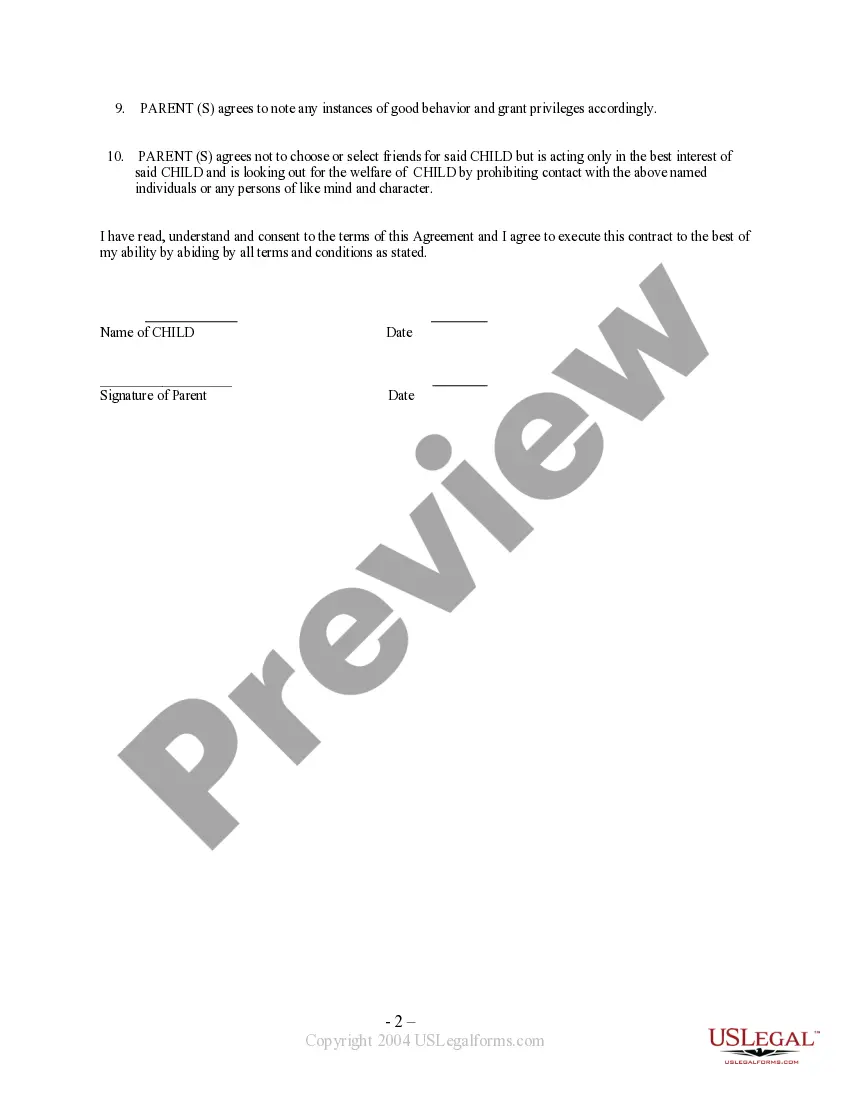
This is a contract between parent(s) and child acknowledging that there are certain people from whom child should refrain from associating. This contract affords privileges for good behavior and for abiding by its terms while listing the repercussions for breaking the contract.
South Carolina Parent - Child Social Acquaintance Contract
Category:
State:
Multi-State
Control #:
US-PC09
Format:
Word;
Rich Text
Instant download
Description
Free preview
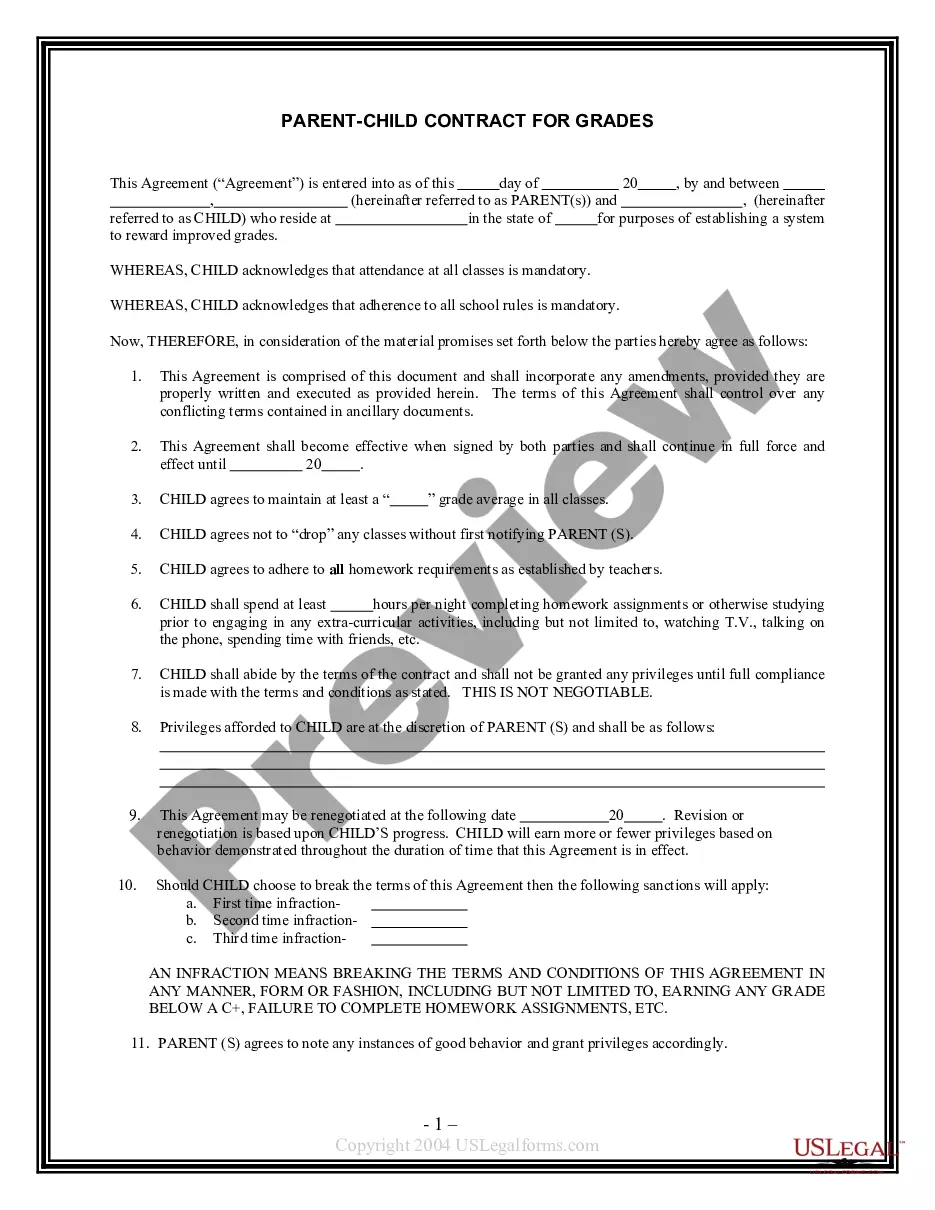
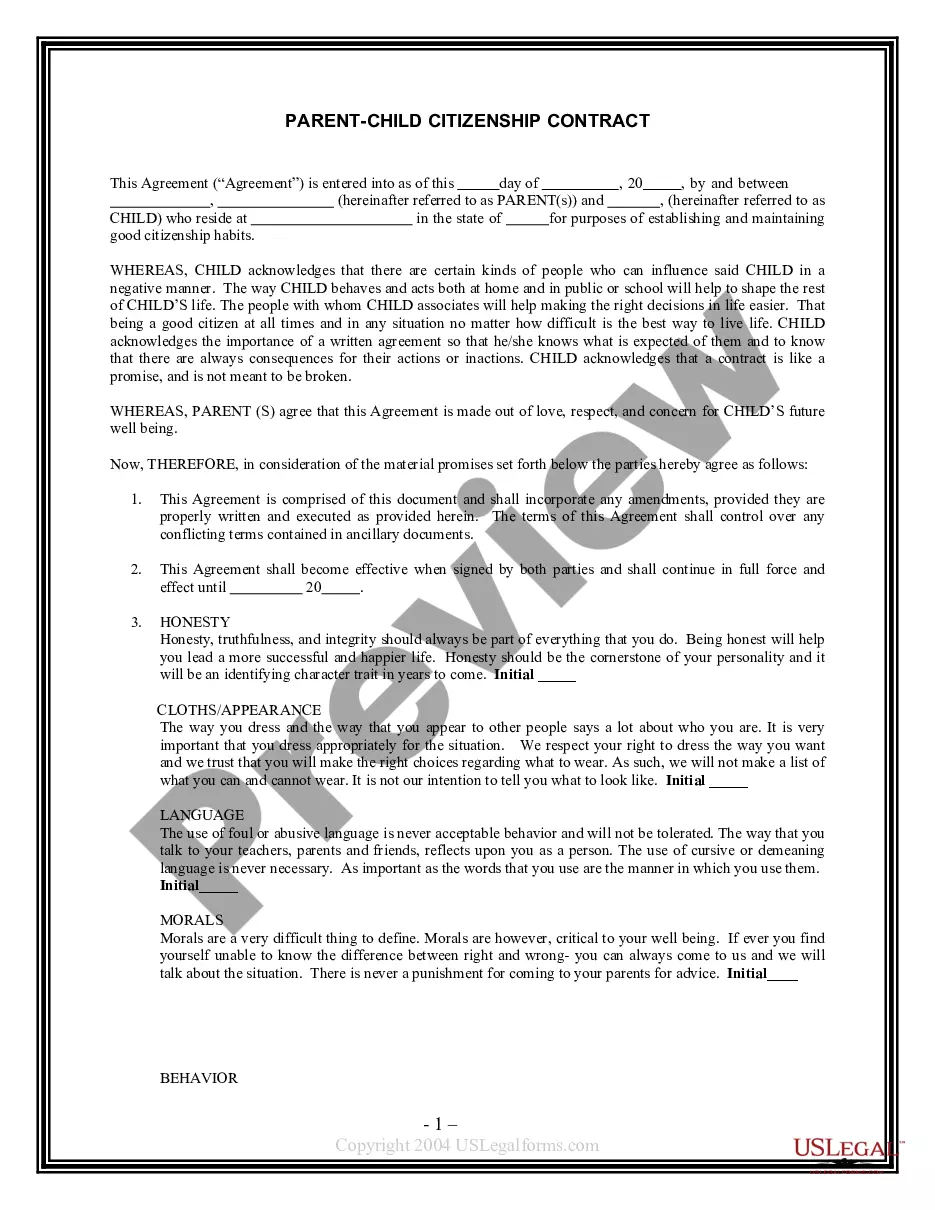
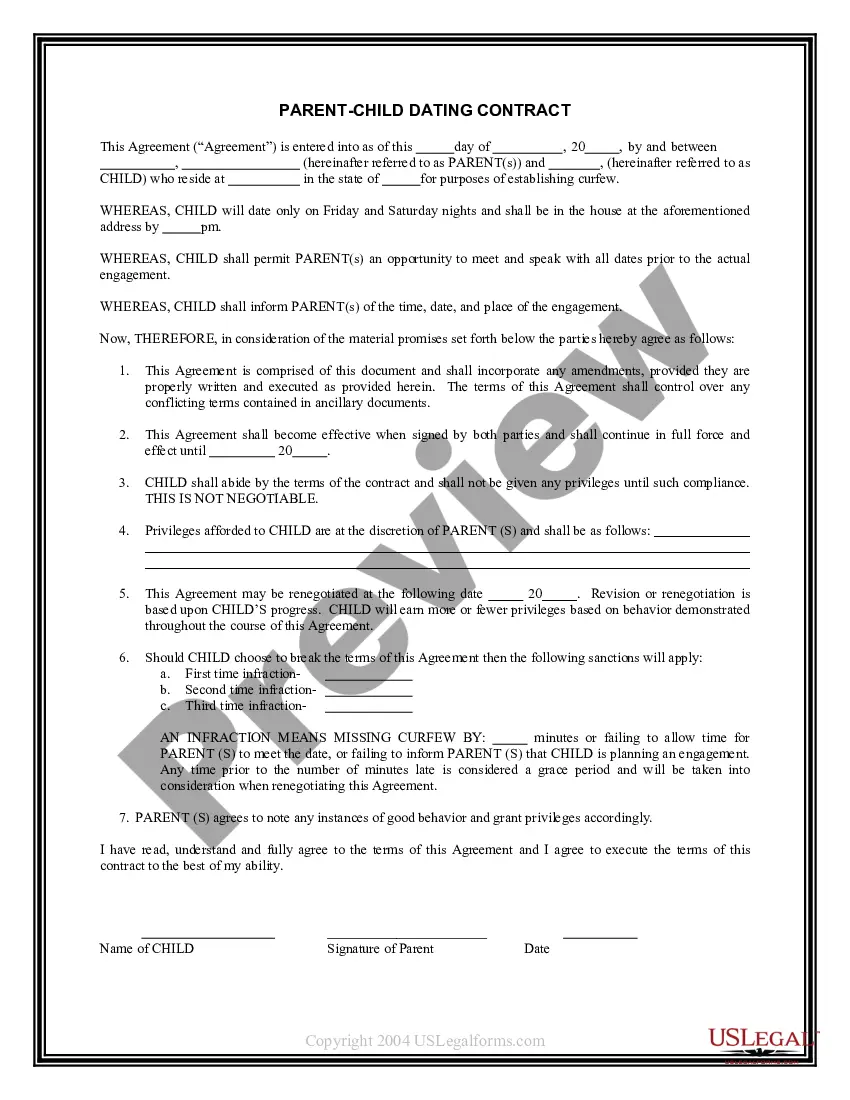
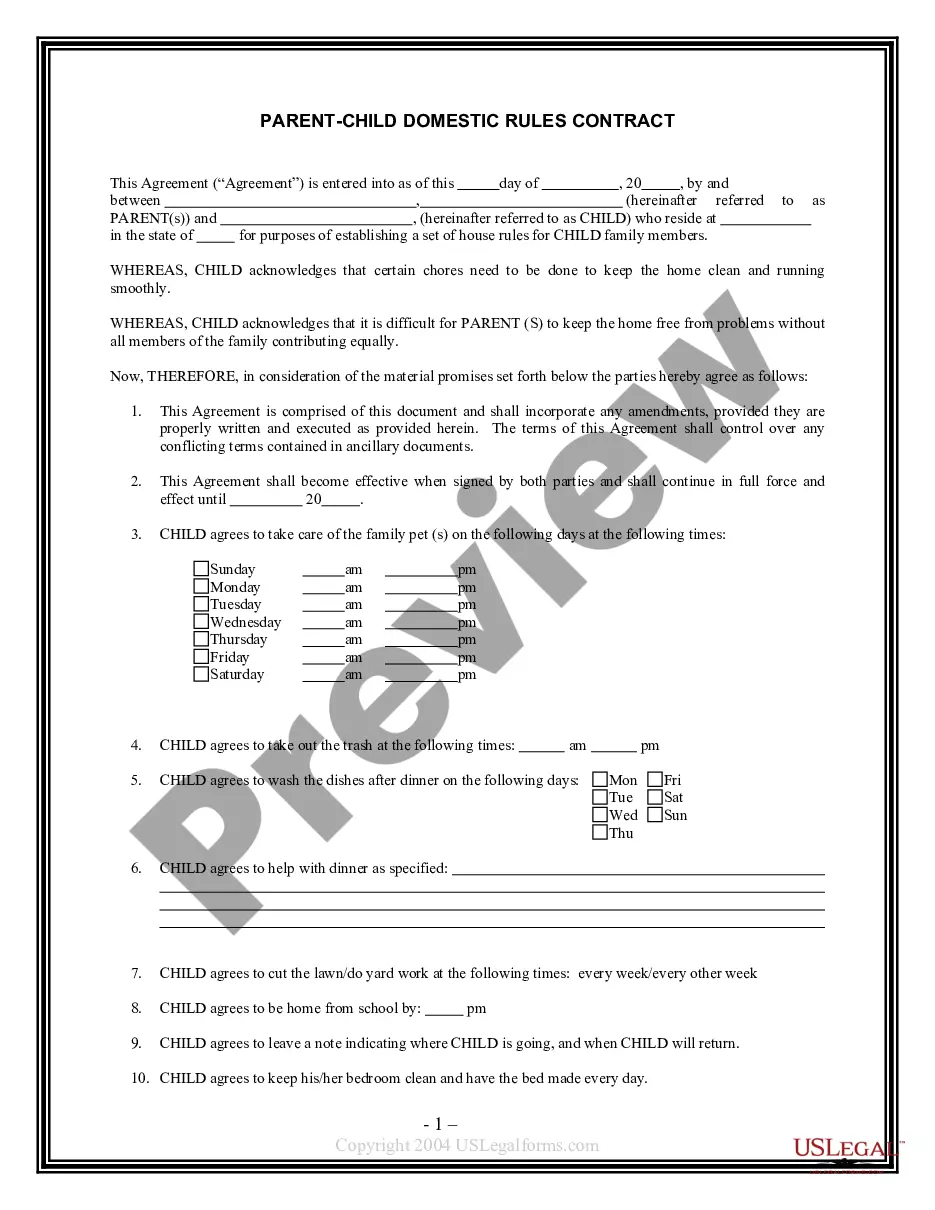
Get your form ready online
Our built-in tools help you complete, sign, share, and store your documents in one place.
Built-in online Word editor
Make edits, fill in missing information, and update formatting in US Legal Forms—just like you would in MS Word.
Export easily
Download a copy, print it, send it by email, or mail it via USPS—whatever works best for your next step.
E-sign your document
Sign and collect signatures with our SignNow integration. Send to multiple recipients, set reminders, and more. Go Premium to unlock E-Sign.
Notarize online 24/7
If this form requires notarization, complete it online through a secure video call—no need to meet a notary in person or wait for an appointment.
Store your document securely
We protect your documents and personal data by following strict security and privacy standards.

Make edits, fill in missing information, and update formatting in US Legal Forms—just like you would in MS Word.

Download a copy, print it, send it by email, or mail it via USPS—whatever works best for your next step.

Sign and collect signatures with our SignNow integration. Send to multiple recipients, set reminders, and more. Go Premium to unlock E-Sign.

If this form requires notarization, complete it online through a secure video call—no need to meet a notary in person or wait for an appointment.

We protect your documents and personal data by following strict security and privacy standards.
Looking for another form?


How to fill out Parent - Child Social Acquaintance Contract?
US Legal Forms - one of the largest repositories of legal documents in the USA - offers a vast selection of legal document templates that you can download or print. By using the website, you can access thousands of forms for business and personal purposes, organized by categories, states, or keywords. You can obtain the latest versions of forms such as the South Carolina Parent - Child Social Acquaintance Contract within seconds.
If you already have a monthly subscription, Log In and download the South Carolina Parent - Child Social Acquaintance Contract from the US Legal Forms library. The Download button will appear on every form you view. You can access all previously downloaded forms from the My documents section of your account.
If you are using US Legal Forms for the first time, here are simple instructions to help you get started: Ensure you have selected the correct form for your area/state. Click the Preview button to review the form's content. Read the form summary to ensure you have chosen the right form. If the form does not meet your needs, utilize the Search field at the top of the screen to find one that does. If you are satisfied with the form, confirm your choice by clicking on the Purchase now button. Then, select the payment plan you prefer and provide your details to register for the account. Process the payment. Use your Visa or Mastercard or PayPal account to complete the transaction. Choose the format and download the form to your device. Make adjustments. Complete, modify, and print and sign the downloaded South Carolina Parent - Child Social Acquaintance Contract. Every template you add to your account has no expiration date and belongs to you indefinitely. Therefore, if you want to download or print another copy, simply go to the My documents section and click on the form you need.
- Access the South Carolina Parent - Child Social Acquaintance Contract with US Legal Forms, the most extensive collection of legal document templates.
- Utilize thousands of professional and state-specific templates that satisfy your business or personal needs and requirements.
Form popularity
FAQ
An unfit parent in South Carolina may be characterized by their inability to provide a safe and nurturing environment for their children. This includes issues like substance abuse, chronic neglect, or engaging in harmful relationships. Being aware of these criteria can also inform how you approach a South Carolina Parent - Child Social Acquaintance Contract, as it helps define expectations for both parents.
In a custody battle, behaviors such as substance abuse, domestic violence, or failure to provide a stable environment can negatively impact your case. It is vital to maintain a positive reputation and demonstrate your commitment to your child's well-being. Utilizing a South Carolina Parent - Child Social Acquaintance Contract can help establish clear roles and responsibilities, further supporting your position.
To voluntarily relinquish parental rights in South Carolina, you must file a petition in family court and provide valid reasons for your decision, such as being unable to provide proper care. The court requires a thorough review of your situation, including any existing agreements like the South Carolina Parent - Child Social Acquaintance Contract. Seeking legal advice can help ensure that you navigate this complex process correctly.
In South Carolina, a child can express their preference regarding visitation at age 12, though the court ultimately decides based on the child's best interests. It is essential to consider how a South Carolina Parent - Child Social Acquaintance Contract can help outline expectations and responsibilities. Parents should focus on maintaining open communication with their children throughout this process.
In South Carolina, a parent may be deemed unfit if they demonstrate a pattern of neglect, abuse, or substance abuse that endangers the child’s well-being. Factors such as abandonment or failure to provide for the child's basic needs can also contribute to this determination. Understanding these factors is crucial for parents, especially when considering a South Carolina Parent - Child Social Acquaintance Contract.
To file for child support in South Carolina, you need to gather essential documents such as proof of income, your child’s birth certificate, and any existing custody agreements. It is important to understand that the South Carolina Parent - Child Social Acquaintance Contract may also play a role in determining support obligations. Additionally, you may want to consult a legal professional to guide you through the process efficiently.
In South Carolina, there is no specific age at which a child can unilaterally decide which parent to live with. However, as children grow older, courts may consider their preferences, especially around the age of 14. This is significant when establishing a South Carolina Parent - Child Social Acquaintance Contract, as it allows parents to define social arrangements that align with their child's wishes. Ultimately, a court will prioritize the best interest of the child while considering these preferences.
Yes, a child can express a desire to refuse visitation in South Carolina, especially as they grow older. While the court generally encourages visitation, the child’s feelings should be taken into account. A South Carolina Parent - Child Social Acquaintance Contract can aid in addressing these concerns, ensuring that the child's voice is heard while promoting healthy relationships. Consulting with legal experts can provide clarity on visitation rights and the child’s role in the process.
In South Carolina, there is no specific law stating the minimum age at which a child can be left home alone. However, parents must use their judgment and consider the child's maturity level. A South Carolina Parent - Child Social Acquaintance Contract can help establish guidelines and expectations for both parents and children regarding independence and safety. It’s wise to communicate openly with your child about responsibilities and ensure they feel comfortable when left alone.
When a 14-year-old expresses a desire not to see a parent, it is important to consider their feelings seriously. In South Carolina, a Parent - Child Social Acquaintance Contract can facilitate discussions that respect the child's wishes while fostering a healthy relationship. It helps parents understand the child's perspective and find a compromise that benefits everyone involved. Seeking guidance from legal professionals can also assist in navigating these sensitive situations.