South Carolina Cease and Desist for Copyright Infringement
Description
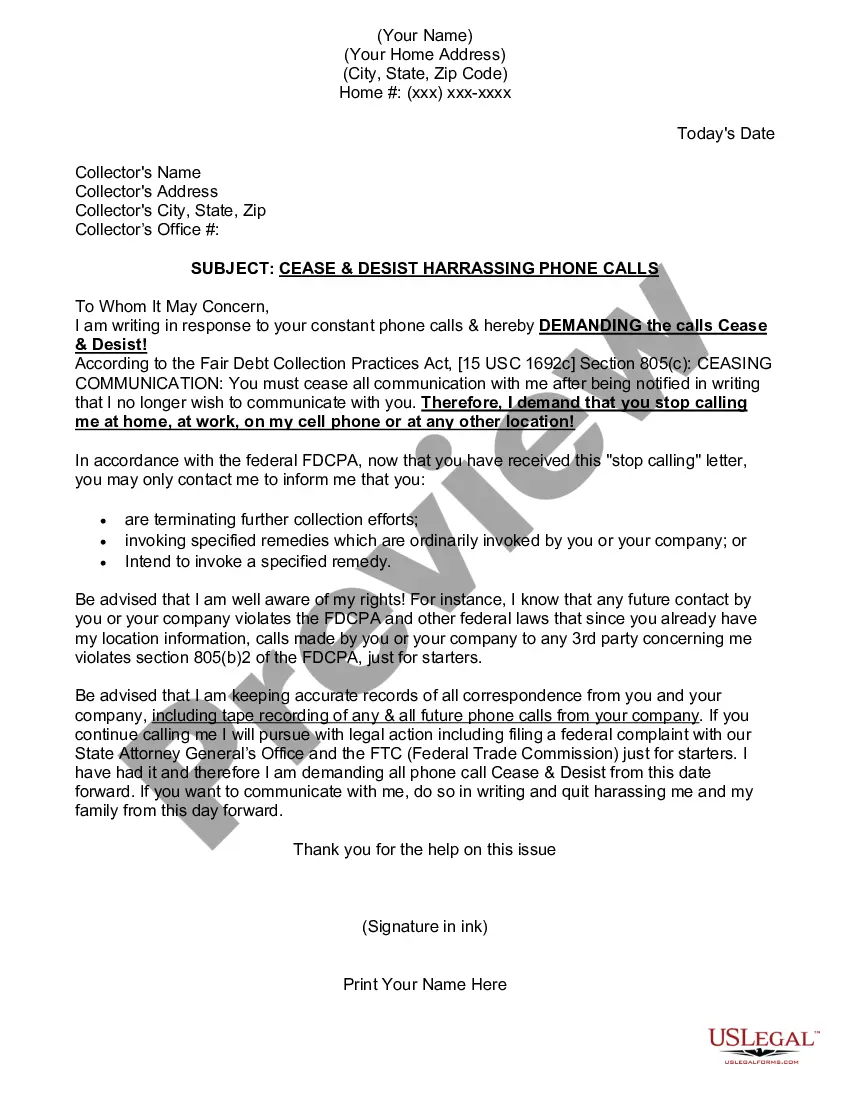
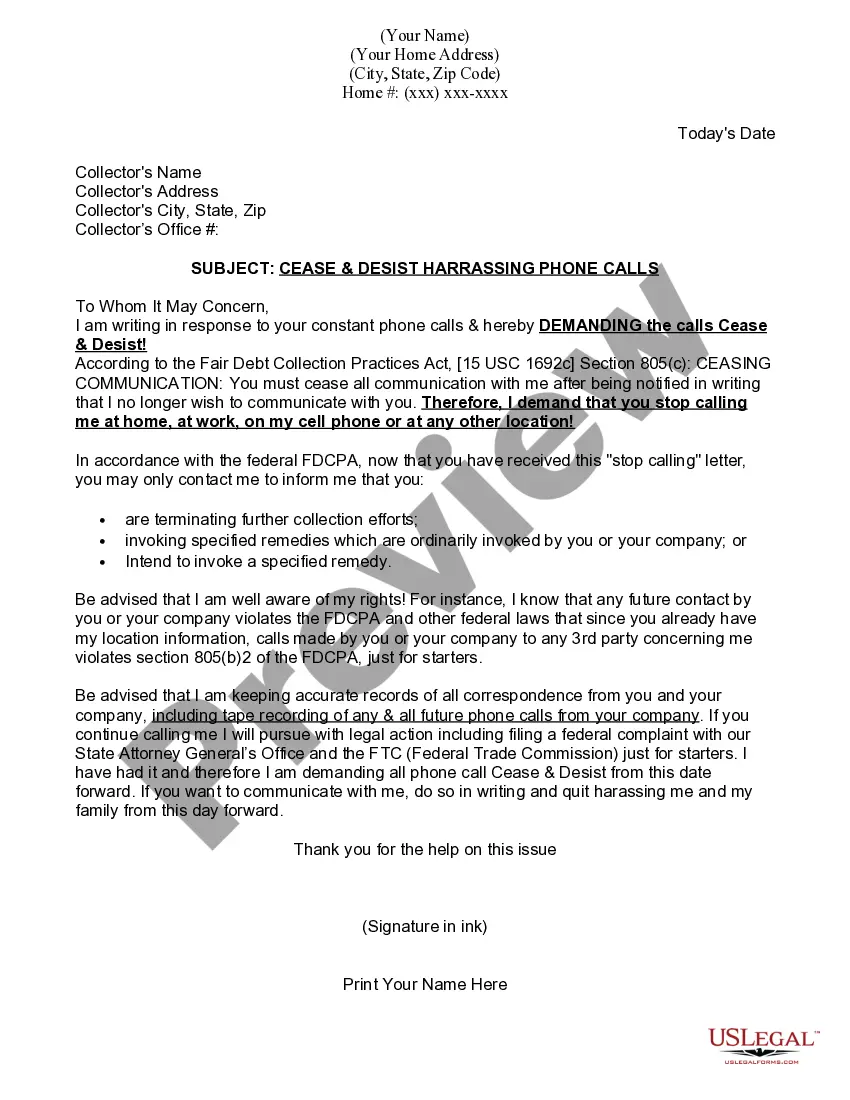

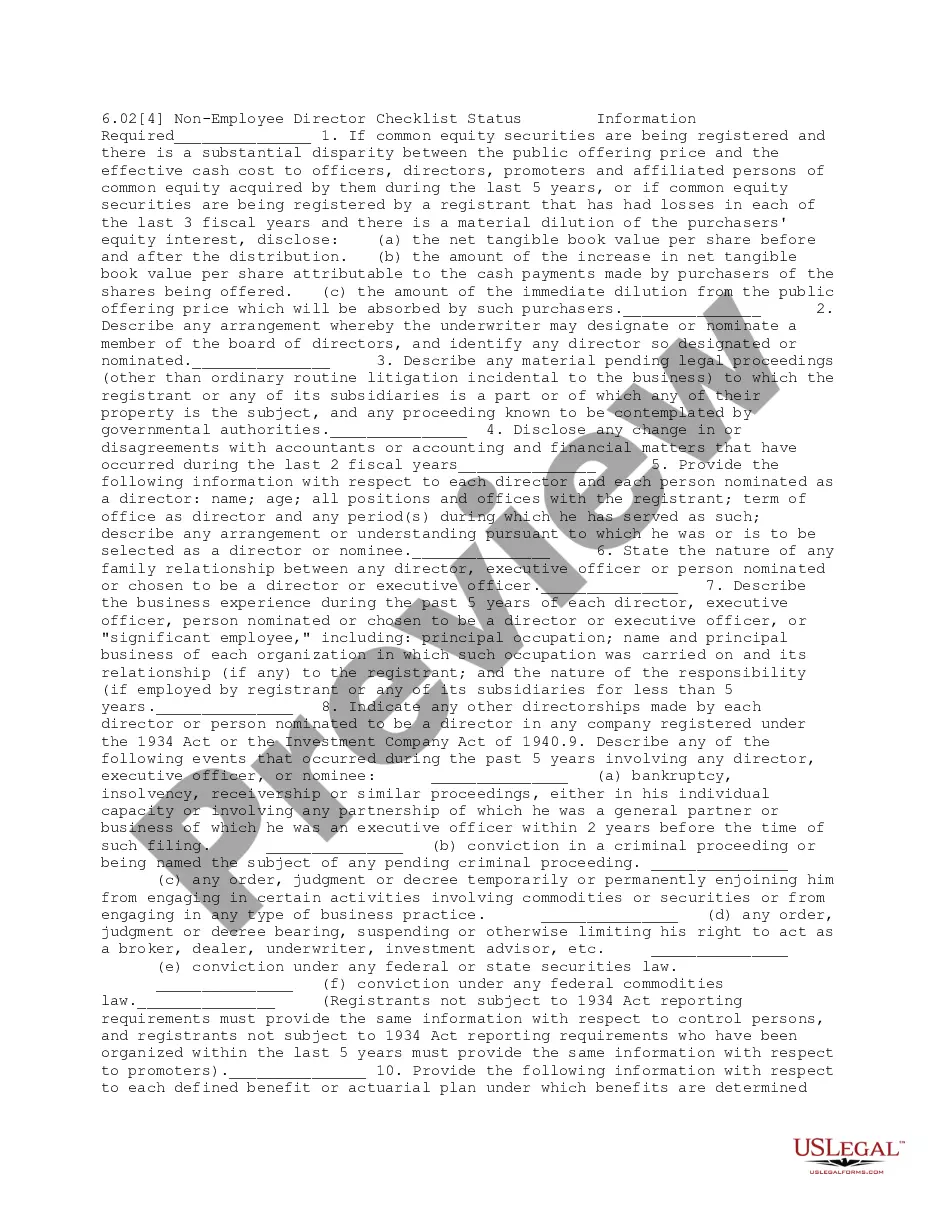
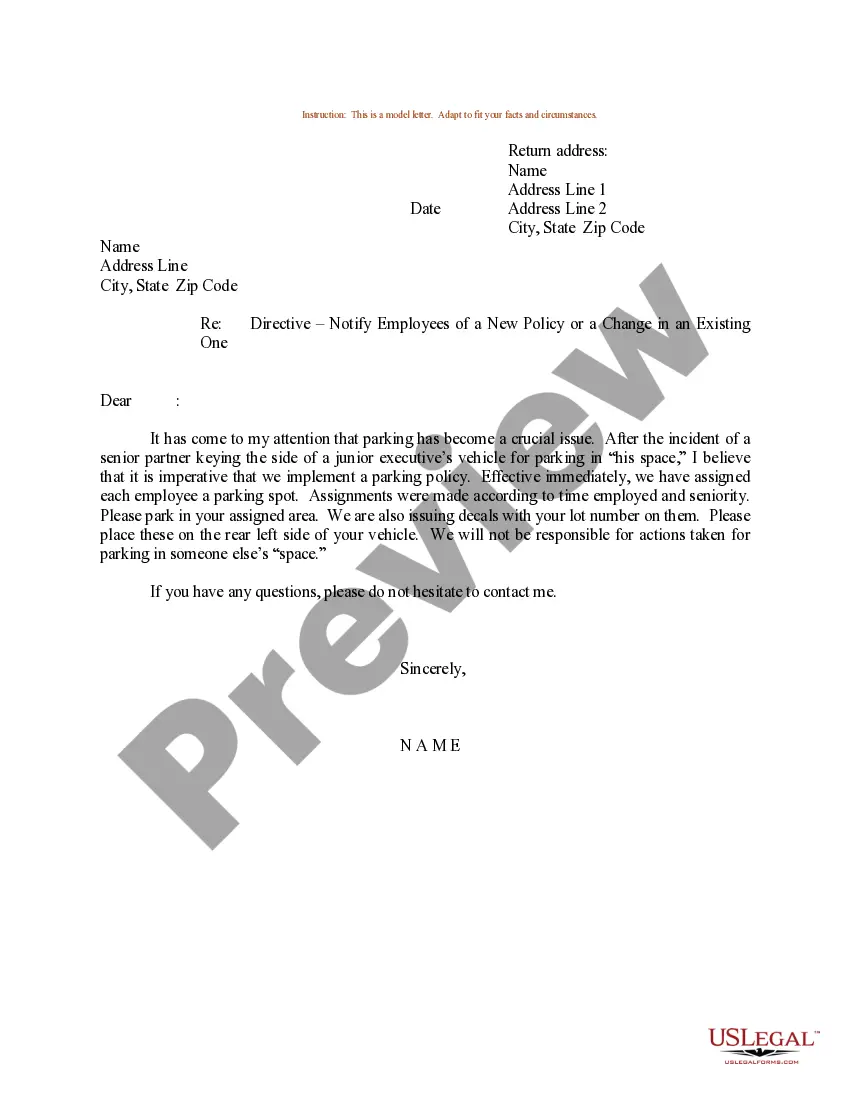
How to fill out Cease And Desist For Copyright Infringement?
Locating the appropriate legal document template can be a challenge. Of course, there are numerous templates available online, but how can you find the legal form you need? Utilize the US Legal Forms website. The service provides thousands of templates, including the South Carolina Cease and Desist for Copyright Infringement, which you can use for business and personal purposes. All of the forms are reviewed by specialists and satisfy state and federal requirements.
If you are already a registered user, Log In to your account and click on the Download button to obtain the South Carolina Cease and Desist for Copyright Infringement. Use your account to browse through the legal forms you have previously purchased. Go to the My documents tab of your account and retrieve another copy of the document you need.
If you are a new user of US Legal Forms, here are simple instructions you can follow: First, ensure you have selected the correct form for your area/county. You can review the form using the Preview button and read the form description to confirm it is suitable for you. If the form does not meet your needs, use the Search field to find the appropriate form. Once you are confident that the form is suitable, select the Buy now button to acquire the form. Choose the pricing plan you require and enter the necessary information. Create your account and complete the purchase using your PayPal account or credit card. Select the file format and download the legal document template to your device. Complete, edit, print, and sign the obtained South Carolina Cease and Desist for Copyright Infringement. US Legal Forms is the largest library of legal forms where you can find a variety of document templates. Use the service to obtain professionally crafted documents that comply with state requirements.
- legal document template.
- numerous templates.
- business and personal purposes.
- reviewed by specialists.
- state and federal requirements.
- professionally crafted documents.
Form popularity
FAQ
Proof for a cease and desist typically includes documentation that showcases your copyright ownership and examples of the infringement. This might involve registration of the copyright, dated copies of your work, and any correspondence related to the infringement. When preparing a South Carolina Cease and Desist for Copyright Infringement, ensure you compile comprehensive proof to support your claims.
To support a cease and desist request, you need to gather evidence demonstrating your ownership of the copyright and the infringing party's actions. This can include copies of the copyrighted work and documentation of the infringement. Having solid evidence is critical when pursuing a South Carolina Cease and Desist for Copyright Infringement, as it strengthens your case.
A cease and desist order qualifies when there is clear evidence of copyright infringement or violation of legal rights. The order serves as a formal request to stop actions that infringe on your intellectual property. If you believe your copyright has been violated, consider initiating a South Carolina Cease and Desist for Copyright Infringement to protect your rights effectively.
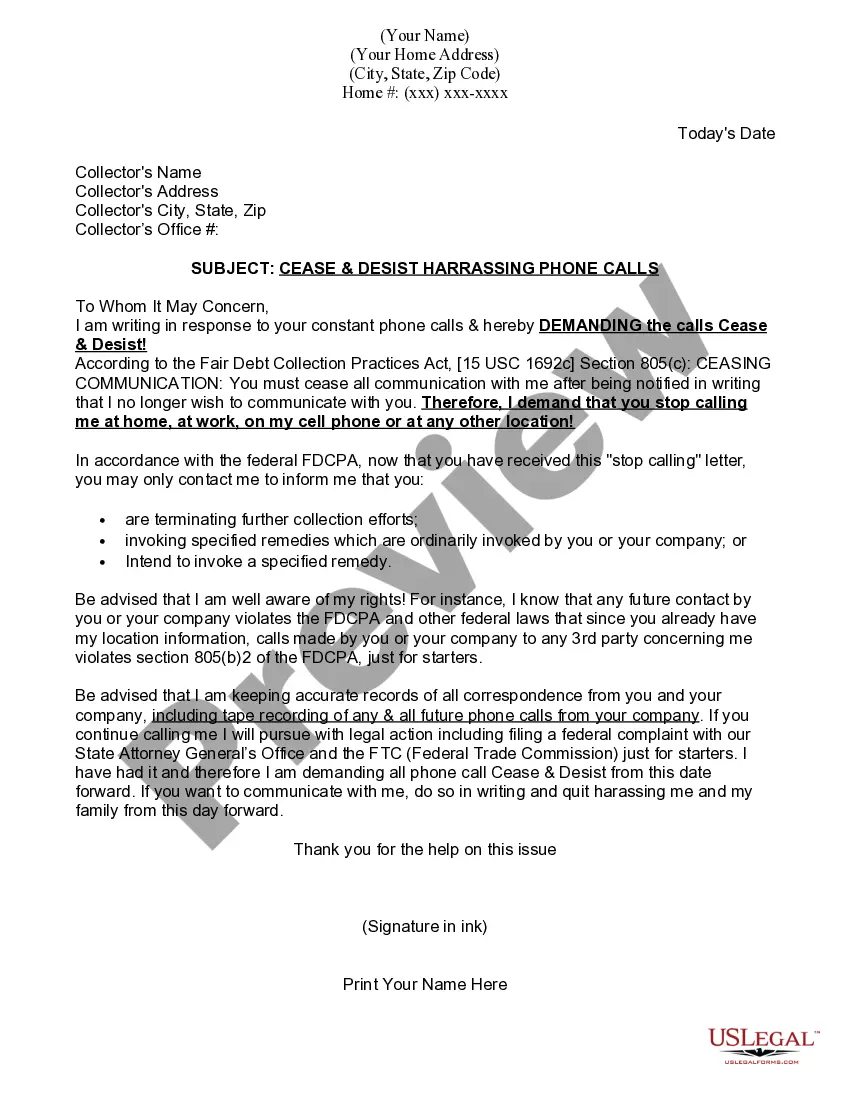
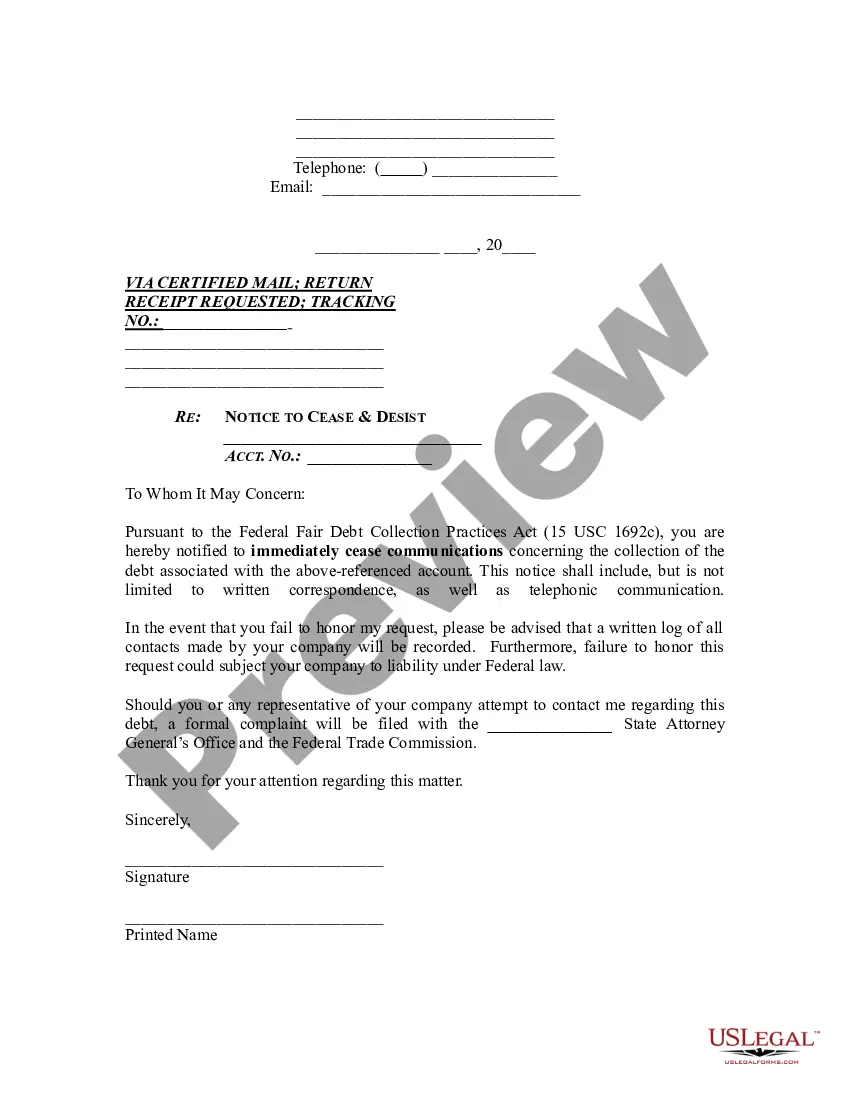
To send a cease and desist letter for copyright infringement, begin by clearly identifying the infringing party and the specific copyright material involved. Draft a formal letter that outlines your rights and demands the cessation of the infringing activity. Using a platform like USLegalForms can streamline this process, ensuring you include all necessary legal language for a South Carolina Cease and Desist for Copyright Infringement.
Rule 5.5 in South Carolina addresses the unauthorized practice of law. It prevents individuals from providing legal services without proper licensing. For those dealing with copyright issues, understanding this rule is crucial, especially when considering a South Carolina Cease and Desist for Copyright Infringement. Always consult a licensed attorney to navigate these legal matters.
Yes, you can write your own cease and desist letter for copyright infringement in South Carolina. However, it’s crucial to ensure that your letter includes all necessary legal elements. If you're unsure about the process, using a template from US Legal Forms can simplify the task and help you create a document that stands up legally. This way, you can confidently address the infringement while protecting your rights.
When preparing a cease and desist for copyright infringement, you need to provide evidence of the infringement. This can include copies of the original work, documentation of your copyright registration, and examples of the unauthorized use. Having solid proof strengthens your position and makes your case more compelling. Utilizing resources like US Legal Forms can help you organize your evidence effectively.
To fill out a cease and desist for copyright infringement in South Carolina, start by clearly identifying the parties involved. Include information about the copyrighted material and explain how it has been infringed upon. Use straightforward language to outline the actions you want the recipient to stop. If you need guidance, consider using a professional service like US Legal Forms to ensure your document meets legal requirements.
While it is not legally required to send a cease and desist before suing for copyright infringement in South Carolina, it is often a recommended first step. Sending a cease and desist letter can serve as a formal warning, allowing the infringer an opportunity to stop their actions before legal action escalates. Additionally, this approach may strengthen your case by showing that you attempted to resolve the issue amicably. Using platforms like US Legal Forms can help you easily create a professional cease and desist letter tailored to your needs.
To write a cease and desist letter for copyright infringement in South Carolina, start by clearly identifying the infringing party and detailing the specific copyright material involved. Include a statement that outlines your ownership rights and how the infringement occurred. It is also important to specify the actions you want the infringer to take, such as stopping the use of your copyrighted material. Using a reliable platform like uslegalforms can help you create a comprehensive South Carolina Cease and Desist for Copyright Infringement letter that adheres to legal standards.