South Carolina Motion for Continuance
Description
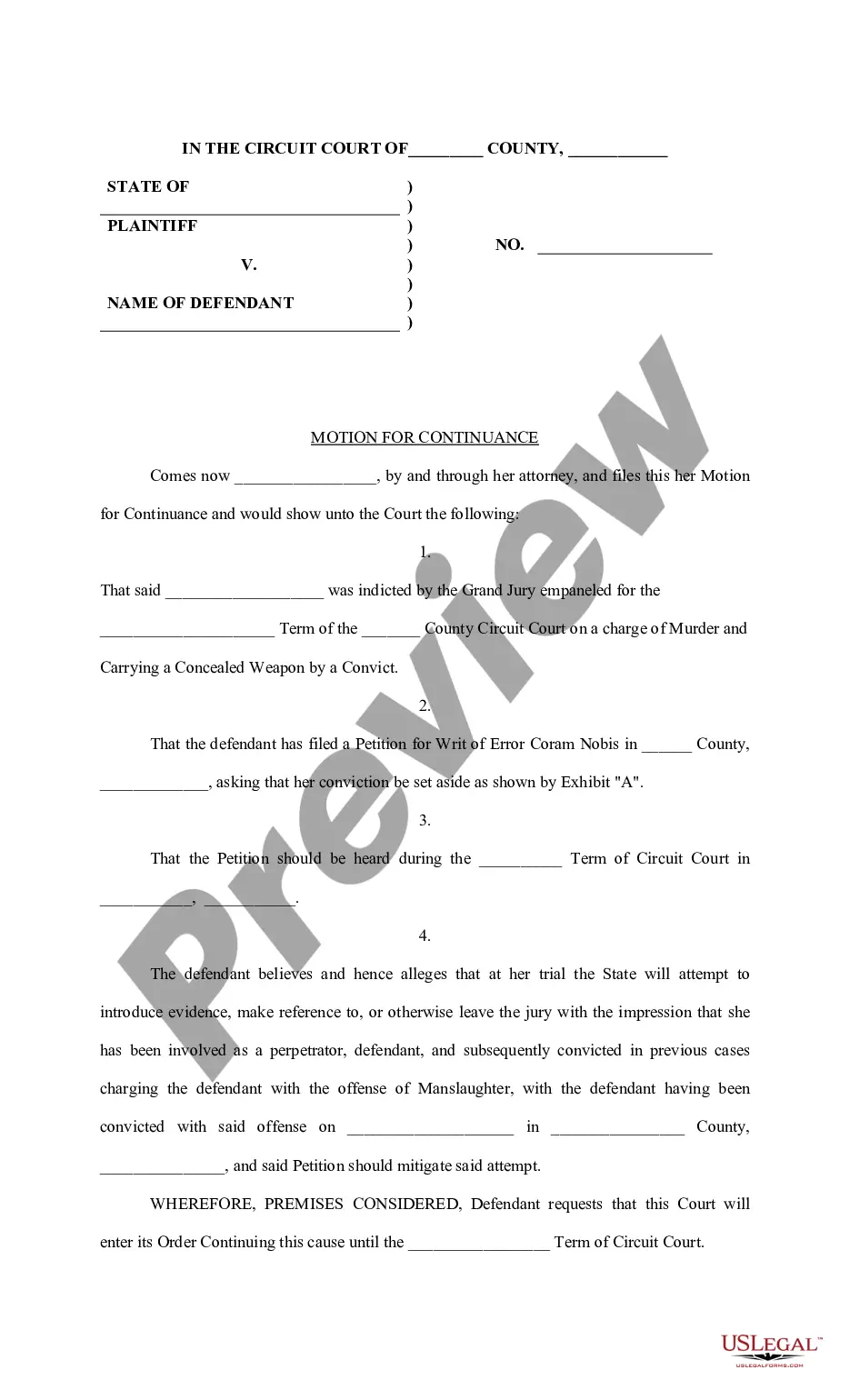
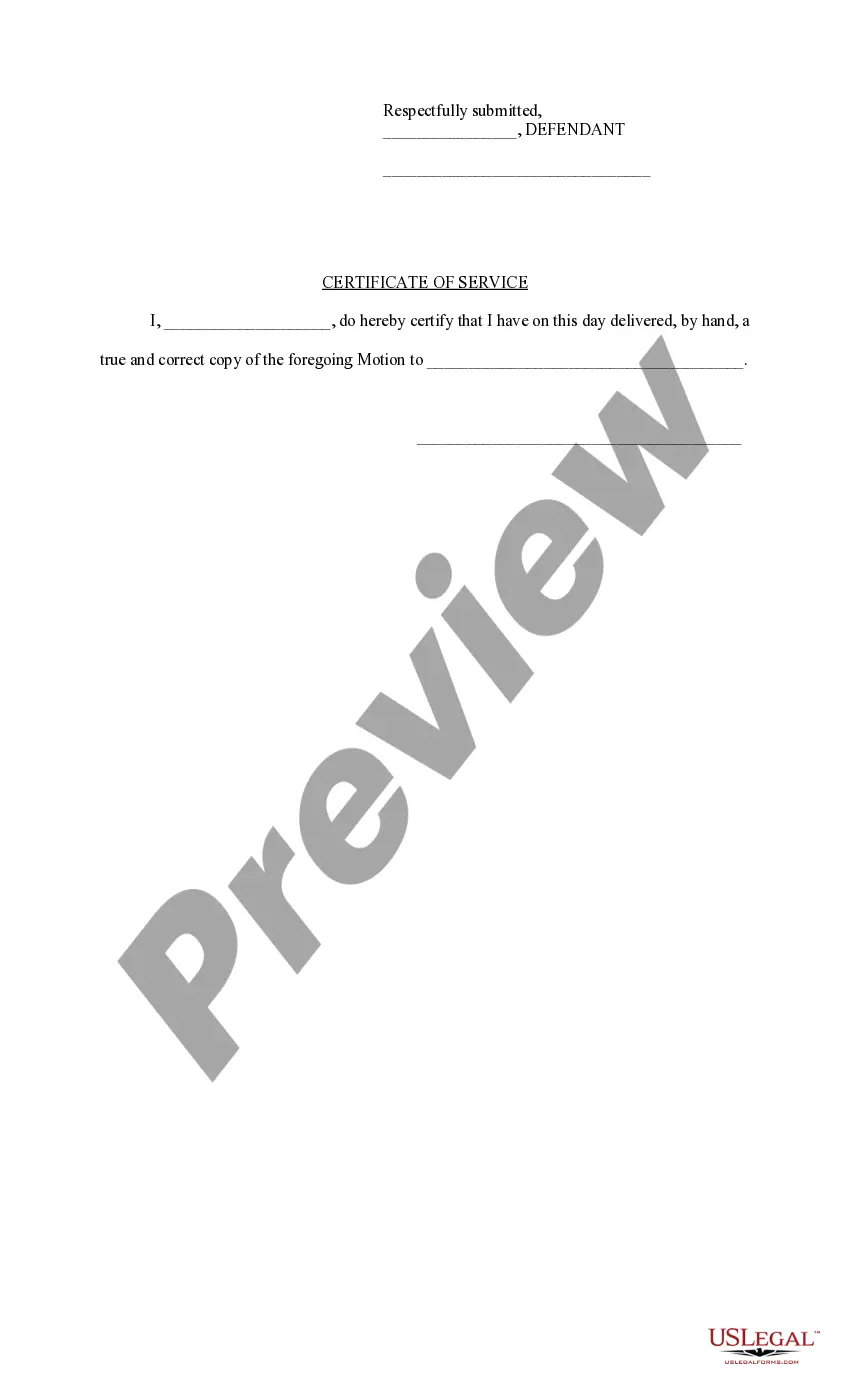
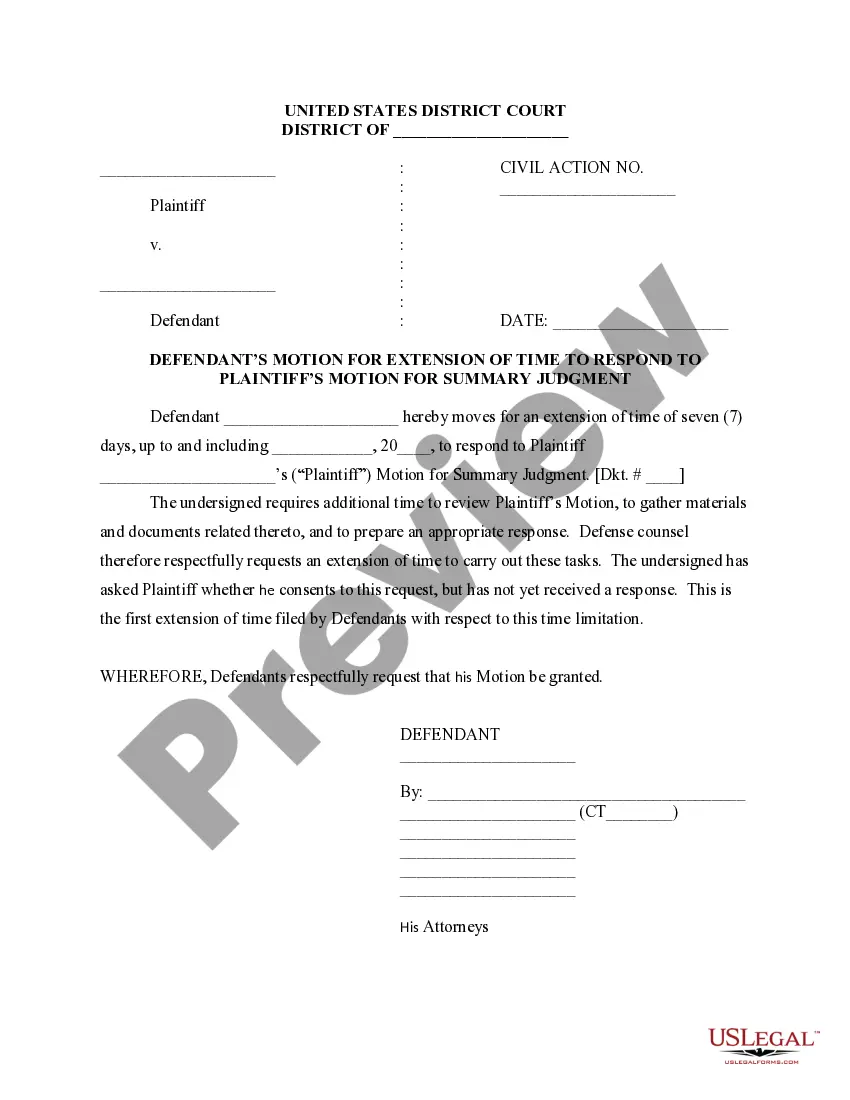
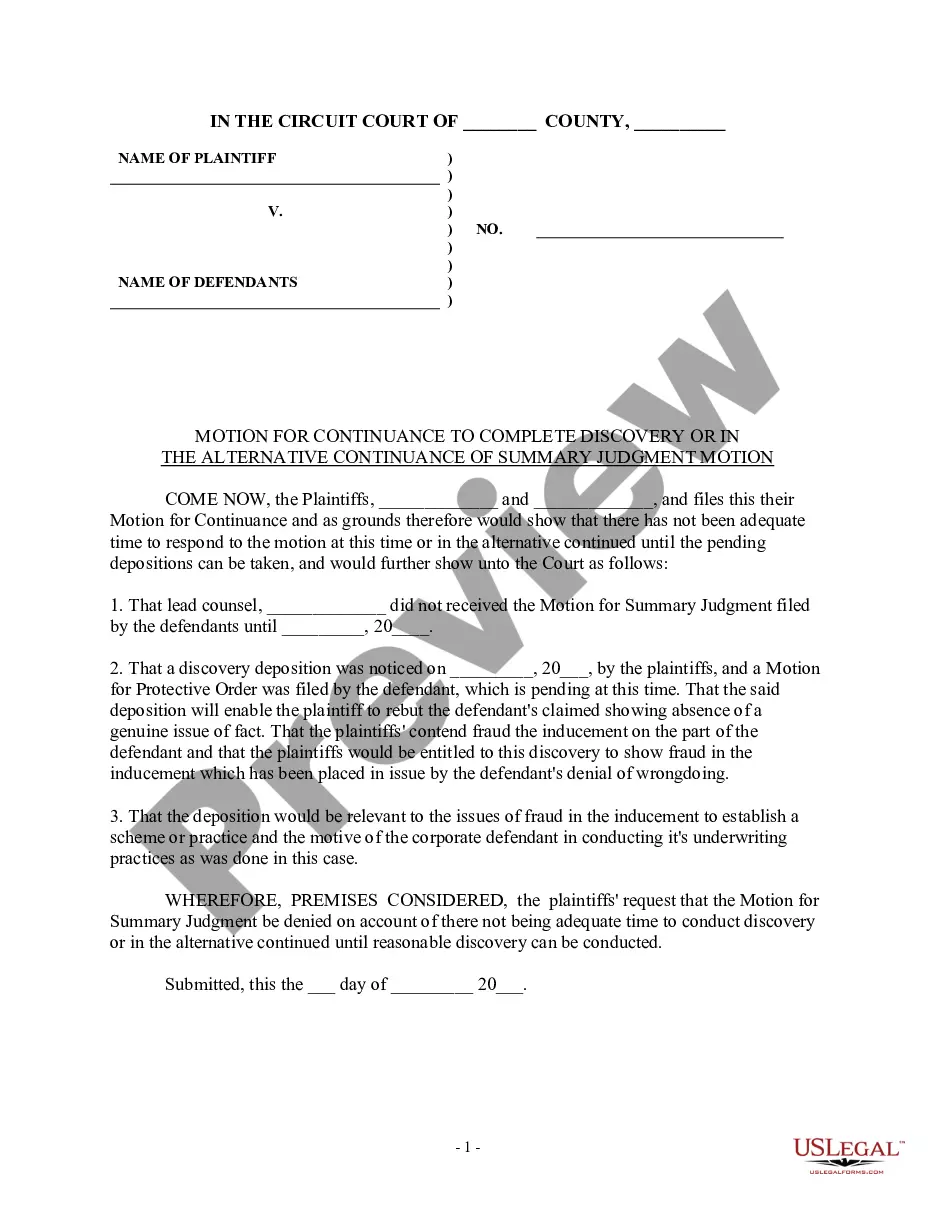
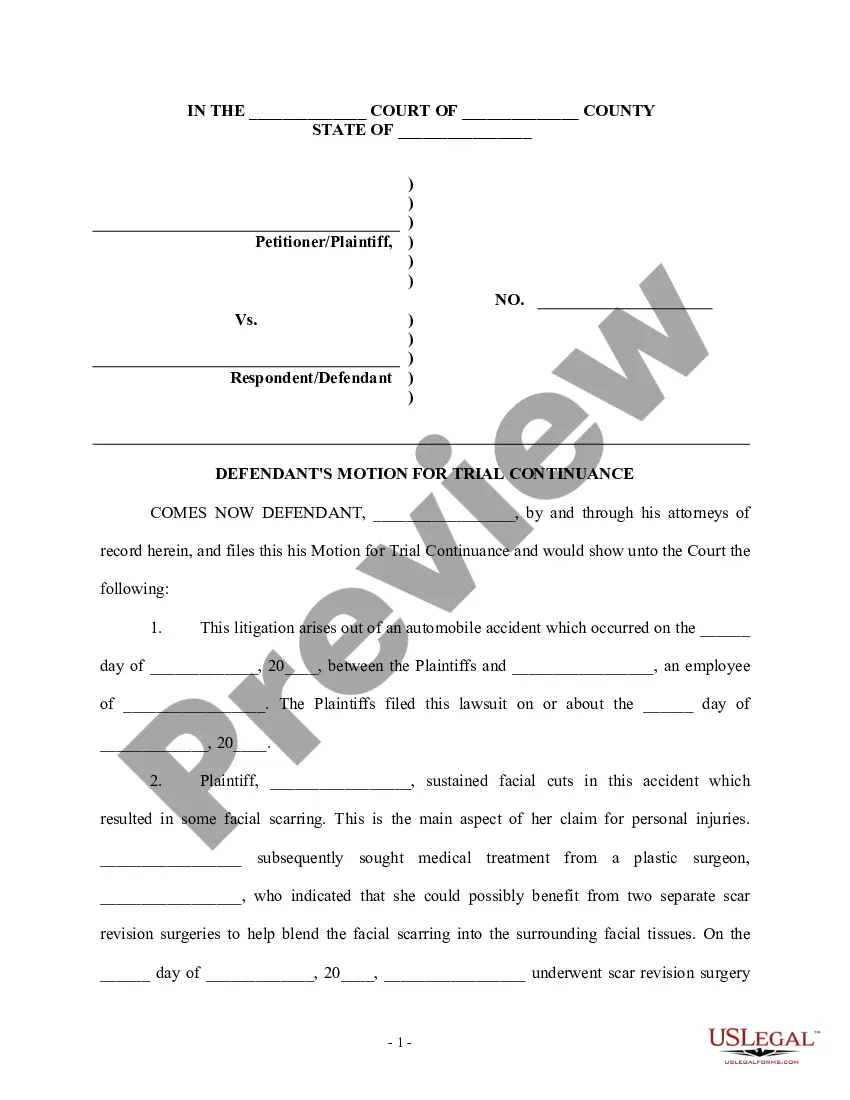
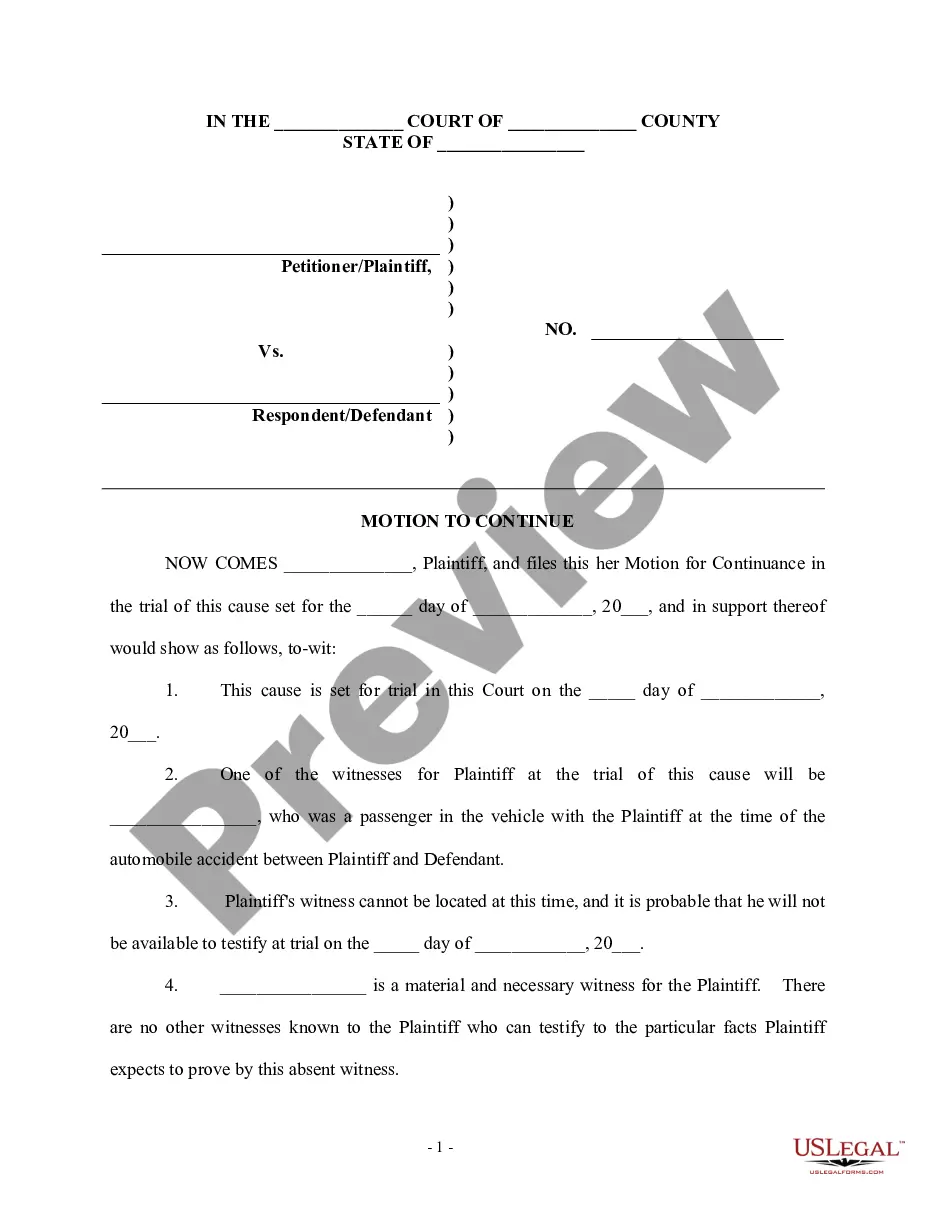
Get your form ready online
Our built-in tools help you complete, sign, share, and store your documents in one place.
Make edits, fill in missing information, and update formatting in US Legal Forms—just like you would in MS Word.
Download a copy, print it, send it by email, or mail it via USPS—whatever works best for your next step.
Sign and collect signatures with our SignNow integration. Send to multiple recipients, set reminders, and more. Go Premium to unlock E-Sign.
If this form requires notarization, complete it online through a secure video call—no need to meet a notary in person or wait for an appointment.
We protect your documents and personal data by following strict security and privacy standards.

Make edits, fill in missing information, and update formatting in US Legal Forms—just like you would in MS Word.

Download a copy, print it, send it by email, or mail it via USPS—whatever works best for your next step.

Sign and collect signatures with our SignNow integration. Send to multiple recipients, set reminders, and more. Go Premium to unlock E-Sign.

If this form requires notarization, complete it online through a secure video call—no need to meet a notary in person or wait for an appointment.

We protect your documents and personal data by following strict security and privacy standards.
Looking for another form?
How to fill out Motion For Continuance?
Are you in a location where you require paperwork for either organization or particular purposes almost every day? There are numerous legal document templates accessible online, but locating ones you can trust is not straightforward.
US Legal Forms offers thousands of form templates, such as the South Carolina Motion for Continuance, that are designed to comply with federal and state requirements.
If you are already familiar with the US Legal Forms website and have an account, simply Log In. Afterwards, you can download the South Carolina Motion for Continuance template.
Select a convenient document format and download your copy.
You can find all of the document templates you have purchased in the My documents section. You can access another copy of the South Carolina Motion for Continuance at any time, if needed. Just click on the desired form to download or print the document template. Utilize US Legal Forms, the most extensive collection of legal forms, to save time and avoid mistakes. The service provides professionally crafted legal document templates that you can use for a variety of purposes. Create your account on US Legal Forms and start making your life easier.
- If you do not have an account and wish to start using US Legal Forms, follow these steps.
- Obtain the form you need and ensure it is for the correct city/state.
- Utilize the Review button to inspect the form.
- Check the description to confirm you have selected the appropriate form.
- If the form is not what you are looking for, use the Search field to find the form that suits your needs and requirements.
- Once you find the correct form, click Buy now.
- Choose the pricing plan you need, complete the required information to create your account, and pay for the order using your PayPal or credit card.
Form popularity
FAQ
A continuance is a judicial act and takes a judicial act to overturn it. It is within the discretion of the court to assign and impose costs for a continuance in a civil case. Extensive case law reviewed.
Such a motion under Rule 60(b) does not affect the finality of the judgment, but a motion under Rule 59, made within 10 days, does affect finality and the running of the time for appeal.
After a nonjury trial, the court may, on motion for a new trial, open the judgment if one has been entered, take additional testimony, amend findings of fact and conclusions of law or make new ones, and direct the entry of a new judgment.
Continuances may be granted by a presiding judge during a term of court at which he presides only upon written request by counsel, and any order granting a continuance shall be in writing, shall be made only upon a showing of good and sufficient legal cause and shall be filed forthwith with the clerk of court.
S.C. Dep't of Transp., 361 S.C. 9, 21, 602 S.E.2d 772, 778 (2004). ?The purpose of Rule 59(e), SCRCP, to alter or amend the judgment is to request the trial judge to 'reconsider matters properly encompassed in a decision on the merits.
Rule 59(e) authorizes a motion to alter or amend a judgment. A Rule 59(e) motion must be filed no later than 28 days after the entry of the judgment. This is a strict time limit, and the court has no authority to grant more time.
(e) Motion to Alter or Amend a Judgment. A motion to alter or amend the judgment shall be served not later than 10 days after receipt of written notice of the entry of the order.
Rule 59(e), FRCP, provides: Motion to Alter or Amend Judgment. Any motion to alter or amend a judgment shall be filed no later than 10 days after entry of the judgment.
(e) Motion to Alter or Amend a Judgment. A motion to alter or amend the judgment shall be served not later than 10 days after receipt of written notice of the entry of the order.
Rule 59(e) of the SC Rules of Civil Procedure (PCR claims are in civil court) permits a litigant to file a motion to alter or amend a court's ruling within 10 days of receiving the Order: (e) Motion to Alter or Amend a Judgment.