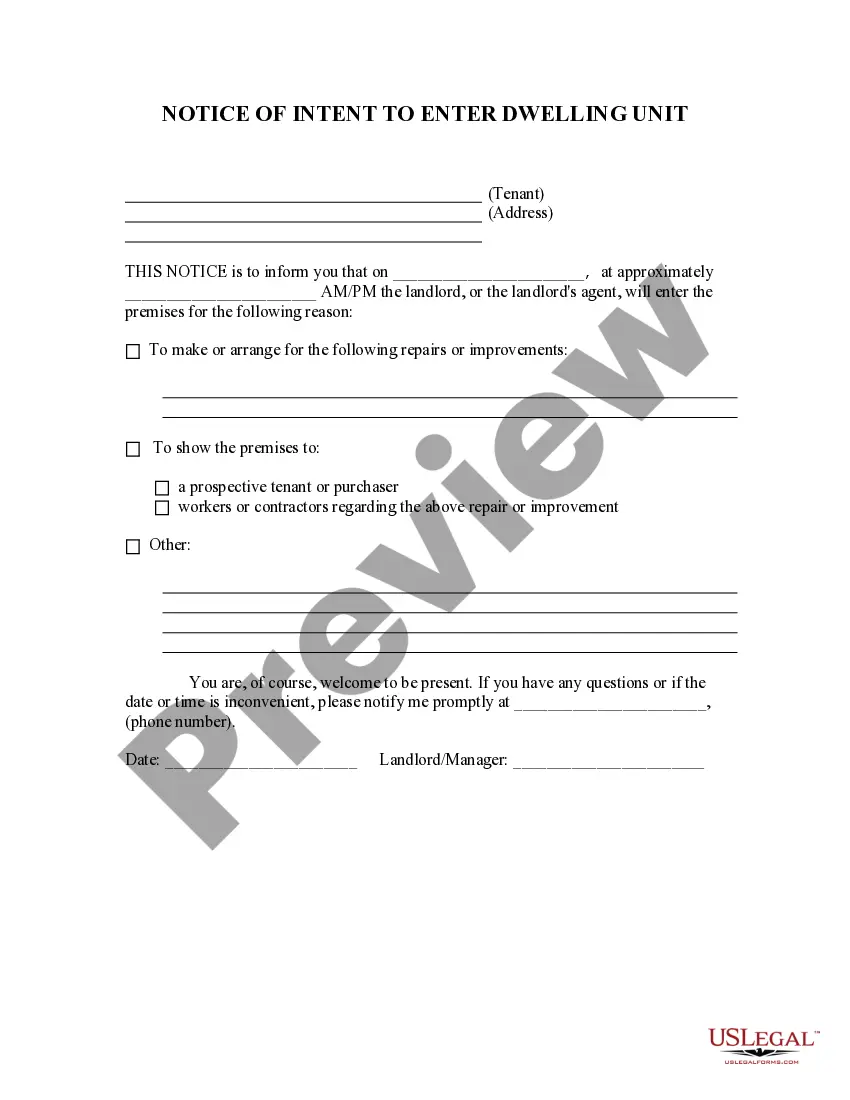
Rhode Island Landlord Notice of Intent to Enter Premises
Description
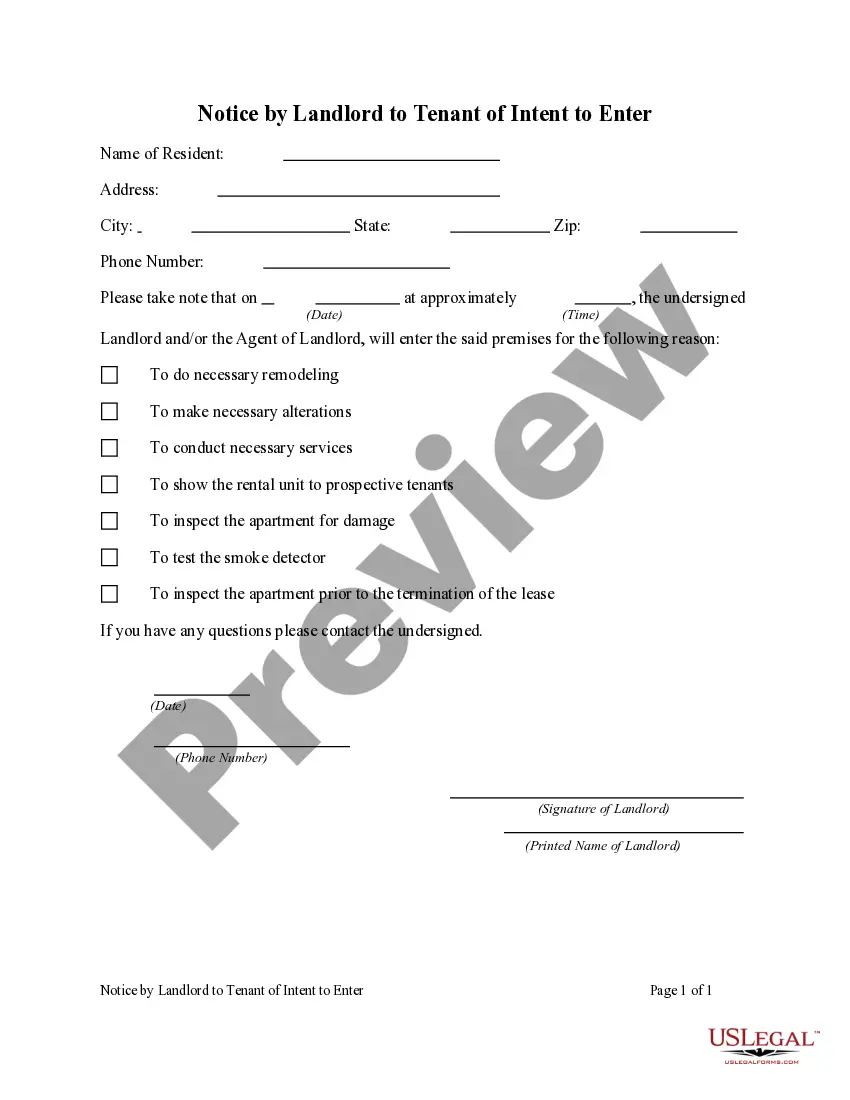
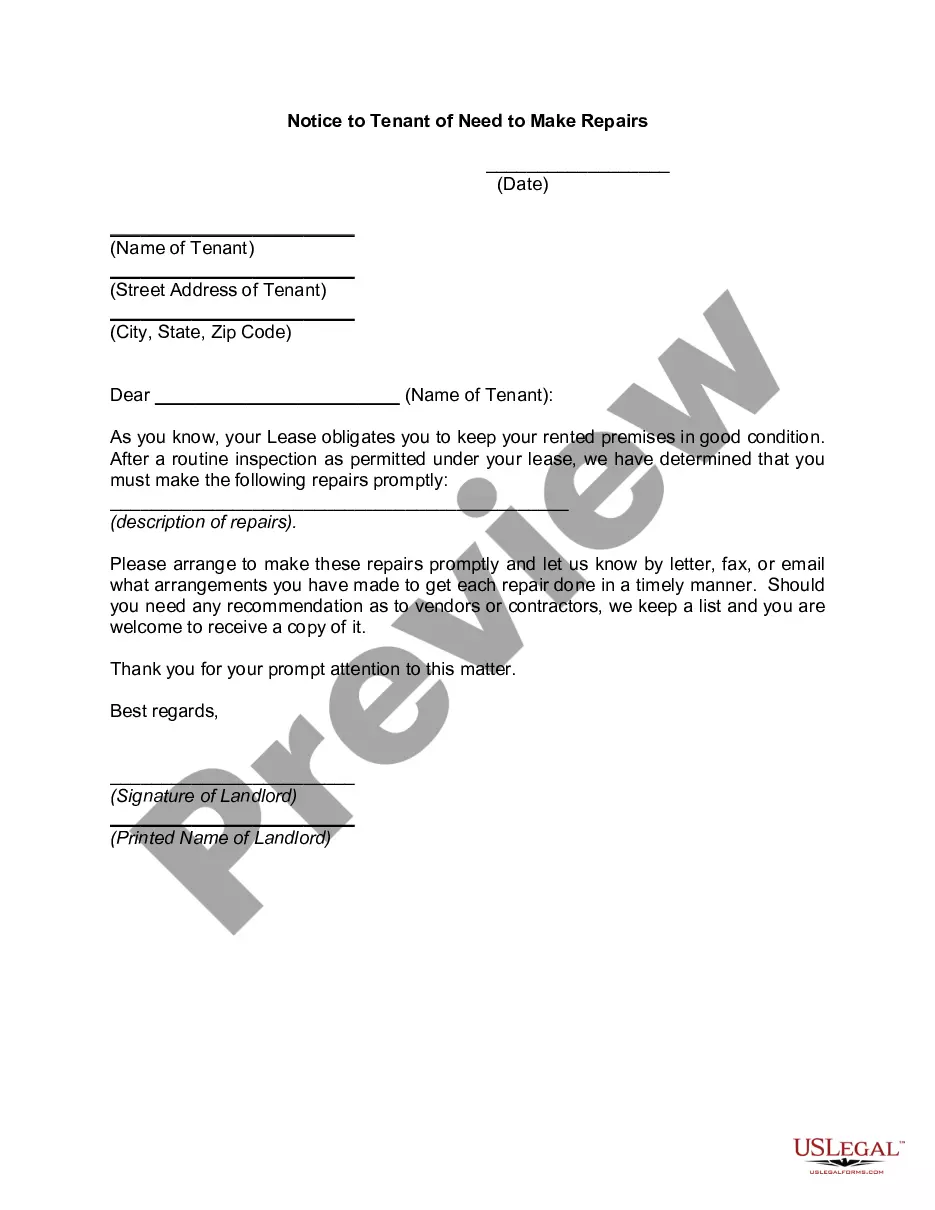
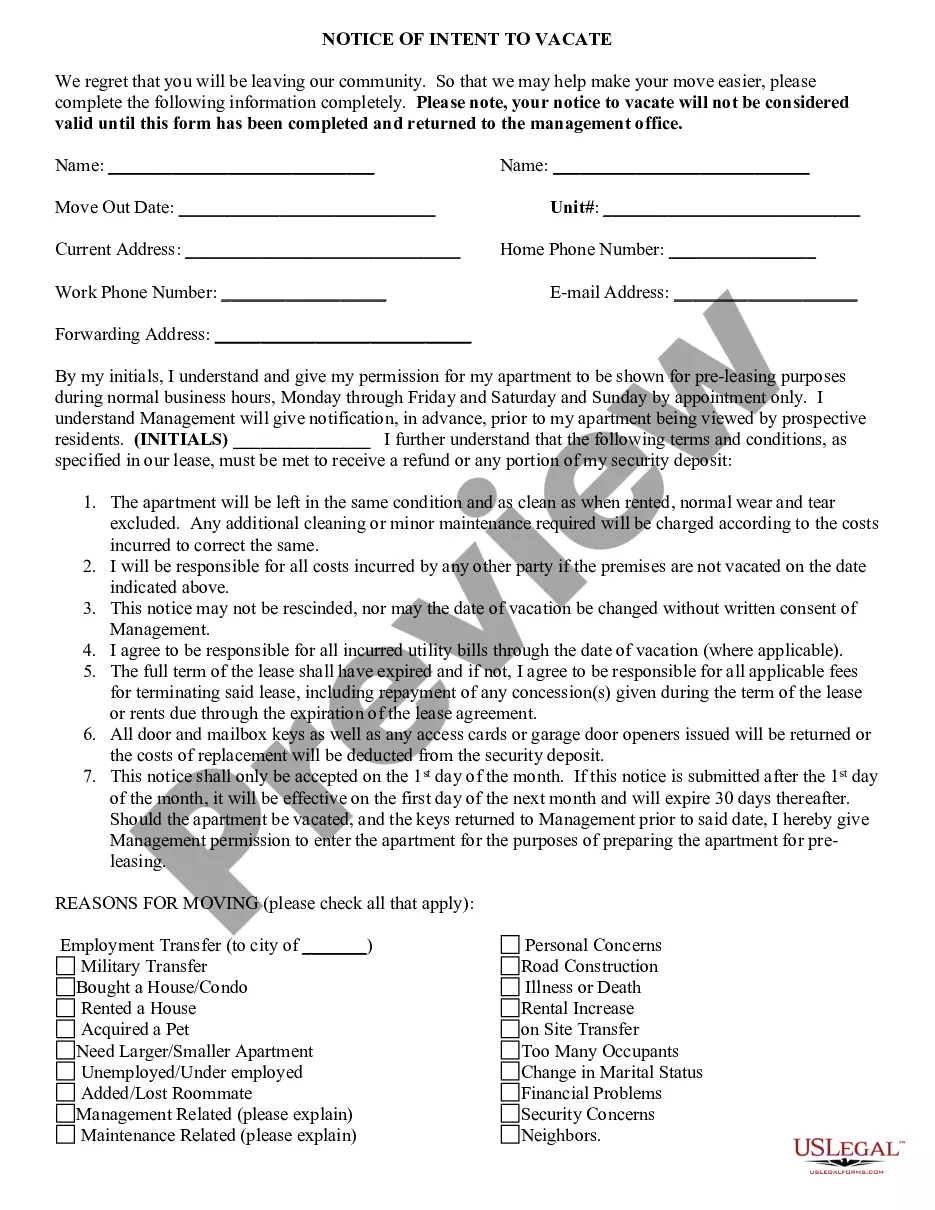
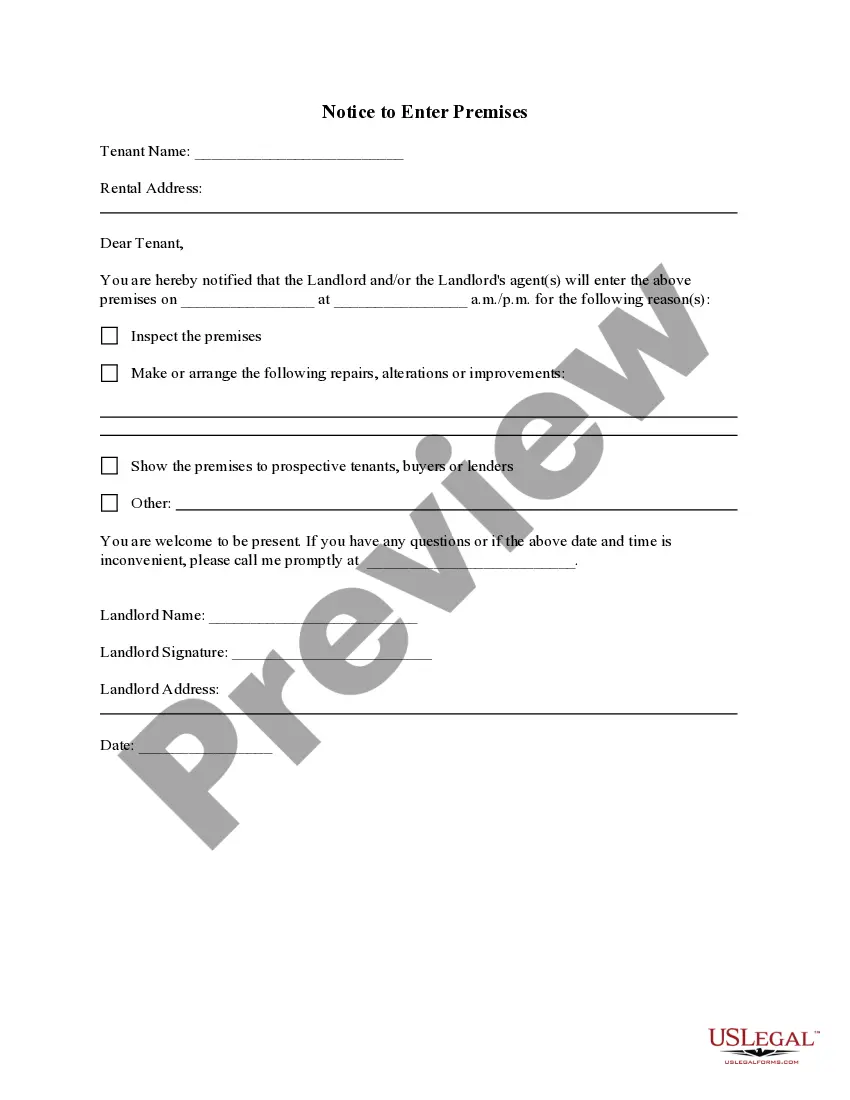
How to fill out Landlord Notice Of Intent To Enter Premises?
Locating the appropriate authentic document template may pose a challenge. Clearly, there are numerous designs available online, but how can you identify the correct template you need? Utilize the US Legal Forms website. The service offers thousands of designs, including the Rhode Island Landlord Notice of Intent to Enter Premises, that can be utilized for both business and personal purposes. All forms are vetted by experts and comply with federal and state regulations.
If you are already a registered user, Log In to your account and click the Download button to obtain the Rhode Island Landlord Notice of Intent to Enter Premises. Use your account to browse the legal forms you have previously purchased. Visit the My documents section of your account to retrieve another copy of the document you need.
If you are a new user of US Legal Forms, here are some simple steps to follow: First, make sure you have selected the right template for your city/county. You can browse the form using the Preview button and review the form summary to ensure it is suitable for you. If the form does not meet your needs, utilize the Search field to locate the correct form. Once you are confident that the form is appropriate, click the Buy now button to acquire the form. Choose the pricing plan you prefer and enter the required information. Create your account and complete your purchase using your PayPal account or credit card. Select the document format and download the legal document template to your device. Complete, modify, print, and sign the downloaded Rhode Island Landlord Notice of Intent to Enter Premises.
US Legal Forms is the largest repository of legal forms where you can discover a broad range of document templates. Take advantage of this service to download well-crafted papers that conform to state requirements.
- Utilize the online library for various document designs.
- Access expertly crafted paperwork that adheres to state regulations.
- Download legal templates suitable for personal and business use.
- Browse forms previously purchased easily.
- Explore templates with a helpful preview feature.
- Ensure compliance with both federal and state requirements.
Form popularity
FAQ
An LOI is a short written document signed by the landlord and tenant, which describes the basic terms of the lease. By signing an LOI, the landlord and tenant can make sure they agree to fundamental lease terms before taking the time and incurring the expense of preparing and negotiating a lease.
The Landlord And Tenant Act 1985 allows your landlord access to inspect the property, as long as they have given you at least 24 hours' notice and that the proposed visit is at a reasonable time. The landlord should give you notice in writing, stating who will enter the property and why.
As a tenant you have certain legal rights including a legal right to live in your property undisturbed by your landlord or the letting agent. That means that your landlord and the letting agent cannot enter the tenanted property without your agreement or permission.
Landlord Right to Entry in Rhode Island Rhode Island landlords must give at least 2 days' notice before entering an inhabited property and the entry must occur at a reasonable time of day. Landlords may enter without permission in the case of emergencies.
Let's be clear, other than in emergency it's illegal for a landlord or agent to enter a property without agreement from the tenant. The golden rule to abide by is always to provide your tenants with written notice at least 24 hours before any planned visits.
Is there a moratorium on evictions in Rhode Island? No. This means there is currently no order banning evictions of any kind. The lack of a moratorium does not mean you can be immediately evicted from your home if you are behind on rent.
The landlord can enter without giving notice for three reasons. First, if there is an emergency, the landlord does not have to give notice to enter. For example, if the landlord sees smoke coming from under the tenant's door and thinks the property is on fire, the landlord can enter without notice.
You are paying rent to the landlord for exclusive use as the property as your home and as such you have the right to decide who enters it and when. If a landlord enters your home without permission they are, technically, trespassing, unless they have a court order to allow them otherwise.
Landlord Right to Entry in Rhode Island Rhode Island landlords must give at least 2 days' notice before entering an inhabited property and the entry must occur at a reasonable time of day. Landlords may enter without permission in the case of emergencies.
Do landlords have to give notice before entering a tenant's property? In most instances, yes. The minimum notice a landlord is required to give by law is 24 hours, but they can give longer should they wish to do so.