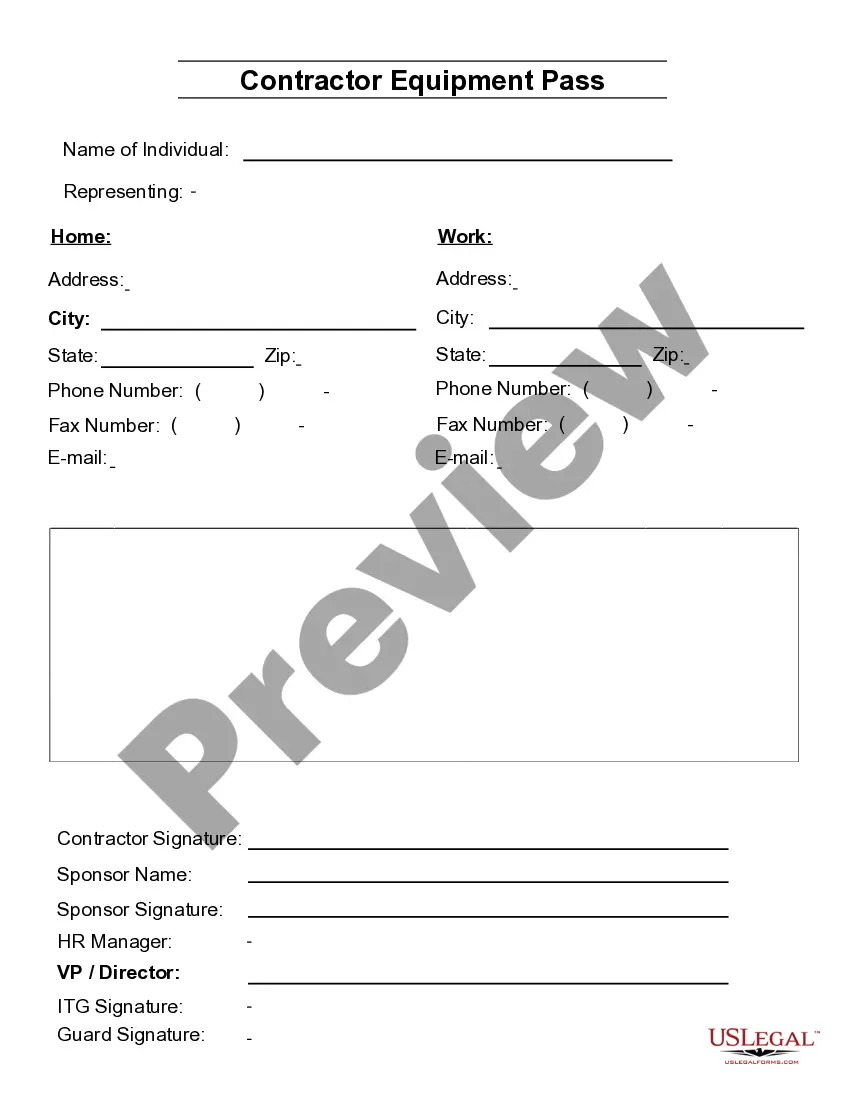
Rhode Island Contractor Equipment Pass
Description
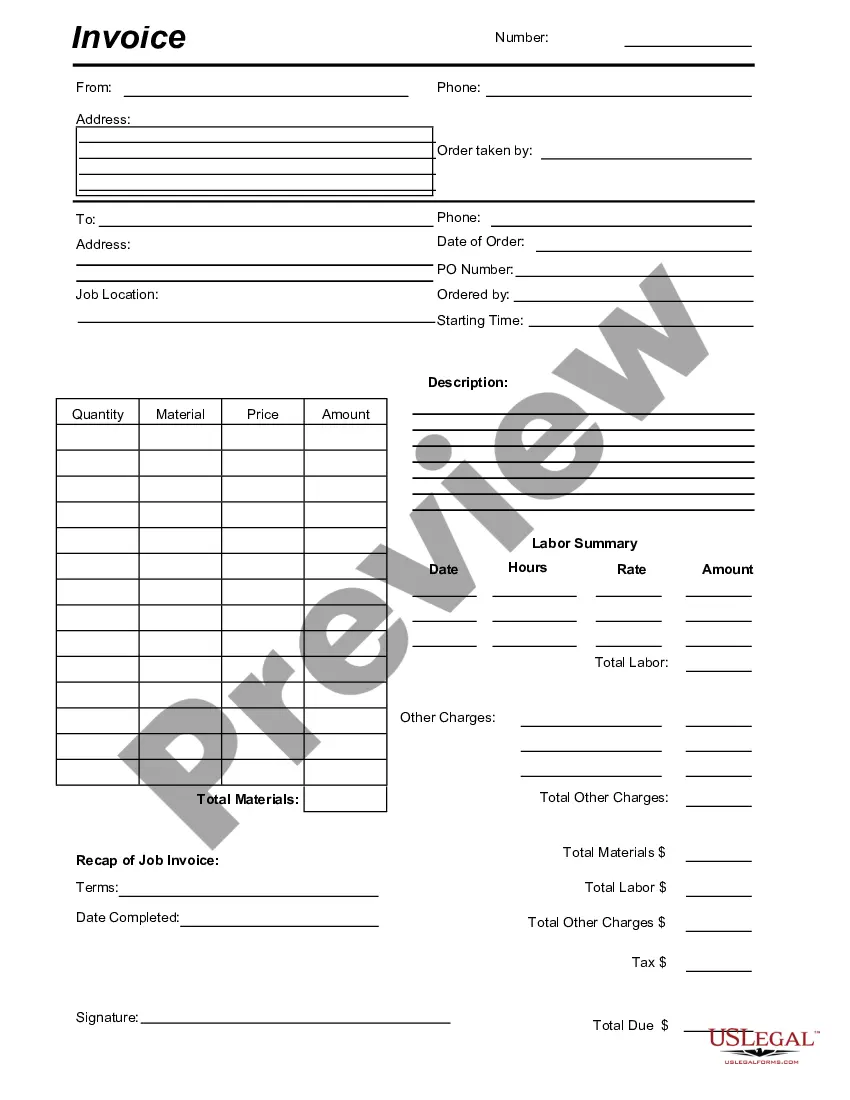
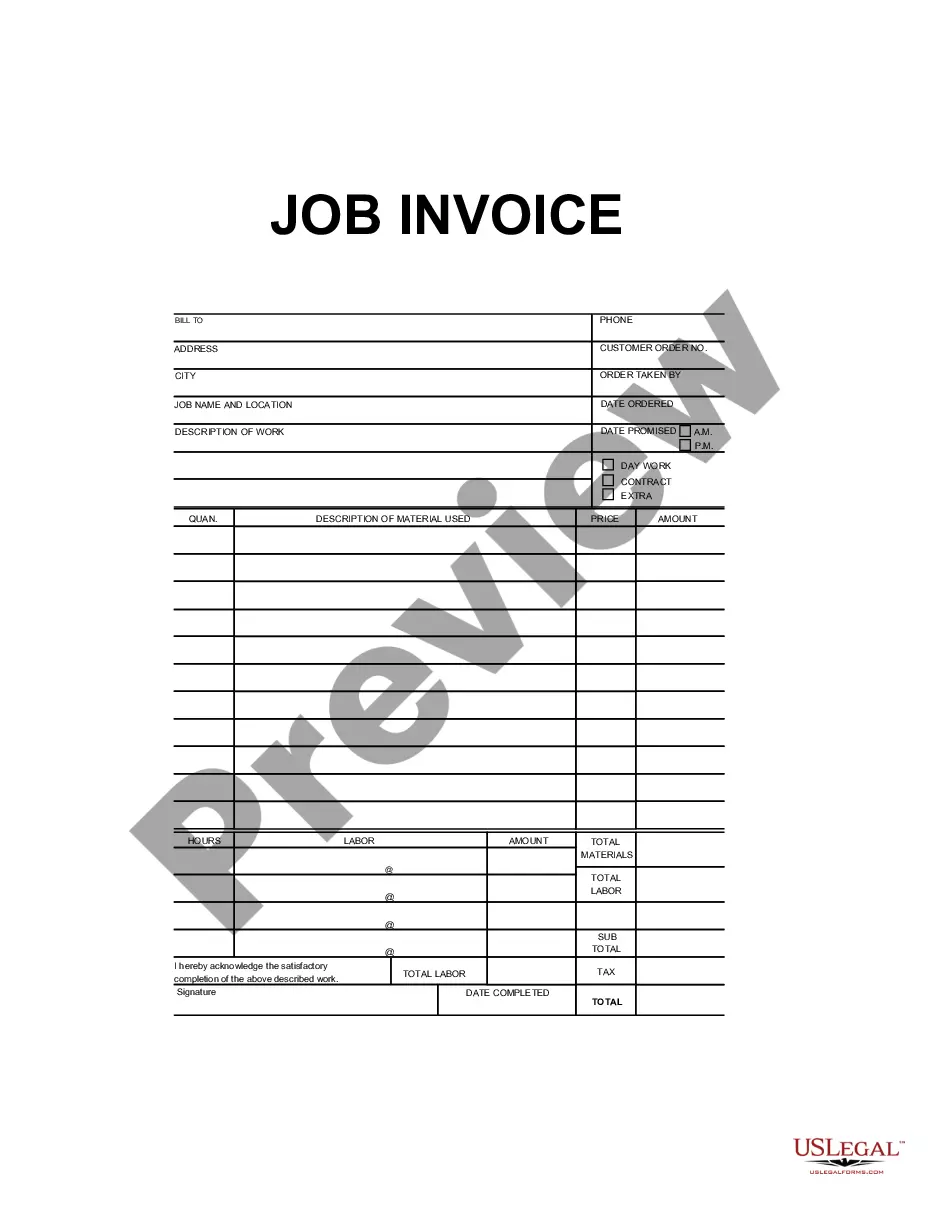
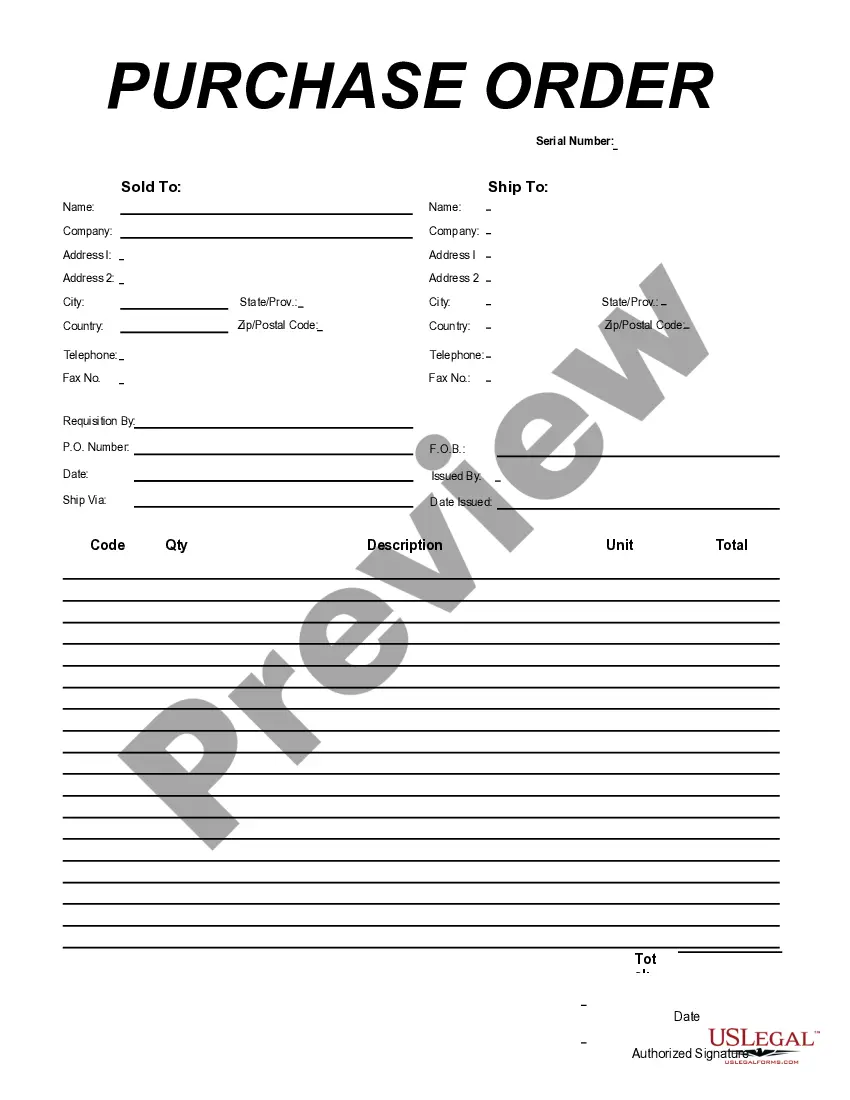
Get your form ready online
Our built-in tools help you complete, sign, share, and store your documents in one place.
Make edits, fill in missing information, and update formatting in US Legal Forms—just like you would in MS Word.
Download a copy, print it, send it by email, or mail it via USPS—whatever works best for your next step.
Sign and collect signatures with our SignNow integration. Send to multiple recipients, set reminders, and more. Go Premium to unlock E-Sign.
If this form requires notarization, complete it online through a secure video call—no need to meet a notary in person or wait for an appointment.
We protect your documents and personal data by following strict security and privacy standards.

Make edits, fill in missing information, and update formatting in US Legal Forms—just like you would in MS Word.

Download a copy, print it, send it by email, or mail it via USPS—whatever works best for your next step.

Sign and collect signatures with our SignNow integration. Send to multiple recipients, set reminders, and more. Go Premium to unlock E-Sign.

If this form requires notarization, complete it online through a secure video call—no need to meet a notary in person or wait for an appointment.

We protect your documents and personal data by following strict security and privacy standards.
Looking for another form?



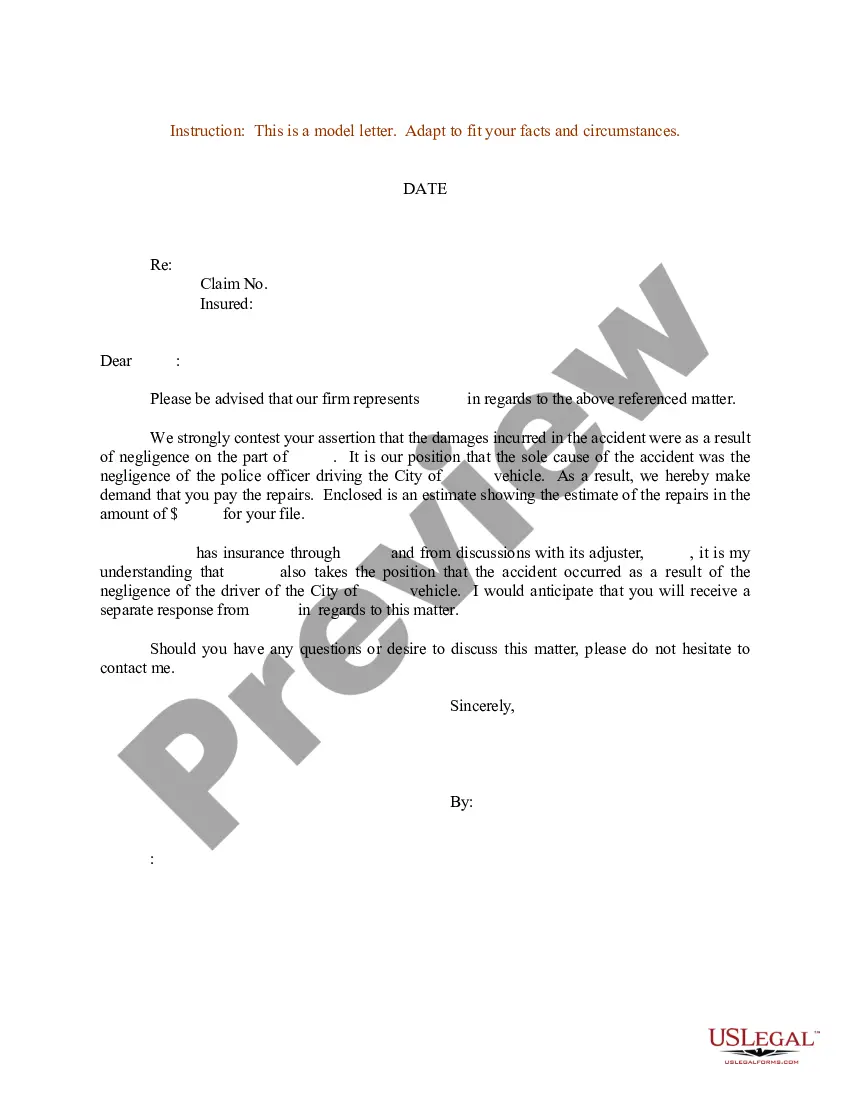


How to fill out Contractor Equipment Pass?
You may spend numerous hours online trying to discover the official document template that meets the state and federal requirements you need.
US Legal Forms provides thousands of legal forms that can be reviewed by experts.
You can download or print the Rhode Island Contractor Equipment Pass from our service.
If available, utilize the Preview option to review the document template as well.
- If you already possess a US Legal Forms account, you can Log In and click the Download button.
- After that, you can complete, edit, print, or sign the Rhode Island Contractor Equipment Pass.
- Every legal document template you obtain belongs to you permanently.
- To retrieve another copy of the acquired form, visit the My documents tab and click the relevant option.
- If this is your first time using the US Legal Forms website, follow the simple instructions below.
- First, ensure you have chosen the correct document template for the county/city of your choice.
- Review the form description to confirm you have selected the appropriate form.
Form popularity
FAQ
A builder's license in Rhode Island primarily allows you to construct new buildings or major renovations, while a contractor's license covers a broader range of activities, including managing various subcontractors. Understanding these distinctions can help you select the appropriate license for your needs. If you're working with residents or properties, ensure compliance with local licensing requirements, possibly including the Rhode Island Contractor Equipment Pass.
In Rhode Island, you must have a licensed electrician handle most electrical work due to strict safety regulations. Although it may be tempting to tackle projects yourself, the risks often outweigh the benefits. If you are hiring a contractor, verify that they have a Rhode Island Contractor Equipment Pass to ensure their work meets industry standards.
Homeowners in Rhode Island can typically perform their own plumbing work for minor repairs. However, for significant projects or installations, it is advisable to hire a licensed plumber. This ensures your work meets state safety standards. If you need guidance, USLegalForms offers resources to help navigate the plumbing regulations surrounding the Rhode Island Contractor Equipment Pass.
While homeowners in Rhode Island may wish to perform their own electrical work, local laws generally require that this work be done by a licensed electrician. This rule protects you from potential hazards and compliance issues. If you plan to hire someone, ensure they possess a Rhode Island Contractor Equipment Pass for safety and lawful execution of the work.
In Rhode Island, you cannot legally perform electrical work unless you hold a valid electrician's license. This regulation helps ensure safety and compliance with local laws. If you're considering any electrical project, it’s best to consult a qualified electrician. Additionally, for contractors working with specialized equipment, a Rhode Island Contractor Equipment Pass may be required to ensure proper licensing.
Yes, a handyman can obtain insurance even without a license in Rhode Island, but having a license may make it easier. Insurance providers often prefer licensed professionals due to the adherence to regulatory standards. It's important to demonstrate that you operate safely and responsibly, as this can ultimately impact your coverage options. Consider the Rhode Island Contractor Equipment Pass when seeking potential insurance benefits.
The primary difference between a contractor and a handyman lies in the scope of work. Contractors often handle larger projects, requiring specific trades and licenses, while handymen do smaller, general tasks. It is essential to understand this distinction, as different regulations apply based on your services. This knowledge can guide you in using a Rhode Island Contractor Equipment Pass effectively.
Yes, a handyman may need a license in Rhode Island if performing work classified under the state’s construction laws. This can include electrical work, plumbing, or renovations that exceed a particular threshold. Always check the updated guidelines, as they will inform you about how the Rhode Island Contractor Equipment Pass fits into the licensing framework.
A handyman usually falls under the category of general contractor or home improvement contractor. Manhandyman services often encompass a variety of tasks, from small repairs to larger projects. Depending on the job scope, certain handyman services may require specific licensing in Rhode Island. Knowing the regulations can help you operate your business smoothly.
In Rhode Island, whether you need a license as a handyman often depends on the nature of the work you plan to do. If your tasks involve construction or remodeling beyond minor repairs, a contractor license is typically required. It's wise to review the state’s regulations to ensure compliance and understand how the Rhode Island Contractor Equipment Pass may play a role in your operations.