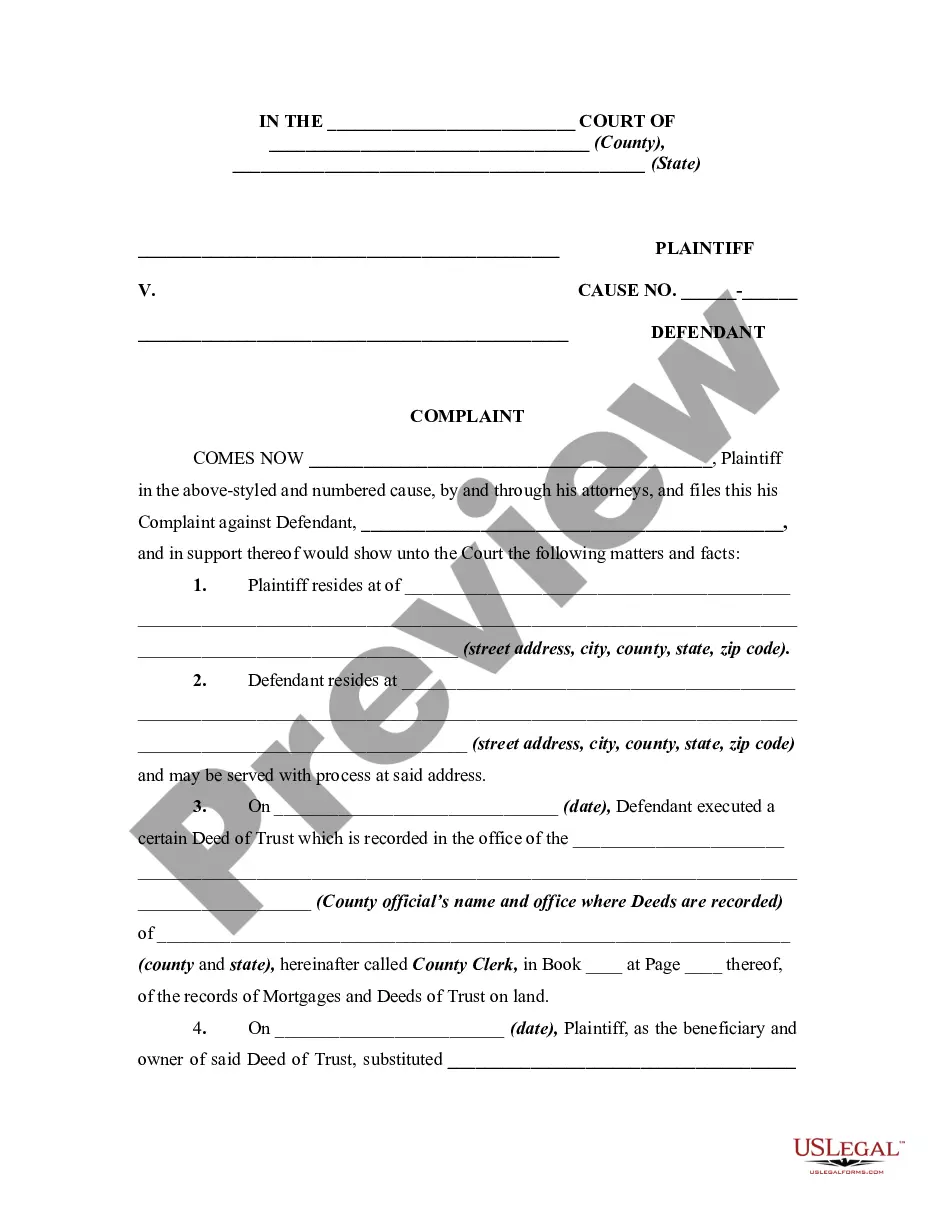
Keeping possession of real property without a right, such as after a lease has expired or after the real property has be sold by the possessor, may entitle the owner to file a lawsuit for "unlawful detainer," asking for possession by court order, unpaid rent and damages. This form is for illustrative purposes only. Local laws should be consulted to determine any specific requirements for such a notice in a particular jurisdiction.
Rhode Island Complaint or Petition by Purchaser Against Possessor of Real Property After Judicial Foreclosure Sale - Repossession
Category:
State:
Multi-State
Control #:
US-01018BG
Format:
Word;
Rich Text
Instant download
Description
Free preview
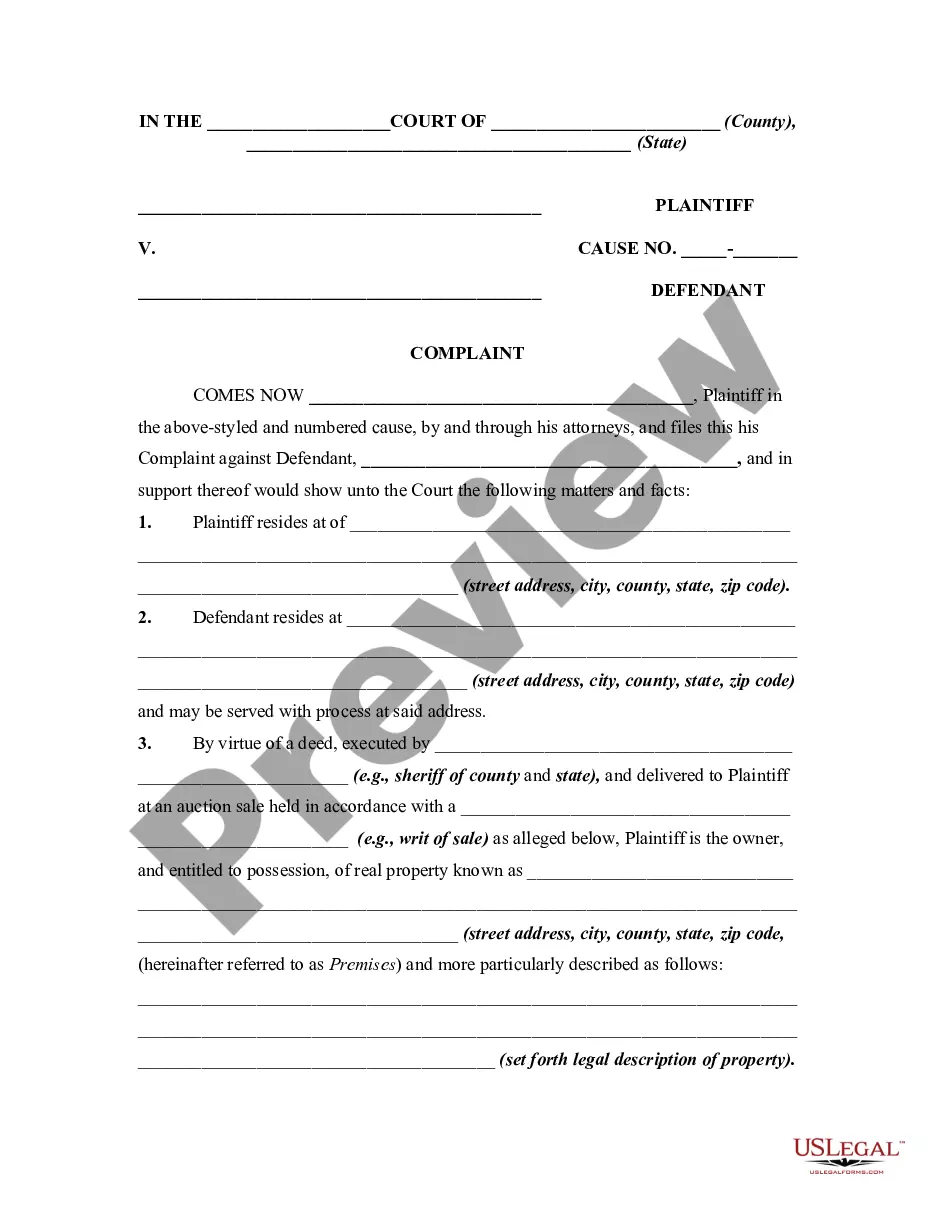
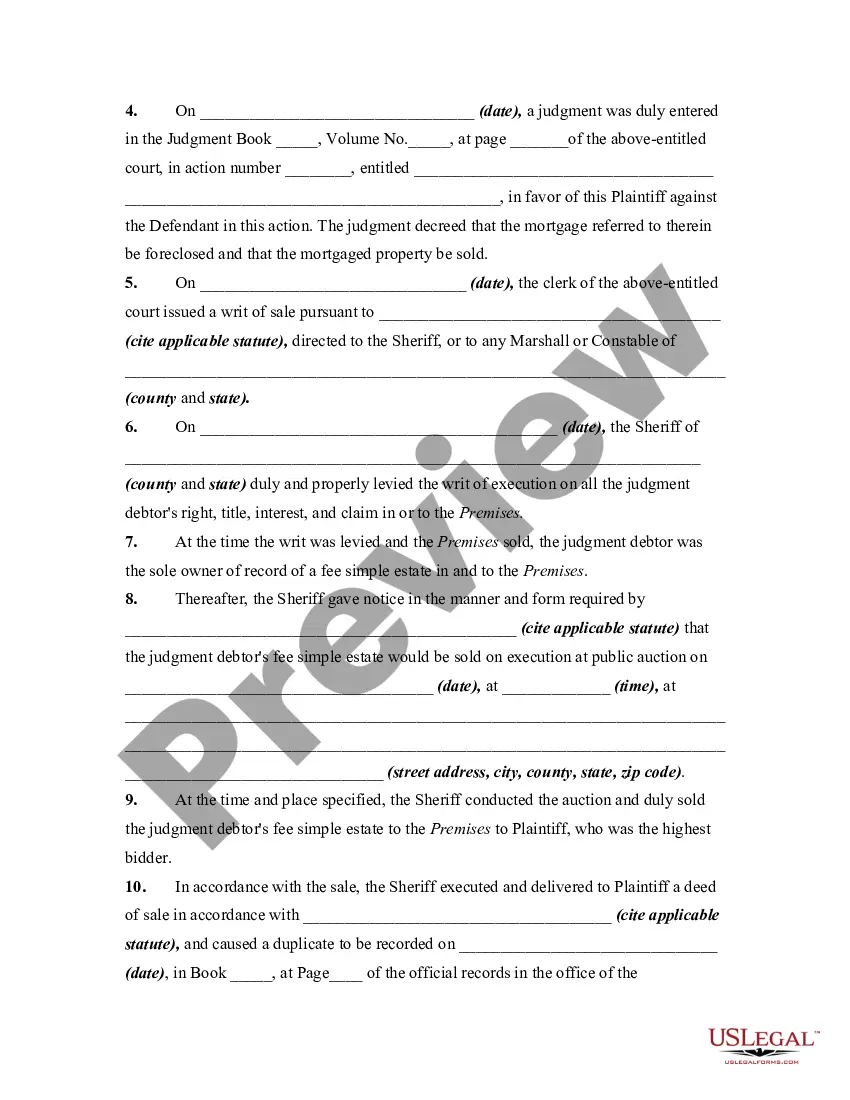
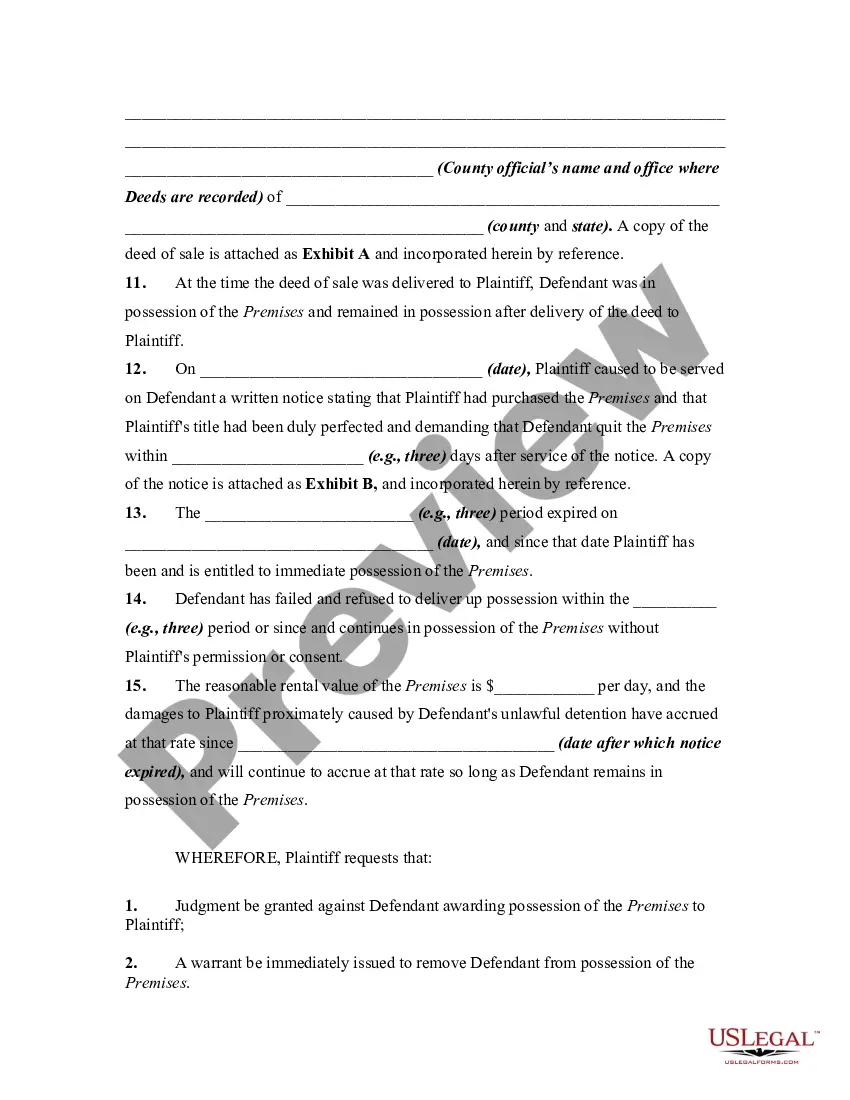
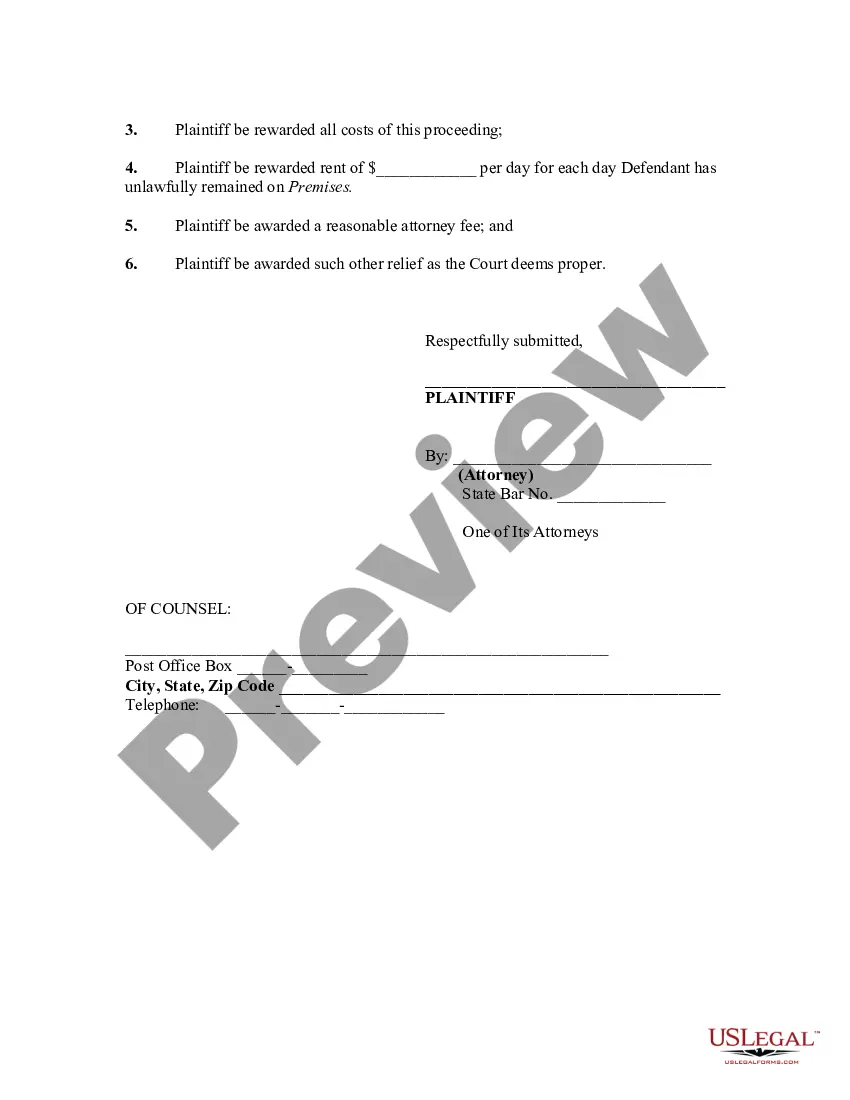

Get your form ready online
Our built-in tools help you complete, sign, share, and store your documents in one place.
Built-in online Word editor
Make edits, fill in missing information, and update formatting in US Legal Forms—just like you would in MS Word.
Export easily
Download a copy, print it, send it by email, or mail it via USPS—whatever works best for your next step.
E-sign your document
Sign and collect signatures with our SignNow integration. Send to multiple recipients, set reminders, and more. Go Premium to unlock E-Sign.
Notarize online 24/7
If this form requires notarization, complete it online through a secure video call—no need to meet a notary in person or wait for an appointment.
Store your document securely
We protect your documents and personal data by following strict security and privacy standards.

Make edits, fill in missing information, and update formatting in US Legal Forms—just like you would in MS Word.

Download a copy, print it, send it by email, or mail it via USPS—whatever works best for your next step.

Sign and collect signatures with our SignNow integration. Send to multiple recipients, set reminders, and more. Go Premium to unlock E-Sign.

If this form requires notarization, complete it online through a secure video call—no need to meet a notary in person or wait for an appointment.

We protect your documents and personal data by following strict security and privacy standards.
Looking for another form?



How to fill out Complaint Or Petition By Purchaser Against Possessor Of Real Property After Judicial Foreclosure Sale - Repossession?
Are you presently in a location where you require documents for both professional or personal purposes almost every day? There are numerous legal document templates accessible online, but finding ones you can rely on isn't easy. US Legal Forms offers thousands of template documents, such as the Rhode Island Complaint or Petition by Purchaser Against Possessor of Real Property After Judicial Foreclosure Sale - Repossession, which are designed to satisfy federal and state requirements.
If you are currently familiar with the US Legal Forms website and have an account, simply Log In. After that, you can download the Rhode Island Complaint or Petition by Purchaser Against Possessor of Real Property After Judicial Foreclosure Sale - Repossession template.
If you do not have an account and wish to use US Legal Forms, follow these steps: Obtain the form you need and ensure it is for the correct city/state. Utilize the Preview feature to examine the form. Review the description to confirm that you have selected the right form. If the form isn’t what you’re looking for, use the Search field to find the form that fits your needs and requirements. Once you locate the correct form, simply click Buy now. Choose the pricing plan you prefer, fill out the necessary information to create your account, and pay for your order using your PayPal or credit card. Select a convenient document format and download your copy. Access all the document templates you have purchased in the My documents section. You can obtain another copy of the Rhode Island Complaint or Petition by Purchaser Against Possessor of Real Property After Judicial Foreclosure Sale - Repossession at any time, if needed. Just click the required form to download or print the document template.
- Utilize US Legal Forms, the largest collection of legal forms, to save time and avoid errors.
- The service provides professionally crafted legal document templates that can be used for various purposes.
- Create an account on US Legal Forms and start simplifying your life.
Form popularity
FAQ
In a judicial foreclosure, the lender must file a lawsuit in court and prove that the borrower is in default before they can take possession of the property. The court will then issue a judgment of foreclosure, and the property will be sold at a public auction to pay off the debt.
If you default on your mortgage payments in Rhode Island, the lender may foreclose using a judicial or nonjudicial method.
Judicial foreclosure refers to foreclosure proceedings that take place through the court system. This type of foreclosure process often occurs when a mortgage note lacks a power of sale clause, which would legally authorize the mortgage lender to sell the property if a default occurred.
Step 2: Notice of Sale or Order of Sale In a judicial foreclosure, once the court has issued their judgment granting the foreclosure, the clerk of the court will prepare an Order of Sale directing the sheriff or constable to sell the property at auction.
Deed of Trust and Foreclosure by Power of Sale In the instance of foreclosure, the trustee, not the mortgage holder, conducts the sale or foreclosure auction of the mortgaged property.
Judicial Foreclosure These auctions are commonly referred to as sheriff sales. In a strict foreclosure, the court sets a date by which the owner must pay the mortgage, and if the owner fails to pay, the court awards ownership of the home to the lender with no auction taking place.
Steps in the Foreclosure Process: Notice of Default, Notice of Sale, Trustee's Sale, and Eviction. The process typically begins with a notice of default, which is sent to the homeowner when they have missed several mortgage payments.
A power of sale clause is a part of the contract that says if the person who takes out the loan stops making payments the lender can sell the property without going to court. Most mortgages have a power of sale clause, so lenders can foreclose without going to court (non-judicial).