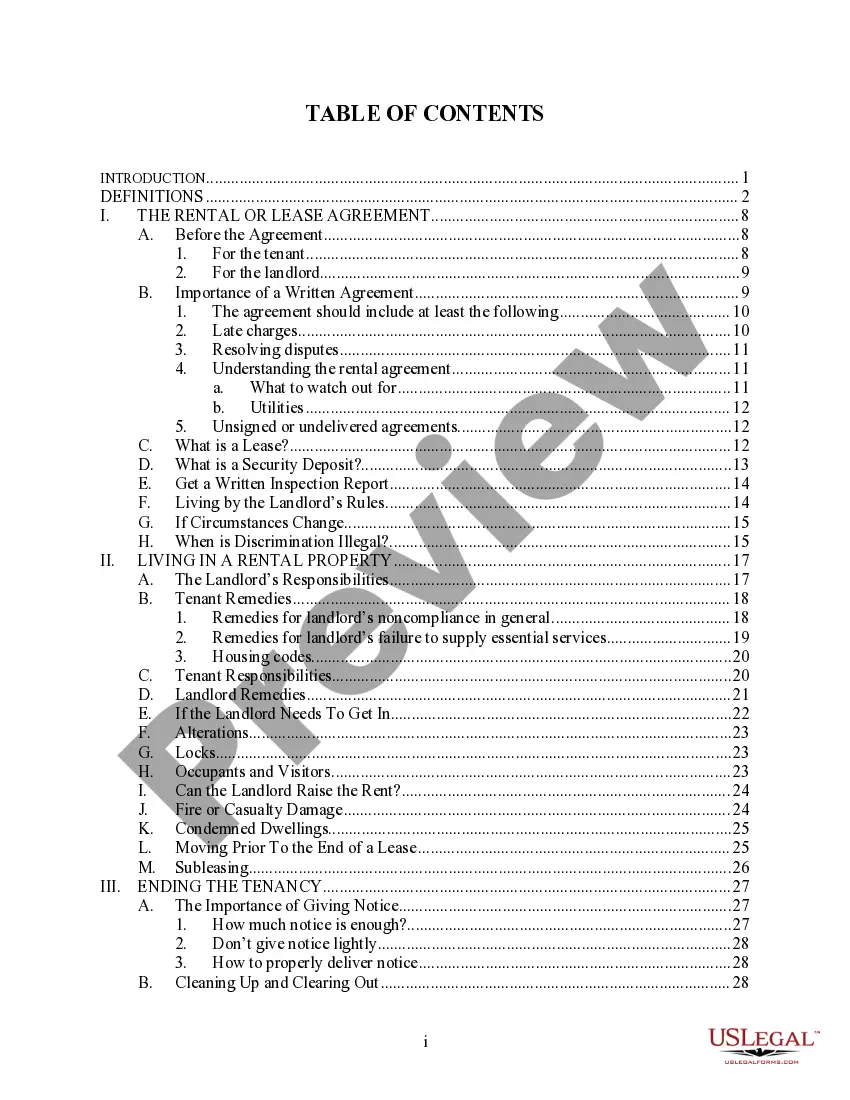
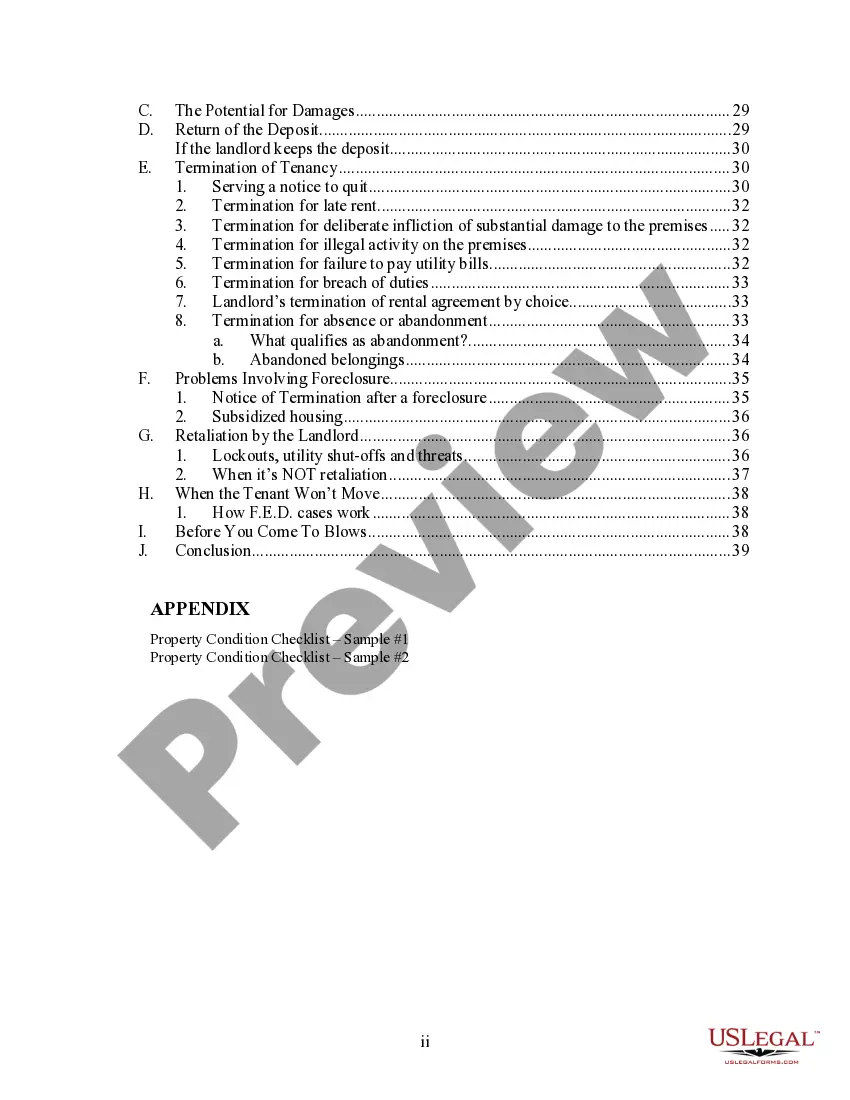
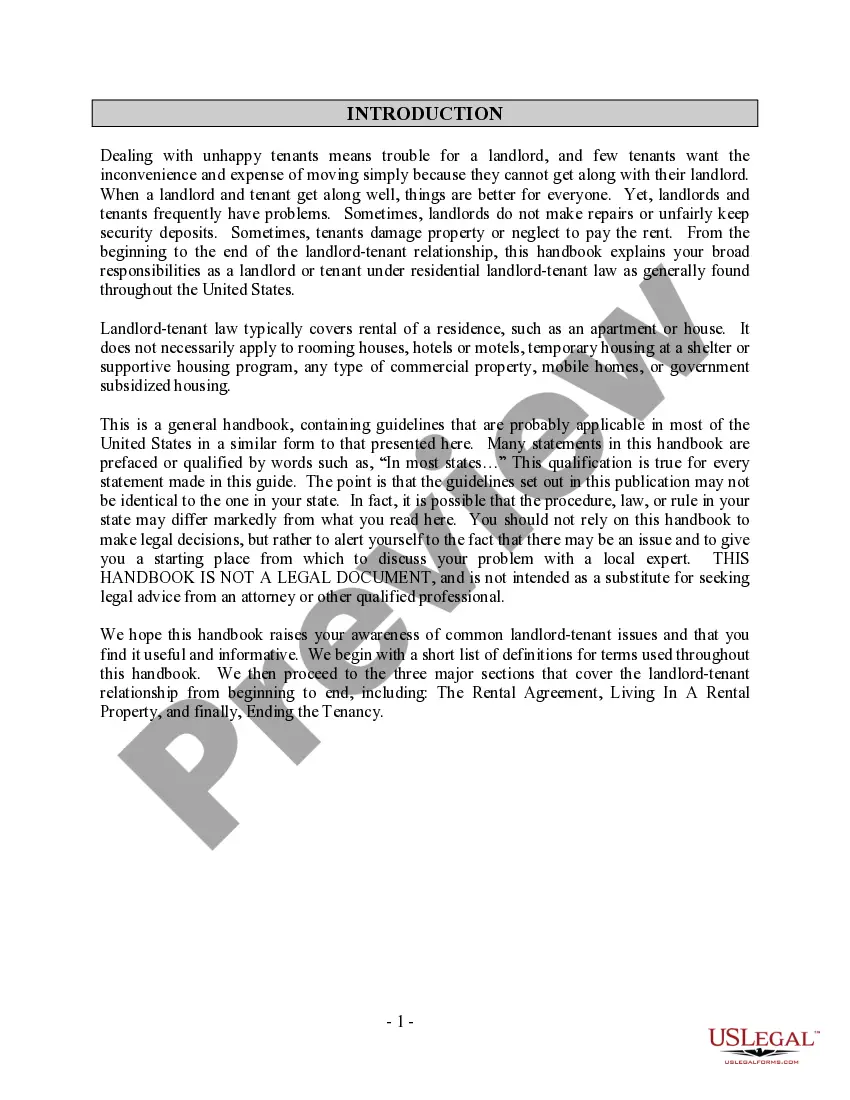
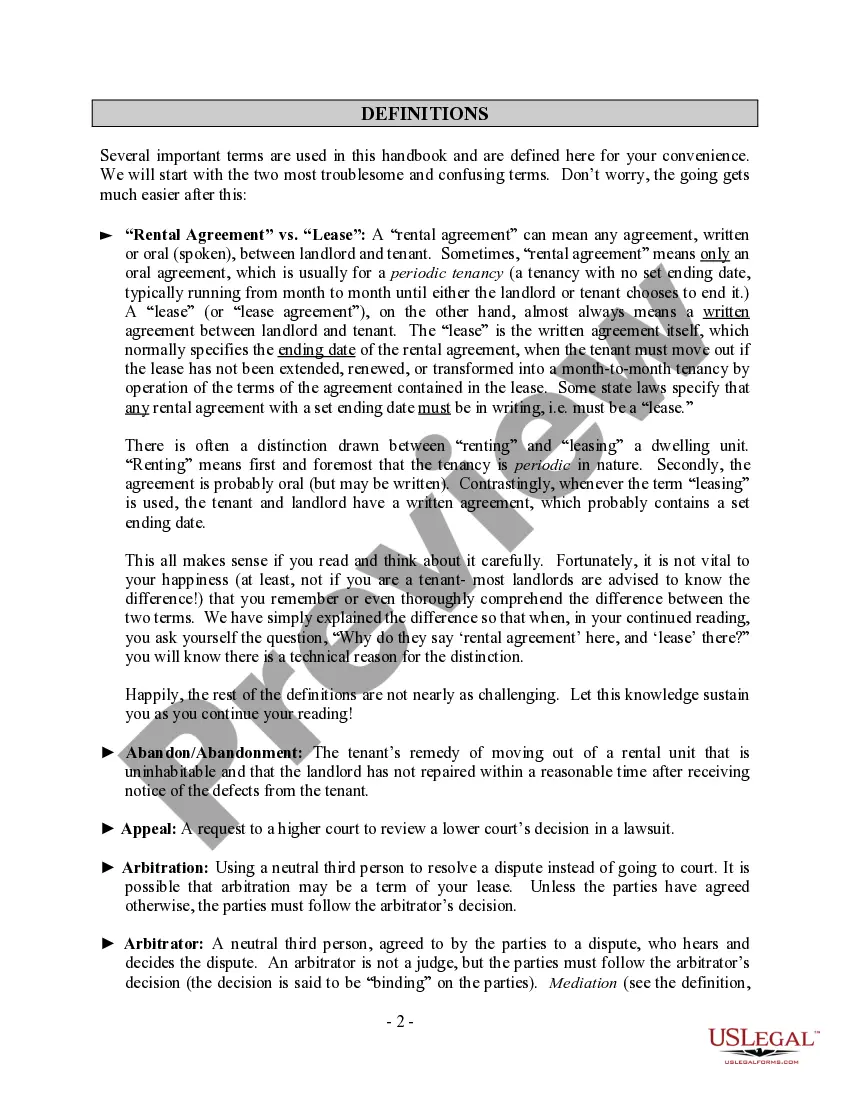
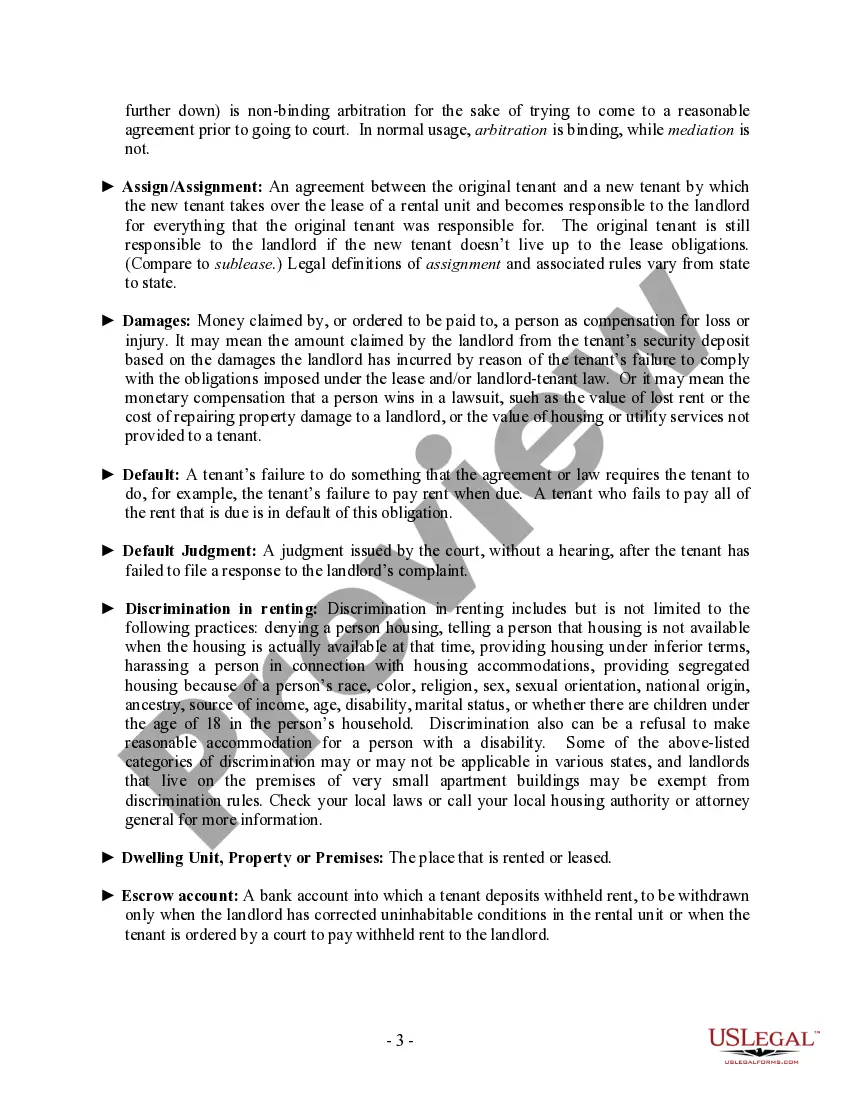
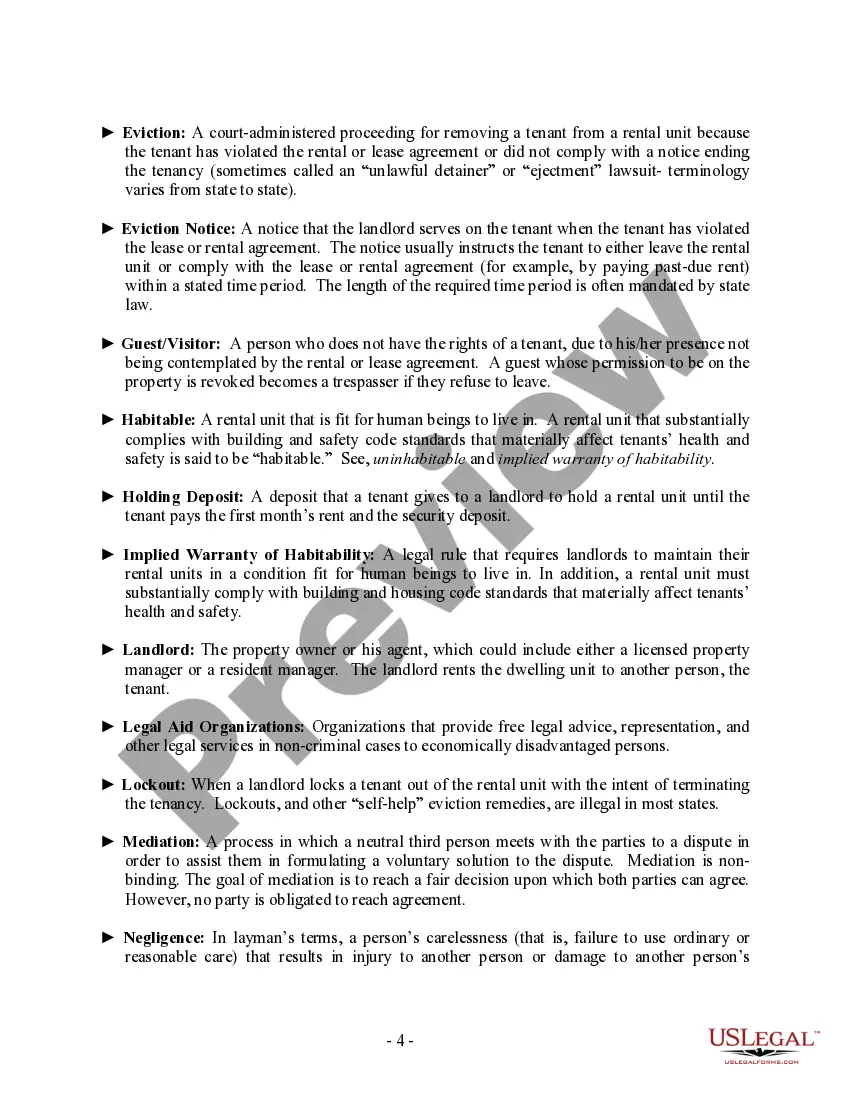
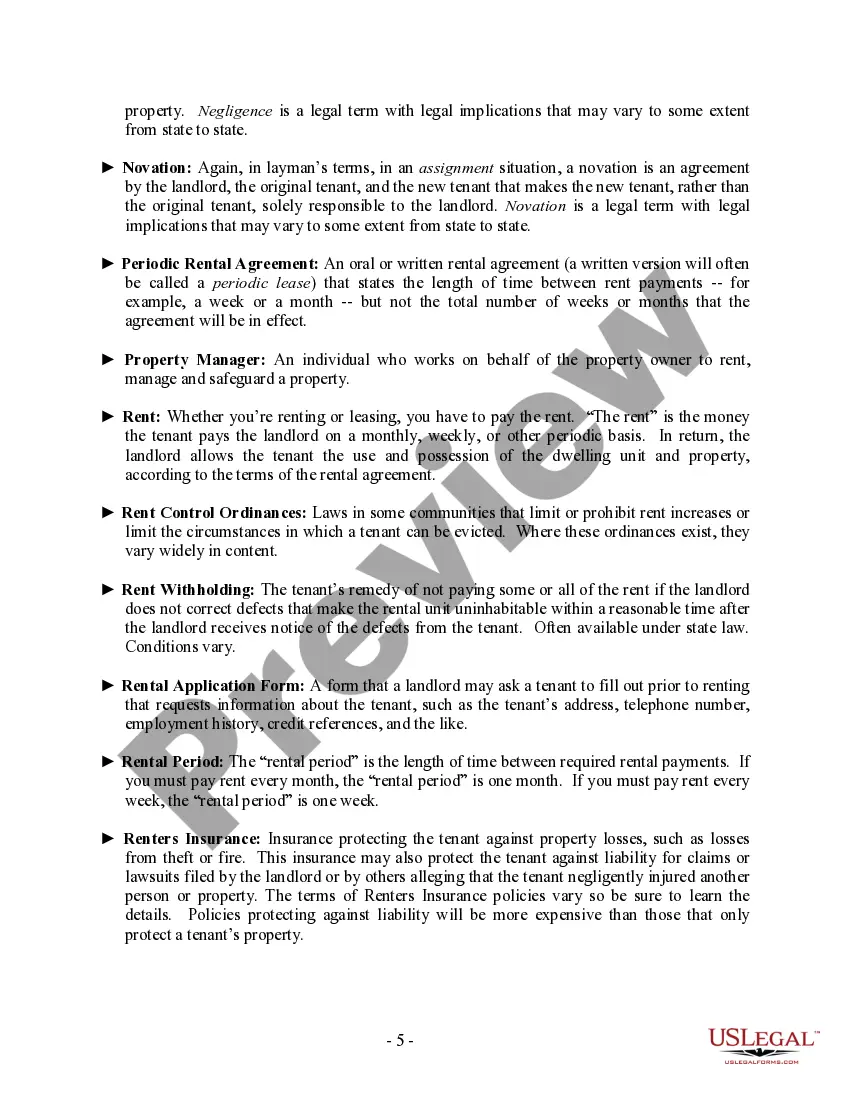
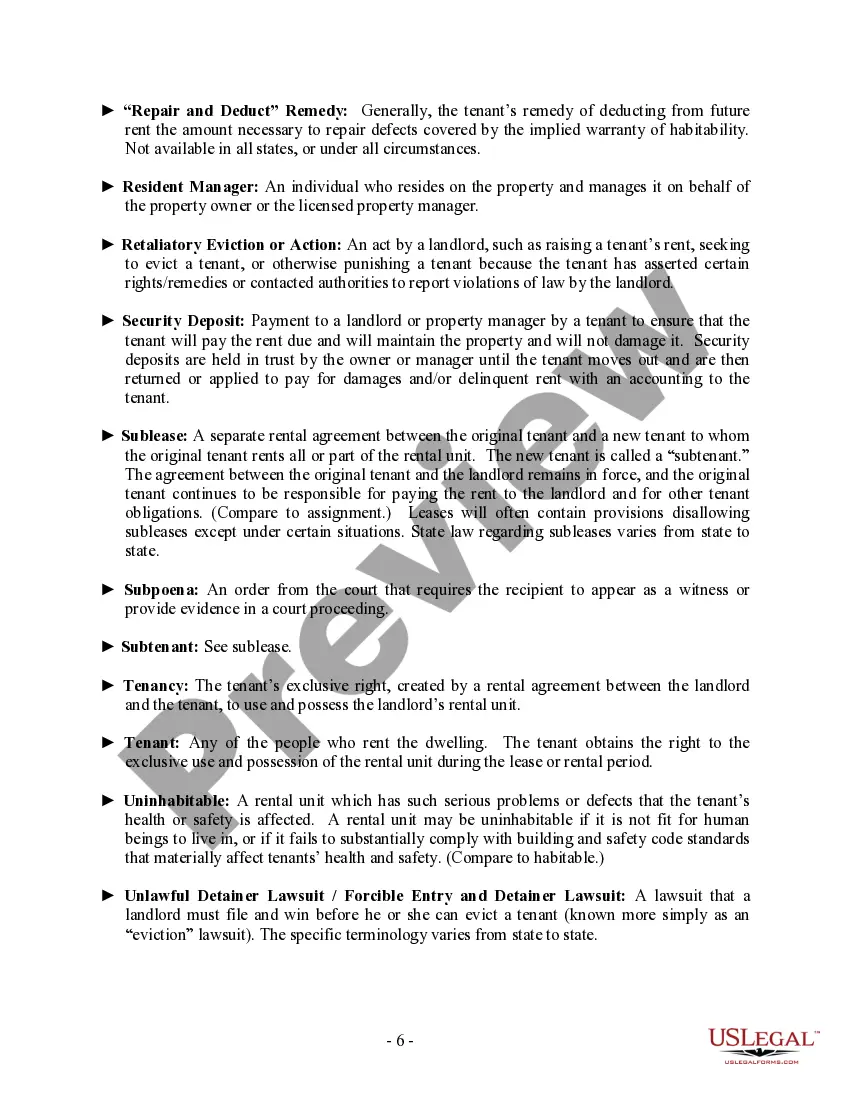
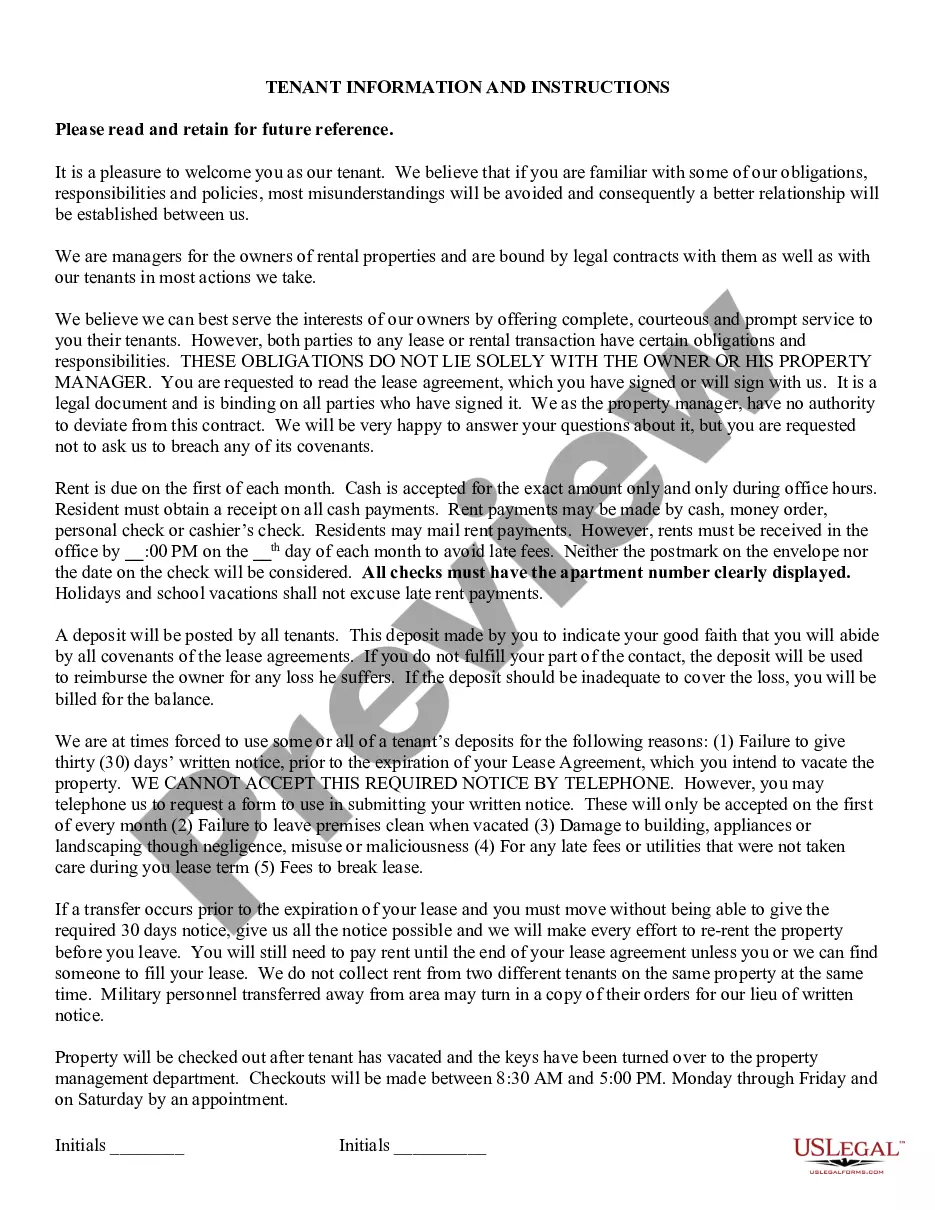
This Handbook summarizes the rights and obligations of landlords and tenants, and is designed to be a helpful guide to both landlords and tenants. Information about rental applications, leases, security deposits, inventory checklists, repair responsibilities, rent increases, termination of leases, eviction notices and much more is included in 40+ pages of materials.
Pennsylvania Multistate Landlord Tenant Handbook - Guide - Laws
Instant download
Description
Free preview
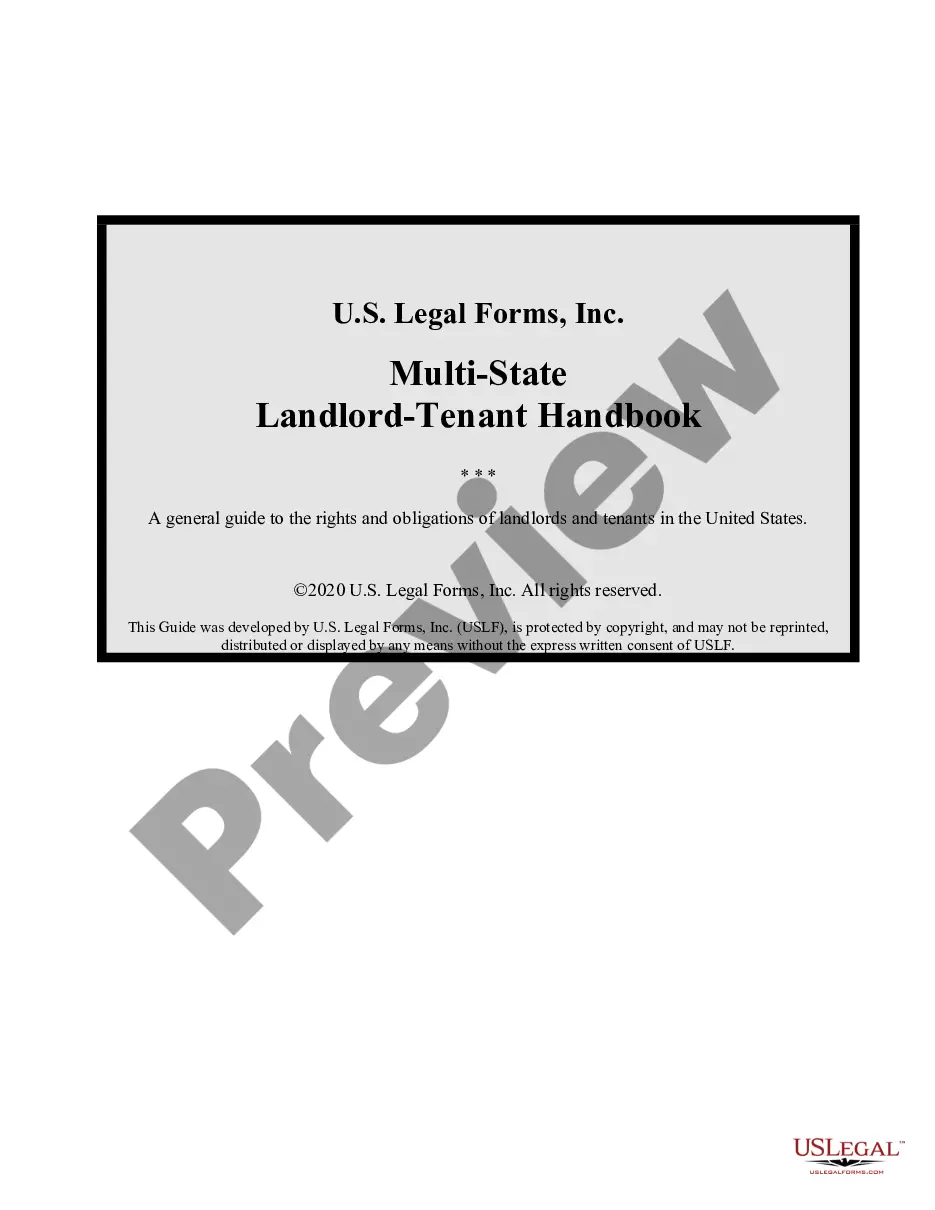

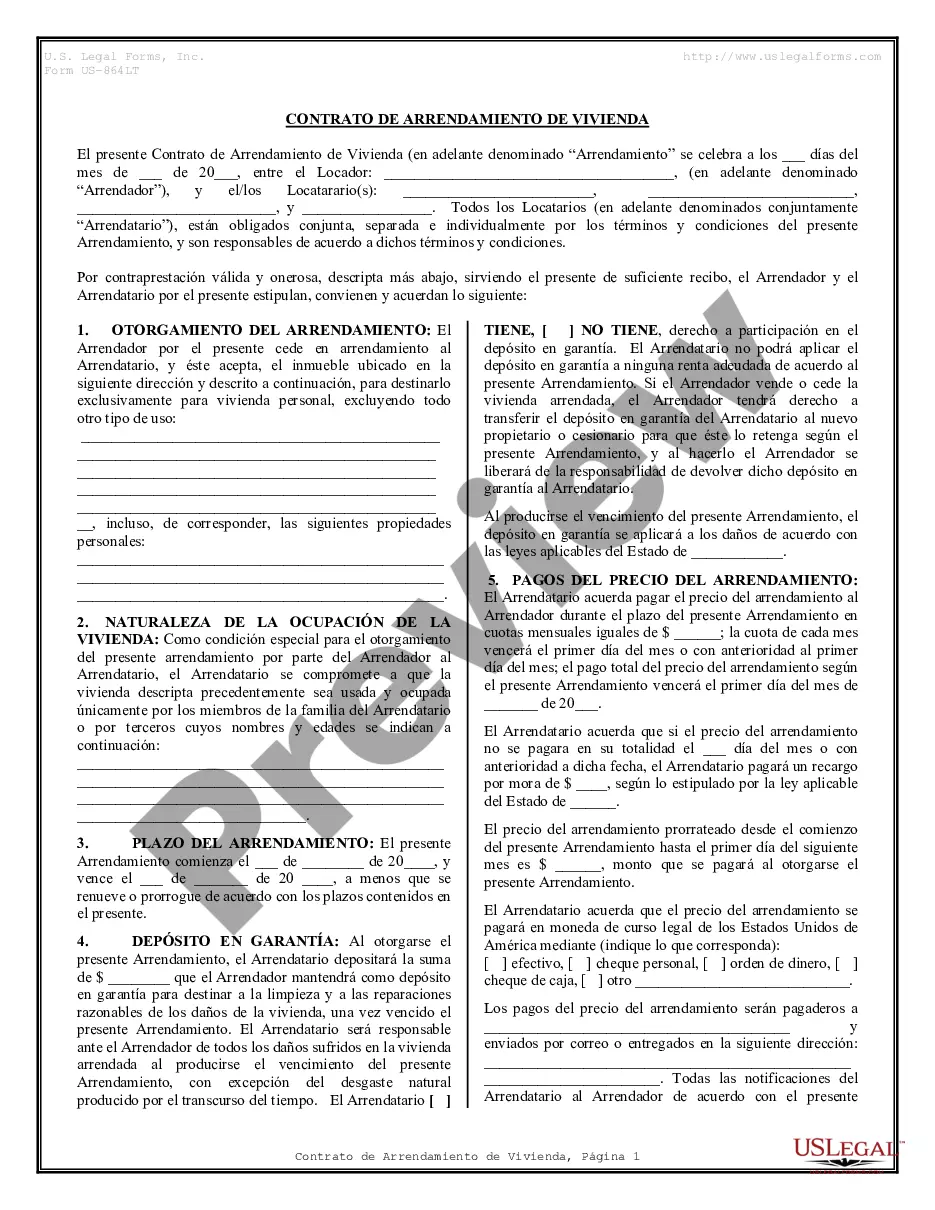
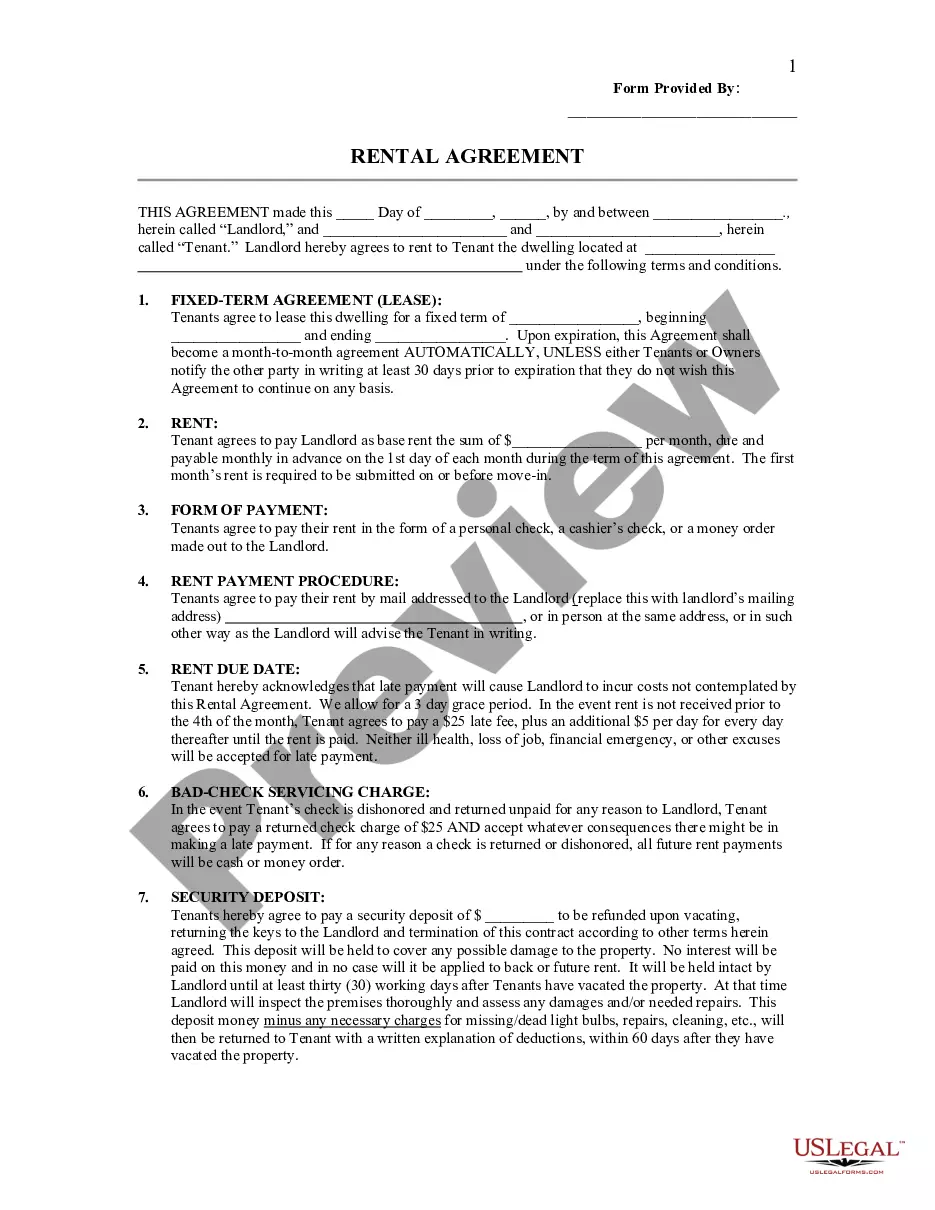
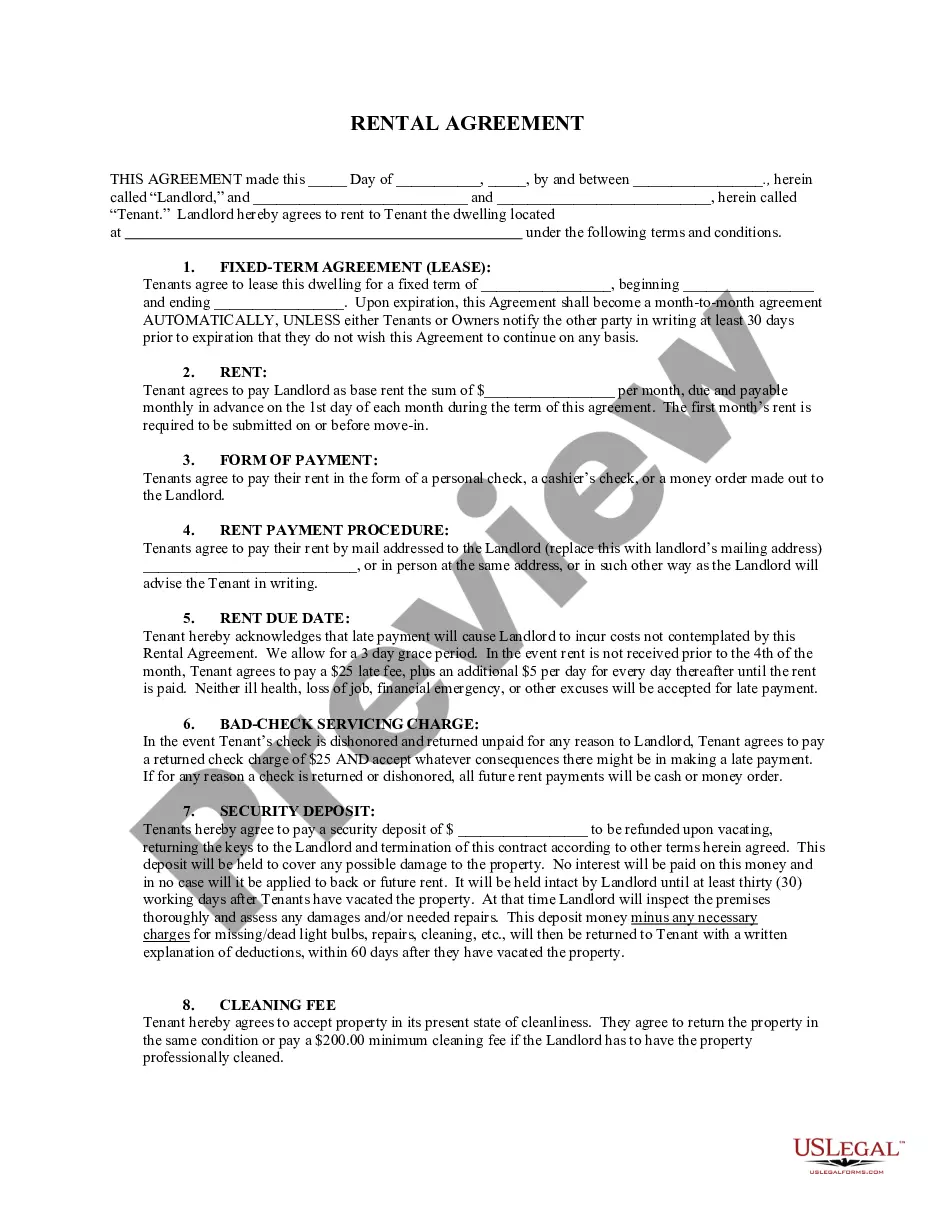

How to fill out Multistate Landlord Tenant Handbook - Guide - Laws?
If you require to be thorough, download, or print legal document templates, utilize US Legal Forms, the largest collection of legal forms available online.
Take advantage of the site’s straightforward and user-friendly search to find the documents you need.
Various templates for business and personal needs are categorized by type and state, or keywords. Use US Legal Forms to obtain the Pennsylvania Multistate Landlord Tenant Handbook - Guide - Laws in just a few clicks.
Step 5. Process the transaction. You can use your credit card or PayPal account to complete the transaction.
Step 6. Choose the format of the legal form and download it to your device. Step 7. Fill out, edit, and print or sign the Pennsylvania Multistate Landlord Tenant Handbook - Guide - Laws. Each legal document format you acquire is yours permanently. You will have access to every form you downloaded within your account. Click the My documents section and select a form to print or download again. Complete and download, and print the Pennsylvania Multistate Landlord Tenant Handbook - Guide - Laws with US Legal Forms. There are numerous professional and state-specific forms you can use for your business or personal requirements.
- If you are already a US Legal Forms customer, Log In to your account and then click the Acquire button to get the Pennsylvania Multistate Landlord Tenant Handbook - Guide - Laws.
- You can also access forms you previously downloaded in the My documents section of your account.
- If you are using US Legal Forms for the first time, follow the instructions below.
- Step 1. Ensure you have selected the form for the correct area/region.
- Step 2. Use the Review option to check the form’s details. Always remember to read the information.
- Step 3. If you are not satisfied with the form, use the Search box at the top of the screen to find other models in the legal form format.
- Step 4. Once you have found the form you need, click the Buy now button. Choose the pricing plan you prefer and enter your details to register for an account.
Form popularity
FAQ
The Tenant Protection Act in Pennsylvania aims to safeguard tenants from unfair practices and ensure they have access to safe housing. This act includes provisions that protect against unjust eviction and mandates that rental properties meet specific health and safety standards. For a thorough overview of tenant protections, consult the Pennsylvania Multistate Landlord Tenant Handbook - Guide - Laws available through US Legal Forms.
The Pennsylvania Landlord and Tenant Act is the primary law governing tenant-landlord relations in the state. This law outlines various aspects, including lease agreements, rental payments, and eviction processes. For a comprehensive understanding of these regulations, refer to the Pennsylvania Multistate Landlord Tenant Handbook - Guide - Laws, which serves as an invaluable resource.
Landlords in Pennsylvania must adhere to specific regulations that protect tenant rights. They cannot retaliate against tenants for exercising their legal rights, nor can they unlawfully enter a rental property without proper notice. Familiarizing yourself with these restrictions through the Pennsylvania Multistate Landlord Tenant Handbook - Guide - Laws can help both landlords and tenants maintain a respectful relationship.
In Pennsylvania, it is not illegal for landlords to request that tenants earn three times the monthly rent as a guideline for financial stability. This practice is common as it helps ensure that tenants can afford their rent without hardship. However, it's important to consult the Pennsylvania Multistate Landlord Tenant Handbook - Guide - Laws for a deeper understanding of rental criteria and tenant rights.
The Landlord Tenant Relationship Act establishes the rights and responsibilities of both landlords and tenants in Pennsylvania. This act is crucial as it outlines how leases should be managed, what constitutes fair treatment, and the processes for resolving disputes. Understanding this act is essential for anyone looking to navigate the Pennsylvania Multistate Landlord Tenant Handbook - Guide - Laws effectively.
Illegal actions by landlords in Pennsylvania include evicting tenants without court approval, entering a rental property without notice, and retaliating against tenants for rightful complaints. Understanding these illegal actions is crucial for both tenants and landlords. To navigate these complex laws, refer to the Pennsylvania Multistate Landlord Tenant Handbook - Guide - Laws for detailed information.
Yes, landlords in Pennsylvania are generally required to ensure that rental units are clean and habitable for new tenants. This often includes tasks like cleaning carpets and repainting walls to maintain a safe living environment. For specific guidelines and best practices, consult the Pennsylvania Multistate Landlord Tenant Handbook - Guide - Laws.
Landlord retaliation occurs when a landlord takes adverse action against a tenant for exercising their legal rights, such as filing a complaint about unsafe living conditions. Examples include raising rent, refusing to renew a lease, or evicting a tenant shortly after they report issues. For more detailed insights, check the Pennsylvania Multistate Landlord Tenant Handbook - Guide - Laws.
In Pennsylvania, landlords cannot unlawfully evict tenants, discriminate based on race or gender, or retaliate against tenants for exercising their rights. They also cannot enter a rental unit without proper notice, typically 24 hours, unless in emergencies. For a comprehensive understanding of your rights and responsibilities, refer to the Pennsylvania Multistate Landlord Tenant Handbook - Guide - Laws.
Statute 250.512 in Pennsylvania outlines the obligations of landlords regarding the maintenance and repair of rental properties. It mandates that landlords must provide a safe, habitable living environment for tenants. This includes making necessary repairs in a timely manner. For a comprehensive understanding of this statute and its implications, refer to the Pennsylvania Multistate Landlord Tenant Handbook - Guide - Laws, which can help you grasp your rights and responsibilities as a tenant.