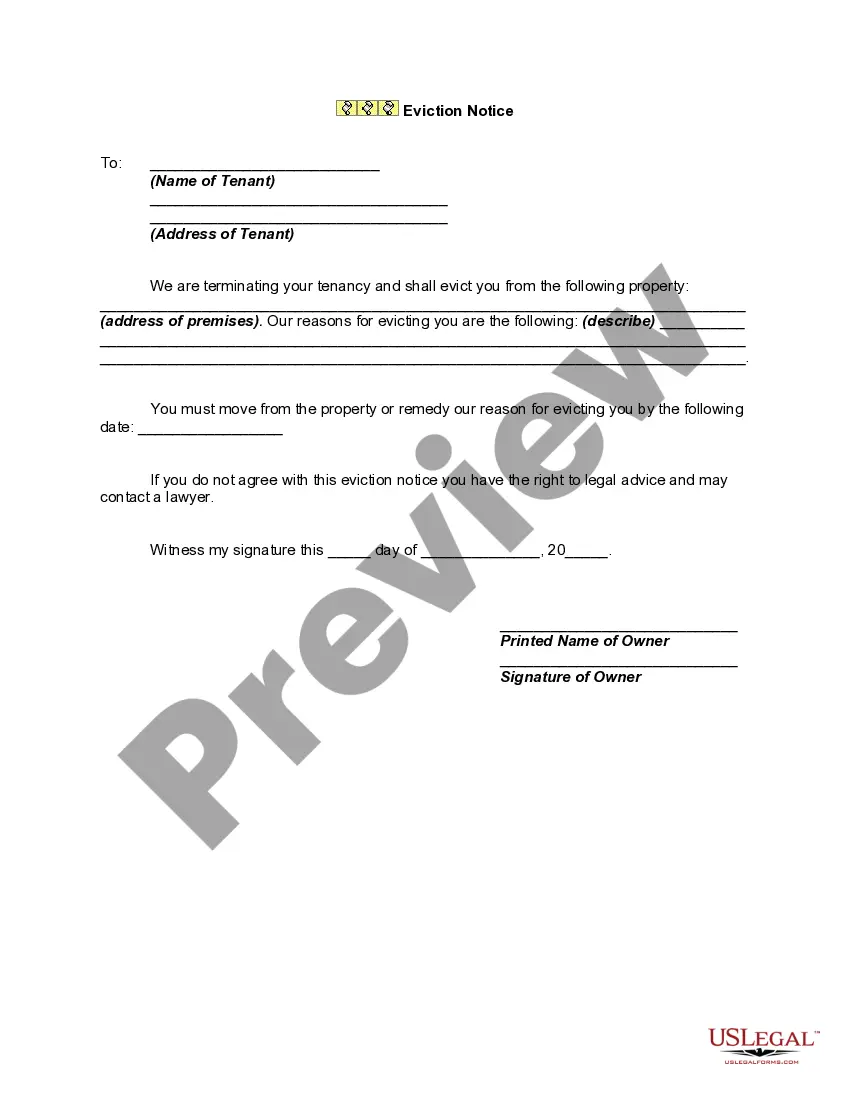
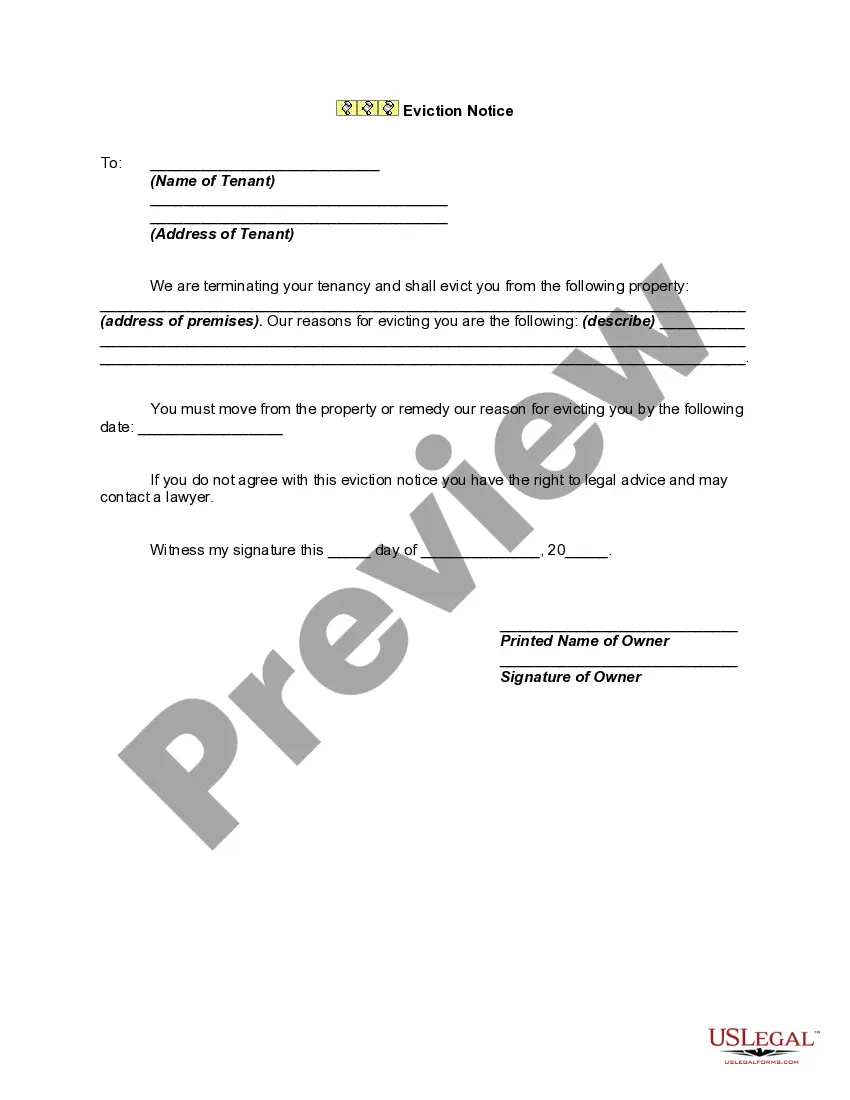
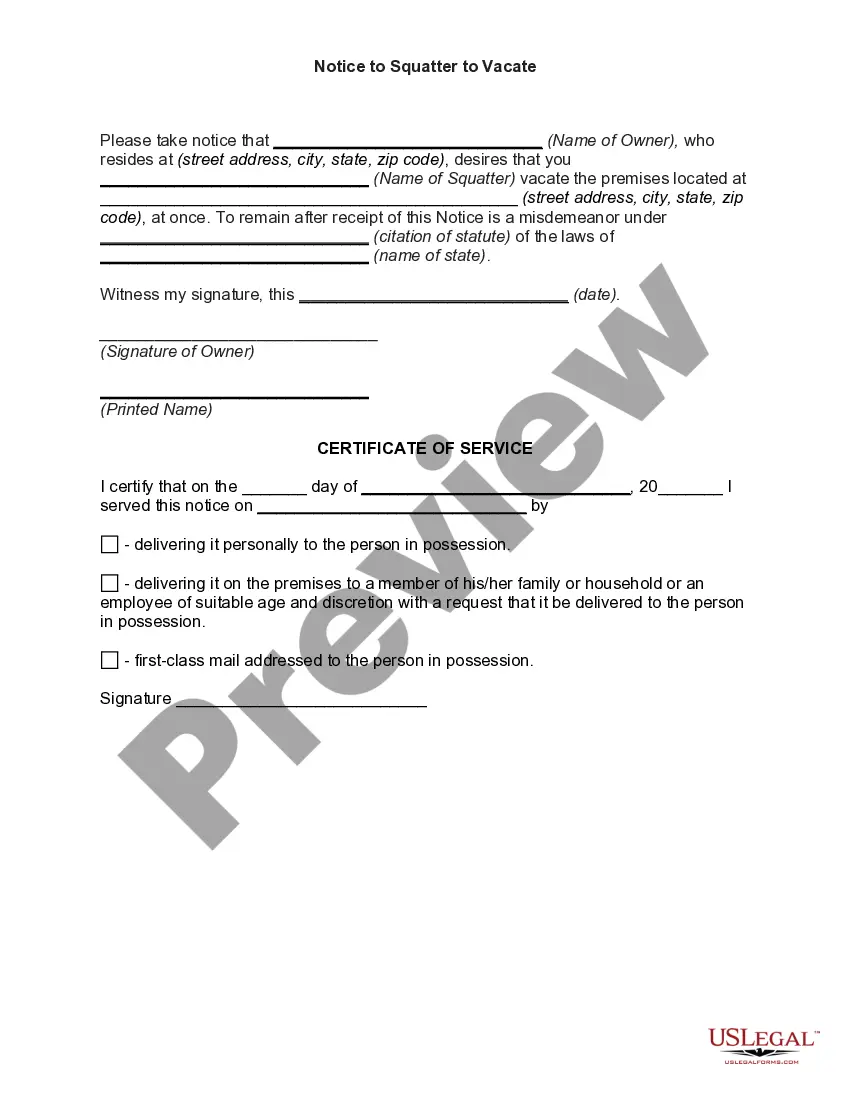
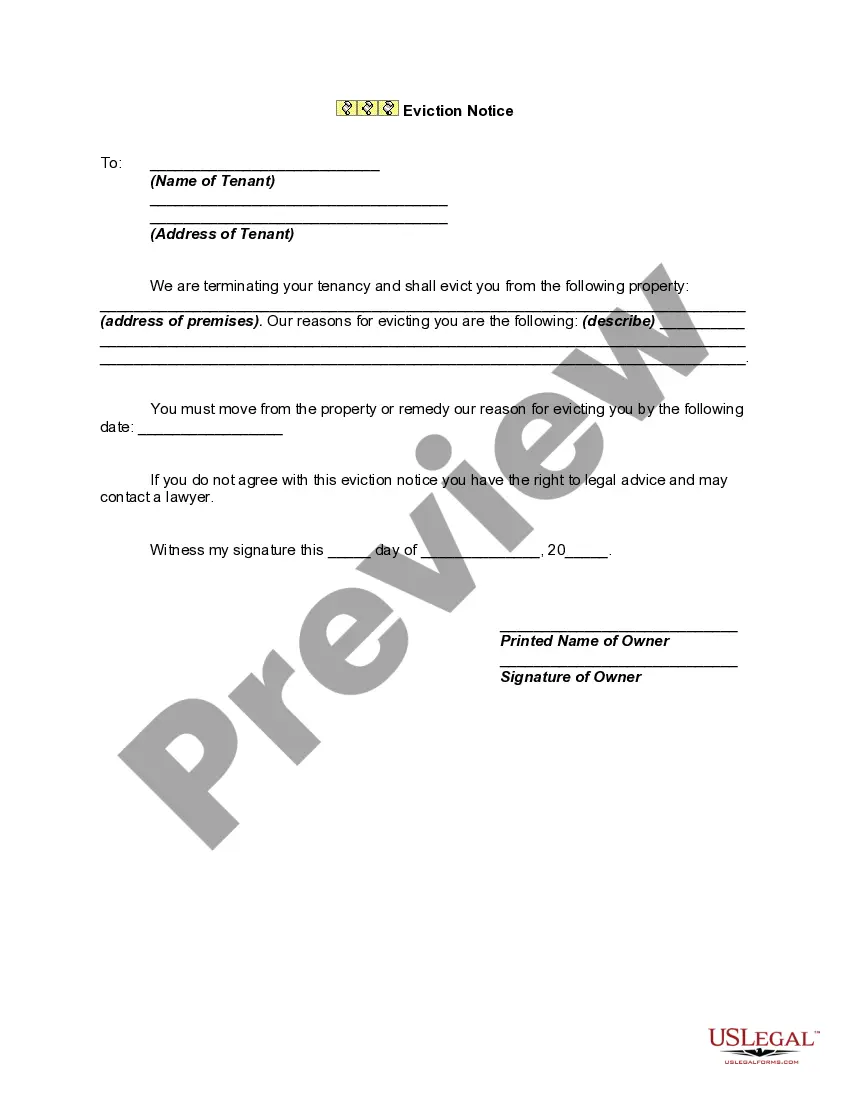
Pennsylvania Eviction Notice for Smoking
Description
Get your form ready online
Our built-in tools help you complete, sign, share, and store your documents in one place.
Make edits, fill in missing information, and update formatting in US Legal Forms—just like you would in MS Word.
Download a copy, print it, send it by email, or mail it via USPS—whatever works best for your next step.
Sign and collect signatures with our SignNow integration. Send to multiple recipients, set reminders, and more. Go Premium to unlock E-Sign.
If this form requires notarization, complete it online through a secure video call—no need to meet a notary in person or wait for an appointment.
We protect your documents and personal data by following strict security and privacy standards.

Make edits, fill in missing information, and update formatting in US Legal Forms—just like you would in MS Word.

Download a copy, print it, send it by email, or mail it via USPS—whatever works best for your next step.

Sign and collect signatures with our SignNow integration. Send to multiple recipients, set reminders, and more. Go Premium to unlock E-Sign.

If this form requires notarization, complete it online through a secure video call—no need to meet a notary in person or wait for an appointment.

We protect your documents and personal data by following strict security and privacy standards.
Looking for another form?
How to fill out Eviction Notice For Smoking?
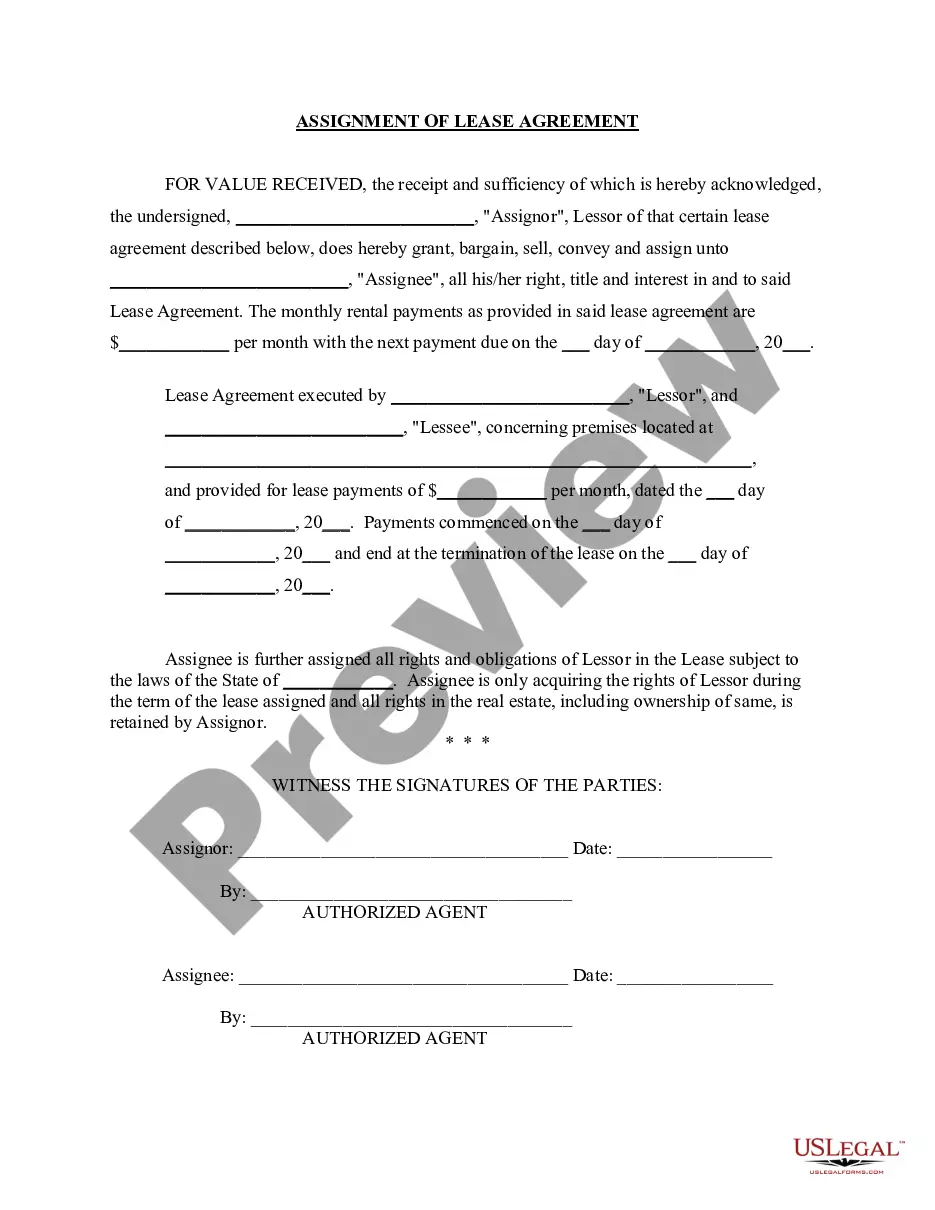
Are you currently in the location where you will require documentation for either business or specific purposes nearly every day? There are numerous legal document templates available online, but finding reliable ones isn't simple. US Legal Forms offers a vast array of template forms, including the Pennsylvania Eviction Notice for Smoking, which are designed to meet state and federal requirements.
If you are already familiar with the US Legal Forms website and have an account, simply Log In. After that, you can download the Pennsylvania Eviction Notice for Smoking template.
If you do not have an account and wish to start using US Legal Forms, follow these steps: Find the form you need and ensure it is for the correct city/county. Utilize the Preview button to examine the form. Review the description to confirm that you have chosen the correct form. If the form isn’t what you’re looking for, use the Search field to find the form that meets your needs and requirements. When you find the right form, click Acquire now. Choose the pricing plan you want, fill out the necessary information to create your account, and complete the transaction using your PayPal or credit card. Select a convenient file format and download your copy.
- Find all the document templates you have purchased in the My documents section. You can obtain an additional copy of the Pennsylvania Eviction Notice for Smoking at any time if needed. Just select the required form to download or print the document template.
- Utilize US Legal Forms, the most extensive collection of legal forms, to save time and avoid mistakes. The service provides professionally crafted legal document templates that you can use for a variety of purposes.
- Create an account on US Legal Forms and start making your life a bit easier.
Form popularity
FAQ
A court ordered eviction is the only legal way a landlord may force a tenant to leave a rental property. A lawful eviction requires a court proceeding. The length of the process will vary depending on the circumstances of the eviction.
How much notice does a landlord have to give a tenant to move out in Pennsylvania? In the state of Pennsylvania, for a lease that is one year or less in length, a landlord can give a tenant 15-day notice to leave. For leases over one year, landlords can give a 30-day notice to leave from the date the lease ends.
Common forms of illegal or ?self-help? eviction include: Changing locks or blocking access to the dwelling in any way. Removing doors or windows from a rental property.
In Pennsylvania, a landlord must give reasonable notice before entering a property ? usually, 24-hours advanced notice. There needs to be written notice ? if emergency repairs are needed, landlords can enter the property to stop any damage that is occurring.
Both landlord and tenant must uphold the terms of the lease/rental agreement at all times and avoid lease violations. In Pennsylvania, the landlord can evict a tenant for violating the terms of the written lease agreement.
Under the right to a safe and habitable home, a landlord cannot force a tenant to move into a home or unit ?as-is? and cannot demand that the tenant be responsible for repairs. To be safe, and habitable, a unit or home should have: Working smoke alarms. Working hot water.
The Pennsylvania 30 Day Notice To Quit is the first step in evicting a problem tenant. Landlords may only use this notice for a lease agreement that lasts for one year or more. This notice may only be given when a tenant has violated their lease agreement for reasons other than non-payment of rent.