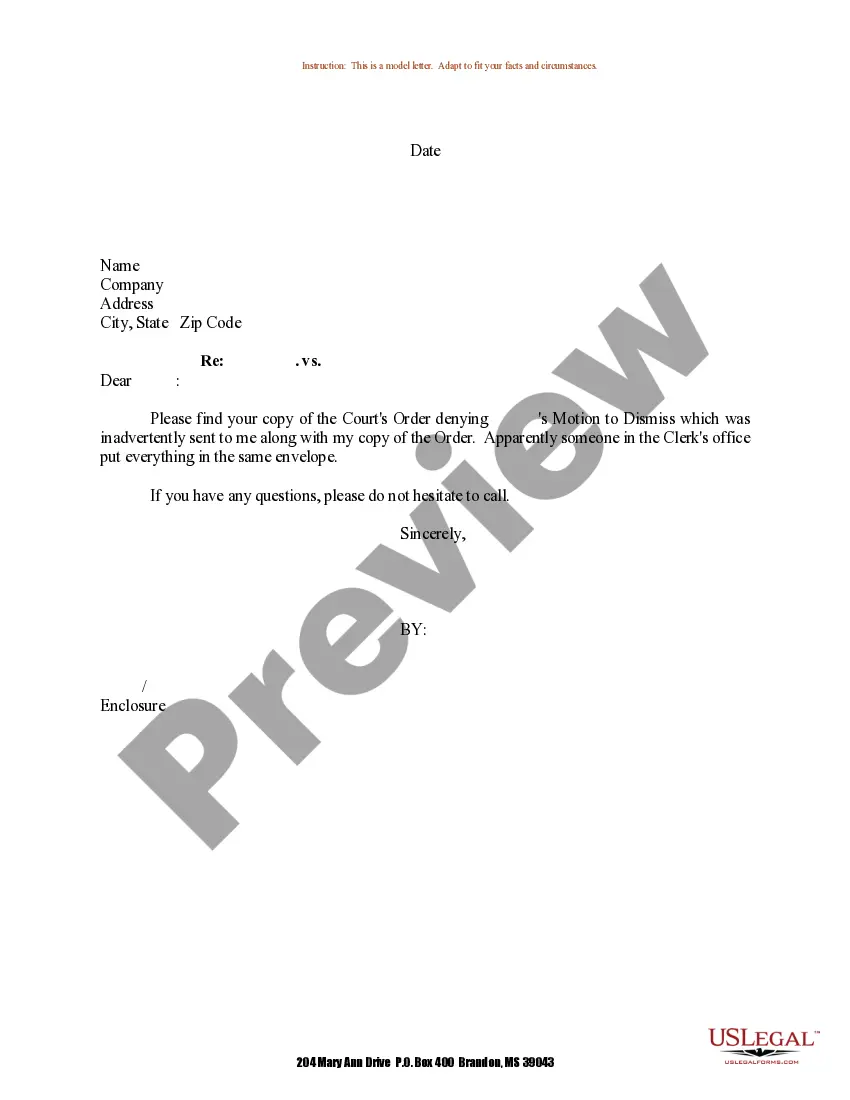
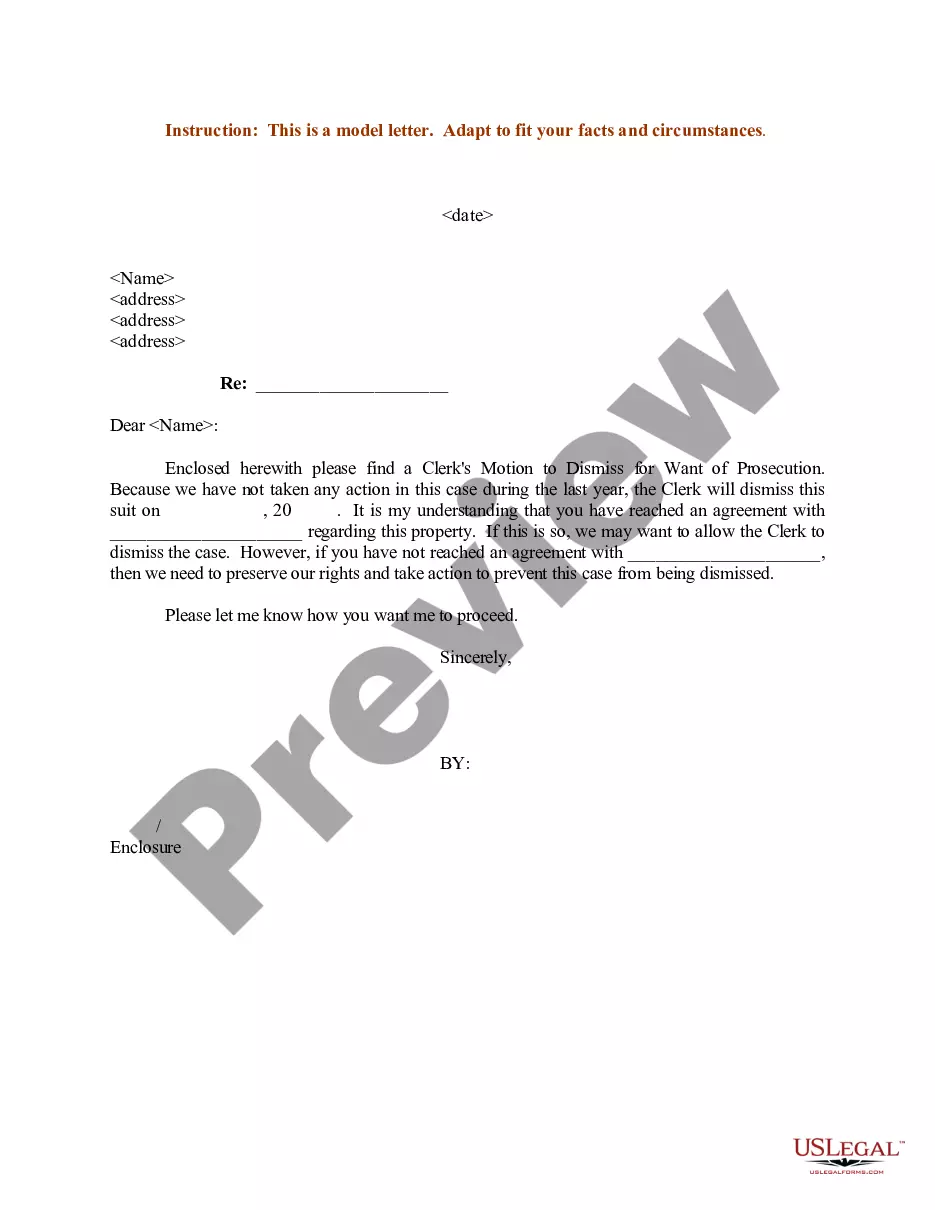
Pennsylvania Sample Letter for Court Order Denying Motion to Dismiss Case
Description
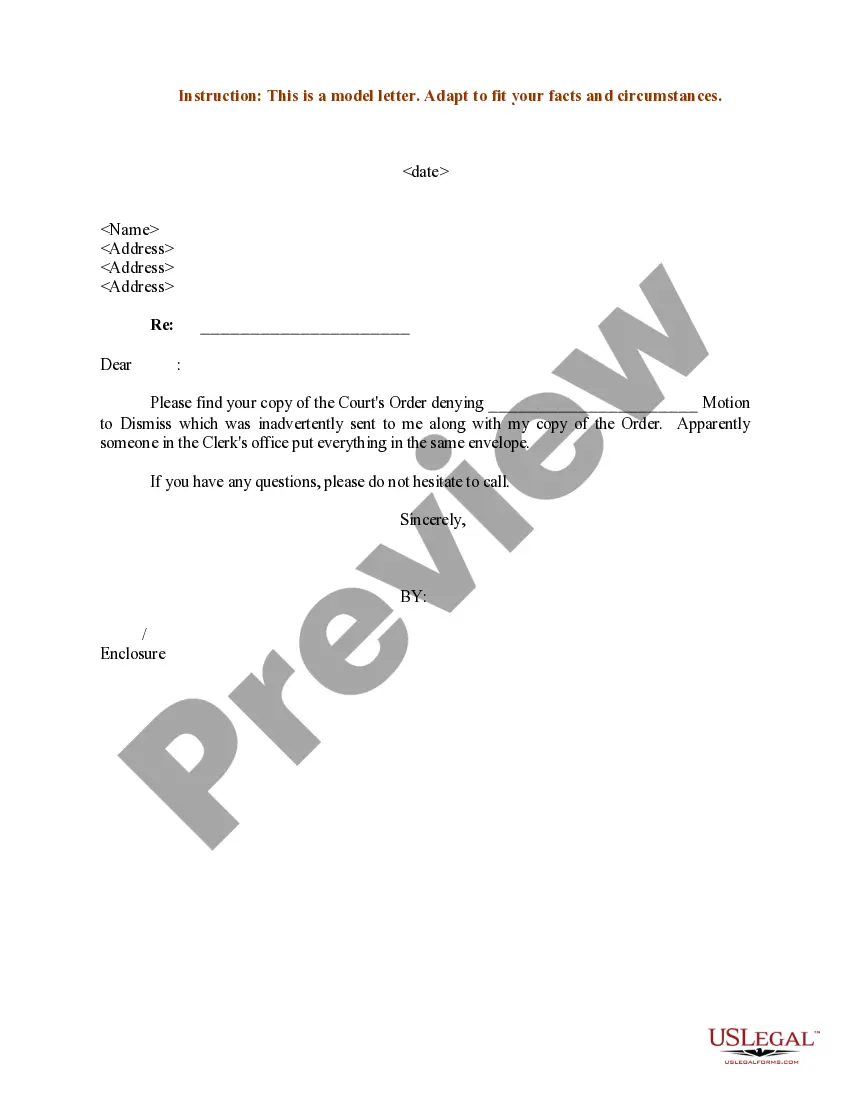
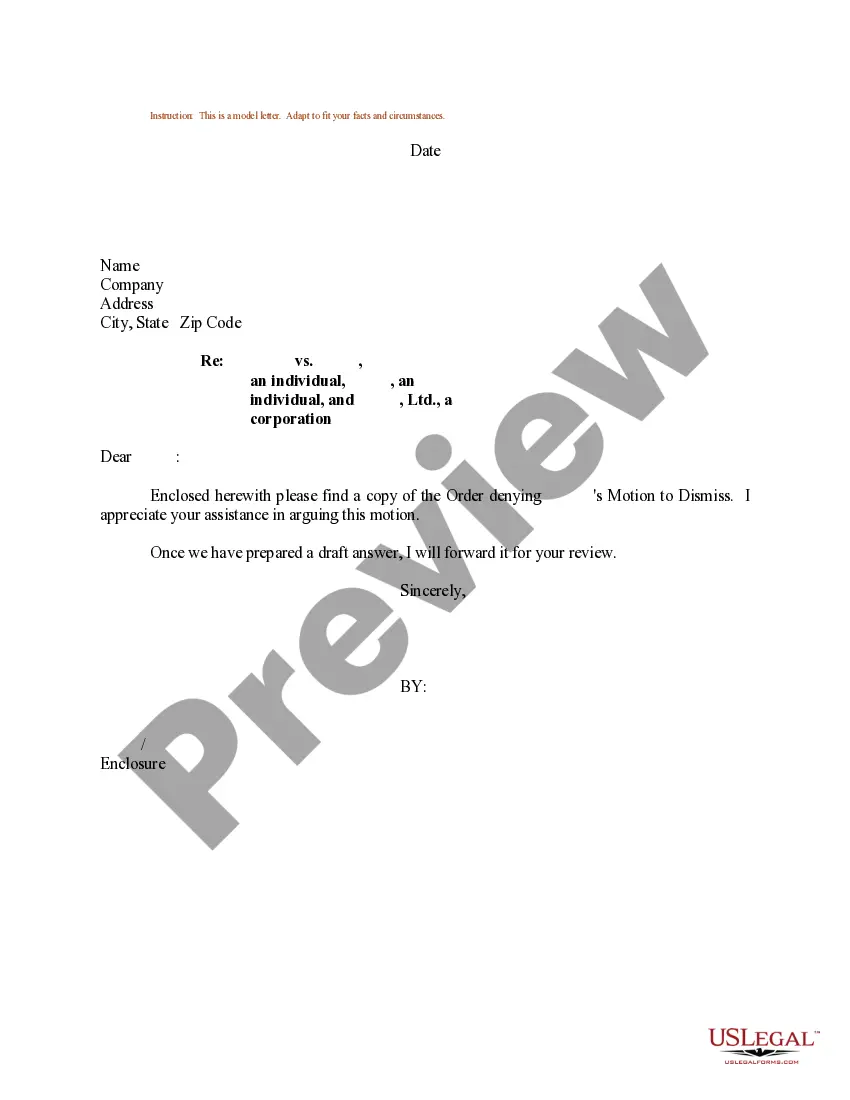
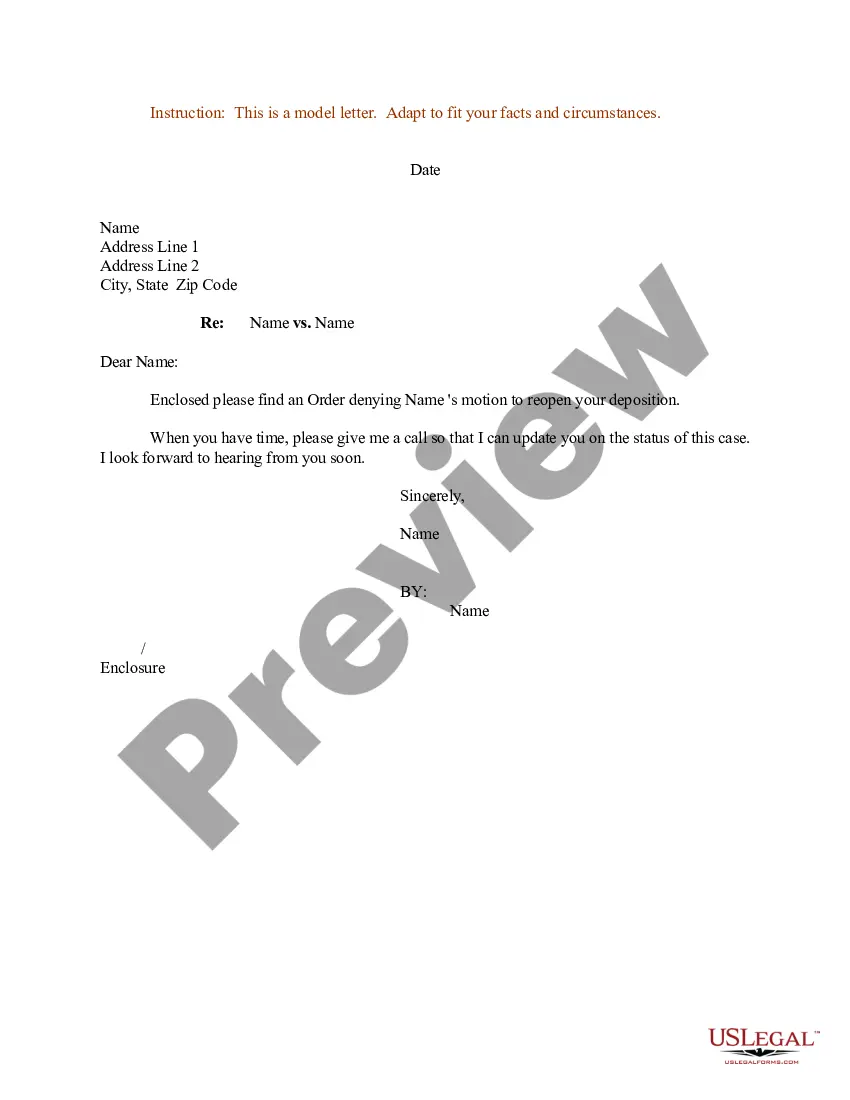
Get your form ready online
Our built-in tools help you complete, sign, share, and store your documents in one place.
Make edits, fill in missing information, and update formatting in US Legal Forms—just like you would in MS Word.
Download a copy, print it, send it by email, or mail it via USPS—whatever works best for your next step.
Sign and collect signatures with our SignNow integration. Send to multiple recipients, set reminders, and more. Go Premium to unlock E-Sign.
If this form requires notarization, complete it online through a secure video call—no need to meet a notary in person or wait for an appointment.
We protect your documents and personal data by following strict security and privacy standards.

Make edits, fill in missing information, and update formatting in US Legal Forms—just like you would in MS Word.

Download a copy, print it, send it by email, or mail it via USPS—whatever works best for your next step.

Sign and collect signatures with our SignNow integration. Send to multiple recipients, set reminders, and more. Go Premium to unlock E-Sign.

If this form requires notarization, complete it online through a secure video call—no need to meet a notary in person or wait for an appointment.

We protect your documents and personal data by following strict security and privacy standards.
Looking for another form?
How to fill out Sample Letter For Court Order Denying Motion To Dismiss Case?
Have you ever been in a situation where you require documents for either business or personal use almost every day.
There are numerous legal document templates available online, but finding reliable ones isn't easy.
US Legal Forms offers a vast array of form templates, such as the Pennsylvania Sample Letter for Court Order Denying Motion to Dismiss Case, which are crafted to comply with state and federal requirements.
Access all the document templates you have purchased in the My documents section.
You can retrieve another copy of the Pennsylvania Sample Letter for Court Order Denying Motion to Dismiss Case anytime, if needed. Just follow the necessary form to download or print the document template.
- If you are already familiar with the US Legal Forms website and possess an account, simply Log In.
- Then, you can download the Pennsylvania Sample Letter for Court Order Denying Motion to Dismiss Case template.
- If you do not have an account and wish to start using US Legal Forms, follow these steps.
- Locate the form you need and ensure it is for the correct jurisdiction.
- Utilize the Review option to examine the form.
- Check the description to confirm you have selected the right form.
- If the form isn't what you're looking for, use the Search box to find a form that meets your needs and specifications.
- If you find the appropriate form, click Buy now.
- Choose the pricing plan you want, fill in the required information to create your account, and complete the payment using your PayPal or credit card.
- Select a preferred file format and download your copy.
Form popularity
FAQ
In a motion to dismiss, you can typically use evidence that demonstrates there is no legal basis for the claims made. This may include affidavits, contracts, or documents that contradict the allegations in the complaint. The focus should remain on the sufficiency of the claims rather than on the merits of the case. To assist you in preparing your evidence and arguments, consider a Pennsylvania Sample Letter for Court Order Denying Motion to Dismiss Case from USLegalForms, which can guide you in presenting your case effectively.
In Pennsylvania, the standard for a motion to dismiss is based on whether the plaintiff's complaint states a valid claim for relief. The court considers only the allegations in the complaint and any documents attached to it. If the complaint does not provide sufficient facts to support a legal claim, the motion may be granted. Understanding this standard is crucial, and using a Pennsylvania Sample Letter for Court Order Denying Motion to Dismiss Case from USLegalForms can help you craft a solid response.
Writing a letter of dismissal for court involves clearly stating your intent to dismiss the case. Begin with your name, contact information, and the court's details. Clearly reference the case number and explain your reasons for dismissal. For a structured approach, you can utilize a Pennsylvania Sample Letter for Court Order Denying Motion to Dismiss Case available on USLegalForms, which provides a clear template to ensure you cover all necessary points.
To write a motion to dismiss, start by clearly stating the case name and number at the top of the document. Next, provide a concise introduction that outlines the reasons for the dismissal, such as lack of jurisdiction or failure to state a claim. Utilize a formal tone and structure your arguments logically, referencing applicable laws and precedents when possible. Finally, conclude with a request for the court to deny the motion to dismiss case, and consider using a Pennsylvania Sample Letter for Court Order Denying Motion to Dismiss Case as a guide for your format and language.
A motion to dismiss should be denied when the case presents sufficient facts or legal grounds that warrant further examination. If the allegations in the complaint, when taken as true, suggest that the plaintiff has a valid claim, the court will typically deny the motion. Understanding these nuances can be complex, but utilizing a Pennsylvania Sample Letter for Court Order Denying Motion to Dismiss Case can guide you through the process effectively.
Writing a letter to dismiss a court case requires clarity and precision. Begin by addressing the court and stating your intent to dismiss the case clearly. Include relevant details such as the case number, parties involved, and the reasons for your request. For a comprehensive guide, you can refer to a Pennsylvania Sample Letter for Court Order Denying Motion to Dismiss Case, which can serve as a template to ensure you cover all necessary elements.
When a judge denies a motion to dismiss, your case continues to proceed through the legal process. This decision means the court found enough merit in your claims to allow the case to go forward. Understanding this outcome can help you prepare for the next steps, and a Pennsylvania Sample Letter for Court Order Denying Motion to Dismiss Case can illustrate how to respond to such a ruling effectively.
Replying to a motion to dismiss requires you to address each argument presented in the motion. Provide counterarguments and any supporting evidence that reinforces your case. Consider referencing a Pennsylvania Sample Letter for Court Order Denying Motion to Dismiss Case to ensure your reply is well-structured and persuasive.
To write an opposition to a motion, begin by addressing the court and the specifics of the motion you are opposing. Clearly articulate your arguments and cite relevant laws or case precedents. Using a Pennsylvania Sample Letter for Court Order Denying Motion to Dismiss Case can provide a solid framework for presenting your opposition.
Writing an opposition to a motion to dismiss involves outlining your reasons for contesting the motion clearly and concisely. Include facts, legal arguments, and any evidence that supports your case. A Pennsylvania Sample Letter for Court Order Denying Motion to Dismiss Case can guide you in structuring your opposition effectively.