Pennsylvania Guide for Identity Theft Victims Who Know Their Imposter
Description
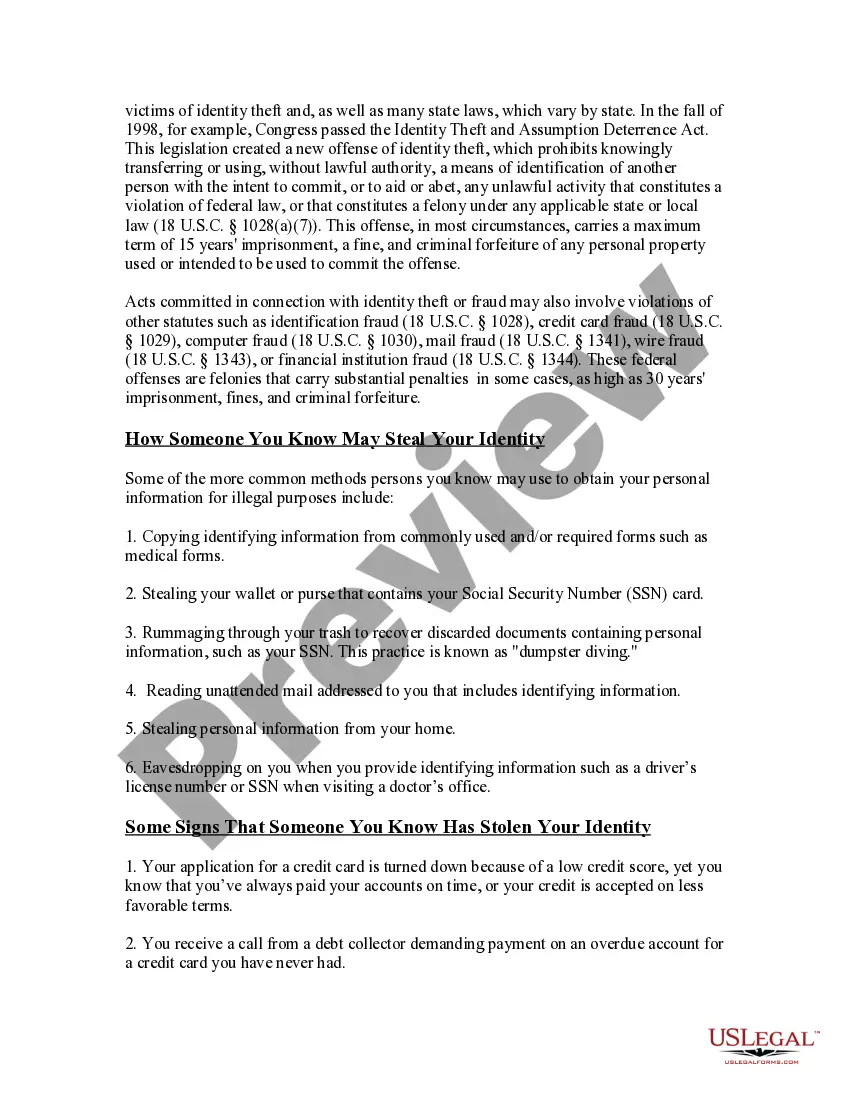
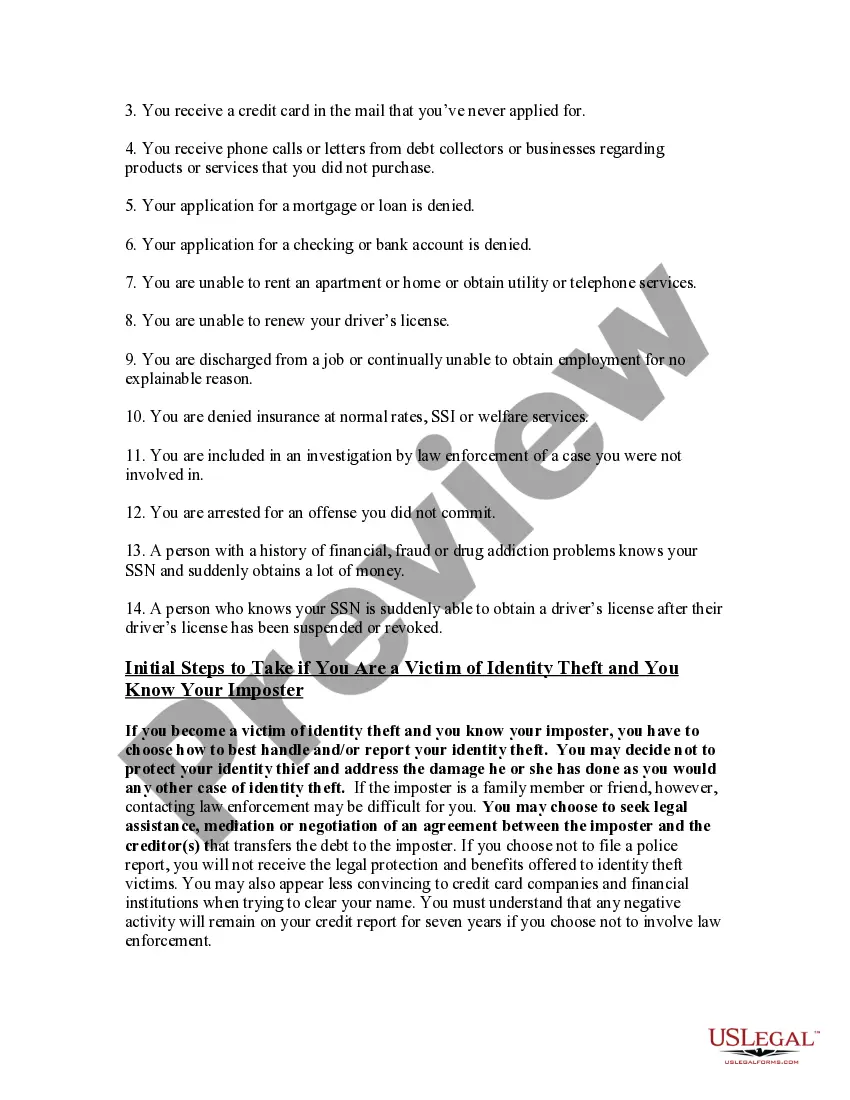
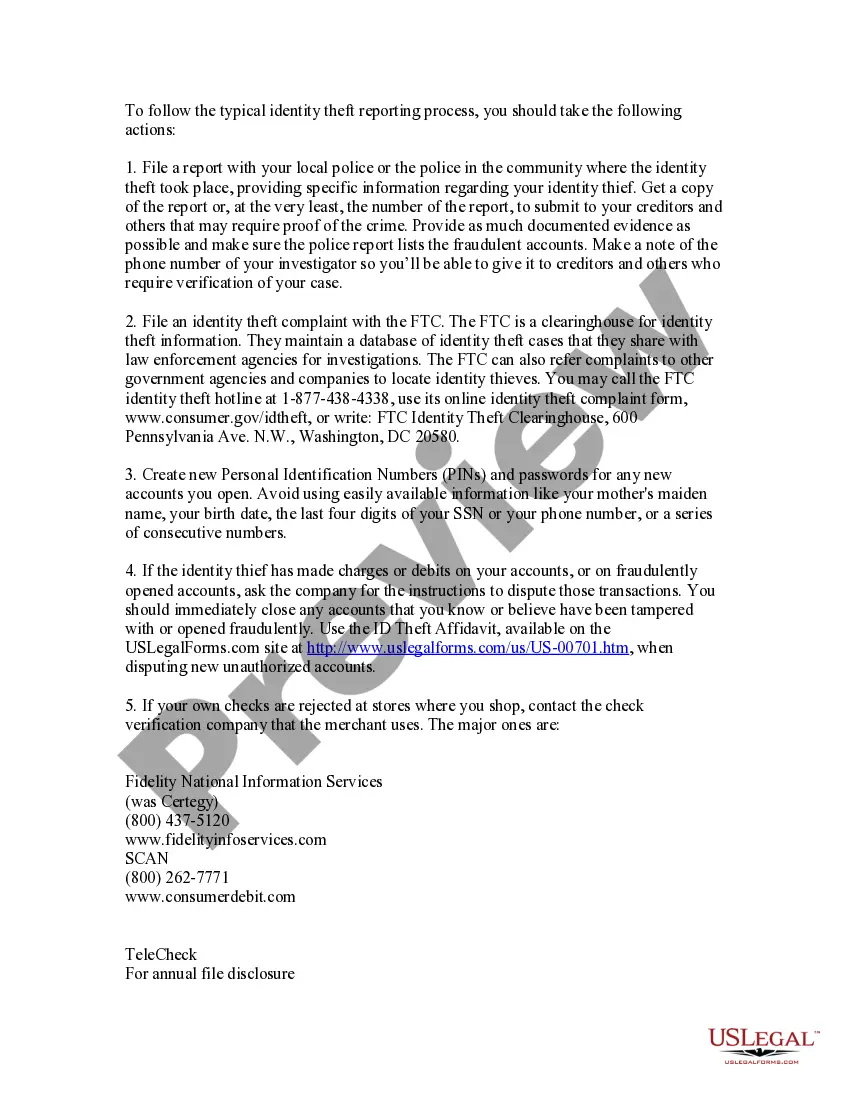
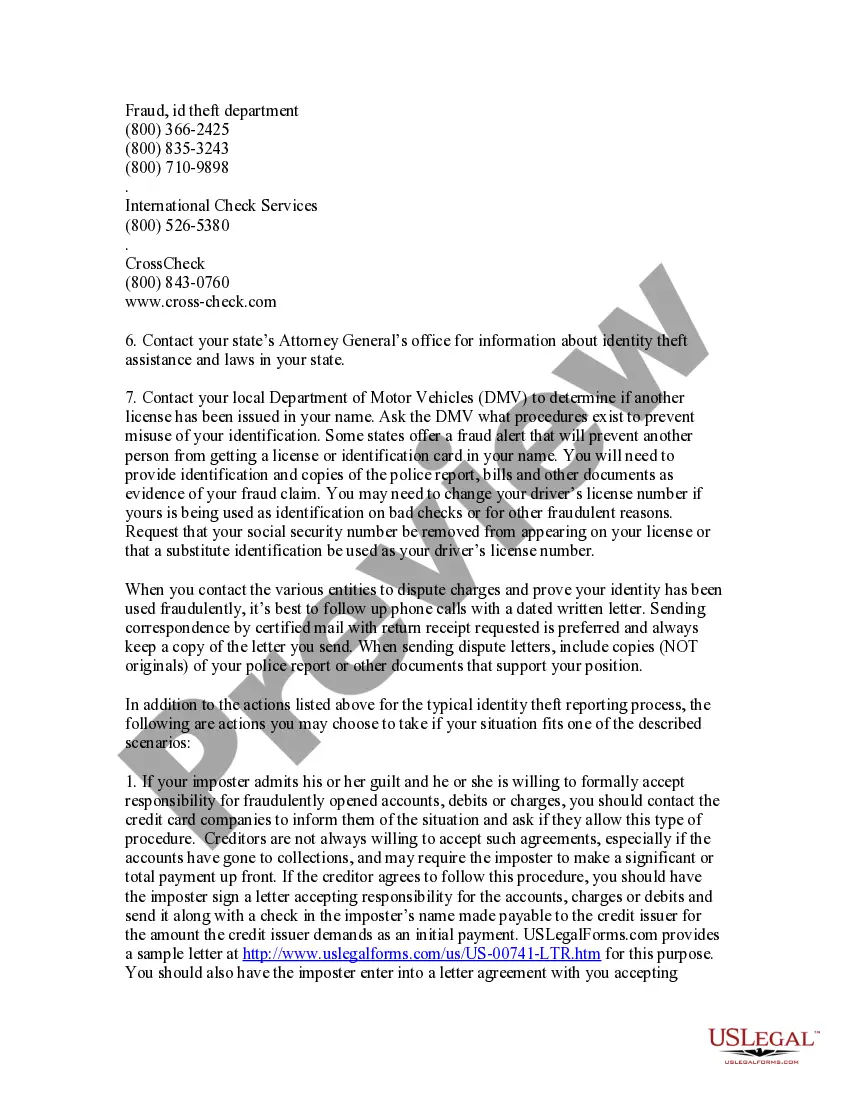
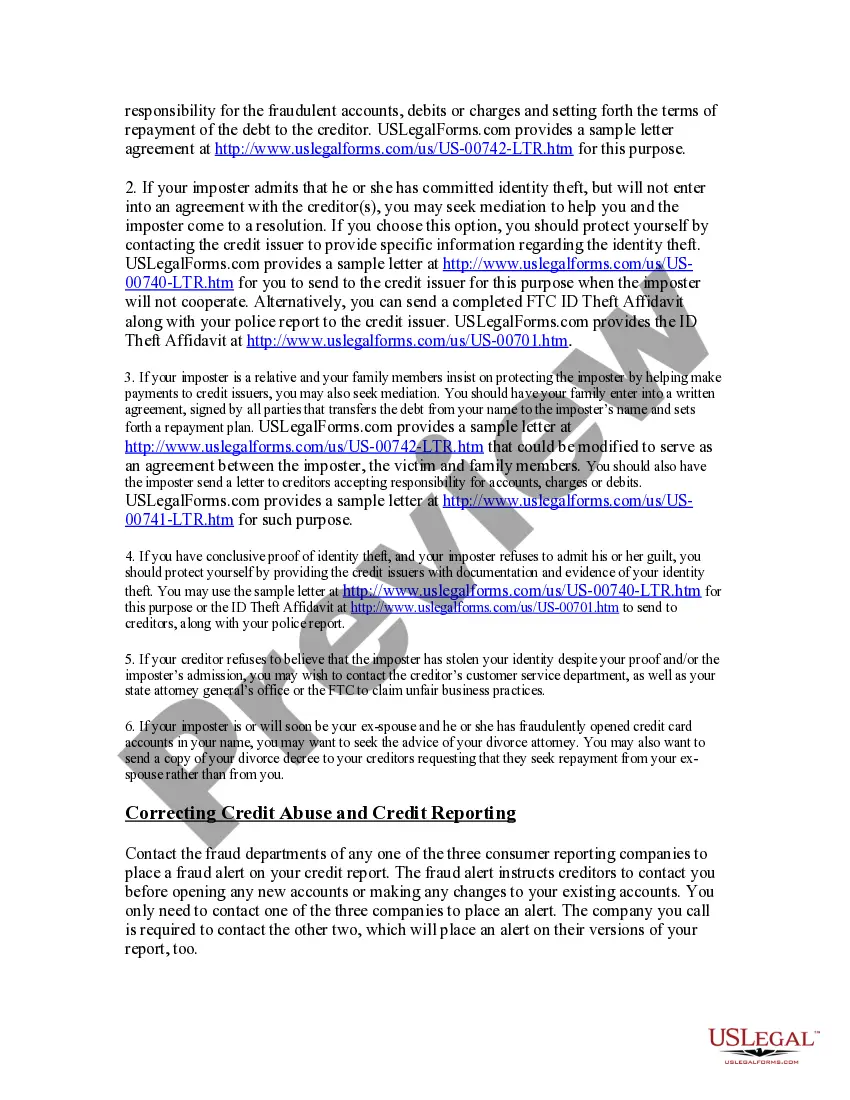
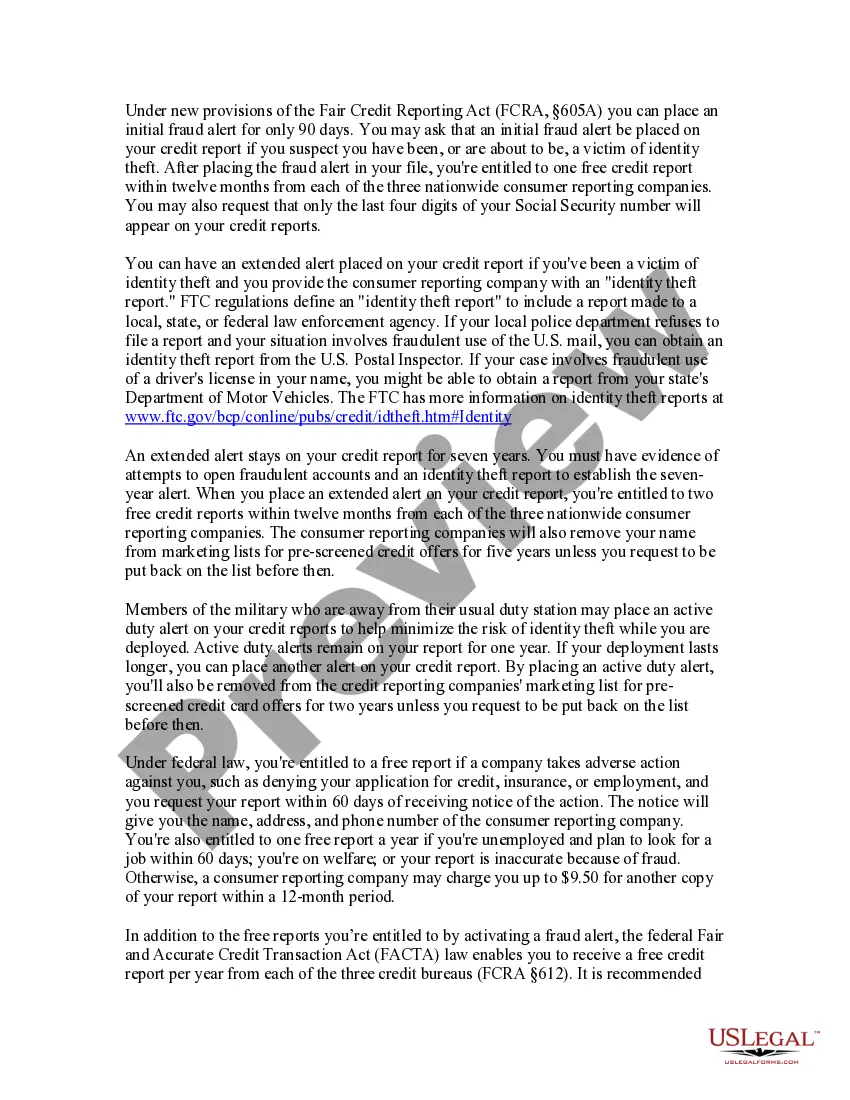

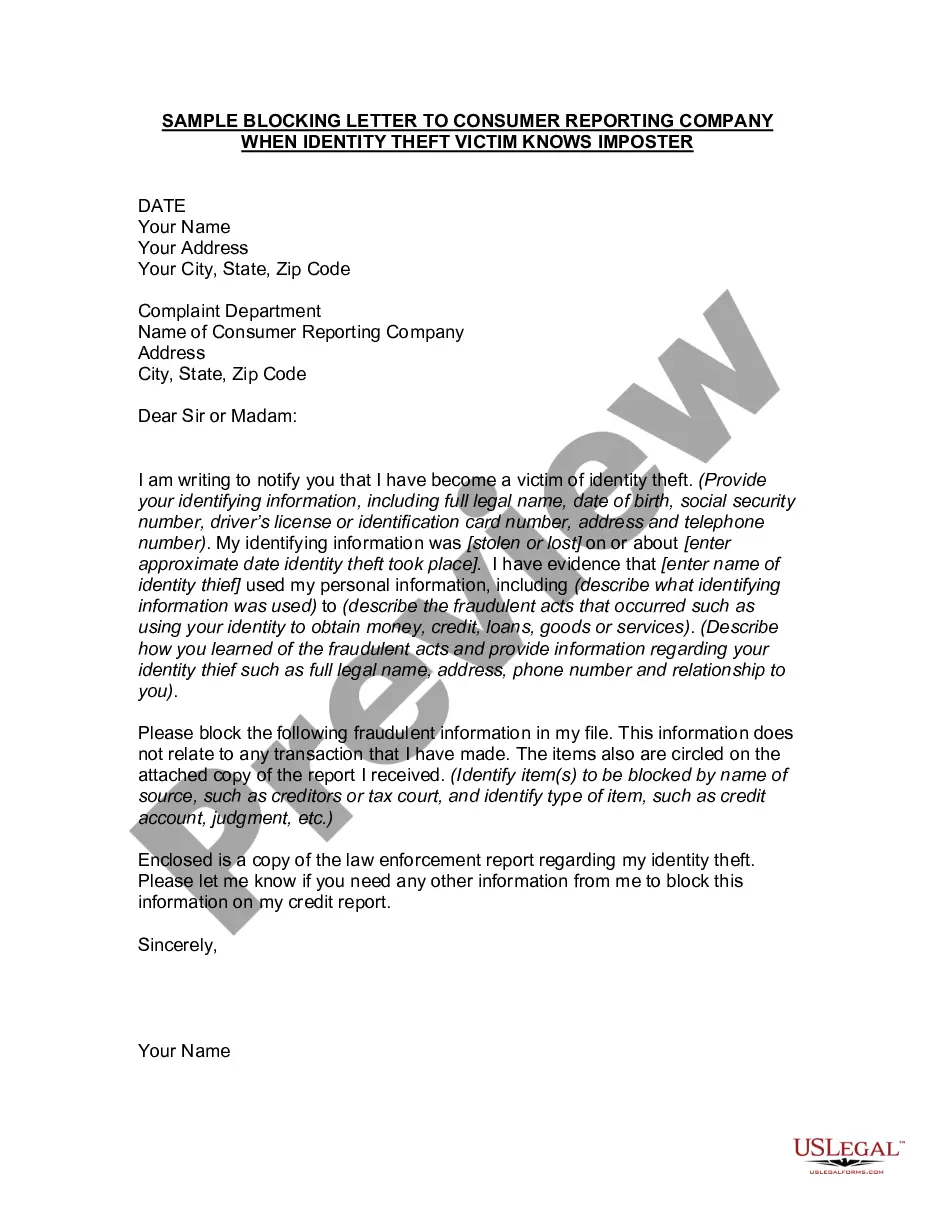
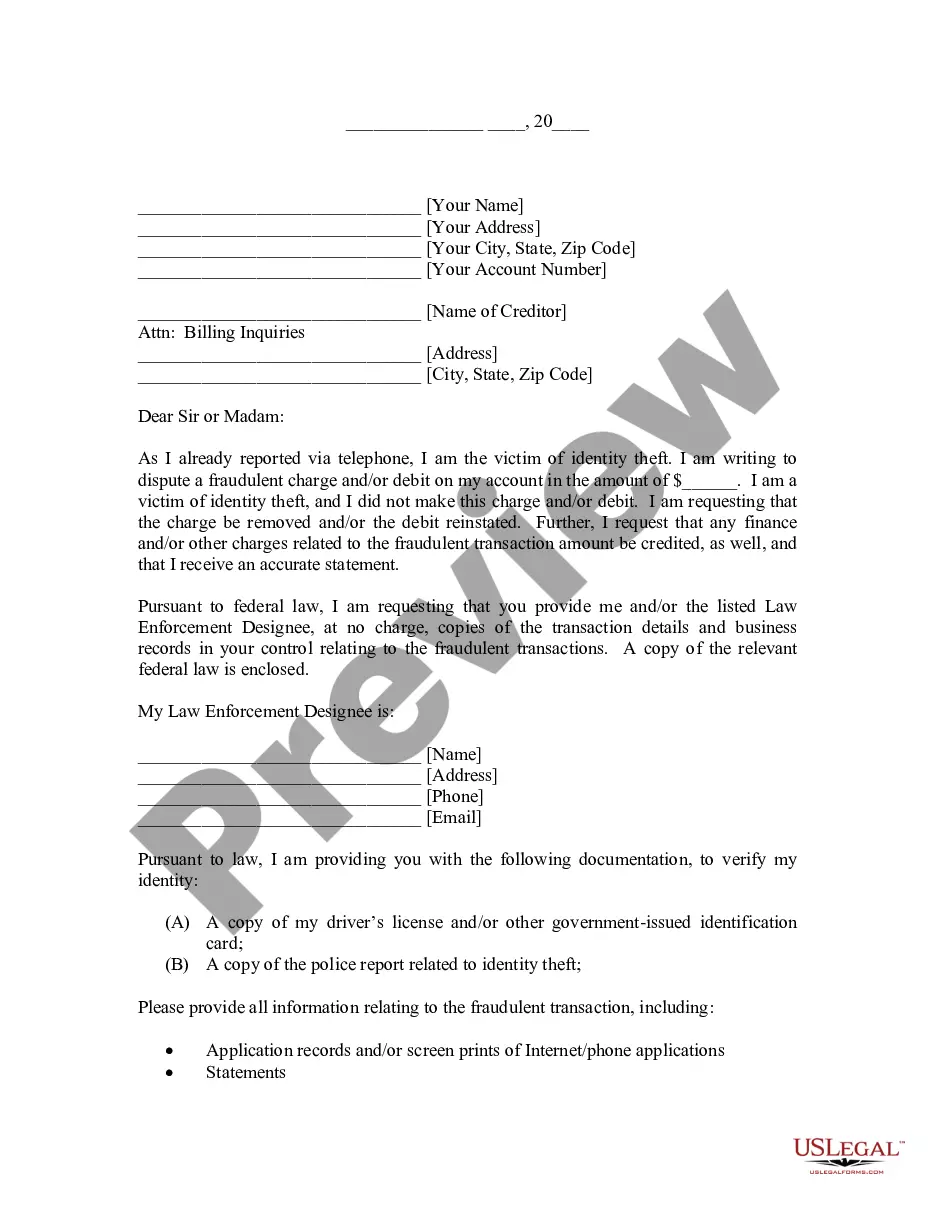
How to fill out Guide For Identity Theft Victims Who Know Their Imposter?
Locating the appropriate legal document template can be a challenge. Of course, there are numerous templates accessible online, but how do you acquire the legal form you need? Utilize the US Legal Forms website. The service offers a vast selection of templates, including the Pennsylvania Guide for Identity Theft Victims Who Know Their Imposter, which can be used for business and personal purposes. All forms are vetted by experts and comply with federal and state regulations.
If you are already registered, Log In to your account and click the Download button to retrieve the Pennsylvania Guide for Identity Theft Victims Who Know Their Imposter. Use your account to search through the legal forms you have previously purchased. Navigate to the My documents tab of your account to obtain another copy of the document you require.
If you are a new user of US Legal Forms, here are simple steps you should follow: First, ensure you have chosen the correct form for your city/state. You can review the form using the Review button and examine the form details to confirm it is indeed the right one for you. If the form does not satisfy your requirements, use the Search field to find the appropriate form. Once you are confident that the form is suitable, select the Get now button to obtain the form. Choose the pricing plan you desire and enter the necessary information. Create your account and pay for the order using your PayPal account or credit card. Select the file format and download the legal document template to your device. Complete, modify, print, and sign the acquired Pennsylvania Guide for Identity Theft Victims Who Know Their Imposter.
The platform is designed to streamline the process of obtaining legal documents, making it easier for users to find and utilize the forms they need.
- US Legal Forms is the largest repository of legal forms.
- You can find a wide range of document templates.
- Utilize the service to download professionally crafted paperwork.
- All documents comply with state requirements.
- Efficiently manage your legal documentation needs.
- Access a comprehensive library of legal resources.
Form popularity
FAQ
You see unfamiliar and unauthorized activity on your credit card or credit report. Another sign that you may be a victim of financial ID theft is suspicious activity on your credit card statement. Criminals sometimes make small charges to test an account to see if a fraudulent charge will go through.
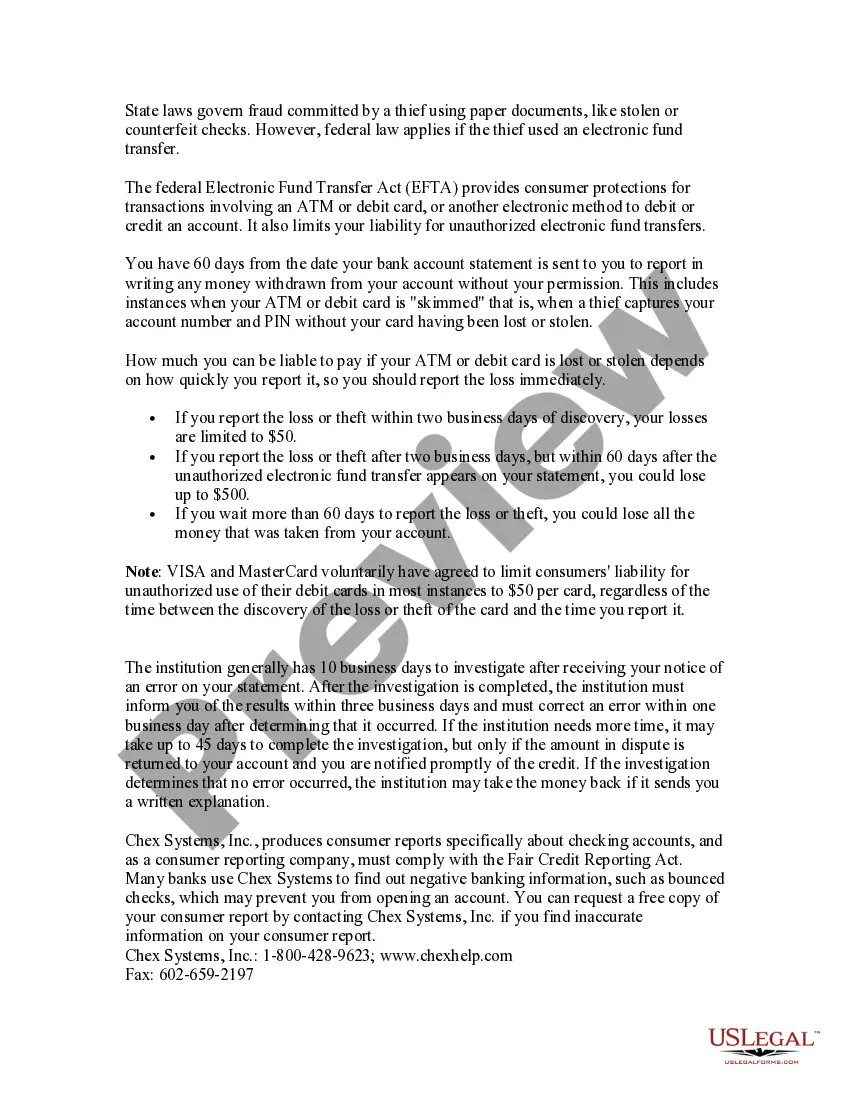
Inform your bank, building society and credit card company of any unusual transactions on your statement. Request a copy of your credit file to check for any suspicious credit applications. Report the theft of personal documents and suspicious credit applications to the police and ask for a crime reference number.
What should you do if you think you are a victim of identity theft? notify your financial institution and the local police; contact the CRA at 1-800-959-8281; report the theft to a credit reporting agency such as Equifax or TransUnion; keep records of recent purchases, payments, and financial transactions; and.
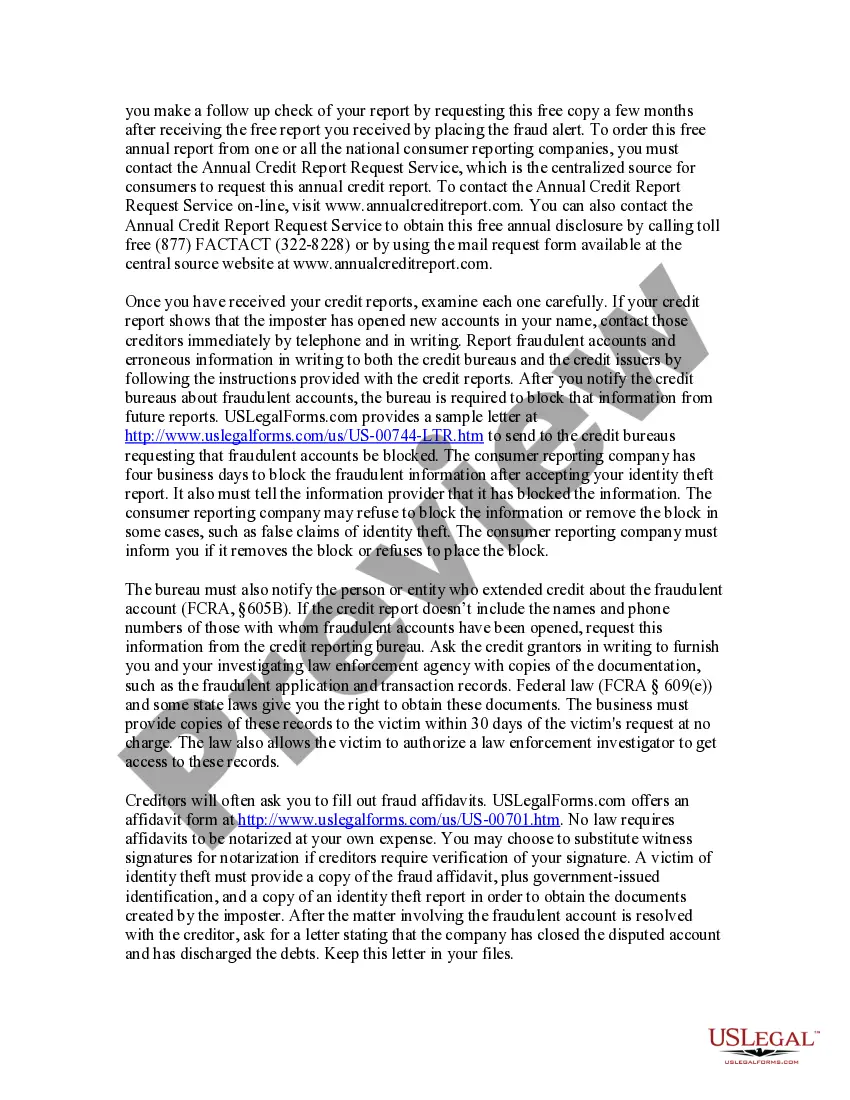
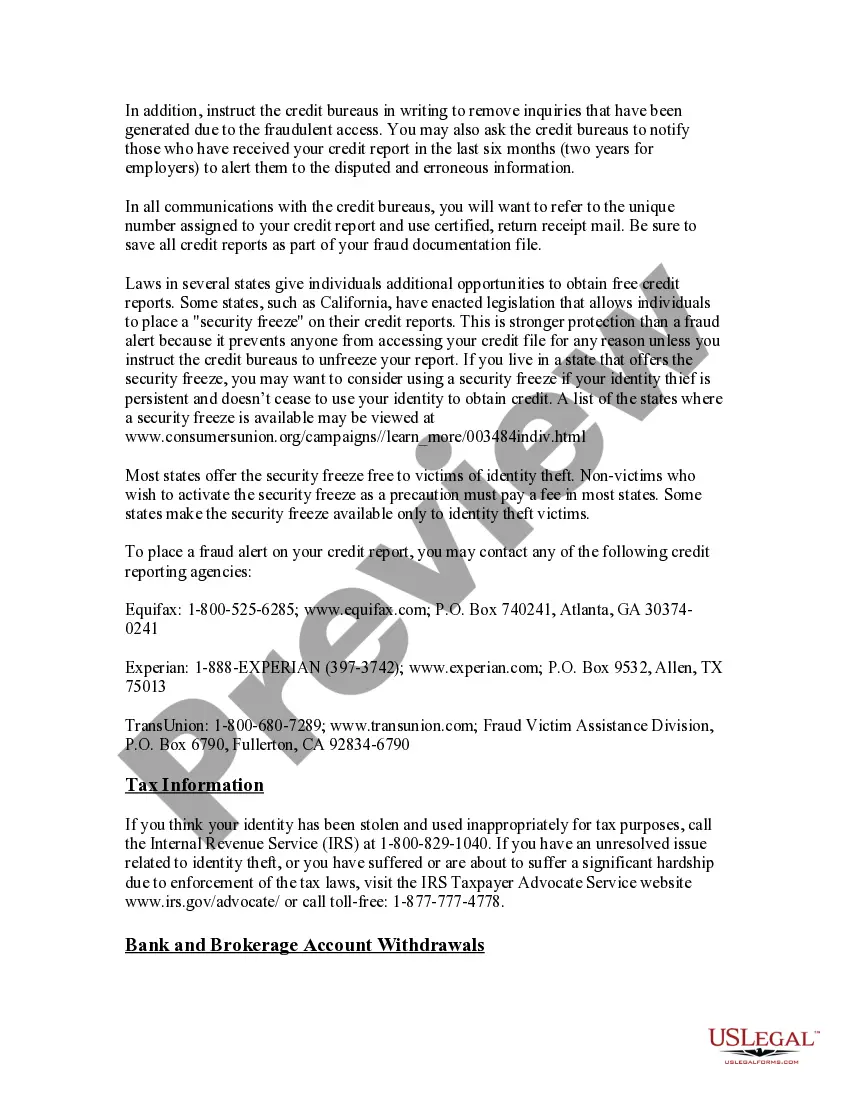
Steps for Victims of Identity Theft or Fraud Place a fraud alert on your credit report. Close out accounts that have been tampered with or opened fraudulently. Report the identity theft to the Federal Trade Commission. File a report with your local police department.
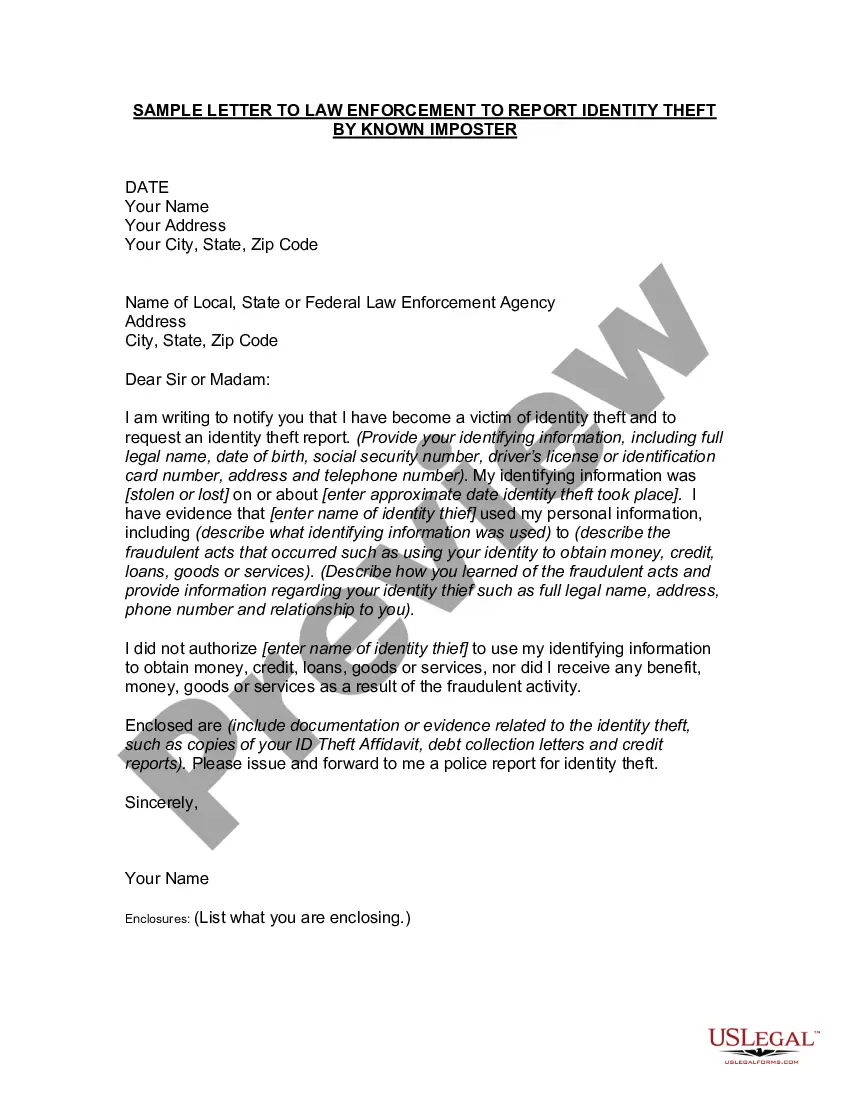
Use the ID Theft Affidavit Creditors may ask you to fill out fraud affidavits. The Federal Trade Commission's ID Theft Affidavit is accepted by the credit bureaus and by most major creditors. Send copies of the completed form to creditors where the thief opened accounts in your name.
Unfortunately, in many reported identity theft cases co-workers, friends, employees, neighbors and family members see an opportunity to commit identity theft and take advantage.
Steps for Victims of Identity Theft or Fraud Place a fraud alert on your credit report. Close out accounts that have been tampered with or opened fraudulently. Report the identity theft to the Federal Trade Commission. File a report with your local police department.
Consumers can report identity theft at IdentityTheft.gov, the federal government's one-stop resource to help people report and recover from identity theft. The site provides step-by-step advice and helpful resources like easy-to-print checklists and sample letters.