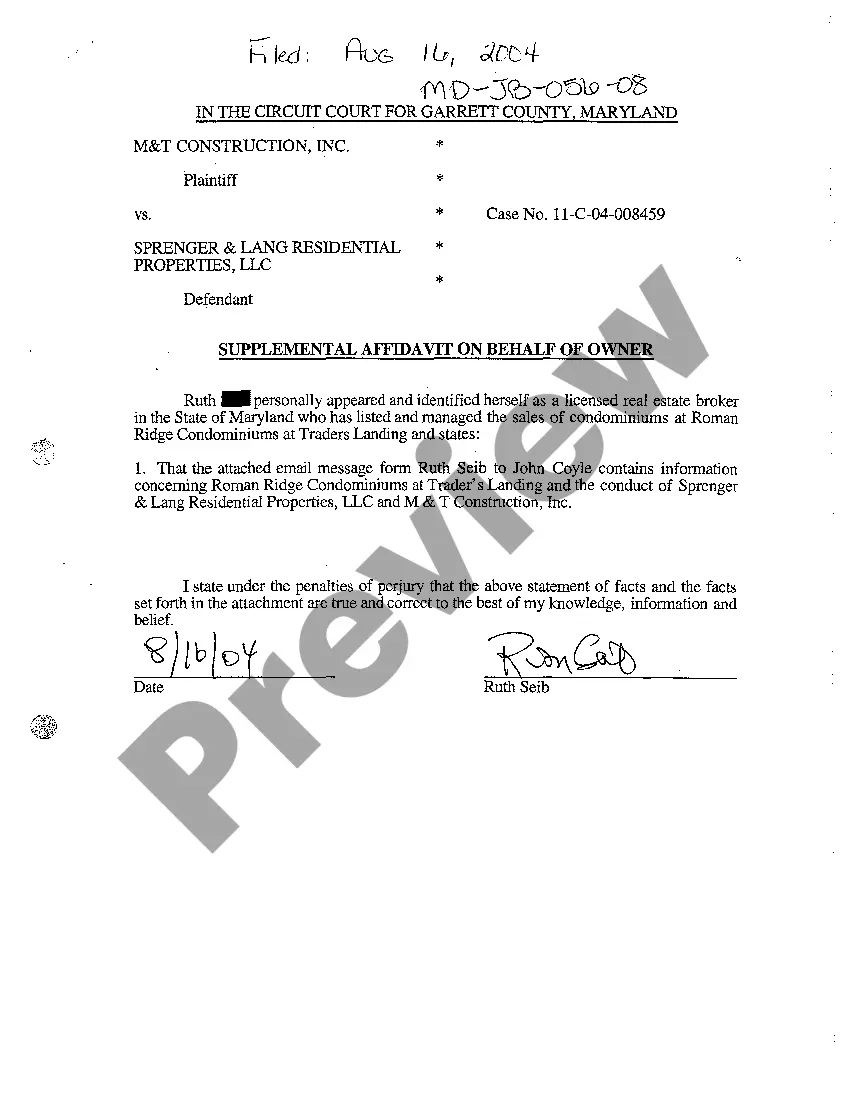
Pennsylvania Acknowledgment for Plaintiff (for Marital Property Settlement Agreement)
About this form
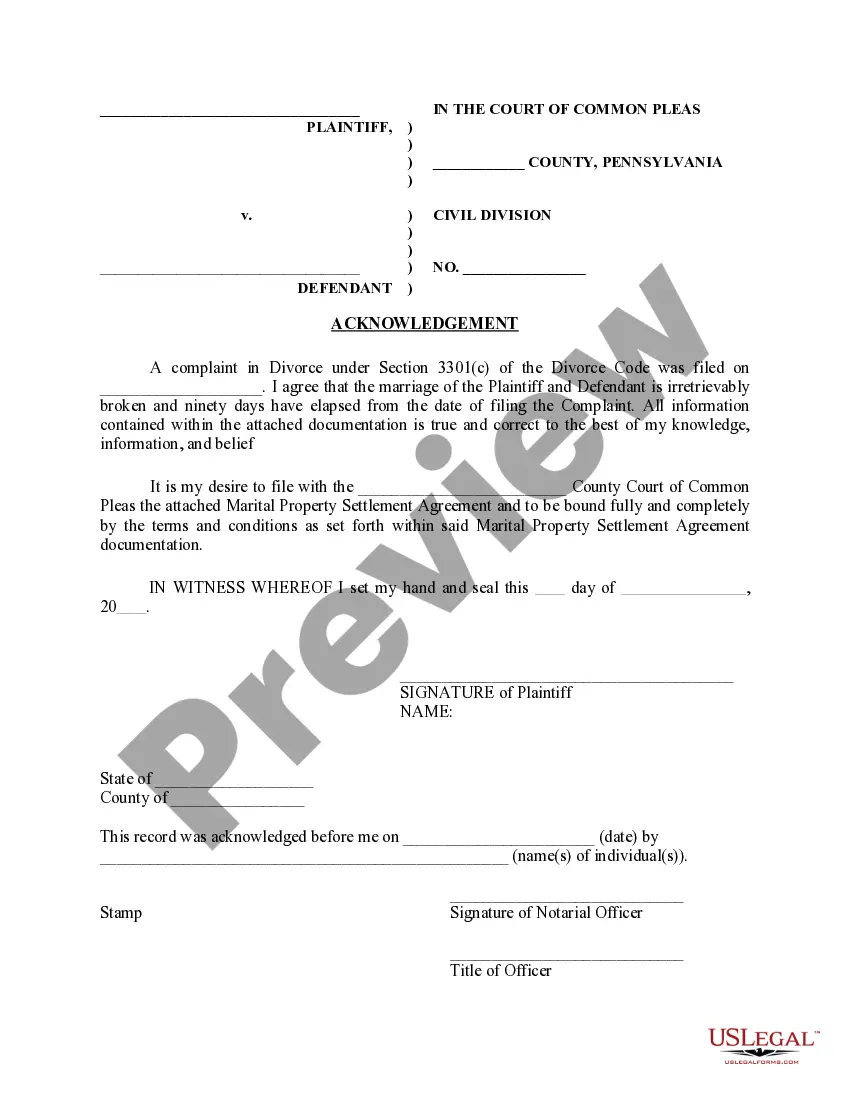
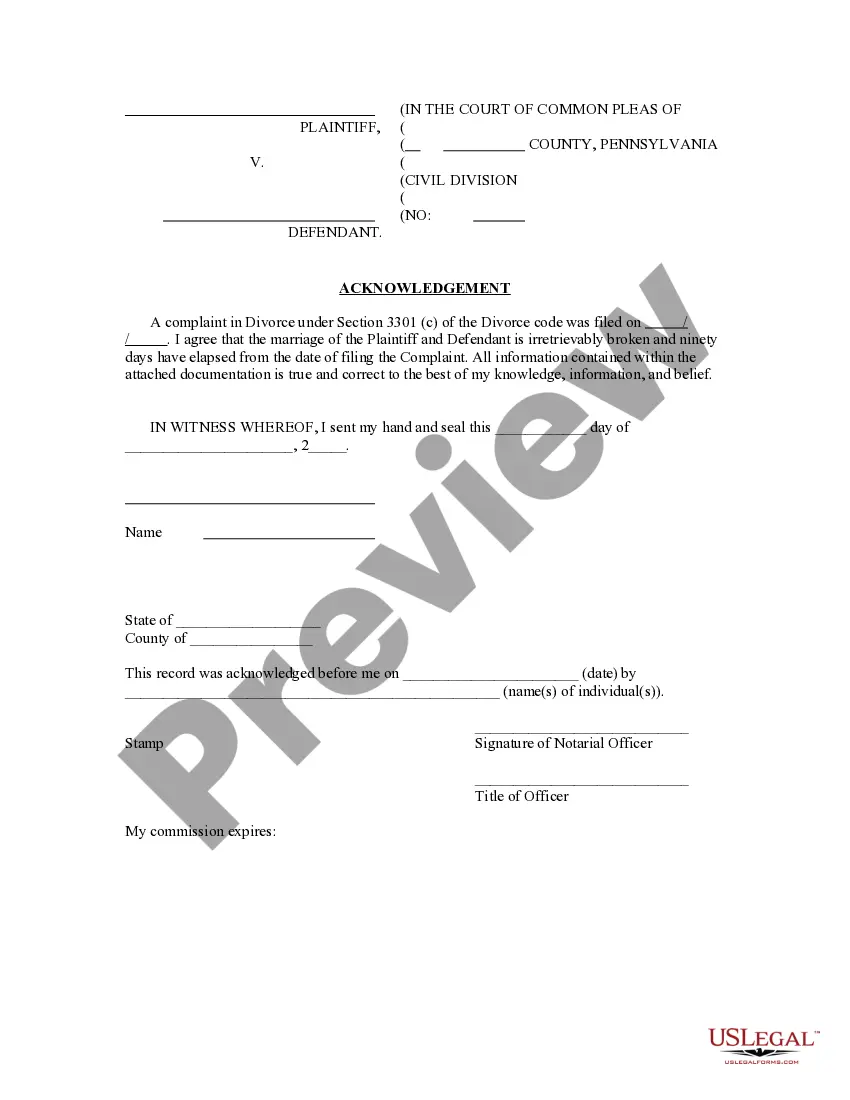
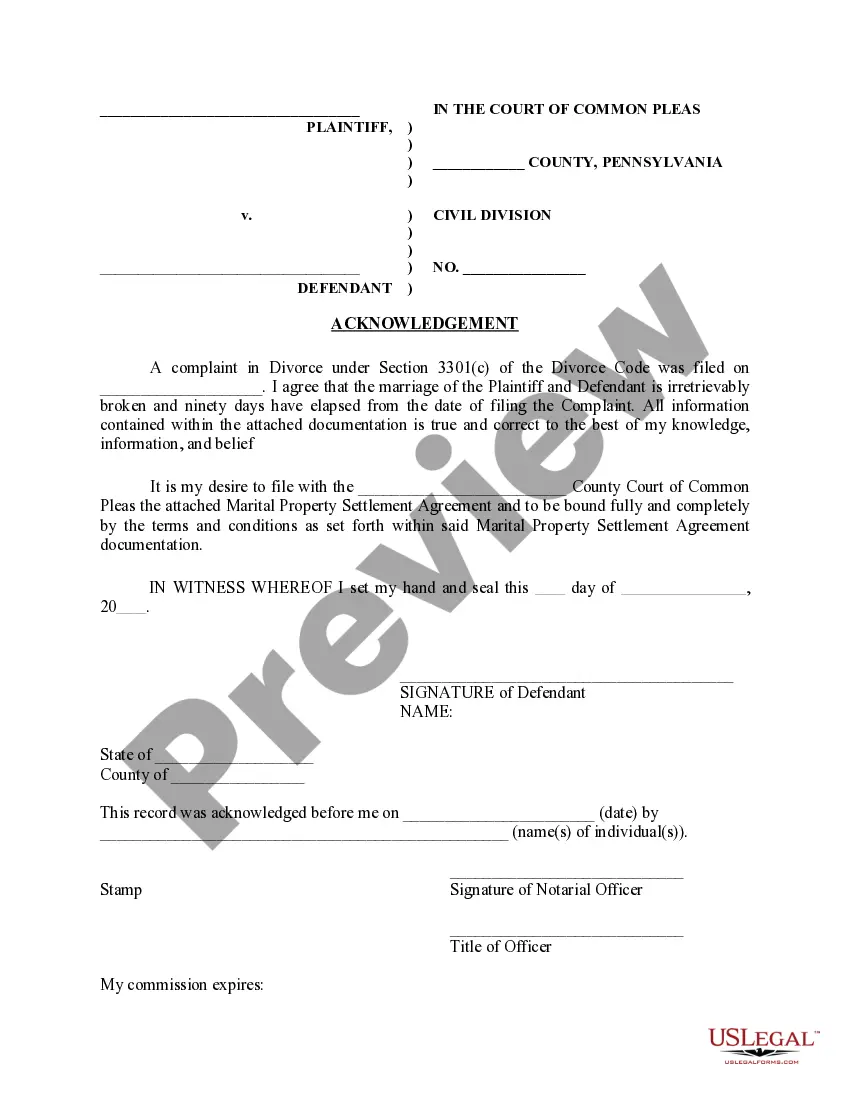
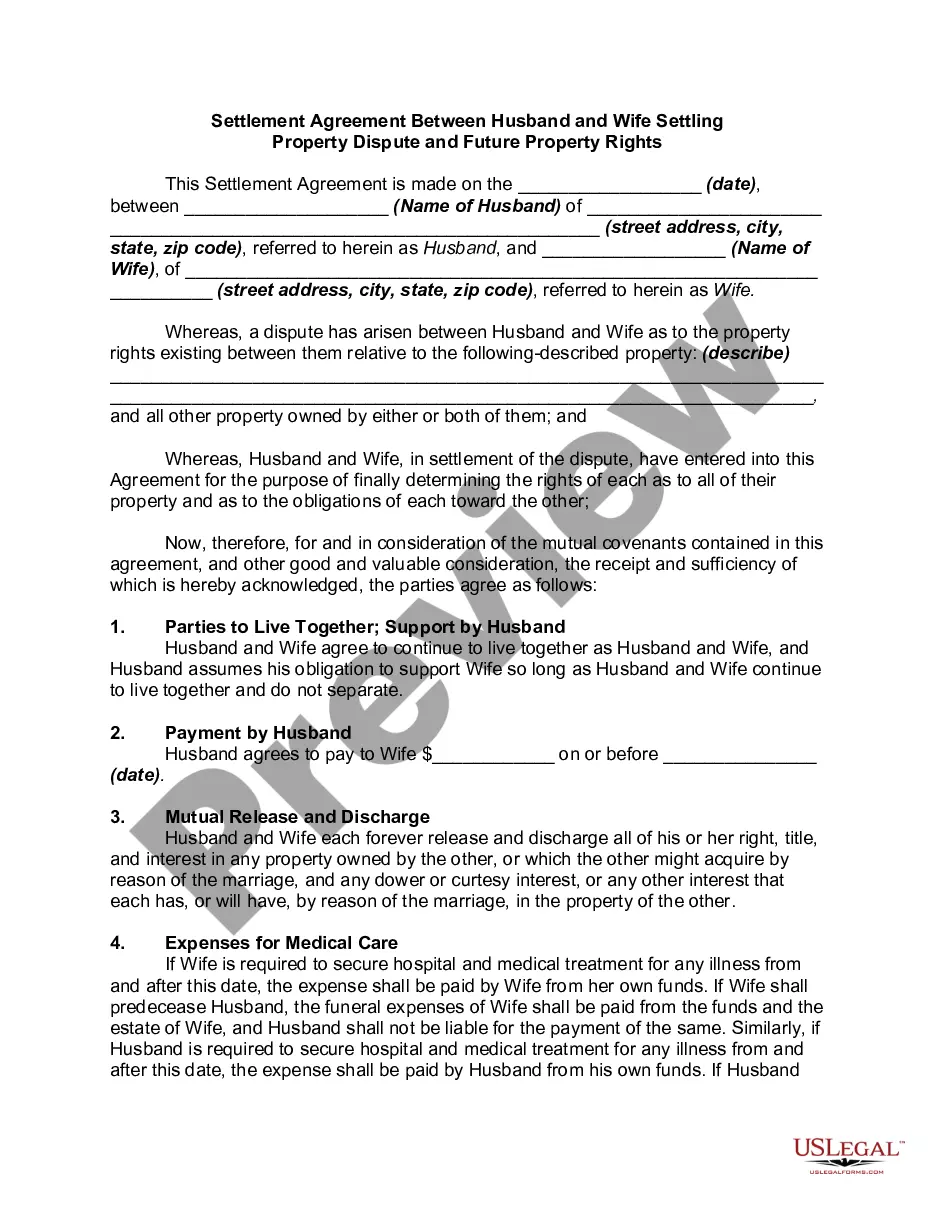
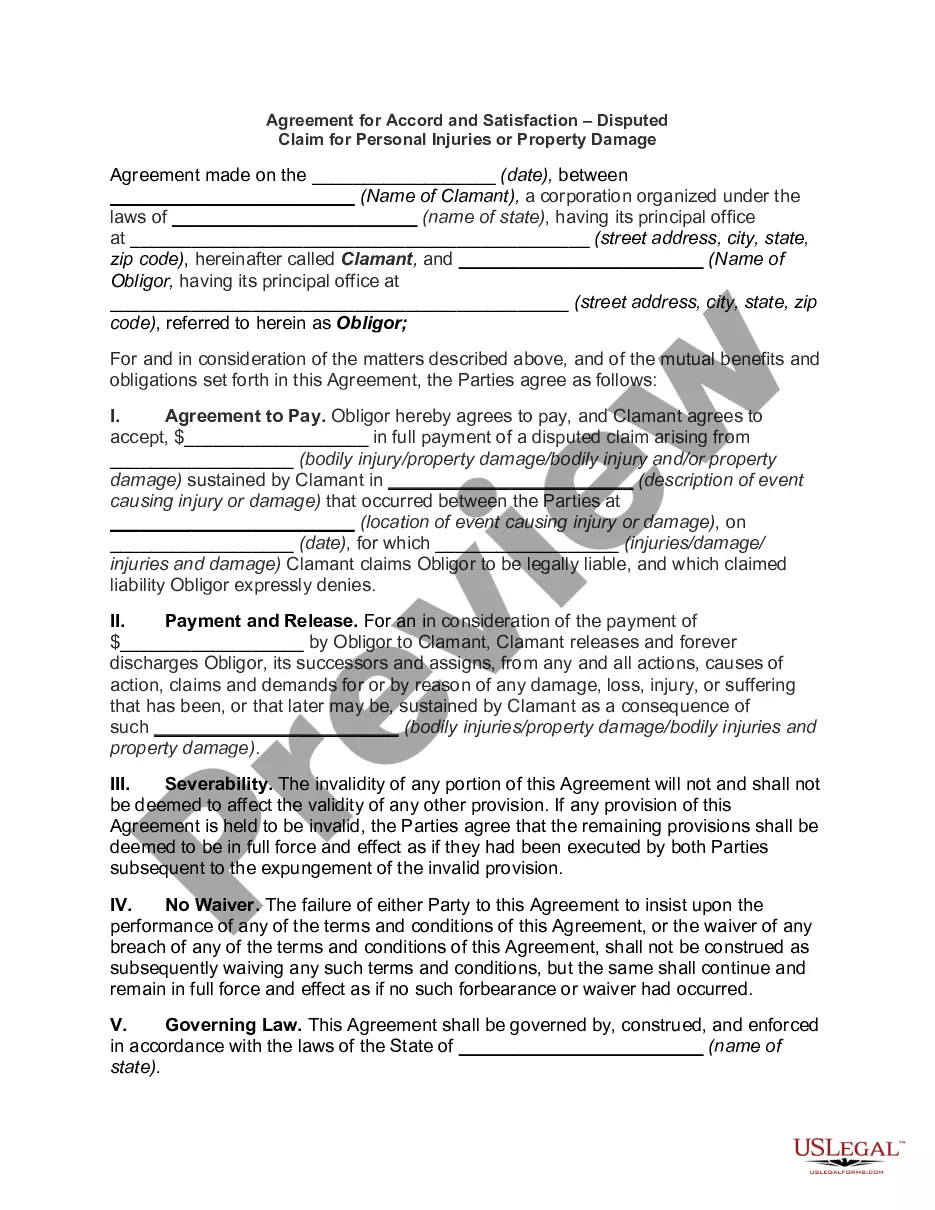
The Acknowledgment for Plaintiff (for Marital Property Settlement Agreement) is a legal document that confirms the Plaintiff's agreement to the terms of a specific Marital Property Settlement Agreement. This form serves to ensure that both parties display mutual understanding and consent regarding the financial arrangements that arise from their divorce, differentiating it from other divorce-related documents by focusing specifically on property settlements.
Key components of this form
- Date of complaint filing for divorce under Section 3301(c).
- Statement confirming the marriage is irretrievably broken and ninety days have passed since filing.
- Acknowledgment of the truthfulness of information within the attached documents.
- Desire to file the Marital Property Settlement Agreement with the county court.
- Signature of the Plaintiff and notary public acknowledgment.

When to use this form
This form is used when a Plaintiff is finalizing a divorce and has reached an agreement on how to divide shared marital property. It should be completed and filed once the initial divorce complaint has been submitted and the requisite waiting period of ninety days has passed. This ensures that both parties are legally bound to the agreed-upon terms concerning their marital assets.
Intended users of this form
- Individuals who are Plaintiffs in a divorce case.
- Those who have agreed upon a Marital Property Settlement Agreement with their spouse.
- Parties looking to formalize their agreement legally.
How to complete this form
- Identify the date the divorce complaint was filed.
- Confirm that ninety days have elapsed since the complaint's filing.
- Verify that all information provided in the attached documents is accurate.
- Fill in the name of the county court where the agreement will be filed.
- Sign the form in the presence of a notary public to validate your acknowledgment.
Notarization requirements for this form
Yes, this form must be notarized to be legally valid. US Legal Forms offers integrated online notarization, allowing you to secure a notary via a secure video call, making the process simple and accessible without the need for travel.
Get your form ready online
Our built-in tools help you complete, sign, share, and store your documents in one place.
Make edits, fill in missing information, and update formatting in US Legal Forms—just like you would in MS Word.
Download a copy, print it, send it by email, or mail it via USPS—whatever works best for your next step.
Sign and collect signatures with our SignNow integration. Send to multiple recipients, set reminders, and more. Go Premium to unlock E-Sign.
If this form requires notarization, complete it online through a secure video call—no need to meet a notary in person or wait for an appointment.
We protect your documents and personal data by following strict security and privacy standards.

Make edits, fill in missing information, and update formatting in US Legal Forms—just like you would in MS Word.

Download a copy, print it, send it by email, or mail it via USPS—whatever works best for your next step.

Sign and collect signatures with our SignNow integration. Send to multiple recipients, set reminders, and more. Go Premium to unlock E-Sign.

If this form requires notarization, complete it online through a secure video call—no need to meet a notary in person or wait for an appointment.

We protect your documents and personal data by following strict security and privacy standards.
Common mistakes
- Failing to provide an accurate date of filing the divorce complaint.
- Not confirming that the necessary waiting period has been met.
- Leaving sections of the form blank.
- Neglecting to have the form notarized before submission.
Benefits of using this form online
- Convenience of downloading the form from home.
- Editable templates allowing for customization to suit individual needs.
- Access to forms drafted by licensed attorneys for reliability.
- Immediate availability without the need for in-person appointments.
What to keep in mind
- The form confirms acknowledgment of a Marital Property Settlement Agreement.
- It is essential for Plaintiffs finalizing divorce-related property settlements.
- Accurate completion and notarization are crucial for legal validity.
Looking for another form?
Form popularity
FAQ
Pennsylvania is an equitable distribution state. It divides property in a divorce based on a judge's determination of what's fair under the circumstances of each case.Community property states, on the other hand, attempt an equal 50-50 distribution between the spouses.
Is Pennsylvania a Community Property State? No. Pennsylvania divides marital property under the theory of equitable distribution.
Any assets acquired before the marriage are considered separate property, and are owned only by that original owner.Spouses can also comingle their separate property with community property, for example, by adding funds from before the marriage to the community property funds.
California's separate property laws apply to a house owned before marriage.(b) A married person may, without the consent of the person's spouse, convey the person's separate property." Therefore, you should have a separate property interest during the divorce in that premarital asset which is your house.
Pennsylvania divides marital property under the theory of equitable distribution.Community property states attempt a 50-50 distribution, as best as possible. Equitable distribution states divide property based on a determination of what's fair under the circumstances of each case.
Marital property includes all property that was acquired during the marriage, regardless of how it is titled (in whose name it is). Gifts from one spouse to another are marital property if they were purchased with marital funds.
Marital property includes real estate and other property a couple buys together during their marriage, such as a home or investment property, cars, boats, furniture, or artwork, when not acquired by either as separate property.
Pennsylvania is an equitable distribution state. It divides property in a divorce based on a judge's determination of what's fair under the circumstances of each case.Community property states, on the other hand, attempt an equal 50-50 distribution between the spouses.