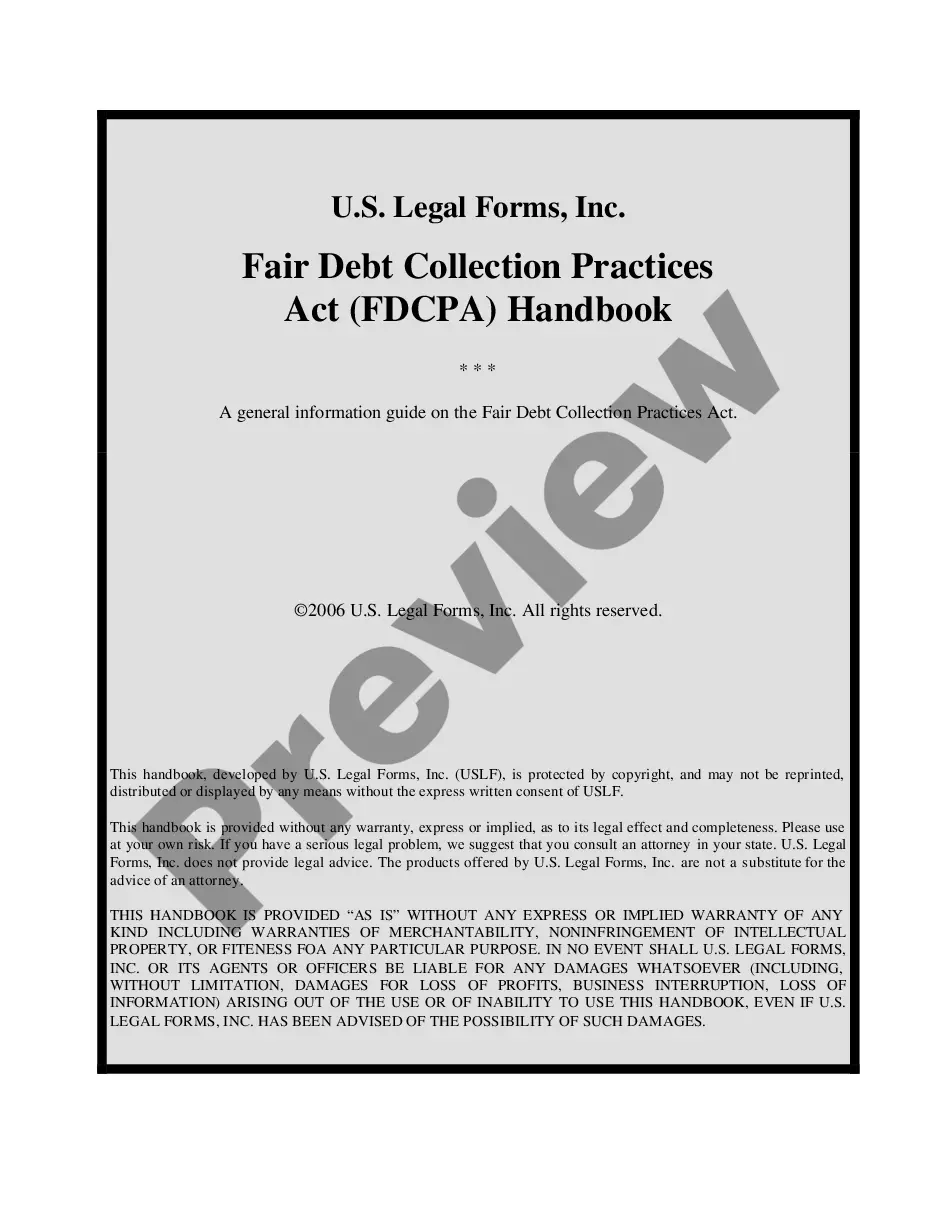
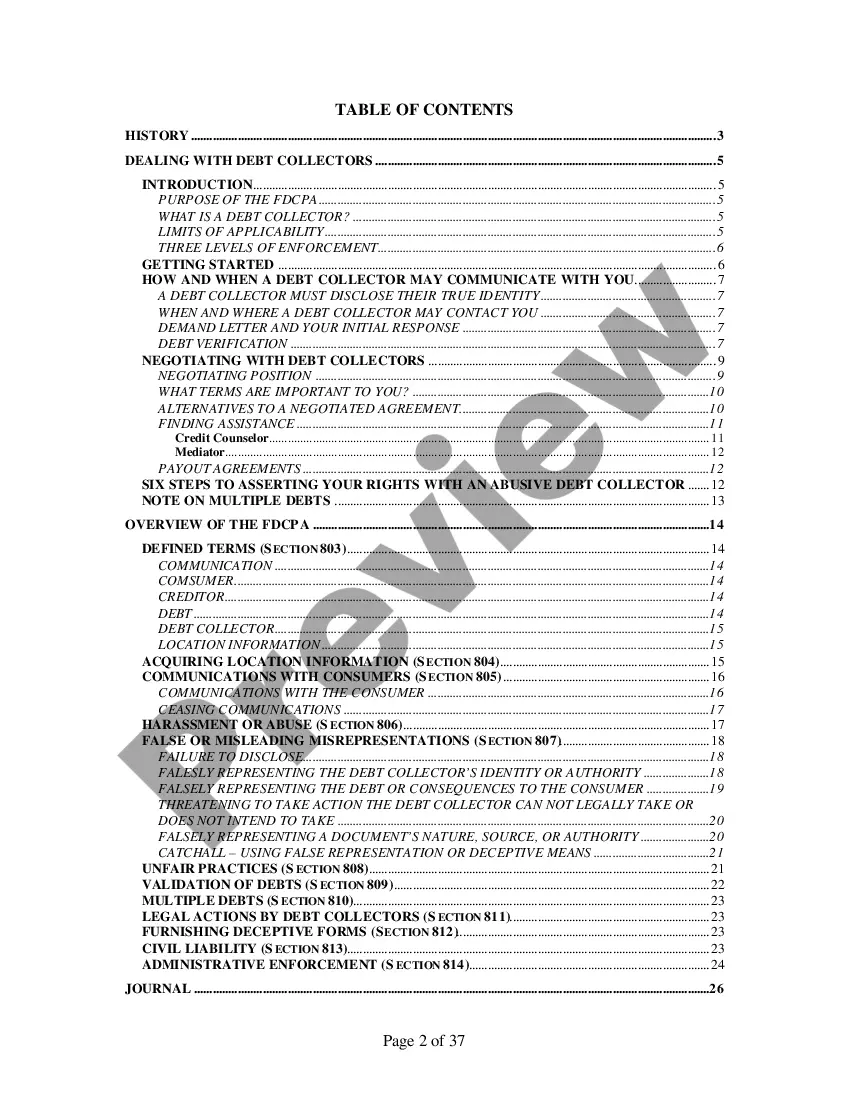
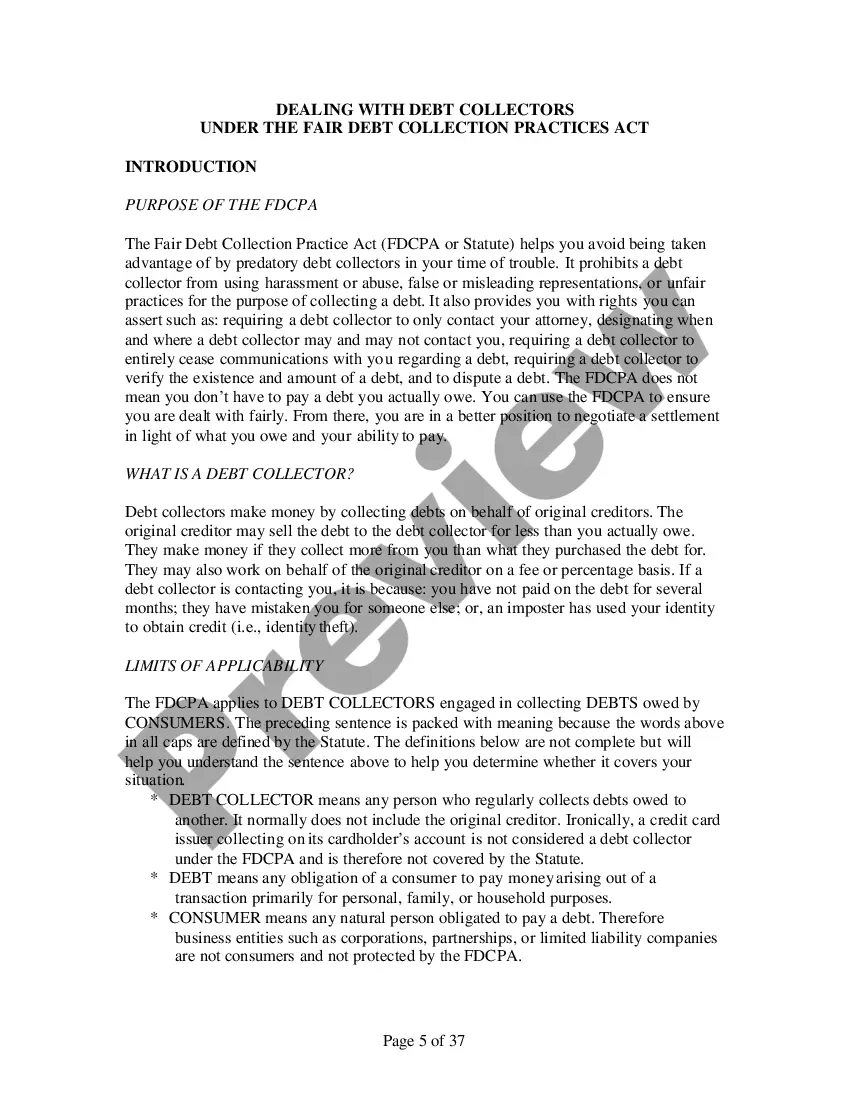
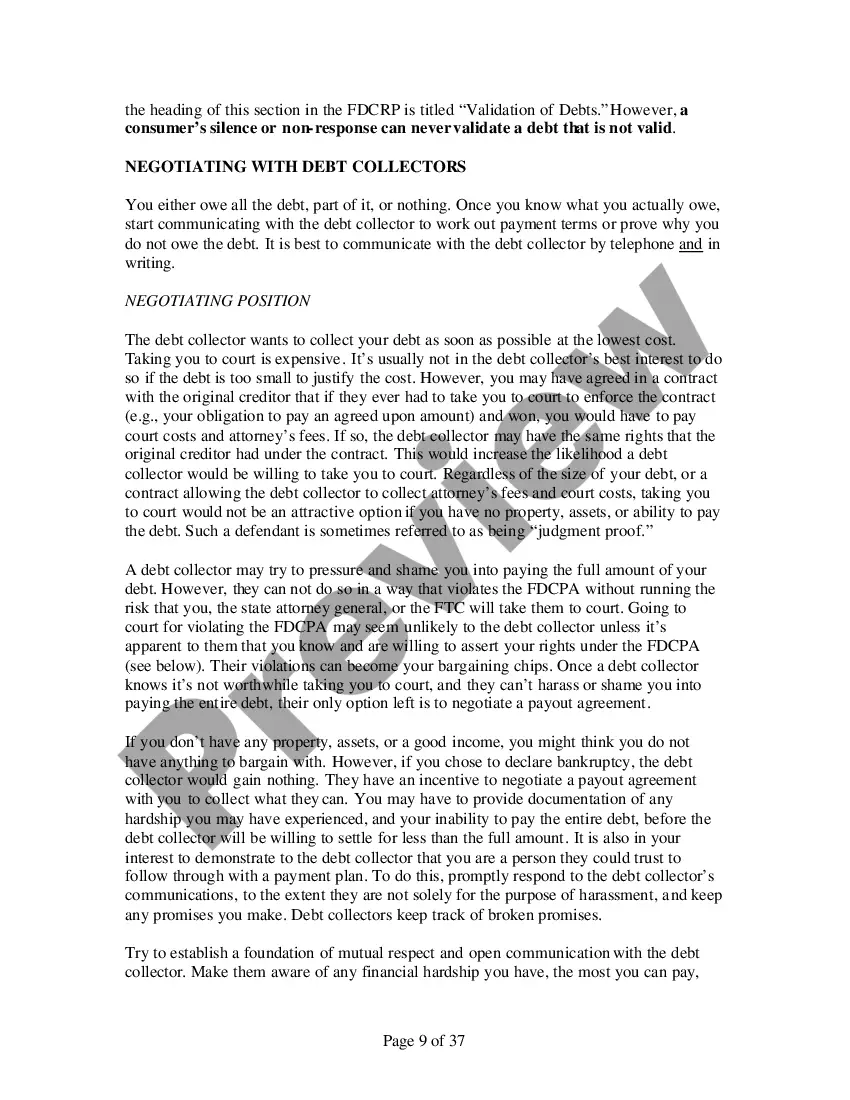
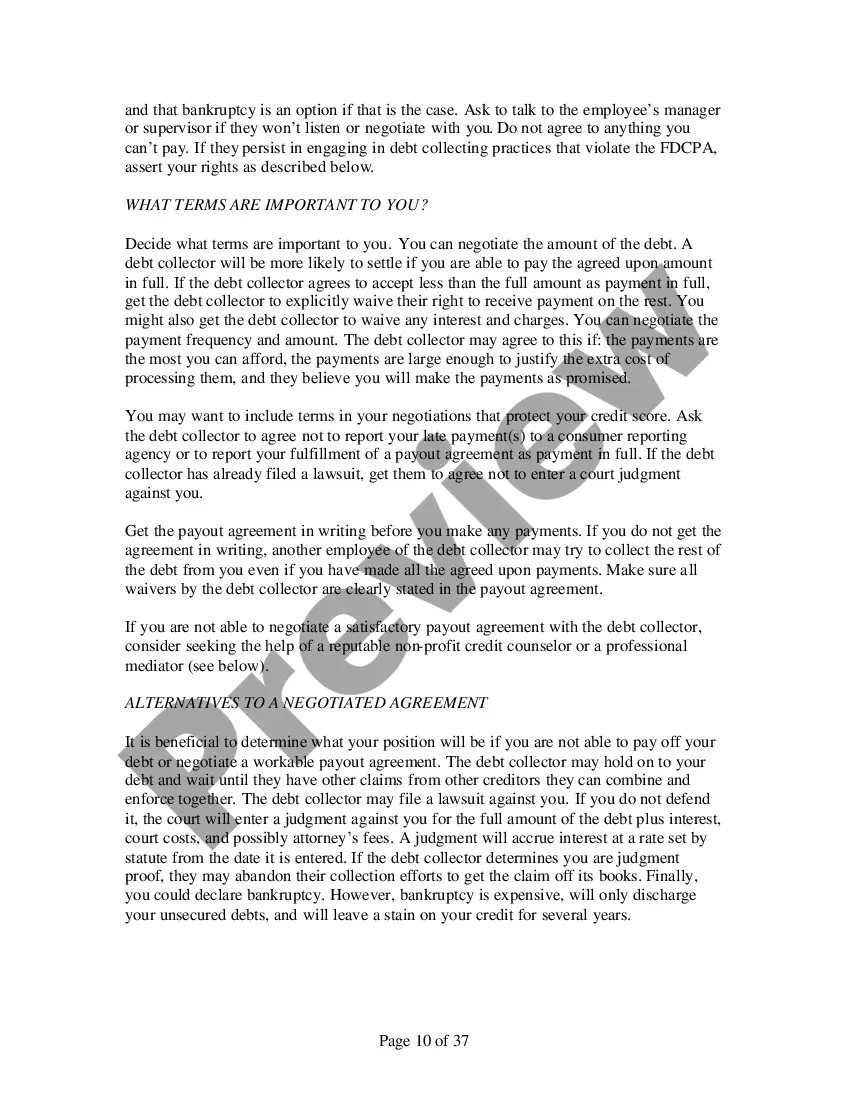
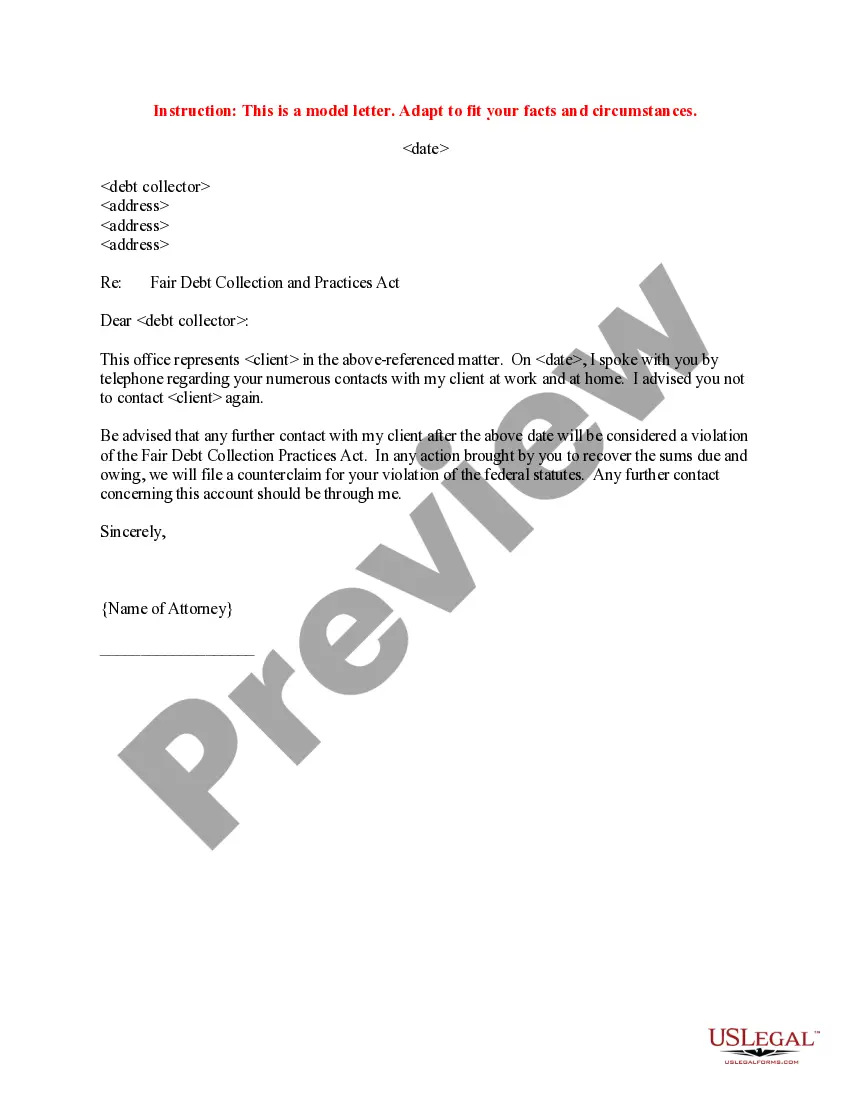
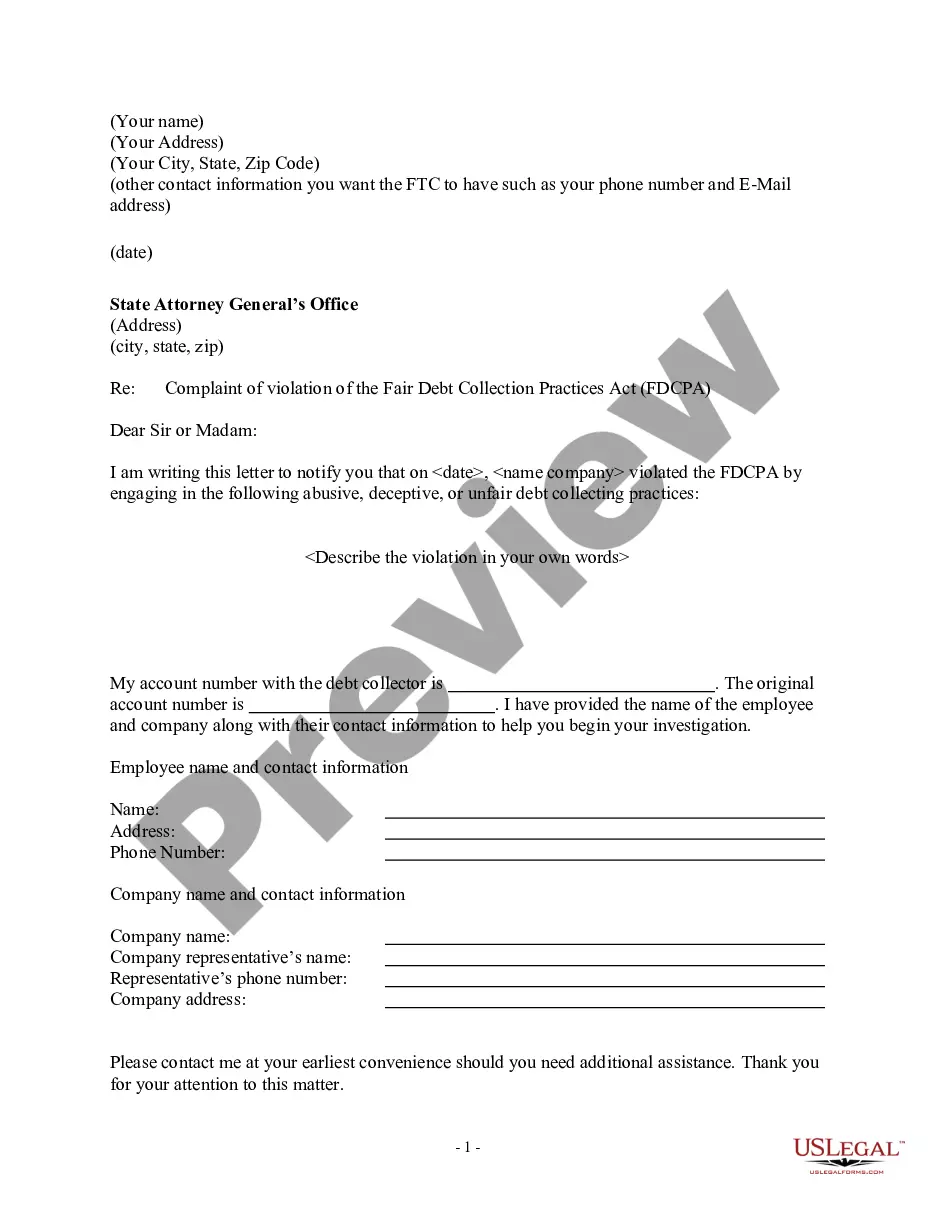
This handbook describes the Fair Debt Collection Practices Act (FDCPA) and discusses how to negotiate with debt collectors and creditors. The handbook is divided into 4 sections. Section 1 briefly describes how consumer credit got started. Section 2 describes how to deal with debt collectors. Section 3 provides a detailed overview of the FDCPA. Finally, Section 4 is a journal for you to use to document your communicatioins with debt collectors.
Oregon Fair Debt Collection Practices Act Handbook
State:
Multi-State
Category:
Control #:
US-DCPA-23
Format:
PDF
124 downloads
Description
Free preview

Get your form ready online
Our built-in tools help you complete, sign, share, and store your documents in one place.
Built-in online Word editor
Make edits, fill in missing information, and update formatting in US Legal Forms—just like you would in MS Word.
Export easily
Download a copy, print it, send it by email, or mail it via USPS—whatever works best for your next step.
E-sign your document
Sign and collect signatures with our SignNow integration. Send to multiple recipients, set reminders, and more. Go Premium to unlock E-Sign.
Notarize online 24/7
If this form requires notarization, complete it online through a secure video call—no need to meet a notary in person or wait for an appointment.
Store your document securely
We protect your documents and personal data by following strict security and privacy standards.

Make edits, fill in missing information, and update formatting in US Legal Forms—just like you would in MS Word.

Download a copy, print it, send it by email, or mail it via USPS—whatever works best for your next step.

Sign and collect signatures with our SignNow integration. Send to multiple recipients, set reminders, and more. Go Premium to unlock E-Sign.

If this form requires notarization, complete it online through a secure video call—no need to meet a notary in person or wait for an appointment.

We protect your documents and personal data by following strict security and privacy standards.
Looking for another form?
How to fill out Fair Debt Collection Practices Act Handbook?
If you require to download, retrieve, or print legal document templates, use US Legal Forms, the most significant collection of legal forms, available online.
Utilize the website's straightforward and user-friendly search to locate the documents you need.
A range of templates for business and personal purposes are sorted by types and states, or keywords.
Step 3. If you are not satisfied with the form, use the Search box at the top of the screen to find other versions of the legal document template.
Step 4. Once you have found the form you want, click the Get Now button. Choose the payment plan you prefer and provide your details to create an account.
- Use US Legal Forms to get the Oregon Fair Debt Collection Practices Act Handbook in just a few clicks.
- If you are an existing US Legal Forms client, Log In to your account and hit the Download button to find the Oregon Fair Debt Collection Practices Act Handbook.
- You can also access forms you previously saved in the My documents section of your account.
- If this is your first time using US Legal Forms, follow the instructions below.
- Step 1. Ensure you have chosen the form appropriate for your city/state.
- Step 2. Use the Preview option to review the form's content. Be sure to read the description.
Form popularity
FAQ
In California, the statute of limitations for consumer debt is four years. This means a creditor can't prevail in court after four years have passed, making the debt essentially uncollectable.
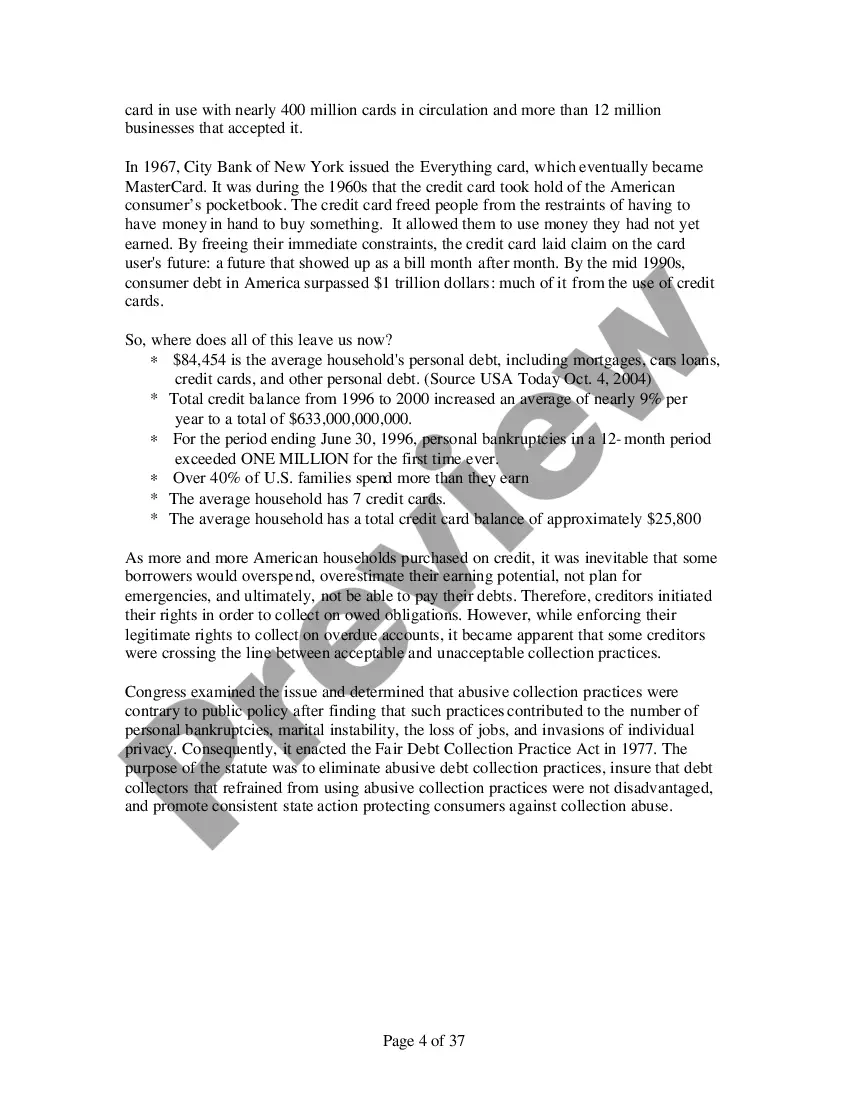
The Fair Debt Collection Practices Act (FDCPA) (15 USC 1692 et seq.), which became effective in March 1978, was designed to eliminate abusive, deceptive, and unfair debt collection practices.
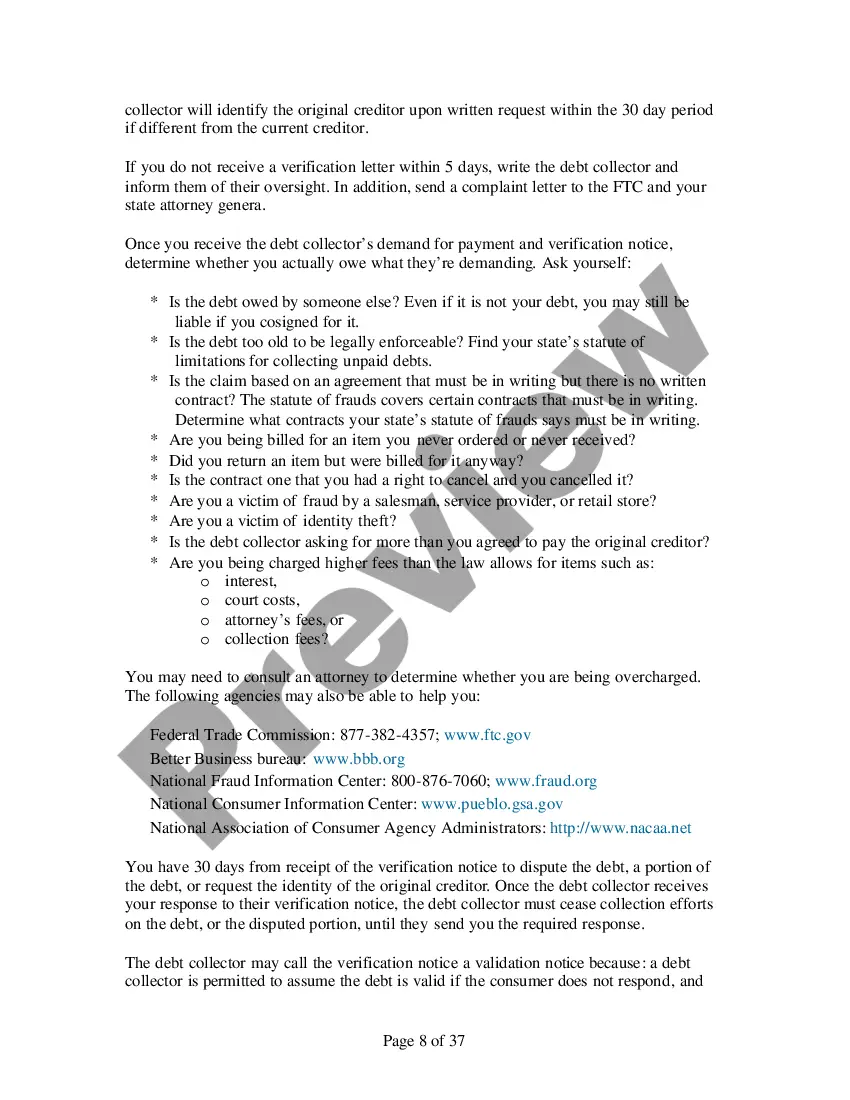
Deadline in Years In Oregon, the statute of limitations for debt is six years. This means a creditor has up to six years to file a lawsuit to collect on the debt. The six-year statute of limitations applies to medical debt, credit card debt, auto loan debt, etc.
Under the Fair Credit Reporting Act, debts can appear on your credit report generally for seven years and in a few cases, longer than that. Under state laws, if you are sued about a debt, and the debt is too old, you may have a defense to the lawsuit.
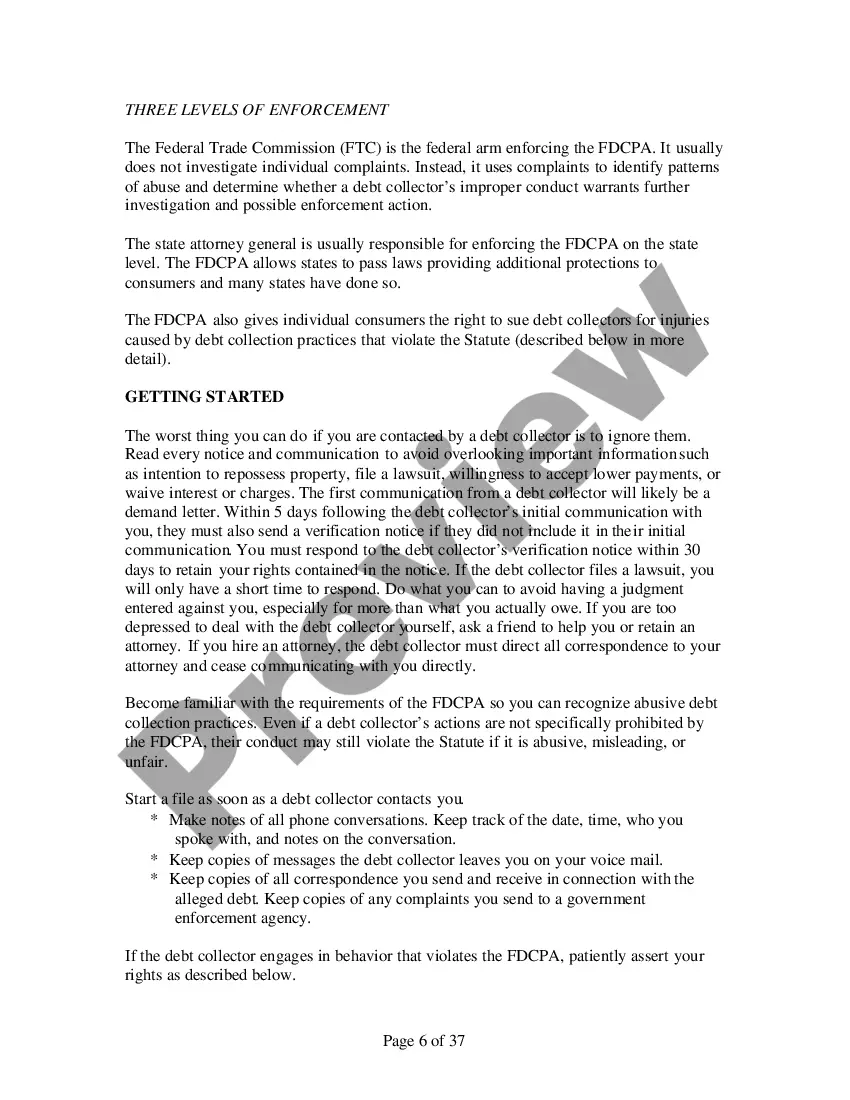
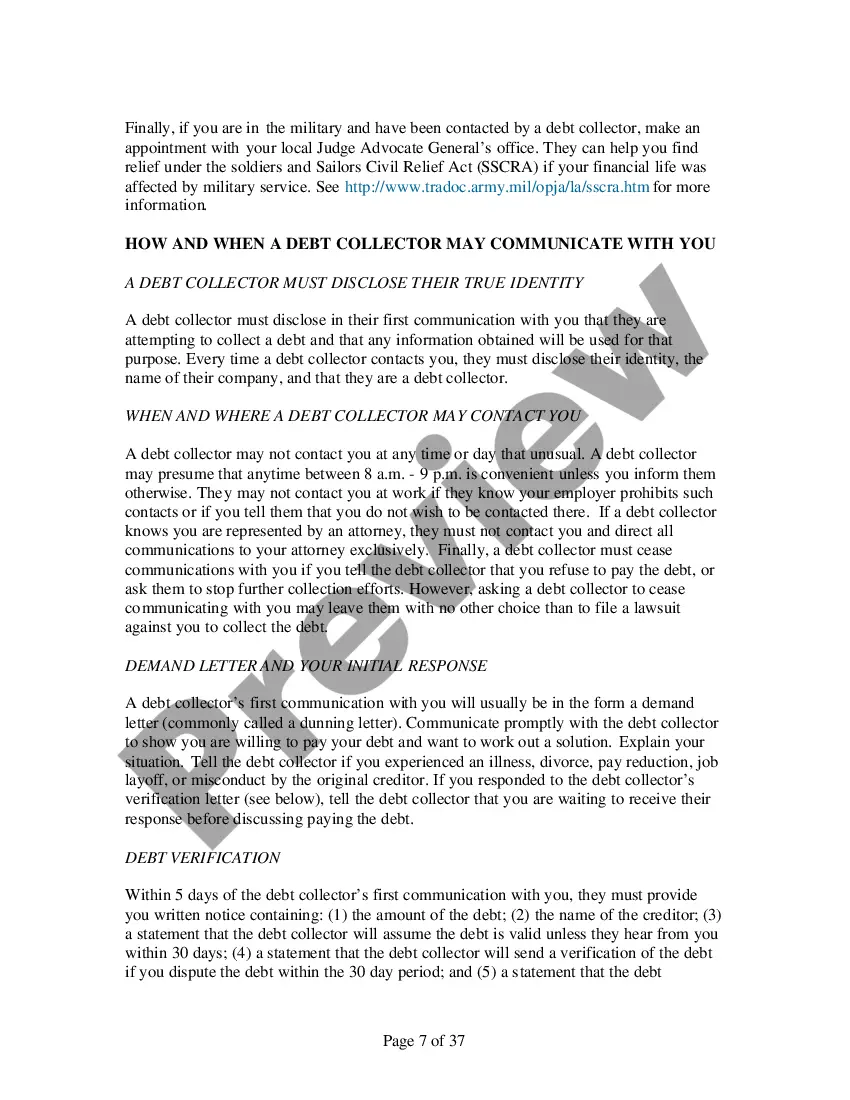
Here are five ways the Fair Debt Collection Practices Act protects you and what to do if your rights are violated:You control communication with debt collectors.You're protected from harassing or abusive practices.Debt collectors must be truthful.Unfair practices are prohibited.Collectors must validate your debt.More items...
The Fair Debt Collection Practices Act (FDCPA) The FDCPA prohibits debt collection companies from using abusive, unfair or deceptive practices to collect debts from you.
For most debts, the time limit is 6 years since you last wrote to them or made a payment. The time limit is longer for mortgage debts. If your home is repossessed and you still owe money on your mortgage, the time limit is 6 years for the interest on the mortgage and 12 years on the main amount.
What are the provisions of the FDCPA?Call Time Restrictions.Honoring Workplace Opt-Outs.Honoring Home Phone Opt-Outs.Restrictions Against Harassment.Restrictions Against Unfair Practices.Restrictions Against False Lawsuit Threats.
In most cases, the statute of limitations for a debt will have passed after 10 years. This means a debt collector may still attempt to pursue it (and you technically do still owe it), but they can't typically take legal action against you.