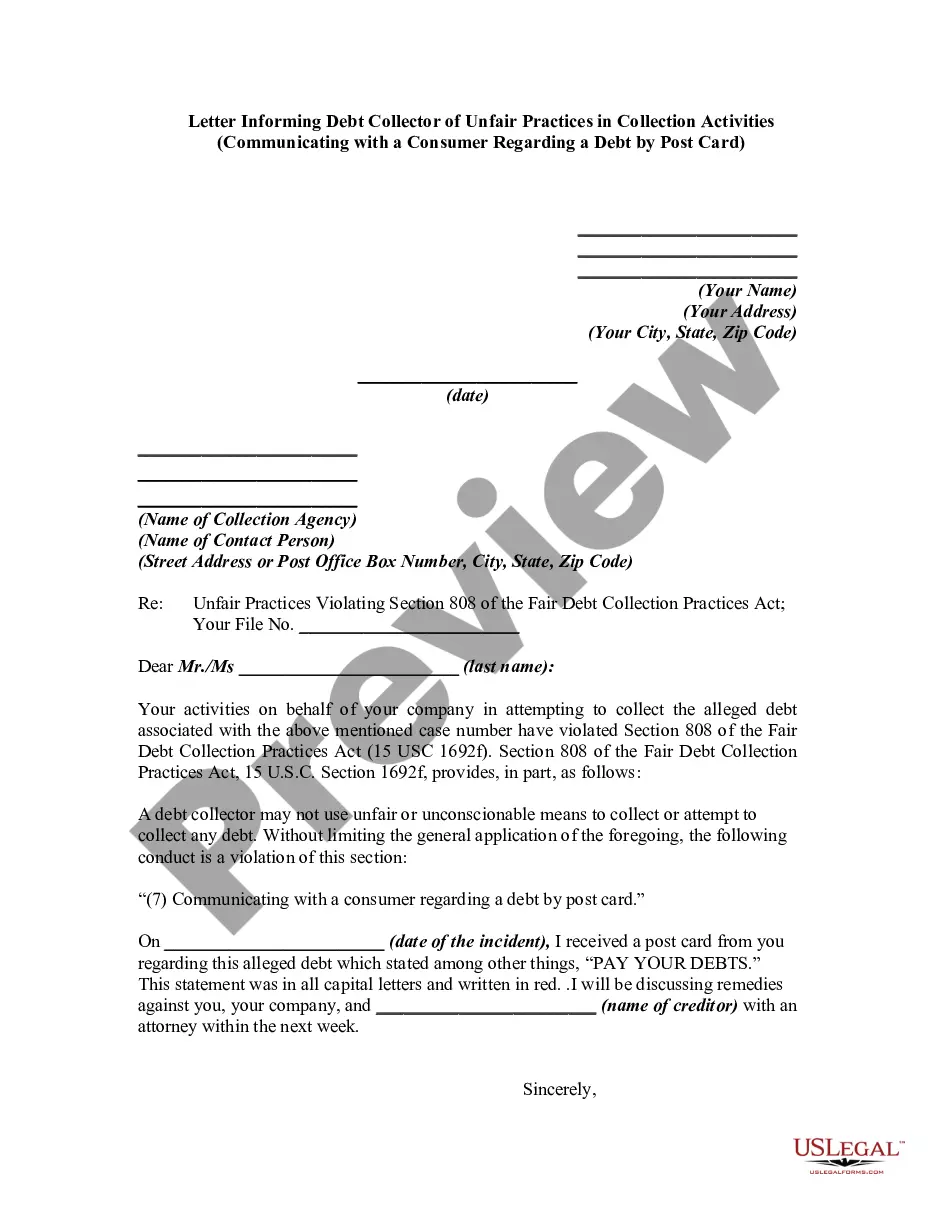
Oregon Notice of Violation of Fair Debt Act - Unlawful Contact by Postcard
Description
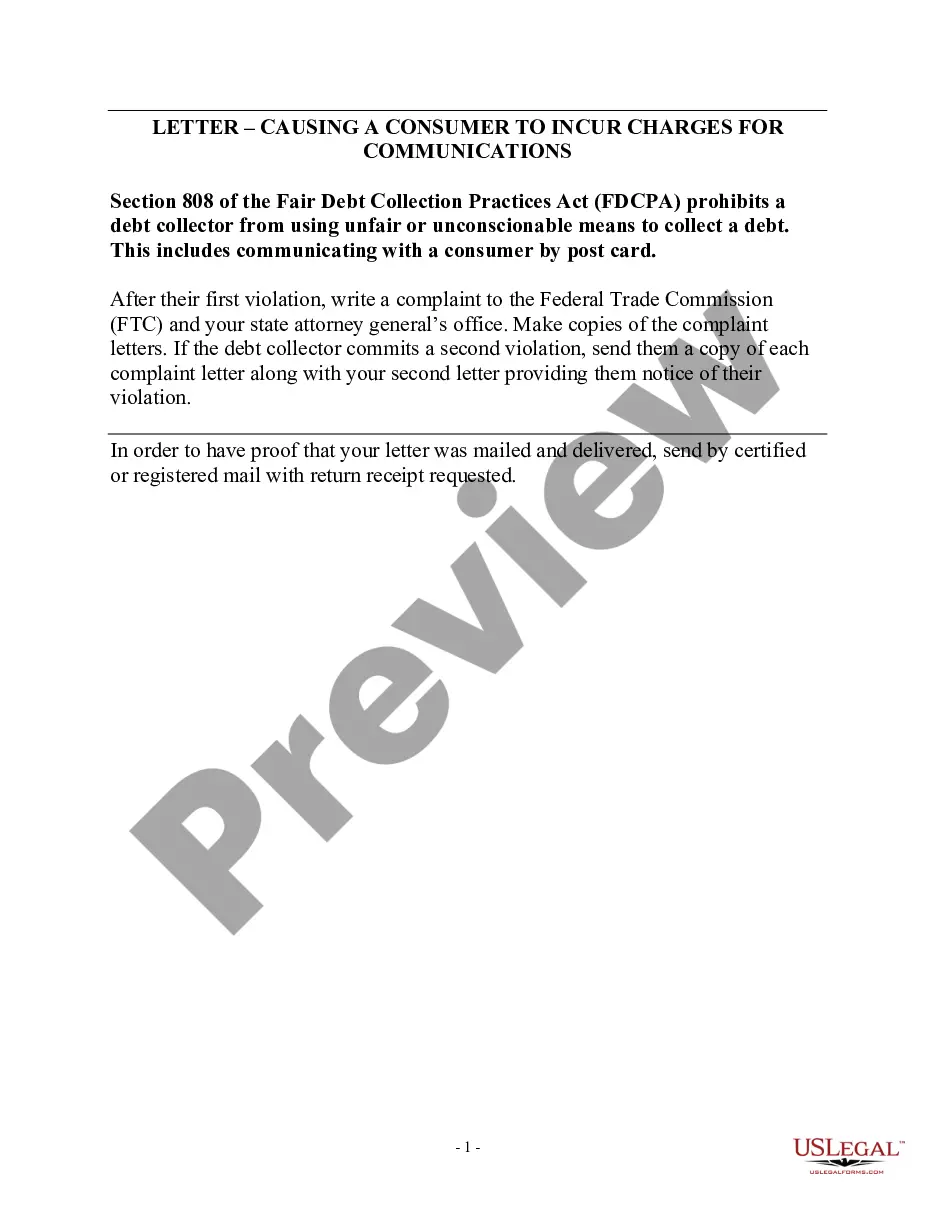
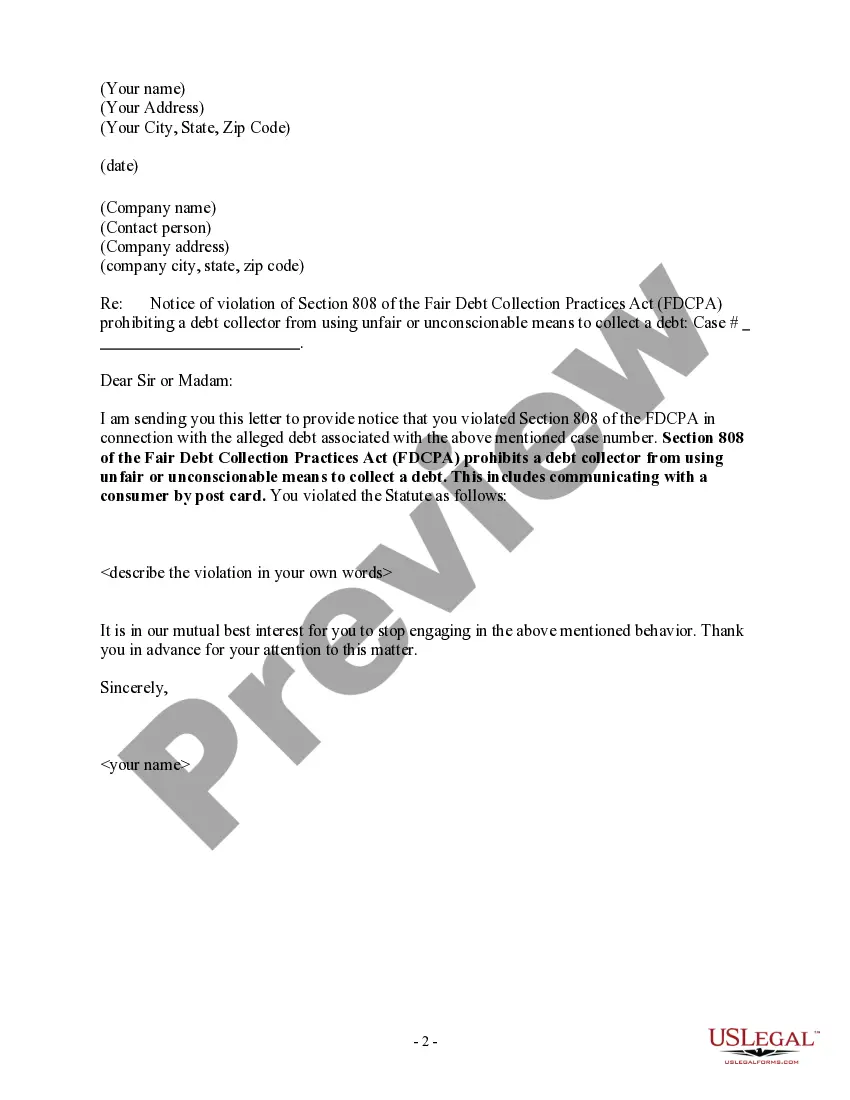
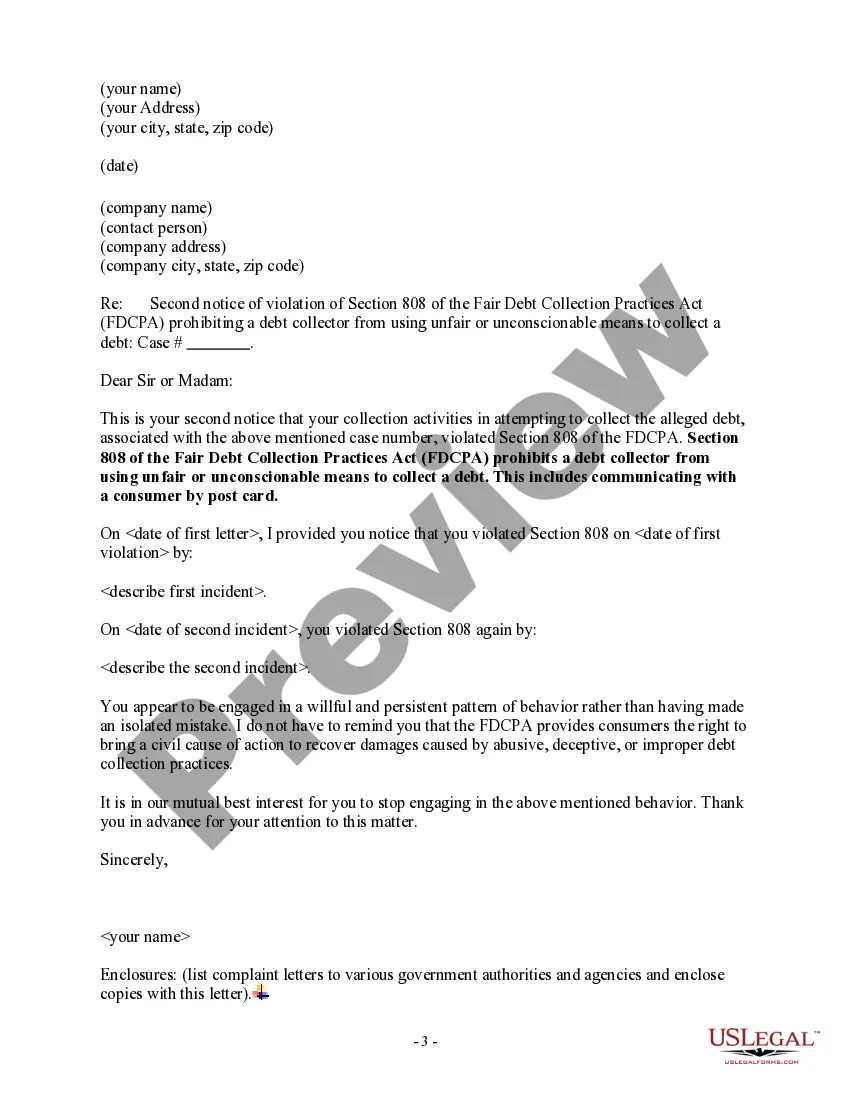
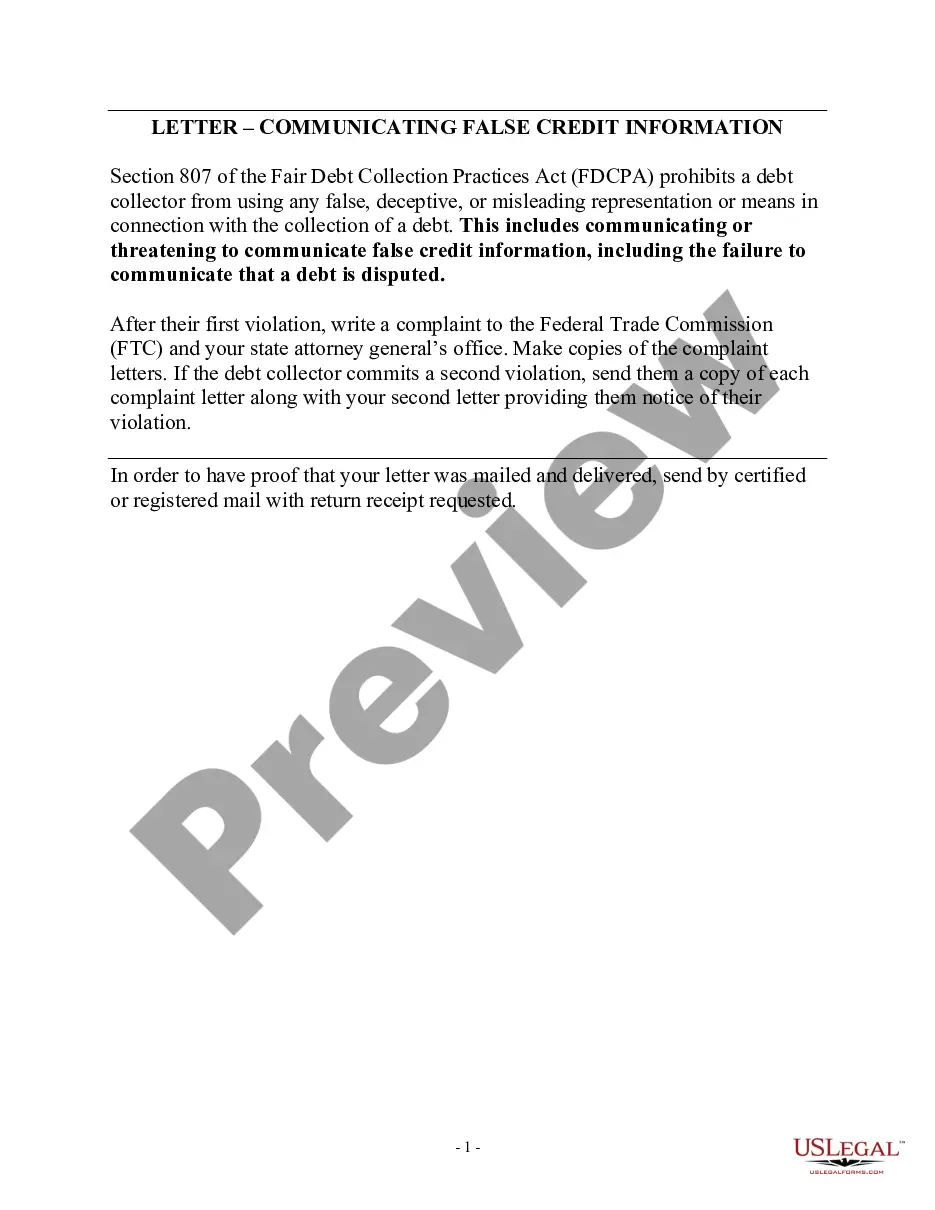

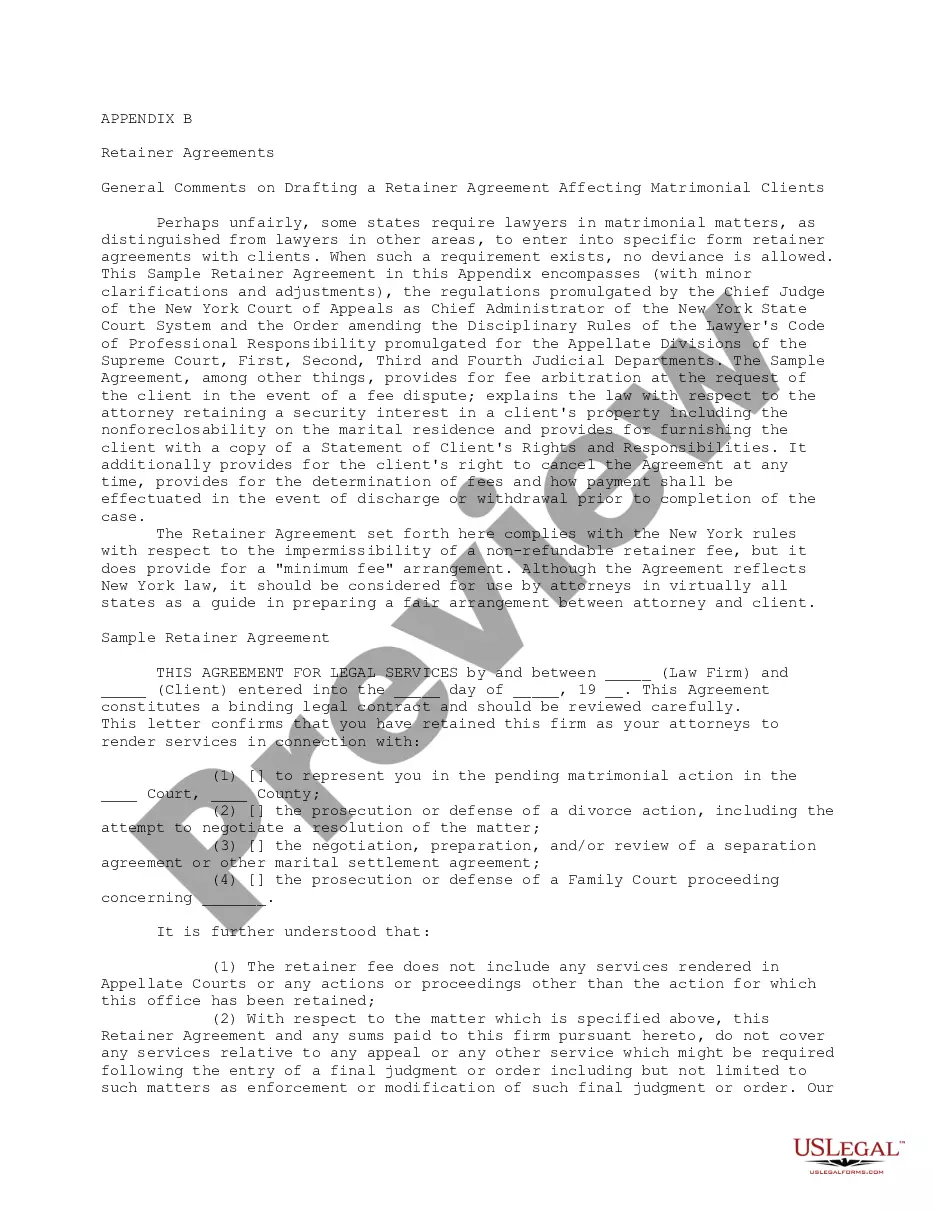
How to fill out Notice Of Violation Of Fair Debt Act - Unlawful Contact By Postcard?
If you need to download, obtain, or create official document templates, utilize US Legal Forms, the widest selection of official forms available online.
Utilize the site's straightforward and user-friendly search to locate the documents you require.
Various templates for business and personal purposes are categorized by groups and locations, or keywords.
Step 4. Once you have found the form you want, click the Acquire now button. Choose the pricing plan you prefer and provide your information to register for an account.
Step 5. Complete the transaction. You can use your credit card or PayPal account to finalize the purchase.
- Use US Legal Forms to acquire the Oregon Notice of Violation of Fair Debt Act - Unlawful Contact by Postcard with just a few clicks.
- If you are already a US Legal Forms member, Log In to your account and click the Download button to receive the Oregon Notice of Violation of Fair Debt Act - Unlawful Contact by Postcard.
- You can also access forms you previously downloaded from the My documents section of your account.
- If you are using US Legal Forms for the first time, follow the instructions listed below.
- Step 1. Make sure you have selected the form relevant to the appropriate area/region.
- Step 2. Use the Preview option to review the form's details. Don't forget to read the explanation.
- Step 3. If you are not satisfied with the form, utilize the Search field at the top of the screen to find alternative versions of the official form template.
Form popularity
FAQ
As of Nov. 30, 2021, debt collectors have new options for how they may communicate with you about debts they're trying to collect. Now they can text you. Text messages, along with emailing and direct messages on social media, are allowed as part of an update to the Fair Debt Collection Practices Act (FDCPA).
7 Most Common FDCPA ViolationsContinued attempts to collect debt not owed.Illegal or unethical communication tactics.Disclosure verification of debt.Taking or threatening illegal action.False statements or false representation.Improper contact or sharing of info.Excessive phone calls.
The law makes it illegal for debt collectors to harass debtors in other ways, including threats of bodily harm or arrest. They also cannot lie or use profane or obscene language. Additionally, debt collectors cannot threaten to sue a debtor unless they truly intend to take that debtor to court.
Debt collectors cannot harass or abuse you. They cannot swear, threaten to illegally harm you or your property, threaten you with illegal actions, or falsely threaten you with actions they do not intend to take. They also cannot make repeated calls over a short period to annoy or harass you.
Debt collectors must be truthful The Fair Debt Collection Practices Act states that debt collectors cannot use any false, deceptive or misleading representation to collect the debt. Along with other restrictions, debt collectors cannot misrepresent: The amount of the debt. Whether it's past the statute of limitations.
If a debt collector violates the FDCPA, you may sue that collector in state or federal court. You can even sue in small claims court. You must do this within one year from the date on which the violation occurred.
7 Most Common FDCPA ViolationsContinued attempts to collect debt not owed.Illegal or unethical communication tactics.Disclosure verification of debt.Taking or threatening illegal action.False statements or false representation.Improper contact or sharing of info.Excessive phone calls.16 Sept 2020
Deceptive And Unfair Practices Calling you collect so that you have to pay to accept the call is an example of an unfair practice. Engaging in any practice that forces you to pay additional money other than the debt you owe is considered an FDCPA violation.
Don't be surprised if debt collectors slide into your DMs. A new rule allows debt collectors to contact you on social media, text or email not just by phone. The rule, which was approved last year by the Consumer Financial Protection Bureau's former president Kathleen L.
Debt collectors cannot harass or abuse you. They cannot swear, threaten to illegally harm you or your property, threaten you with illegal actions, or falsely threaten you with actions they do not intend to take. They also cannot make repeated calls over a short period to annoy or harass you.