This form is to for a Landlord to provide notice of breach of a written lease for violating a specific provision of lease with no right to cure. It is for a Non-Residential lease. You insert the specific breach in the form. The lease should contain the specific provision which has been violated and provide that violation of that provision that cannot be cured, or the statutory law must state that this particular breach cannot be cured. This form is for use when a form for your specific situation is not available.
Oregon Violating
State:
Oregon
Control #:
OR-1503LT
Format:
Word;
Rich Text
Instant download
Description
Free preview
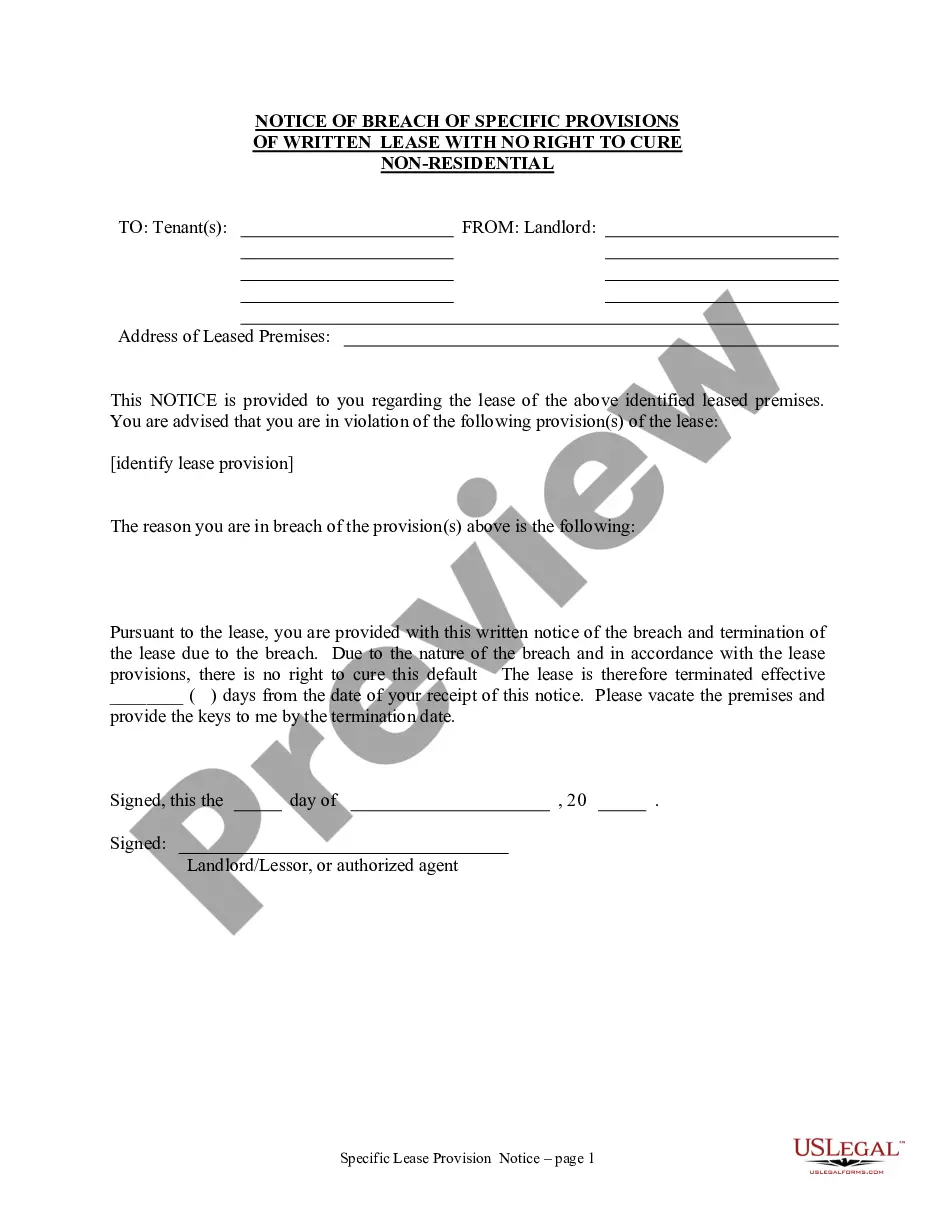
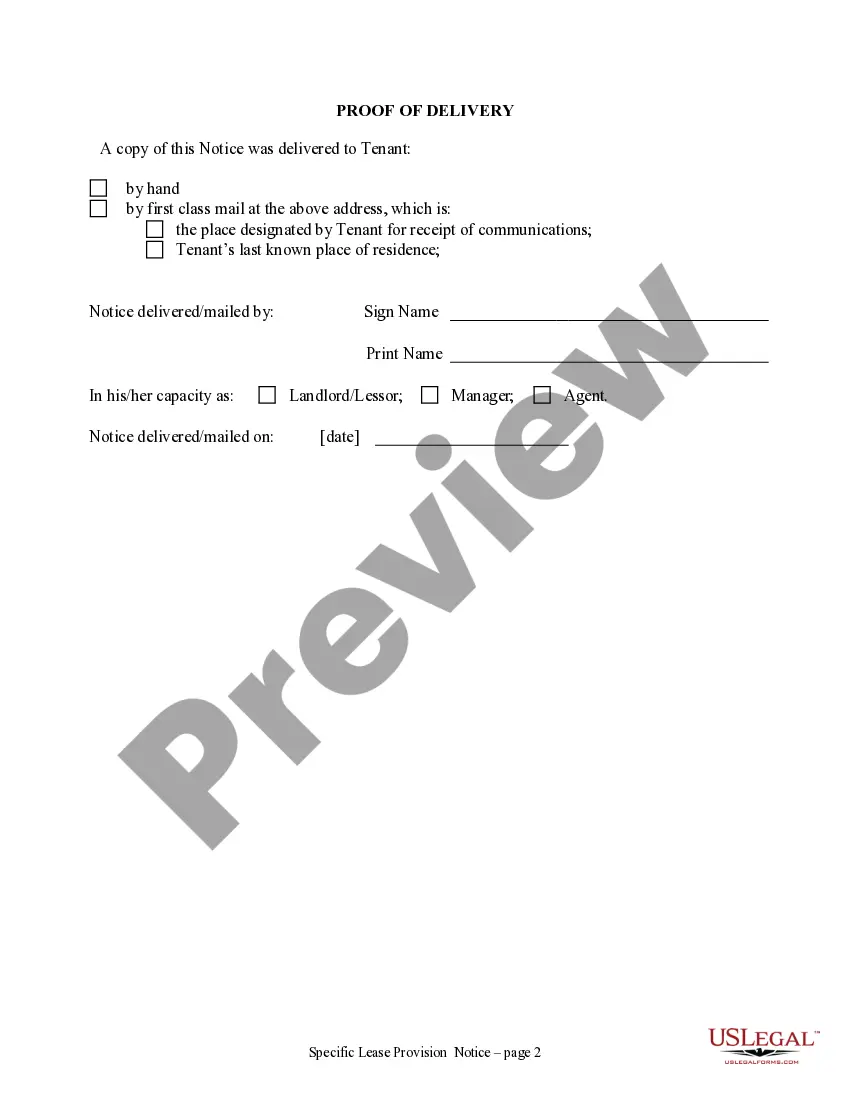
How to fill out Oregon Notice Of Breach Of Written Lease For Violating Specific Provisions Of Lease With No Right To Cure For Nonresidential Property From Landlord To Tenant?
When it comes to submitting Oregon Notice of Breach of Written Lease for Violating Specific Provisions of Lease with No Right to Cure for Nonresidential Property from Landlord to Tenant, you most likely visualize a long procedure that consists of choosing a ideal sample among a huge selection of similar ones and after that being forced to pay legal counsel to fill it out to suit your needs. Generally speaking, that’s a slow and expensive choice. Use US Legal Forms and choose the state-specific document in just clicks.
If you have a subscription, just log in and click on Download button to have the Oregon Notice of Breach of Written Lease for Violating Specific Provisions of Lease with No Right to Cure for Nonresidential Property from Landlord to Tenant form.
If you don’t have an account yet but want one, follow the step-by-step manual listed below:
- Make sure the document you’re getting is valid in your state (or the state it’s needed in).
- Do so by reading the form’s description and by clicking on the Preview function (if offered) to see the form’s content.
- Click on Buy Now button.
- Find the appropriate plan for your financial budget.
- Sign up for an account and select how you would like to pay: by PayPal or by card.
- Download the document in .pdf or .docx format.
- Get the file on the device or in your My Forms folder.
Professional legal professionals work on creating our templates so that after downloading, you don't need to bother about modifying content outside of your individual details or your business’s info. Be a part of US Legal Forms and receive your Oregon Notice of Breach of Written Lease for Violating Specific Provisions of Lease with No Right to Cure for Nonresidential Property from Landlord to Tenant example now.