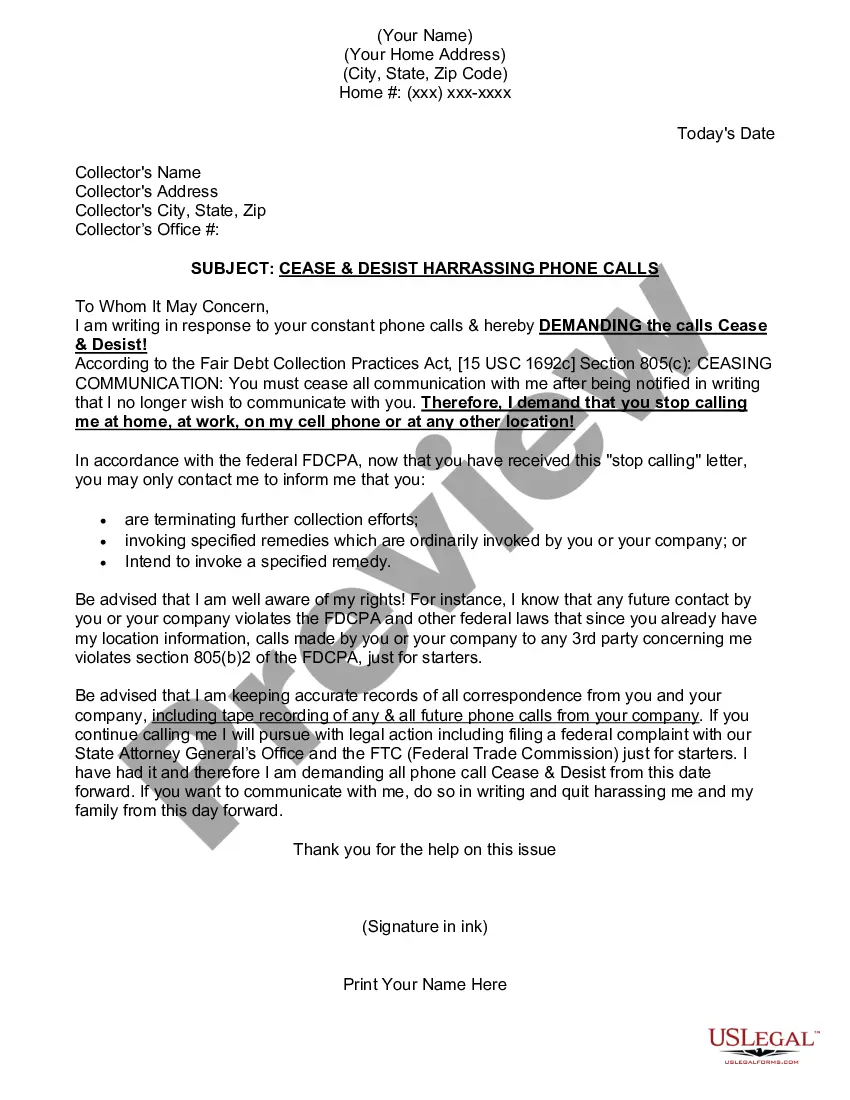
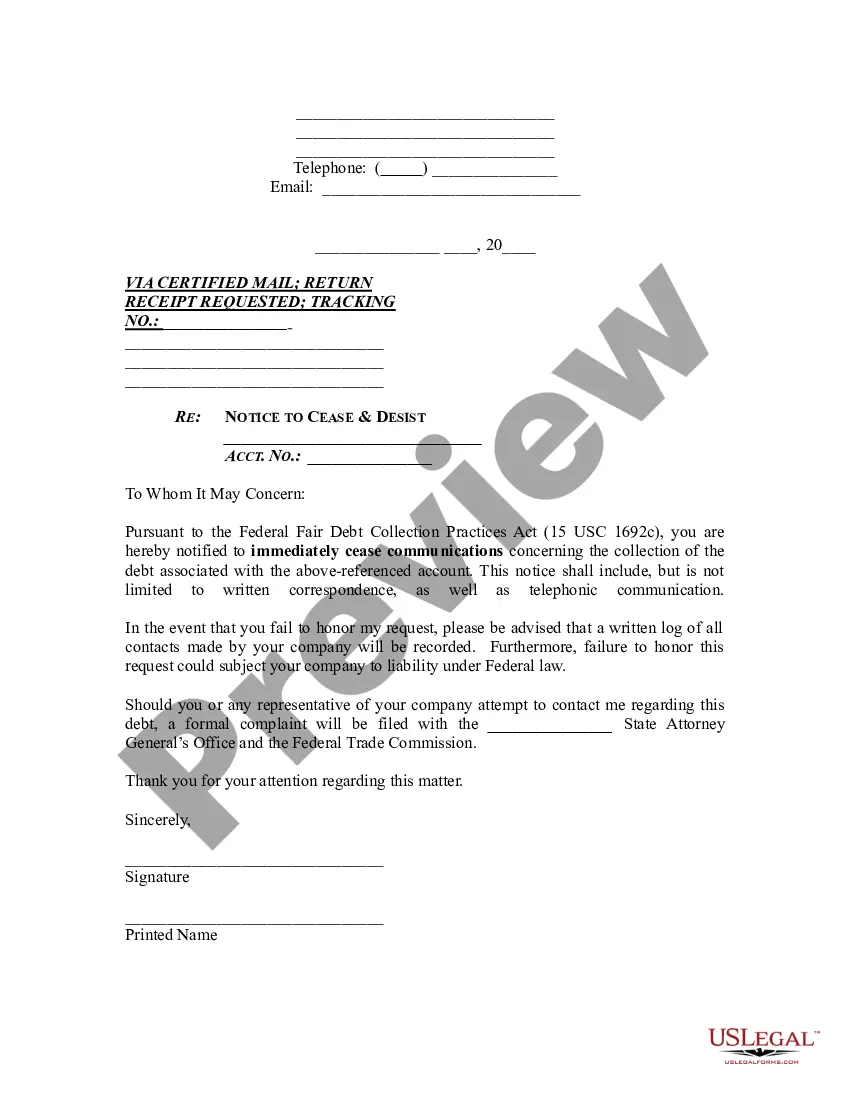
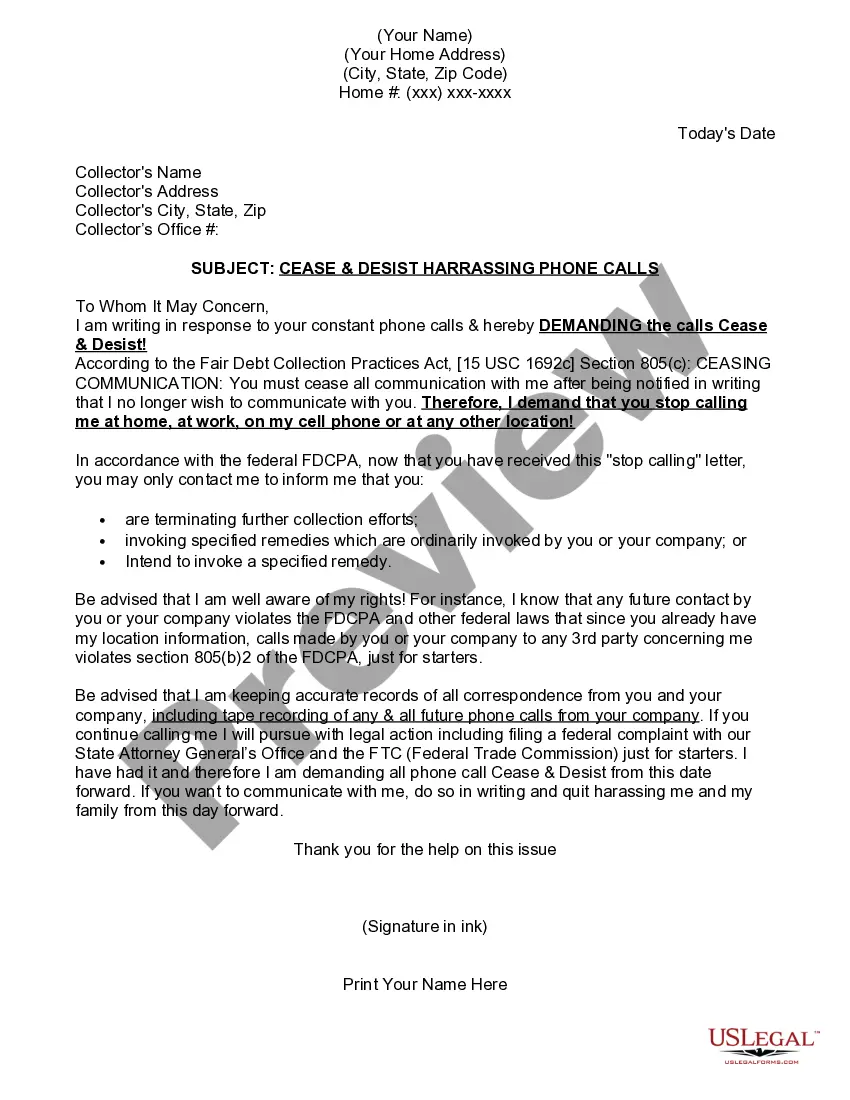
Oklahoma Cease and Desist for Slander
Description
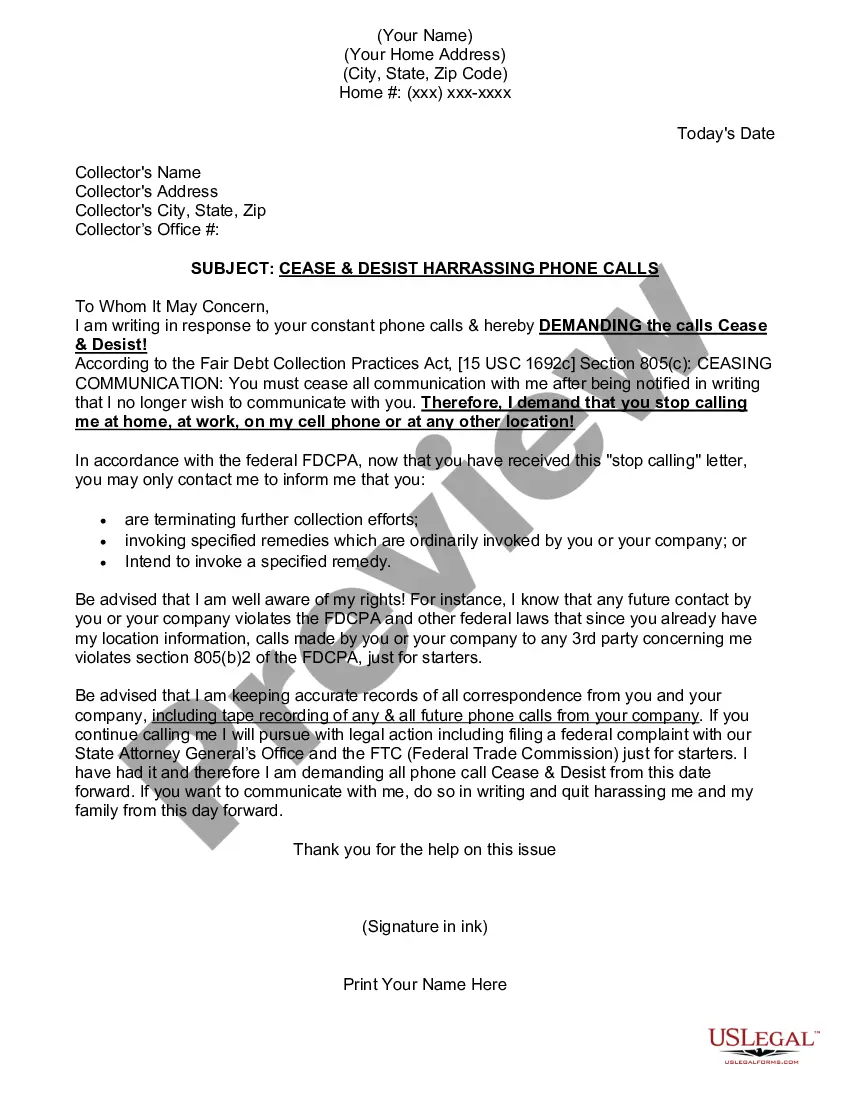
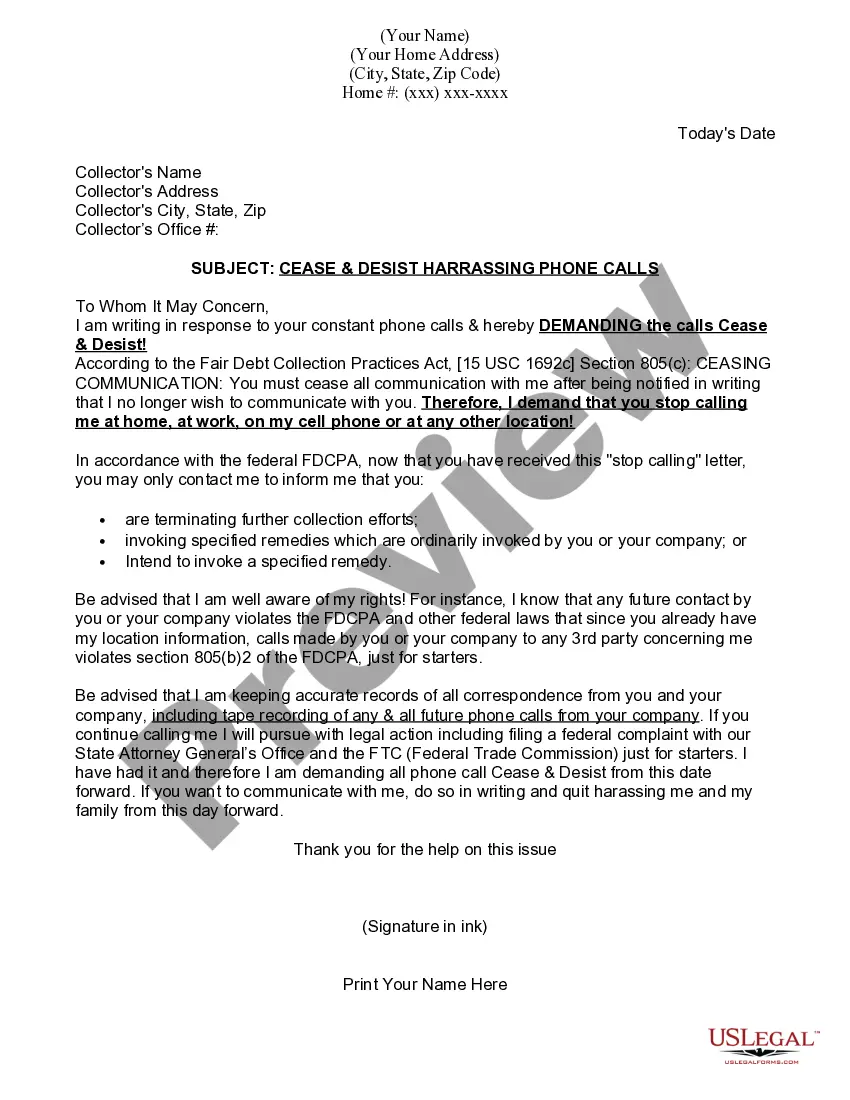


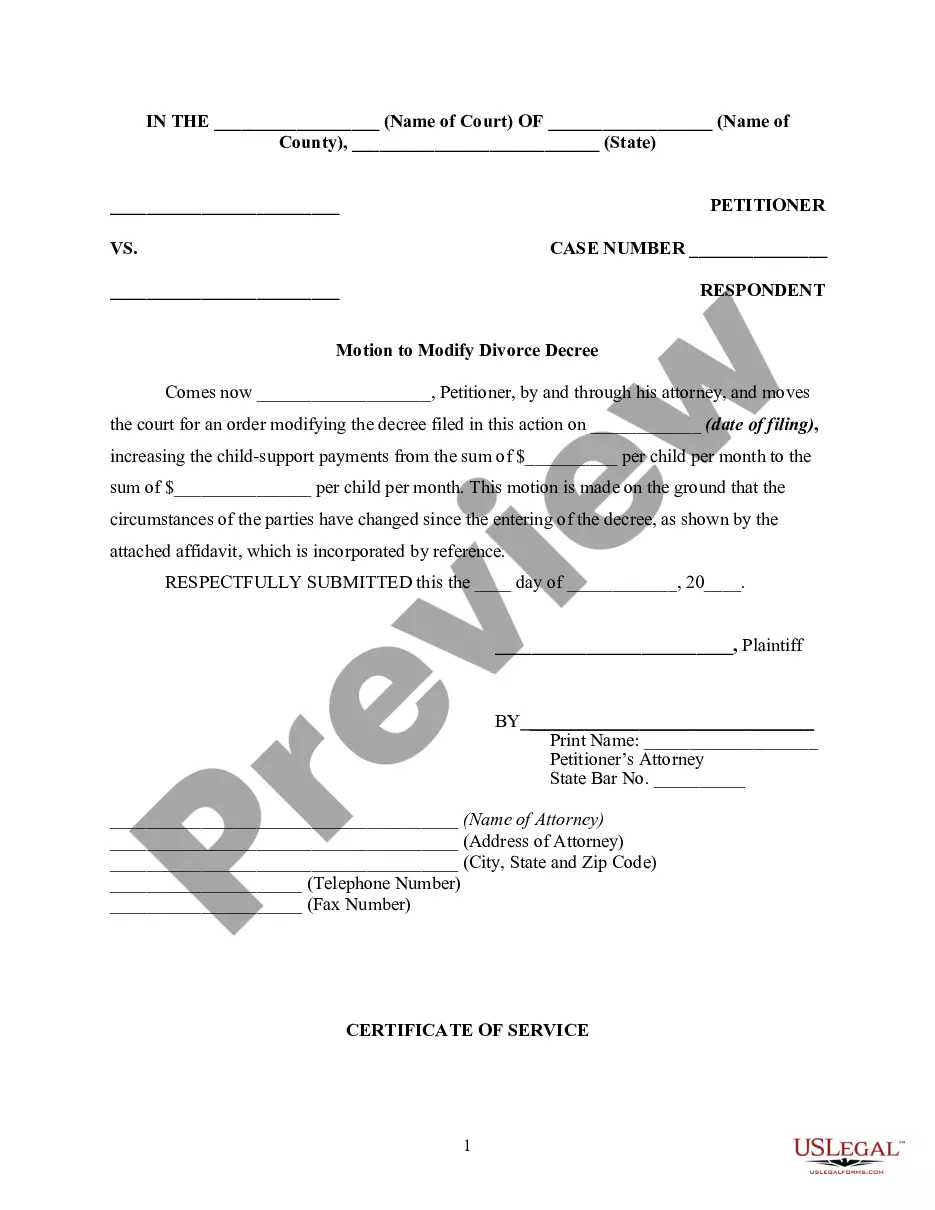
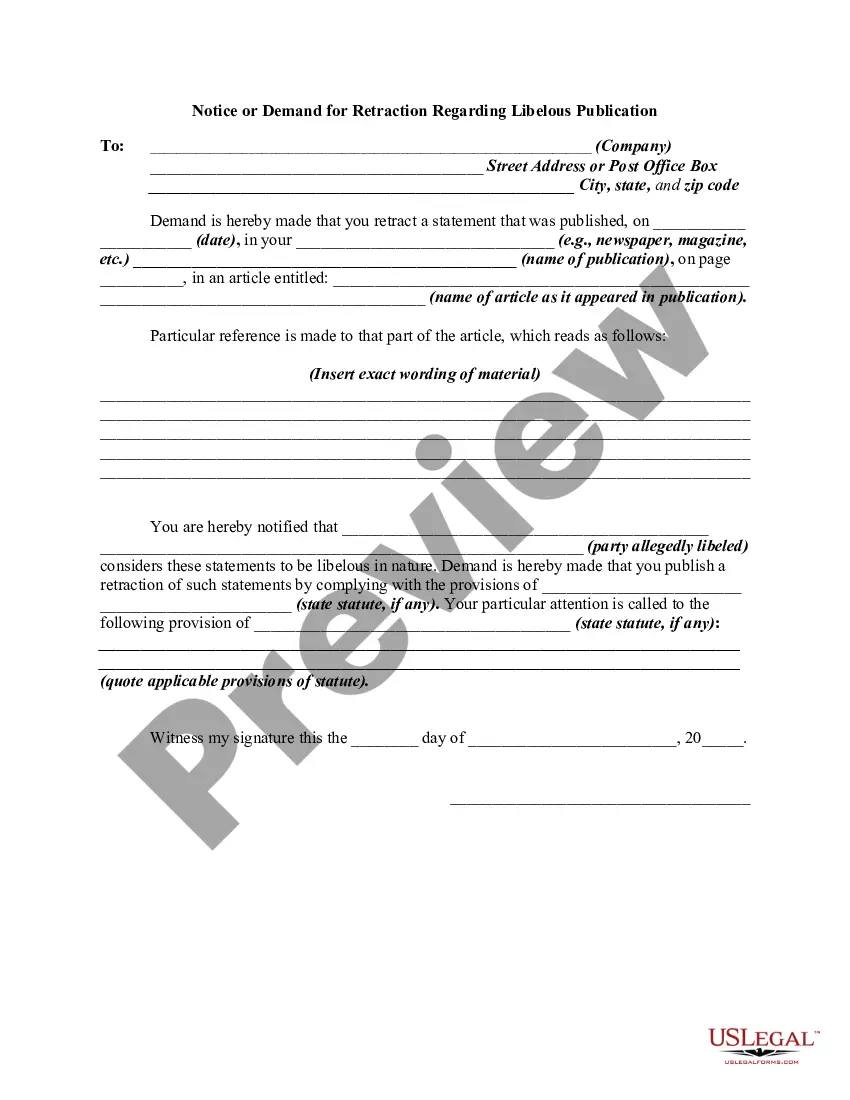
How to fill out Cease And Desist For Slander?
US Legal Forms - one of the largest collections of legal forms in the United States - offers a variety of legal document templates that you can download or print. By using the website, you can discover thousands of forms for business and personal purposes, organized by categories, states, or keywords. You can find the latest versions of forms such as the Oklahoma Cease and Desist for Slander in just a few moments.
If you already hold a subscription, Log In and download the Oklahoma Cease and Desist for Slander from the US Legal Forms library. The Download button will appear on every form you view. You can access all previously downloaded forms from the My documents section of your account.
If you are using US Legal Forms for the first time, here are simple steps to get started: Ensure you have selected the correct form for your city/state. Click on the Preview button to review the form's details. Check the form information to confirm you've chosen the right form. If the form does not meet your requirements, utilize the Search box located at the top of the screen to find one that does. If you are satisfied with the form, finalize your choice by clicking the Purchase now button. Then, select the payment plan you prefer and provide your credentials to register for an account. Complete the transaction. Use your credit card or PayPal account to finalize the payment. Choose the format and download the form to your device. Make changes. Complete, modify, print, and sign the downloaded Oklahoma Cease and Desist for Slander. Every template you add to your account has no expiration date and is yours indefinitely. Therefore, if you wish to download or print another copy, simply visit the My documents section and click on the form you need.
Take advantage of the extensive resources available at US Legal Forms to streamline your legal documentation process.
Whether for personal use or business, US Legal Forms provides you with the tools to ensure you have the right legal documents at your fingertips.
- Access the Oklahoma Cease and Desist for Slander through US Legal Forms, one of the most comprehensive collections of legal document templates.
- Utilize numerous professional and state-specific templates that meet your business or personal needs and requirements.
- Explore a wide range of legal forms categorized for easy navigation.
- Easily manage your downloaded templates with no time limitations.
- Find the most up-to-date legal documents with a few clicks.
- Enjoy a user-friendly experience while handling your legal paperwork.
Form popularity
FAQ
Yes, you can sue someone for slander in Oklahoma if you can prove the essential elements of the claim. This includes demonstrating that false statements were made, that they were communicated to a third party, and that you suffered harm as a result. Before pursuing legal action, consider using an Oklahoma Cease and Desist for Slander to halt the defamatory statements and protect your reputation effectively.
To successfully sue for slander in Oklahoma, you need to provide proof that the statements were false, spoken to another person, and harmful to your reputation. Documentation such as witness statements, recordings, and evidence of damages can strengthen your case. An Oklahoma Cease and Desist for Slander can also serve as a preliminary step in gathering this evidence and addressing the issue directly.
Deciding whether to sue for slander depends on the severity of the damage caused to your reputation and potential financial losses. If the slanderous statements have significantly impacted your personal or professional life, pursuing legal action may be justified. However, consider sending an Oklahoma Cease and Desist for Slander first, as it can often resolve the issue without the need for a lawsuit.
To issue an Oklahoma Cease and Desist for Slander, you need evidence that the slanderous statements were made, such as witness accounts or recordings. Additionally, you should demonstrate how these statements have harmed your reputation or livelihood. Having clear proof can strengthen your case and encourage the other party to cease their damaging actions.
In Oklahoma, slander refers to making false spoken statements that damage a person's reputation. To qualify as slander, the statements must be untrue, made to a third party, and cause harm to the individual's character or livelihood. If you believe you have been a victim of slander, an Oklahoma Cease and Desist for Slander can help stop further harm and protect your reputation.
In pursuing an Oklahoma Cease and Desist for Slander, it's essential to gather various forms of evidence. This may include recordings, social media posts, written communications, and statements from witnesses who can corroborate your claims. Collecting this evidence not only supports your case but also aids in effectively communicating the seriousness of the situation to the slanderer. UsLegalForms provides tools and templates to streamline this evidence-gathering process.
For an Oklahoma Cease and Desist for Slander to be valid, the statements in question must be false, damaging to your reputation, and made with negligence or malice. Additionally, the remarks should be communicated to third parties, not just between the involved parties. If you can demonstrate these elements, you may have grounds for a cease and desist order. UsLegalForms offers resources that can help clarify these qualifications further.
To initiate an Oklahoma Cease and Desist for Slander, you should gather evidence that supports your claim. This includes statements made by the accused, witness testimonials, and any documentation that showcases the impact of the slanderous remarks. Having clear proof strengthens your case, making it more likely for the recipient to comply with your request. UsLegalForms can provide templates and guidance to help you compile the necessary proof effectively.
Yes, you can file a cease and desist for slander if someone has made false statements about you that harm your reputation. This legal action aims to prevent further defamatory statements and seek redress for the damage already done. Utilizing the resources available on the US Legal Forms platform can help you navigate the process of filing an Oklahoma Cease and Desist for Slander efficiently and effectively.
The 85% rule in Oklahoma refers to the requirement that individuals convicted of certain crimes must serve at least 85% of their sentence before becoming eligible for parole. This rule is designed to ensure that offenders serve a significant portion of their time in prison, which helps maintain public safety. If you consider filing an Oklahoma Cease and Desist for Slander, understanding this rule can be crucial if the slander impacts your legal standing or reputation.