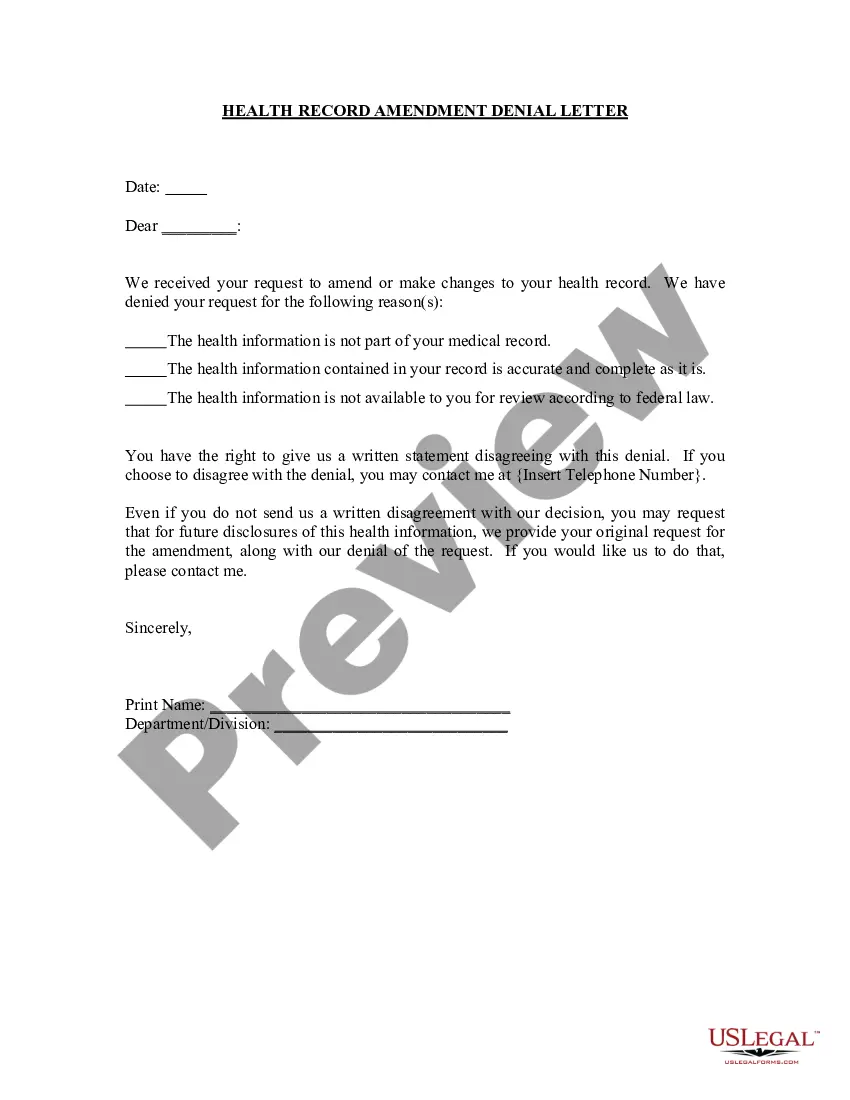
Oklahoma Health Record Amendment Denial Letter
Description
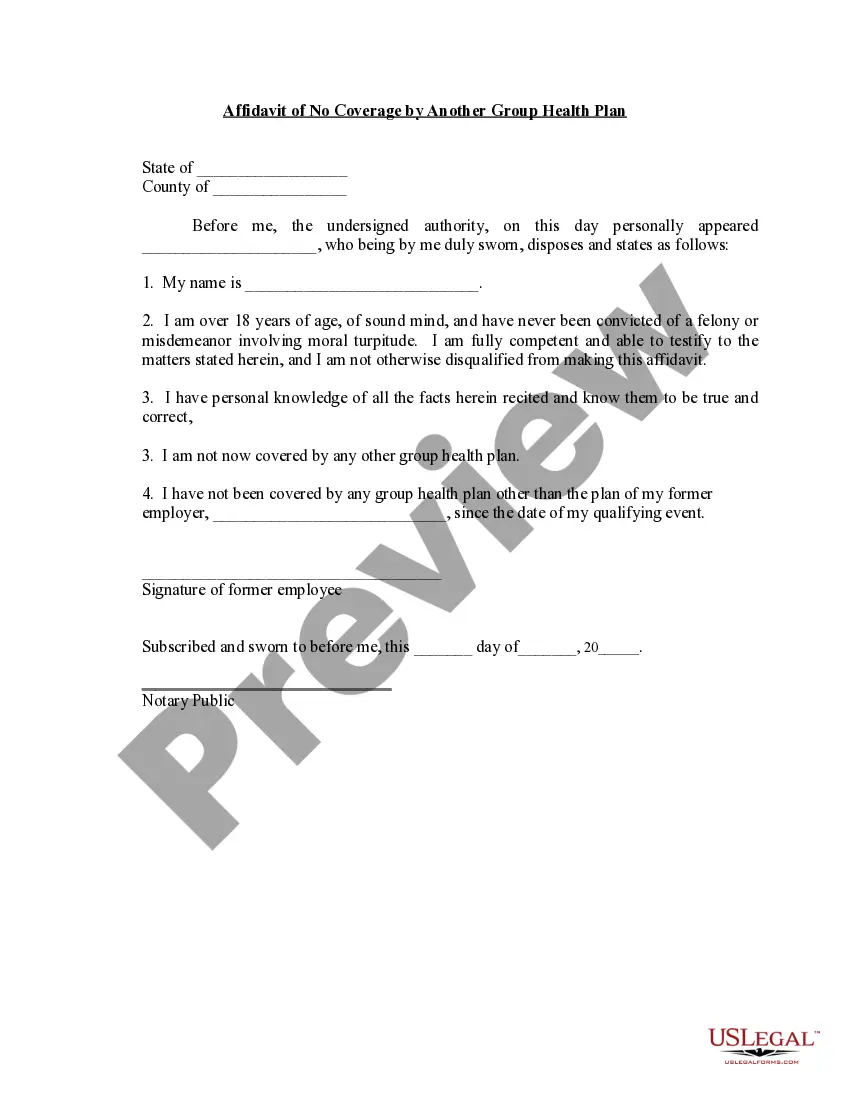
How to fill out Health Record Amendment Denial Letter?
You can spend hours online trying to locate the correct legal document format that complies with the state and federal requirements you need. US Legal Forms offers a vast selection of legal templates that are evaluated by experts.
It is easy to download or print the Oklahoma Health Record Amendment Denial Letter from the service.
If you already have a US Legal Forms account, you can sign in and click the Get button. Then, you can complete, modify, print, or sign the Oklahoma Health Record Amendment Denial Letter. Every legal document template you purchase is yours permanently.
Complete the payment. You can use your credit card or PayPal account to buy the legal document. Select the format of the document and download it to your device. Make adjustments to your document if necessary. You can complete, edit, sign, and print the Oklahoma Health Record Amendment Denial Letter. Obtain and print numerous document templates using the US Legal Forms site, which offers the largest range of legal forms. Utilize professional and state-specific templates to address your business or personal needs.
- To obtain another copy of the purchased form, visit the My documents section and click the related button.
- If you are using the US Legal Forms website for the first time, follow the straightforward instructions below.
- First, ensure you have selected the correct document format for the county/region of your choice. Read the form description to confirm you have chosen the appropriate form.
- If available, utilize the Preview button to review the document format as well.
- To search for another version of the form, use the Search section to find the format that meets your needs and criteria.
- Once you've located the template you wish to purchase, click Order now to proceed.
- Choose the pricing option you desire, enter your details, and register for an account with US Legal Forms.
Form popularity
FAQ
No. A patient's record should be complete and accurate to ensure they receive appropriate care. Patients can question the content of their records, but not on the basis that it is upsetting or that they disagree with it.
Proper Error Correction ProcedureDraw line through entry (thin pen line). Make sure that the inaccurate information is still legible.Initial and date the entry.State the reason for the error (i.e. in the margin or above the note if room).Document the correct information.
Consequently, patients frequently ask about whether they have the right to remove a diagnosis from their medical records. But, can they do this? The answer to this question is NO.
Proper Error Correction ProcedureDraw line through entry (thin pen line). Make sure that the inaccurate information is still legible.Initial and date the entry.State the reason for the error (i.e. in the margin or above the note if room).Document the correct information.
General concerns about psychological or emotional harm are not sufficient to deny an individual access (e.g., concerns that the individual will not be able to understand the information or may be upset by it). In addition, the requested access must be reasonably likely to cause harm or endanger physical life or safety.
Reasons for Denial.The provider who received the amendment request had not created the original record. The record was created at another office. There is an exception if the creator is no longer available and the mistake in the record is apparent.
A patient has the right to request an amendment to his or her health record per 45 CFR §164.526 of the HIPAA Privacy Rule, and it is the policy of this organization to respond to any amendment requests in accordance with this rule.
Blood samples, writing samples, records, phone taps, email, and every other form of physical evidence is protected by the Fourth Amendment. With a proper warrant, even confidential information such as patient records is subject to search and seizure.
Changing a medical record to correct an error is anything but an easy process. Under federal HIPAA rules, patients have the right to request that doctors fix errors, but the provider has up to 60 days to respond, and can ask for a 30-day extension. The provider also can refuse, but must specify the reason in writing.
Any corrected record submitted must make clear the specific change made, the date of the change and the identity of the person making that entry. Note that only the attending providerthat is, the provider who saw the patient and documented the initial note for the visit in questionmay amend the medical record.