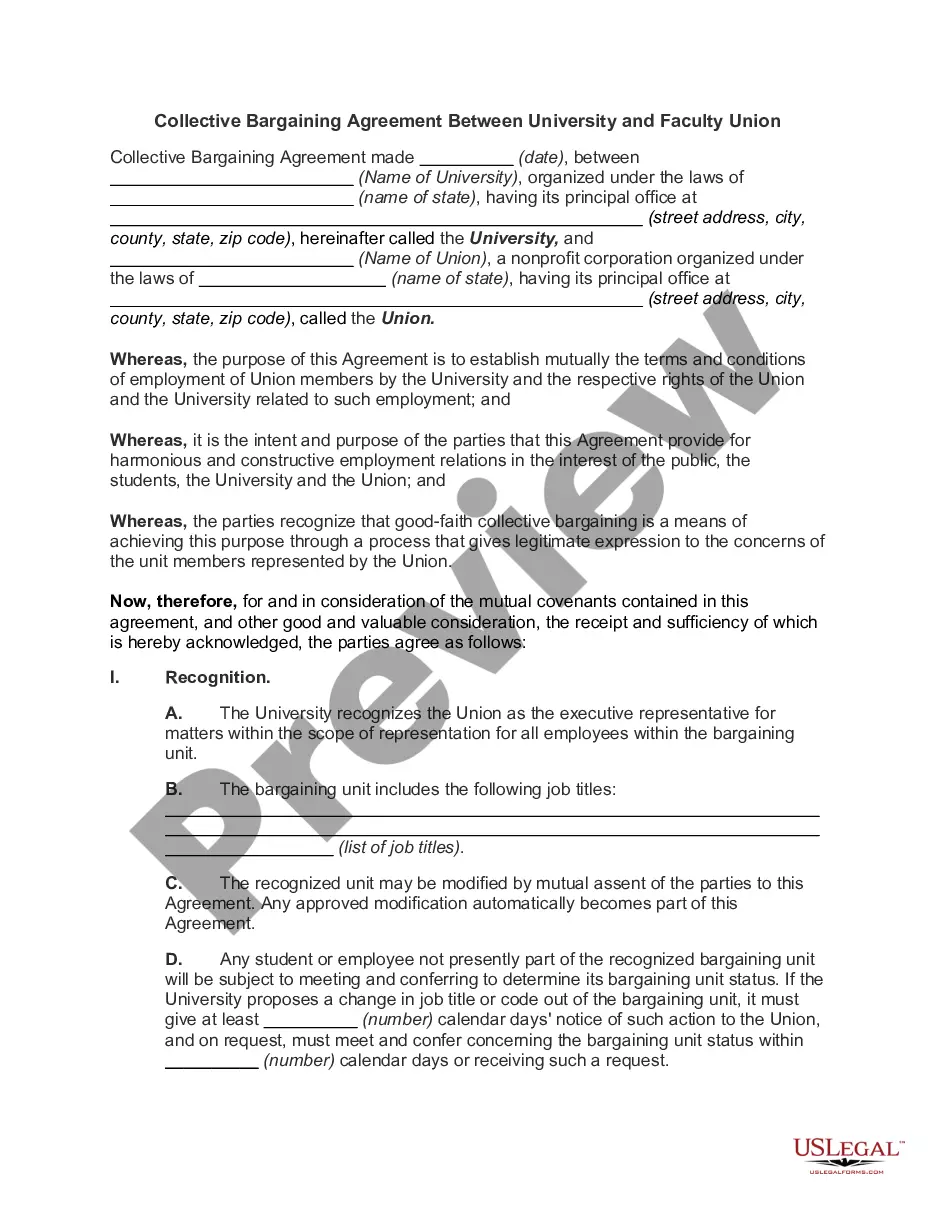
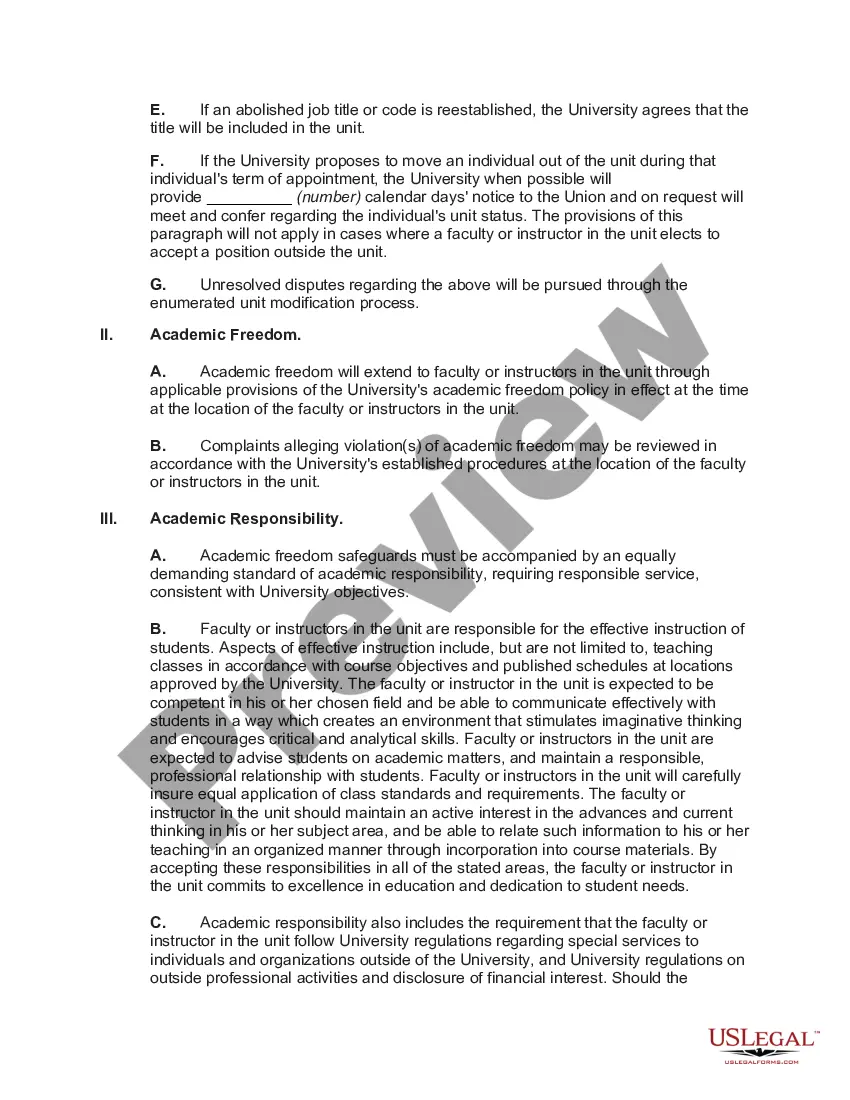
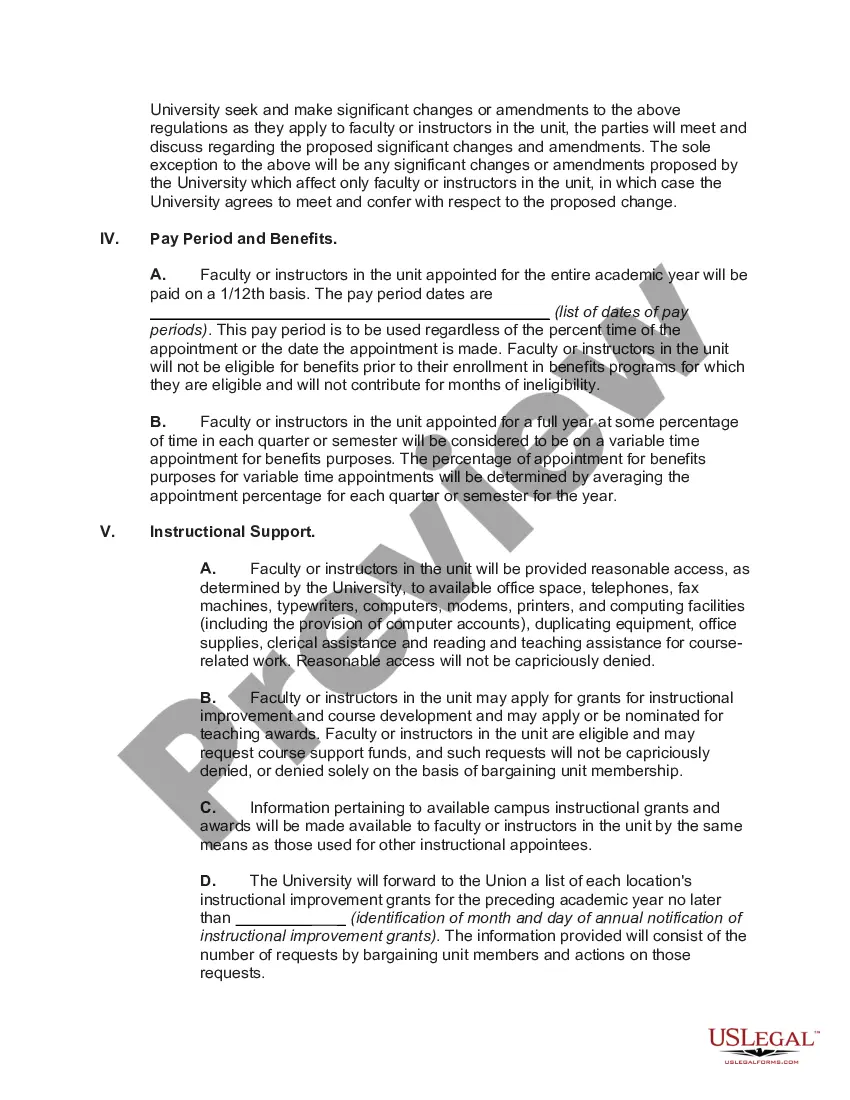
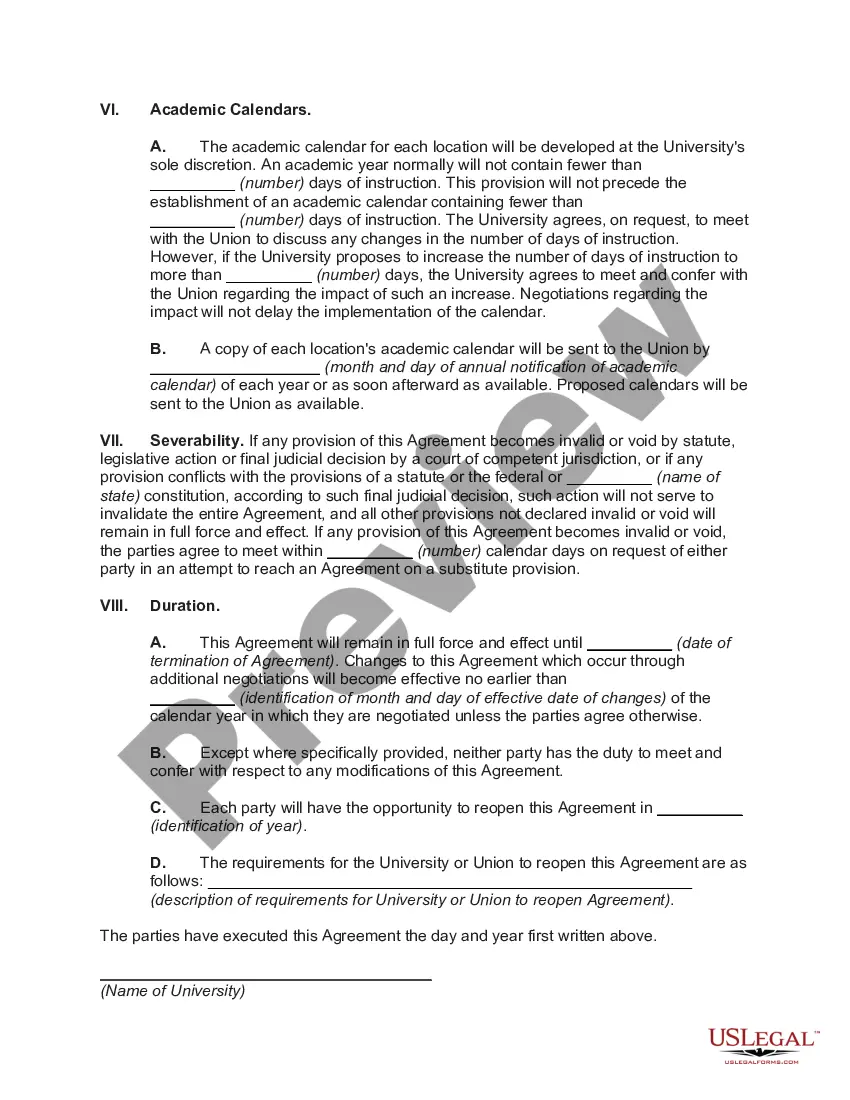
Oklahoma Collective Bargaining Agreement Between University and Faculty Union
Description
Get your form ready online
Our built-in tools help you complete, sign, share, and store your documents in one place.
Make edits, fill in missing information, and update formatting in US Legal Forms—just like you would in MS Word.
Download a copy, print it, send it by email, or mail it via USPS—whatever works best for your next step.
Sign and collect signatures with our SignNow integration. Send to multiple recipients, set reminders, and more. Go Premium to unlock E-Sign.
If this form requires notarization, complete it online through a secure video call—no need to meet a notary in person or wait for an appointment.
We protect your documents and personal data by following strict security and privacy standards.

Make edits, fill in missing information, and update formatting in US Legal Forms—just like you would in MS Word.

Download a copy, print it, send it by email, or mail it via USPS—whatever works best for your next step.

Sign and collect signatures with our SignNow integration. Send to multiple recipients, set reminders, and more. Go Premium to unlock E-Sign.

If this form requires notarization, complete it online through a secure video call—no need to meet a notary in person or wait for an appointment.

We protect your documents and personal data by following strict security and privacy standards.
Looking for another form?
How to fill out Collective Bargaining Agreement Between University And Faculty Union?
Have you found yourself in a circumstance where you require documents for various business or specific needs almost every day.
There are numerous legal document templates accessible online, but locating reliable ones can be challenging.
US Legal Forms offers a vast collection of templates, including the Oklahoma Collective Bargaining Agreement Between University and Faculty Union, which can be tailored to meet state and federal requirements.
Choose a convenient document format and download your copy.
Access all the document templates you have purchased in the My documents section. You can obtain an additional copy of the Oklahoma Collective Bargaining Agreement Between University and Faculty Union at any time, if necessary. Simply follow the required form to download or print the document template.
- If you are already aware of the US Legal Forms website and possess an account, simply Log In.
- Then, you can download the Oklahoma Collective Bargaining Agreement Between University and Faculty Union template.
- If you lack an account and wish to start using US Legal Forms, follow these steps.
- Find the form you need and ensure it is for the correct city/county.
- Utilize the Review button to examine the form.
- Read the description to confirm you have chosen the correct template.
- If the form isn't what you're looking for, use the Lookup section to find the form that suits your needs and specifications.
- When you locate the correct form, click on Acquire now.
- Select the pricing plan you prefer, fill out the necessary information to create your account, and pay for your order using PayPal or a credit card.
Form popularity
FAQ
If the union and the employer do not reach an agreement They can: continue bargaining. put the employer's last offer to a vote, if the employer decides to initiate one. jointly agree to voluntary interest arbitration.
STATE POLICY: This section addresses whether a state has a collective bargaining law. Currently, 35 states have such laws.
Those subjects include items like wages, overtime, bonuses, grievance procedures, safety and work practices, and seniority, as well as procedures for discharge, layoff, recall, or discipline.
State legislators in Idaho, Indiana, Michigan, Tennessee, and Wisconsin launched unprecedented initiatives substantially restricting or entirely prohibiting the collective bargaining rights of public-sector employees, including public-school teachers.
Today, North Carolina, South Carolina, and Virginia are the only three states to have statutory prohibitions on collective bargaining of all public-sector employees.
A collective bargaining agreement (CBA) is a written legal contract between an employer and a union representing the employees. The CBA is the result of an extensive negotiation process between the parties regarding topics such as wages, hours, and terms and conditions of employment.
The collective agreement is considered ratified by the bargaining unit if a majority (50% +1) of those voting accept the terms of the tentative collective agreement.
There is nothing in the Act which requires that collective bargaining agreements be submitted to the membership for ratification. Procedures concerning this matter would be controlled by the constitution and bylaws of the union involved.
Depending upon the terms of the collective bargaining agreement, even non-union members may be subject to fines from the union for certain activities. 24 Regardless, if a union negotiates a collective bargaining agreement for an entire workforce, both members and non-members benefit.
CBAs commonly set forth provisions regarding wages, vacation time, working hours and conditions, and employee benefits. These provisions are enforced by the labor union to ensure that employees are treated fairly.