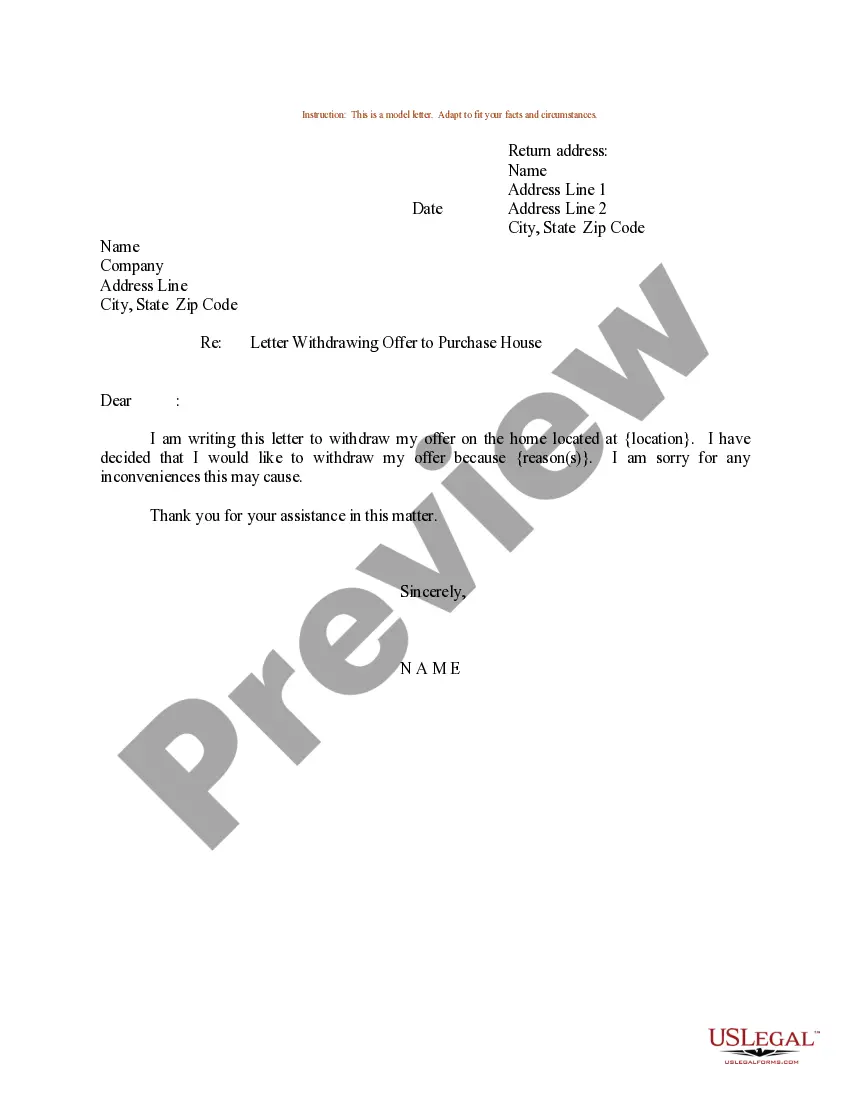
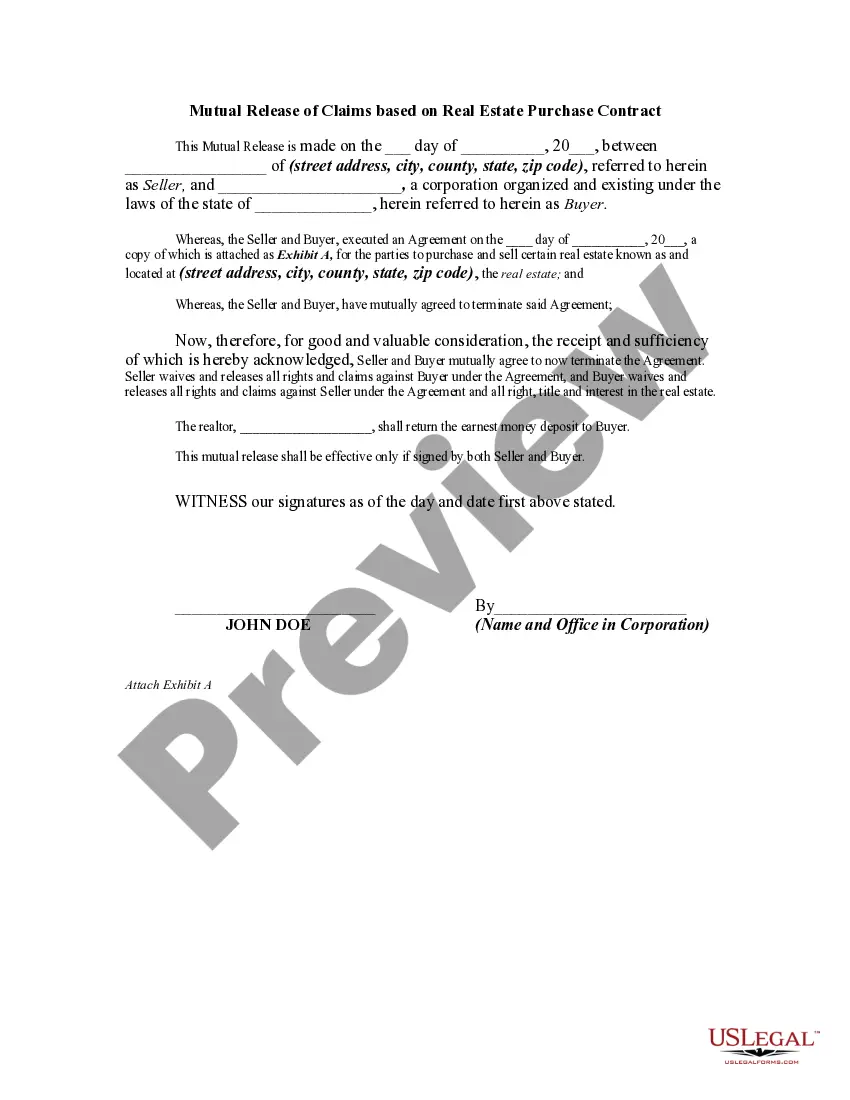
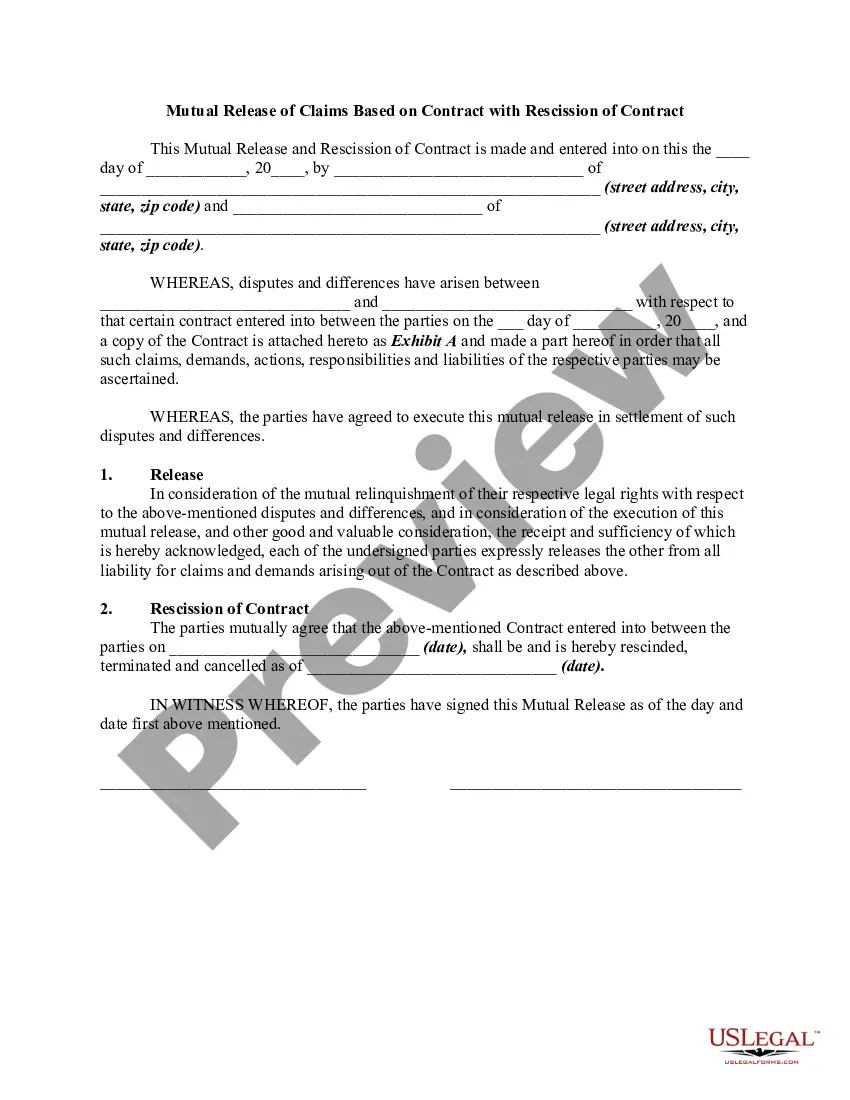
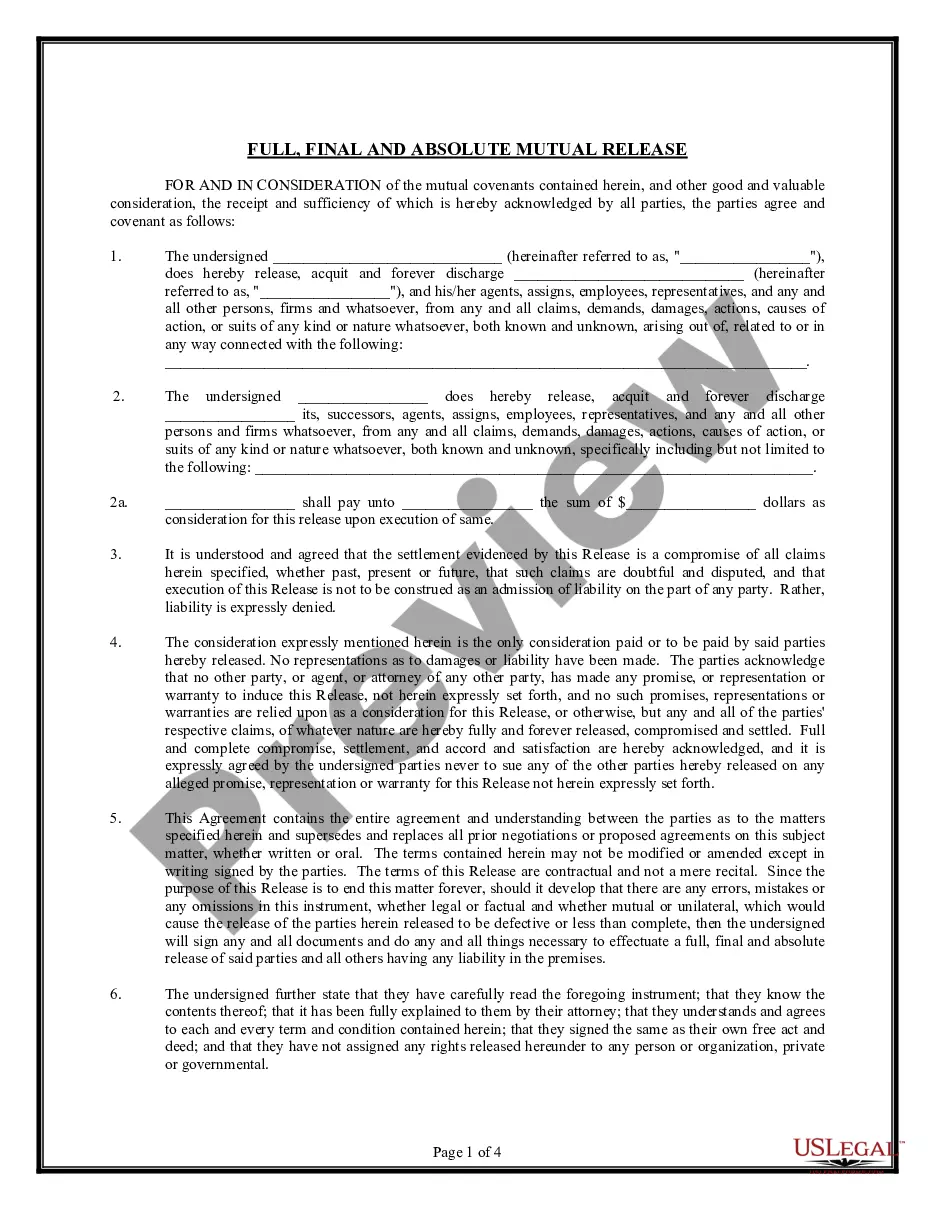
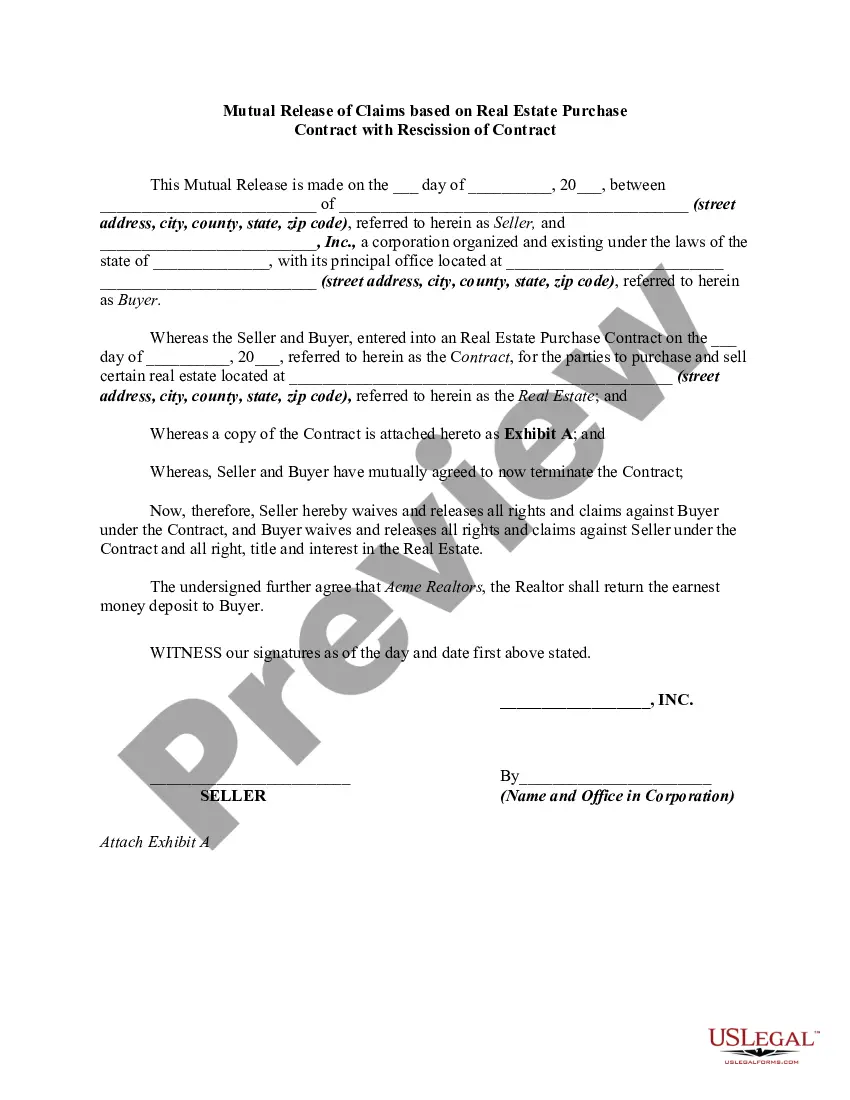
Oklahoma Mutual Release of Claims based on Real Estate Purchase Contract
Description
Get your form ready online
Our built-in tools help you complete, sign, share, and store your documents in one place.
Make edits, fill in missing information, and update formatting in US Legal Forms—just like you would in MS Word.
Download a copy, print it, send it by email, or mail it via USPS—whatever works best for your next step.
Sign and collect signatures with our SignNow integration. Send to multiple recipients, set reminders, and more. Go Premium to unlock E-Sign.
If this form requires notarization, complete it online through a secure video call—no need to meet a notary in person or wait for an appointment.
We protect your documents and personal data by following strict security and privacy standards.

Make edits, fill in missing information, and update formatting in US Legal Forms—just like you would in MS Word.

Download a copy, print it, send it by email, or mail it via USPS—whatever works best for your next step.

Sign and collect signatures with our SignNow integration. Send to multiple recipients, set reminders, and more. Go Premium to unlock E-Sign.

If this form requires notarization, complete it online through a secure video call—no need to meet a notary in person or wait for an appointment.

We protect your documents and personal data by following strict security and privacy standards.
Looking for another form?
How to fill out Mutual Release Of Claims Based On Real Estate Purchase Contract?
Selecting the appropriate legal document template can be challenging.
Of course, there are many templates available online, but how can you find the legal document you require.
Utilize the US Legal Forms platform. The service provides thousands of templates, including the Oklahoma Mutual Release of Claims based on Real Estate Purchase Agreement, which can be utilized for business and personal purposes.
You can review the document using the Review button and read the document description to confirm it is suitable for your needs.
- All documents are reviewed by experts and comply with state and federal regulations.
- If you are already a member, Log In to your account and select the Download button to procure the Oklahoma Mutual Release of Claims based on Real Estate Purchase Agreement.
- You can use your account to browse the legal documents you have purchased previously.
- Navigate to the My documents section of your account to download an additional copy of the document you require.
- If you are a new user of US Legal Forms, here are some straightforward steps for you to follow.
- First, ensure you have chosen the correct document for your city/county.
Form popularity
FAQ
In Oklahoma, a seller can get out of a real estate contract if the buyer's contingencies are not metthese include financial, appraisal, inspection, insurance, or home sale contingencies agreed to in the contract. Sellers might have additional exit opportunities with unique situations also such as an estate sale.
For example: Mary has offered her used car to John for a price of $10,000 and they have reached a mutual agreement. This means that Mary and John have mutually agreed on the terms and conditions relating to the sale of Mary's car to John.
A mutual release is a document designed to be signed by both the buyers and sellers to cancel an agreement of purchase and sale. When executed, this document cancels the agreement and releases all parties from any future liabilities or claims.
Can seller back out? Yes, it is possible. That is, if the seller can offer compensation to the buyer or if the buyer regrets his purchase. Timing is also of essence things will be much easier before the purchase agreement is signed.
A release usually takes the form of a voluntary private contract between parties to cease the obligation or concede the right. California Civil Code § 1541 upholds release provisions, stating an obligation is extinguished by a release therefrom given to the debtor or the released party by the creditor or releasing
If a seller changes their mind before they are bound under the contract of sale, usually the seller will be able to change their mind and walk away from the deal at that point.
A mutual agreement is a binding contract between two or more parties and can cover any contingency. The difference between a mutual agreement and a settlement not creating a trust, is determined by the operative words, ie "mutually agrees" or "settles".
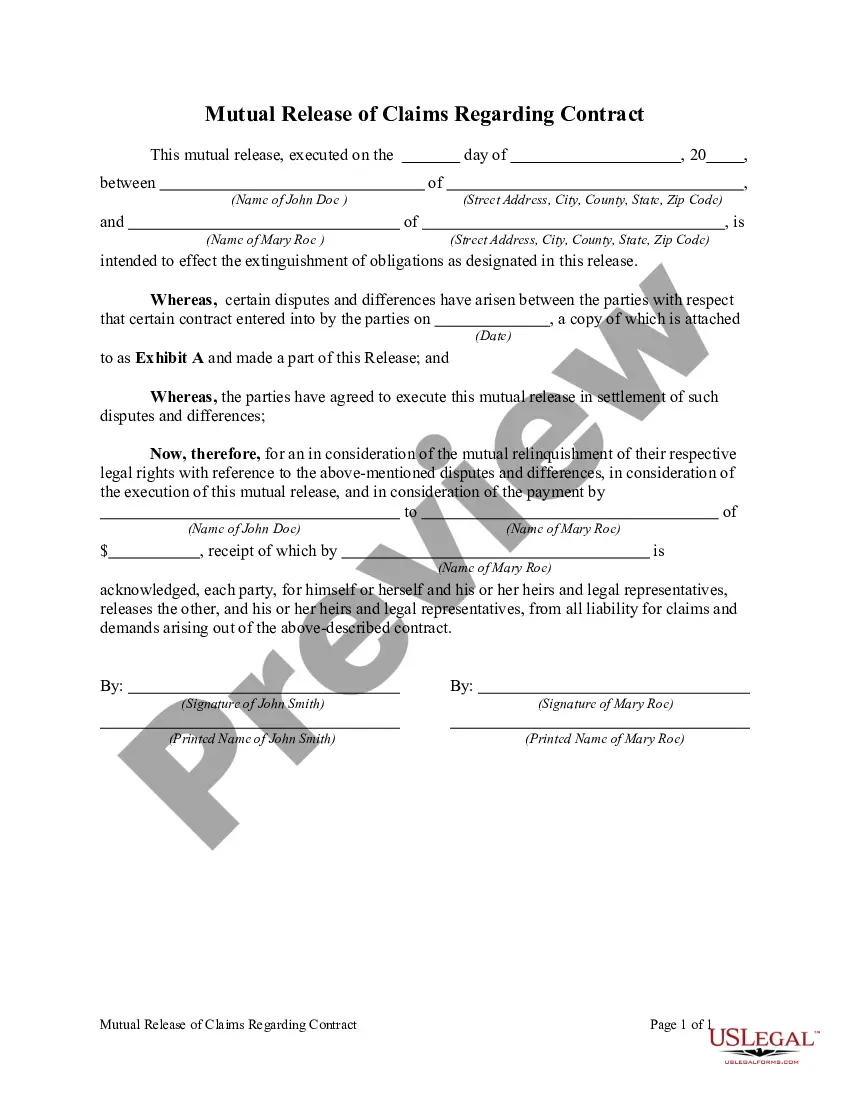
A Mutual Release Agreement is a straightforward document that allows you to settle disputes quickly and professionally. No matter what your dispute, a Mutual Release Agreement allows both parties to agree to drop all claims and get out of the contract.
A mutual release is a document designed to be signed by both the buyers and sellers to cancel an agreement of purchase and sale. When executed, this document cancels the agreement and releases all parties from any future liabilities or claims.
What Makes a Contract Unenforceable? If a contract is deemed unenforceable, the court will not compel a party to act or compensate the other for not fulfilling the contract terms. While the elements of an enforceable contract (offer, acceptance, consideration) seem simple, there are strict standards for enforceability.