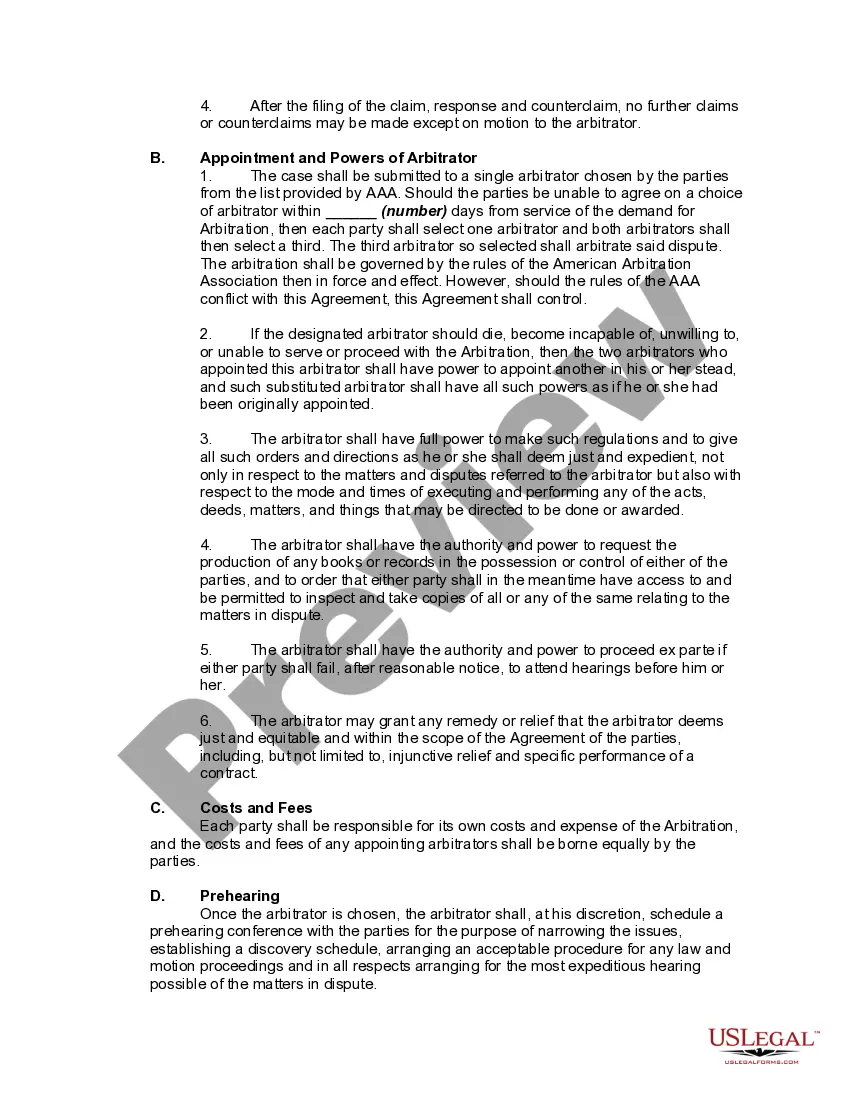
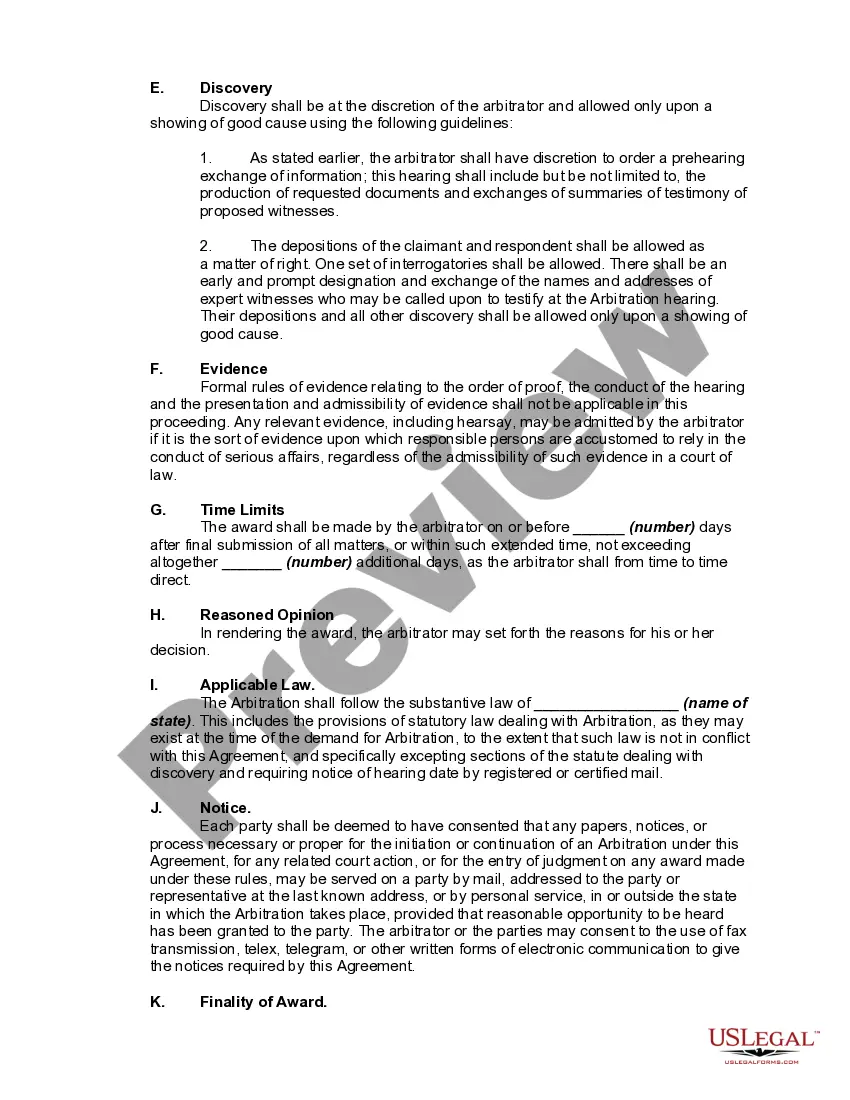
Arbitration is an alternative means of settling a dispute by impartial persons without proceeding to a court trial. It is sometimes preferred as a means of settling a matter in order to avoid the expense, delay, and acrimony of litigation. Discovery is with the discretion of the Arbitrator and there are simplified rules of evidence in arbitration.
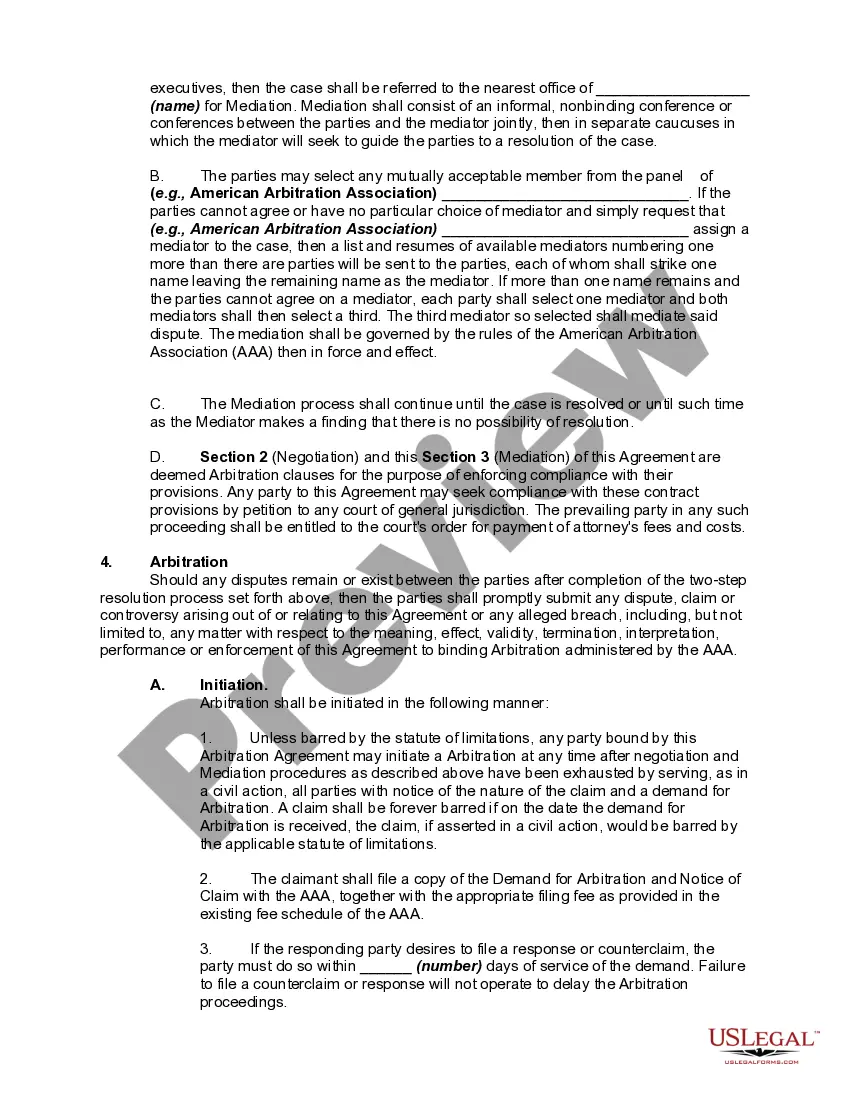
Mediation is a non-adversarial method of alternative dispute resolution (ADR) in which a neutral third party helps resolve a dispute. The mediator does not have the power to render a decision on the matter or order an outcome. If a satisfactory resolution cannot be reached, the parties can pursue a lawsuit or arbitration.
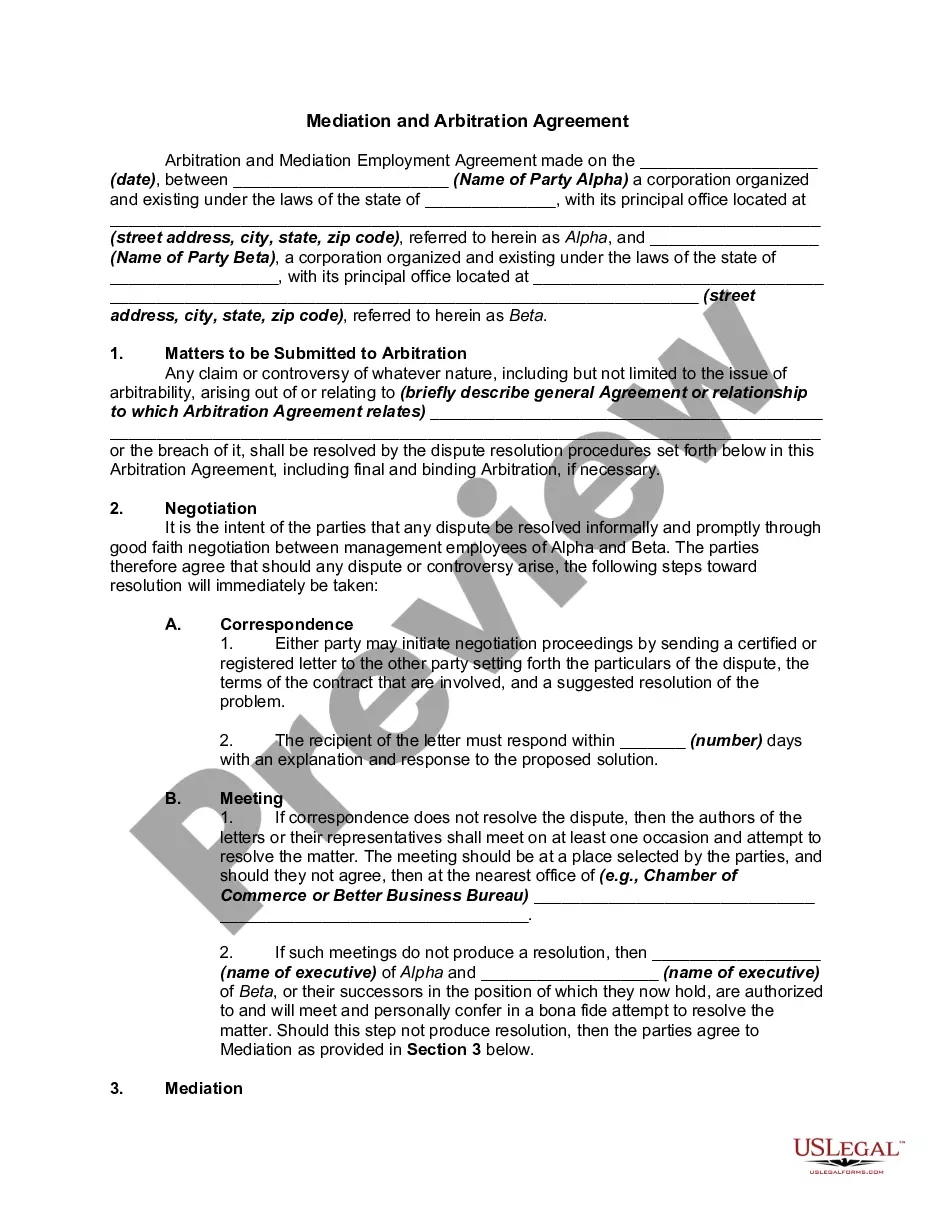
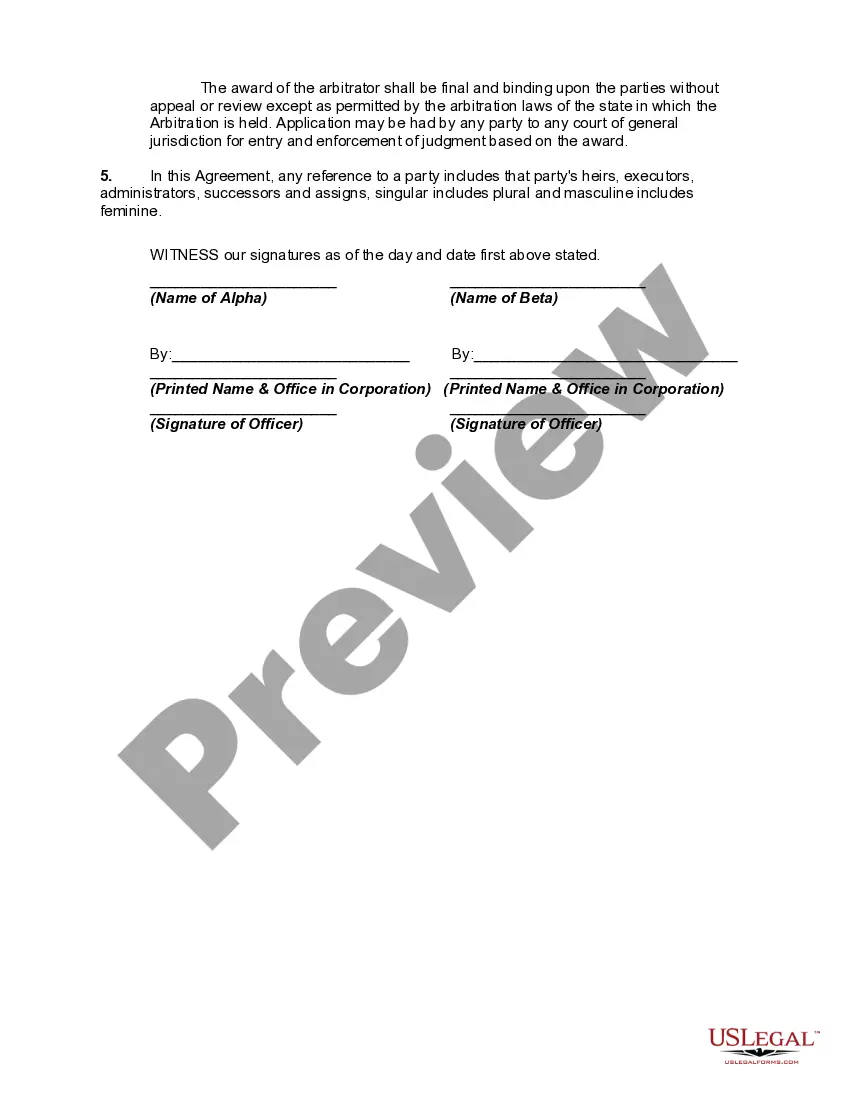
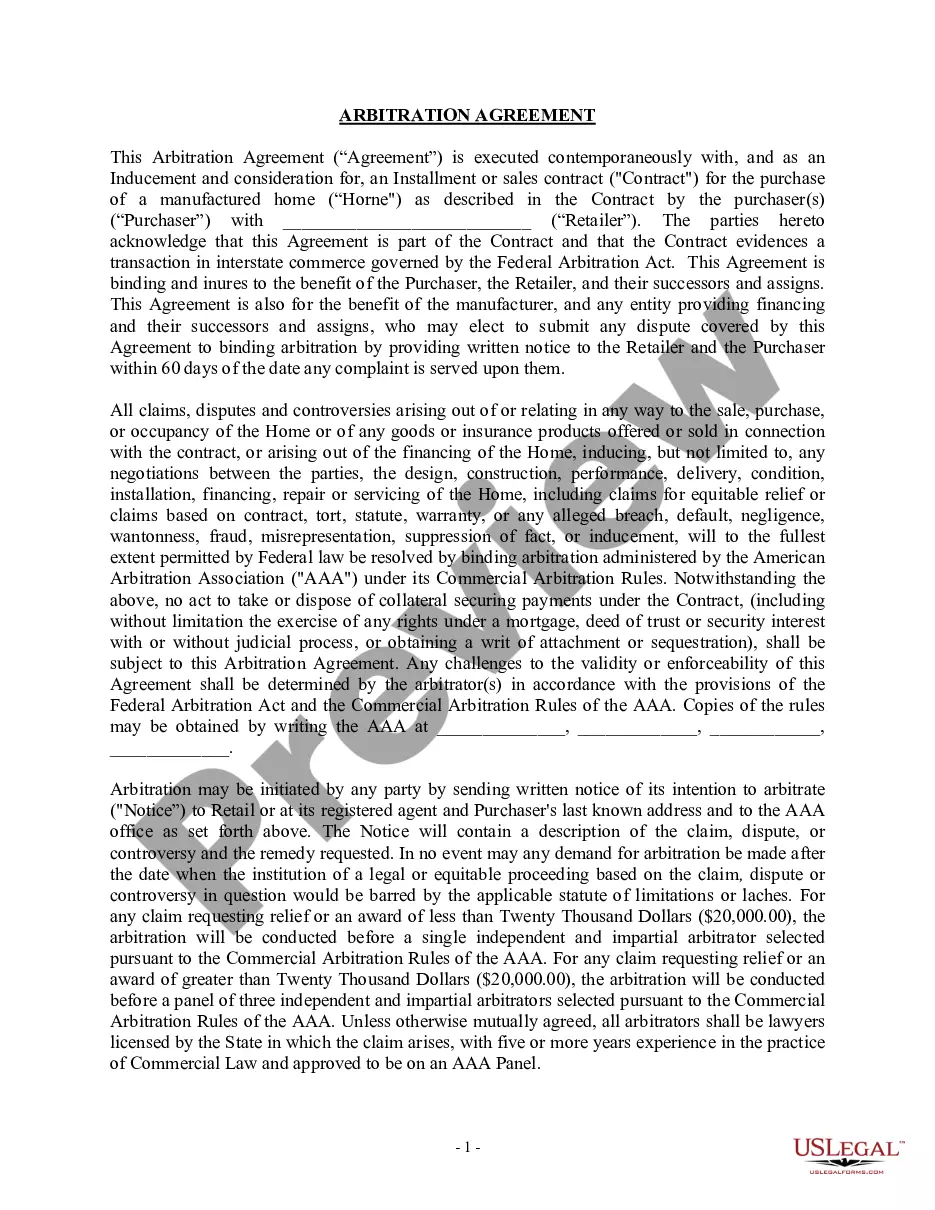
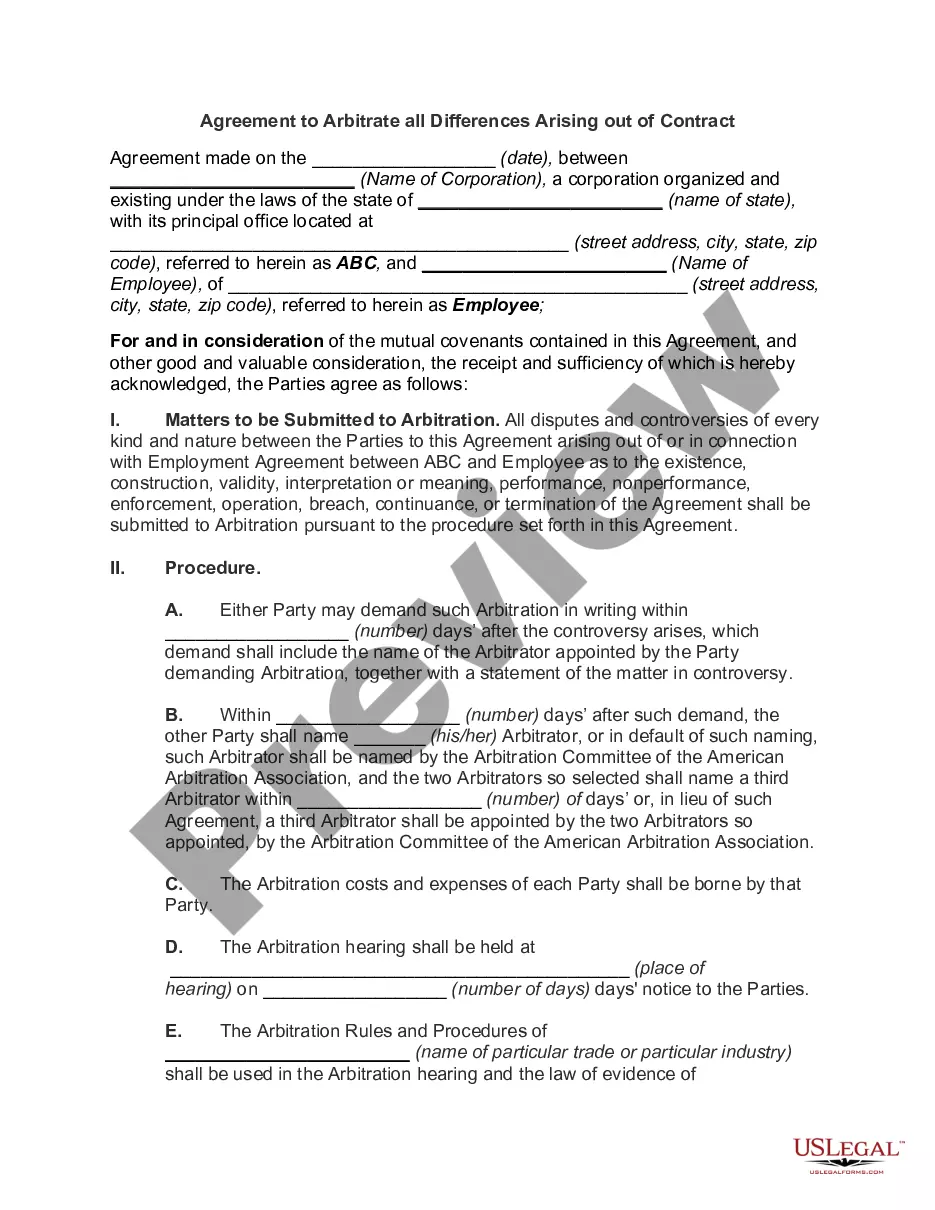
This form provides for negotiation, then mediation if the negotiation fails to resolve the issues. If both negotiation and mediation fail to resolve the issues, the parties arbitrate the dispute.
Ohio Mediation and Arbitration Agreement
State:
Multi-State
Category:
Control #:
US-02980BG
Format:
Word;
Rich Text
125 downloads
Description
Free preview



Get your form ready online
Our built-in tools help you complete, sign, share, and store your documents in one place.
Built-in online Word editor
Make edits, fill in missing information, and update formatting in US Legal Forms—just like you would in MS Word.
Export easily
Download a copy, print it, send it by email, or mail it via USPS—whatever works best for your next step.
E-sign your document
Sign and collect signatures with our SignNow integration. Send to multiple recipients, set reminders, and more. Go Premium to unlock E-Sign.
Notarize online 24/7
If this form requires notarization, complete it online through a secure video call—no need to meet a notary in person or wait for an appointment.
Store your document securely
We protect your documents and personal data by following strict security and privacy standards.

Make edits, fill in missing information, and update formatting in US Legal Forms—just like you would in MS Word.

Download a copy, print it, send it by email, or mail it via USPS—whatever works best for your next step.

Sign and collect signatures with our SignNow integration. Send to multiple recipients, set reminders, and more. Go Premium to unlock E-Sign.

If this form requires notarization, complete it online through a secure video call—no need to meet a notary in person or wait for an appointment.

We protect your documents and personal data by following strict security and privacy standards.
Looking for another form?

How to fill out Mediation And Arbitration Agreement?
Finding the appropriate legitimate document template can be a challenge. Of course, there are numerous templates accessible online, but how can you secure the valid version you need.
Utilize the US Legal Forms platform. The service offers thousands of templates, including the Ohio Mediation and Arbitration Agreement, which you can utilize for both business and personal purposes.
All documents are reviewed by professionals and comply with state and federal regulations.
Once you are certain that the document is correct, click the Purchase now button to obtain the form. Select your desired pricing plan and enter the required details. Create your account and process the payment via your PayPal account or credit card. Choose the file format and download the legal file template to your device. Complete, edit, print, and sign the finalized Ohio Mediation and Arbitration Agreement. US Legal Forms is the largest repository of legal documents where you can find various file templates. Use the service to download properly crafted paperwork that adhere to state requirements.
- If you are currently a member, Log In to your account and select the Obtain button to access the Ohio Mediation and Arbitration Agreement.
- Use your account to browse through the legal documents you have purchased previously.
- Navigate to the My documents section within your account to obtain another copy of the document you require.
- If you are a new user of US Legal Forms, follow these simple steps.
- First, ensure you have chosen the correct document for your locality. You can preview the document using the Review button and examine the document details to confirm this is the one you need.
- If the document does not satisfy your requirements, utilize the Search field to locate the appropriate form.
Form popularity
FAQ
To initiate mediation, you generally need to express your desire to mediate to the other party and agree on a neutral mediator. Once both parties agree, you can schedule a session and prepare any necessary documentation. Resources like UsLegalForms can assist you throughout this process, ensuring you understand the Ohio Mediation and Arbitration Agreement fully and get started correctly.
Mediation usually comes before arbitration in the dispute resolution process. The Ohio Mediation and Arbitration Agreement often encourages parties to try mediation first to settle their differences amicably. If mediation fails, arbitration becomes the next step, providing a structured decision-making approach. Knowing the sequence can help you prepare effectively.
The costs of mediation in Ohio are typically shared by both parties involved in the dispute, unless otherwise agreed. This includes fees for the mediator as well as any administrative costs associated with the mediation process. Understanding the financial aspects through the lens of the Ohio Mediation and Arbitration Agreement can help set proper expectations.
Yes, you can engage in both mediation and arbitration to resolve disputes. Many people start with mediation in hopes of reaching a consensus without the need for more formal procedures. However, if mediation is unsuccessful, they may proceed to arbitration, where a decisive resolution is achieved. Knowing the Ohio Mediation and Arbitration Agreement can guide you through this process.
Filing for mediation in Ohio usually involves completing a mediation request form provided by the court or mediation center. You will submit this form along with any necessary fees and documentation related to your dispute. It is often beneficial to consult with legal resources, like UsLegalForms, to ensure your filing aligns with the Ohio Mediation and Arbitration Agreement requirements.
To engage in mediation in Ohio, both parties must agree to the mediation process. You typically need to select a qualified mediator who is familiar with the Ohio Mediation and Arbitration Agreement. Additionally, it helps to gather all relevant documents and evidence related to your case to ensure a smooth discussion. Being prepared can lead to a more effective mediation experience.
The process of mediation and arbitration involves resolving disputes outside of the traditional court system. In mediation, a neutral third party, known as a mediator, facilitates discussions to help both parties reach a mutual agreement. In arbitration, an arbitrator listens to the arguments of both sides and makes a decision that is usually binding. Understanding the Ohio Mediation and Arbitration Agreement can help clarify these processes.
A mediation and arbitration agreement is a legal document that outlines the process for resolving disputes through these two methods. This agreement typically specifies the rules, timelines, and procedures to be followed, aligning with the Ohio Mediation and Arbitration Agreement. It serves as a roadmap for parties, ensuring clarity and fairness in the resolution process. You can find templates and assistance through platforms like UsLegalForms to create your agreement.
While mediation and arbitration offer many benefits, they do have some disadvantages. Parties may feel that mediation lacks enforceability, or that a binding arbitration decision may feel too final. Additionally, not all disputes may be suitable for these processes outlined in the Ohio Mediation and Arbitration Agreement. It’s crucial to consider the nature of your dispute and consult resources like UsLegalForms for guidance.
The combination of mediation and arbitration involves using both methods to resolve disputes. Initially, mediation aims to help parties find common ground, while arbitration serves as a binding resolution if mediation fails. This approach within the Ohio Mediation and Arbitration Agreement provides a structured yet adaptable process for dispute resolution. Many find this hybrid method to be effective in addressing complex issues.