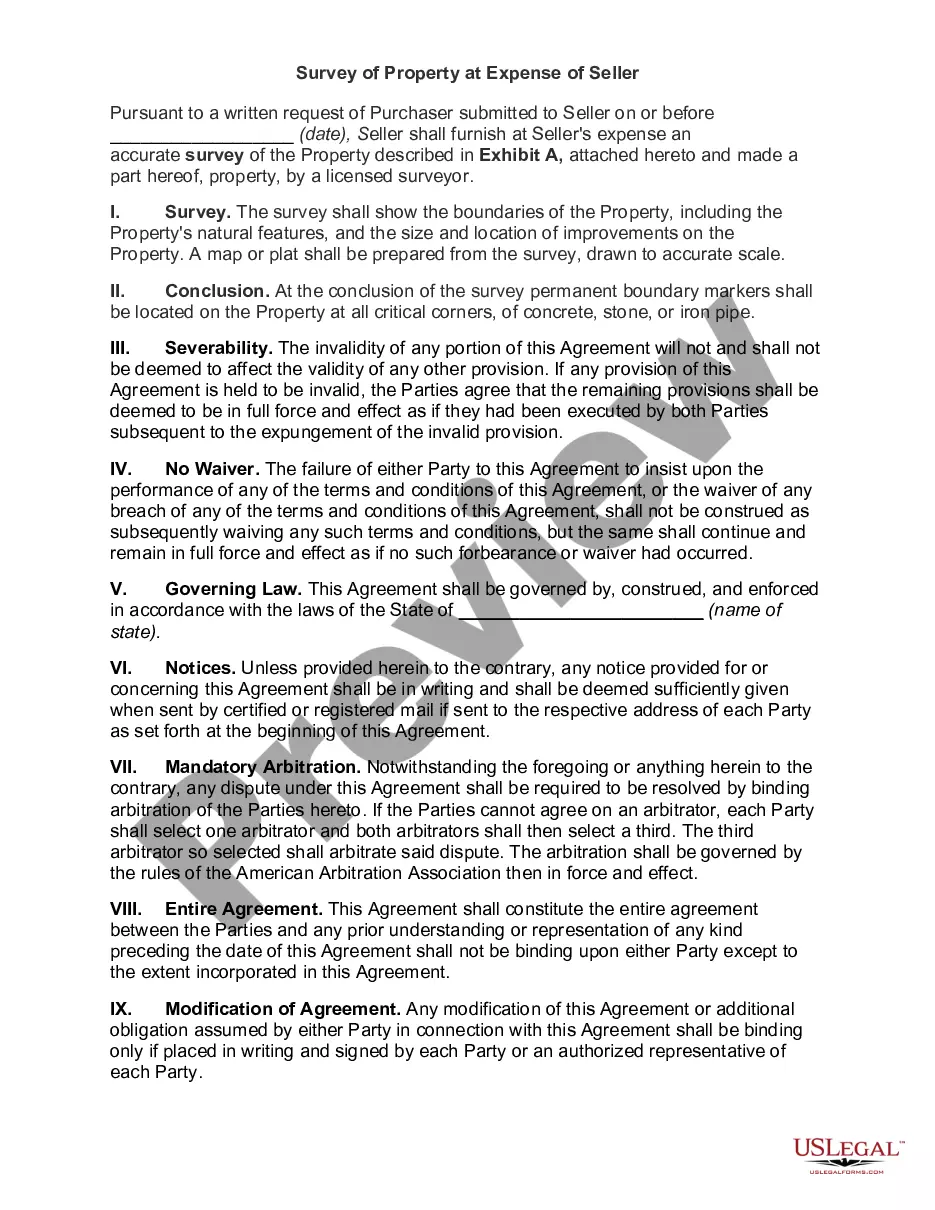
Ohio Customer Confidentiality Agreement
Description
Get your form ready online
Our built-in tools help you complete, sign, share, and store your documents in one place.
Make edits, fill in missing information, and update formatting in US Legal Forms—just like you would in MS Word.
Download a copy, print it, send it by email, or mail it via USPS—whatever works best for your next step.
Sign and collect signatures with our SignNow integration. Send to multiple recipients, set reminders, and more. Go Premium to unlock E-Sign.
If this form requires notarization, complete it online through a secure video call—no need to meet a notary in person or wait for an appointment.
We protect your documents and personal data by following strict security and privacy standards.

Make edits, fill in missing information, and update formatting in US Legal Forms—just like you would in MS Word.

Download a copy, print it, send it by email, or mail it via USPS—whatever works best for your next step.

Sign and collect signatures with our SignNow integration. Send to multiple recipients, set reminders, and more. Go Premium to unlock E-Sign.

If this form requires notarization, complete it online through a secure video call—no need to meet a notary in person or wait for an appointment.

We protect your documents and personal data by following strict security and privacy standards.
Looking for another form?






How to fill out Customer Confidentiality Agreement?
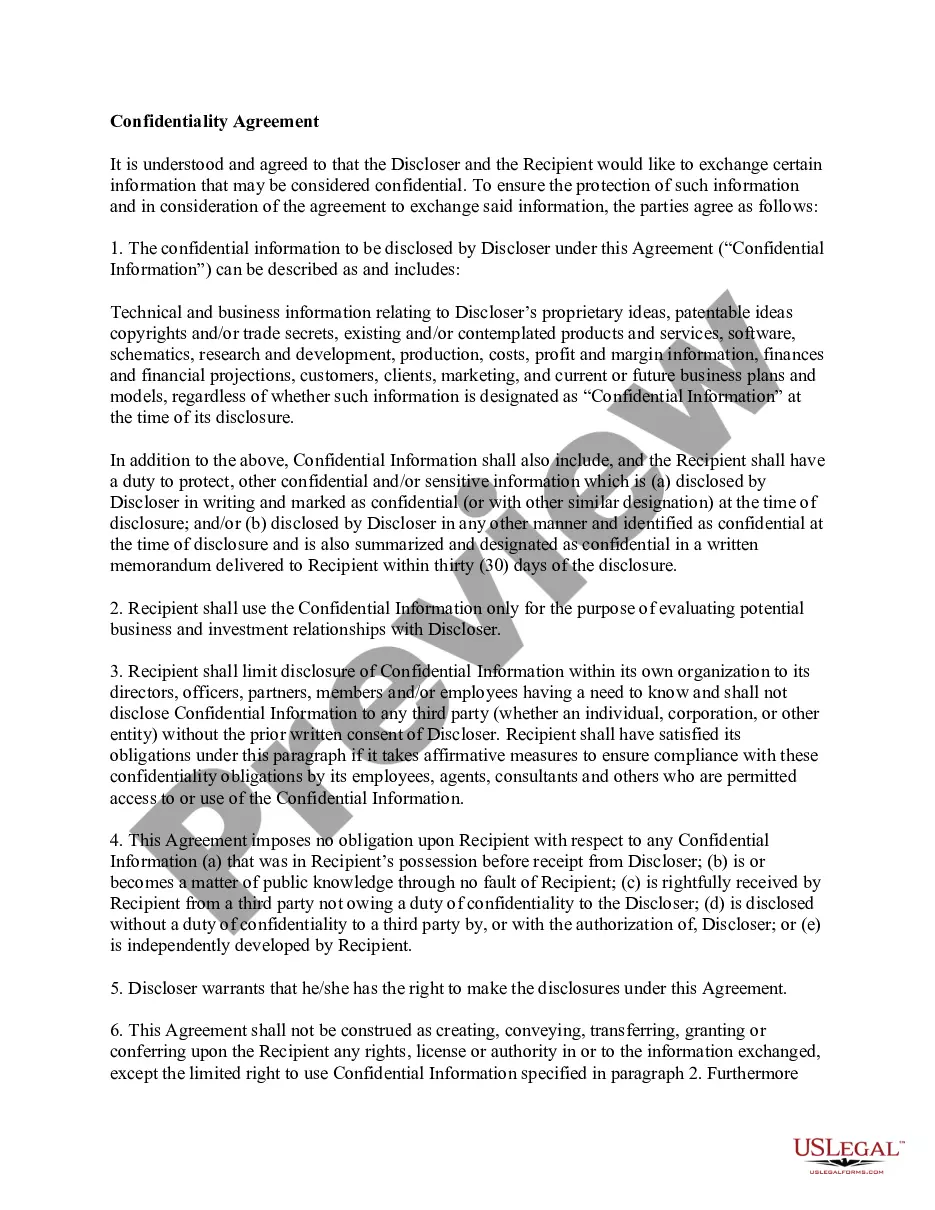
You may allocate time on the Web looking for the legal document template that meets the state and federal requirements you need.
US Legal Forms offers thousands of legal forms that are reviewed by professionals.
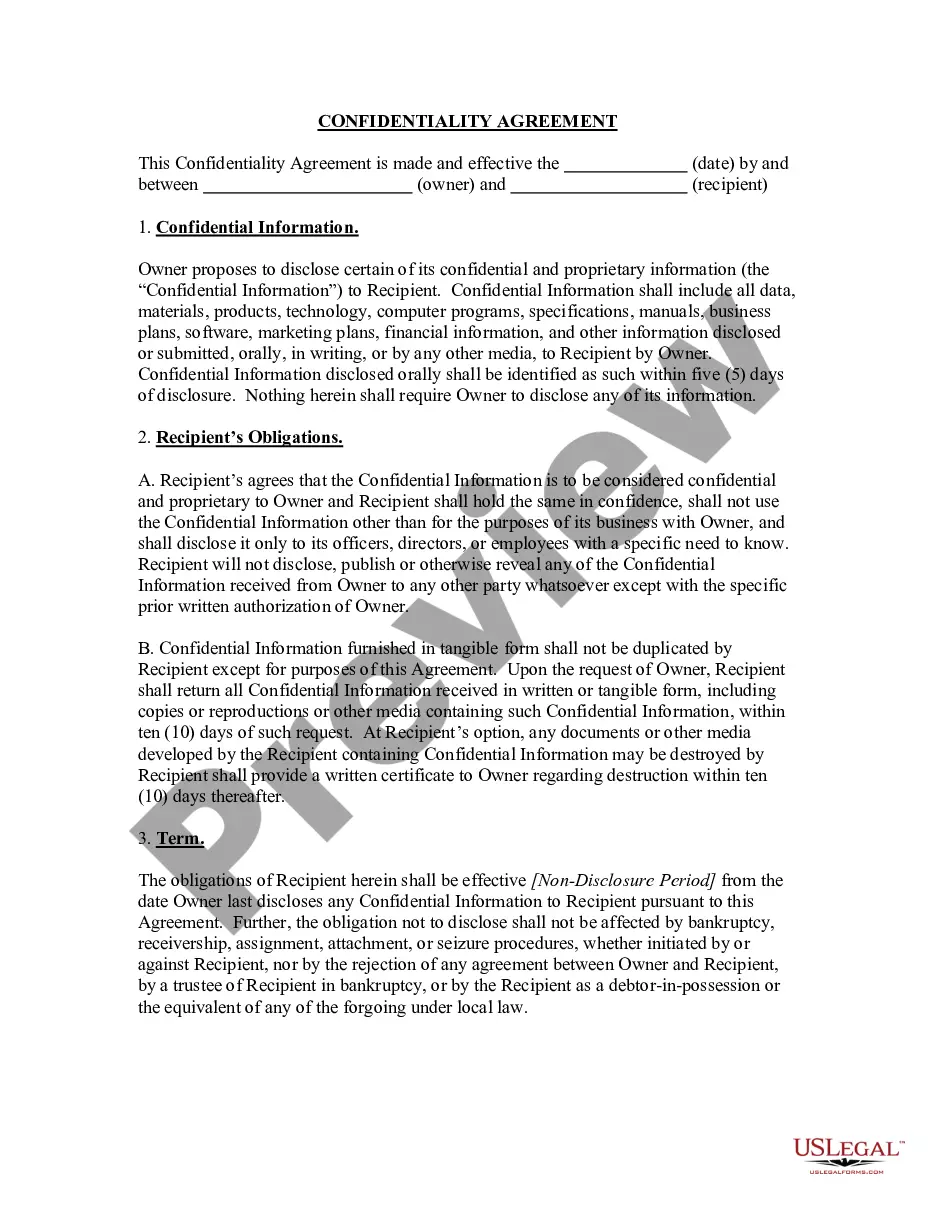
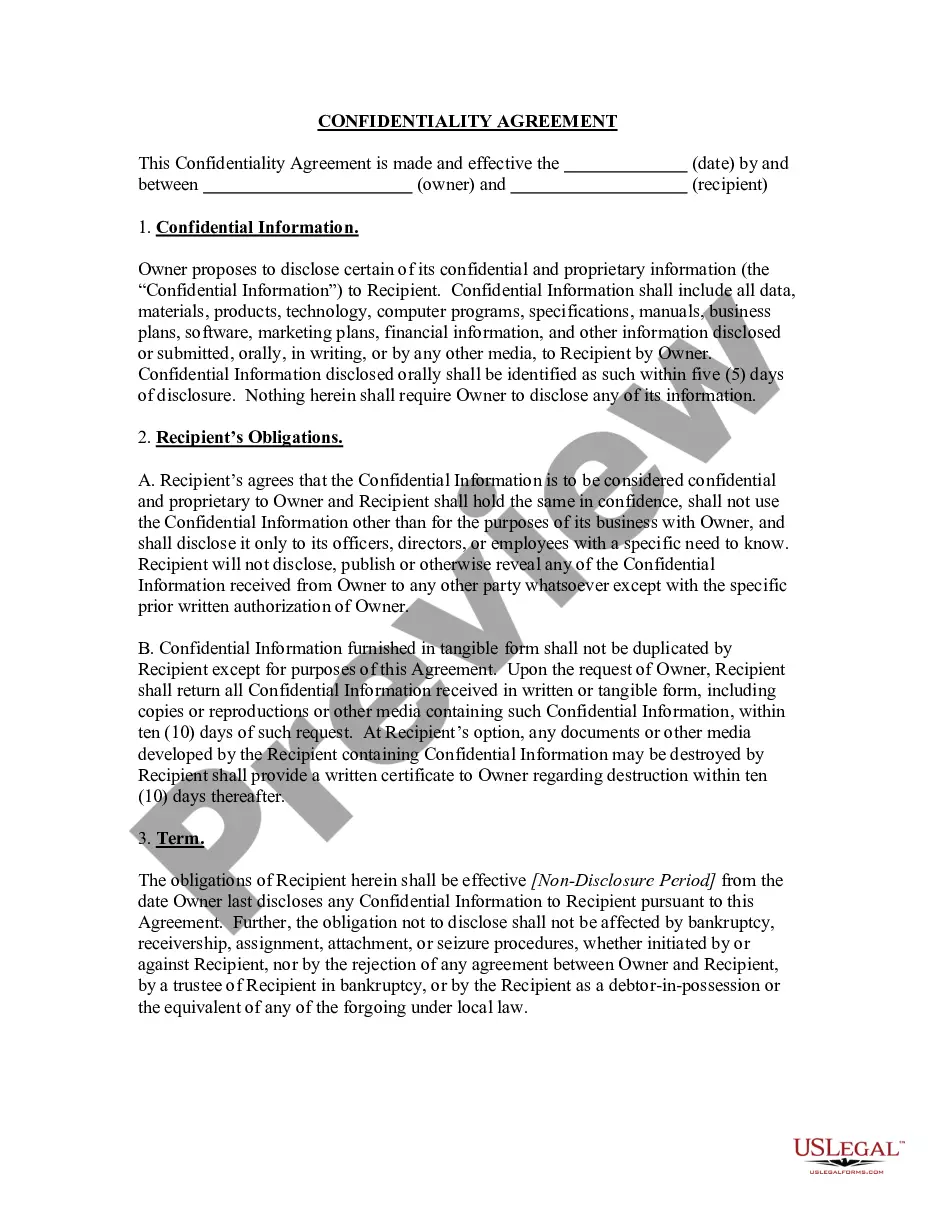
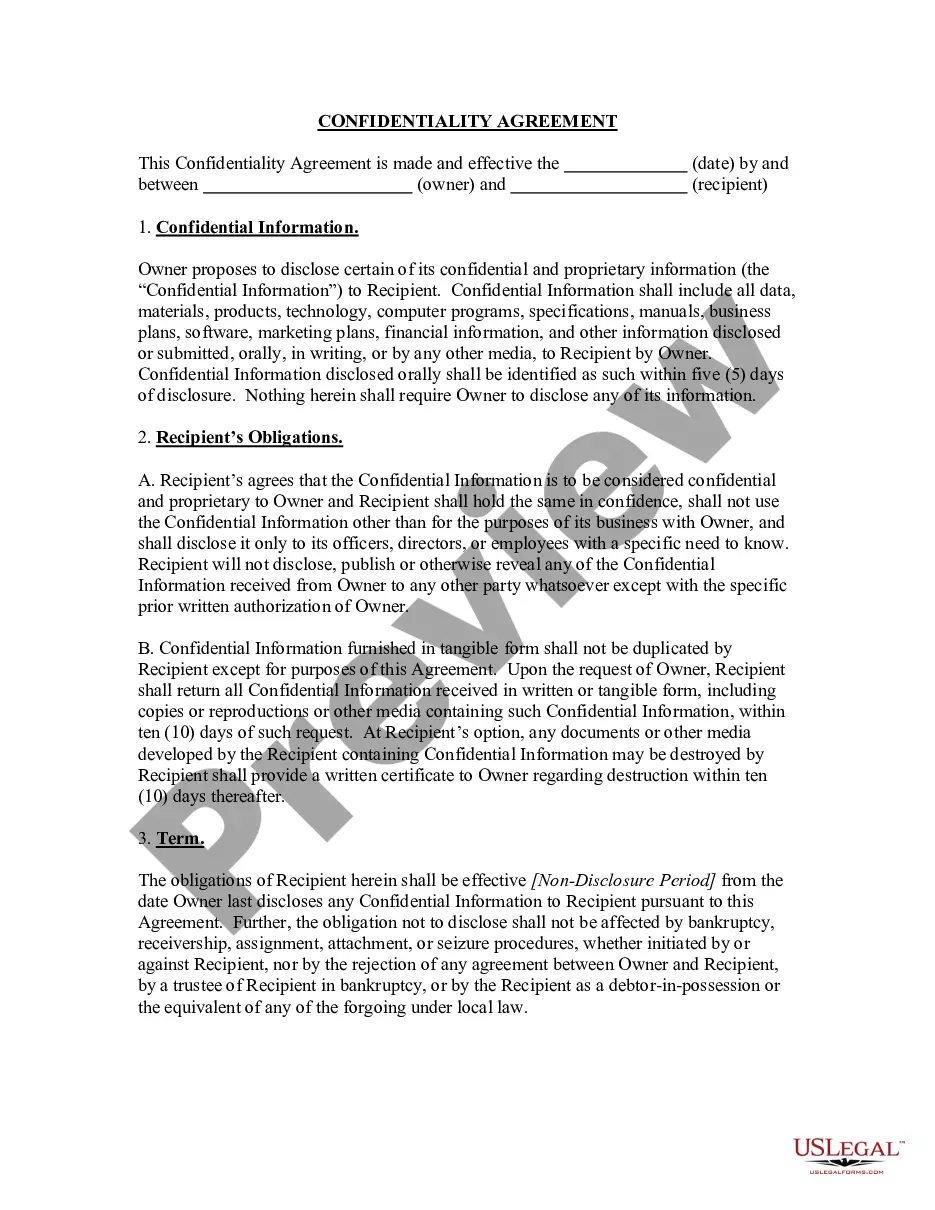
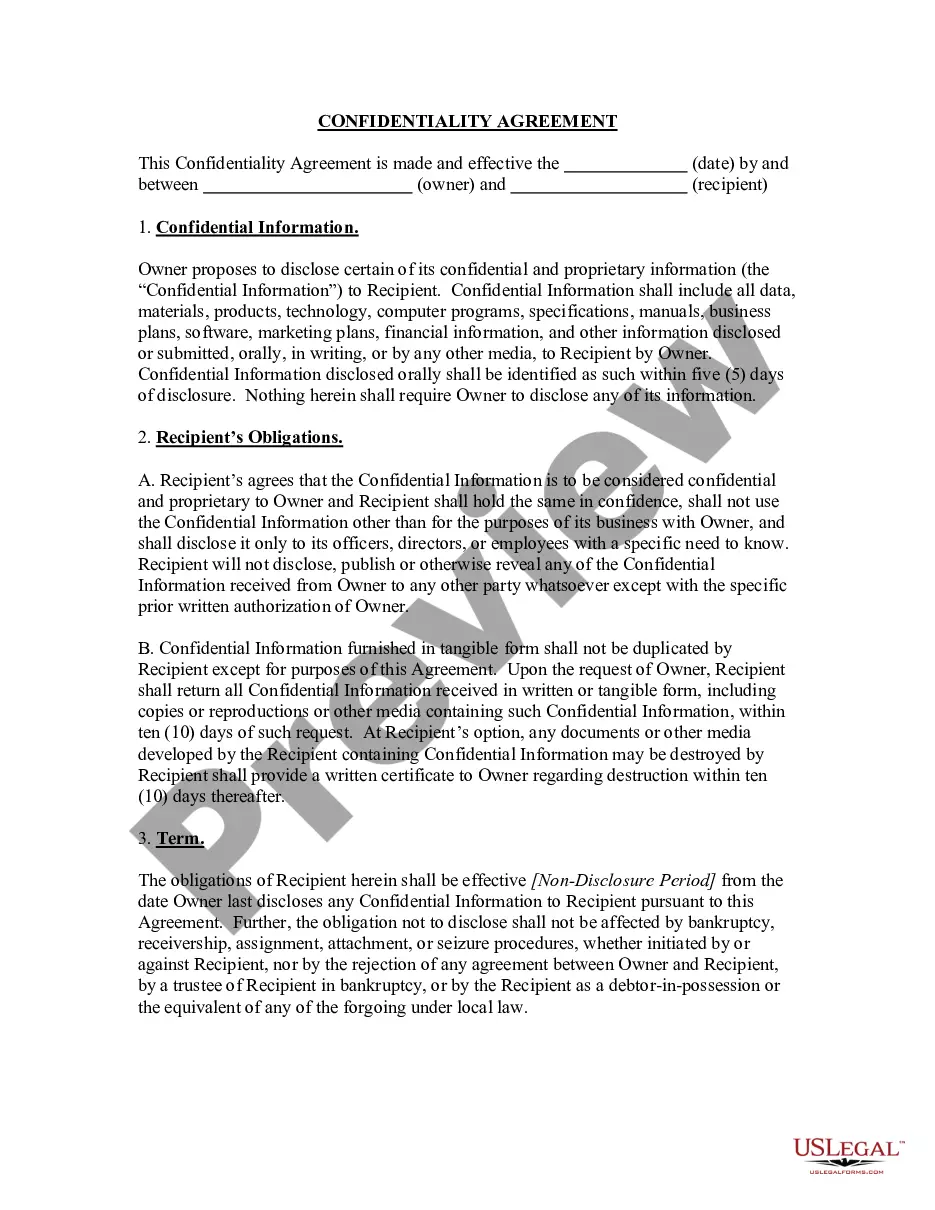
You can readily download or print the Ohio Customer Confidentiality Agreement from our platform.
If available, use the Review button to browse the document template as well.
- If you currently possess a US Legal Forms account, you can Log In and click on the Download button.
- Then, you can complete, edit, print, or sign the Ohio Customer Confidentiality Agreement.
- Every legal document template you purchase is yours permanently.
- To obtain another copy of any purchased form, navigate to the My documents section and click on the respective button.
- If this is your first time using the US Legal Forms site, follow the simple steps below.
- Firstly, ensure you have chosen the correct document template for the area/city you select.
- Check the form description to confirm that you have chosen the right document.
Form popularity
FAQ
Yes, you can create your own confidentiality agreement tailored to your specific needs. However, ensuring that it meets all legal requirements is crucial. An Ohio Customer Confidentiality Agreement should clearly outline the terms of confidentiality and the responsibilities of each party involved. To simplify this process, consider using the templates available on the US Legal Forms platform, which can guide you in drafting a legally sound agreement.
The enforceability of confidentiality agreements largely depends on how they are structured. In Ohio, a well-drafted Ohio Customer Confidentiality Agreement will cover essential points such as the definition of confidential information and the extent of the obligation. Ensuring clarity and mutual understanding strengthens the agreement's enforceability.
Generally, a confidentiality agreement does not require notarization to be valid in Ohio. However, having it notarized can add a layer of authenticity and may help in future disputes. To ensure full protection under an Ohio Customer Confidentiality Agreement, clearly define the terms and obtain signatures from all involved parties.
Non-disclosure agreements (NDAs) are enforceable in Ohio if they adhere to state laws. An effective Ohio Customer Confidentiality Agreement should clearly outline what constitutes confidential information and the consequences of unauthorized disclosure. By creating a thorough NDA, businesses can protect sensitive information and avoid potential legal disputes.
A confidentiality agreement is legally enforceable in Ohio when it meets particular legal criteria. This includes clear identification of confidential material, mutual agreement between parties, and a reasonable duration for confidentiality. Utilizing an Ohio Customer Confidentiality Agreement helps ensure that both parties understand their obligations and rights.
Yes, confidentiality agreements can hold up in court, provided they meet certain legal requirements. The Ohio Customer Confidentiality Agreement must outline specific terms and conditions, clearly stating the confidential nature of the information. Courts generally uphold these agreements when they are reasonable and specific in their scope.
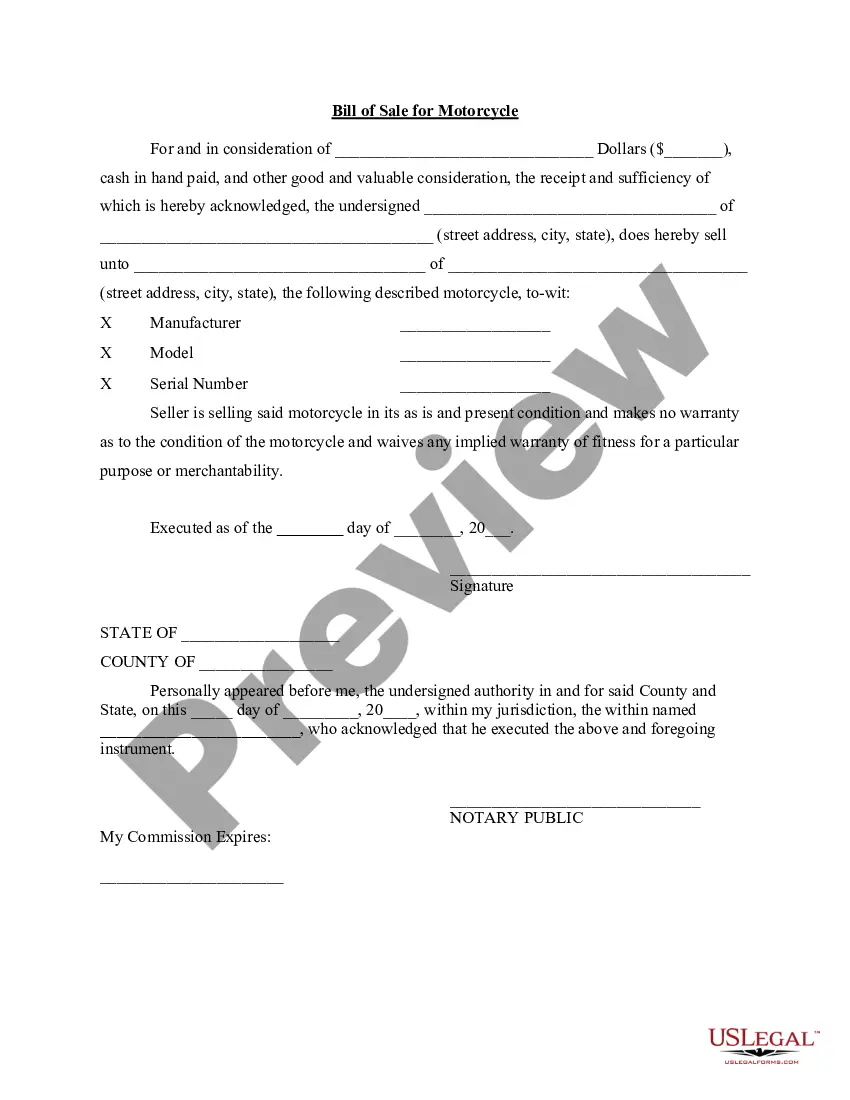
No, an NDA is not the same as a CDA. A Non-Disclosure Agreement (NDA) is more general and covers various types of confidential information, while an Ohio Customer Confidentiality Agreement is specifically tailored to safeguard customer-related data. Choosing the right document depends on what you need to protect and the nature of your business relationships.
CDA stands for Customer Confidentiality Agreement, a legal contract designed to protect sensitive customer information from unauthorized disclosure. In Ohio, having a strong Ohio Customer Confidentiality Agreement can benefit businesses by fostering trust and ensuring that proprietary information remains confidential. Understanding its implications can help businesses navigate their legal obligations more effectively.
The choice between a Non-Disclosure Agreement (NDA) and a Customer Confidentiality Agreement (CDA) depends on your specific needs. If your primary concern is protecting customer information, an Ohio Customer Confidentiality Agreement may be more appropriate. Conversely, if you want broader protection for varied confidential information, an NDA could serve you better.
Creating an Ohio Customer Confidentiality Agreement involves several steps. First, clearly define the confidential information you wish to protect. Next, outline the obligations of all parties involved, including how the information should be handled. Utilizing a platform like UsLegalForms can simplify this process, offering templates and guidance tailored to Ohio's legal standards.