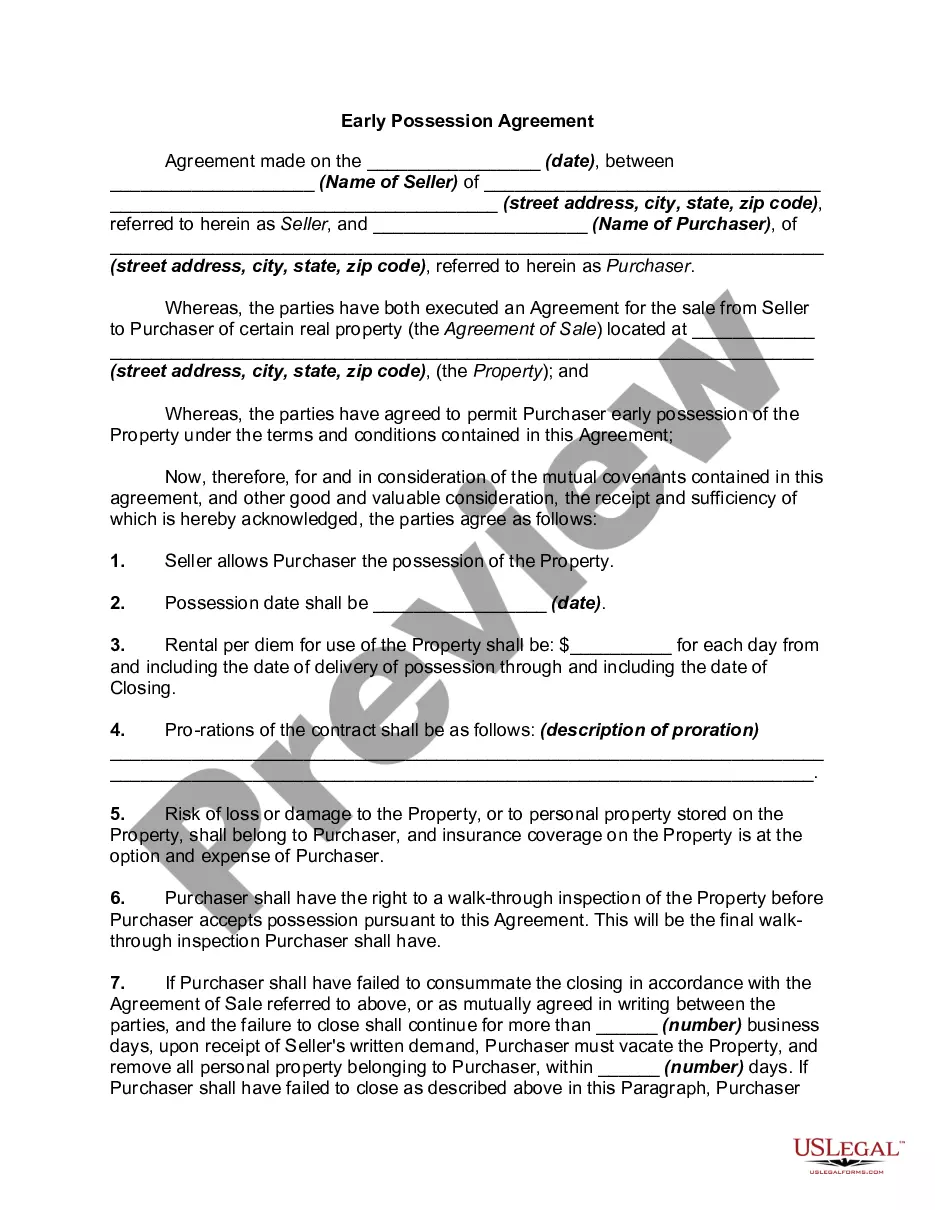
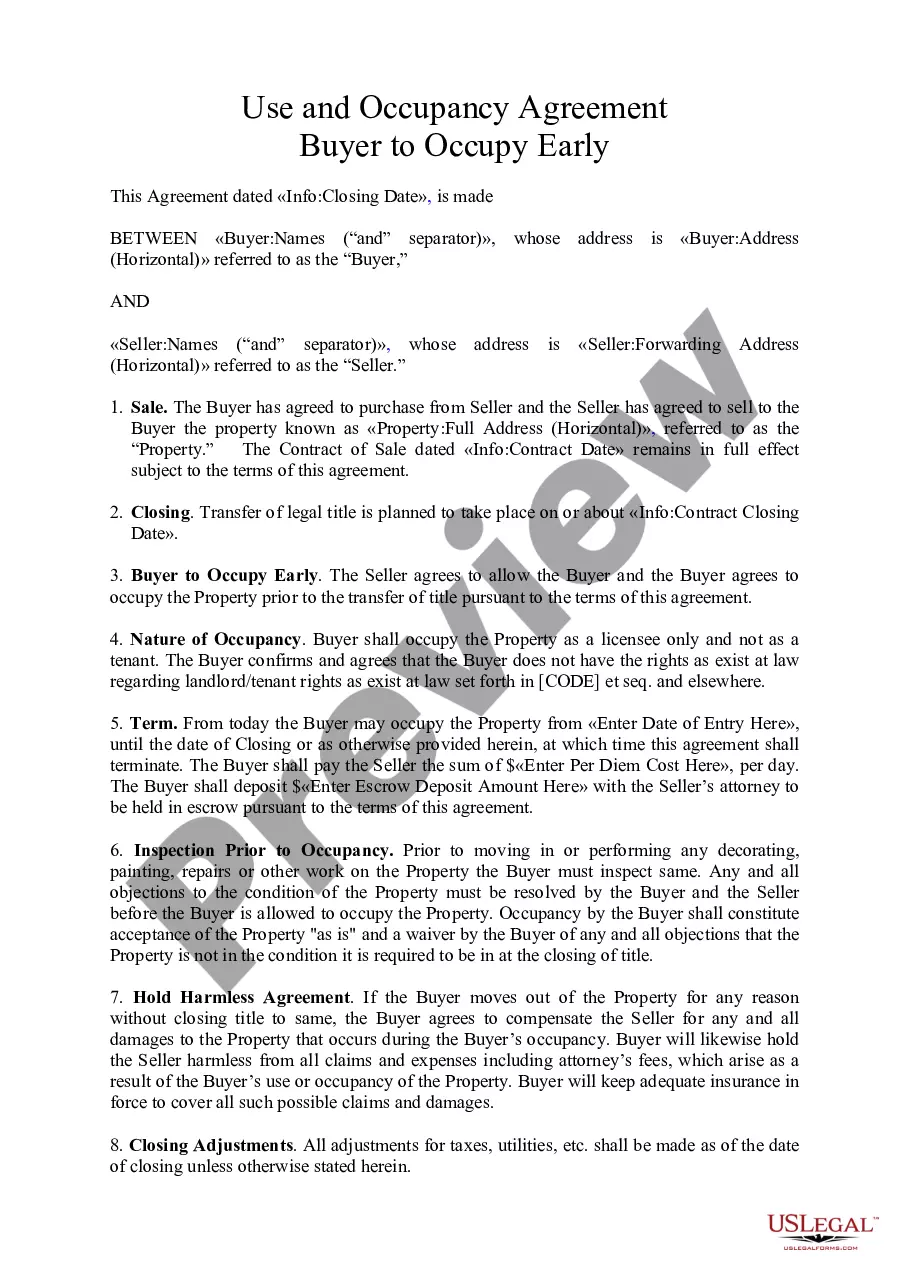
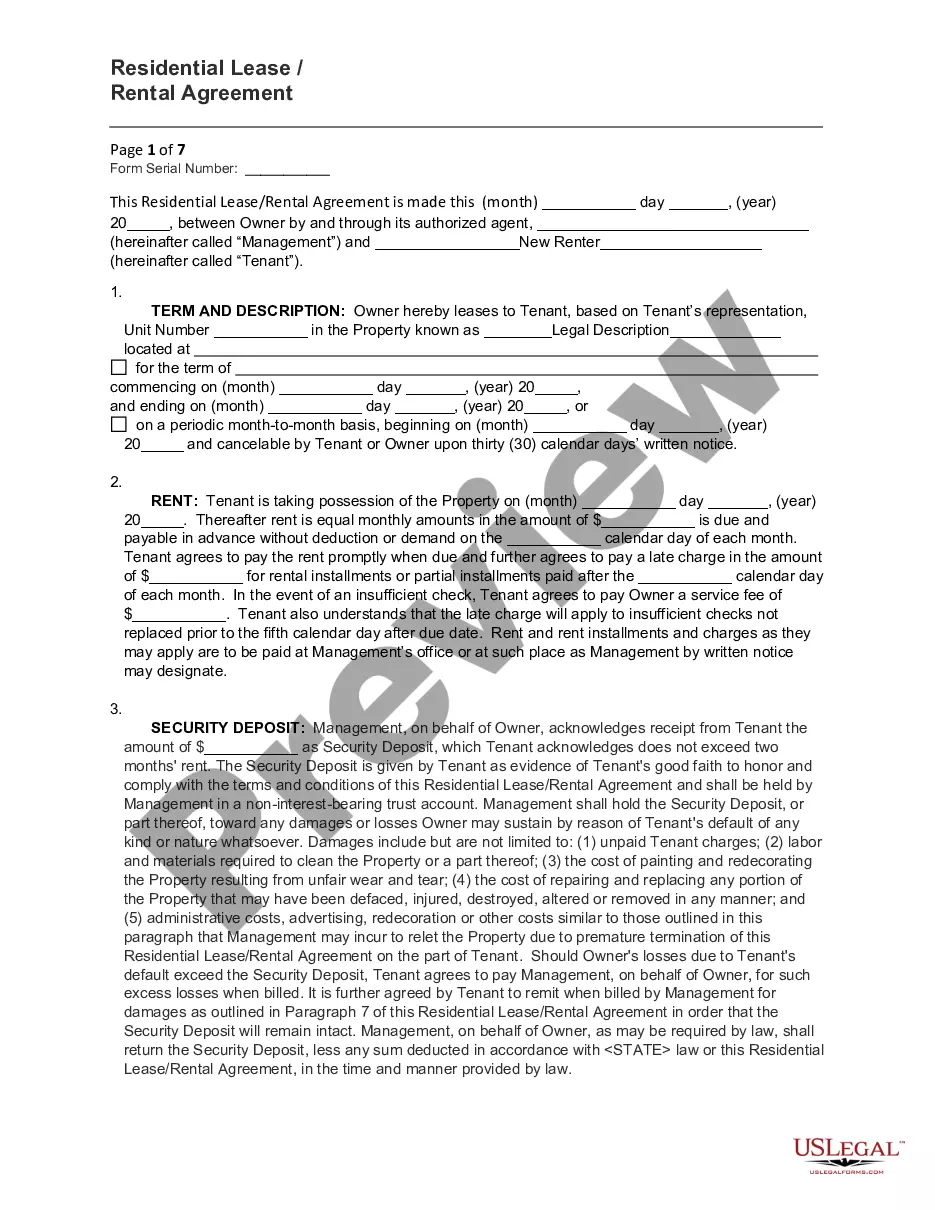
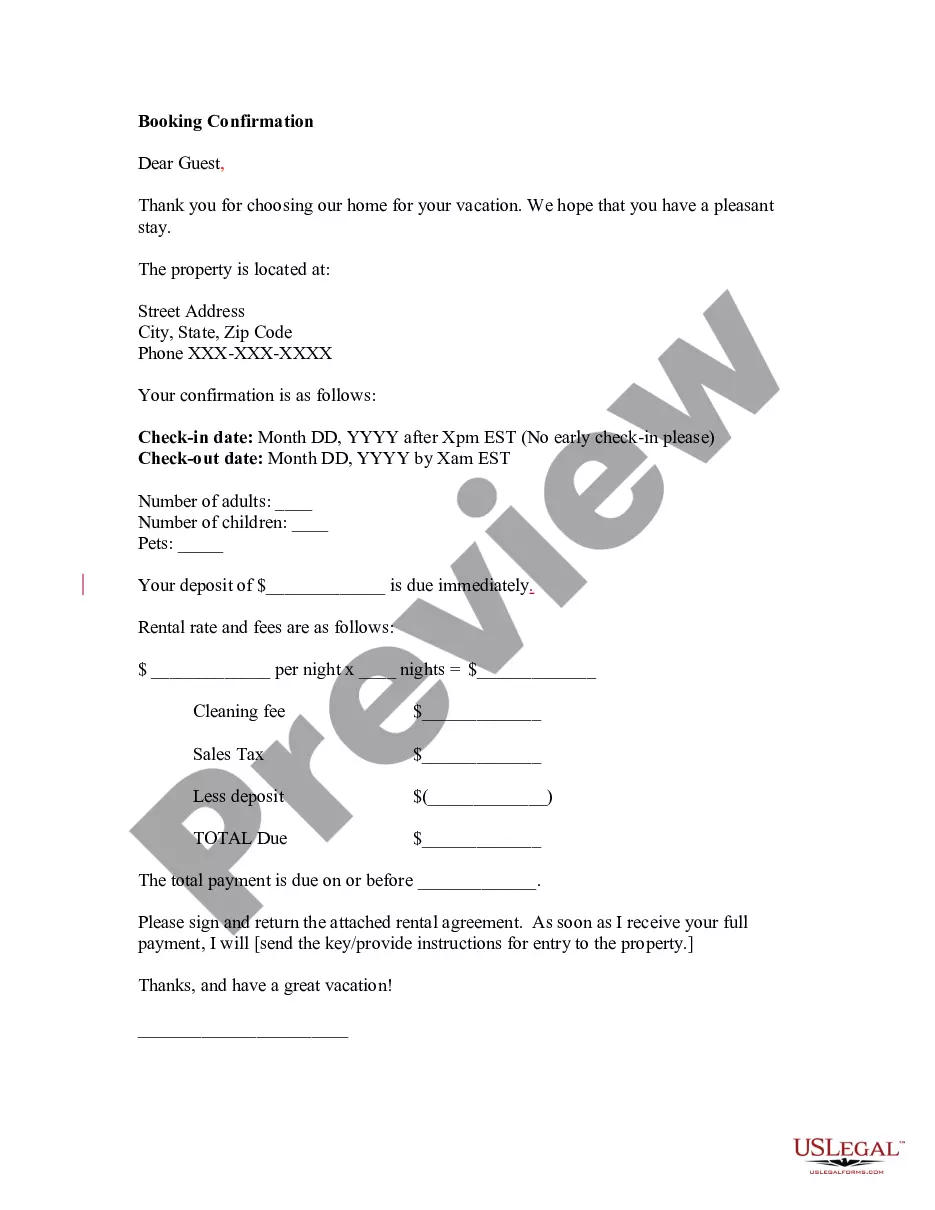
Ohio Temporary Residential Lease or Early Possession Agreement with Occupation
Description
Get your form ready online
Our built-in tools help you complete, sign, share, and store your documents in one place.
Make edits, fill in missing information, and update formatting in US Legal Forms—just like you would in MS Word.
Download a copy, print it, send it by email, or mail it via USPS—whatever works best for your next step.
Sign and collect signatures with our SignNow integration. Send to multiple recipients, set reminders, and more. Go Premium to unlock E-Sign.
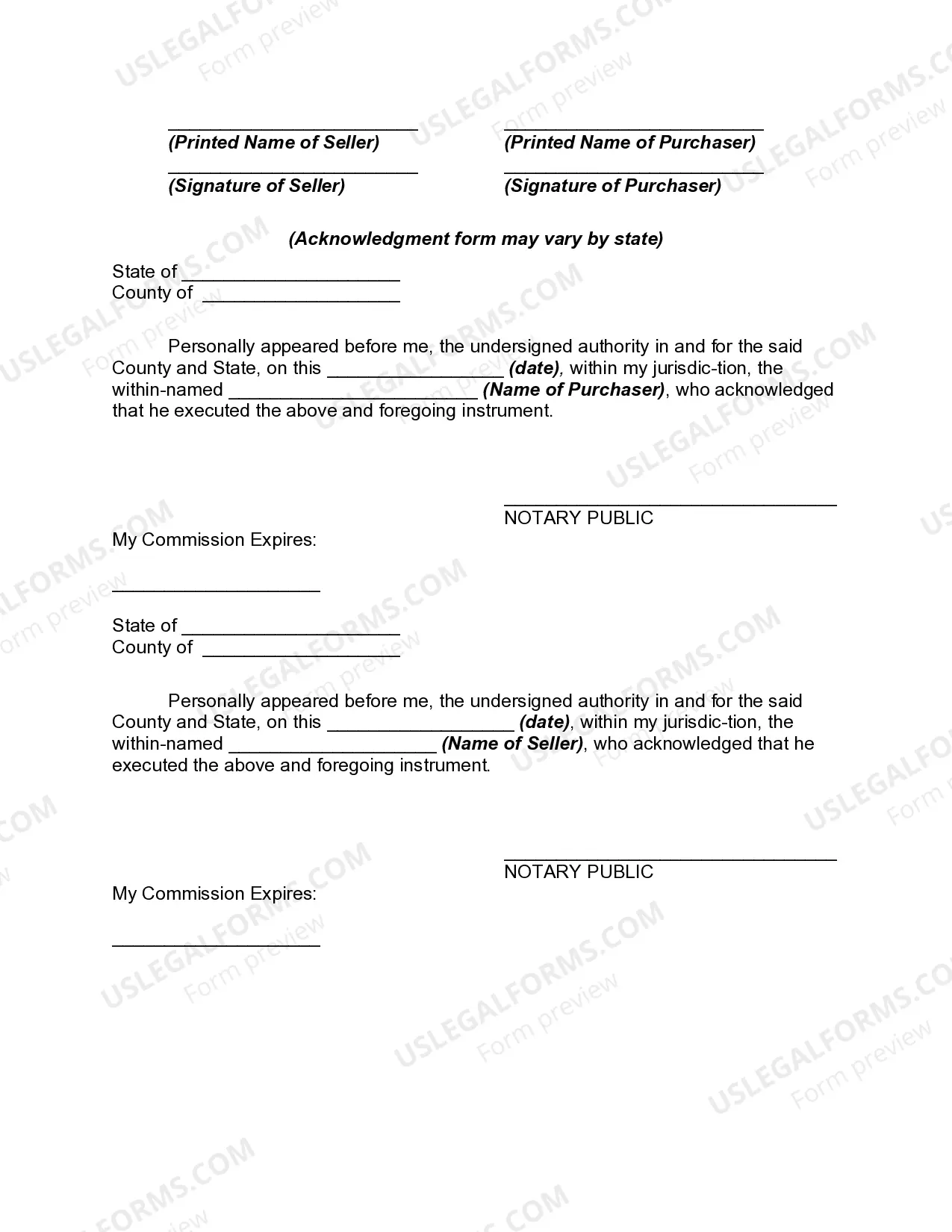
If this form requires notarization, complete it online through a secure video call—no need to meet a notary in person or wait for an appointment.
We protect your documents and personal data by following strict security and privacy standards.

Make edits, fill in missing information, and update formatting in US Legal Forms—just like you would in MS Word.

Download a copy, print it, send it by email, or mail it via USPS—whatever works best for your next step.

Sign and collect signatures with our SignNow integration. Send to multiple recipients, set reminders, and more. Go Premium to unlock E-Sign.

If this form requires notarization, complete it online through a secure video call—no need to meet a notary in person or wait for an appointment.

We protect your documents and personal data by following strict security and privacy standards.
Looking for another form?
How to fill out Temporary Residential Lease Or Early Possession Agreement With Occupation?
If you wish to finish, obtain, or create legitimate document templates, utilize US Legal Forms, the largest selection of lawful documents accessible on the web.
Utilize the site's straightforward and efficient search function to find the forms you require.
Various templates for business and personal purposes are organized by categories and states, or keywords.
Step 3. If you are not satisfied with the form, utilize the Search section at the top of the screen to locate alternative versions of the legal document template.
Step 4. Once you've found the form you need, click the Buy now button. Select the pricing plan you prefer and enter your details to create an account.
- Utilize US Legal Forms to acquire the Ohio Temporary Residential Lease or Early Possession Agreement with Occupation in just a few clicks.
- If you are already a US Legal Forms user, Log In to your account and select the Download button to obtain the Ohio Temporary Residential Lease or Early Possession Agreement with Occupation.
- You may also access documents you have previously obtained in the My documents section of your account.
- If you are utilizing US Legal Forms for the first time, follow the guidelines below.
- Step 1. Ensure you have selected the form for your specific city/state.
- Step 2. Utilize the Preview feature to review the content of the form. Remember to read the description.
Form popularity
FAQ
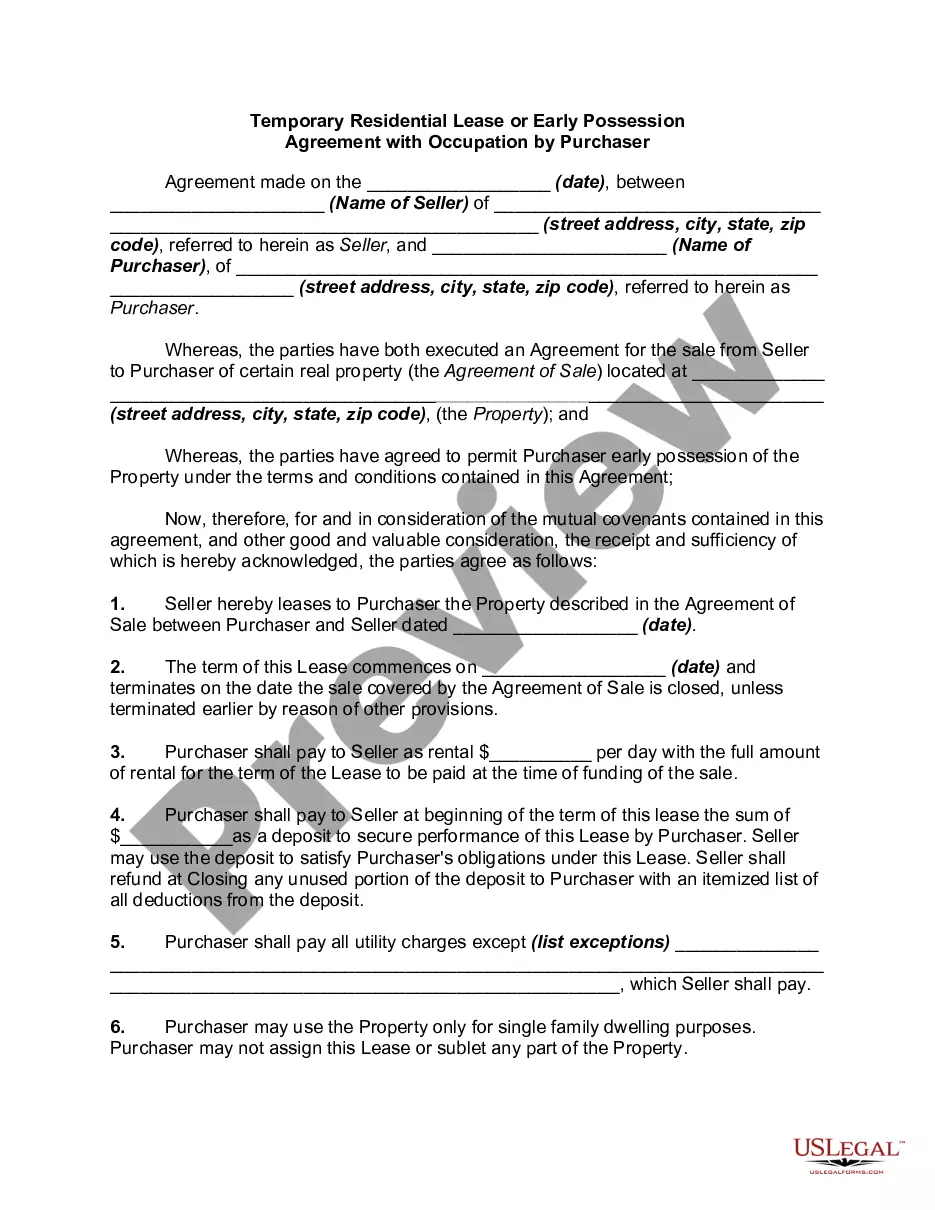
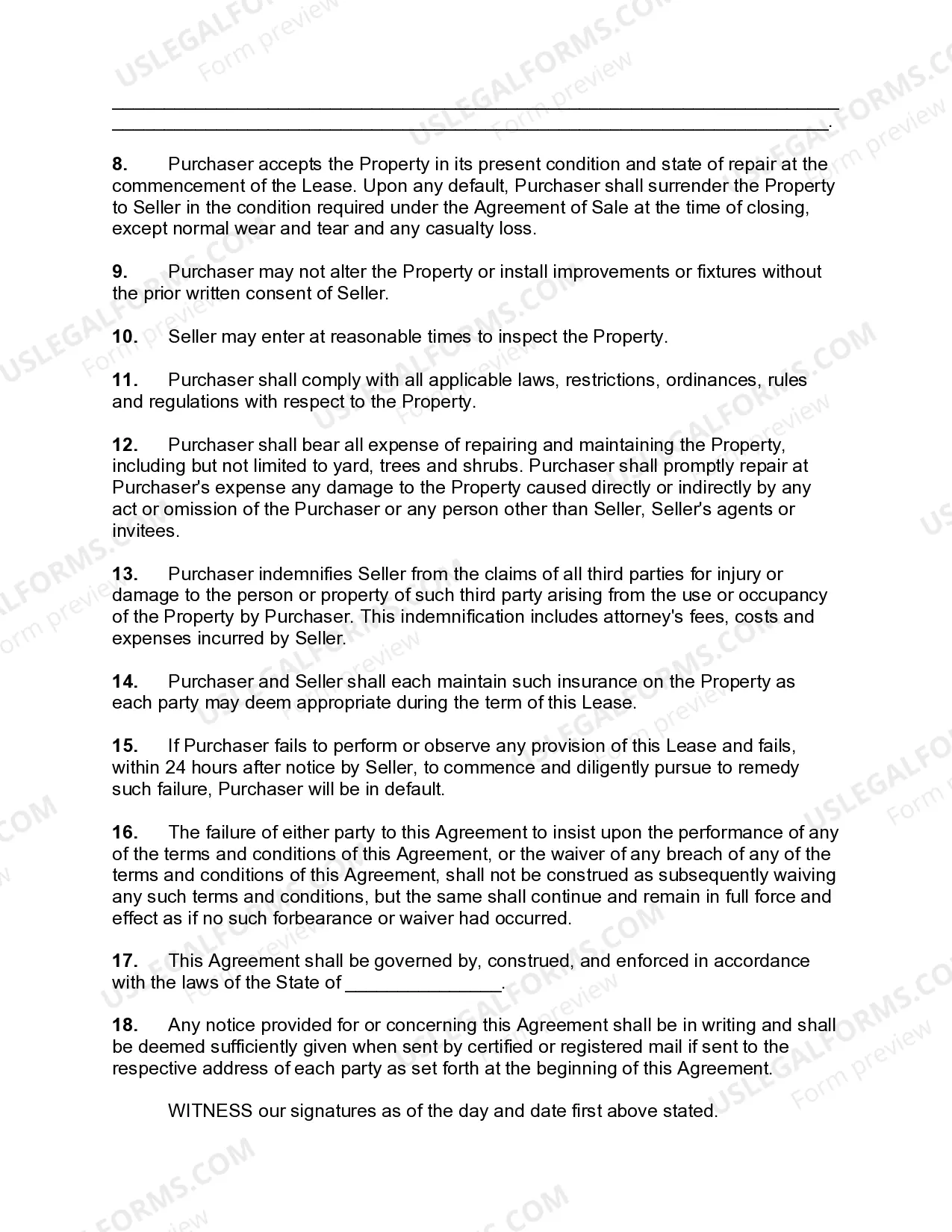
When a property is occupied, it means someone is currently living there, irrespective of the formal lease agreement. On the other hand, leased indicates a formal arrangement where a tenant has legally agreed to the terms set forth in a lease, such as the Ohio Temporary Residential Lease or Early Possession Agreement with Occupation. Recognizing this difference is important to navigate your housing situation and understand your legal rights.
A lease holder is the individual who has signed the lease and holds the legal rights to occupy the property. In contrast, an occupant may be someone living in the property who is not listed on the lease. Understanding these roles is vital when entering an Ohio Temporary Residential Lease or Early Possession Agreement with Occupation, as it impacts lease obligations and rights of each party involved.
An agreement outlines the terms and conditions under which parties can occupy a property, while a lease is a legally binding contract that grants specific rights to a tenant. The Ohio Temporary Residential Lease or Early Possession Agreement with Occupation serves as a type of lease that allows for early occupancy before the full lease term begins. It is crucial to understand these distinctions, as they affect your rights and responsibilities.
Filling out an Ohio residential lease agreement is straightforward if you follow the required sections carefully. Include details such as the names of all tenants, property address, lease duration, and rent amount. Additionally, you should mention any specific terms related to an early possession if applicable. To simplify this process, consider using an Ohio Temporary Residential Lease or Early Possession Agreement with Occupation available on USLegalForms, which guides you through each step.
Early occupancy can be beneficial for both tenants and landlords in certain circumstances. For tenants, it allows them to settle in before the lease begins, while landlords can secure a rent payment sooner. However, it's crucial to carefully consider the terms and responsibilities involved. Using an Ohio Temporary Residential Lease or Early Possession Agreement with Occupation helps clearly define these terms and offers protection for both parties.
An early possession agreement specifically outlines the terms under which a tenant can occupy a rental property before the lease officially starts. This agreement should encompass rent amount, duration of early occupancy, and any potential liabilities. Having this documented is vital to prevent misunderstandings between landlords and tenants. Adopting an Ohio Temporary Residential Lease or Early Possession Agreement with Occupation simplifies this process.
First possession of property law pertains to the rights of individuals regarding the first use or possession of a property. In Ohio, it outlines who has legal entitlement to occupy the space upon agreement. Understanding this law helps both landlords and tenants navigate their rights effectively. Utilizing an Ohio Temporary Residential Lease or Early Possession Agreement with Occupation can provide clarity and protection in these scenarios.
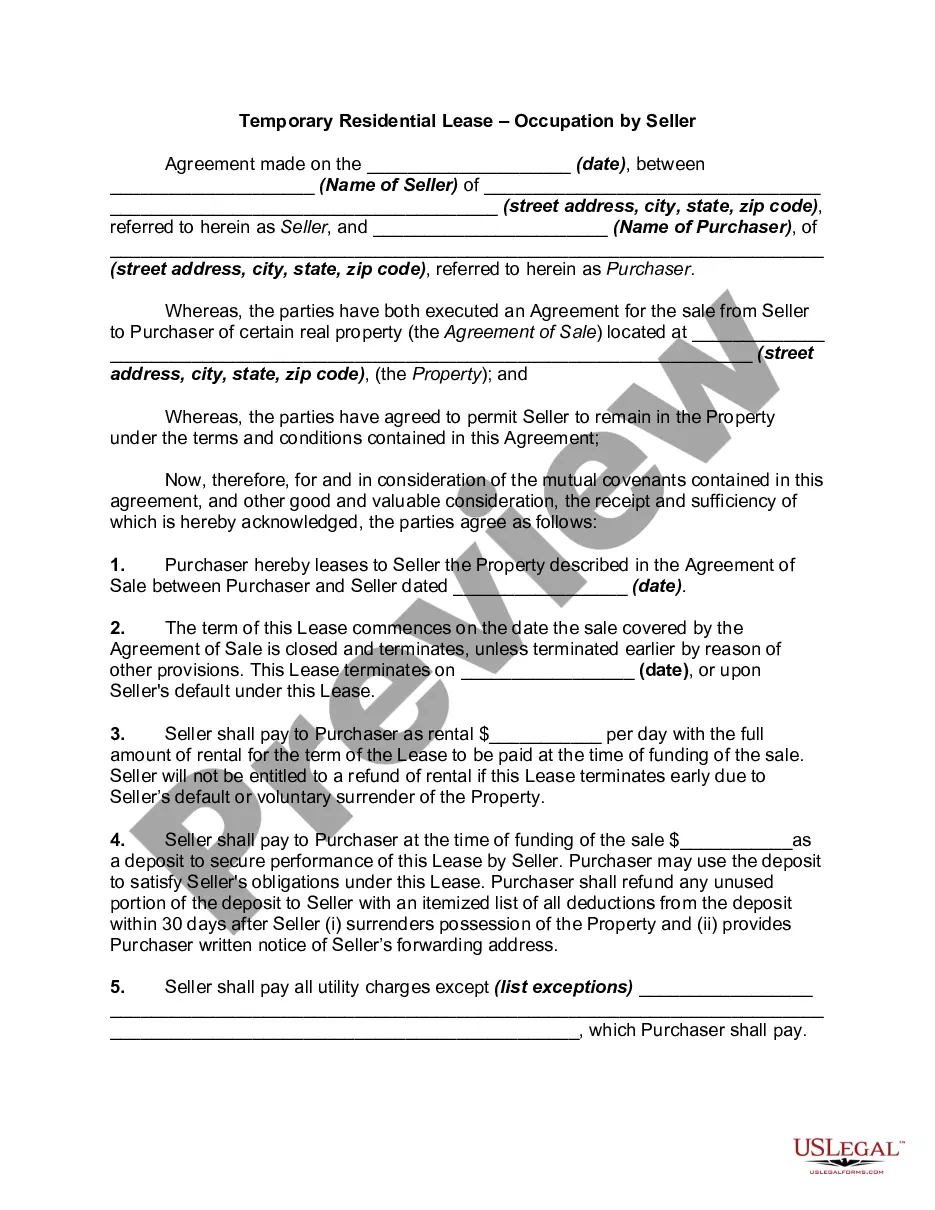
An early occupancy agreement allows a tenant to move into a rental property before the formal lease begins. This agreement details the conditions of early occupation, including rent payment and responsibilities of both parties. It's essential to clarify these terms to protect your rights as a tenant or landlord. Consider using an Ohio Temporary Residential Lease or Early Possession Agreement with Occupation to formalize this arrangement.
The early occupancy clause allows tenants to occupy a property before the official lease start date. This clause clearly states the conditions and responsibilities of both the landlord and tenant during this time. It is wise to ensure that any such arrangements are documented in your Ohio Temporary Residential Lease or Early Possession Agreement with Occupation to avoid misunderstandings.
If your landlord never provided a lease in Ohio, your rights may still be protected under tenant laws. You can reference any written or verbal agreements that have been made regarding your tenancy. It is beneficial to explore the provisions of an Ohio Temporary Residential Lease or Early Possession Agreement with Occupation to establish your rights and obligations.