Ohio Annual Minutes
What this document covers
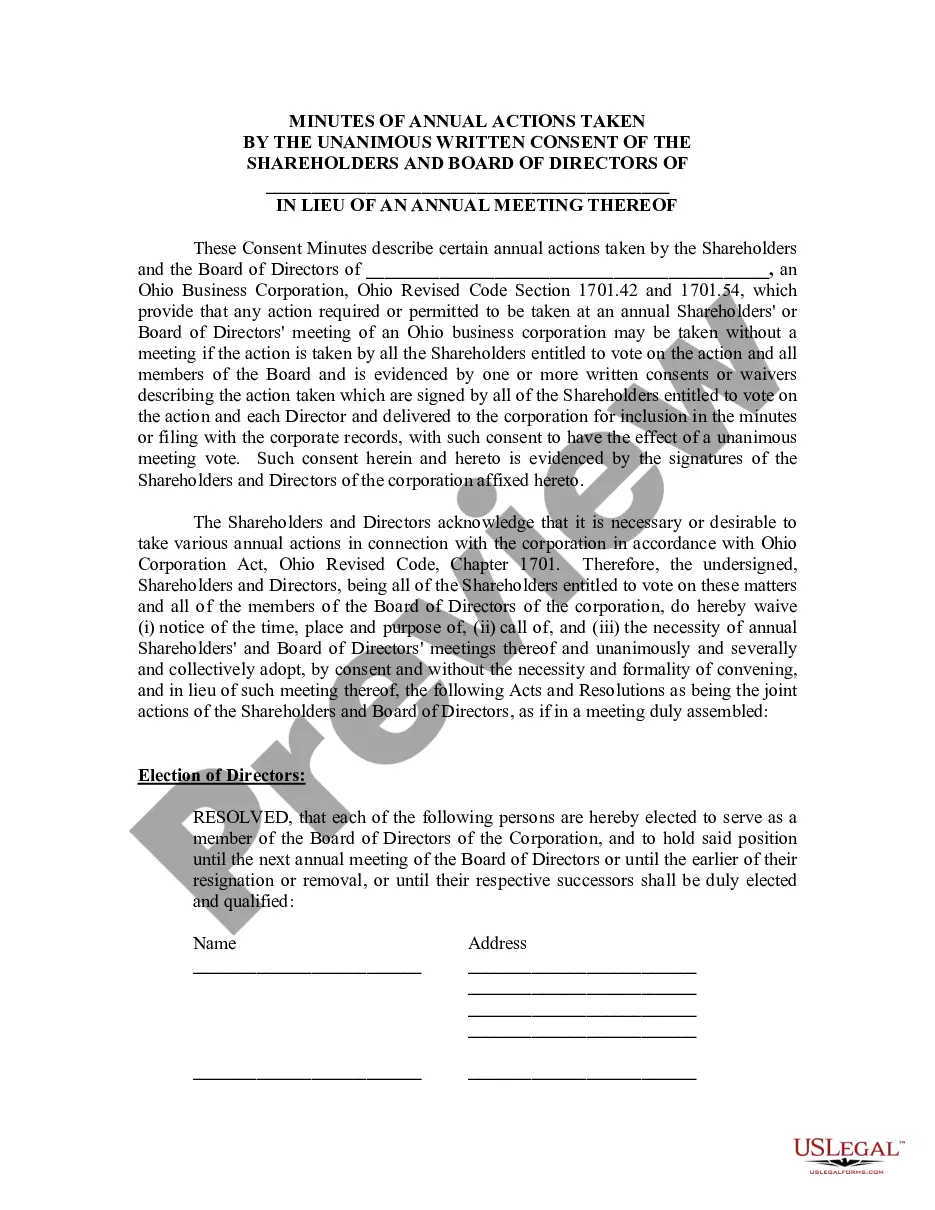
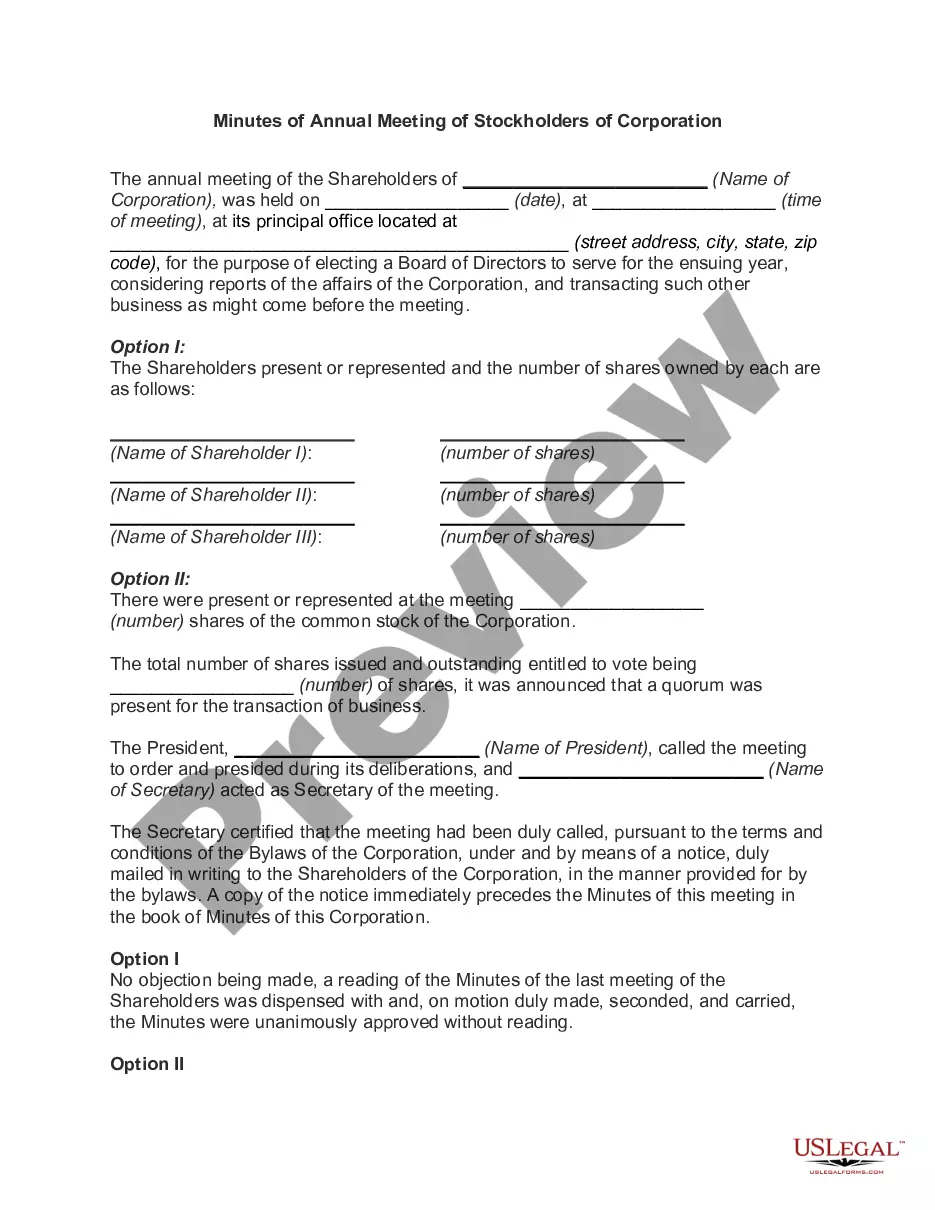
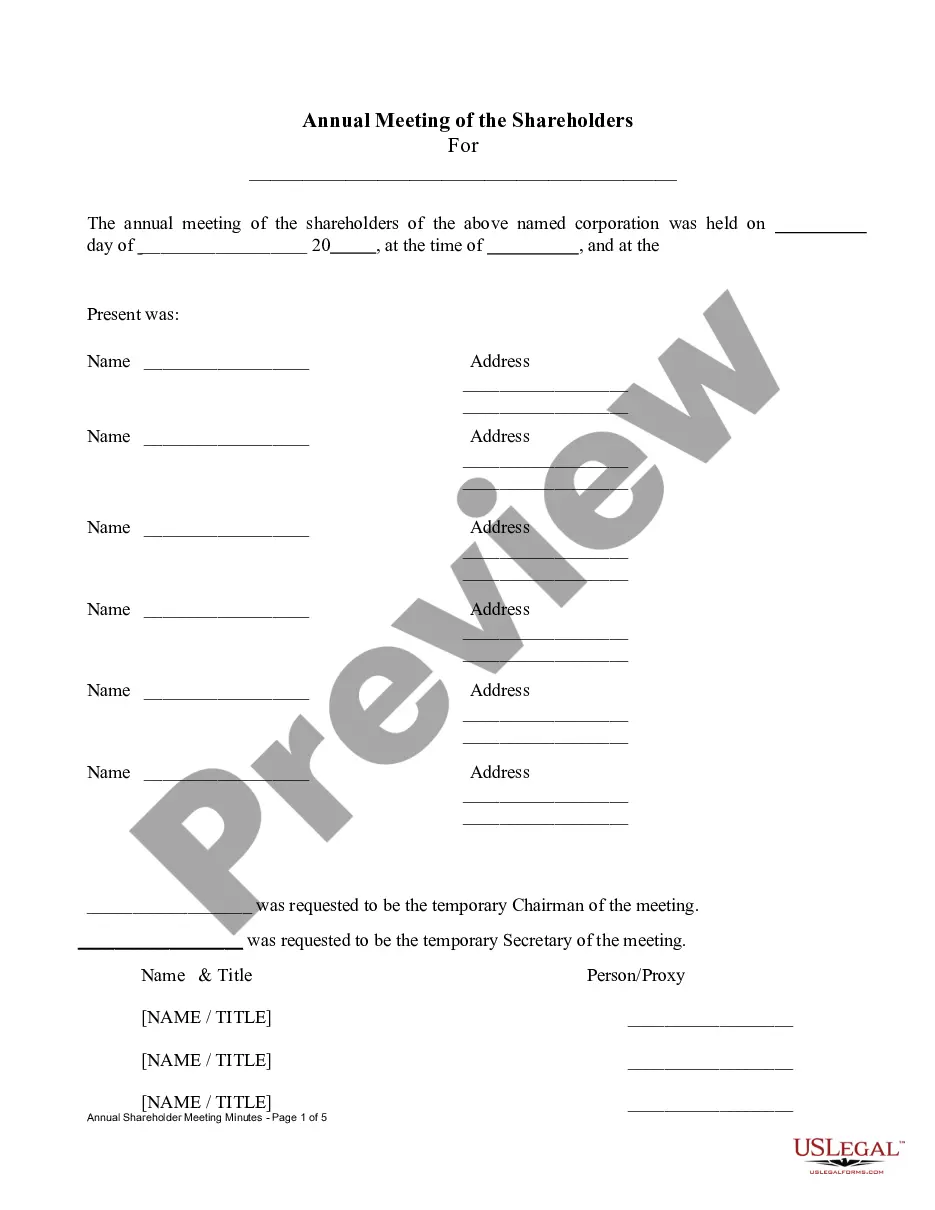
The Annual Minutes form is a legal document used to formally record significant events and decisions made by the shareholders and board of directors of a corporation throughout the year. This form serves as an alternative to holding an annual meeting, allowing actions to be documented through written consent instead. It is crucial for compliance with state laws governing corporate governance and ensures transparent communication among stakeholders.
What’s included in this form
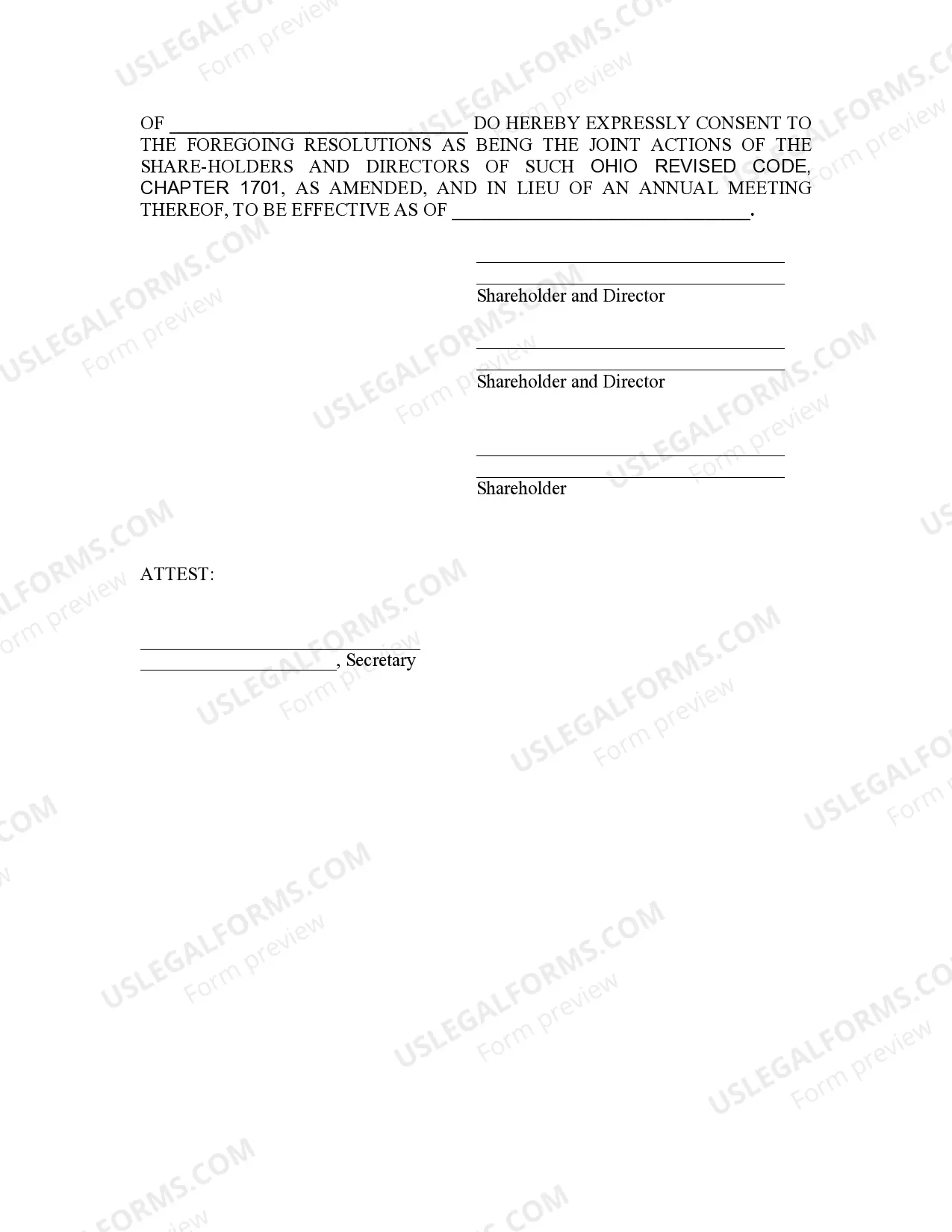
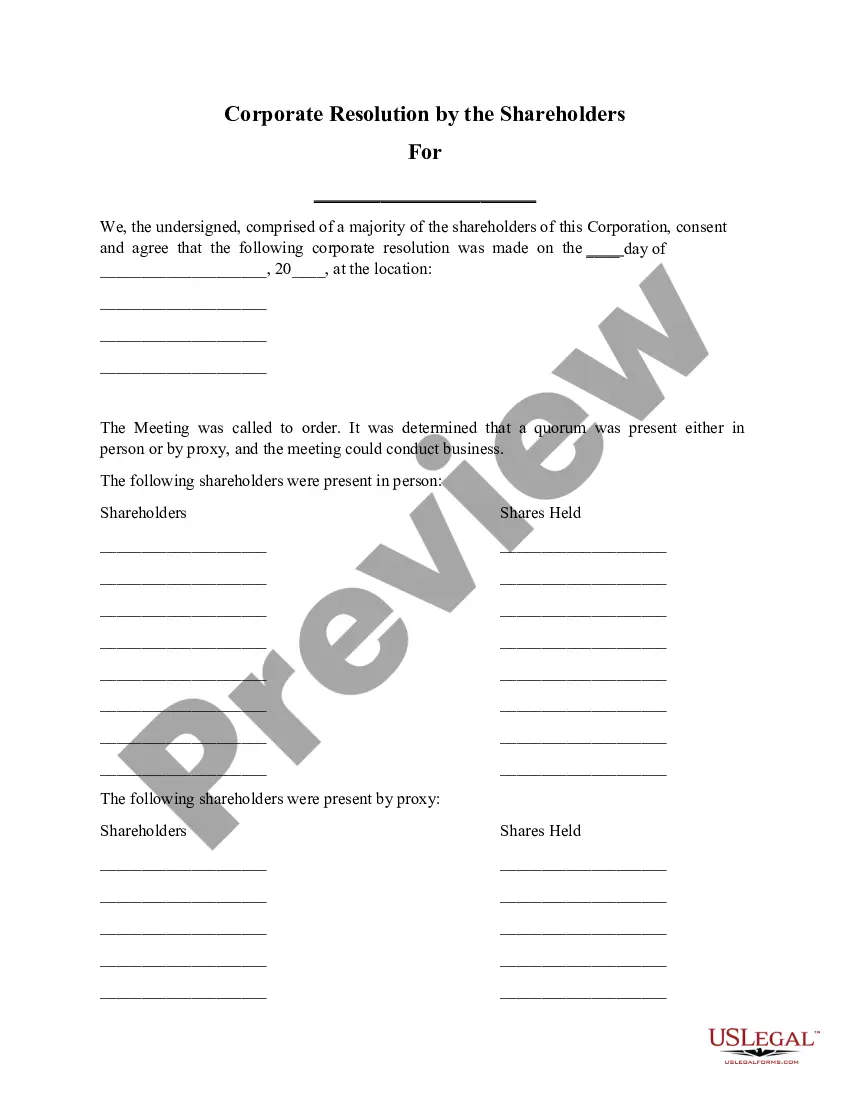
- Unanimous written consent of shareholders and board of directors.
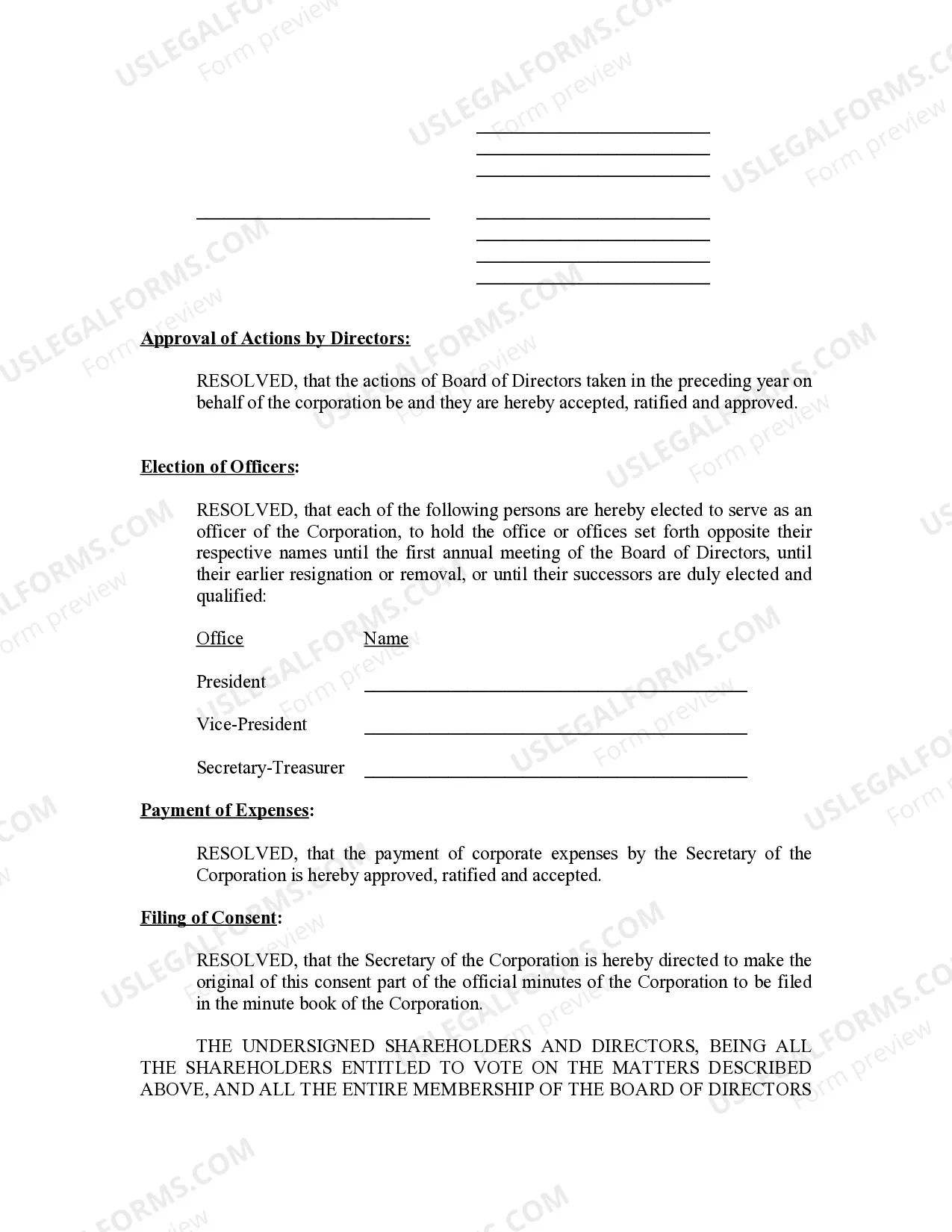
- Election of directors and officers of the corporation.
- Approval of actions taken by the board of directors in the previous year.
- Documentation of corporate expenses approved by the secretary.
- Filing procedures for the official minutes of the corporation.
Situations where this form applies
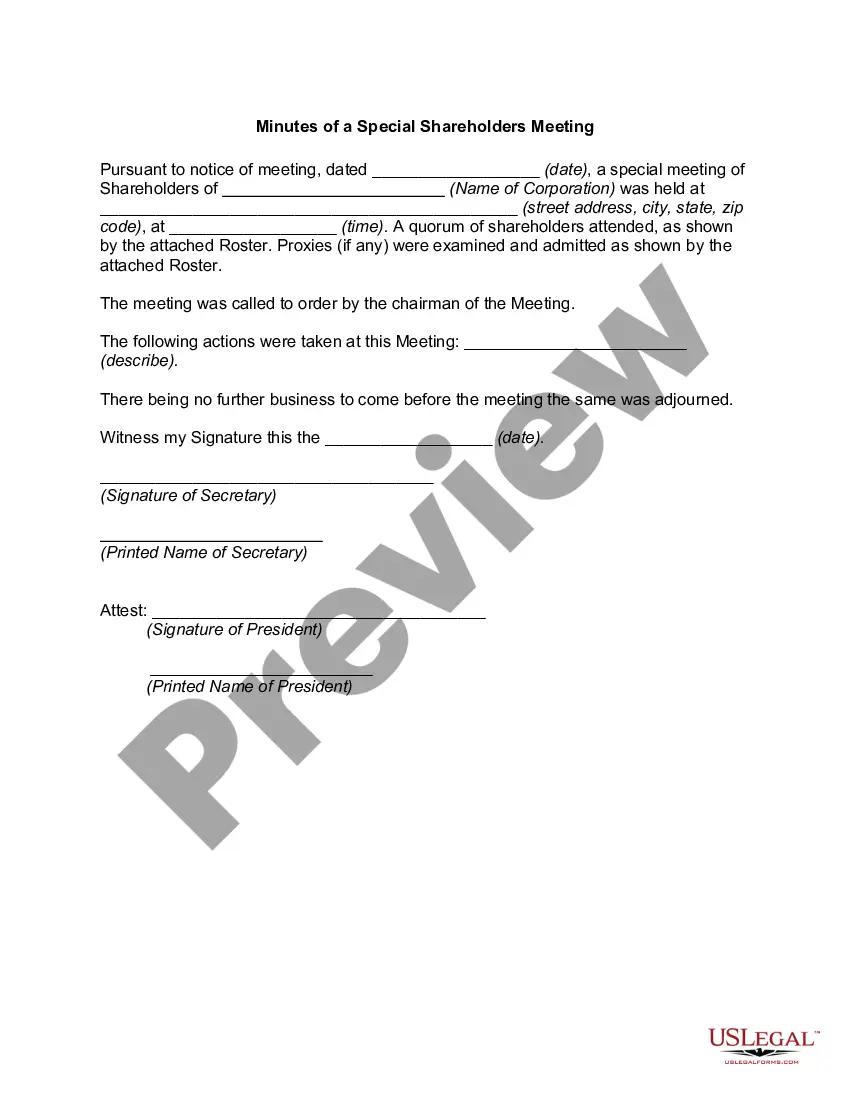
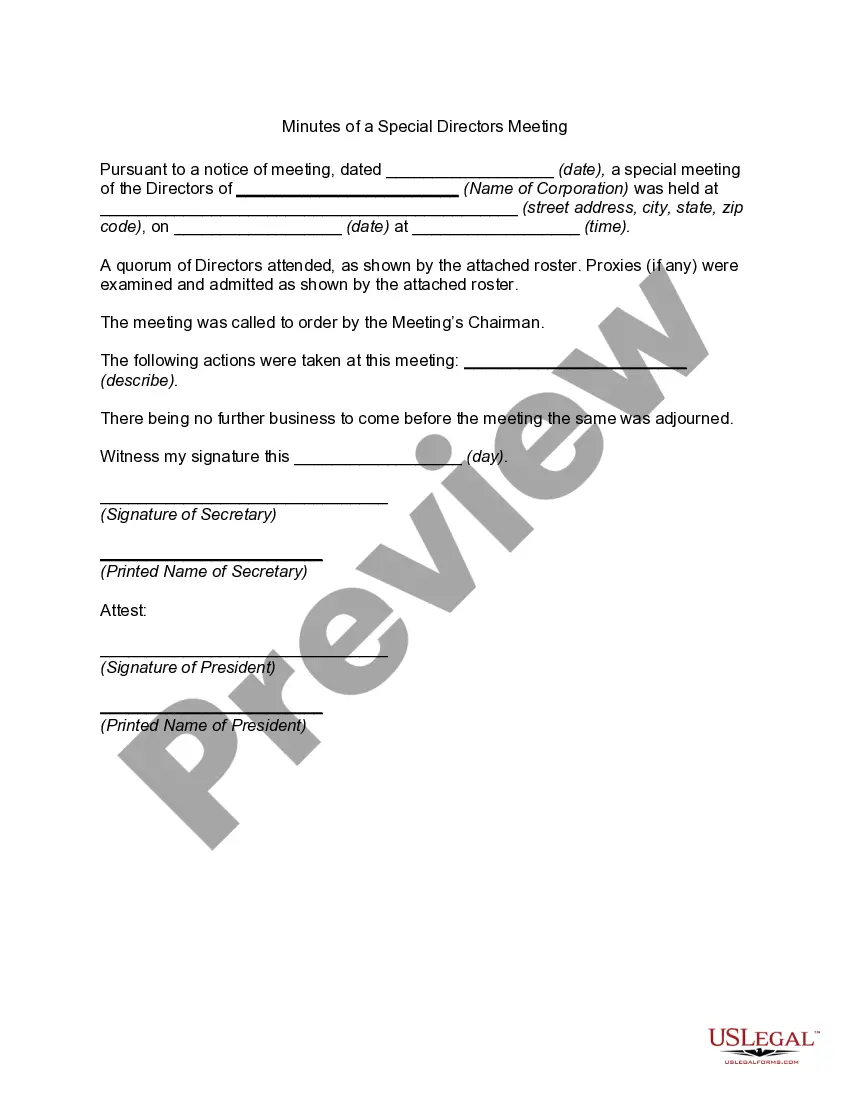
This form should be used when a corporation's shareholders and board of directors need to document their annual decisions and activities without convening a physical meeting. Common scenarios include the election of new board members, ratifying previous actions, and acknowledging corporate expenditures. The Annual Minutes form ensures that all necessary actions are recorded officially and can be referenced in the future.
Who this form is for
This form is intended for:
- Corporations in Ohio that require annual formal documentation.
- Shareholders and directors looking for a streamlined way to record decisions.
- Businesses that prefer to manage governance without holding a formal meeting.
- Corporations that need to maintain compliance with state regulations.
How to prepare this document
To complete the Annual Minutes form, follow these steps:
- Identify and enter the name of the corporation at the top of the document.
- List the names and addresses of the elected directors and officers.
- Provide the date on which the consent resolutions are to be effective.
- Gather the signatures of all shareholders and directors to validate the consent.
- Ensure the completed form is filed in the corporationâs minute book.
Is notarization required?
This form does not typically require notarization unless specified by local law. Ensure to check any additional requirements for your specific corporation as stipulated by Ohio regulations.
Get your form ready online
Our built-in tools help you complete, sign, share, and store your documents in one place.
Make edits, fill in missing information, and update formatting in US Legal Forms—just like you would in MS Word.
Download a copy, print it, send it by email, or mail it via USPS—whatever works best for your next step.
Sign and collect signatures with our SignNow integration. Send to multiple recipients, set reminders, and more. Go Premium to unlock E-Sign.
If this form requires notarization, complete it online through a secure video call—no need to meet a notary in person or wait for an appointment.
We protect your documents and personal data by following strict security and privacy standards.

Make edits, fill in missing information, and update formatting in US Legal Forms—just like you would in MS Word.

Download a copy, print it, send it by email, or mail it via USPS—whatever works best for your next step.

Sign and collect signatures with our SignNow integration. Send to multiple recipients, set reminders, and more. Go Premium to unlock E-Sign.

If this form requires notarization, complete it online through a secure video call—no need to meet a notary in person or wait for an appointment.

We protect your documents and personal data by following strict security and privacy standards.
Typical mistakes to avoid
- Failing to gather signatures from all required shareholders and directors.
- Not dating the document properly, which can affect the validity of the recorded actions.
- Omitting the proper corporate name or details, leading to potential legal issues.
- Not filing the Annual Minutes form with the corporationâs records, risking non-compliance.
Benefits of completing this form online
- Convenience of documenting decisions without the need for a physical meeting.
- Streamlined process for electing directors and approving official actions.
- Editable format allows for easy customization based on specific corporate needs.
- Ensures compliance with state laws, reducing potential legal risks.
- Documenting annual actions ensures compliance with state corporate laws.
- Joins actions of directors and shareholders into a unified consent.
- Helps prevent disputes among shareholders regarding corporate decisions.
Main things to remember
- The Annual Minutes form is essential for documenting corporate decisions made outside of a formal meeting.
- It includes key actions, such as elections and approvals, that must be recorded accurately.
- Compliance with Ohio law is critical to avoid legal issues for the corporation.
- This form simplifies the governance process while maintaining transparency and accountability.
Looking for another form?




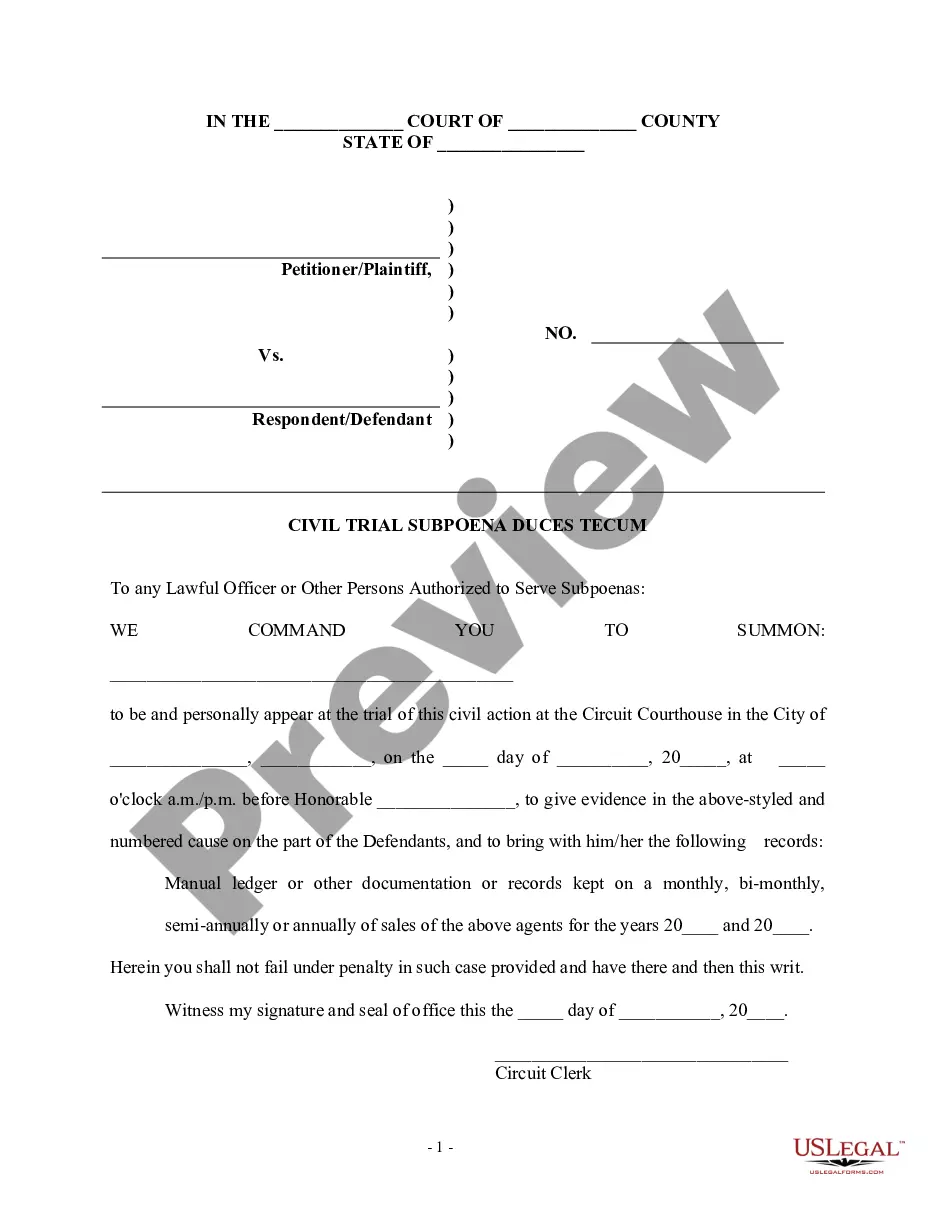
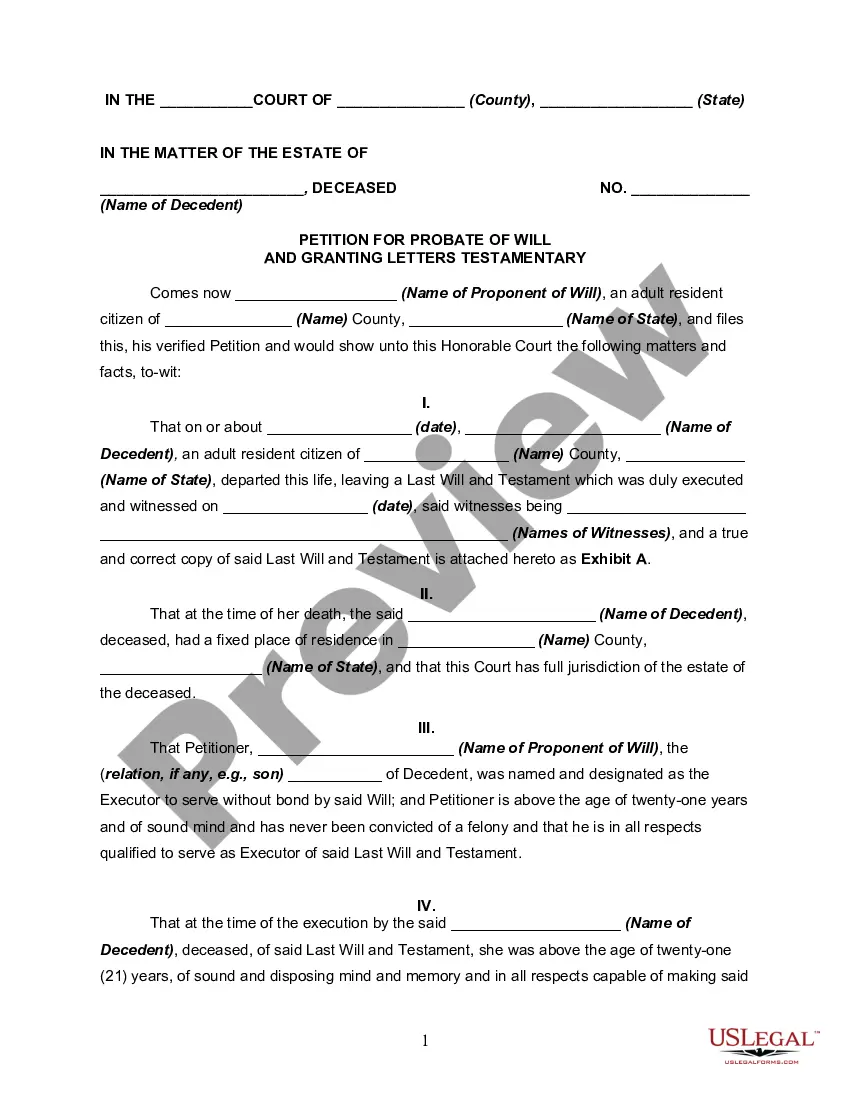
Form popularity
FAQ
Note the subject of the discussion. Include the name of the person who led the discussion. Include motions. Note voting outcomes. Include any decisions made.
Date, time, and location. Minutes should include this basic information about when and where the meeting was held and how long it lasted. Creator. List of persons present. Topics list. Voting record. Review and approval.
The meeting's date, time, and location. Who wrote the minutes. The names of the members in attendance. Brief description of the meeting agenda. Details about what the members discussed. Decisions made or voting actions taken. The time that the meeting adjourned.
Taking Meeting Notes. Type Meeting Notes - Type up a full version of the meeting minutes. Circulate a Draft - Follow your corporation's policy about who must review the draft notes. Distribute Minutes to Board - Usually in advance of the next meeting.
Annual meeting minutes for corporations are one of the important business compliance requirements that keep a company's corporate veil (legal and financial separation of a business and its owners) intact.
Prepare corporate minutes. Notes kept at each shareholder and board meeting held by a corporation provide a written record of what occurred at the meeting. Approve corporate minutes. File the minutes with internal corporate records. In limited circumstances, file the corporate minutes with the state.
Use a template. Check off attendees as they arrive. Do introductions or circulate an attendance list. Record motions, actions, and decisions as they occur. Ask for clarification as necessary. Write clear, brief notes-not full sentences or verbatim wording.
Meeting name and place. Date and time of the meeting. List of meeting participants. Purpose of the meeting. For each agenda items: decisions, action items, and next steps. Next meeting date and place. Documents to be included in the meeting report.