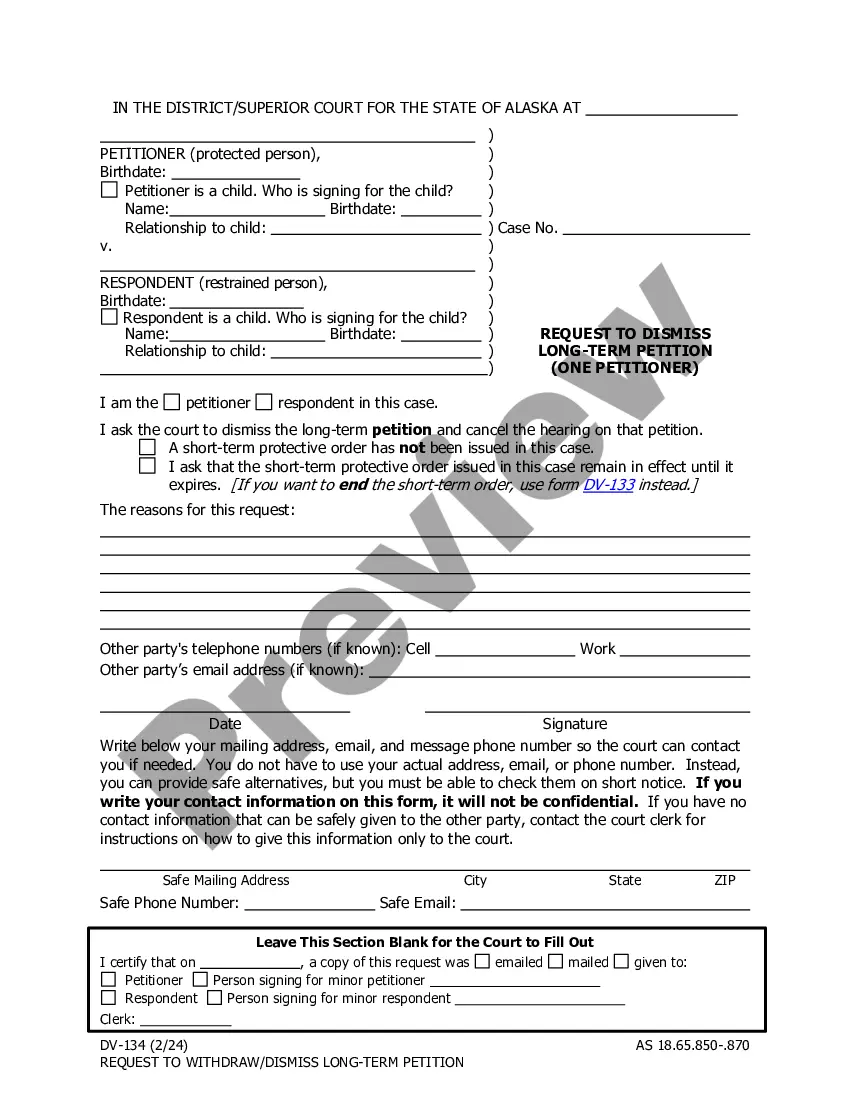
Ohio Motion to Reduce Bond
What is this form?
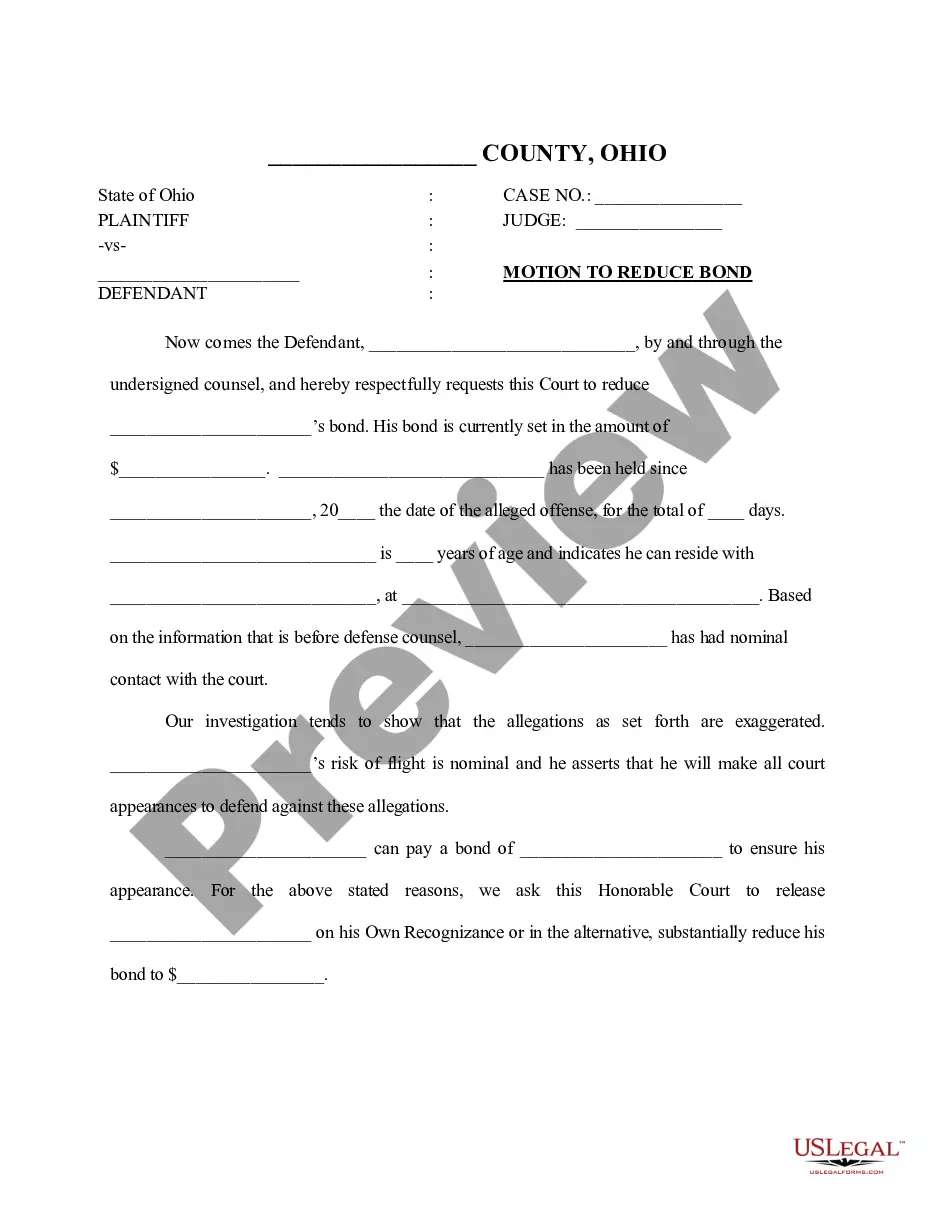
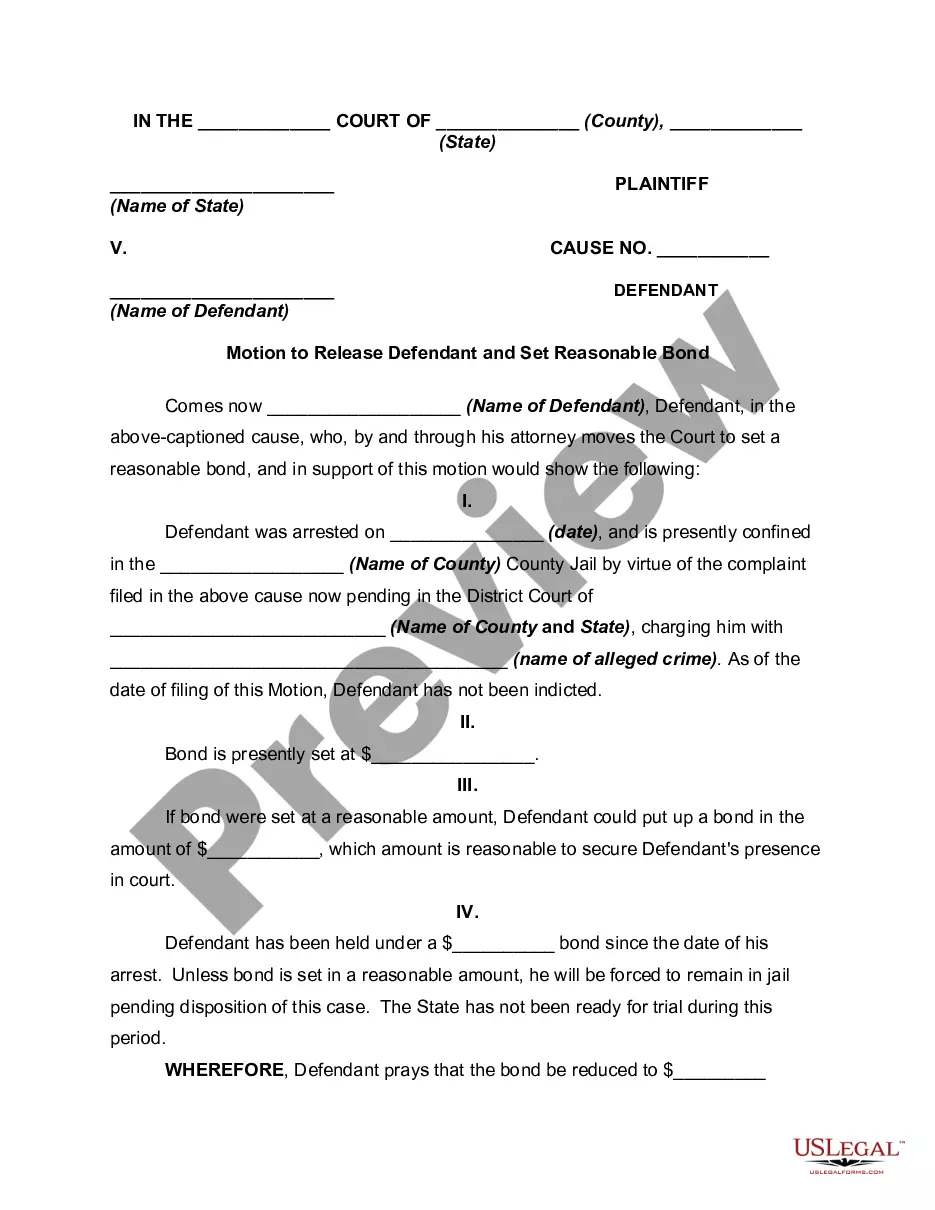
The Motion to Reduce Bond is a formal request submitted to the court by a defendant seeking to lower the bond amount set against them. This motion provides a detailed argument for why the original bond is excessive and outlines the defendant's willingness to comply with court proceedings. Unlike a standard bail application, this motion specifically addresses the need for a bond reduction based on individual circumstances and facts surrounding the case.
Key components of this form
- Name of the county and court.
- Case number and names of parties involved.
- Defendant's personal information and bond amount requested.
- Details regarding the defendant's current status and prior court contact.
- Arguments for bond reduction, including risk assessment.
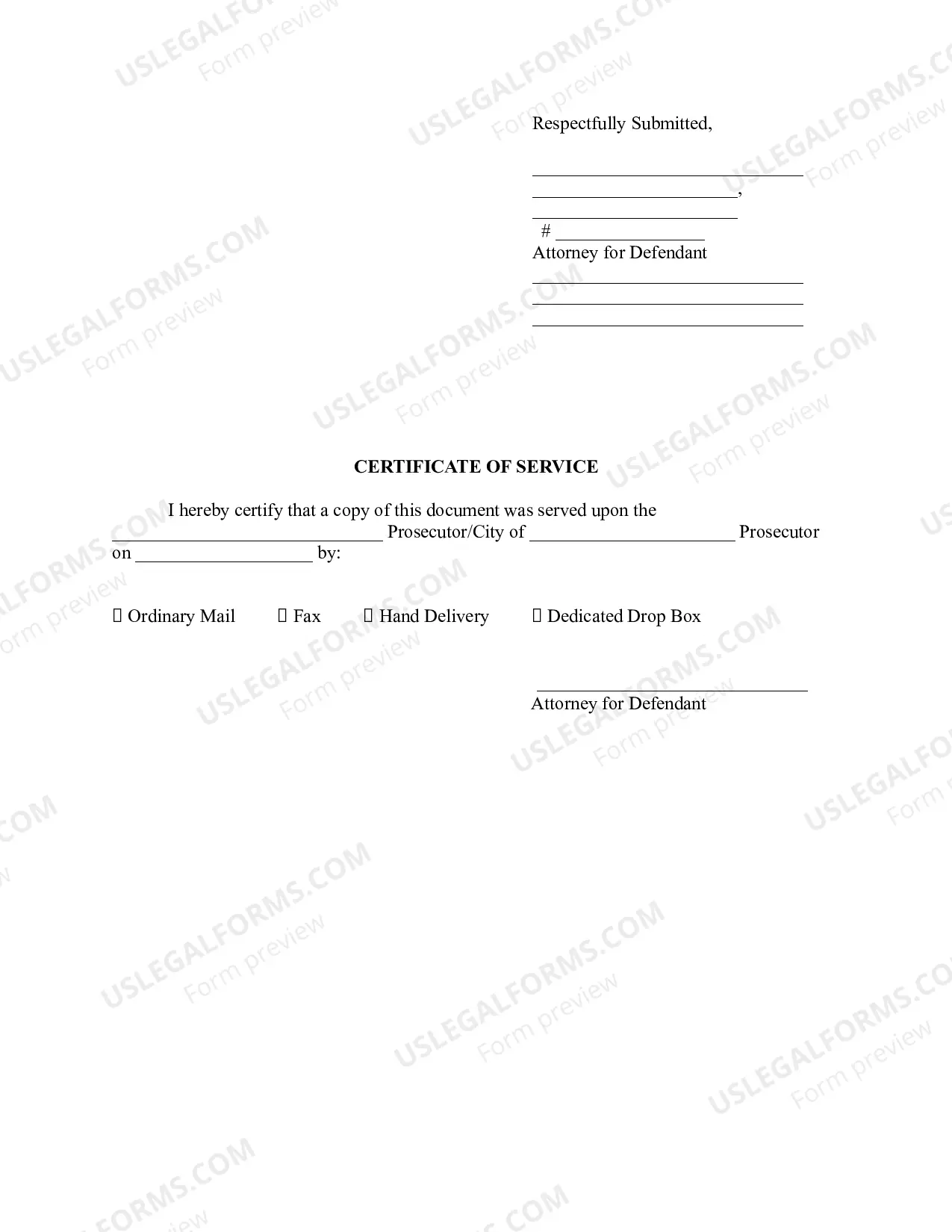
- Certification of service to the prosecutor's office.
When to use this form
This form is appropriate when a defendant believes that the bond amount set by the court is excessive or unfair. It can be used in situations where the defendant has demonstrated compliance with previous court dates, has limited risk of flight, or where there are mitigating circumstances regarding the charges. A Motion to Reduce Bond is especially essential when the defendant wishes to secure their release while awaiting trial without undue financial burden.
Who should use this form
- Defendants who have been assigned a bond that they cannot afford.
- Individuals seeking a reassessment of their bond amount due to changes in circumstances.
- Individuals with limited criminal history or prior compliance with court orders.
- Defendants represented by legal counsel as part of pre-trial procedures.
Steps to complete this form
- Fill out the county and court details at the top of the motion.
- Insert the case number and names of both plaintiff and defendant.
- State the current bond amount and provide details on how long the defendant has been in custody.
- Include personal information about the defendant, such as age and employment status.
- Articulate reasons for the bond reduction request clearly and respectfully.
- Complete the certificate of service to show the prosecutor has been notified of the motion.
Does this form need to be notarized?
This form does not typically require notarization unless specified by local law. It is advisable to check with the appropriate court for any specific notarization requirements related to your jurisdiction.
Get your form ready online
Our built-in tools help you complete, sign, share, and store your documents in one place.
Make edits, fill in missing information, and update formatting in US Legal Forms—just like you would in MS Word.
Download a copy, print it, send it by email, or mail it via USPS—whatever works best for your next step.
Sign and collect signatures with our SignNow integration. Send to multiple recipients, set reminders, and more. Go Premium to unlock E-Sign.
If this form requires notarization, complete it online through a secure video call—no need to meet a notary in person or wait for an appointment.
We protect your documents and personal data by following strict security and privacy standards.

Make edits, fill in missing information, and update formatting in US Legal Forms—just like you would in MS Word.

Download a copy, print it, send it by email, or mail it via USPS—whatever works best for your next step.

Sign and collect signatures with our SignNow integration. Send to multiple recipients, set reminders, and more. Go Premium to unlock E-Sign.

If this form requires notarization, complete it online through a secure video call—no need to meet a notary in person or wait for an appointment.

We protect your documents and personal data by following strict security and privacy standards.
Typical mistakes to avoid
- Failing to include the correct case number or court information.
- Not providing sufficient evidence or reasoning for the bond reduction request.
- Forgetting to serve the motion to the prosecutor's office.
- Using inappropriate tone or language in the motion.
Benefits of completing this form online
- Immediate access to a legally compliant Motion to Reduce Bond template.
- Easy to fill out and customize to fit individual circumstances.
- Convenient downloading and printing options available.
- Guidance provided ensures clarity on what information is required.
Looking for another form?

Form popularity
FAQ
Senate Bill 182 and House Bill 315, both introduced in May 2021, would require courts to release defendants on a personal promise to return unless there is a safety risk or a flight risk. The bills also would require courts to consider the ability to pay when setting the bond amounts.
In DuBose v. McGuffey, the Ohio Supreme Court upheld a decision by an intermediate state appellate court to reduce the bail of a criminal defendant?who was charged with multiple offenses, including murder?from $1,500,000 to $500,000.
Rule 46 - Pretrial Release and Detention (A) Pretrial detention. A defendant may be detained pretrial, pursuant to a motion by the prosecutor or the court's own motion, in ance with the standards and procedures set forth in the Revised Code.
(3) In all cases, the bail shall be fixed with consideration of the seriousness of the offense charged, the previous criminal record of the defendant, and the probability of the defendant appearing at the trial of the case.
A bail bondsman in Ohio charges a 10% premium of the full bond amount. For example, a $10,000 bond will cost a $1,000 premium. Once the premium has been paid, the bondsman will post the full amount of the bond and the defendant will be released from jail.
Pursuant to Ohio Revised Code Section 2109.04, an individual appointed as guardian of the estate of a minor or incompetent is required to post bond with a penal sum in an amount that is fixed by the Probate Court.
Section 2937.23 Bail amount. (A)(1) In a case involving a felony or a violation of section 2903.11, 2903.12, or 2903.13 of the Revised Code when the victim of the offense is a peace officer, the judge or magistrate shall fix the amount of bail.
Senate Bill 182 and House Bill 315, both introduced in May 2021, would require courts to release defendants on a personal promise to return unless there is a safety risk or a flight risk. The bills also would require courts to consider the ability to pay when setting the bond amounts.