Ohio Seller's Information for Appraiser provided to Buyer
Understanding this form
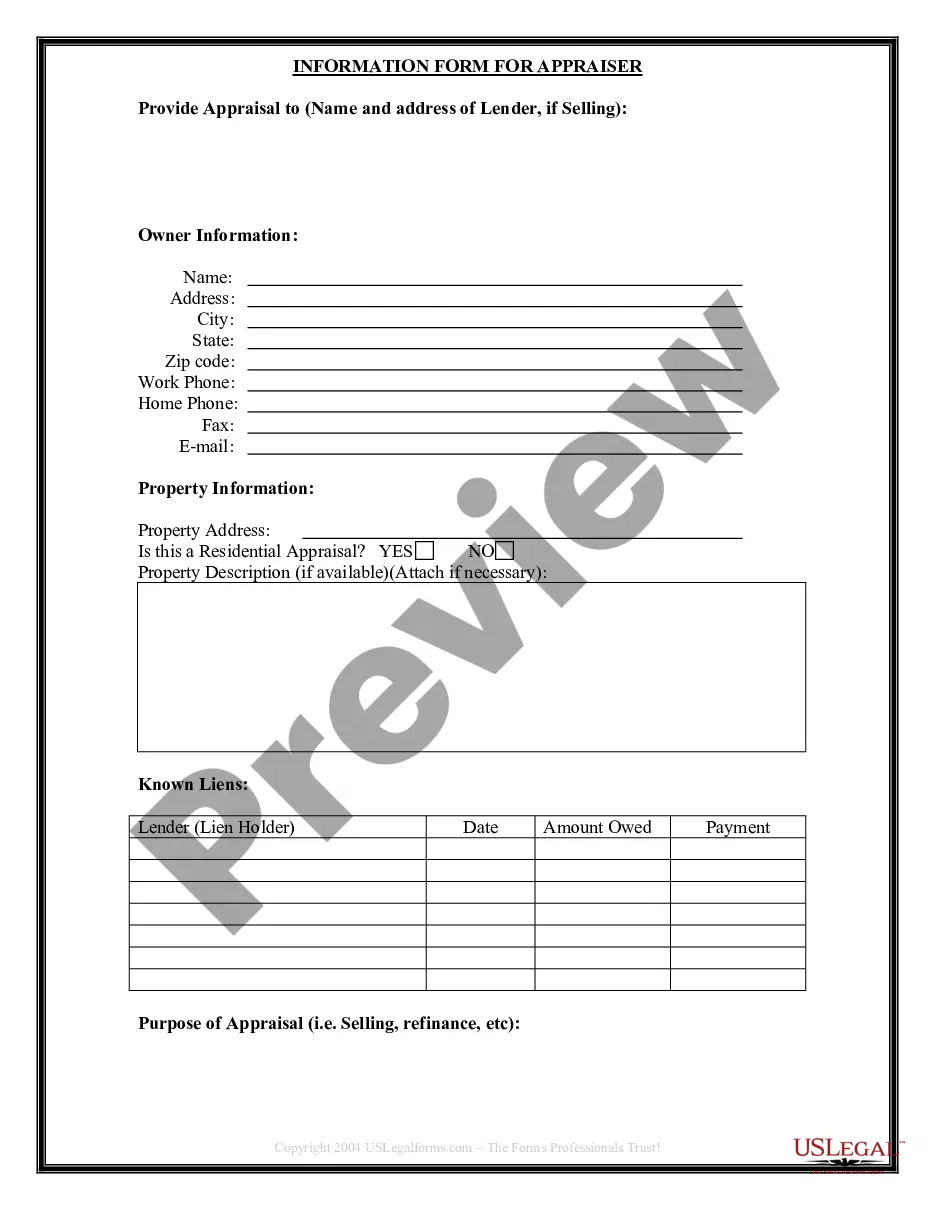
The Seller's Information for Appraiser provided to Buyer form is a critical document used in Ohio to collect essential information needed by an appraiser. This form helps streamline the appraisal process by ensuring the buyer has all necessary details for evaluating the property before purchase. By providing accurate and complete information, the seller aids in creating an efficient transaction, distinguishing this form from other documentation in real estate transactions.
Form components explained
- Seller's contact information: Includes the seller's name, address, and phone number.
- Property details: Requires specifics about the property being appraised, such as its address and type.
- List of improvements: A section where the seller can detail any renovations or enhancements made to the property.
- Disclosures: Important statements regarding the property's condition and any known issues that may affect its value.
- Signature line: A space for the seller's signature to validate the information provided.


When this form is needed
This form is crucial when the buyer needs to have an appraisal performed on a property in Ohio. It should be used once the buyer has identified a property they wish to purchase and the seller is ready to provide detailed information to facilitate the appraisal process. By using this form, both parties can ensure that the appraiser has everything needed to make an accurate assessment.
Who this form is for
- Home sellers in Ohio who are preparing to sell their property.
- Buyers in Ohio who are seeking an appraisal for a property they intend to purchase.
- Realtors or agents assisting sellers or buyers in real estate transactions.
How to complete this form
- Identify the parties: Enter the seller's full name and contact information.
- Specify the property: Provide the complete address and details of the property being appraised.
- List any improvements: Describe renovations or upgrades to the property that may impact its value.
- Complete disclosures: Fill in any known issues or conditions related to the property.
- Sign the document: The seller must sign the form to affirm that the information provided is accurate.
Notarization requirements for this form
This form does not typically require notarization unless specified by local law.
Get your form ready online
Our built-in tools help you complete, sign, share, and store your documents in one place.
Make edits, fill in missing information, and update formatting in US Legal Forms—just like you would in MS Word.
Download a copy, print it, send it by email, or mail it via USPS—whatever works best for your next step.
Sign and collect signatures with our SignNow integration. Send to multiple recipients, set reminders, and more. Go Premium to unlock E-Sign.
If this form requires notarization, complete it online through a secure video call—no need to meet a notary in person or wait for an appointment.
We protect your documents and personal data by following strict security and privacy standards.

Make edits, fill in missing information, and update formatting in US Legal Forms—just like you would in MS Word.

Download a copy, print it, send it by email, or mail it via USPS—whatever works best for your next step.

Sign and collect signatures with our SignNow integration. Send to multiple recipients, set reminders, and more. Go Premium to unlock E-Sign.

If this form requires notarization, complete it online through a secure video call—no need to meet a notary in person or wait for an appointment.

We protect your documents and personal data by following strict security and privacy standards.
Common mistakes to avoid
- Failing to provide complete contact information for the seller.
- Neglecting to include significant property improvements.
- Omitting disclosures about known property issues.
- Not signing the form, which invalidates the provided information.
Why complete this form online
- Convenience: Download the form anytime and complete it at your own pace.
- Editability: Customize the form easily to meet your specific circumstances.
- Reliability: Access professionally drafted forms created by licensed attorneys.
Looking for another form?
Form popularity
FAQ
Home sellers aren't entitled to copies of the appraisals mortgage lenders conduct on behalf of their borrowers. If a home seller wants a copy of an appraisal, she should consider asking for a copy from the buyer.However, a copy may come in handy if the appraisal comes in low and price negotiations must ensue.
Home sellers aren't entitled to copies of the appraisals mortgage lenders conduct on behalf of their borrowers. If a home seller wants a copy of an appraisal, she should consider asking for a copy from the buyer.However, a copy may come in handy if the appraisal comes in low and price negotiations must ensue.
If you're a seller, you almost never see the appraisal, unless the buyer wants to show it to you. If the home appraised for more than sale price, the buyer might be a little reluctant to show the appraisal to you!
Will the homebuyer receive a copy of the appraisal? A. Yes! Regulations allow real estate agents, or other persons with an interest in the real estate transaction, to communicate with the appraiser and provide additional property information, including a copy of the sales contract.
A: An appraisal is generally considered a professional opinion of the market value of a property, not a fact. Although it's both legally and ethically necessary to disclose a material fact, the same requirement doesn't apply to an opinion.
Under Ohio law, in fact, sellers must disclose any material defect about which they are aware before the sale is complete. If you discover a significant defect with your home following the closing, you might be able to seek recovery from the seller in court.
Ohio disclosure law requires sellers to disclose only those items they actually know about. This means that you aren't required to get an independent inspection to complete the form, only to list what you actually have learned and observed about the house through having lived there and taken care of it.
As a general rule it certainly is not a good idea for a buyer and seller to talk directly with each other during negotiations.Good communications between the buyer and seller are important, and that also means that both Realtors need to be good communicators, too.
A home that appraises for higher than the purchase price is a benefit to buyers as it means instant equity. Its impact on sellers is subject to how motivated they are. Still, offering something for sale only to find out that it's worth much more may be enough to make a seller reconsider.