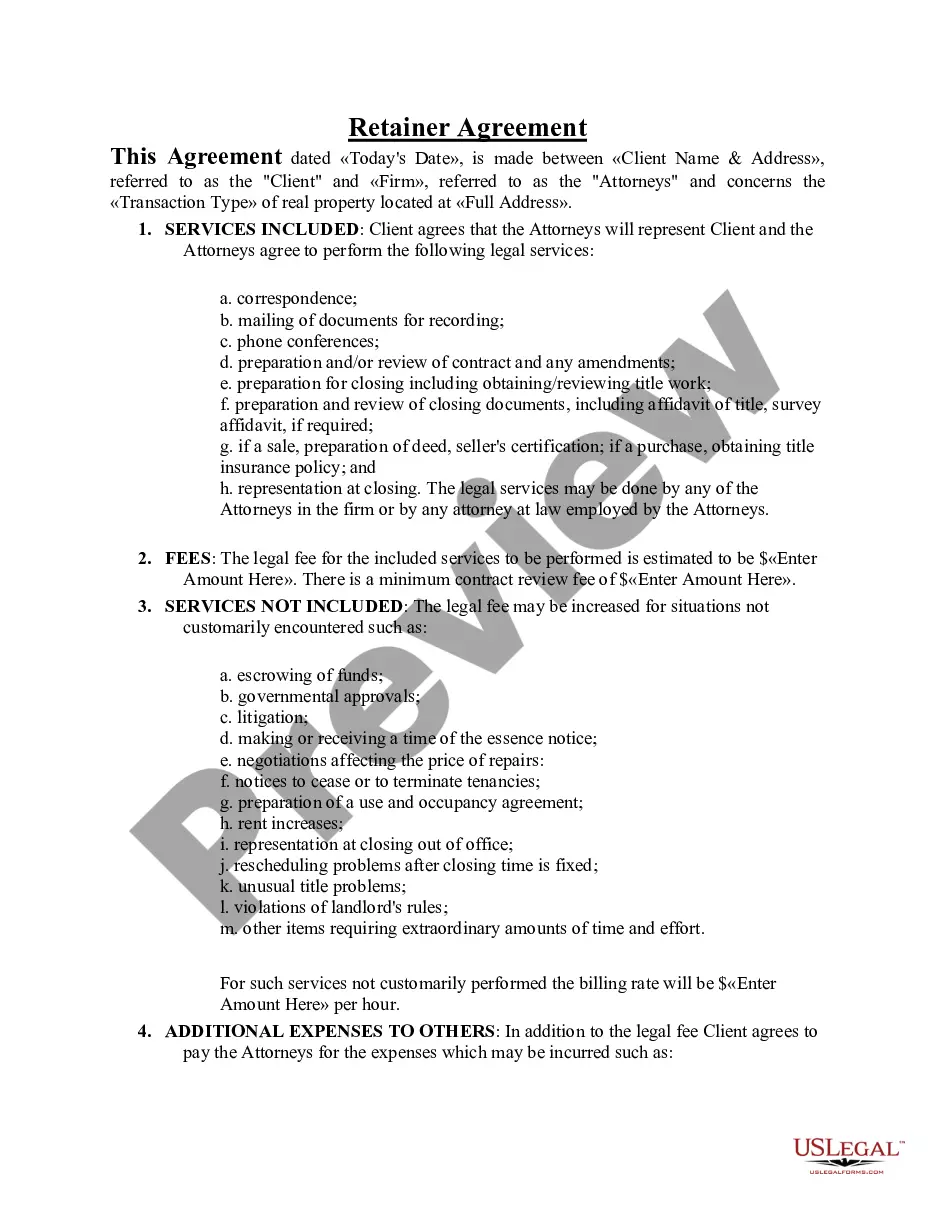
New York Attorney Retainer Agreement
Description

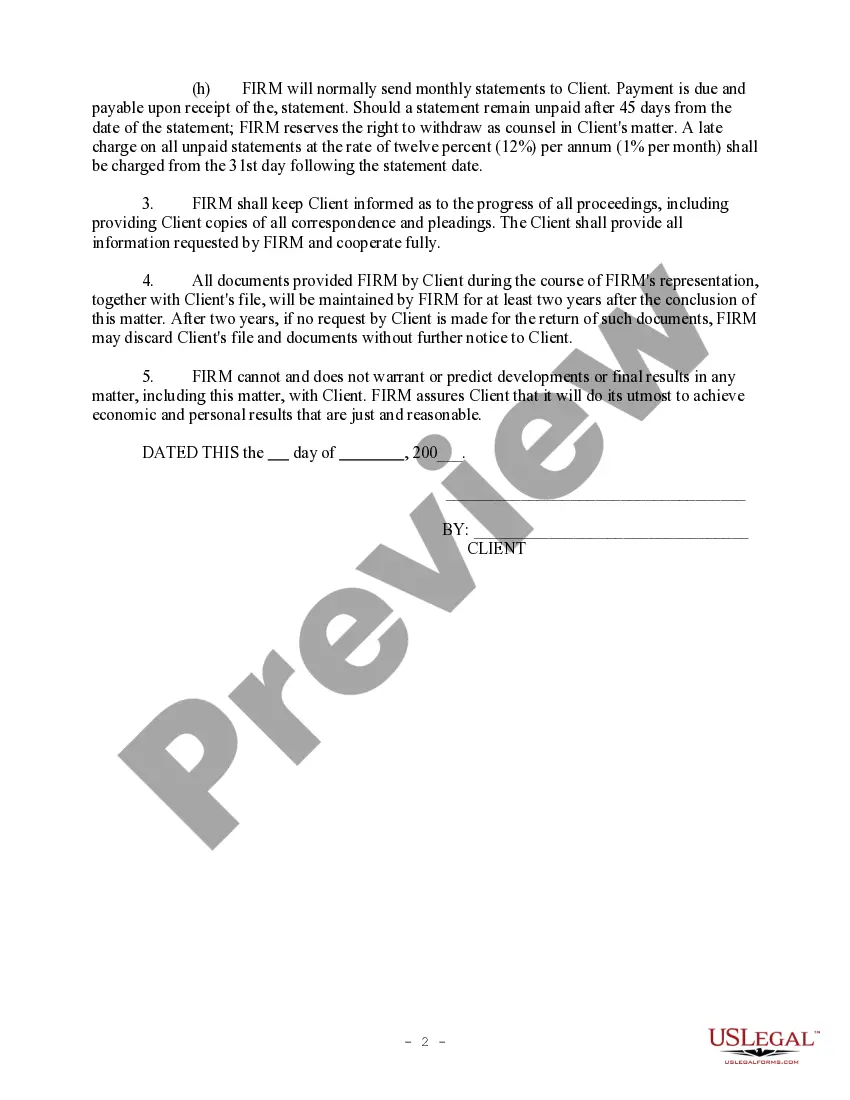
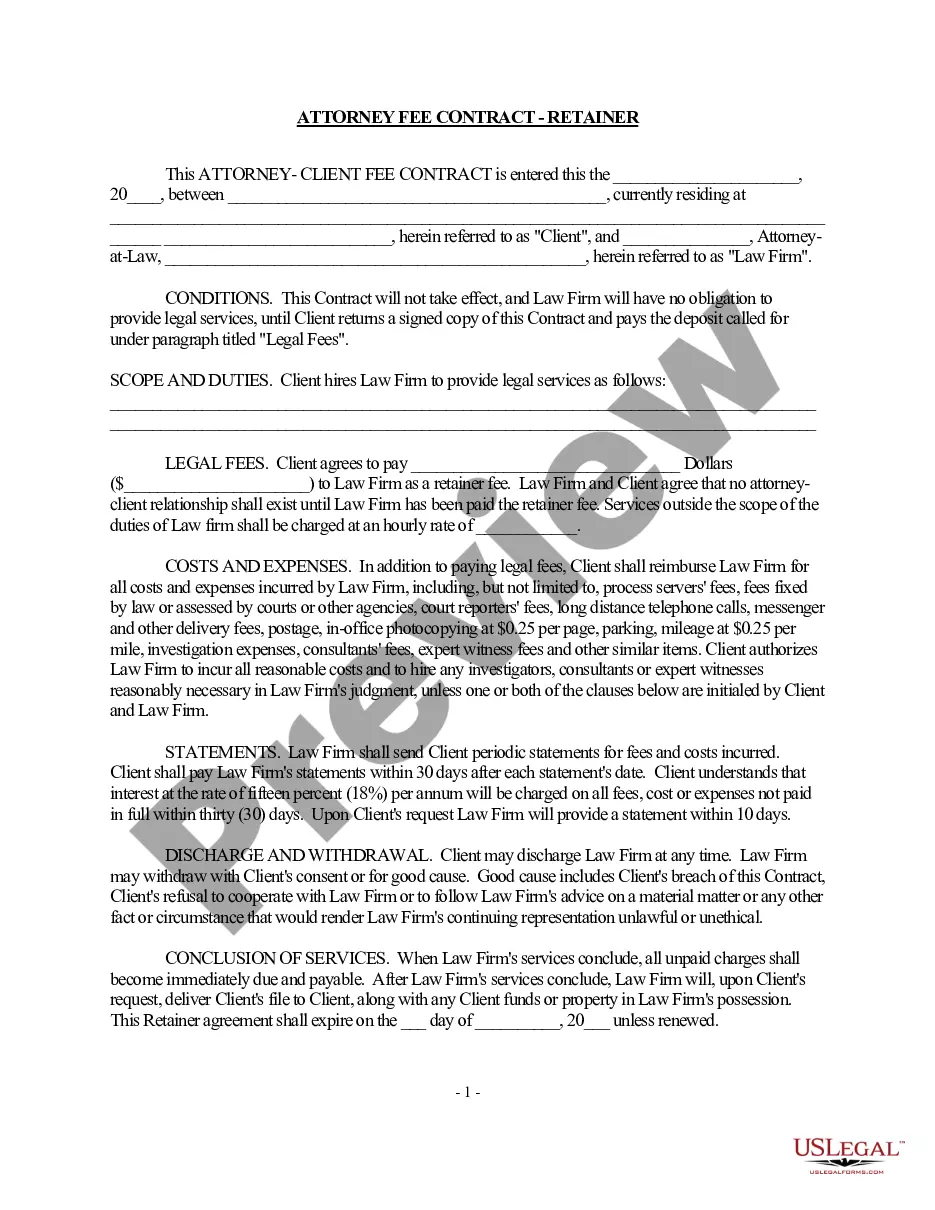
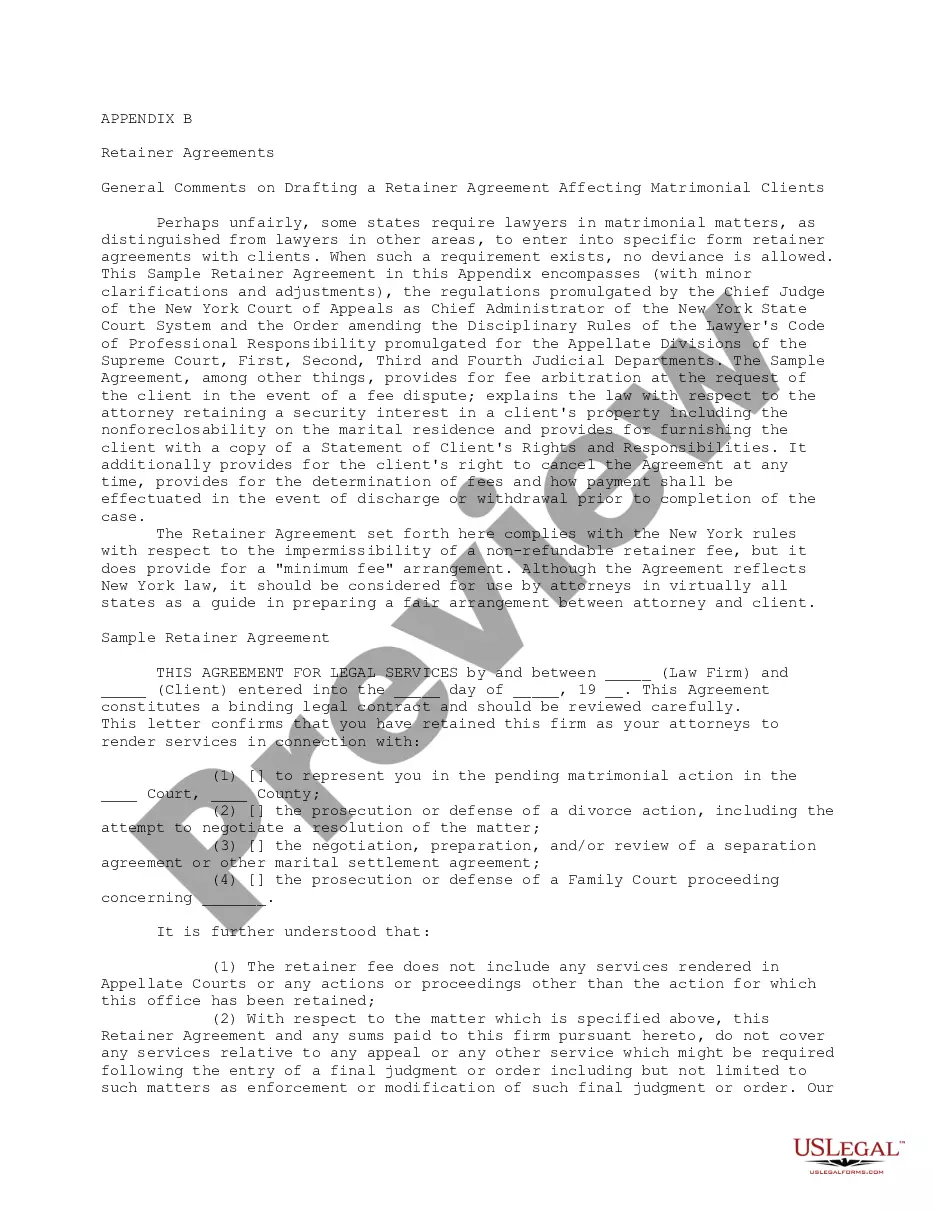
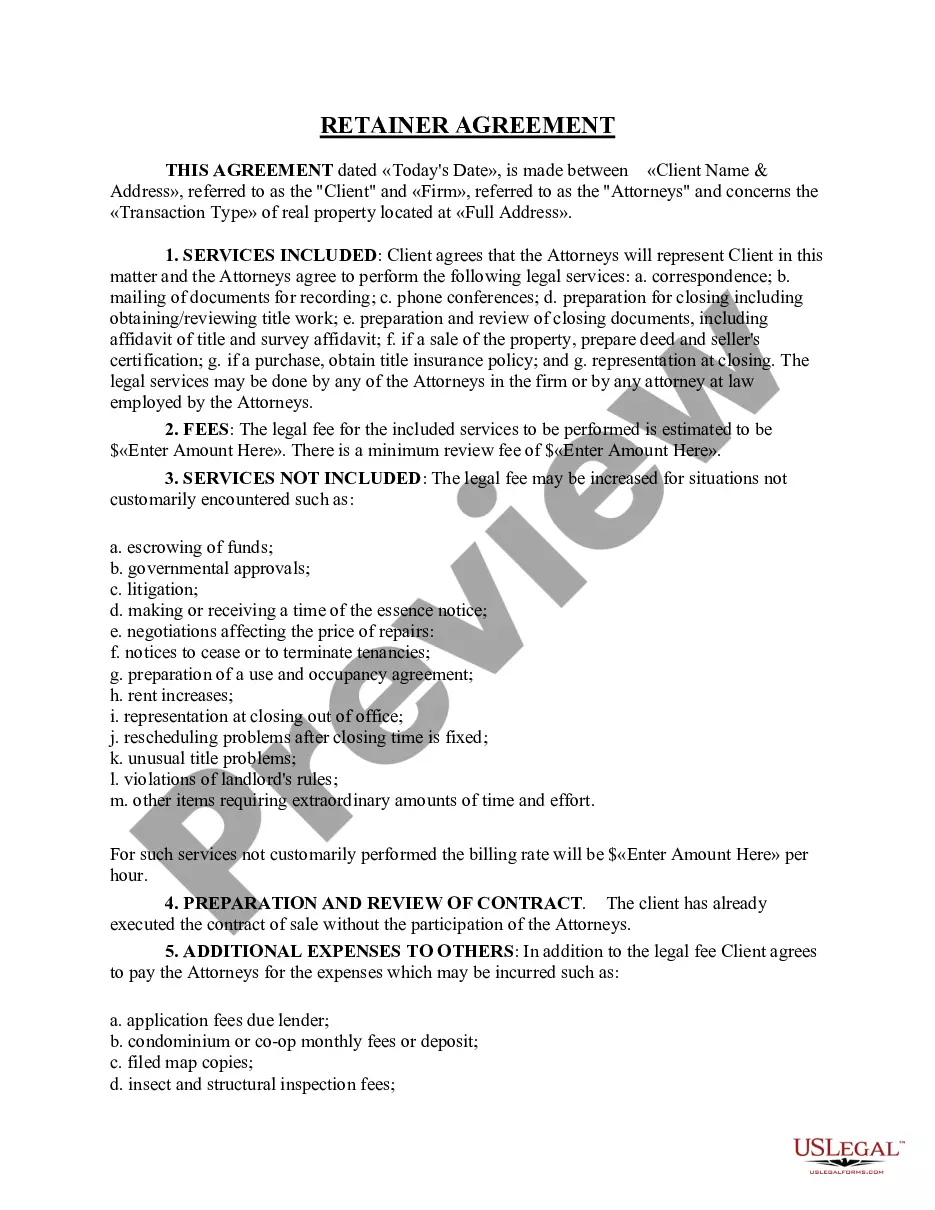
Get your form ready online
Our built-in tools help you complete, sign, share, and store your documents in one place.
Make edits, fill in missing information, and update formatting in US Legal Forms—just like you would in MS Word.
Download a copy, print it, send it by email, or mail it via USPS—whatever works best for your next step.
Sign and collect signatures with our SignNow integration. Send to multiple recipients, set reminders, and more. Go Premium to unlock E-Sign.
If this form requires notarization, complete it online through a secure video call—no need to meet a notary in person or wait for an appointment.
We protect your documents and personal data by following strict security and privacy standards.

Make edits, fill in missing information, and update formatting in US Legal Forms—just like you would in MS Word.

Download a copy, print it, send it by email, or mail it via USPS—whatever works best for your next step.

Sign and collect signatures with our SignNow integration. Send to multiple recipients, set reminders, and more. Go Premium to unlock E-Sign.

If this form requires notarization, complete it online through a secure video call—no need to meet a notary in person or wait for an appointment.

We protect your documents and personal data by following strict security and privacy standards.
Looking for another form?
How to fill out Attorney Retainer Agreement?
You may invest time on-line trying to find the legal record web template which fits the federal and state demands you want. US Legal Forms provides a huge number of legal forms which are examined by pros. You can actually obtain or printing the New York Attorney Retainer Agreement from our assistance.
If you already have a US Legal Forms accounts, it is possible to log in and click the Acquire switch. After that, it is possible to complete, revise, printing, or indicator the New York Attorney Retainer Agreement. Every legal record web template you get is the one you have forever. To have an additional copy for any acquired develop, visit the My Forms tab and click the related switch.
Should you use the US Legal Forms website for the first time, stick to the straightforward directions beneath:
- Initial, make sure that you have selected the correct record web template for your area/metropolis of your choice. Read the develop outline to ensure you have selected the right develop. If accessible, utilize the Review switch to check throughout the record web template as well.
- If you want to get an additional version in the develop, utilize the Research discipline to obtain the web template that meets your requirements and demands.
- Upon having found the web template you desire, just click Buy now to continue.
- Select the pricing prepare you desire, key in your references, and register for your account on US Legal Forms.
- Complete the transaction. You can utilize your Visa or Mastercard or PayPal accounts to pay for the legal develop.
- Select the file format in the record and obtain it to your product.
- Make modifications to your record if necessary. You may complete, revise and indicator and printing New York Attorney Retainer Agreement.
Acquire and printing a huge number of record templates using the US Legal Forms website, that provides the largest collection of legal forms. Use specialist and state-distinct templates to take on your company or individual requirements.
Form popularity
FAQ
How Much Should a Retainer Fee Be? It depends on the industry of the professional you're retaining the services of and their compensation expectations. Generally, it should be close to the professional's hourly rate multiplied by the hours they expect to work.
RETAINER AGREEMENT vs. RETAINER. While the ?retainer agreement? is a binding document outlining the responsibilities and commitments of the client and the attorney, the ?retainer? is a lump sum that the client agrees to pay to the attorney for the services agreed upon in the retainer agreement.
How to Calculate a Retainer Fee. Generally, a consultant calculates a retainer fee by multiplying their hourly rate by the number of hours they predict a project will take them. That said, retainer fees vary from industry to industry and consultant to consultant.
Once you've identified the estimated number of hours, the hourly rate, and additional costs, you can calculate the retainer charge. Multiply the estimated number of hours you expect to work by your established hourly rate. Add any additional costs to this amount for a subtotal.
The most common type of ?retainer? fee is actually an advance fee deposit, usually between $500 and $5,000. These advance fee deposits are paid up front, like a down payment, and then the lawyer subtracts her hourly fees and costs. Most lawyers require advance fee deposits for most kinds of cases.
A retainer agreement is a legal contract between a client and a professional (perhaps a law firm or other service provider). Let's take a lawyer, for example. The client pays a retainer fee in advance to secure the professional's legal services for a set number of hours rather than paying an hourly rate.
Retainer fees are often based on the rates you would charge under other payment models. For instance, if you charge $100 per hour for your services and typically work 40 hours per week for clients, you would likely look to charge a $4,000 monthly retainer.
The basic structure of retainer agreements is the same though: Agency agrees to provide a service(s) or a number of hours their client needs each month. In turn, the client agrees to the retainer payment that they'd pay in exchange for the agency reserving its time/service for them.