Covenants not to compete made by former employees are held valid when they are reasonable and necessary to protect the interests of the employer.
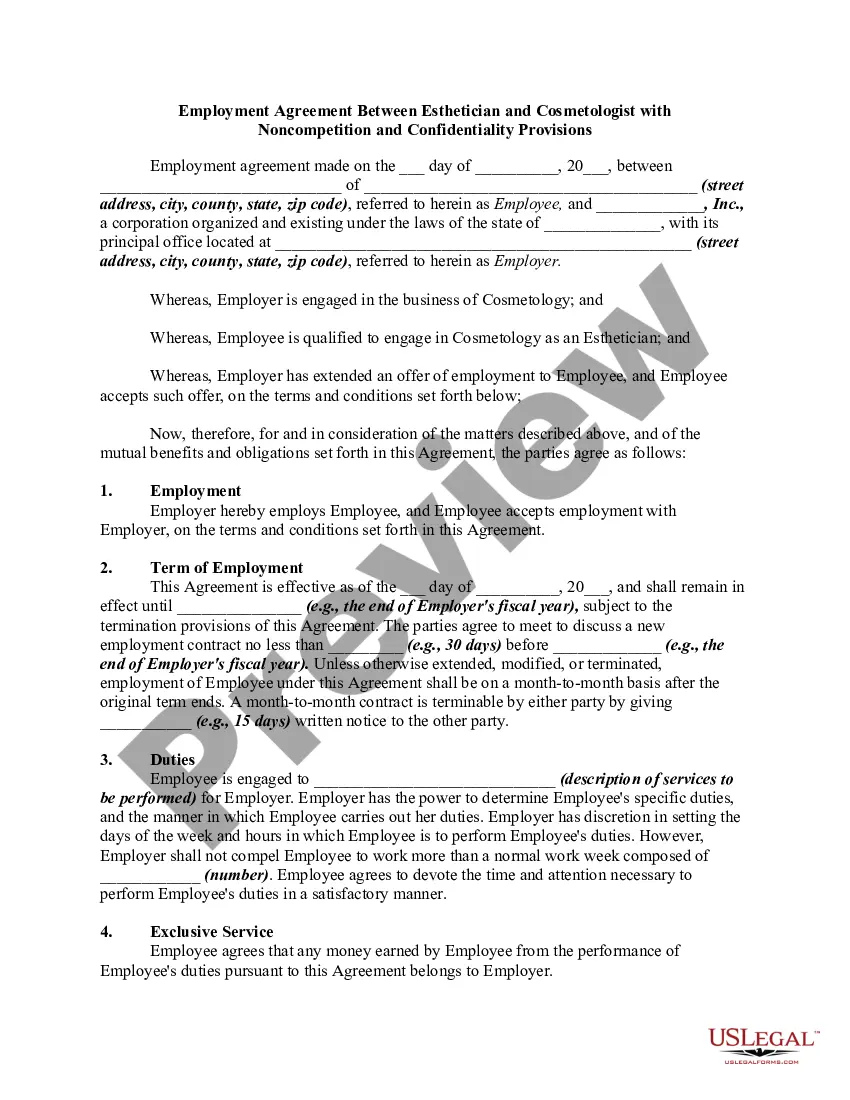
New York Employment Agreement Between Esthetician and Cosmetologist with Noncompetition and Confidentiality Provisions
State:
Multi-State
Category:
Control #:
US-00613BG
Format:
Word;
Rich Text
134 downloads
Description
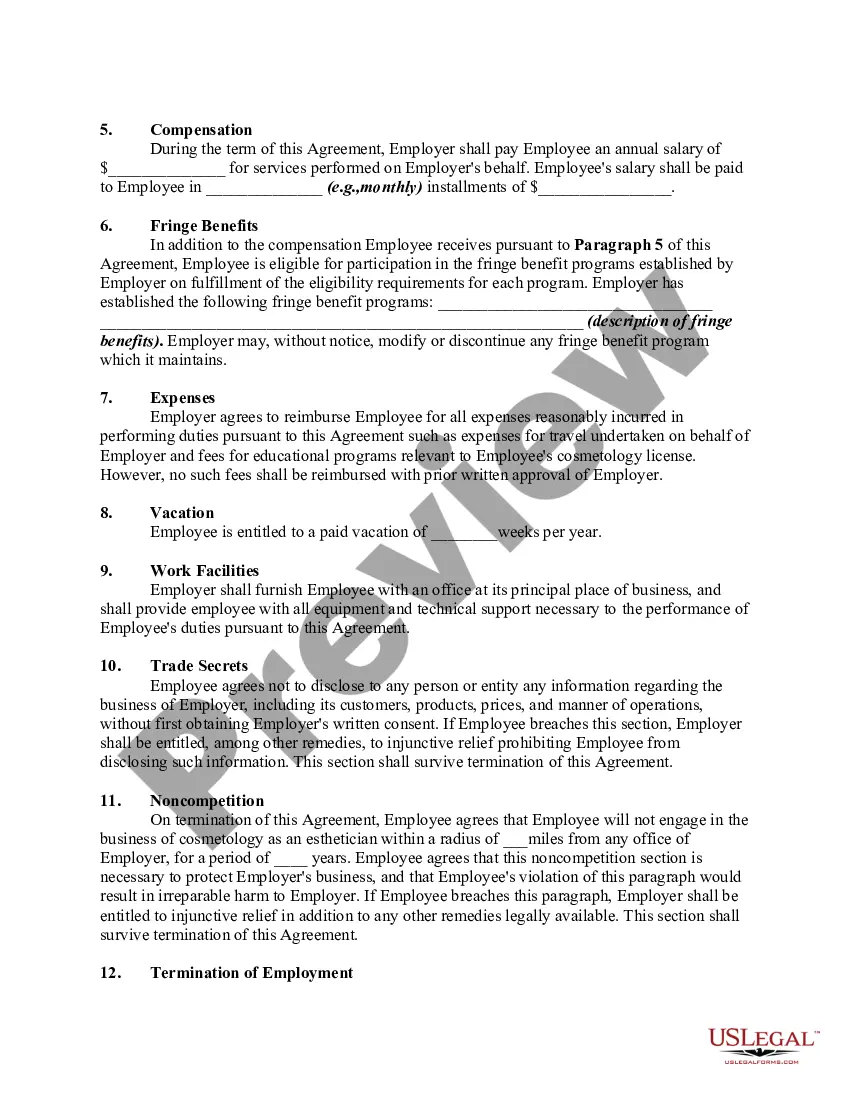
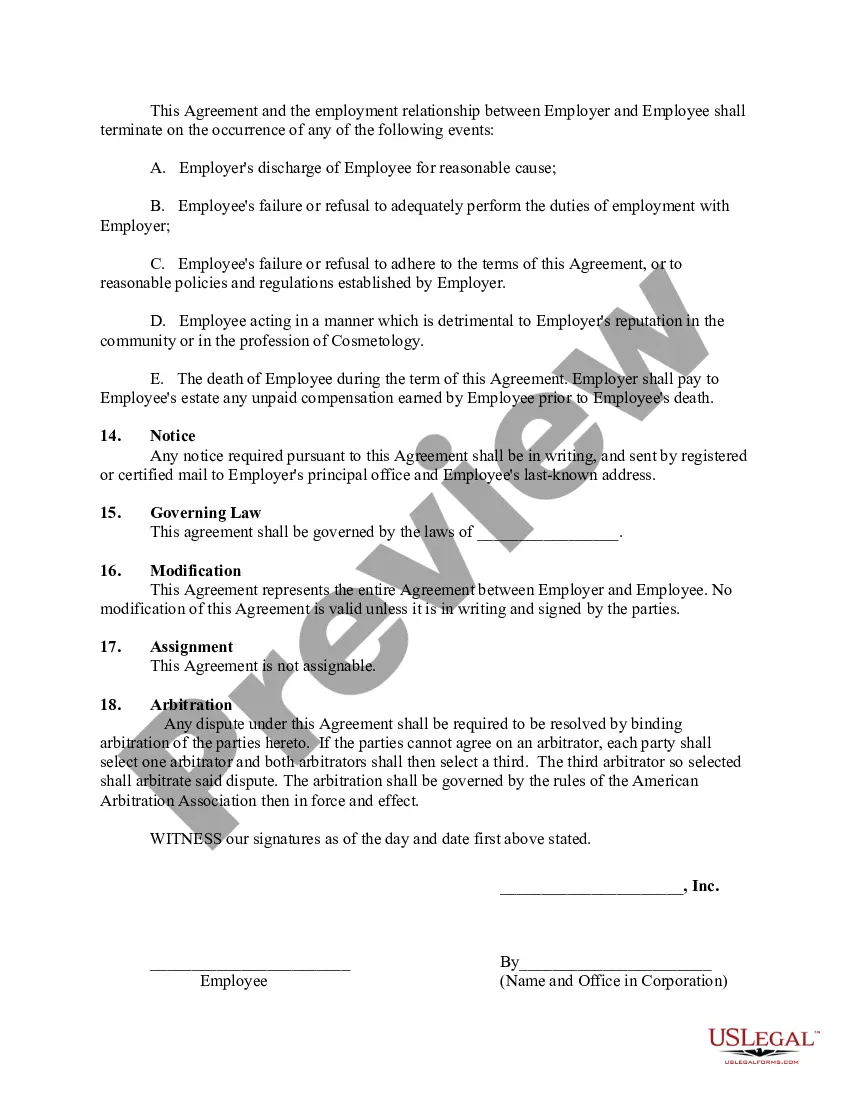
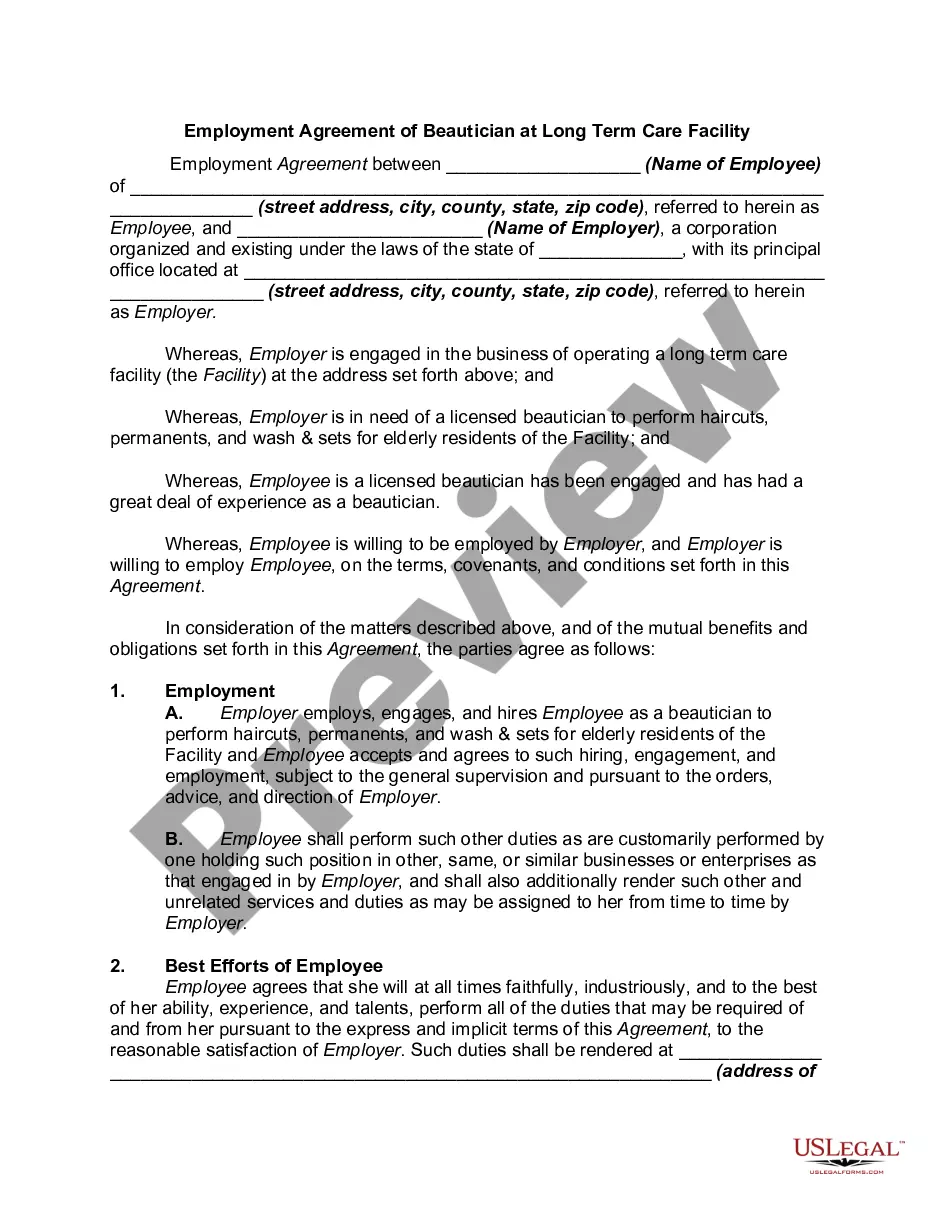
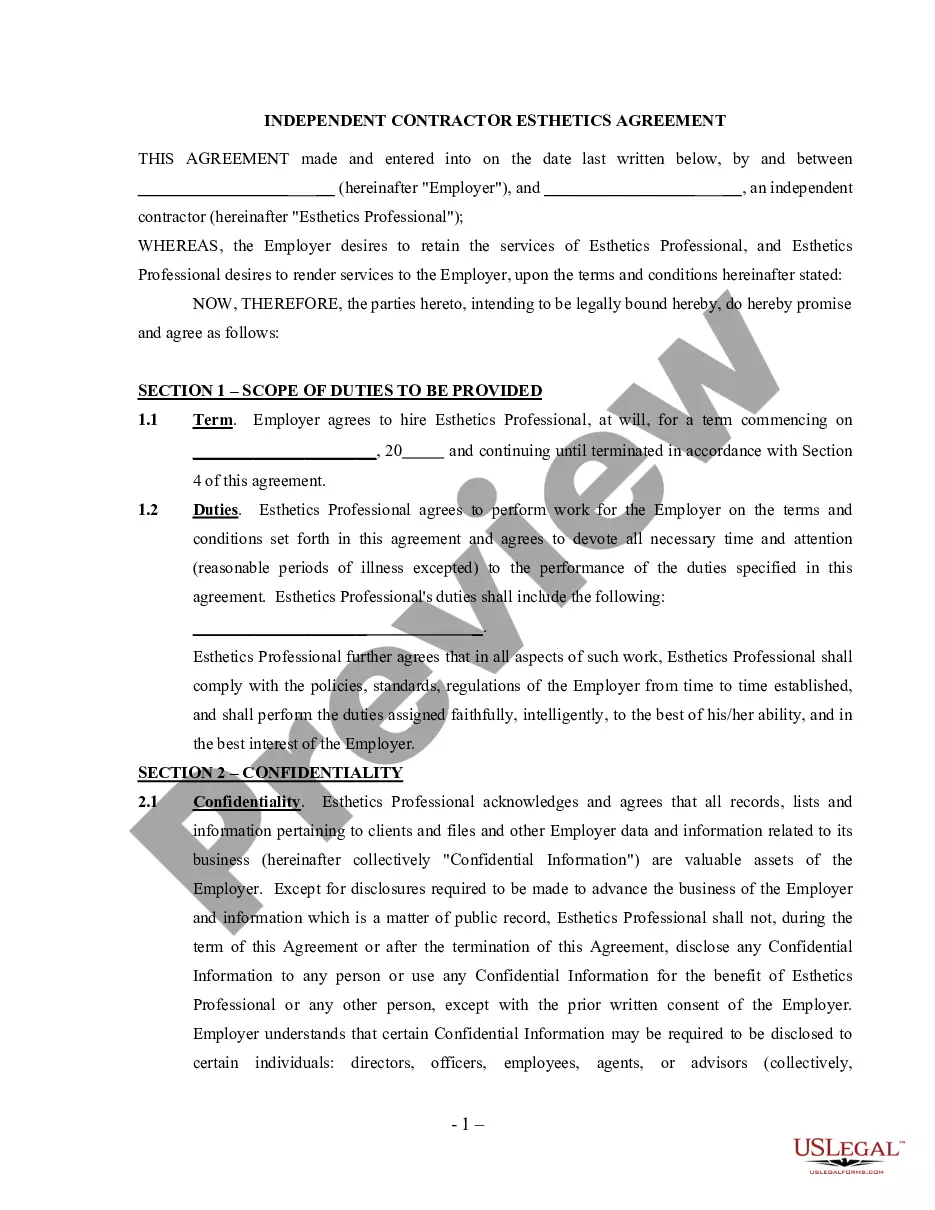
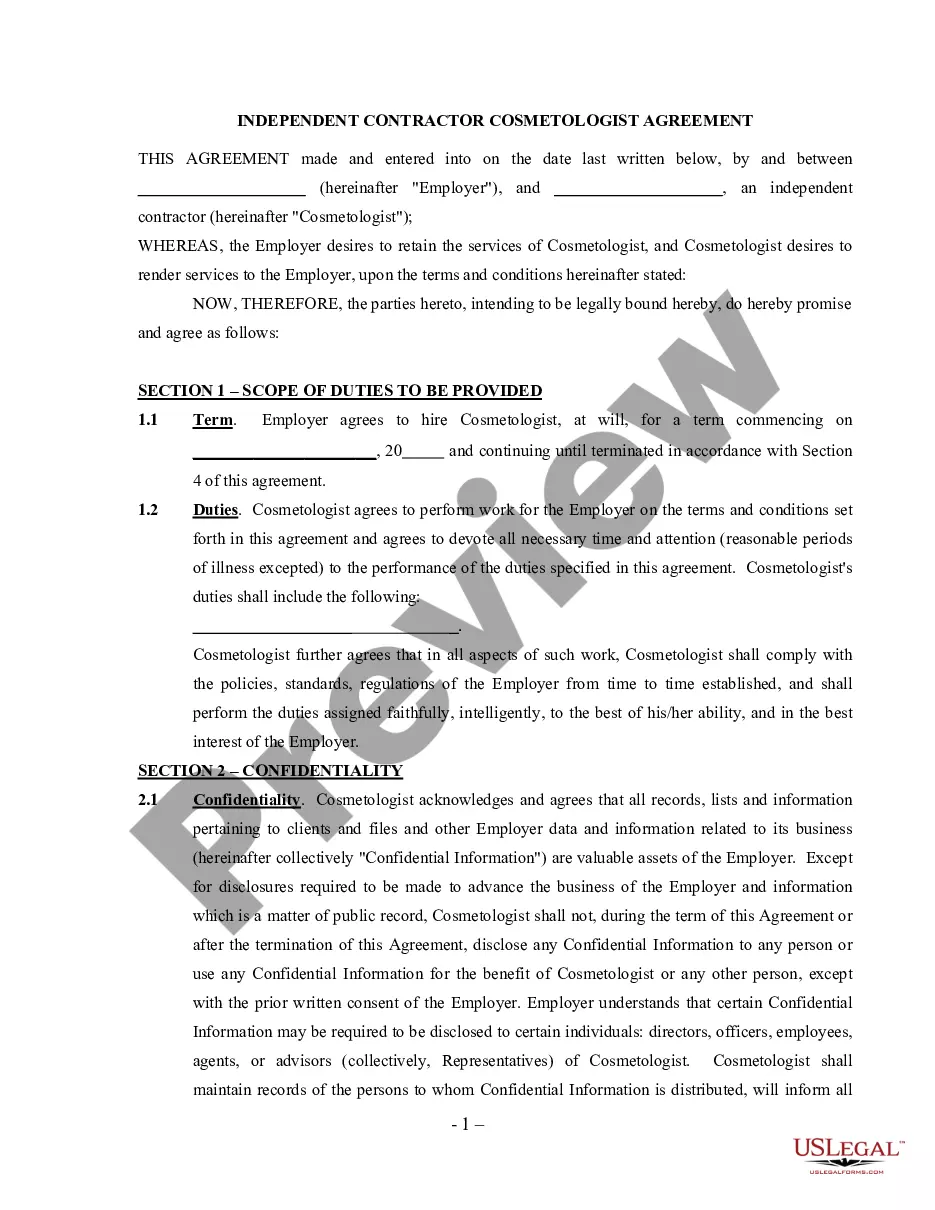
The following form is an employment agreement between a cosmetolotist and an esthetician. This agreement also contains a provision to prevent competition by the employee and confidential information acquired by the employee during her employment.
Free preview
Get your form ready online
Our built-in tools help you complete, sign, share, and store your documents in one place.
Built-in online Word editor
Make edits, fill in missing information, and update formatting in US Legal Forms—just like you would in MS Word.
Export easily
Download a copy, print it, send it by email, or mail it via USPS—whatever works best for your next step.
E-sign your document
Sign and collect signatures with our SignNow integration. Send to multiple recipients, set reminders, and more. Go Premium to unlock E-Sign.
Notarize online 24/7
If this form requires notarization, complete it online through a secure video call—no need to meet a notary in person or wait for an appointment.
Store your document securely
We protect your documents and personal data by following strict security and privacy standards.

Make edits, fill in missing information, and update formatting in US Legal Forms—just like you would in MS Word.

Download a copy, print it, send it by email, or mail it via USPS—whatever works best for your next step.

Sign and collect signatures with our SignNow integration. Send to multiple recipients, set reminders, and more. Go Premium to unlock E-Sign.

If this form requires notarization, complete it online through a secure video call—no need to meet a notary in person or wait for an appointment.

We protect your documents and personal data by following strict security and privacy standards.
Looking for another form?
How to fill out Employment Agreement Between Esthetician And Cosmetologist With Noncompetition And Confidentiality Provisions?
Selecting the most suitable valid file format can be quite a challenge.
Needless to say, there are numerous templates available online, but how will you acquire the valid document you require.
Utilize the US Legal Forms website.
If you are a new user of US Legal Forms, here are simple steps for you to follow.
- The service provides a vast array of templates, including the New York Employment Agreement Between Esthetician and Cosmetologist with Noncompetition and Confidentiality Provisions, which you can use for business and personal purposes.
- All of the forms are reviewed by professionals and comply with federal and state regulations.
- If you are already registered, Log In to your account and click the Download button to receive the New York Employment Agreement Between Esthetician and Cosmetologist with Noncompetition and Confidentiality Provisions.
- Use your account to browse the legal forms you have previously purchased.
- Visit the My documents tab in your account and obtain another copy of the document you need.
Form popularity
FAQ
Violating a non-compete agreement in New York can lead to legal actions, including lawsuits seeking damages or injunctions. Employers may pursue financial compensation or an order to prevent you from taking certain jobs. It is important to understand the specifics of your New York Employment Agreement Between Esthetician and Cosmetologist with Noncompetition and Confidentiality Provisions to avoid unintended consequences.
To escape a non-compete agreement in New York, you may negotiate with your employer, or you can seek legal counsel to review the contract's enforceability. Often, terms that are too broad or unfair can be challenged in court. Utilizing a New York Employment Agreement Between Esthetician and Cosmetologist with Noncompetition and Confidentiality Provisions can help define limits and prevent restrictive scenarios.
As of now, New York has not banned non-compete agreements, but legislation has been introduced to restrict their use. The focus is on preventing employers from over-restraining employees. If you're considering entering into a non-compete, a New York Employment Agreement Between Esthetician and Cosmetologist with Noncompetition and Confidentiality Provisions could guide you through potential changes in the law.
In the USA, enforceability of non-compete agreements largely depends on state laws. Some states uphold them, while others have strict limitations or bans. It is essential to draft the New York Employment Agreement Between Esthetician and Cosmetologist with Noncompetition and Confidentiality Provisions carefully to navigate these legal differences across states.
The duration of a non-compete agreement in New York varies depending on the circumstances, but it typically should not exceed one to two years. A New York Employment Agreement Between Esthetician and Cosmetologist with Noncompetition and Confidentiality Provisions can specify the appropriate duration based on your situation, ensuring compliance with state laws.
Yes, non-compete agreements can be enforceable in New York, provided they are reasonable in scope and duration. They should protect legitimate business interests without unnecessarily restricting an individual's ability to work. Using a structured New York Employment Agreement Between Esthetician and Cosmetologist with Noncompetition and Confidentiality Provisions can provide the clarity you need.
In New York, there is no outright ban on noncompete agreements. However, these agreements must meet specific criteria to be enforceable. The New York Employment Agreement Between Esthetician and Cosmetologist with Noncompetition and Confidentiality Provisions can help clarify the terms and conditions necessary for legality.
As of 2024, non-compete agreements in Illinois are enforceable, but only if they meet specific legal standards. Changes to state laws may affect how these agreements are interpreted, particularly in terms of employee rights and benefits. If you have a New York Employment Agreement Between Esthetician and Cosmetologist with Noncompetition and Confidentiality Provisions, it can be helpful to understand how similar agreements may be treated in other states. Remaining informed about variations can guide your decisions and next steps.
In New York, restrictive covenants, including non-compete and non-solicitation agreements, are enforceable under certain conditions. These provisions must be reasonable in duration, geographic scope, and purpose. When entering into a New York Employment Agreement Between Esthetician and Cosmetologist with Noncompetition and Confidentiality Provisions, it's vital to review these factors. Properly drafted agreements can help protect both the business's interests and your career options.
There may be ways to address a non-compete agreement, depending on its terms and the situation. For example, some agreements may contain clauses allowing for negotiation or amendments. Evaluating the specifics of your New York Employment Agreement Between Esthetician and Cosmetologist with Noncompetition and Confidentiality Provisions can reveal possible challenges to its enforcement. Engaging with a qualified attorney can provide tailored strategies to address your concerns effectively.