Nevada Special Military Power of Attorney
Description
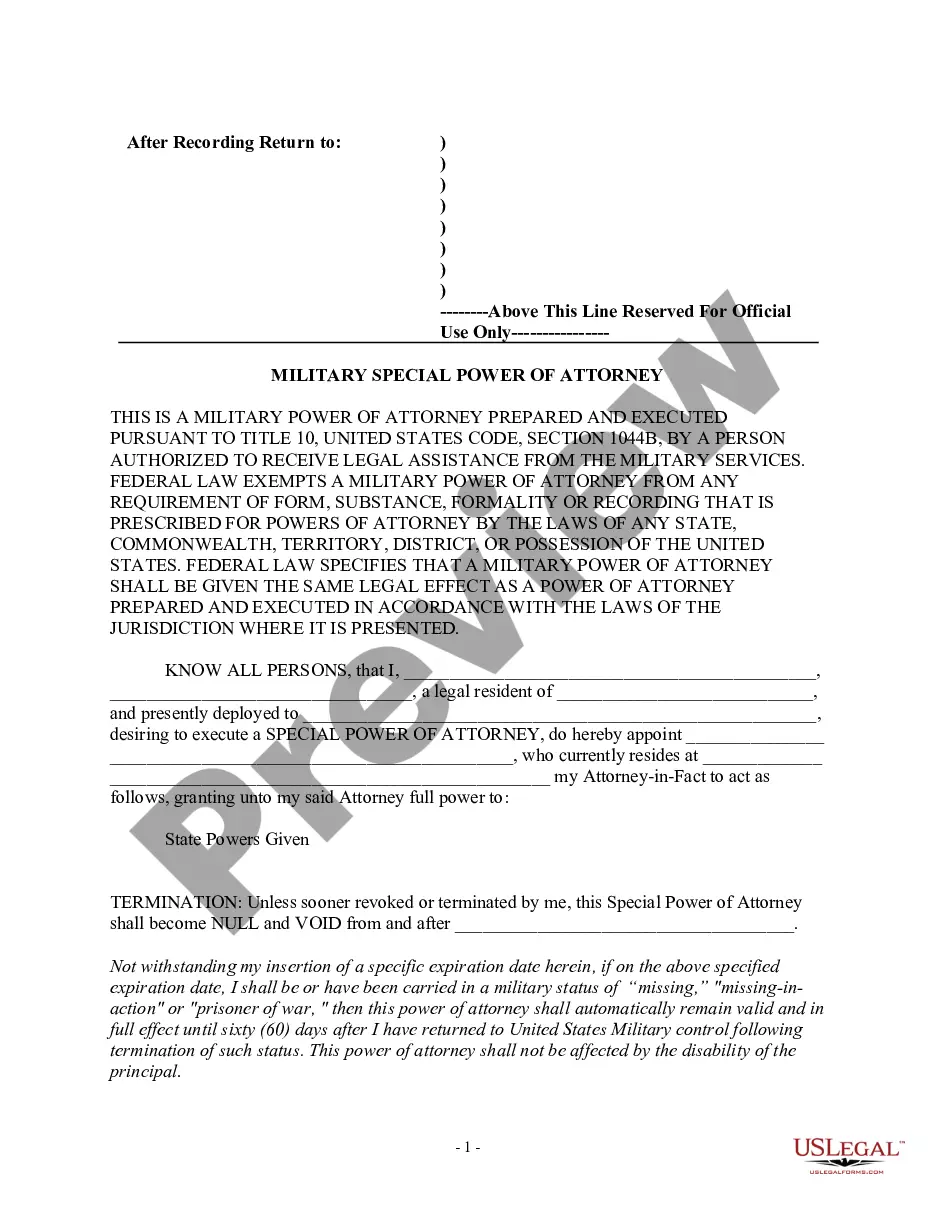
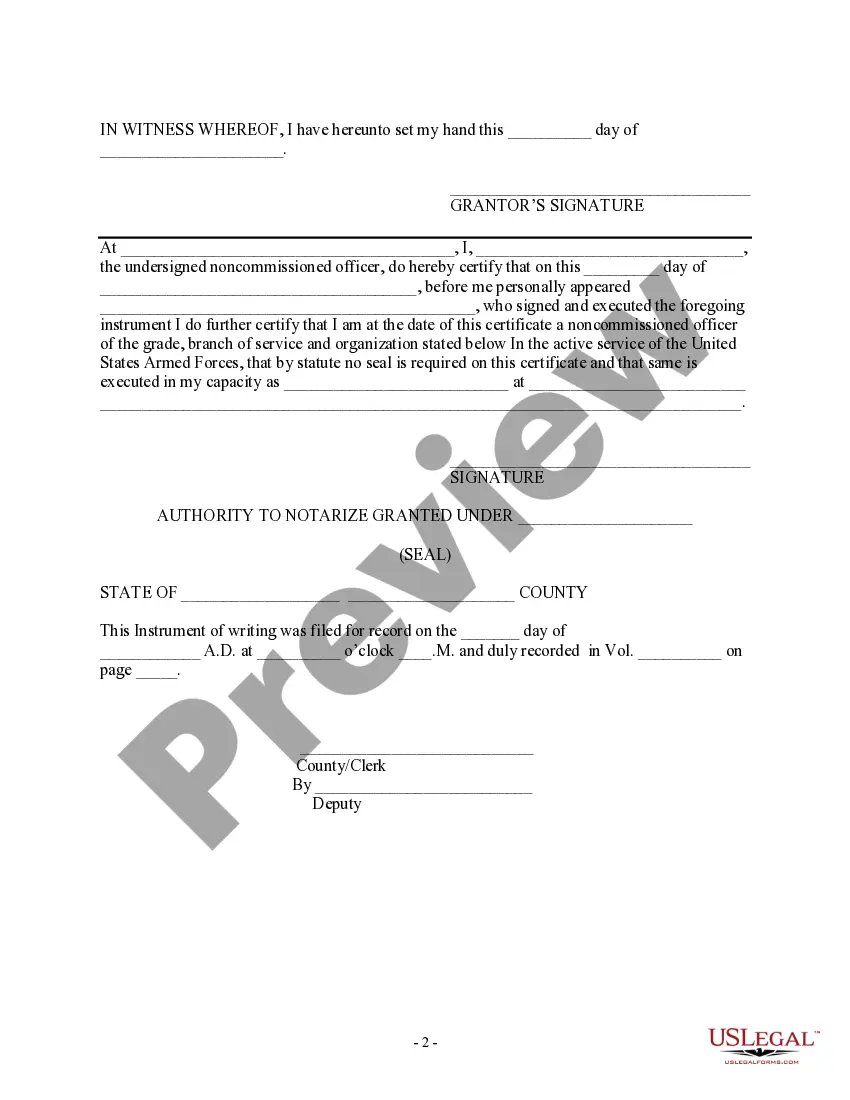
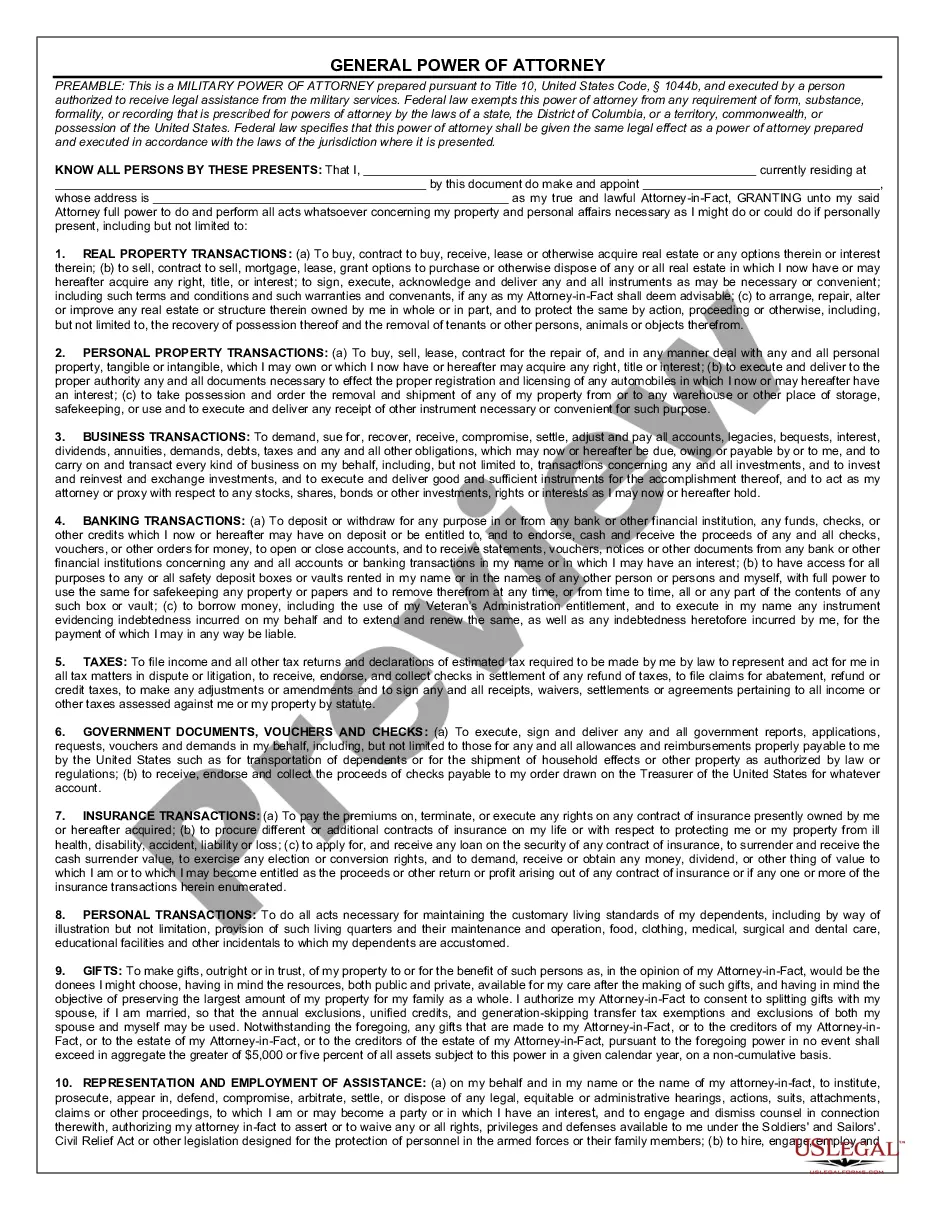
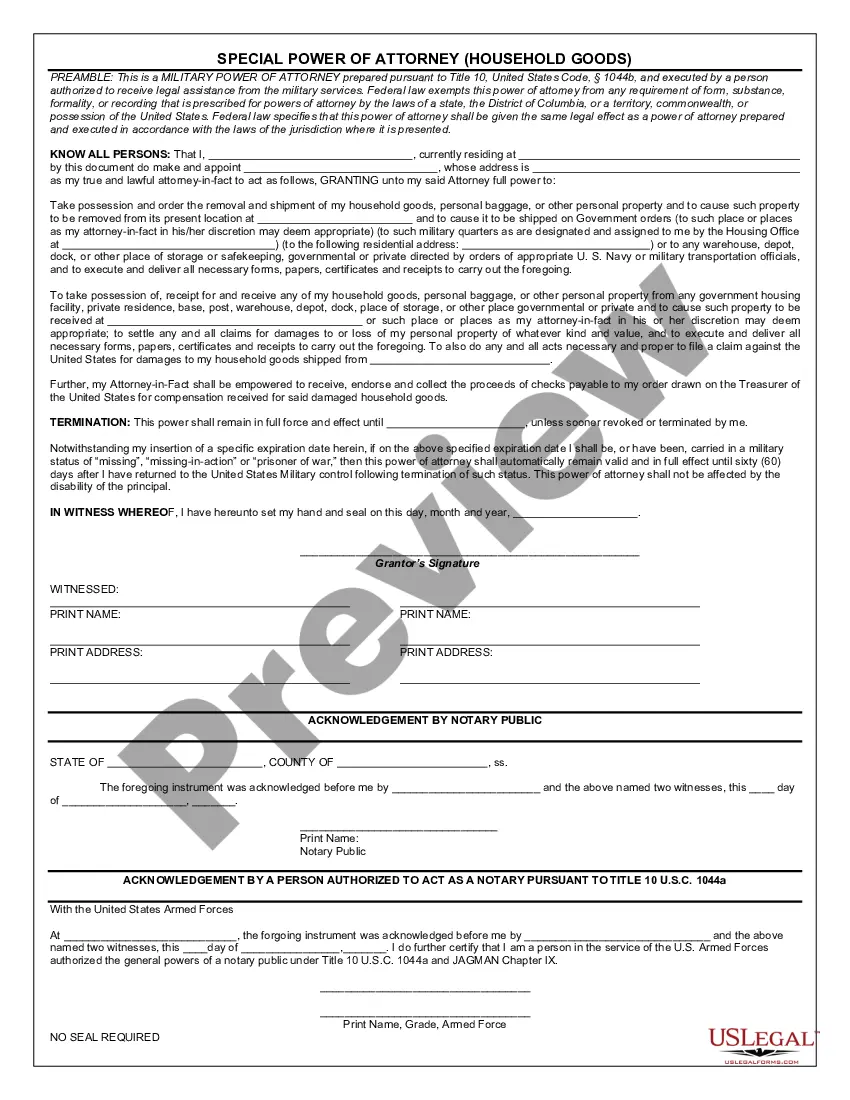
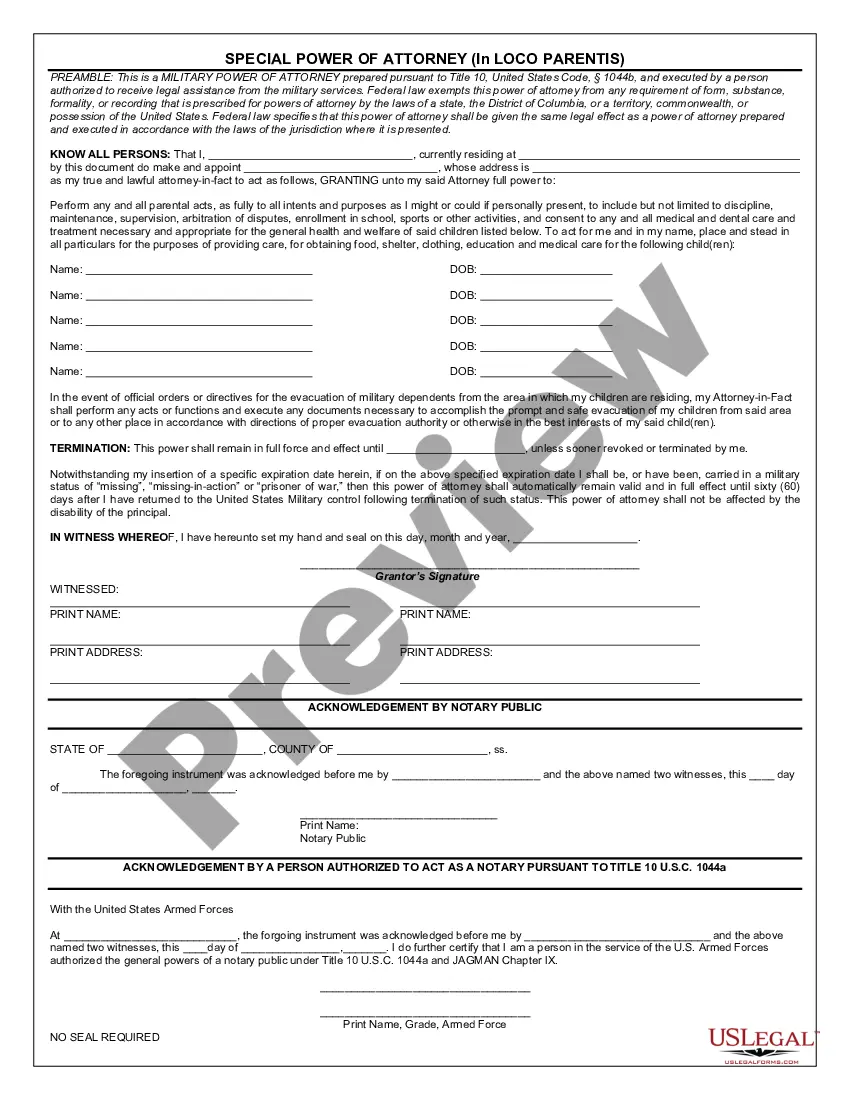
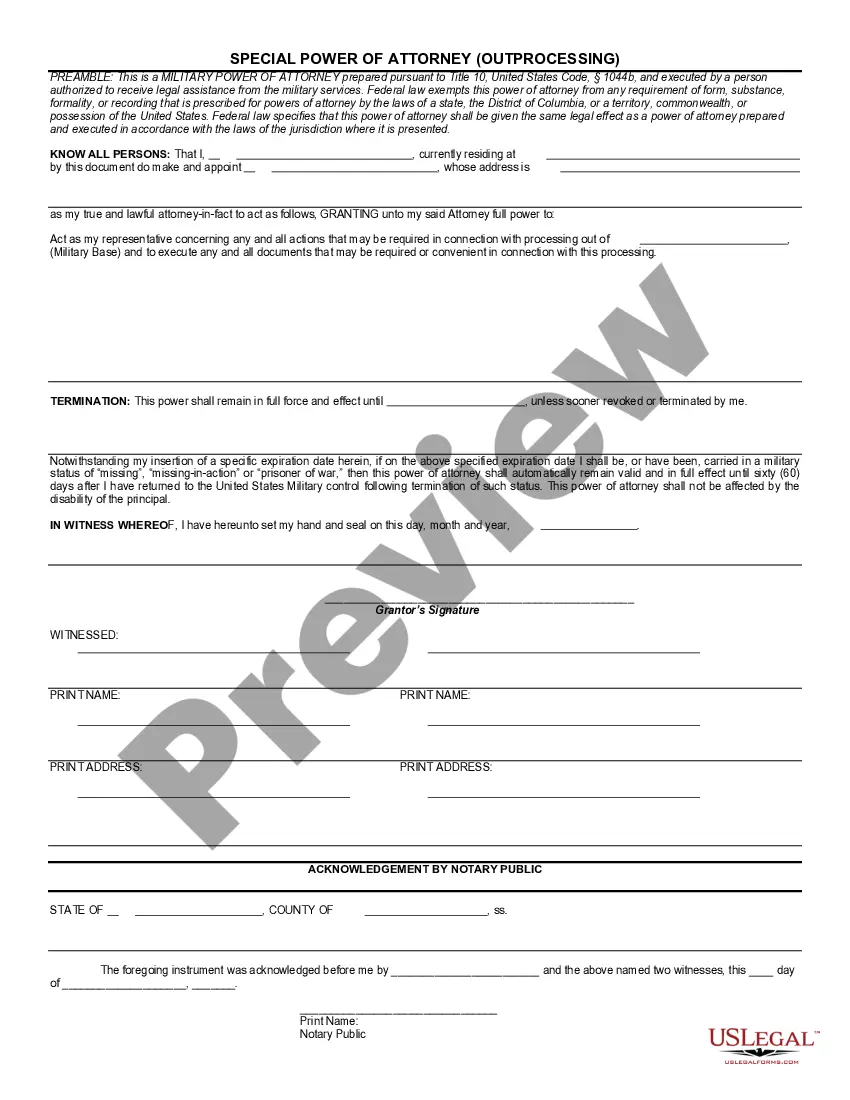

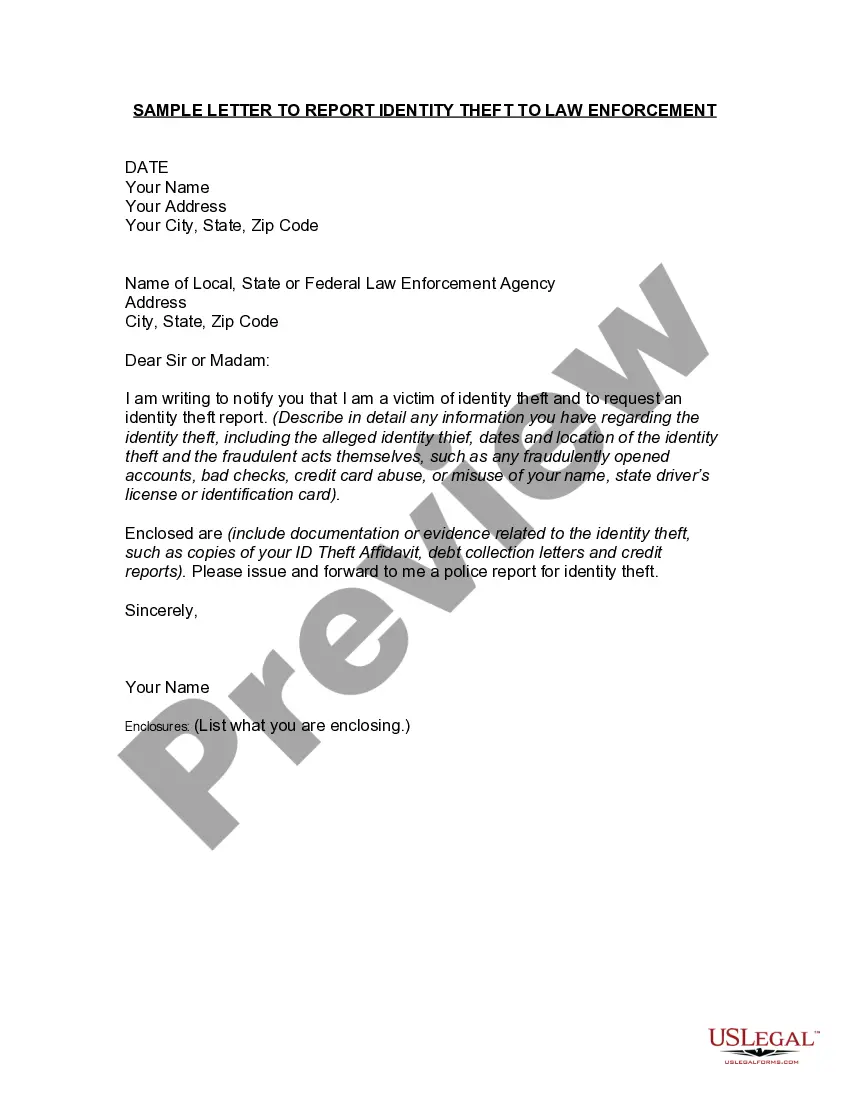
How to fill out Special Military Power Of Attorney?
Locating the appropriate legitimate document template can be a challenge.
Indeed, there are numerous designs accessible online, but how can you locate the authentic form you need.
Utilize the US Legal Forms website. The platform provides thousands of templates, including the Nevada Special Military Power of Attorney, that you can utilize for both business and personal purposes.
You can review the form using the Preview button and read the form description to confirm it is the correct one for you.
- All forms are reviewed by experts and comply with state and federal regulations.
- If you are already registered, Log In to your account and hit the Download button to obtain the Nevada Special Military Power of Attorney.
- Utilize your account to search through the legal forms you have previously purchased.
- Check the My documents tab in your account and download an additional copy of the document you require.
- If you are a new user of US Legal Forms, here are straightforward instructions you can follow.
- First, ensure you have selected the correct form for your city/region.
Form popularity
FAQ
Filing a Nevada Special Military Power of Attorney involves a few straightforward steps. First, complete the appropriate power of attorney form according to Nevada law. After signing, you should have the document notarized, as this adds to its legal standing. Lastly, you may need to submit it to a court or keep it on file with a trusted individual to ensure it is accessible when needed.
Yes, a Nevada Special Military Power of Attorney must be notarized to ensure its validity. Notarization adds an important layer of protection and legitimacy to your document. By having it notarized, you eliminate potential disputes over authenticity, particularly when you are unable to manage your affairs personally. This step is crucial for military personnel who are often deployed and need a reliable way to delegate authority.
When creating a power of attorney in Nevada, you will need to gather personal information for both the principal and the agent. Ensure the document specifies the powers you wish to grant. A notary public must witness the signing for it to be valid, which adds an extra layer of protection. Utilizing a platform like US Legal Forms can help streamline this process and ensure you meet all legal requirements for the Nevada Special Military Power of Attorney.
To obtain a power of attorney in Nevada, you need to prepare a document that clearly states your intentions. Begin by choosing a trusted individual to act on your behalf. Next, you can either draft the power of attorney yourself or use a legal service, like US Legal Forms, to ensure compliance with Nevada laws. Once completed, sign the document in the presence of a notary public to make it legally binding.
In Nevada, a power of attorney does not need to be filed with a court or any government agency. However, it is essential to keep the document in a safe place and provide copies to relevant parties as needed. By understanding these requirements, you can ensure your Nevada Special Military Power of Attorney is effective when you need it.
You can acquire POA paperwork through various means, such as your legal assistance office on a military base or trusted legal service providers like USLegalForms. These platforms offer user-friendly templates that comply with Nevada's regulations. By utilizing these resources, you can easily create the necessary documents.
In the military, a power of attorney empowers a designated agent to make decisions on behalf of the service member during their absence. This often includes handling financial matters, medical decisions, and legal affairs. A Nevada Special Military Power of Attorney ensures that your wishes are respected and that your agent can act swiftly if needed.
Yes, a Nevada Special Military Power of Attorney must be notarized to ensure its legal validity. Notarization helps verify the identity of the signer, adding an additional layer of protection against fraud. Be sure to consult local regulations and follow the proper steps to complete this process.
You can obtain a military power of attorney from various sources, including legal offices on military bases, or through online platforms like USLegalForms. These resources offer templates tailored to Nevada's requirements, ensuring you create a compliant and effective document. Taking advantage of these options can simplify the process and provide you peace of mind.
A Nevada Special Military Power of Attorney typically includes essential components like the names of the principal and agent, a statement of authority, and specific powers granted. It may also have a signature line for the principal and a notary section at the bottom. The document ensures that your legal rights and responsibilities are clearly defined, allowing your representative to act on your behalf.