Nevada 7 Day Notice to Terminate Week to Week Lease - Residential from Landlord to Tenant
What is this form?
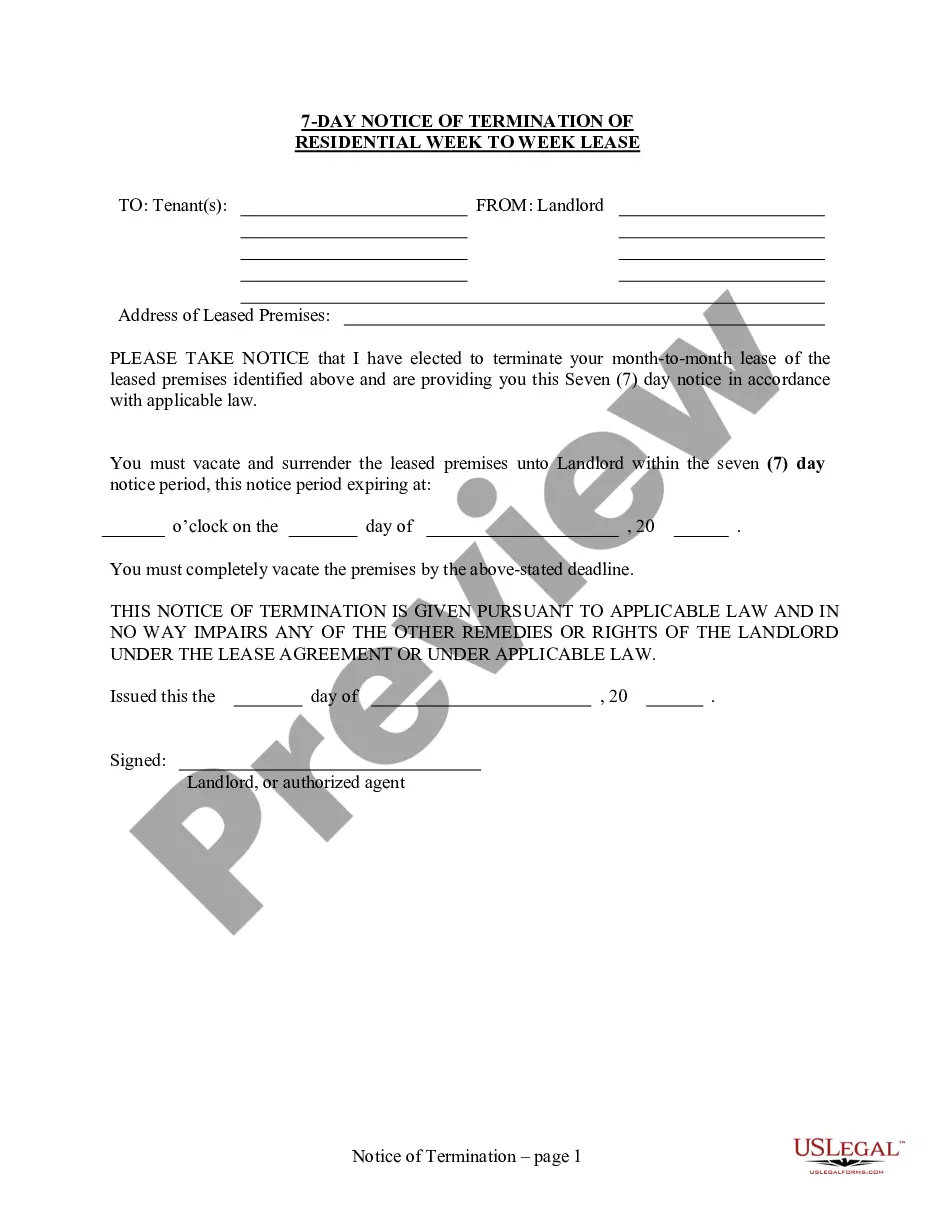
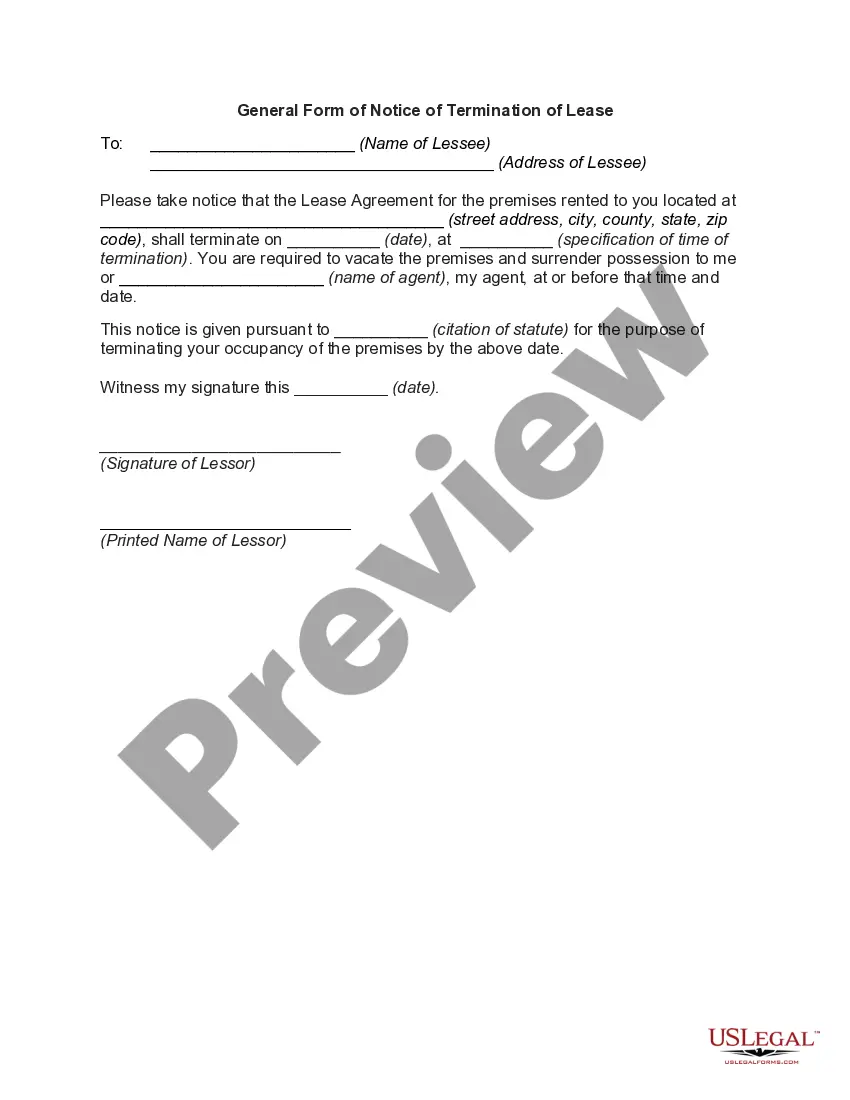
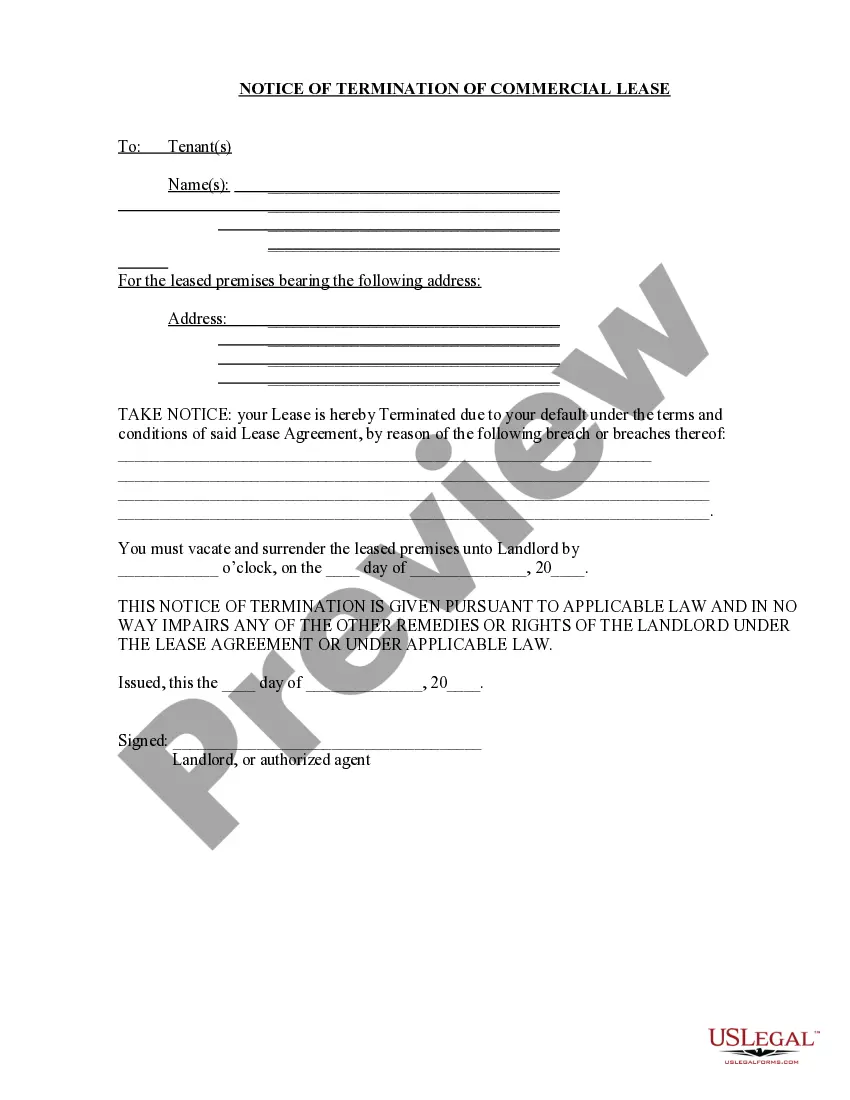
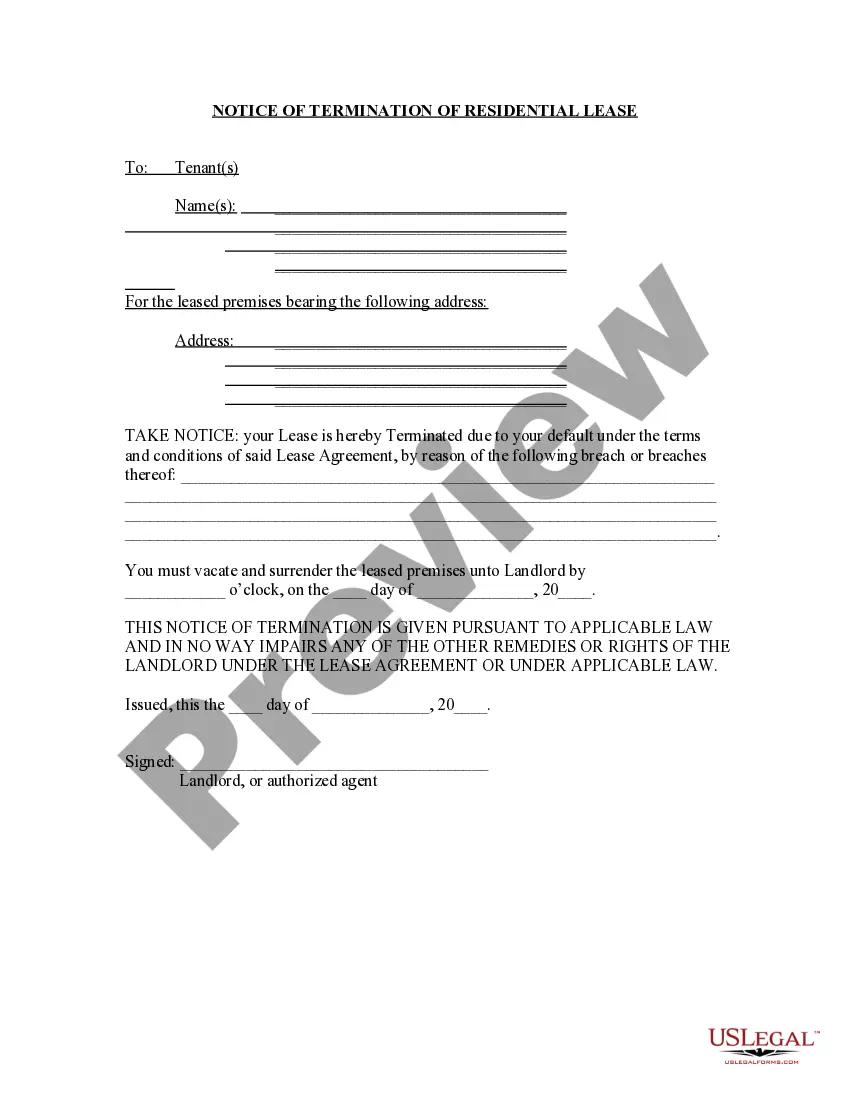
The 7 Day Notice to Terminate Week to Week Lease is a legal document used by a landlord to officially end a week-to-week residential lease agreement with a tenant. This form allows landlords to terminate the lease without providing a specific reason, as long as they adhere to the required notice period. It is essential to understand that this form is distinct from month-to-month leases, and the notice timeframe is critical for compliance with state laws.
Key parts of this document
- Identification of the parties involved: names of the landlord and tenant.
- Description of the leased premises: the address of the property being rented.
- Notice period: clearly states the seven-day timeframe in which the tenant must vacate.
- Signature section: to be signed by the landlord or their authorized agent.
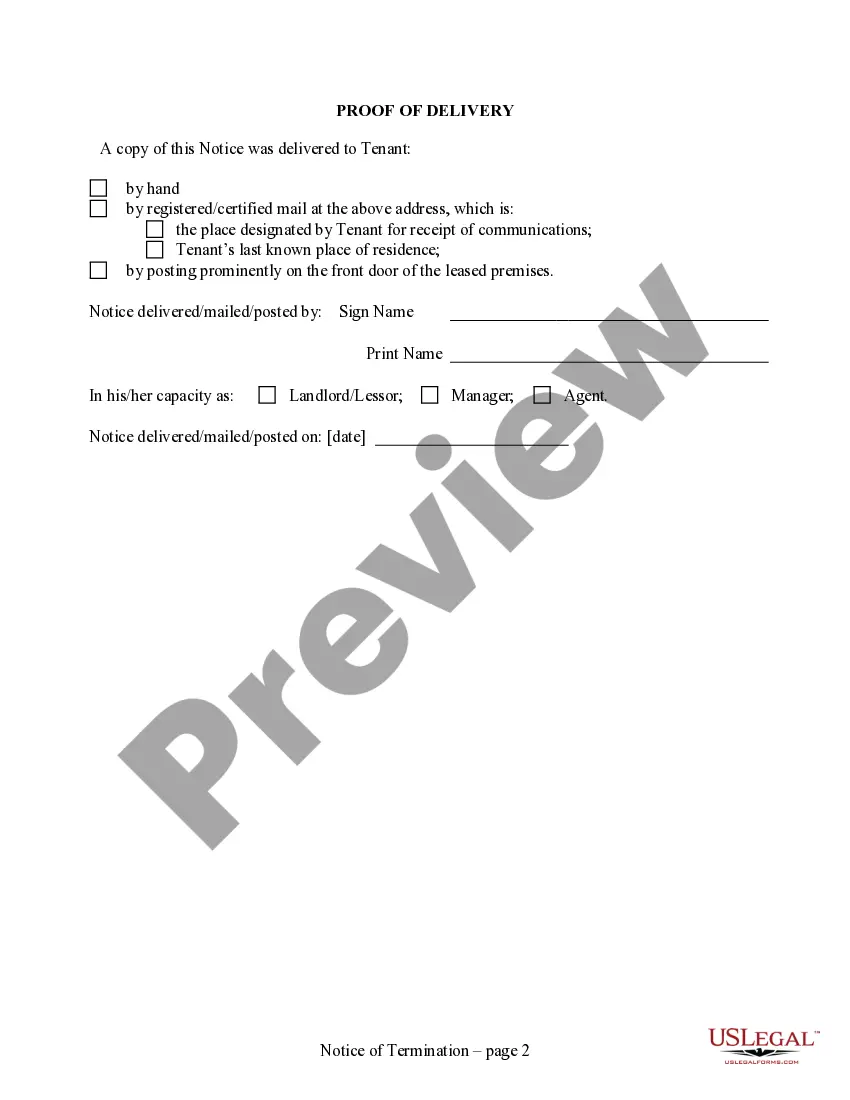
- Proof of delivery: method of delivering the notice to the tenant, including options for hand delivery, mailing, or posting.

Situations where this form applies
This form is necessary when a landlord wishes to terminate a week-to-week residential lease. It can be used in situations where the landlord does not require a specific reason for termination, such as when they plan to sell the property, make renovations, or simply choose not to renew the lease. Adequate notice must be provided to allow the tenant time to vacate the premises.
Intended users of this form
- Landlords who are renting out properties on a week-to-week basis.
- Property managers acting on behalf of landlords for rental agreements.
- Anyone involved in residential leasing where week-to-week terms apply.
Completing this form step by step
- Identify the parties: enter the full names of the landlord and tenant.
- Specify the property: clearly write down the address of the leased premises.
- Enter the termination date: provide the exact date and time when the tenant must vacate.
- Sign the form: the landlord or authorized agent must sign the notice.
- Document the delivery method: indicate how the notice was delivered to the tenant.
Is notarization required?
This form does not typically require notarization unless specified by local law. It is advisable to check local regulations to confirm whether notarization is necessary in your jurisdiction.
Get your form ready online
Our built-in tools help you complete, sign, share, and store your documents in one place.
Make edits, fill in missing information, and update formatting in US Legal Forms—just like you would in MS Word.
Download a copy, print it, send it by email, or mail it via USPS—whatever works best for your next step.
Sign and collect signatures with our SignNow integration. Send to multiple recipients, set reminders, and more. Go Premium to unlock E-Sign.
If this form requires notarization, complete it online through a secure video call—no need to meet a notary in person or wait for an appointment.
We protect your documents and personal data by following strict security and privacy standards.

Make edits, fill in missing information, and update formatting in US Legal Forms—just like you would in MS Word.

Download a copy, print it, send it by email, or mail it via USPS—whatever works best for your next step.

Sign and collect signatures with our SignNow integration. Send to multiple recipients, set reminders, and more. Go Premium to unlock E-Sign.

If this form requires notarization, complete it online through a secure video call—no need to meet a notary in person or wait for an appointment.

We protect your documents and personal data by following strict security and privacy standards.
Common mistakes
- Failing to provide the full notice period of seven days.
- Not signing the notice before delivering it to the tenant.
- Incorrectly identifying the property or parties involved.
- Not documenting the delivery method properly.
Why complete this form online
- Convenience of downloading and customizing the form at your own pace.
- Ensures compliance with legal requirements without the need for legal consultation.
- Reliability of professionally drafted content that meets state standards.
Legal use & context
This form serves as a legal notice to tenants. Proper use ensures that the landlord complies with state laws regarding lease terminations and helps prevent potential disputes. Failure to follow proper procedures can result in legal consequences for the landlord.
Summary of main points
- The form allows landlords to terminate week-to-week leases with seven days' notice.
- Proper completion and delivery of this notice are essential for legal compliance.
- Landlords should be aware of specific state requirements regarding lease termination.
Looking for another form?
Form popularity
FAQ
1 month's notice if your tenancy runs from month to month. 4 weeks' notice if your tenancy runs from week to week. If you live with your landlord. You don't have to give a set amount of notice (unless your tenancy agreement says otherwise).
No Cause Notices Under Nevada law, NRS 40.251, the landlord can serve a No Cause Eviction Notice after your lease has expired. This Notice does not have to provide you with any reason for the eviction. If you rent by the week, the landlord must serve a 7 day notice.
Your landlord can end the let at any time by serving a written 'notice to quit'. The notice period will depend on the tenancy or agreement, but is often at least 4 weeks.
They must give the landlord at least 21 days notice of termination. Landlord Breaches the Agreement - the tenant can terminate the tenancy if the landlord breaches the agreement. If the landlord challenges the termination in the Tribunal, the breach must be serious enough to justify termination.
A no-cause eviction is when a tenant hasn't done anything wrong and the landlord does not want to renew a lease. A landlord cannot use a no-cause eviction before a lease is up. Currently, property owners have to give tenants a 30-days notice for normal renters.
In Colorado, evictions are sometimes referred to as forcible entry & detainer (FED). Before you can file for eviction, you must generally provide 10 days' notice (increased from 3 days prior) for tenants to correct a deficiency or leave the property, except in certain circumstances.
Nevada Revised Statutes require a seven-day notice to the tenant, instructing the tenant to either pay the rent or "quit" (leave) the rental property. To evict a tenant for nonpayment of rent, the landlord must "serve" (deliver) a Seven-Day Notice to Pay Rent or Quit to the tenant.
State law regulates several rent-related issues, including late and bounced-check fees, the amount of notice (at least 45 days in Nevada) landlords must give tenants to raise the rent, and how much time (five days in Nevada) a tenant has to pay overdue rent or move before a landlord can file for eviction.