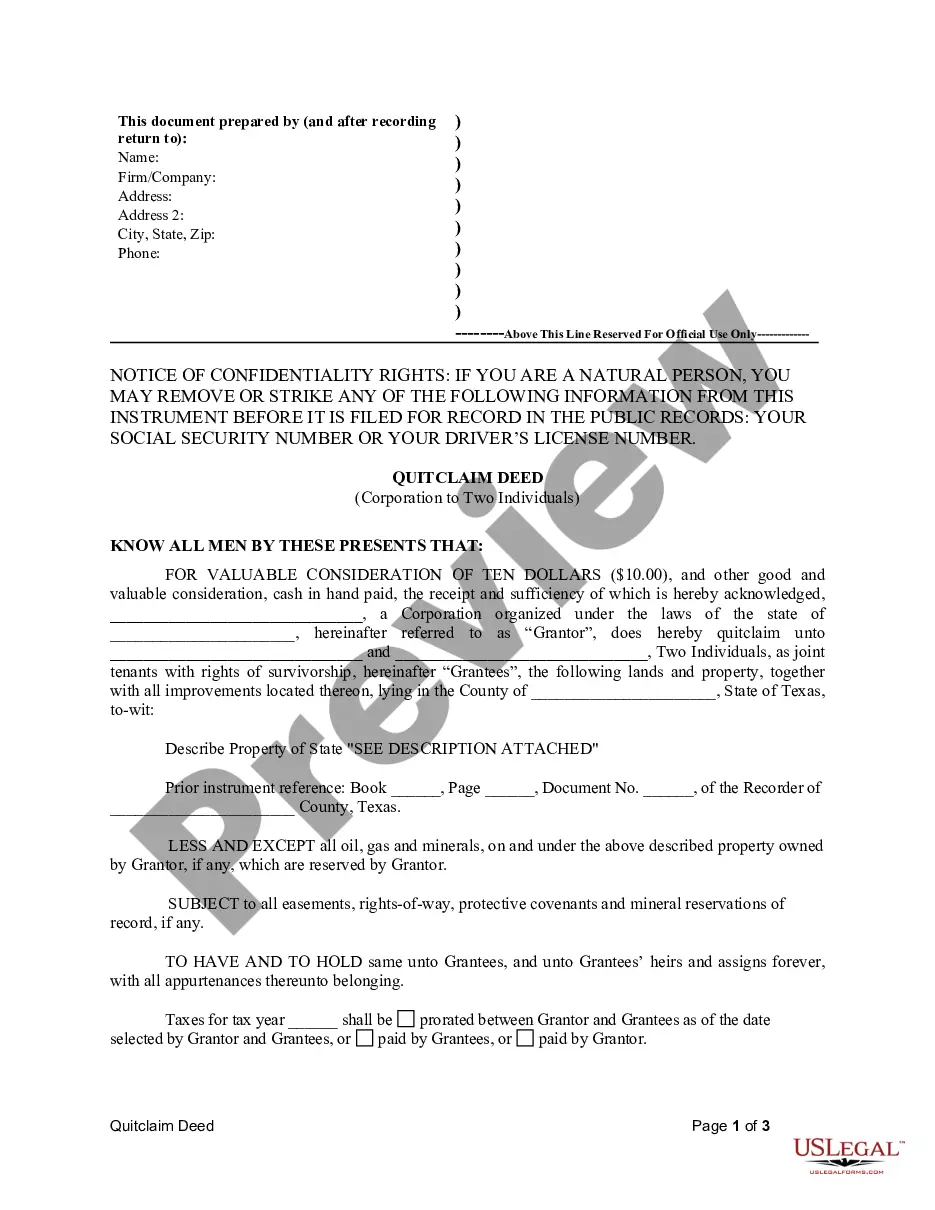
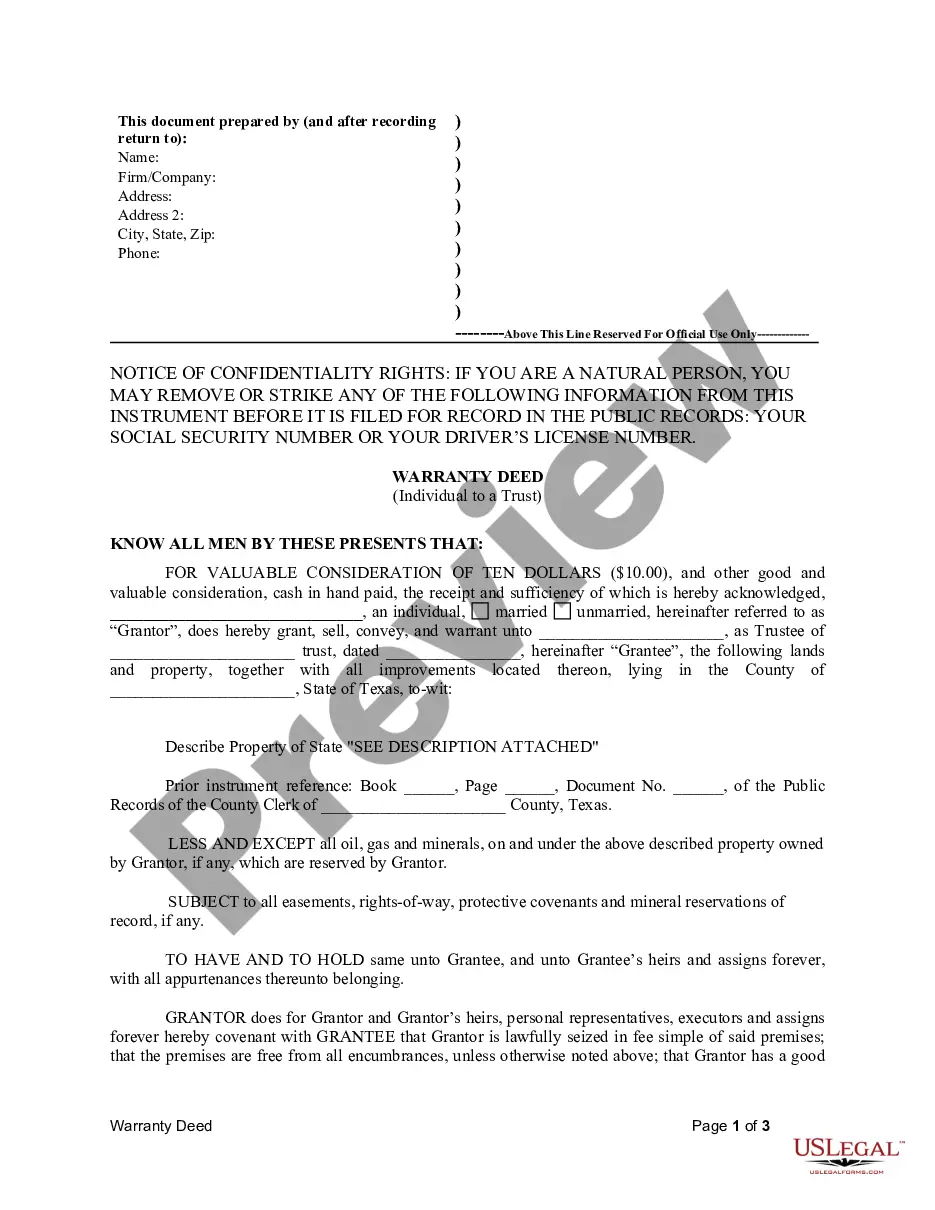
Nevada Grant, Bargain and Sale Deed - Limited Liability Company to Trust
Overview of this form
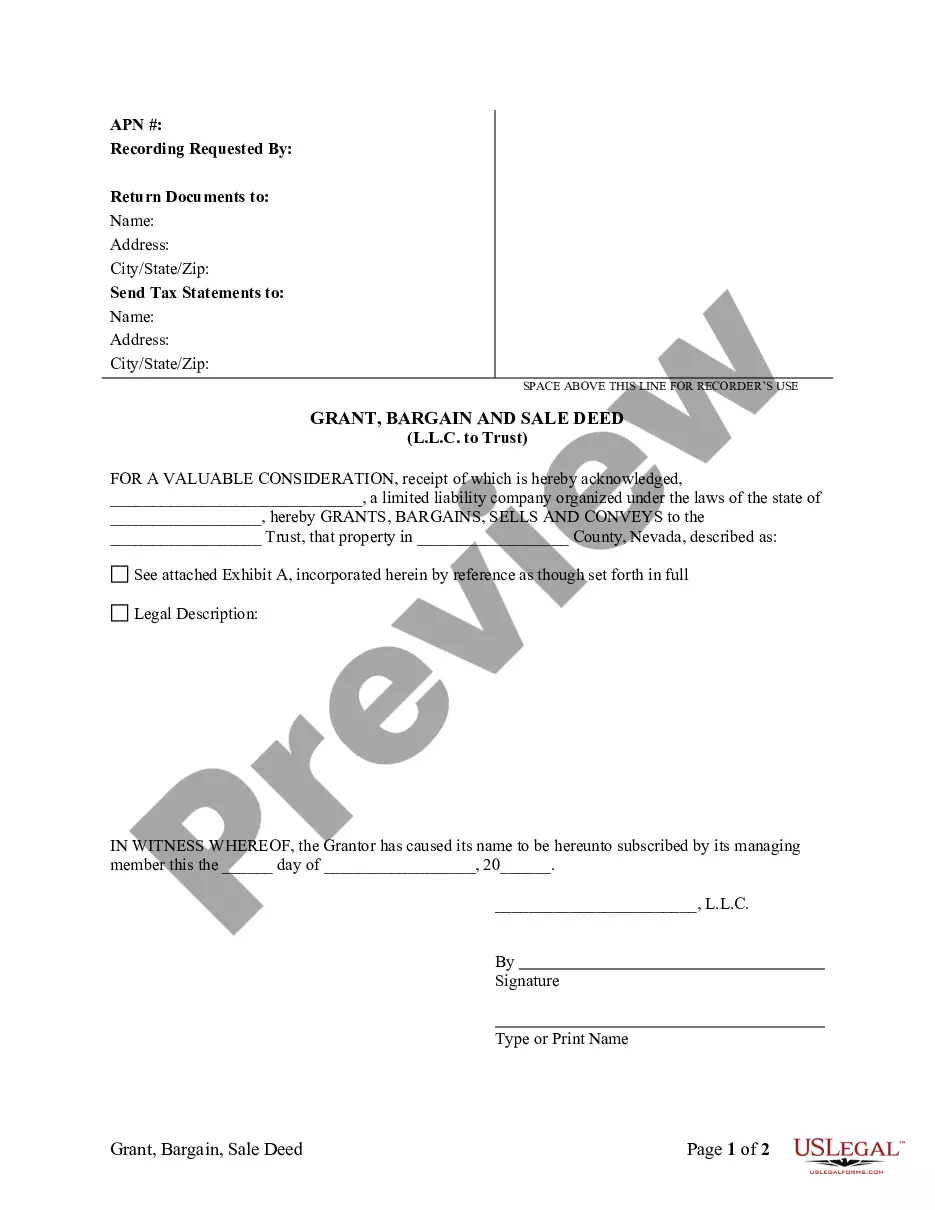
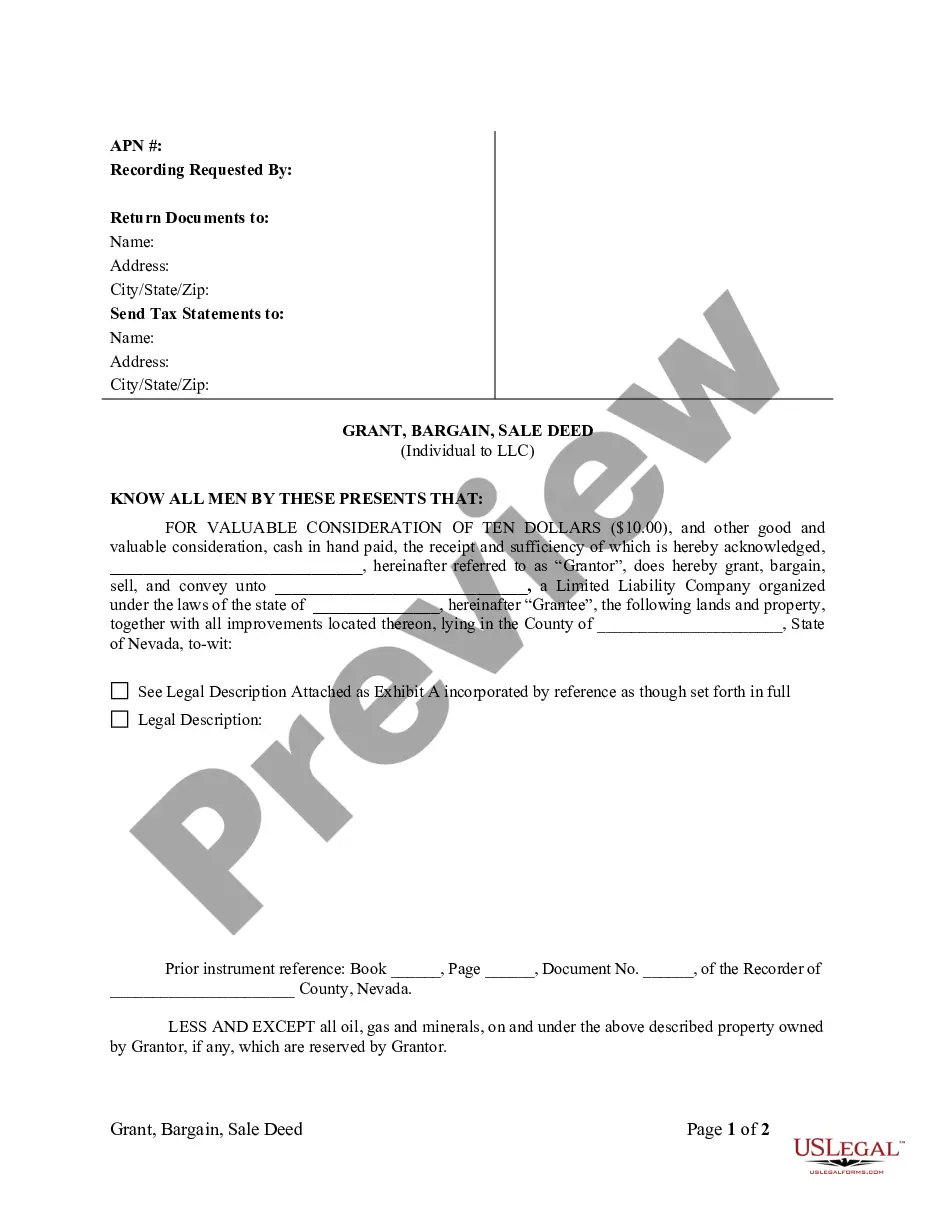
This form is a Grant, Bargain and Sale Deed, where the Grantor is a Limited Liability Company and the Grantee is a Trust. This deed is utilized for transferring property ownership from the Grantor to the Grantee, allowing the Grantor to convey and quitclaim the described property. This form complies with state statutory laws, making it an essential document for property transfers involving these entities.
What’s included in this form
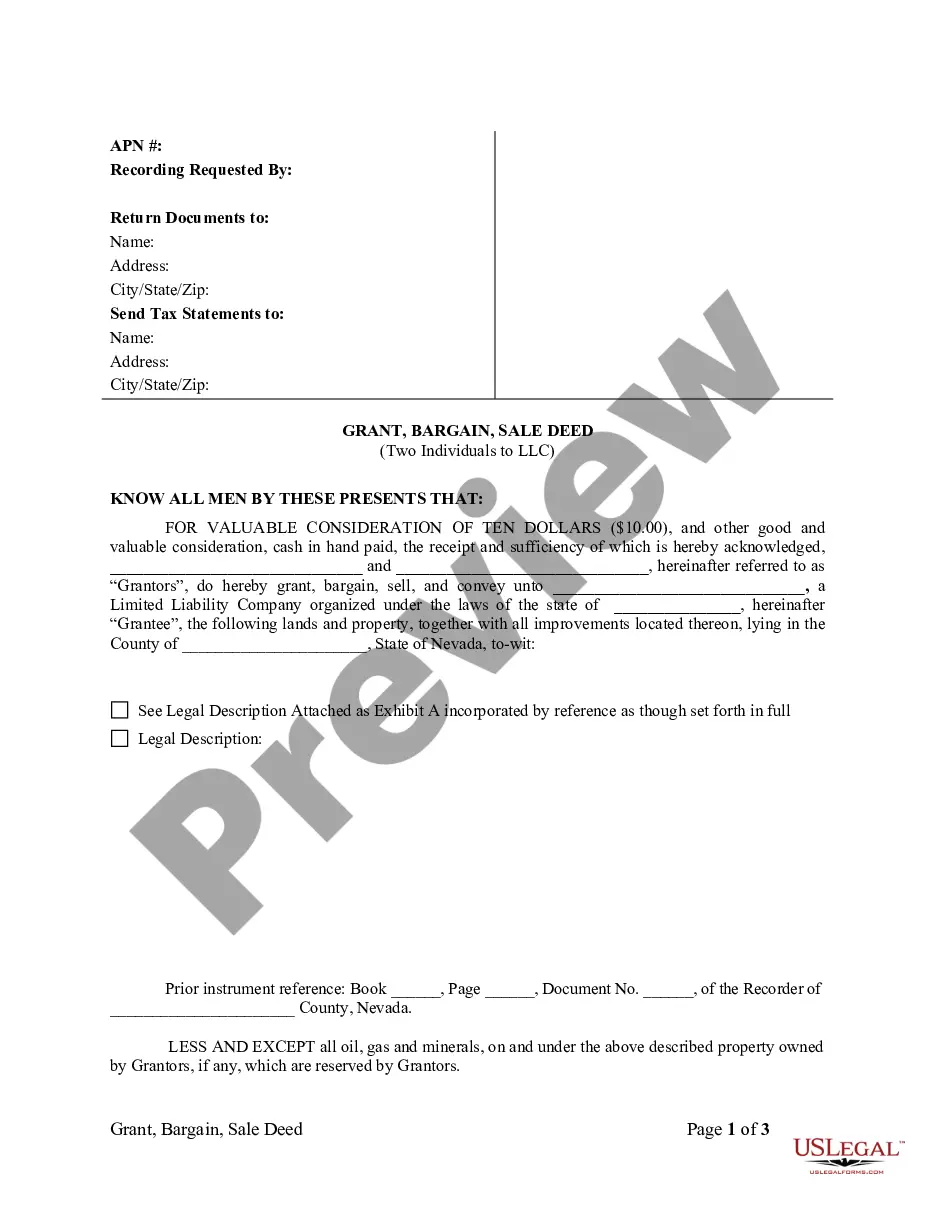
- Parties involved: Clearly identifies the Grantor (Limited Liability Company) and the Grantee (Trust).
- Legal description: Provides a detailed description of the property being conveyed.
- Terms of the transfer: Specifies the conditions under which the property is being transferred.
- Signature requirements: States the necessary signatures for validity.

When to use this document
This form should be used when a Limited Liability Company wishes to transfer ownership of property to a Trust. Such scenarios may arise when a company wants to safeguard its assets, facilitate estate planning, or manage real estate investments through a Trust structure.
Who can use this document
- Limited Liability Companies looking to transfer property ownership.
- Trustees managing assets on behalf of a Trust.
- Real estate professionals facilitating property transactions involving LLCs and Trusts.
Instructions for completing this form
- Identify the parties: Enter the name of the Limited Liability Company as the Grantor and the Trust as the Grantee.
- Specify the property: Provide a legal description of the property being transferred.
- Enter the terms: Outline any specific terms or conditions related to the deed transfer.
- Gather signatures: Ensure that authorized representatives of the Grantor sign the deed.
- Record the deed: File the completed deed with the local county recorder's office as required.
Notarization guidance
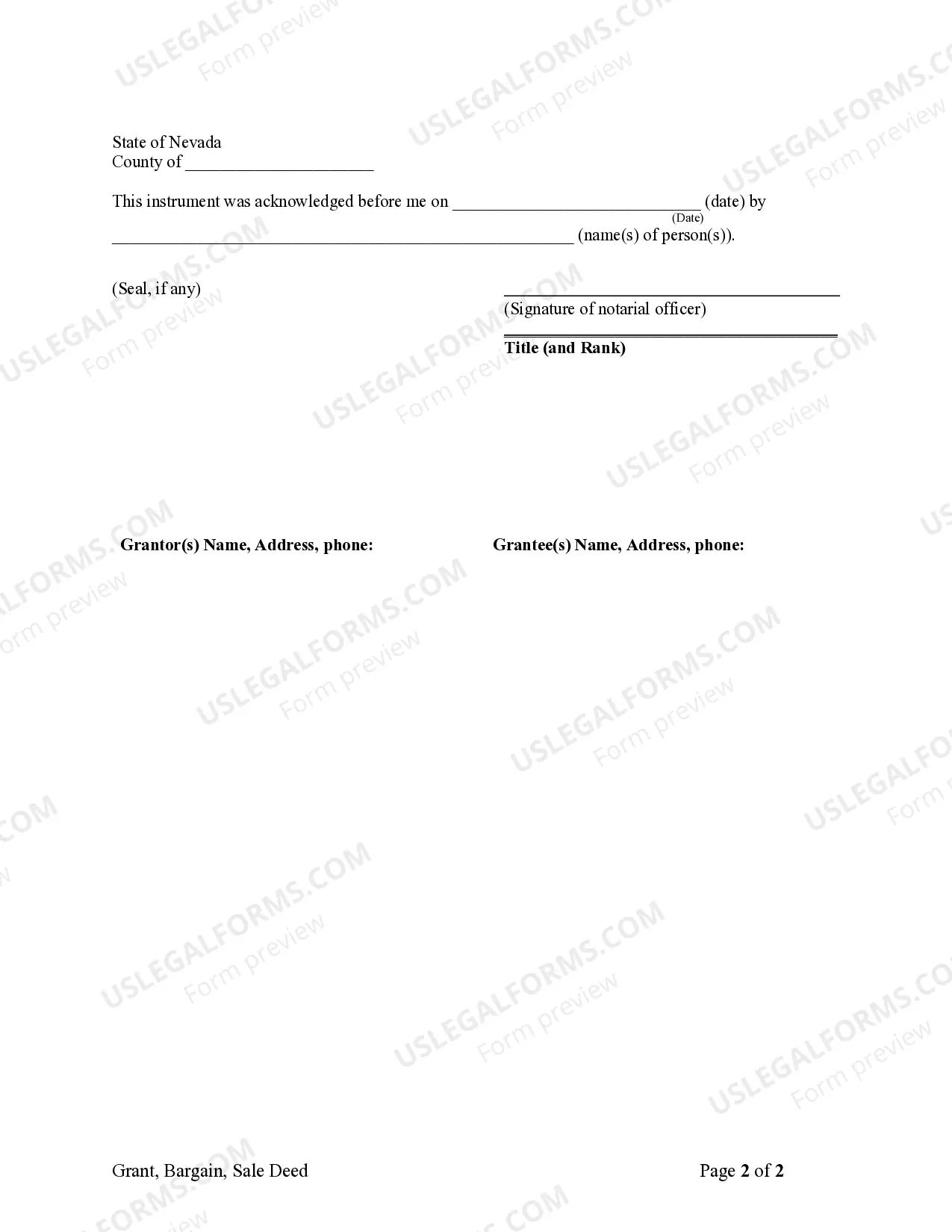
This form needs to be notarized to ensure legal validity. US Legal Forms provides secure online notarization powered by Notarize, allowing you to complete the process through a verified video call, available anytime.
Get your form ready online
Our built-in tools help you complete, sign, share, and store your documents in one place.
Make edits, fill in missing information, and update formatting in US Legal Forms—just like you would in MS Word.
Download a copy, print it, send it by email, or mail it via USPS—whatever works best for your next step.
Sign and collect signatures with our SignNow integration. Send to multiple recipients, set reminders, and more. Go Premium to unlock E-Sign.
If this form requires notarization, complete it online through a secure video call—no need to meet a notary in person or wait for an appointment.
We protect your documents and personal data by following strict security and privacy standards.

Make edits, fill in missing information, and update formatting in US Legal Forms—just like you would in MS Word.

Download a copy, print it, send it by email, or mail it via USPS—whatever works best for your next step.

Sign and collect signatures with our SignNow integration. Send to multiple recipients, set reminders, and more. Go Premium to unlock E-Sign.

If this form requires notarization, complete it online through a secure video call—no need to meet a notary in person or wait for an appointment.

We protect your documents and personal data by following strict security and privacy standards.
Typical mistakes to avoid
- Failing to properly notarize the document if required by state law.
- Omitting the legal description of the property, leading to ambiguity.
- Not securing the necessary signatures from authorized personnel.
Benefits of using this form online
- Ease of access: Downloadable templates allow for quick preparation of necessary documents.
- Editability: Users can fill in specific details as needed, ensuring accuracy.
- Reliability: Forms are drafted to comply with legal standards and requirements.
Legal use & context
- This Grant, Bargain and Sale Deed is legally binding once signed by the appropriate parties.
- Ensure that the Grantor has the authority to convey the property.
- Verify that the Trust can receive property under state law.
Key takeaways
- A Grant, Bargain and Sale Deed is used for property transfer from a Limited Liability Company to a Trust.
- Includes important details like legal descriptions and authority signatures.
- Understand local regulations regarding notarization and property transfer.
Looking for another form?

Form popularity
FAQ
Quitclaim deeds are most often used to transfer property between family members. Examples include when an owner gets married and wants to add a spouse's name to the title or deed, or when the owners get divorced and one spouse's name is removed from the title or deed.
A bargain and sale with covenants against grantor's acts contains only one covenant or promise; that is, that the grantor has done nothing to encumber title with easements, liens, judgements and the like while owing the property.It does not run with the land. This type of deed is typically used in New Jersey.
A quitclaim deed only transfers the grantor's interests in a piece of real estate. It does not create any warranties on the title.A warranty deed contains a guarantee that the grantor has legal title and rights to the real estate. A quitclaim deed offers little to no protection to the grantee.
Bargain and sale deeds are most often used when property is transferred pursuant to a foreclosure, tax sale, or settlement of the estate of a deceased person. They may also be used in the same situations as a quitclaim deed, although they give the grantee a little more protection.
The quitclaim deed provides no warranties; it conveys the interest the grantor had in the propertynothing more.The bargain and sale deed indicates that the grantor has title; but property might come with encumbrances and defects.
Buying property with this type of deed is not necessarily a bad idea, but it is advisable to take some precautions. If possible, a title search should be conducted to look for any clouds on the title and to see how difficult it would be to release them.
A grant, bargain, and sale deed is commonly used in Nevada for a conveyance of real property.A certificate of the acknowledgement or proof of execution, signed by the person taking the acknowledgment or proof, and under the seal or stamp of that person, will entitle the deed to be recorded (NRS 111.310).
To file a quitclaim deed in Nevada, you will need to contact the Recorder of Deeds in the county in which the property is located and ask about the county's specific requirements for quitclaim deeds.