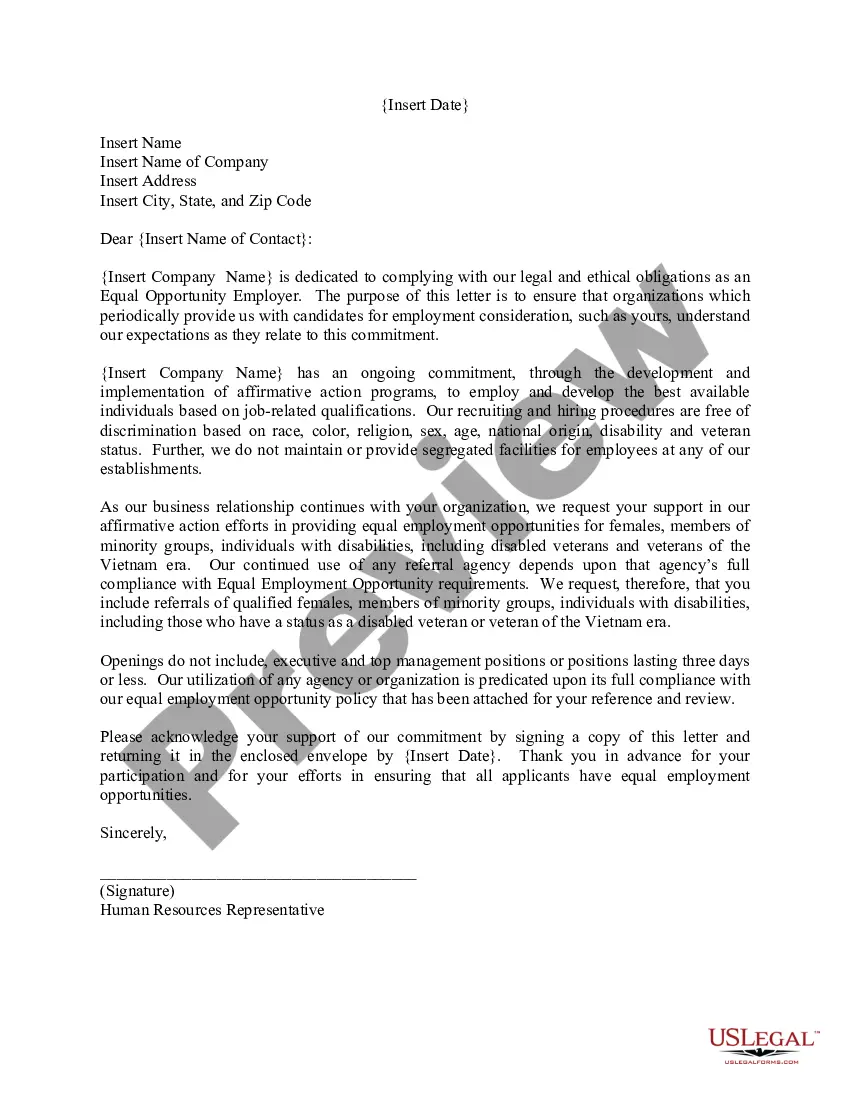
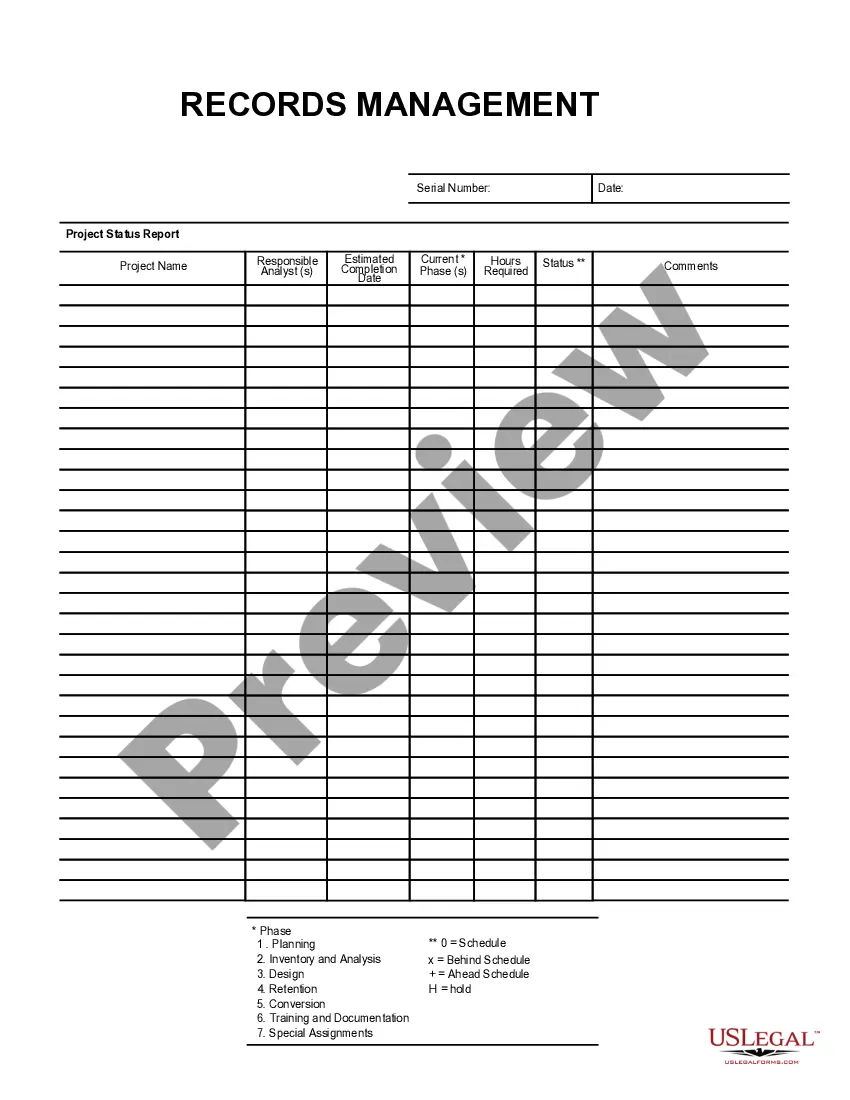
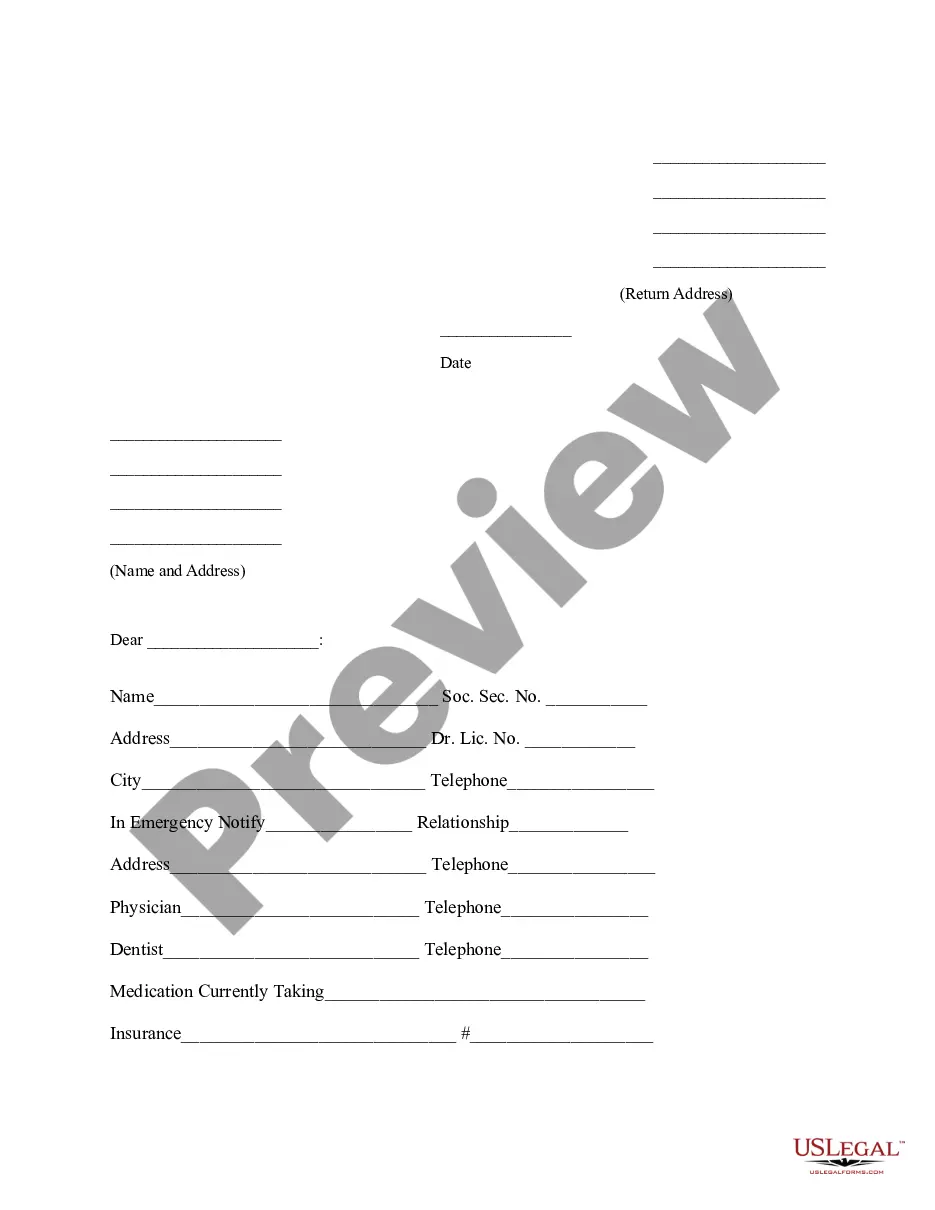
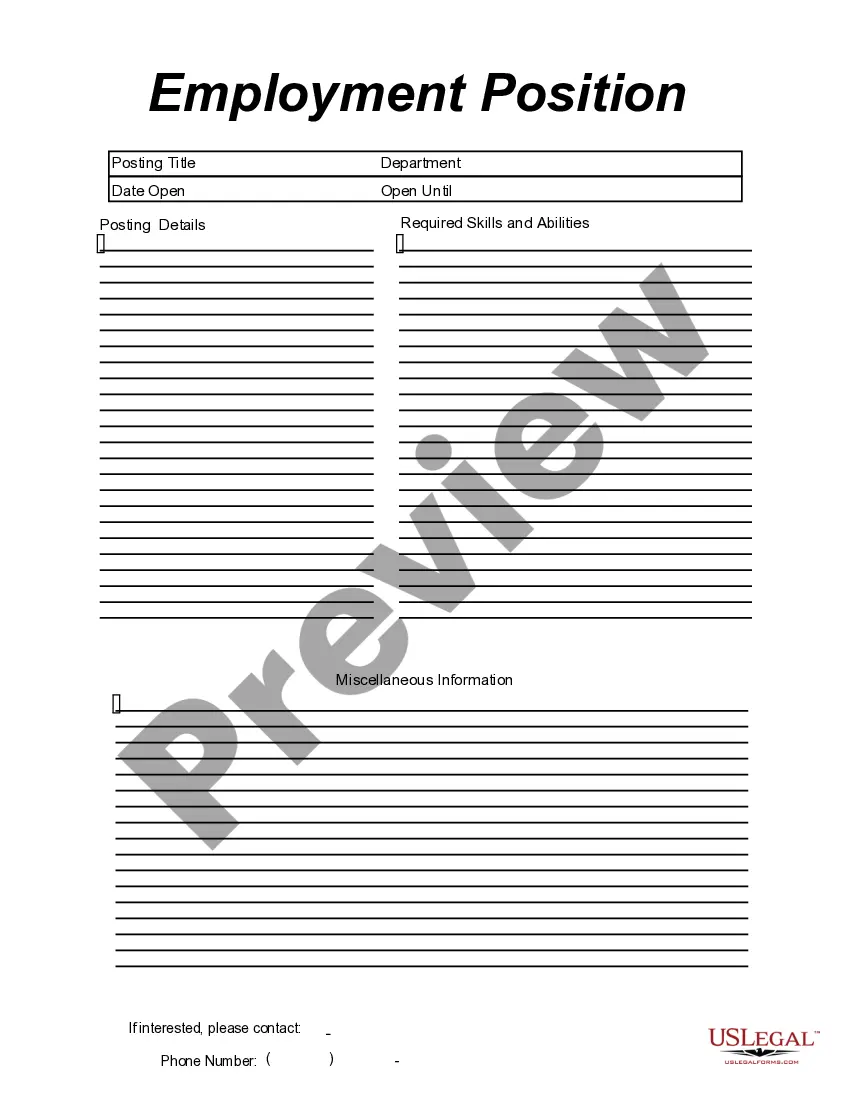
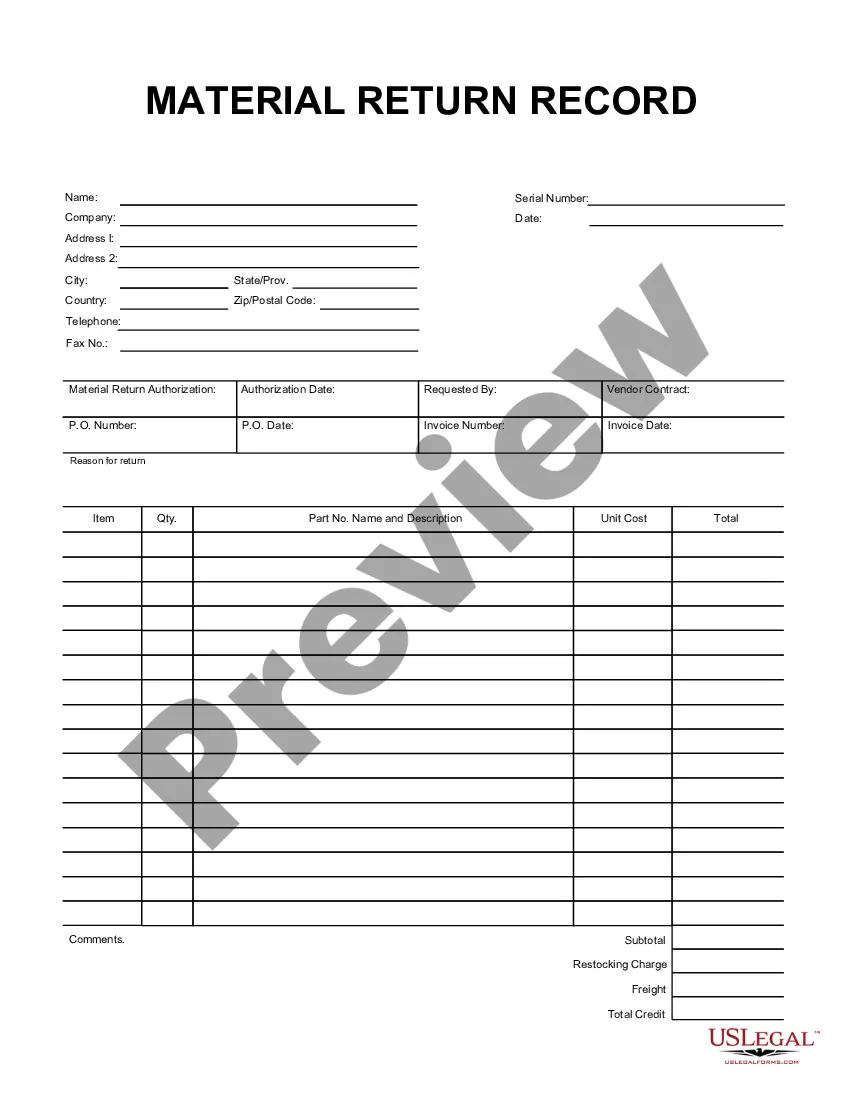
This form is a business type form that is formatted to allow you to complete the form using Adobe Acrobat or Word. The word files have been formatted to allow completion by entry into fields. Some of the forms under this category are rather simple while others are more complex. The formatting is worth the small cost.
New Mexico Records Management
Category:
State:
Multi-State
Control #:
US-193-AZ
Format:
Word;
PDF;
Rich Text
Instant download
Description
Get your form ready online
Our built-in tools help you complete, sign, share, and store your documents in one place.
Built-in online Word editor
Make edits, fill in missing information, and update formatting in US Legal Forms—just like you would in MS Word.
Export easily
Download a copy, print it, send it by email, or mail it via USPS—whatever works best for your next step.
E-sign your document
Sign and collect signatures with our SignNow integration. Send to multiple recipients, set reminders, and more. Go Premium to unlock E-Sign.
Notarize online 24/7
If this form requires notarization, complete it online through a secure video call—no need to meet a notary in person or wait for an appointment.
Store your document securely
We protect your documents and personal data by following strict security and privacy standards.

Make edits, fill in missing information, and update formatting in US Legal Forms—just like you would in MS Word.

Download a copy, print it, send it by email, or mail it via USPS—whatever works best for your next step.

Sign and collect signatures with our SignNow integration. Send to multiple recipients, set reminders, and more. Go Premium to unlock E-Sign.

If this form requires notarization, complete it online through a secure video call—no need to meet a notary in person or wait for an appointment.

We protect your documents and personal data by following strict security and privacy standards.
Looking for another form?




How to fill out Records Management?
Selecting the optimal legal document template can be challenging.
Of course, there are numerous templates accessible online, but how do you find the legal form you need.
Utilize the US Legal Forms website.
For new users of US Legal Forms, here are some straightforward steps to follow: First, verify that you have selected the correct form for your city or county. You can review the form using the Preview button and check the form description to ensure it is suitable for you.
- The service offers a wide range of templates, including the New Mexico Records Management.
- These templates can be used for both business and personal needs.
- All forms are vetted by professionals and comply with federal and state regulations.
- If you are already registered, sign in to your account and click on the Download button to obtain the New Mexico Records Management.
- Use your account to review the legal forms you have previously purchased.
- Navigate to the My documents section of your account to download another copy of the needed document.
Form popularity
FAQ
These policies define what information your organization must keep as a record, the procedures for managing those records, their retention periods, and procedures for ensuring their secure destruction.
Document retention guidelines typically require businesses to store records for one, three or seven years. In some cases, you will need to keep the records forever. If you're unsure what to keep and what to shred, your accountant, lawyer and state record-keeping agency may provide guidance.
Here is the five-step process SD1 followed in implementing transparent records management.Identify. The first step in implementing electronic records management is to identify your organization's problems, issues and pain points.Set goals.Make a plan.Get to work.Stick to it.
KEEP 3 TO 7 YEARS Knowing that, a good rule of thumb is to save any document that verifies information on your tax returnincluding Forms W-2 and 1099, bank and brokerage statements, tuition payments and charitable donation receiptsfor three to seven years.
Fundamental areas of a basic records management program include:Policy and procedure development.A records retention and disposition program.Data collection/forms management.Active records management.Inactive records management.Training and outreach program.
At the center of your records management program are your records management policies. These policies define what information your organization must keep as a record, the procedures for managing those records, their retention periods, and procedures for ensuring their secure destruction.
The ISO 15489 is a standard for records management policies and procedures. The purpose of this standard is to ensure that appropriate attention and protection applies to all records, and that the evidence and information they contain can be retrieved efficiently and effectively using standard practices and procedures.
All records pertaining to controlled substances must be retained for 5 years. Rescue and Disaster Response Reports and related records, covering specific incidents must be retained for 3 years.
As depicted in the image there are six (6) foundational elements:Records Inventory & Classification.Retention scheduling.Records Storage & Conversion.Vital Records Program.Disaster Prevention & Recovery Planning.Disposition.
Keep records for 3 years from the date you filed your original return or 2 years from the date you paid the tax, whichever is later, if you file a claim for credit or refund after you file your return. Keep records for 7 years if you file a claim for a loss from worthless securities or bad debt deduction.