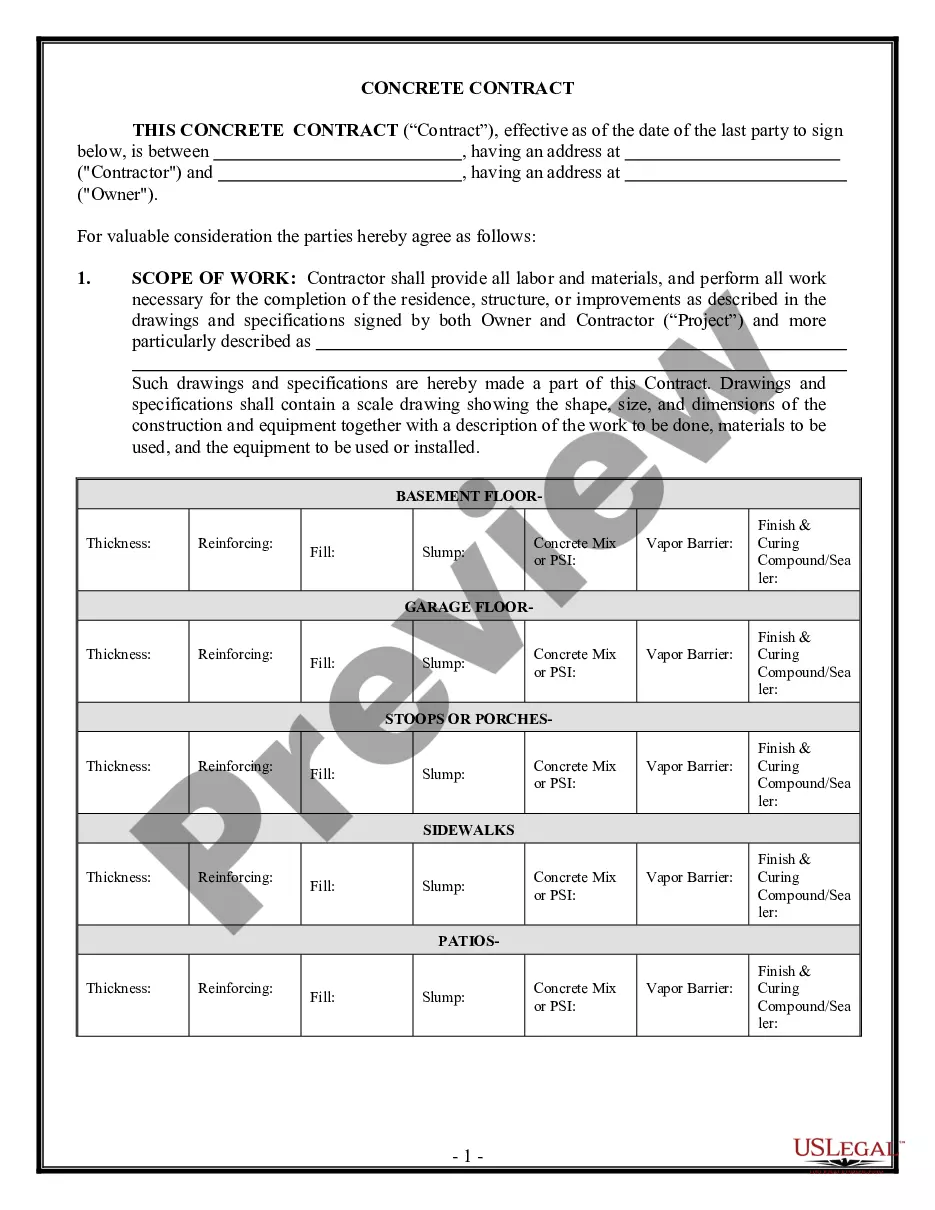
New Mexico Motion to Compel
Overview of this form
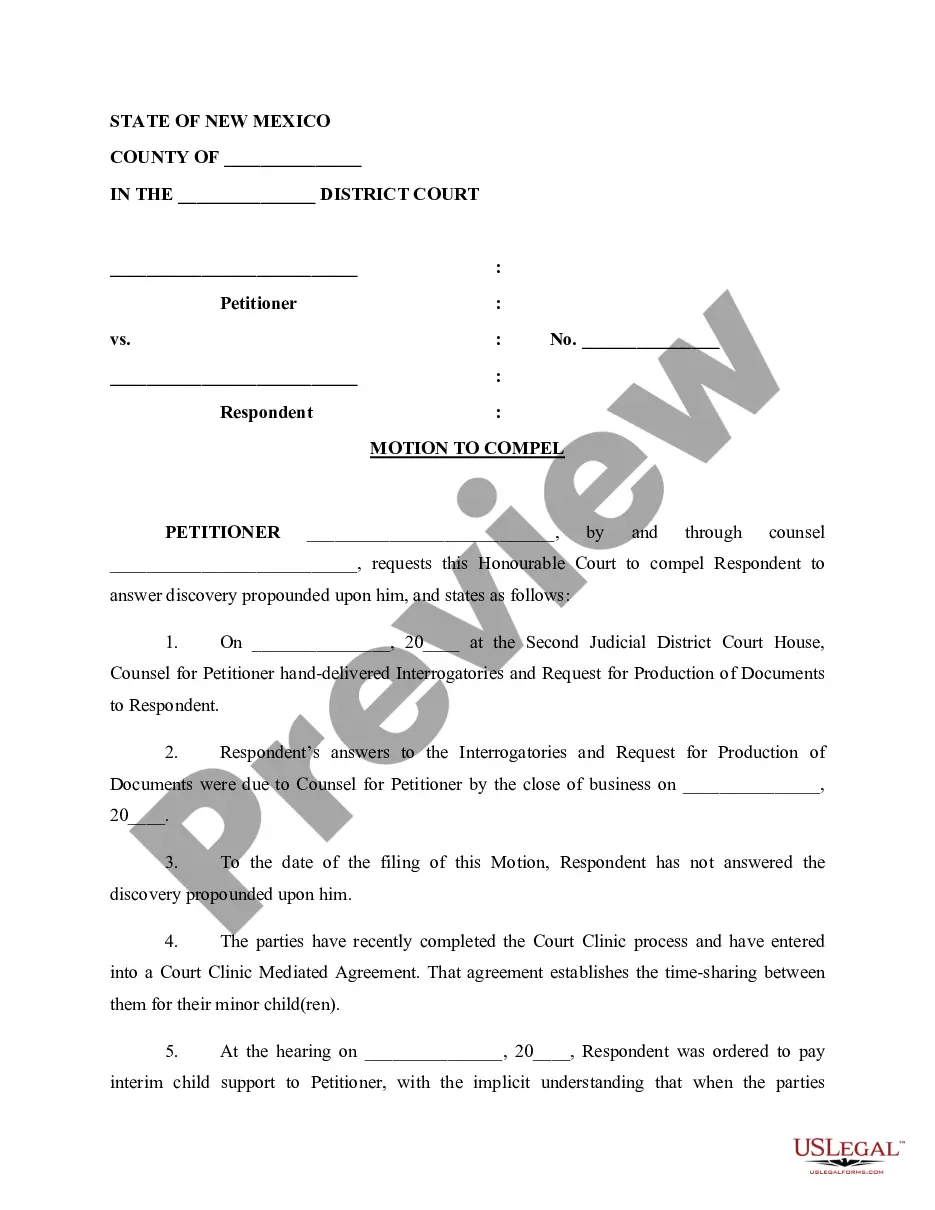
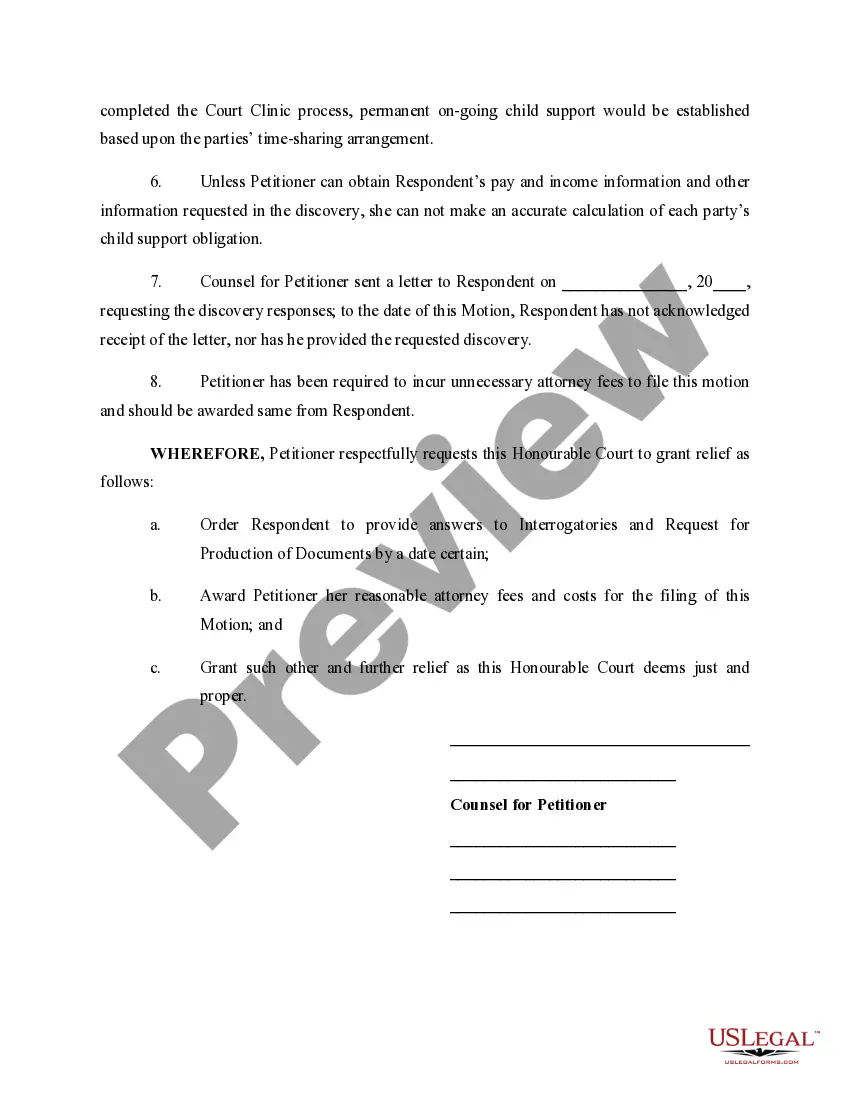
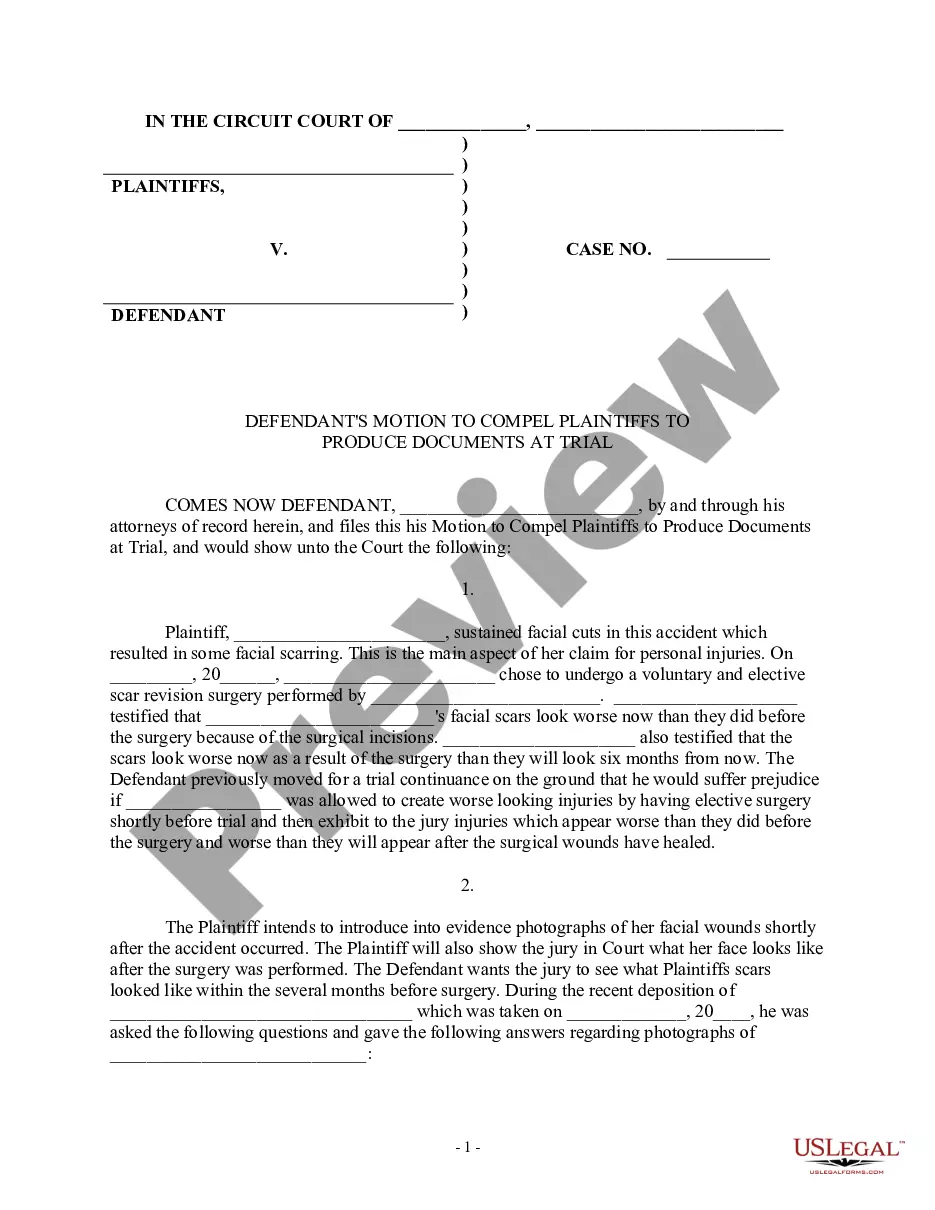
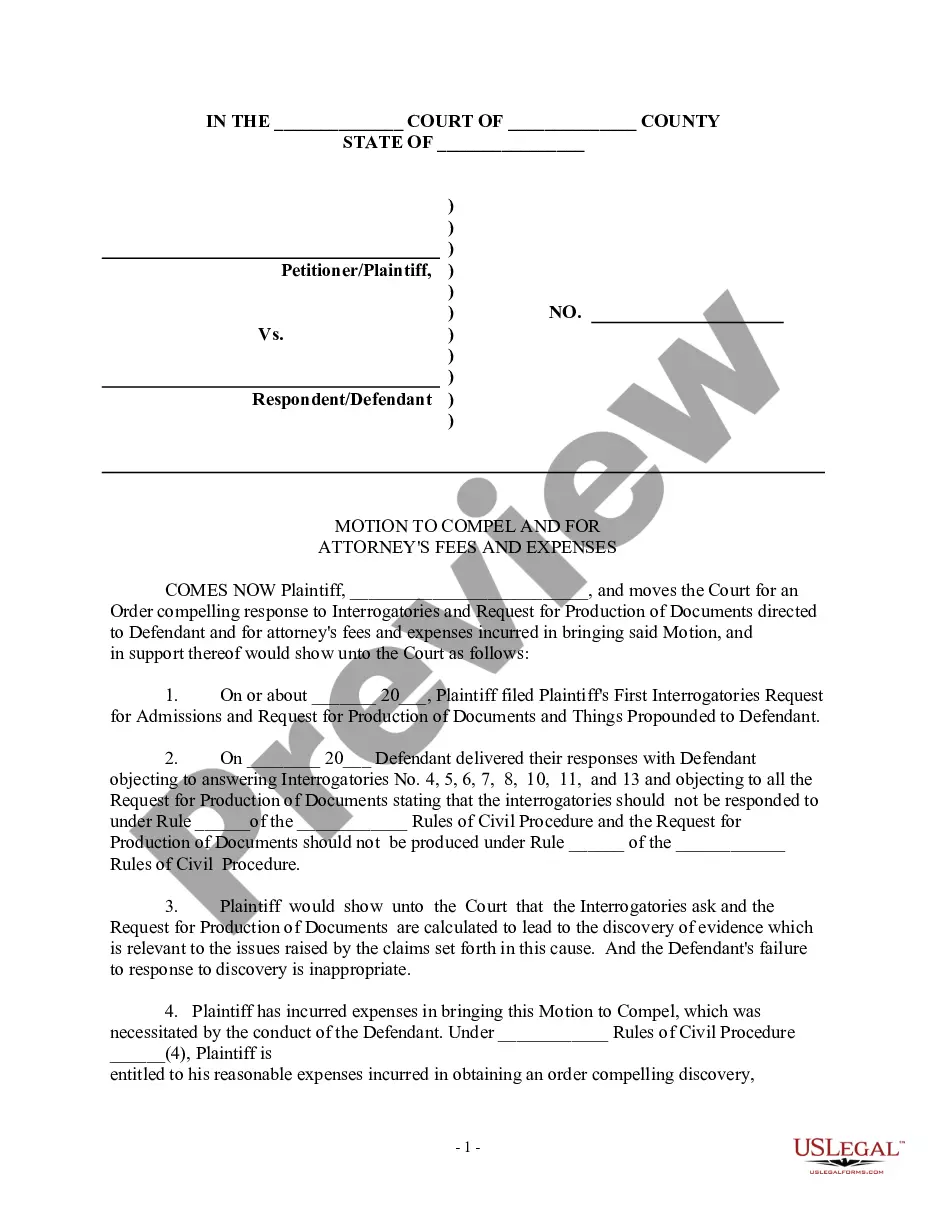
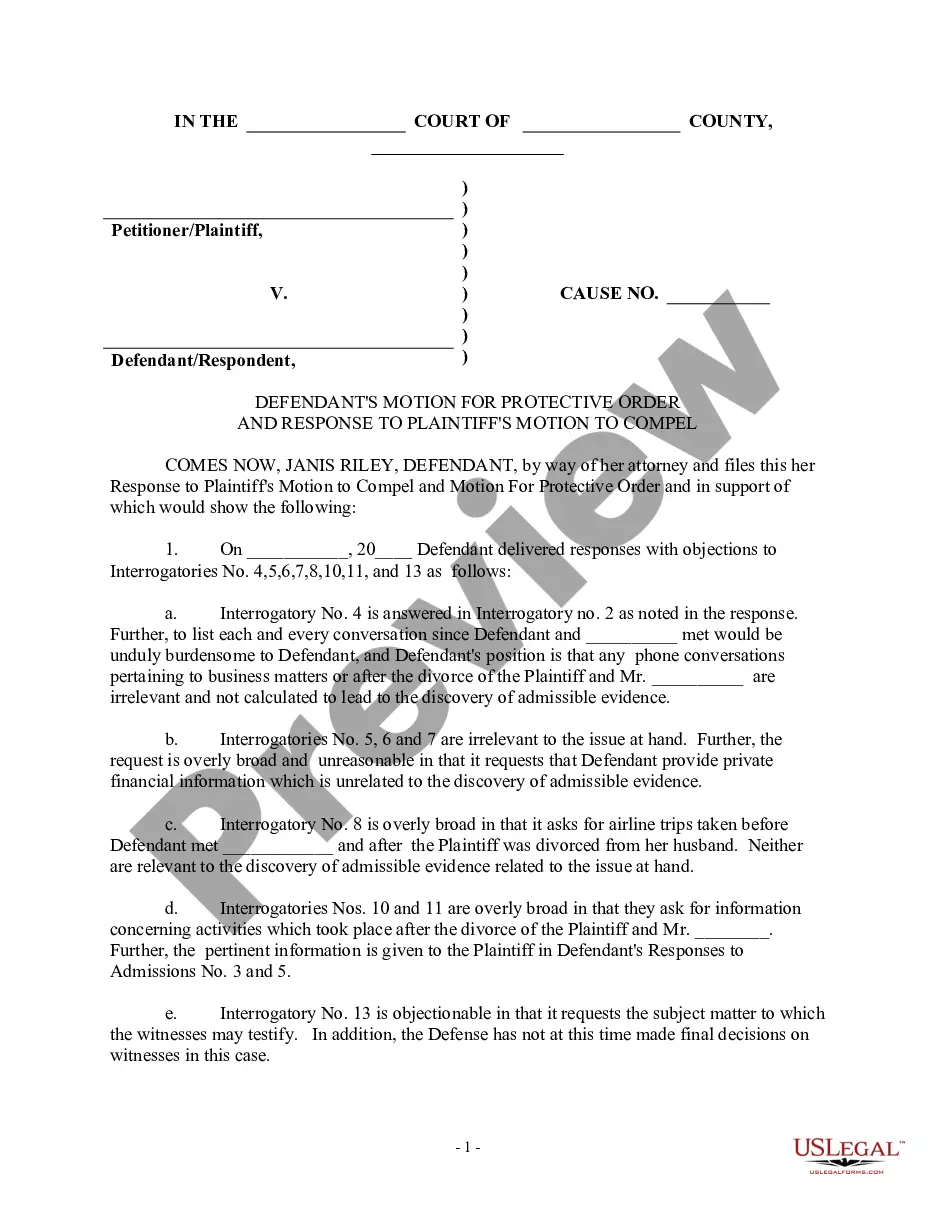
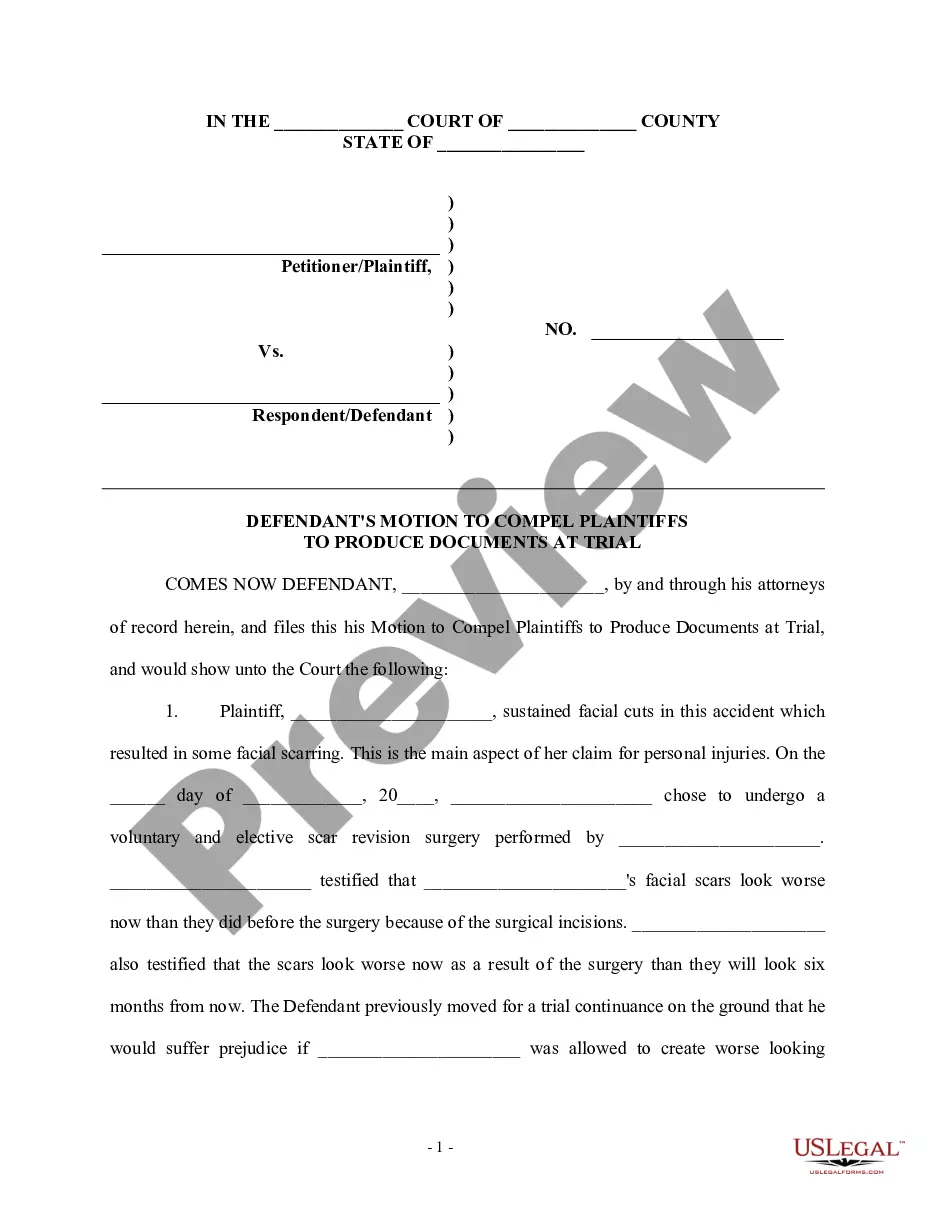
The Motion to Compel is a legal document filed by a petitioner to request the court to order the respondent to provide necessary responses to interrogatories and production requests. This form is essential in situations where the respondent has failed to respond to discovery requests, impacting the petitioner's ability to present a case effectively. Unlike general motions, this form specifically addresses the lack of compliance with discovery obligations in legal proceedings.
Form components explained
- Petitioner and respondent information: Identifies the parties involved in the case.
- Discovery requests: Details the interrogatories and production requests made to the respondent.
- Deadline for responses: States the due date for the respondent's answers.
- Motion statements: Explains the reasons for the motion and the necessity of responses.
- Requested relief: Clearly outlines what the petitioner is seeking from the court.


When this form is needed
This form is typically used when a party in a legal case has not responded to discovery requests within the set time frame. It is often applicable in family law cases, such as custody or child support matters, where obtaining financial information is crucial to determining support obligations. If you find yourself in a situation where your attempts to obtain necessary information have failed, this motion can prompt compliance and ensure a fair legal process.
Who should use this form
- Individuals involved in family law cases, such as child custody or support disputes.
- Parties who have submitted interrogatories or requests for document production and have not received any responses.
- Petitioners who need specific information to calculate child support obligations.
- Legal representatives acting on behalf of a petitioner seeking court intervention for compliance with discovery rules.
Completing this form step by step
- Identify the parties: Fill in the names of the petitioner and respondent at the top of the form.
- Enter the case details: Insert the court name, county, and case number in the appropriate sections.
- Detail the discovery requests: Clearly specify the interrogatories and production requests that have not been answered.
- Provide supporting statements: Explain the reasons for the motion and the importance of the requested information.
- Sign and date the form: Ensure that all signatures are completed where required and that it is dated correctly.
Does this document require notarization?
This form does not typically require notarization unless specified by local law. You should review any specific requirements related to your jurisdiction to ensure compliance.
Get your form ready online
Our built-in tools help you complete, sign, share, and store your documents in one place.
Make edits, fill in missing information, and update formatting in US Legal Forms—just like you would in MS Word.
Download a copy, print it, send it by email, or mail it via USPS—whatever works best for your next step.
Sign and collect signatures with our SignNow integration. Send to multiple recipients, set reminders, and more. Go Premium to unlock E-Sign.
If this form requires notarization, complete it online through a secure video call—no need to meet a notary in person or wait for an appointment.
We protect your documents and personal data by following strict security and privacy standards.

Make edits, fill in missing information, and update formatting in US Legal Forms—just like you would in MS Word.

Download a copy, print it, send it by email, or mail it via USPS—whatever works best for your next step.

Sign and collect signatures with our SignNow integration. Send to multiple recipients, set reminders, and more. Go Premium to unlock E-Sign.

If this form requires notarization, complete it online through a secure video call—no need to meet a notary in person or wait for an appointment.

We protect your documents and personal data by following strict security and privacy standards.
Common mistakes
- Failing to provide complete case information, which may delay processing.
- Not adhering to deadlines for submitting the motion.
- Omitting details about prior attempts to obtain responses.
- Neglecting to include a request for attorney fees when applicable.
Advantages of online completion
- Convenient access: Download and complete the form from anywhere at any time.
- Editable templates: Tailor the form to your specific legal needs with ease.
- Reliable resources: Legal forms are drafted by licensed attorneys, ensuring compliance with applicable laws.
Looking for another form?

Form popularity
FAQ
A motion to compel asks the court to order either the opposing party or a third party to take some action. This sort of motion most commonly deals with discovery disputes, when a party who has propounded discovery to either the opposing party or a third party believes that the discovery responses are insufficient.
If a motion to compel is disobeyed, it can lead to consequences such as: another, more serious court order; fines or fees; other different procedural rulings that may affect the outcome of a case.
Consequences of Refusing to Provide Evidence Requested in a Motion to Compel. If the court issues an order that compels your spouse to produce the discovery you are seeking but your spouse still refuses to provide evidence, the judge may impose further sanctions such as: A verdict in your favor.
21 provides that misjoinder of parties is not ground for dismissal of an action, and that parties may be dropped or added by court order on motion of any party or of the court's own initiative at any stage in the action and on such terms as are just.
The motion to compel further responses has to be brought within 45 days of service of the response. (C.C.P.
Hearing on Motion to Compel When a motion to compel is filed with the court, a hearing is scheduled. At the hearing, the party that filed the motion will need to tell the judge why the other party should be compelled to do something.Once that happens, that party will not be able to use the documents at trial.
A motion to compel asks the court to enforce a request for information relevant to a case.The requesting party files a motion to compel discovery responses if the opposing party continues to deny the discovery request.
Motion for Sanctions If the court issues an order compelling discovery, and the party fails to comply with that order, then the court may sanction the party in numerous ways such as refusing to let in the party's evidence at trial, dismissing their lawsuit or striking their defense to a lawsuit, and imposing