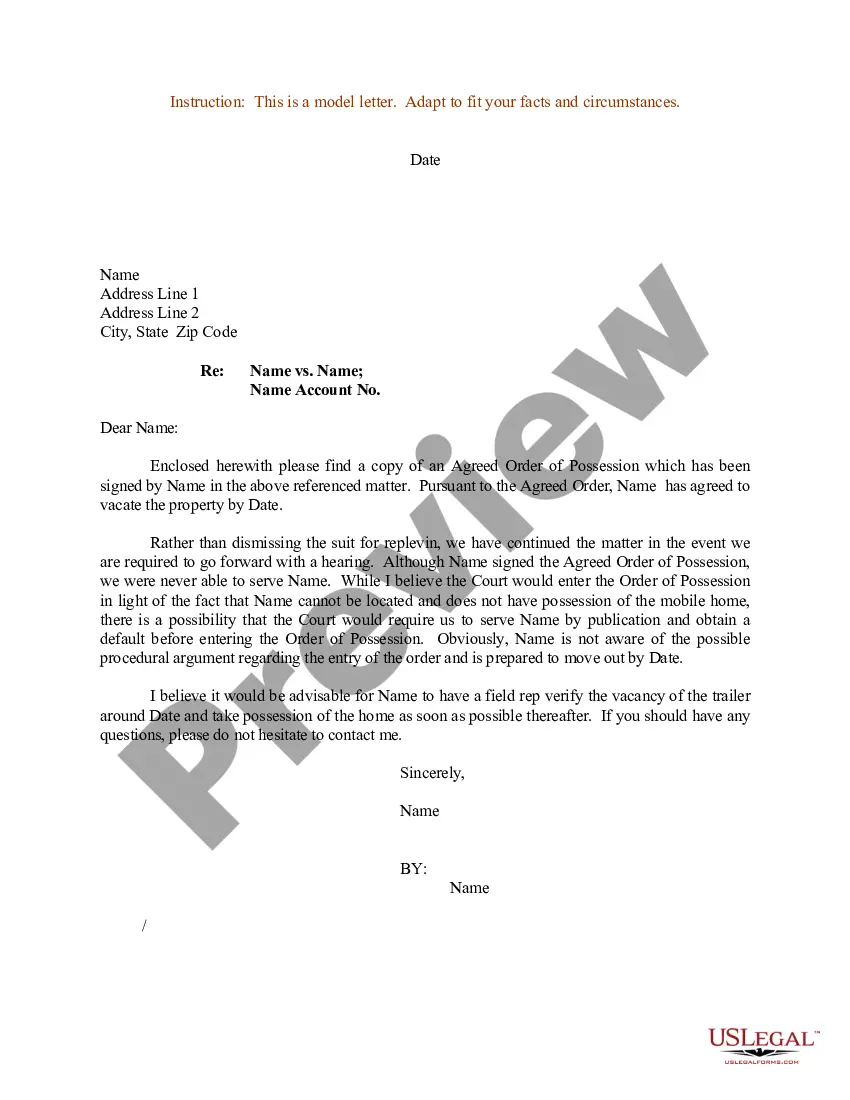
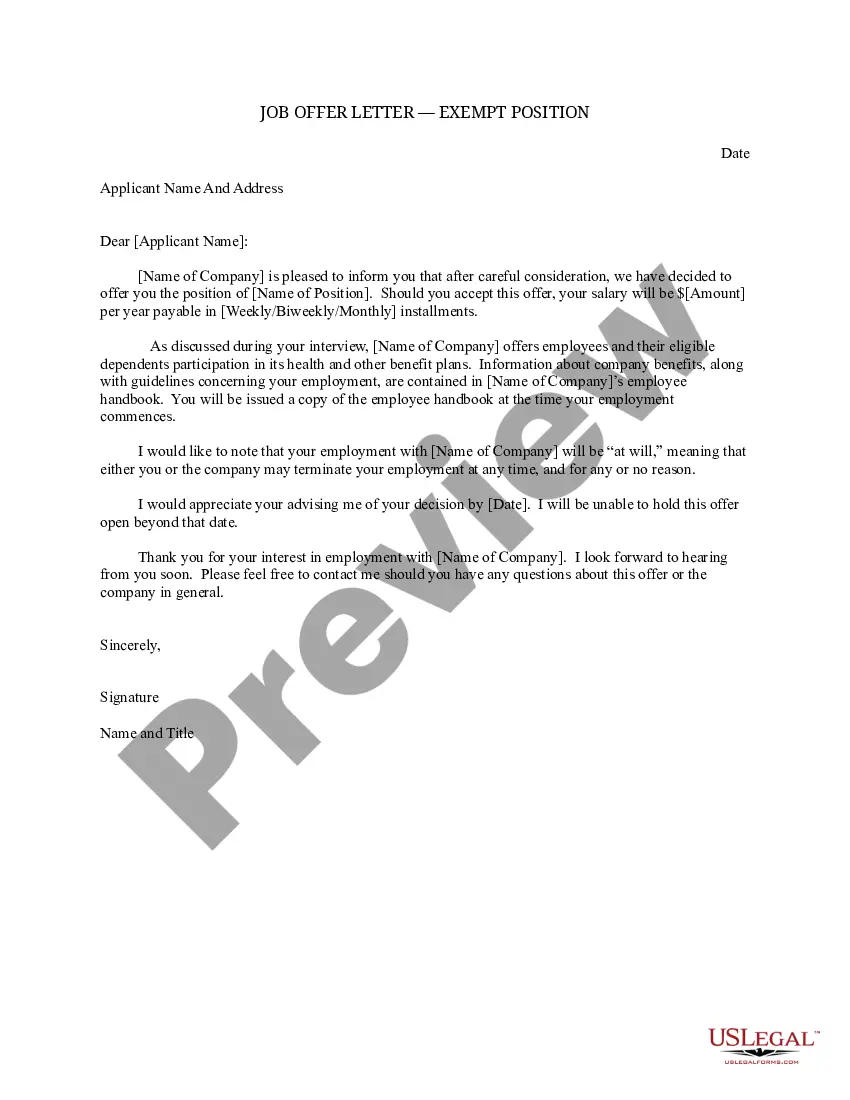
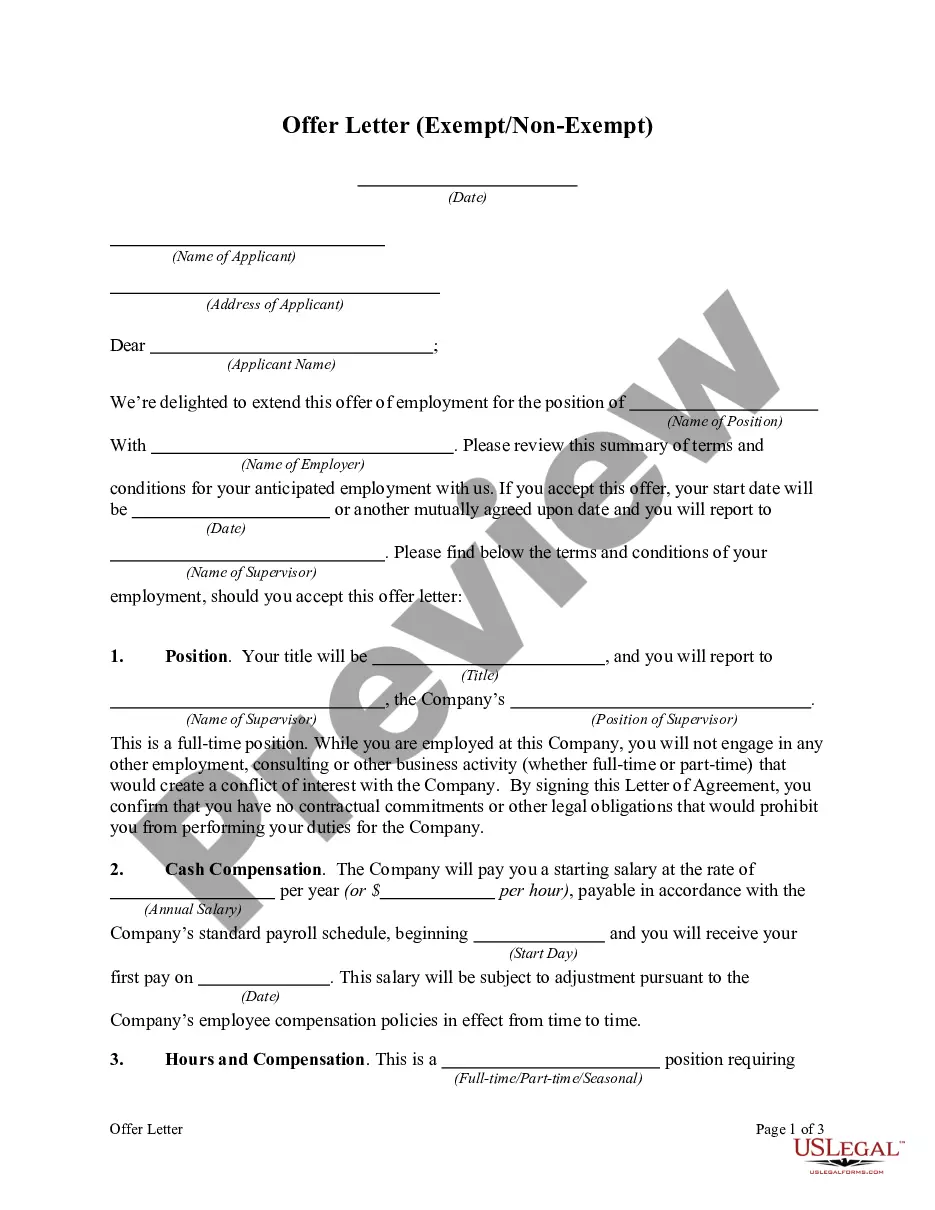
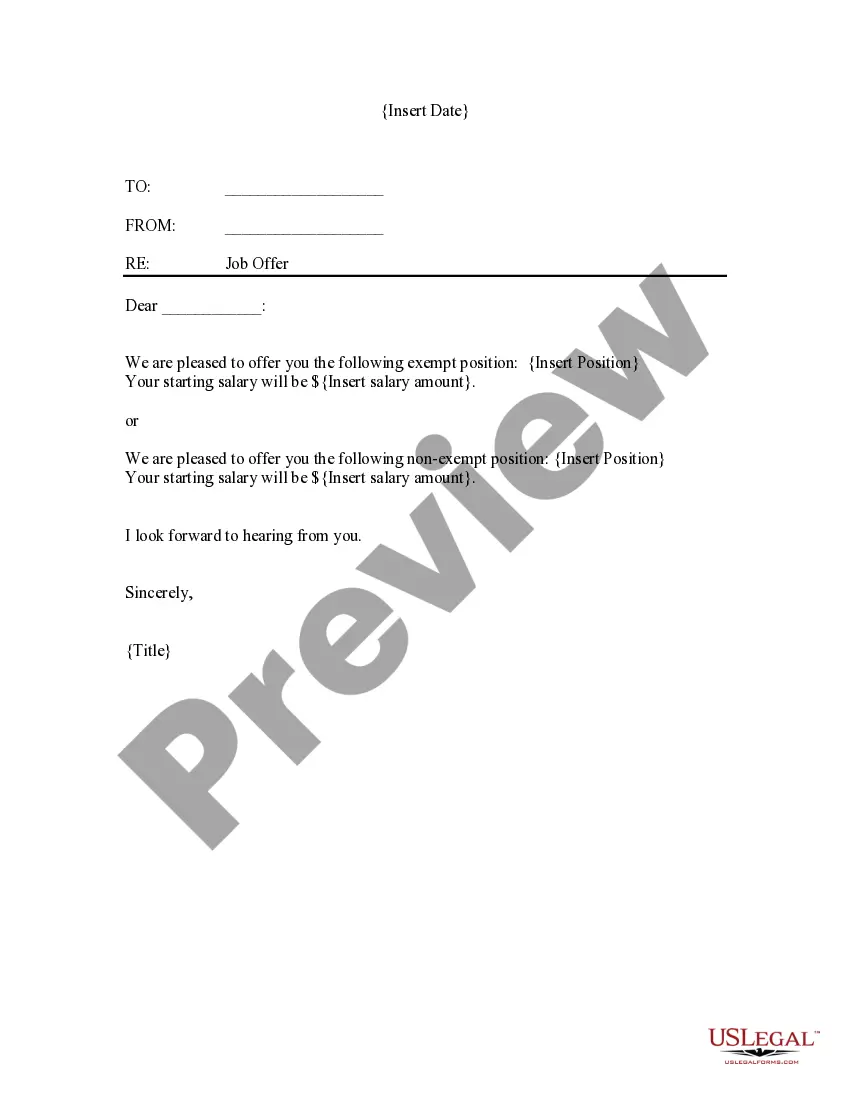
New Jersey Job Offer Letter - Exempt Position - Detailed
Description
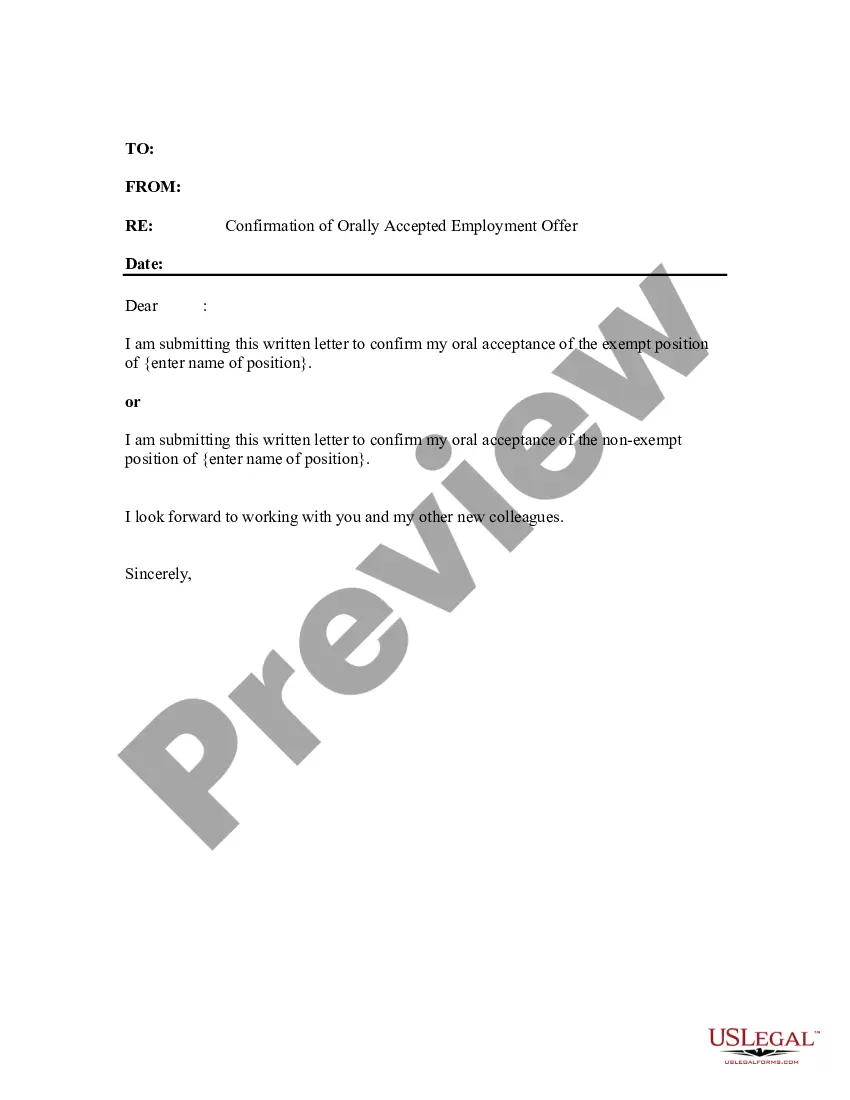
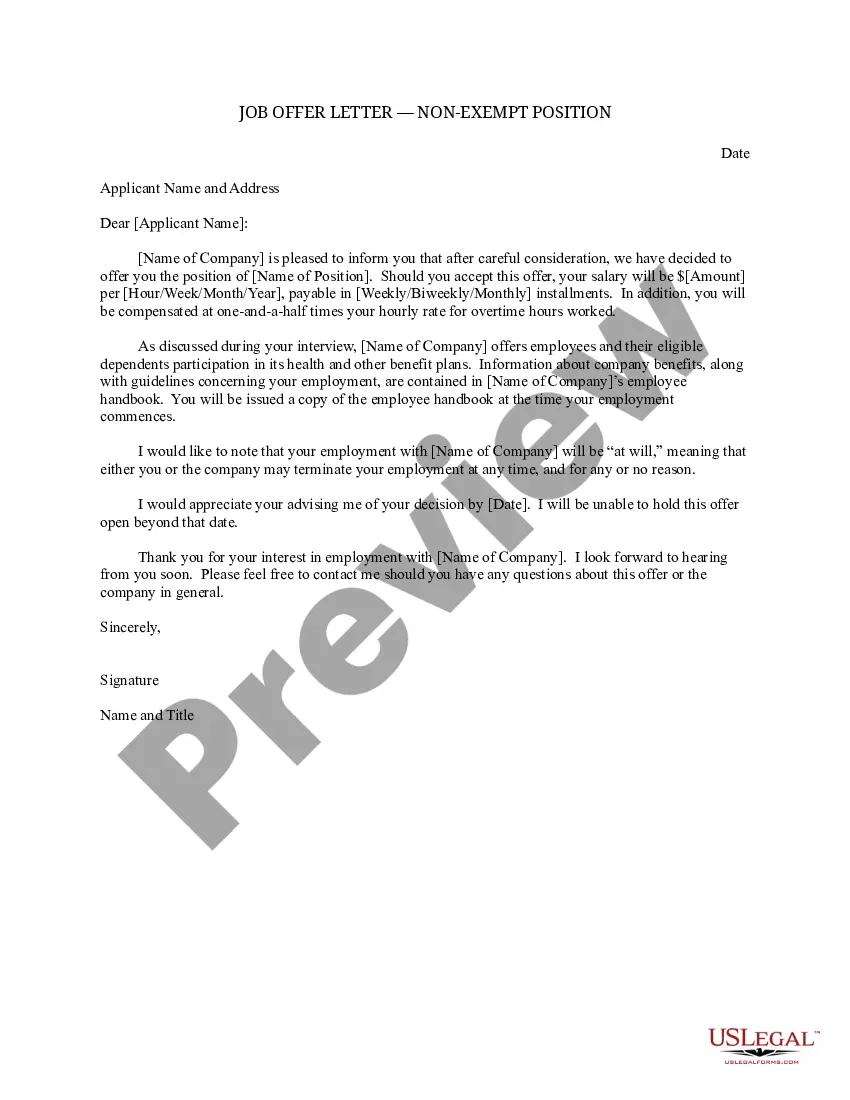
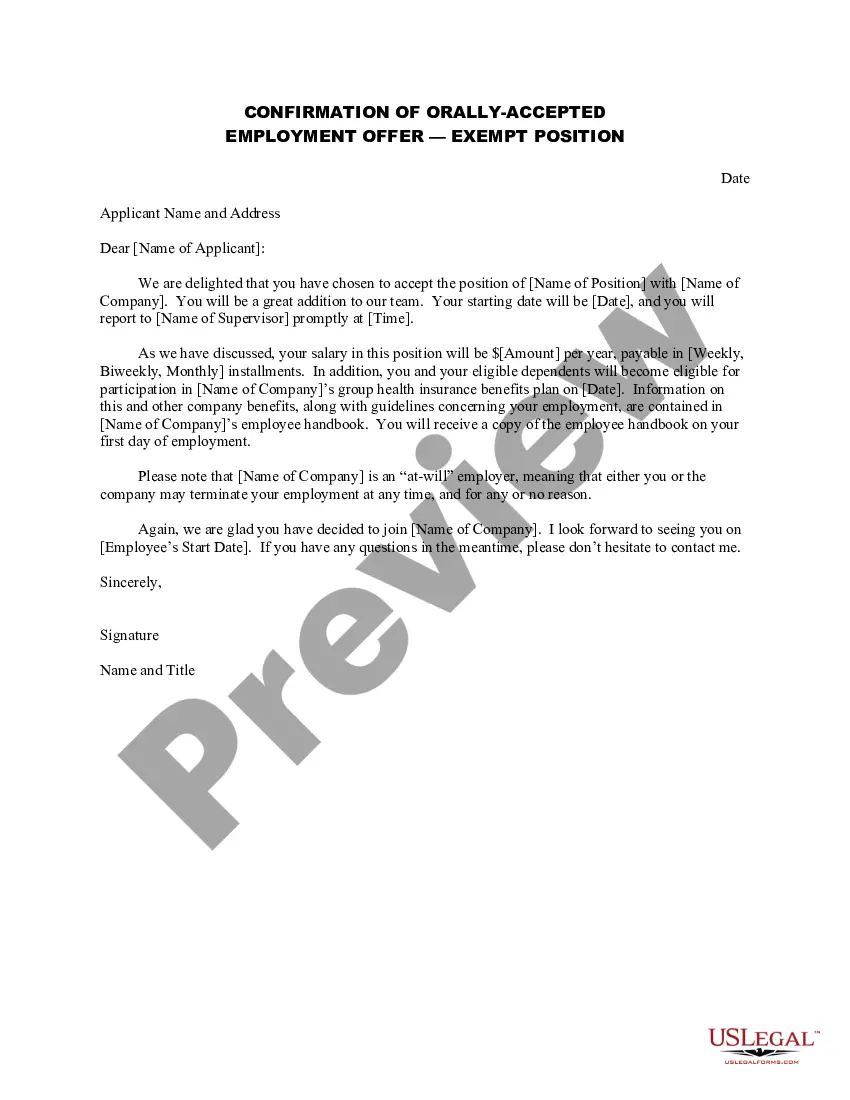
How to fill out Job Offer Letter - Exempt Position - Detailed?
US Legal Forms - one of the largest collections of legal documents in the United States - offers a vast selection of legal document templates that you can download or print.
By using the website, you can access thousands of templates for business and personal use, organized by categories, states, or keywords. You can find the latest versions of documents like the New Jersey Job Offer Letter - Exempt Position - Detailed in just minutes.
If you already have an account, Log In to download the New Jersey Job Offer Letter - Exempt Position - Detailed from the US Legal Forms library. The Download button will appear on every document you view. You can find all previously downloaded forms in the My documents section of your account.
Process the payment. Use a credit card or PayPal account to complete the transaction.
Choose the format and download the document onto your device. Edit. Fill out, modify, print, and sign the downloaded New Jersey Job Offer Letter - Exempt Position - Detailed. Each template you save in your account has no expiration date and belongs to you indefinitely. Therefore, if you wish to download or print another copy, simply go to the My documents section and click on the document you need. Access the New Jersey Job Offer Letter - Exempt Position - Detailed through US Legal Forms, the most comprehensive library of legal document templates. Utilize thousands of professional and state-specific templates that cater to your business or personal requirements.
- If you are using US Legal Forms for the first time, follow these simple steps to get started.
- Ensure you have selected the correct form for your city/state. Click the Preview button to review the content of the form.
- Read the form description to confirm that you have chosen the right document.
- If the form does not meet your requirements, use the Search bar at the top of the screen to find one that does.
- If you are satisfied with the selected form, confirm your choice by clicking the Get now button.
- Then, select your preferred payment plan and provide your details to register for an account.
Form popularity
FAQ
In New Jersey, exempt salaried employees must meet specific criteria set by both federal and state laws. Generally, these employees should perform primarily executive, administrative, or professional duties. Additionally, they must earn a minimum salary threshold, which is subject to change. For creating a compliant New Jersey Job Offer Letter - Exempt Position - Detailed, it is essential to clearly outline the employee's duties and salary to ensure adherence to these regulations.
Likewise, if it includes any guarantees, limits the employer's right to fire you, or promises you anything else, those promises may be legally binding.
Can you back out of the job offer? Yes. Technically, anyone can turn down a job offer, back out of a job already started, or renege on an acceptance at any point. Most states operate with what is called at will employment. This means the employee and the employer are not in a binding contract.
With that, every job offer letter should include the following terms:A job title and description.Important dates.Compensation, benefits, and terms.Company policies and culture.A statement of at-will employment.An employee confidentiality agreement and noncompete clause.A list of contingencies.30-Aug-2021
Yes, you can sue your employer for false promises. Misleading statements can land an employer in court for negligent misrepresentation, fraudulent inducement, or other legal issues.
Under federal and New Jersey law, an employee who is classified as exempt is not entitled to be paid overtime, at a rate of one and one-half times his or her normal rate of pay, for hours worked in excess of forty in a workweek.
In general, offer letters are less formal than employment contracts, which typically set terms and conditions of employment that are legally binding. It's also vital for employers to understand that they aren't required by federal law to send an offer letter to new hires.
Generally, this means that when an employer makes an offer of at-will employment, the employer is free to rescind that job offer, for any reason or no reason at all, at any time, including the period after the potential employee has accepted the offer but before he or she begins work, without legal consequence.
Contrary to what most people think, a signed offer letter, except in very rare instances, is not a legally binding implied contract. Candidates often think that because they have signed and accepted an offer letter, they have some sort of legal right to the job.
Unfortunately, your boss is correct. An written offer of employment does not constitue a legal contrat unless it guaranteed your employment in some way (i.e. your compensation, etc.) for a specified period of time.