New Jersey Confidentiality Agreement for Invention
Description
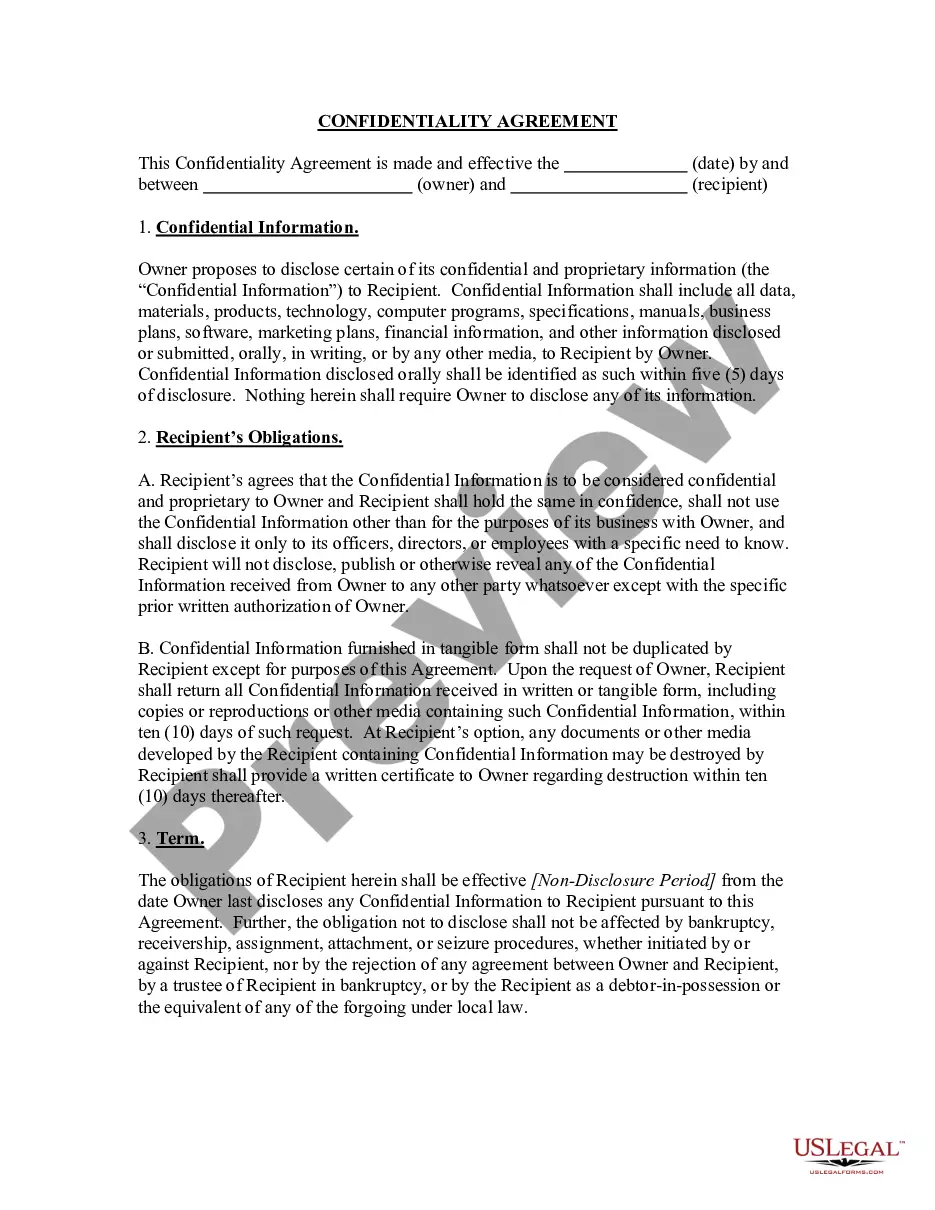
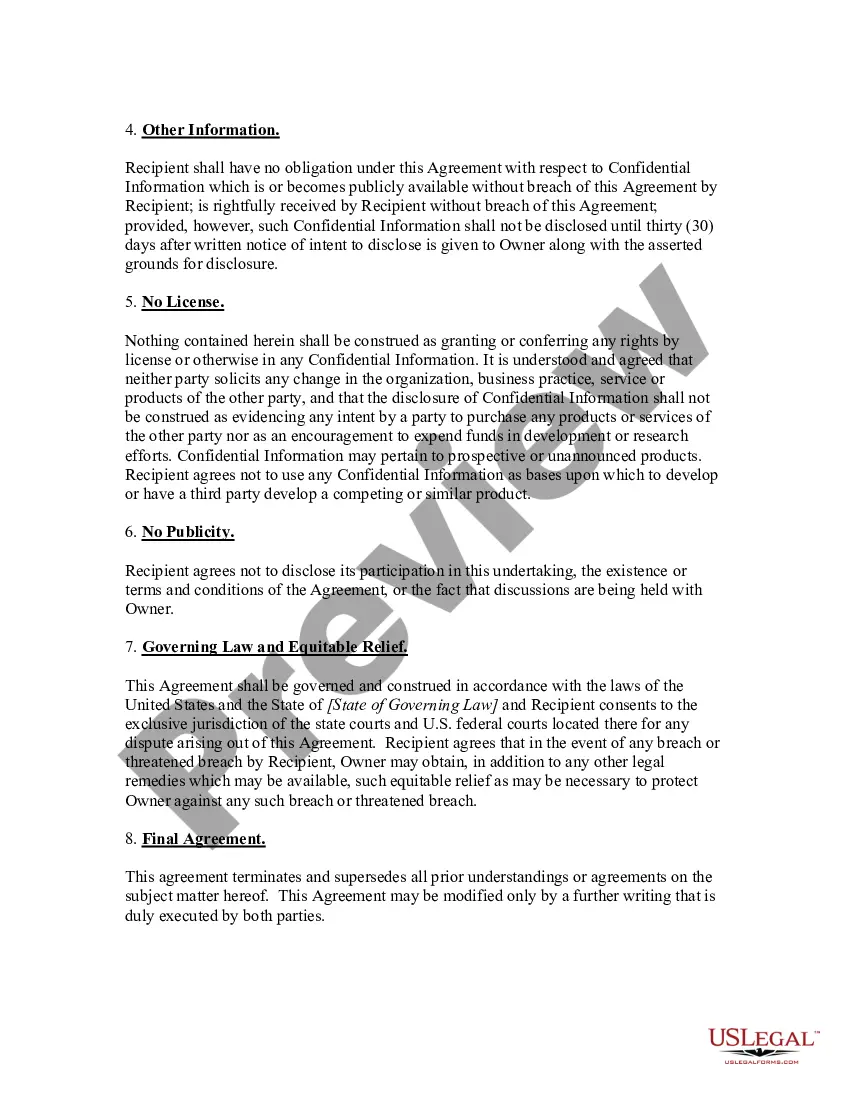
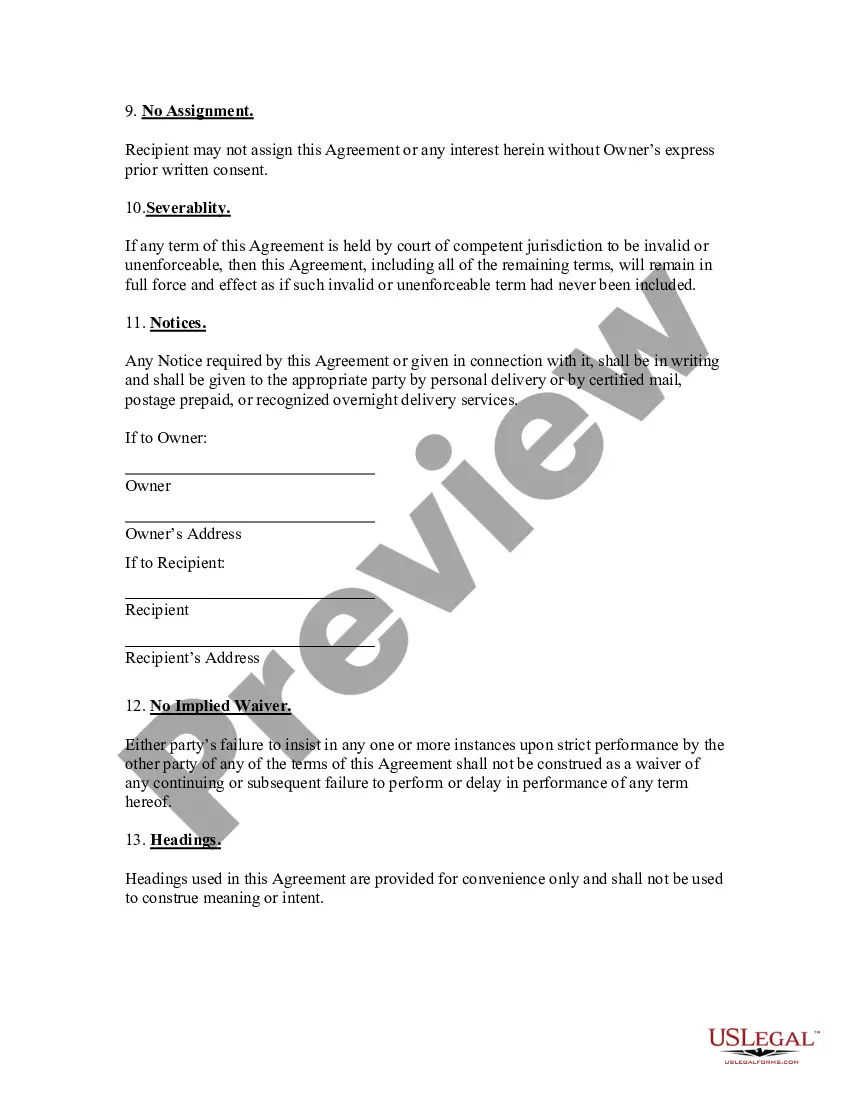
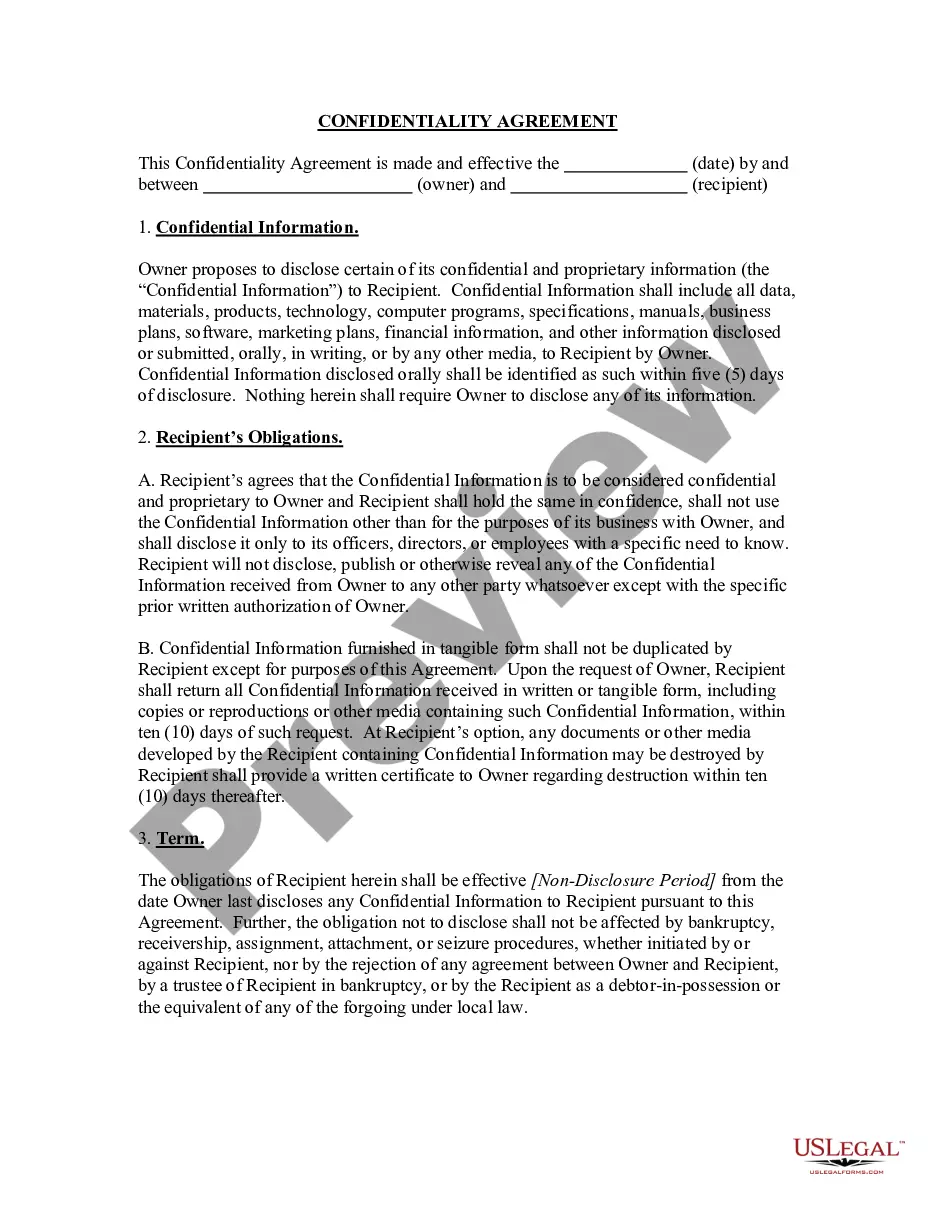
How to fill out Confidentiality Agreement For Invention?
US Legal Forms - one of the largest collections of official templates in the USA - offers a vast selection of legal document templates that you can download or print.
By using the website, you can obtain thousands of templates for business and personal purposes, categorized by type, state, or keywords. You can find the most recent versions of templates like the New Jersey Confidentiality Agreement for Invention in just moments.
If you already possess an account, Log In and retrieve the New Jersey Confidentiality Agreement for Invention from the US Legal Forms repository. The Download button will be visible on each form you view. You can access all previously downloaded templates from the My documents section of your profile.
Process the payment. Use your credit card or PayPal account to complete the transaction.
Select the format and download the form to your device. Make adjustments. Fill out, modify, print, and sign the downloaded New Jersey Confidentiality Agreement for Invention. Each template added to your account has no expiration date and belongs to you indefinitely. Therefore, if you wish to download or print another copy, simply navigate to the My documents section and click on the form you need. Access the New Jersey Confidentiality Agreement for Invention with US Legal Forms, the most comprehensive collection of legal document templates. Utilize thousands of expert and state-specific templates that fulfill your business or personal needs and requirements.
- If you're using US Legal Forms for the first time, here are straightforward steps to get started.
- Ensure you have selected the appropriate form for your area/state.
- Click the Review button to examine the form's details.
- Read the form description to confirm that you have chosen the right form.
- If the form does not meet your requirements, use the Search box at the top of the page to find one that does.
- Once you are satisfied with the form, confirm your selection by clicking the Get now button.
- Then, choose the pricing plan that suits you and provide your details to create an account.
Form popularity
FAQ
Excluded Developments means any Development that meets the following requirements: an invention for which no equipment, supplies, facility, or Confidential Information of the employer was used and which was developed entirely on the employee's own time, unless the invention relates (A) directly to the business of the
Excluded Invention means any Invention listed on Exhibit A of this Agreement that existed prior to Employee's employment by the Company and would be a Subject Invention if such Invention was or is made during Employee's employment by the Company.
New Jersey Bans Confidentiality Clauses in Employment Agreements and Settlements AND Restricts Waiver of Discrimination Law. In what has become a regular pattern of passing sweeping new employment laws in New Jersey, on March 18, 2019, Governor Murphy signed into law Senate Bill 121.
If any of the confidential information is revealed to another individual or company by a party to the confidentiality agreement, the injured party can claim a breach of contract, and seek an injunction from the court to restrain the individual or company from further disclosing or using the confidential information and
Non-disclosure agreements, or NDAs as they are sometimes called, are legally enforceable agreements between parties that are used to ensure that certain information will remain confidential.
New Jersey's law states that NDAs with the details relating to a discrimination, retaliation, or harassment claim are unenforceable as against public policy.
New Jersey does not have a statute governing restrictive covenants, but the courts will enforce these covenants if they are reasonable in duration, territory and scope. The test for determining whether a covenant is reasonable is whether the covenant: Protects the employer's legitimate business interest.
Typically, a legal professional writing the NDA will complete these steps:Step 1 - Describe the scope. Which information is considered confidential?Step 2 - Detail party obligations.Step 3 - Note potential exclusions.Step 4 - Set the term.Step 5 - Spell out consequences.
An invention assignment agreement is a contract in which an employee or independent contractor assigns intellectual property rights for their services to the company. These agreements typically appear in other employment documents such as confidentiality agreements or an independent contractor agreement.
Also known as Proprietary Information and Inventions Assignment Agreements (or PIIAAs), Confidential Information and Inventions Assignment Agreements ensure that intellectual property and other proprietary rights created by employees during the course of their employment are assigned to the employer.