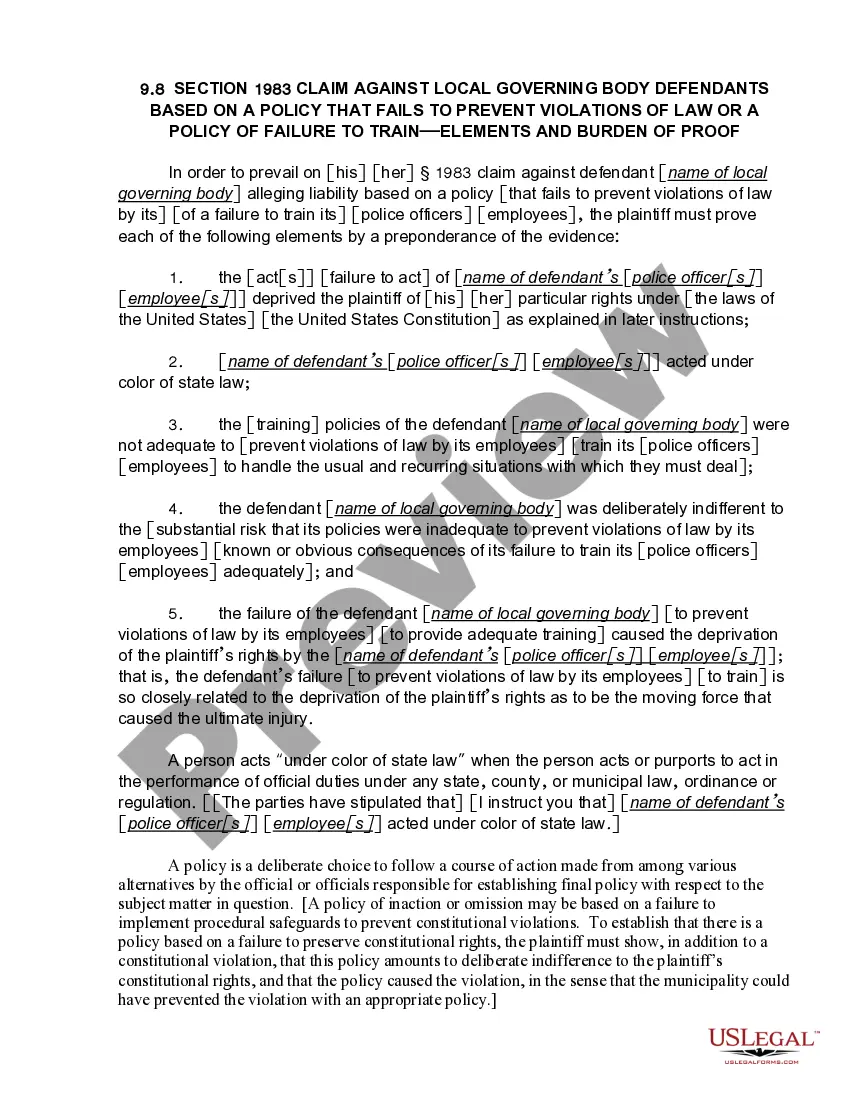
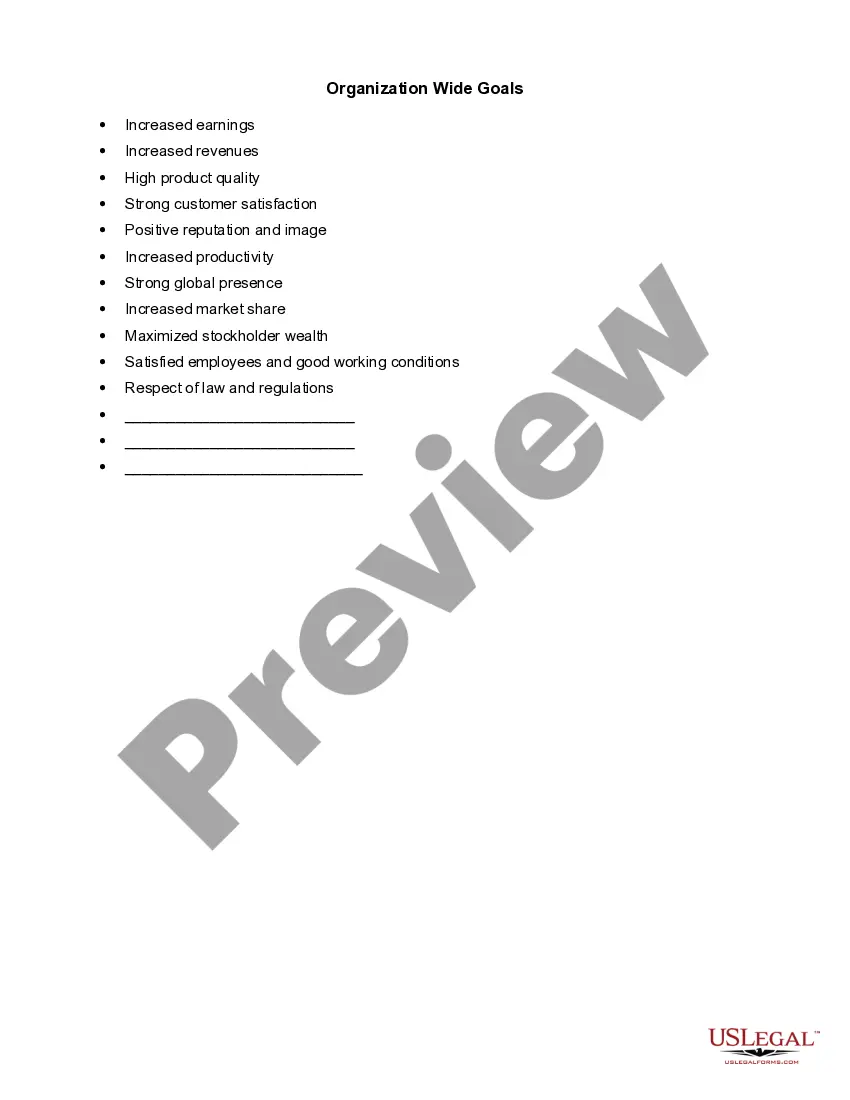
New Hampshire Organization Wide Goals
Description
Get your form ready online
Our built-in tools help you complete, sign, share, and store your documents in one place.
Make edits, fill in missing information, and update formatting in US Legal Forms—just like you would in MS Word.
Download a copy, print it, send it by email, or mail it via USPS—whatever works best for your next step.
Sign and collect signatures with our SignNow integration. Send to multiple recipients, set reminders, and more. Go Premium to unlock E-Sign.
If this form requires notarization, complete it online through a secure video call—no need to meet a notary in person or wait for an appointment.
We protect your documents and personal data by following strict security and privacy standards.

Make edits, fill in missing information, and update formatting in US Legal Forms—just like you would in MS Word.

Download a copy, print it, send it by email, or mail it via USPS—whatever works best for your next step.

Sign and collect signatures with our SignNow integration. Send to multiple recipients, set reminders, and more. Go Premium to unlock E-Sign.

If this form requires notarization, complete it online through a secure video call—no need to meet a notary in person or wait for an appointment.

We protect your documents and personal data by following strict security and privacy standards.
Looking for another form?
How to fill out Organization Wide Goals?
Locating the appropriate legal document template can be challenging.
Indeed, there are numerous templates available online, but how can you identify the specific version you require.
Utilize the US Legal Forms website.
If you are a new user of US Legal Forms, here are simple steps you should follow.
- The service offers a vast array of templates, including the New Hampshire Organization Wide Goals, suitable for both business and personal purposes.
- All forms are reviewed by professionals and comply with federal and state regulations.
- If you are already registered, Log In to your account and click on the Download button to retrieve the New Hampshire Organization Wide Goals.
- Use your account to review the legal forms you have previously purchased.
- Navigate to the My documents section of your account and download another copy of the documents you require.
Form popularity
FAQ
Writing Your Individual Development PlanGoal Description. Your statement of what you want to be able to do differently as a result of development.Action Steps. The activities that will help you reach your goal through practice or education.Measurable Definition of Success.Resources Needed.Target Date.
Long-term plans include the overall goals of the company set four or five years in the future and usually are based on reaching the medium-term targets. Planning in this way helps you complete short-term tasks while keeping longer-term goals in mind.
You can use the following individual development plan example to help you create and expand your own employee development plan templates:Employee name:Position, function, location and title:Date:Development focus area:List professional goals and aspirations:List strengths and talents:List key development needs:More items...
In terms of your Individual Development Plan, there are fundamentally three types of goals: Develop yourself in a new role you recently transitioned into (Learn the Ropes) Master a role you currently have (Become an Expert) Prepare for a future role (Explore Possibilities)
Examples of professional development goalsImprove your professional and networking relationships. Improve your time management skills and productivity in the workplace. Obtain a new certification or degree. Grow your professional network by attending more networking events.
10 examples of professional development goalsDevelop a new skill set.Develop your human skills.Take up leadership responsibilities.Expand your professional network.Level-up your credentials.Consume media in your field.Find other ways to deepen job satisfaction.Take a relevant course.More items...?
An individual development plan is one of the tools employers can use to help employees improve their job performance and achieve their career goals with external encouragement.
Writing Your Individual Development PlanGoal Description. Your statement of what you want to be able to do differently as a result of development.Action Steps. The activities that will help you reach your goal through practice or education.Measurable Definition of Success.Resources Needed.Target Date.
Developing Your IDPStep 1: Explicitly define your career goals.Step 2: Identify necessary skills and knowledge.Step 3: Assess skills and knowledge.Step 4: Write professional development goals.Step 5: Track your development and set new goals.
Developing Your IDPStep 1: Explicitly define your career goals.Step 2: Identify necessary skills and knowledge.Step 3: Assess skills and knowledge.Step 4: Write professional development goals.Step 5: Track your development and set new goals.