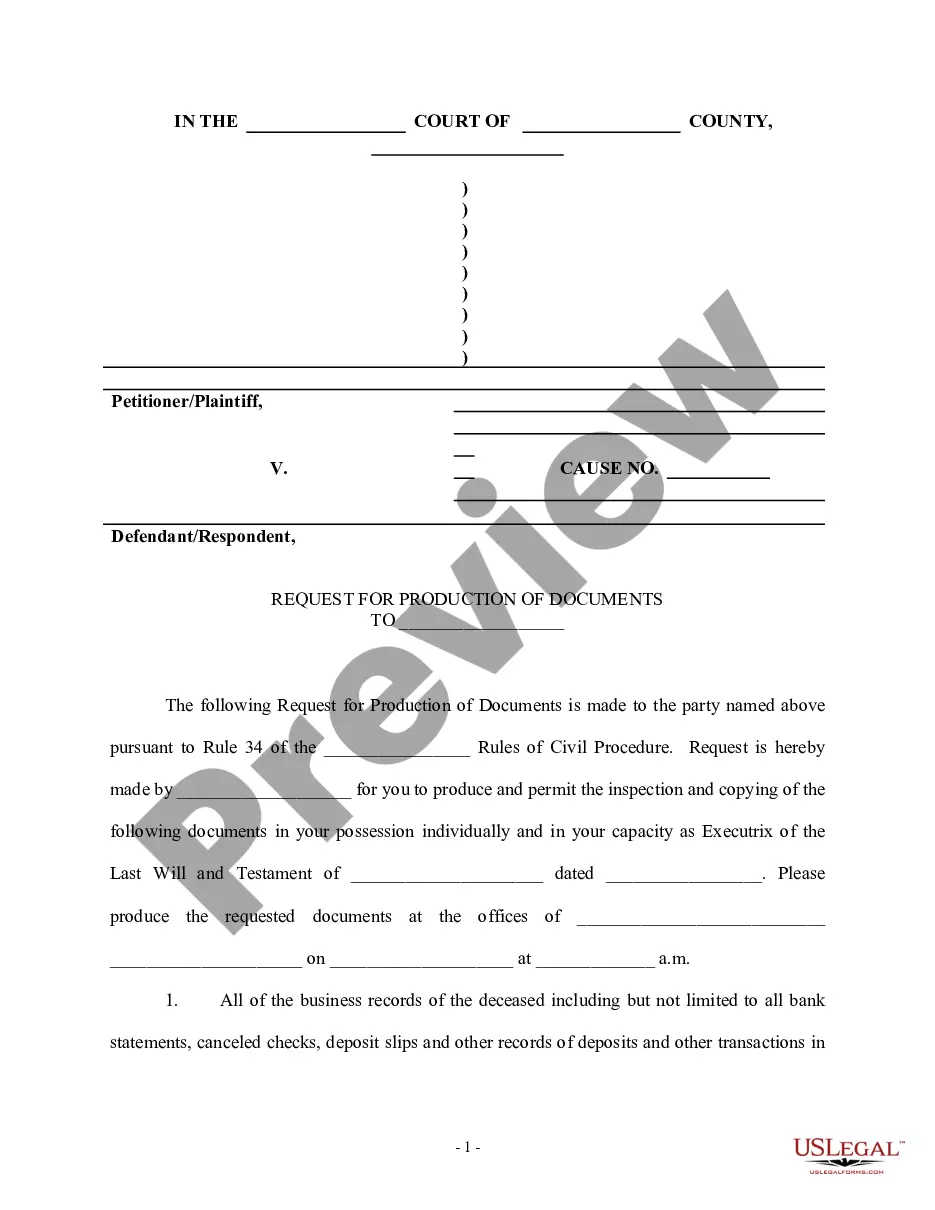
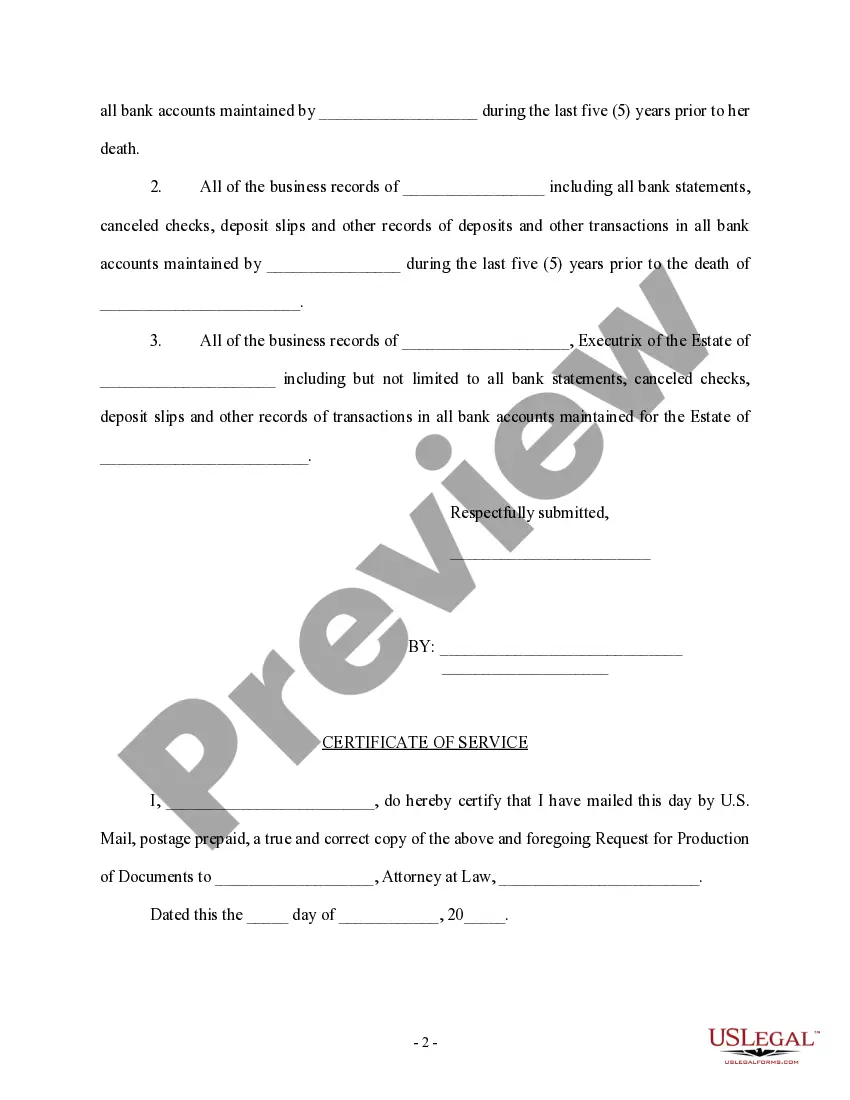
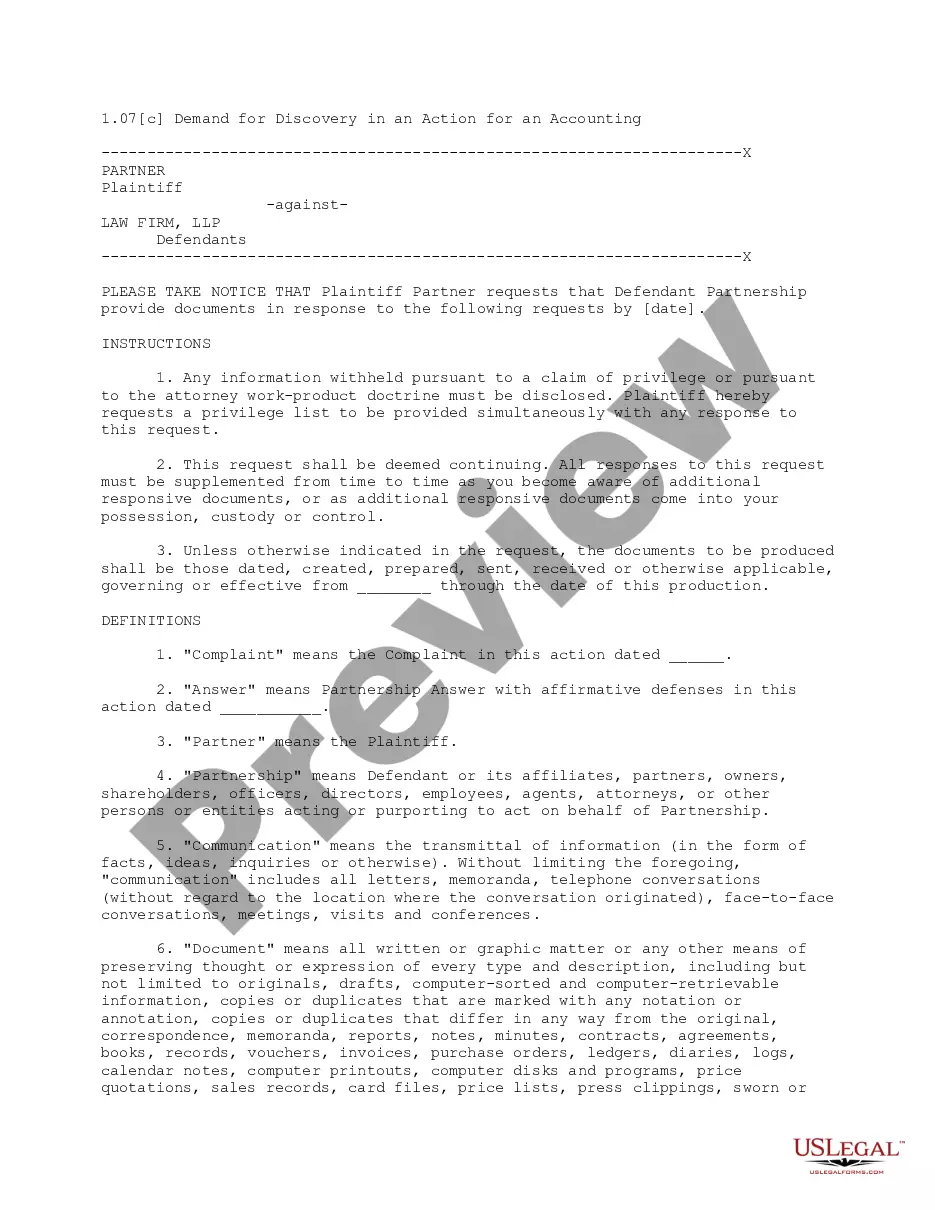
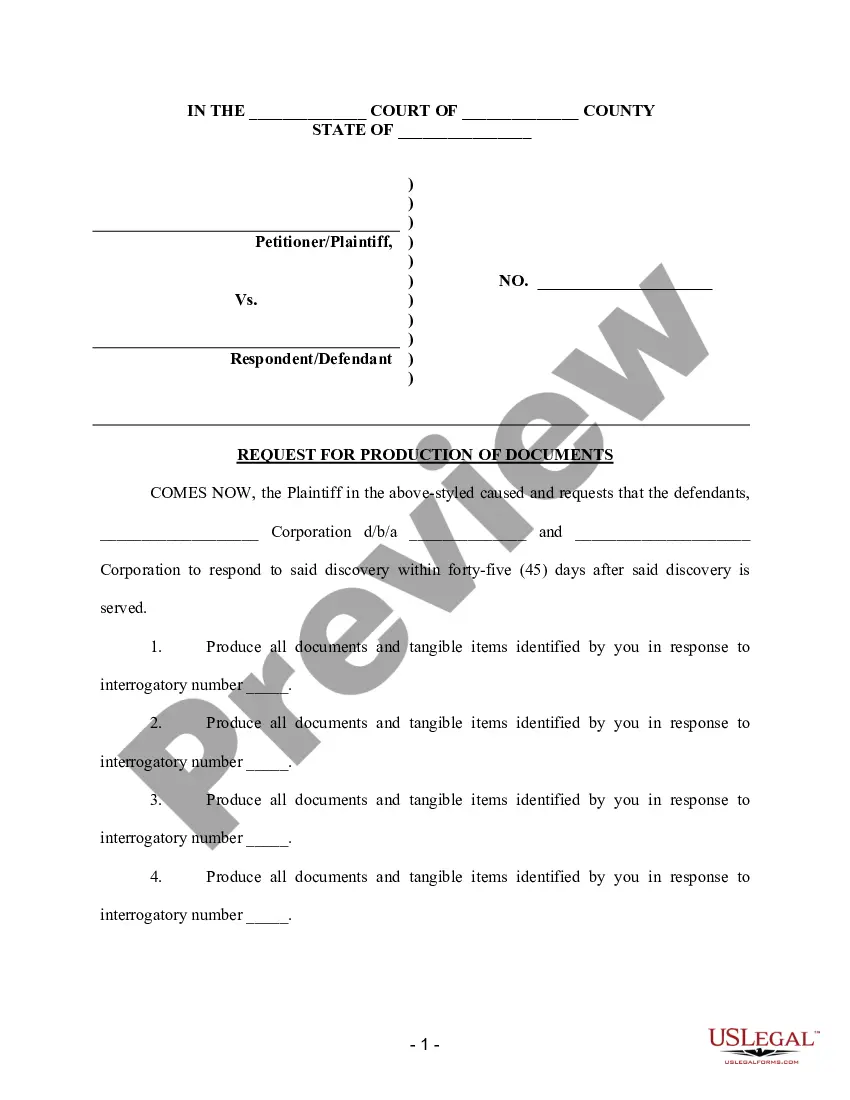
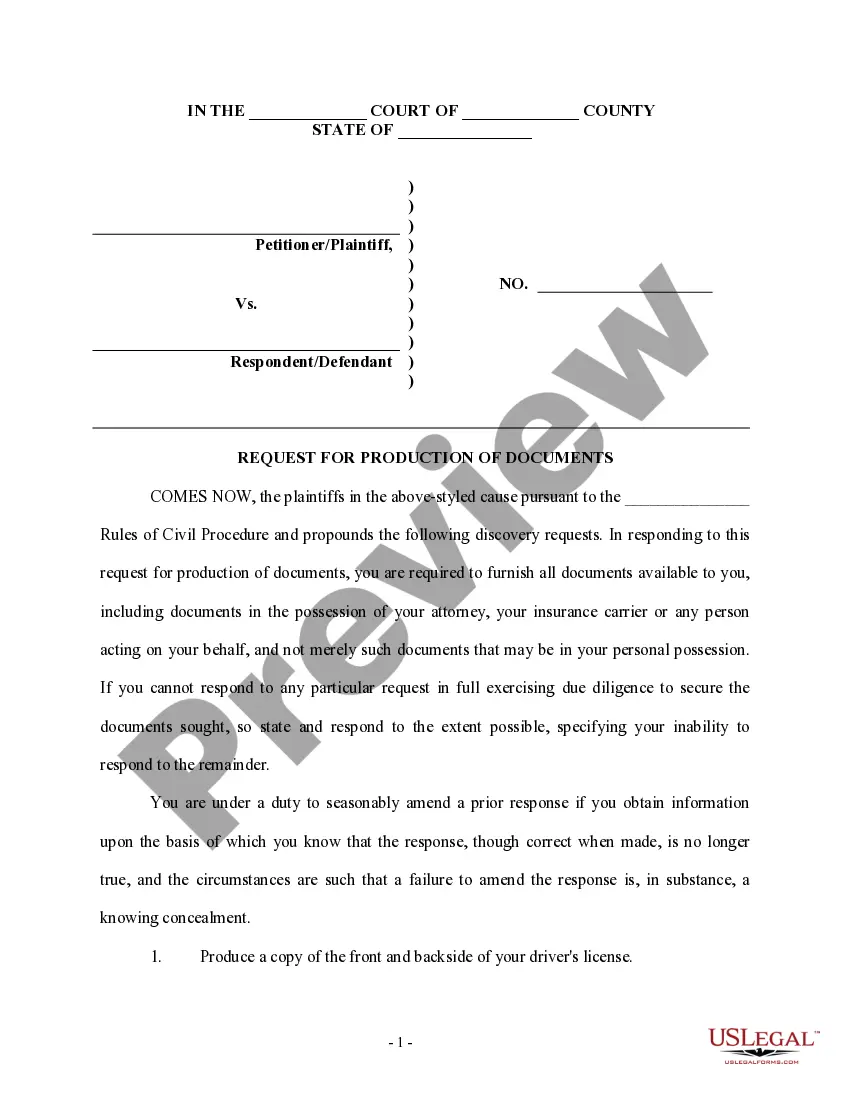
New Hampshire Request for Production of Documents
Description

Get your form ready online
Our built-in tools help you complete, sign, share, and store your documents in one place.
Make edits, fill in missing information, and update formatting in US Legal Forms—just like you would in MS Word.
Download a copy, print it, send it by email, or mail it via USPS—whatever works best for your next step.
Sign and collect signatures with our SignNow integration. Send to multiple recipients, set reminders, and more. Go Premium to unlock E-Sign.
If this form requires notarization, complete it online through a secure video call—no need to meet a notary in person or wait for an appointment.
We protect your documents and personal data by following strict security and privacy standards.

Make edits, fill in missing information, and update formatting in US Legal Forms—just like you would in MS Word.

Download a copy, print it, send it by email, or mail it via USPS—whatever works best for your next step.

Sign and collect signatures with our SignNow integration. Send to multiple recipients, set reminders, and more. Go Premium to unlock E-Sign.

If this form requires notarization, complete it online through a secure video call—no need to meet a notary in person or wait for an appointment.

We protect your documents and personal data by following strict security and privacy standards.
Looking for another form?

How to fill out Request For Production Of Documents?
Locating the appropriate legal document template can be challenging. It goes without saying that there are numerous formats available online, but how can you secure the legal document you need? Utilize the US Legal Forms website. This service offers a multitude of templates, including the New Hampshire Request for Production of Documents, suitable for both business and personal purposes. All templates are reviewed by experts and comply with federal and state regulations.
If you are already registered, Log In to your account and click the Obtain button to access the New Hampshire Request for Production of Documents. Use your account to review the legal templates you have previously purchased. Navigate to the My documents section of your account to retrieve another copy of the document you need.
If you are a new user of US Legal Forms, here are simple steps you should follow: First, ensure you have chosen the correct form for your specific town/county. You can explore the form using the Review button and read the form details to confirm it is suitable for you. If the form does not meet your requirements, use the Search box to find the correct form. Once you are confident that the form is appropriate, click the Acquire now button to obtain the form. Select your desired pricing plan and provide the necessary information. Create your account and pay for your order using your PayPal account or credit card. Choose the document format and download the legal document template to your device. Complete, edit, print, and sign the obtained New Hampshire Request for Production of Documents.
US Legal Forms provides a comprehensive solution for your legal documentation needs, ensuring compliance and professionalism.
- US Legal Forms is the largest repository of legal templates where you can find a variety of document formats.
- Utilize the service to obtain professionally crafted documents that adhere to state requirements.
- Ensure the document you select serves your purpose effectively.
- Take advantage of the user-friendly interface for easy navigation.
- Access a wide range of templates for various legal needs.
- Benefit from expert-reviewed documents for peace of mind.
Form popularity
FAQ
Rule 19 contemplates the transfer of whole cases, or of particular proceedings in cases, even in the absence of a related pending case or proceeding in the county to which transfer is sought. The rule provides a method whereby a party may ask a court to transfer cases for a plea as well as for trial.
If a defendant is charged with two or more related offenses, either party may move for joinder of such charges. The trial judge shall join the charges for trial unless the trial judge determines that joinder is not in the best interests of justice.
(1) A party may obtain discovery of documents, electronically stored information and tangible things otherwise discoverable and prepared in anticipation of litigation or for trial by or for another party or by or for that other party's representative (including his or her attorney, non-attorney representative, ...
Summary Disposition. (1) Except in a mandatory appeal, the supreme court may at any time, on its own motion and without notice or on such notice as it may order, dispose of a case, or any question raised therein, summarily.
Unless otherwise ordered, parties may obtain discovery regarding any matter, not privileged, which is relevant to the subject matter involved in the pending action, whether it relates to the claim or defense of the party seeking discovery or to the claim or defense of any other party, including the existence, ...
Depositions. (a) A party may take as many depositions as necessary to adequately prepare a case for trial so long as the combined total of deposition hours does not exceed 20 unless otherwise stipulated by counsel or ordered by the court for good cause shown.
(i) The party, who is served with interrogatories, shall serve his or her answers thereto, by mail or delivery in hand, upon the party propounding them within 30 days after service of such interrogatories.