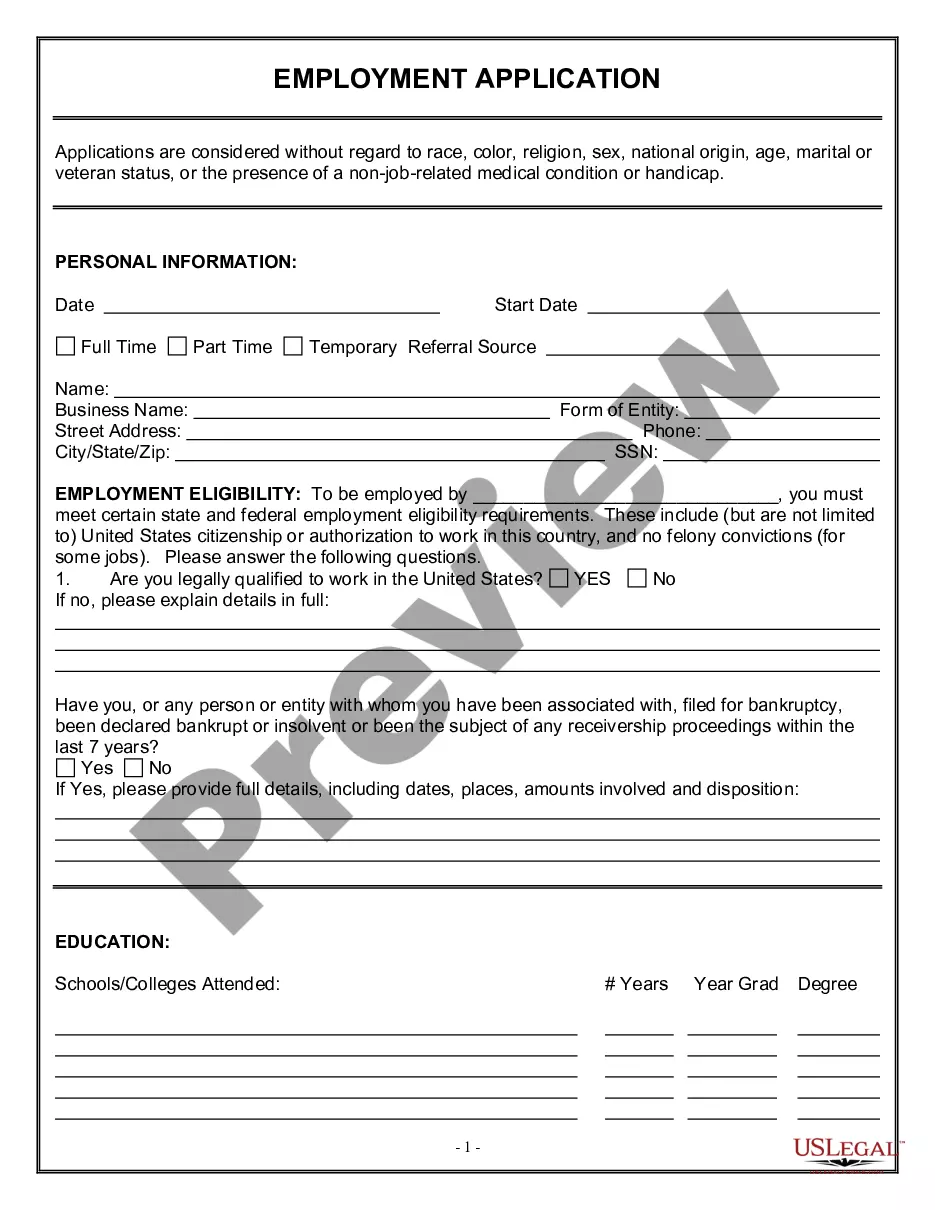
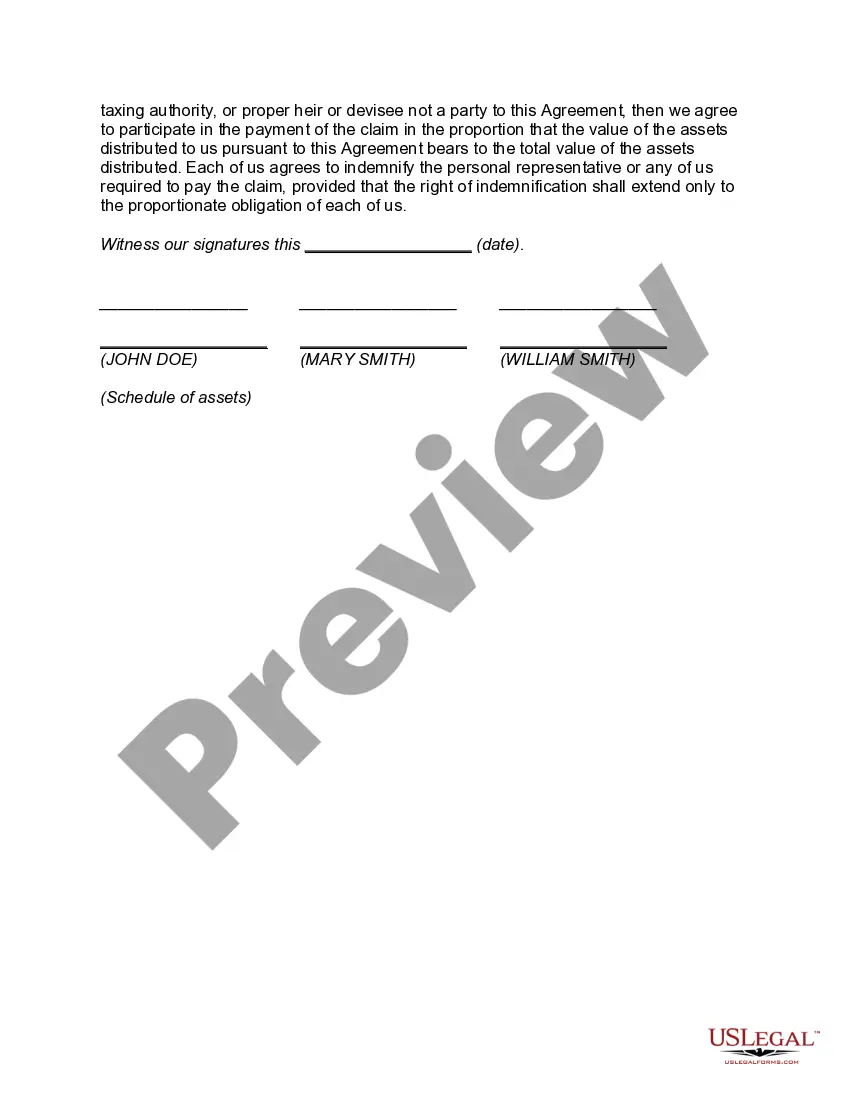
Nebraska Release and Indemnification of Personal Representative by Heirs and Devisees
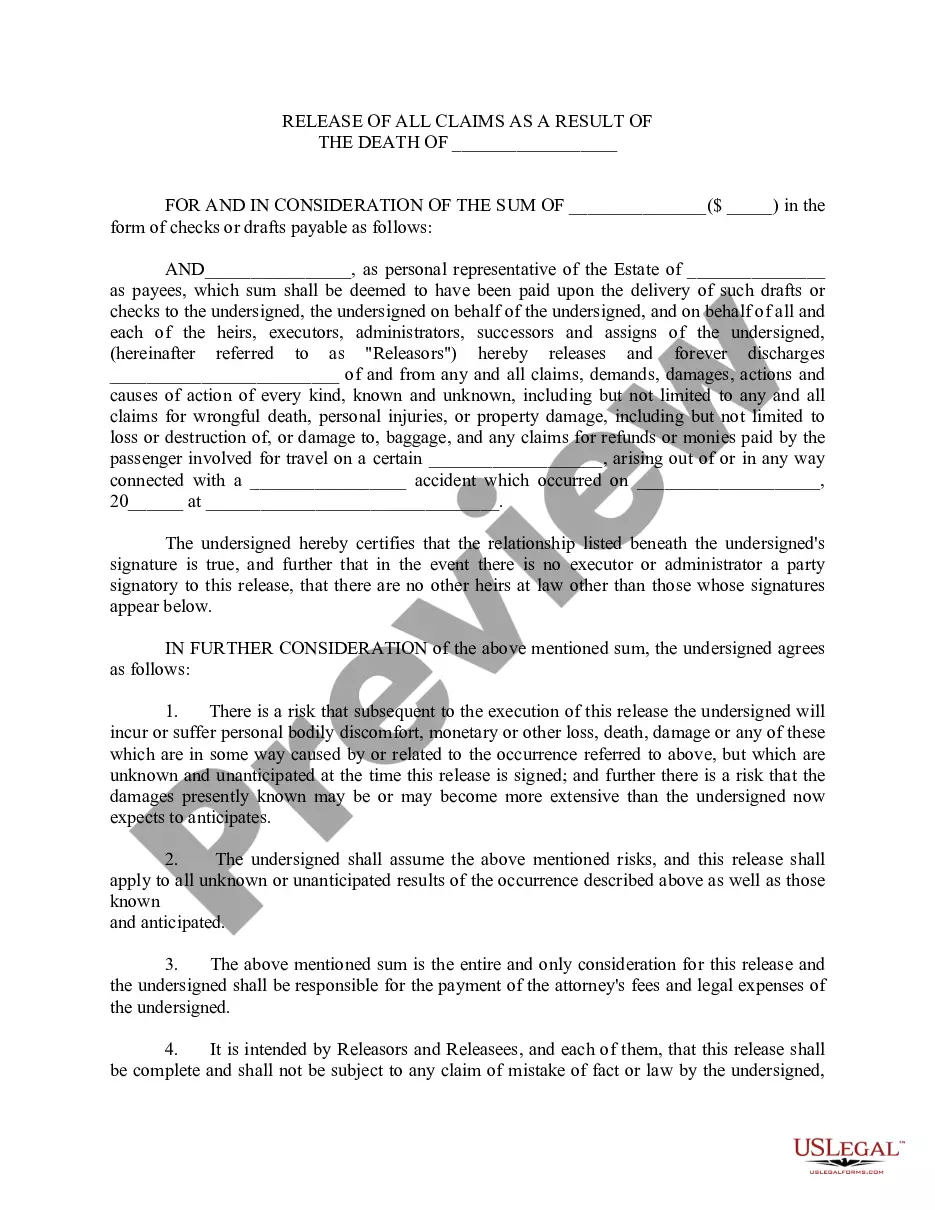
Description
Get your form ready online
Our built-in tools help you complete, sign, share, and store your documents in one place.
Make edits, fill in missing information, and update formatting in US Legal Forms—just like you would in MS Word.
Download a copy, print it, send it by email, or mail it via USPS—whatever works best for your next step.
Sign and collect signatures with our SignNow integration. Send to multiple recipients, set reminders, and more. Go Premium to unlock E-Sign.
If this form requires notarization, complete it online through a secure video call—no need to meet a notary in person or wait for an appointment.
We protect your documents and personal data by following strict security and privacy standards.

Make edits, fill in missing information, and update formatting in US Legal Forms—just like you would in MS Word.

Download a copy, print it, send it by email, or mail it via USPS—whatever works best for your next step.

Sign and collect signatures with our SignNow integration. Send to multiple recipients, set reminders, and more. Go Premium to unlock E-Sign.

If this form requires notarization, complete it online through a secure video call—no need to meet a notary in person or wait for an appointment.

We protect your documents and personal data by following strict security and privacy standards.
Looking for another form?
How to fill out Release And Indemnification Of Personal Representative By Heirs And Devisees?
You might spend hours online trying to find the legal format that meets the federal and state requirements you desire.
US Legal Forms offers countless legal documents that can be reviewed by professionals.
It is easy to obtain or print the Nebraska Release and Indemnification of Personal Representative by Heirs and Devisees from the service.
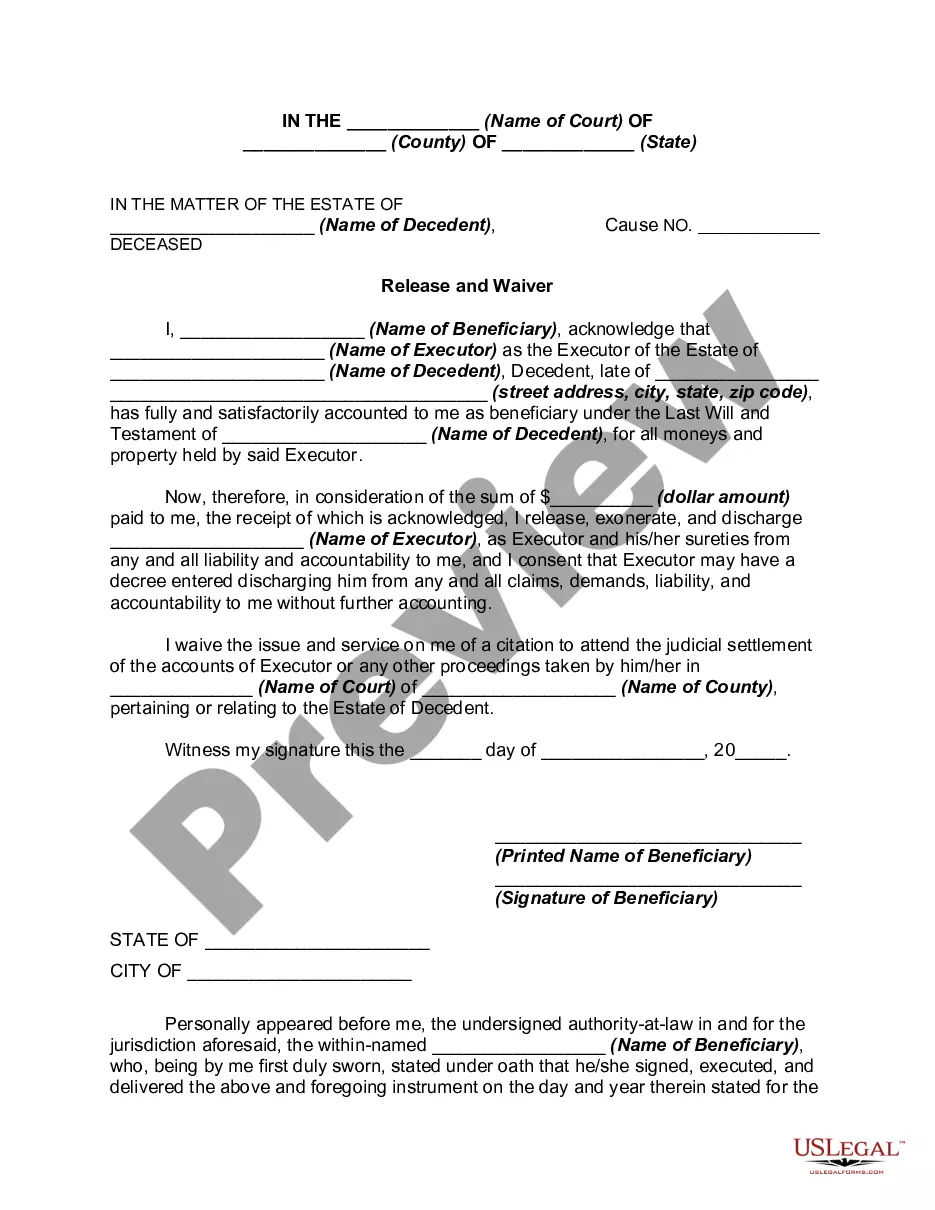
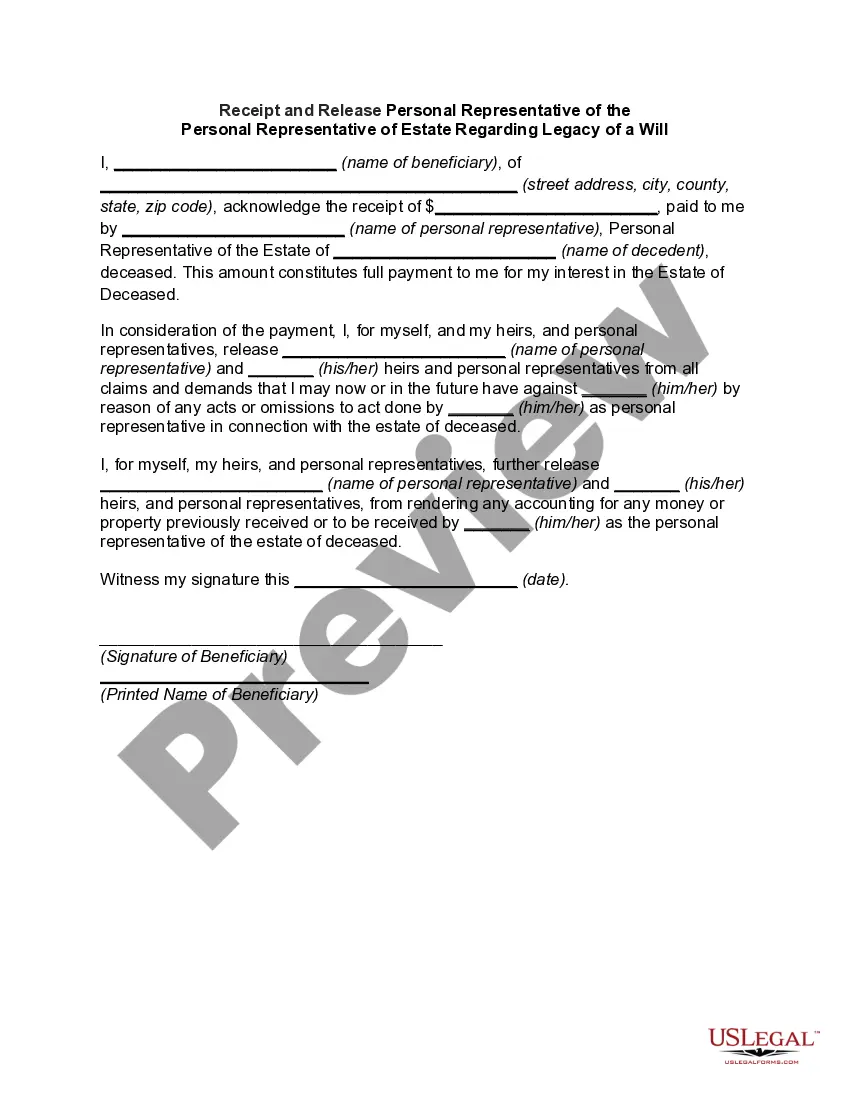
First, ensure you have selected the correct format for your area/town of choice. Review the form details to confirm you have chosen the right document. If available, utilize the Preview button to view the format as well.
- If you already possess a US Legal Forms account, you can Log In and click on the Download button.
- Then, you can complete, modify, print, or sign the Nebraska Release and Indemnification of Personal Representative by Heirs and Devisees.
- Every legal format you acquire is yours indefinitely.
- To get an additional copy of any purchased document, visit the My documents tab and click on the corresponding button.
- If you are visiting the US Legal Forms website for the first time, follow the straightforward guidelines provided below.
Form popularity
FAQ
What Is a Small Estate? Nebraska Revised Statute §30-24, 125 recites the guidelines. Basically, if a decedent's estate involves less than $50,000 in probatable personal property and/or $50,000 or less in real estate, no probate is required.
A residuary beneficiary is entitled to request estate accounts from the PR detailing the composition of the estate and its liabilities. Once requested, these should be prepared within a reasonable period (Re Tillot). This right also applies to creditors.
The first step is to file a petition with the court where the decedent lived before their death. The court will approve or appoint an executor to manage the estate. The first job of the executor is to notify the heirs and any creditors. The executor will need to take inventory of the assets of the estate.
In order to become a legal heir to a decedent's estate in Nebraska, you must live for more than 120 hours, or five days, after the individual's death, according to Nebraska inheritance laws.
The six steps to settling an estate in NebraskaStep 1: Make an inventory of documents and assets.Step 2: Open a probate estate.Step 3: Establish value of assets.Step 4: Pay final bills and other expenses.Step 5: Pay income and estate taxes.Step 6: Distribute the balance to estate beneficiaries.
There is no need for probate or letters of administration unless there are other assets that are not jointly owned. The property might have a mortgage. However, if the partners are tenants in common, the surviving partner does not automatically inherit the other person's share.
The court clerk publishes the notice in a local newspaper, along with notice to creditors, advising them they have 60 days within which to make a claim for payment under Nebraska law. This 60-day period begins to run on the first date of publication and can run concurrently with the inventory deadline.
A probate proceeding in Nebraska can take around six to nine months to fully complete. If an estate is extremely complex or large, the process can take years.
Step 1 Wait 30 Days. The person who fills out the form, known as the affiant must wait at least thirty (30) days before getting the affidavit notarized.Step 2 Assess Estate.Step 3 Fill out the Form.Step 4 Collect the Property.
A personal representative is under a duty to settle and distribute the estate of the decedent in accordance with the terms of any probated and effective will and this code, and as expeditiously and efficiently as is consistent with the best interests of the estate.