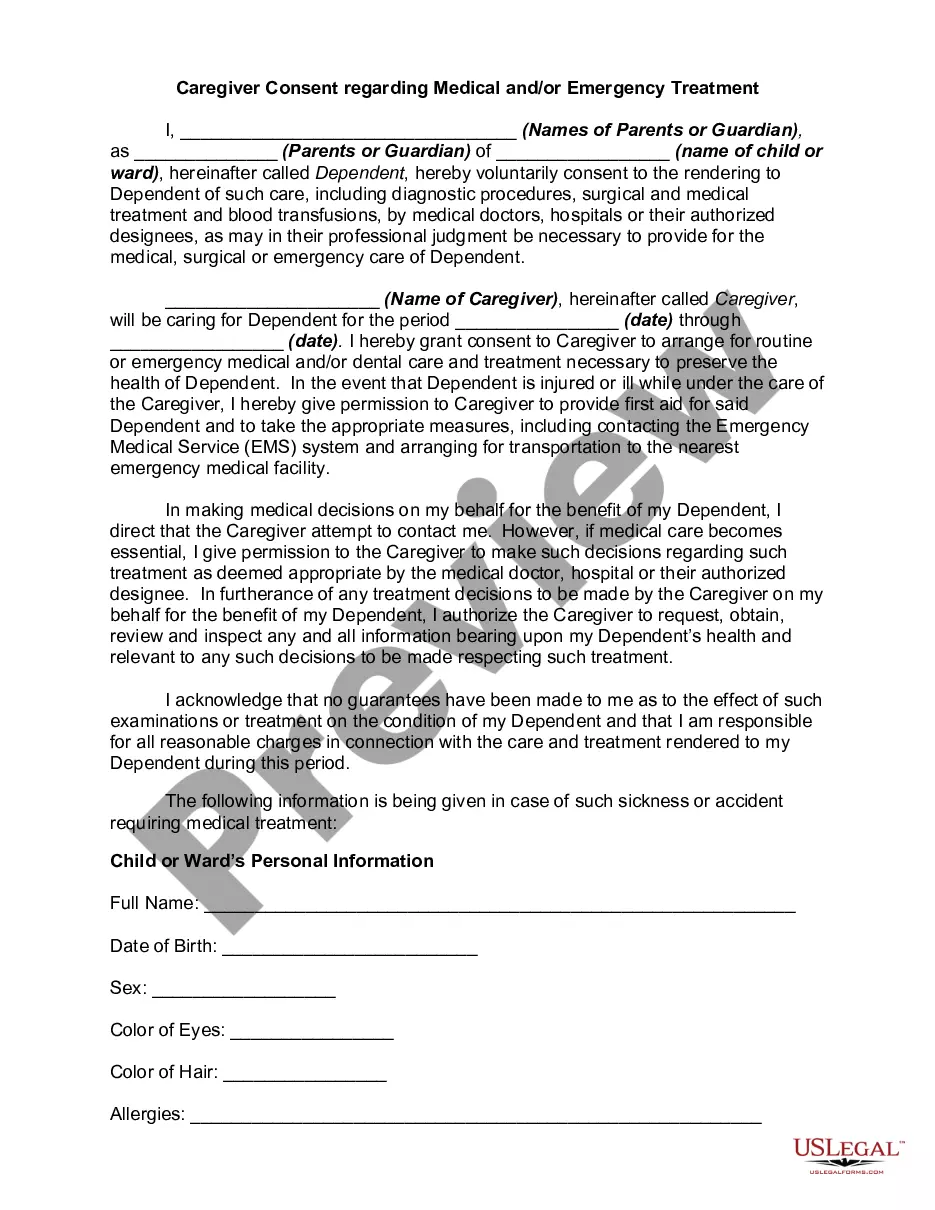
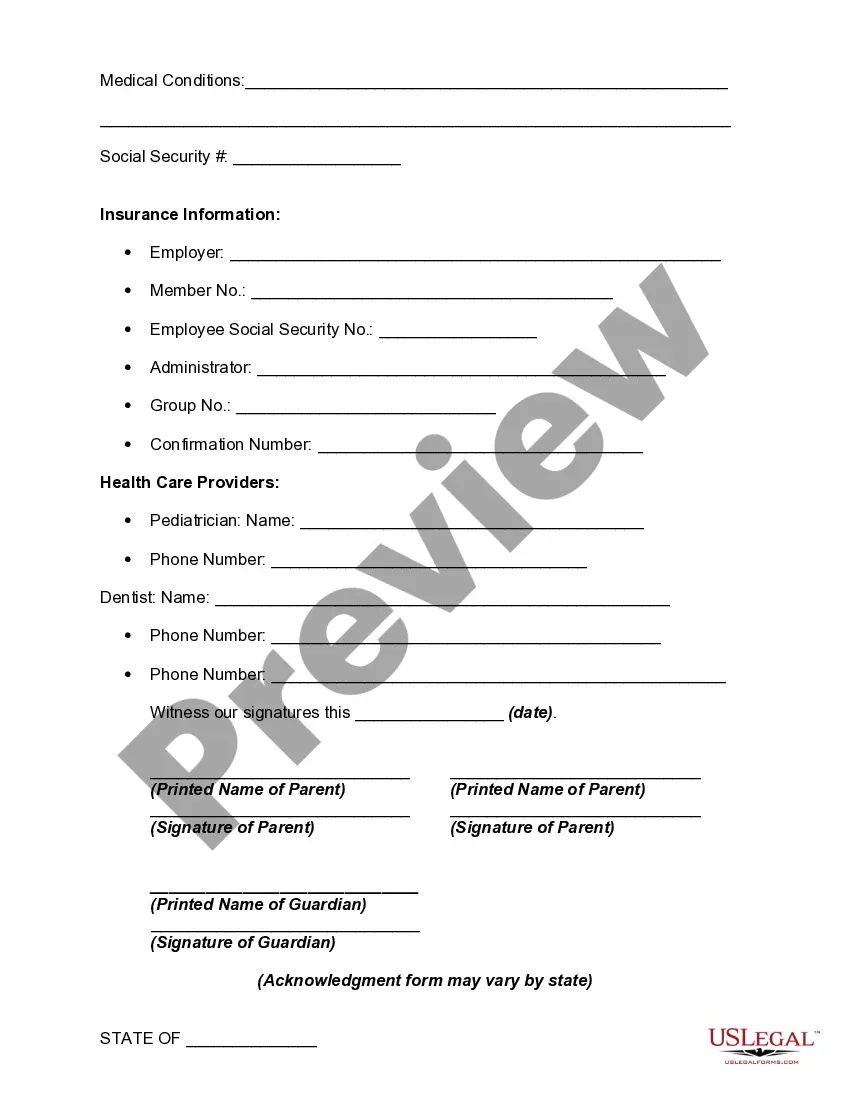
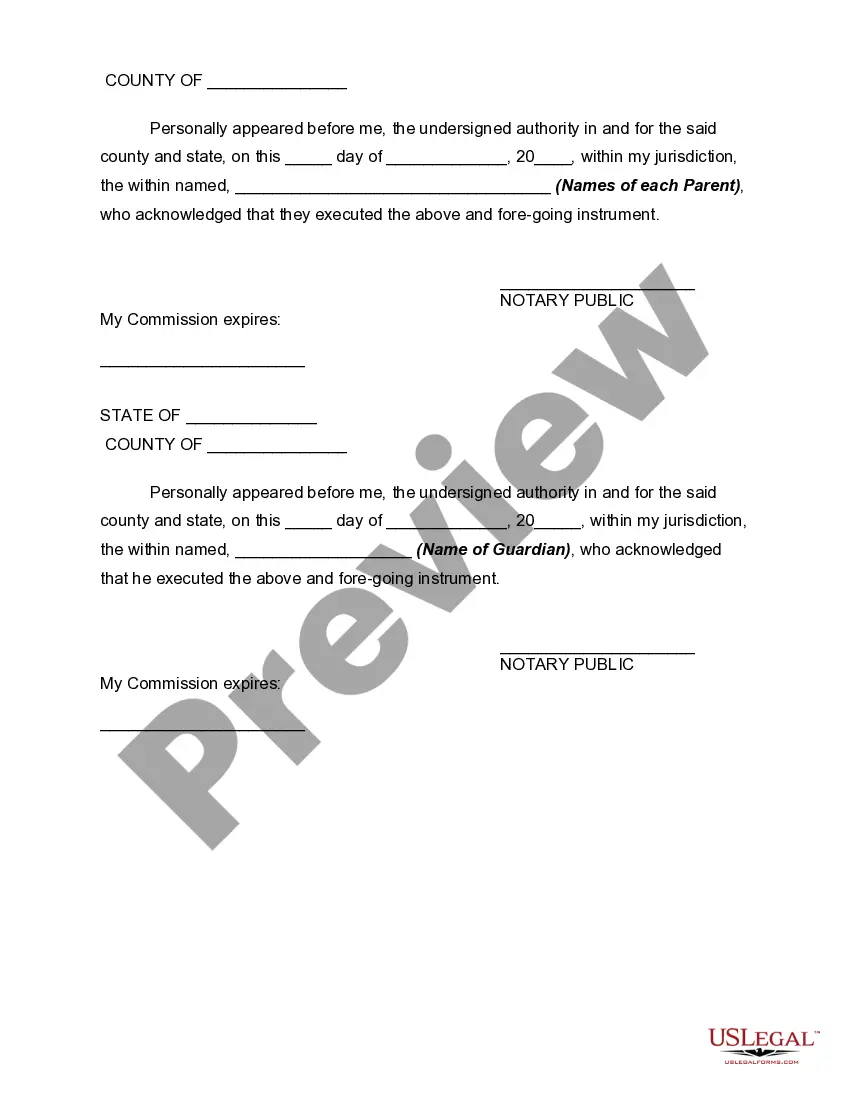
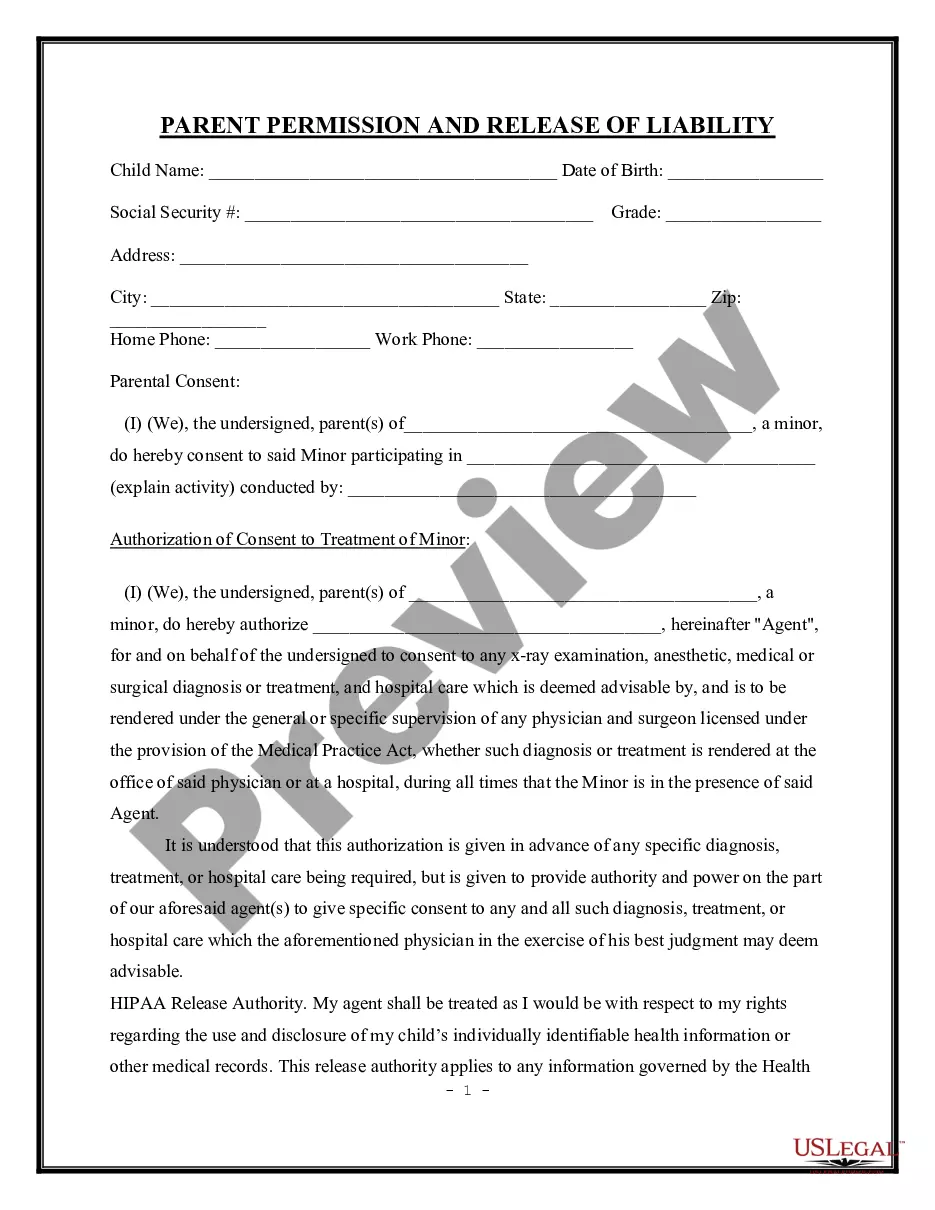
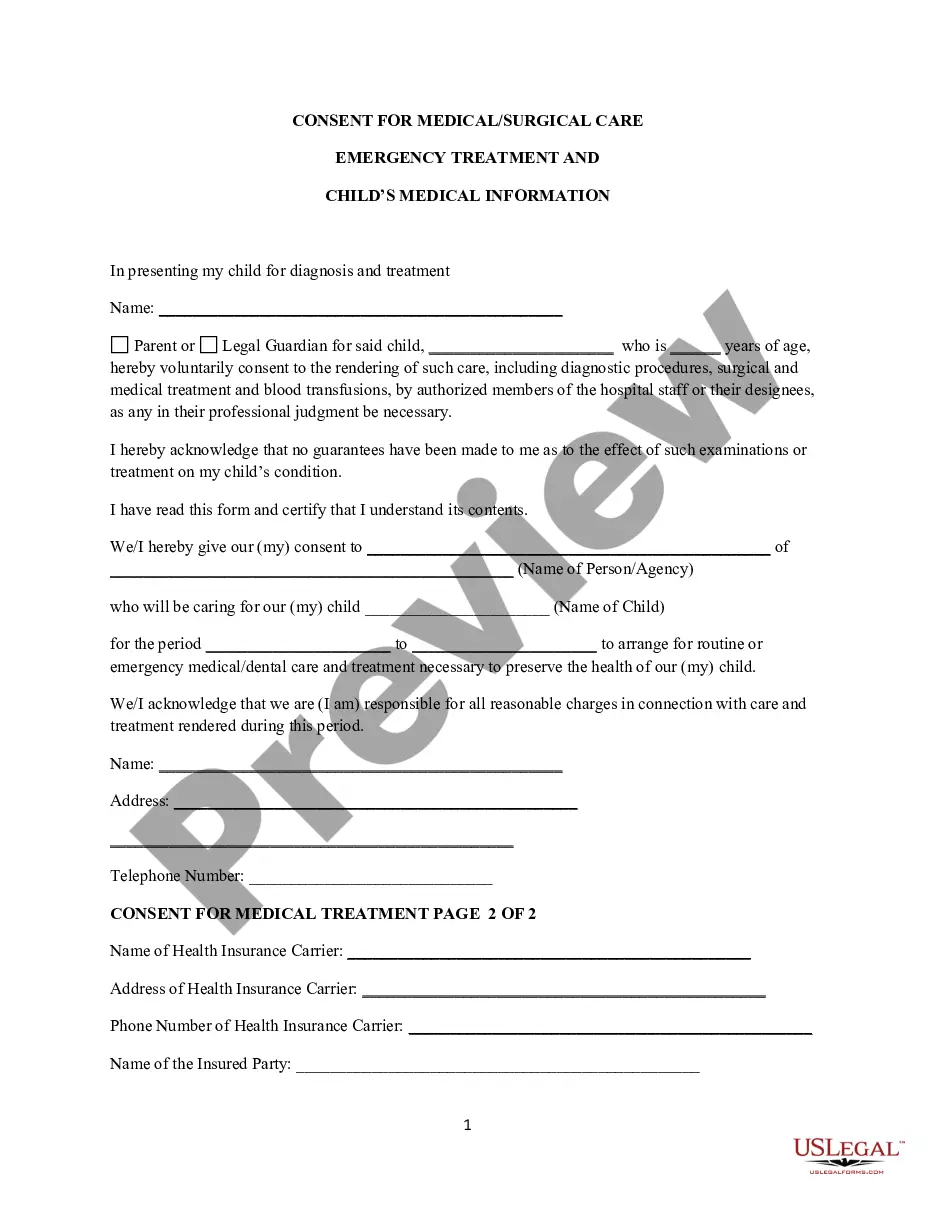
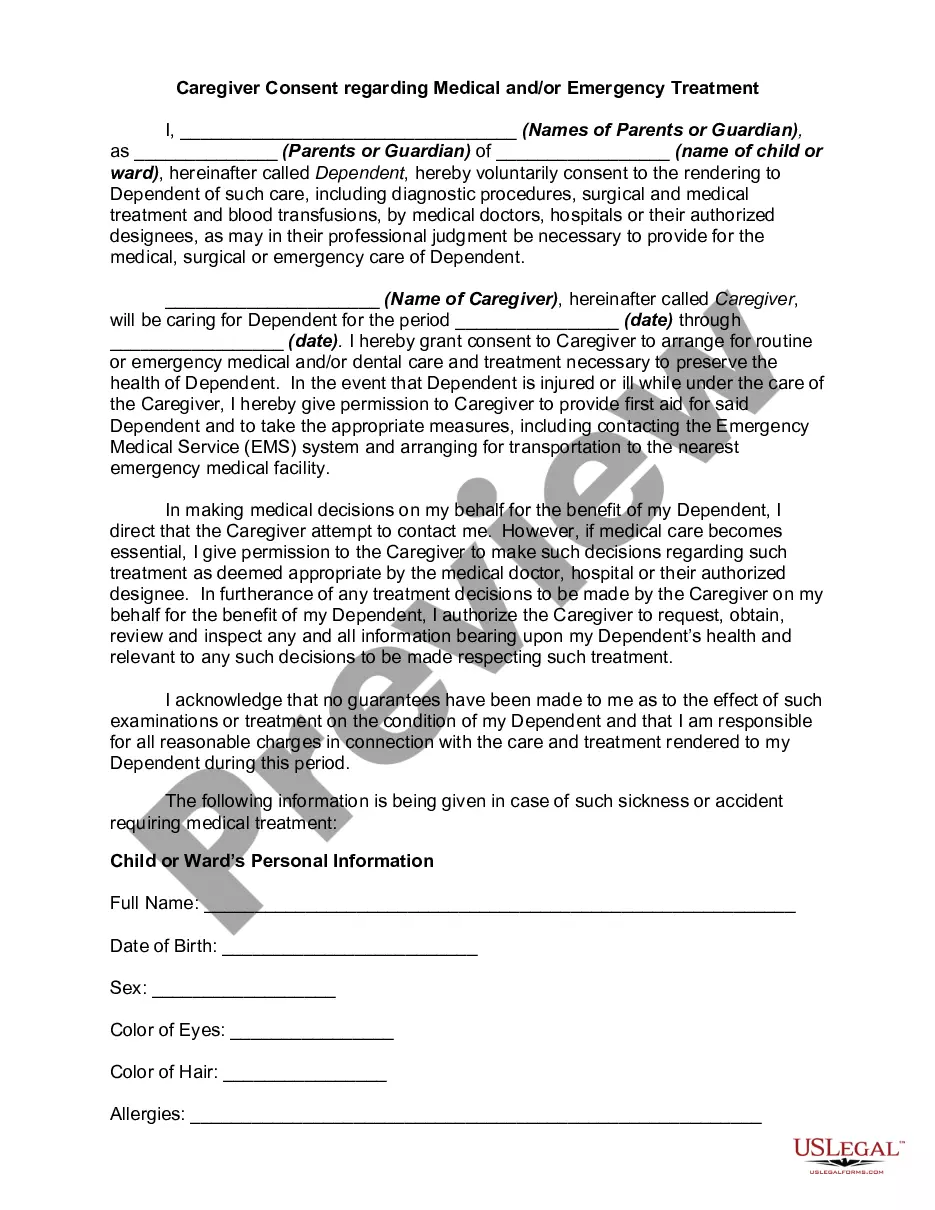
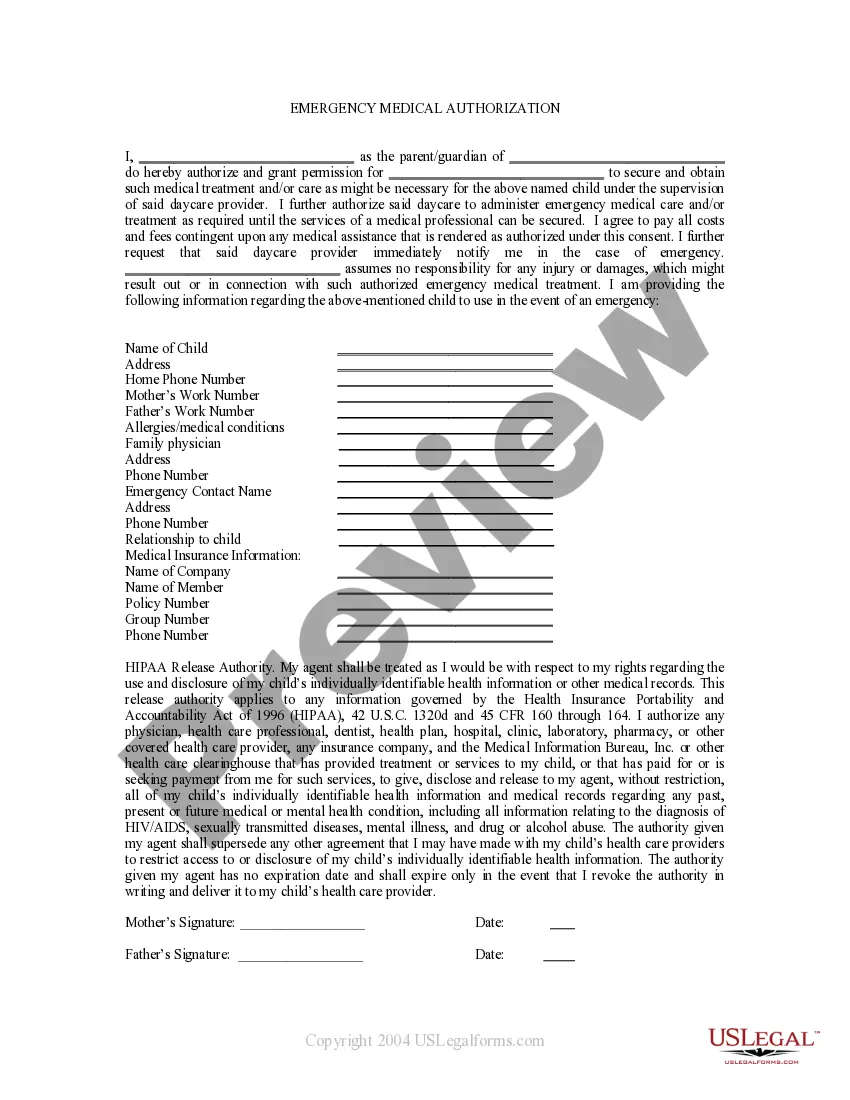
Nebraska Medical Consent for Child
Description
Get your form ready online
Our built-in tools help you complete, sign, share, and store your documents in one place.
Make edits, fill in missing information, and update formatting in US Legal Forms—just like you would in MS Word.
Download a copy, print it, send it by email, or mail it via USPS—whatever works best for your next step.
Sign and collect signatures with our SignNow integration. Send to multiple recipients, set reminders, and more. Go Premium to unlock E-Sign.
If this form requires notarization, complete it online through a secure video call—no need to meet a notary in person or wait for an appointment.
We protect your documents and personal data by following strict security and privacy standards.

Make edits, fill in missing information, and update formatting in US Legal Forms—just like you would in MS Word.

Download a copy, print it, send it by email, or mail it via USPS—whatever works best for your next step.

Sign and collect signatures with our SignNow integration. Send to multiple recipients, set reminders, and more. Go Premium to unlock E-Sign.

If this form requires notarization, complete it online through a secure video call—no need to meet a notary in person or wait for an appointment.

We protect your documents and personal data by following strict security and privacy standards.
Looking for another form?
How to fill out Medical Consent For Child?
You might spend hours on the web searching for the legal document template that satisfies the federal and state regulations you desire.
US Legal Forms offers an extensive collection of legal forms that can be examined by experts.
It is easy to obtain or print the Nebraska Medical Consent for Child through your services.
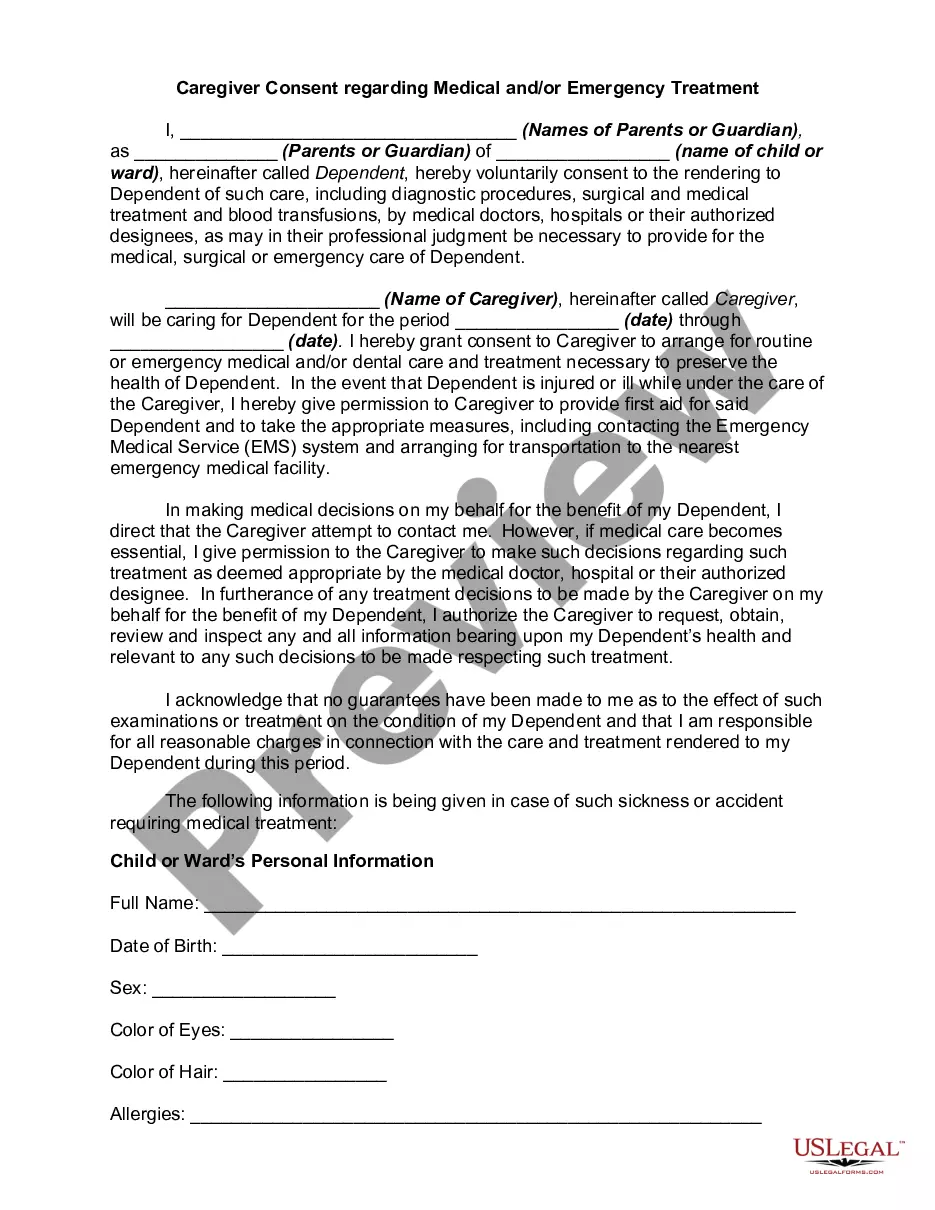
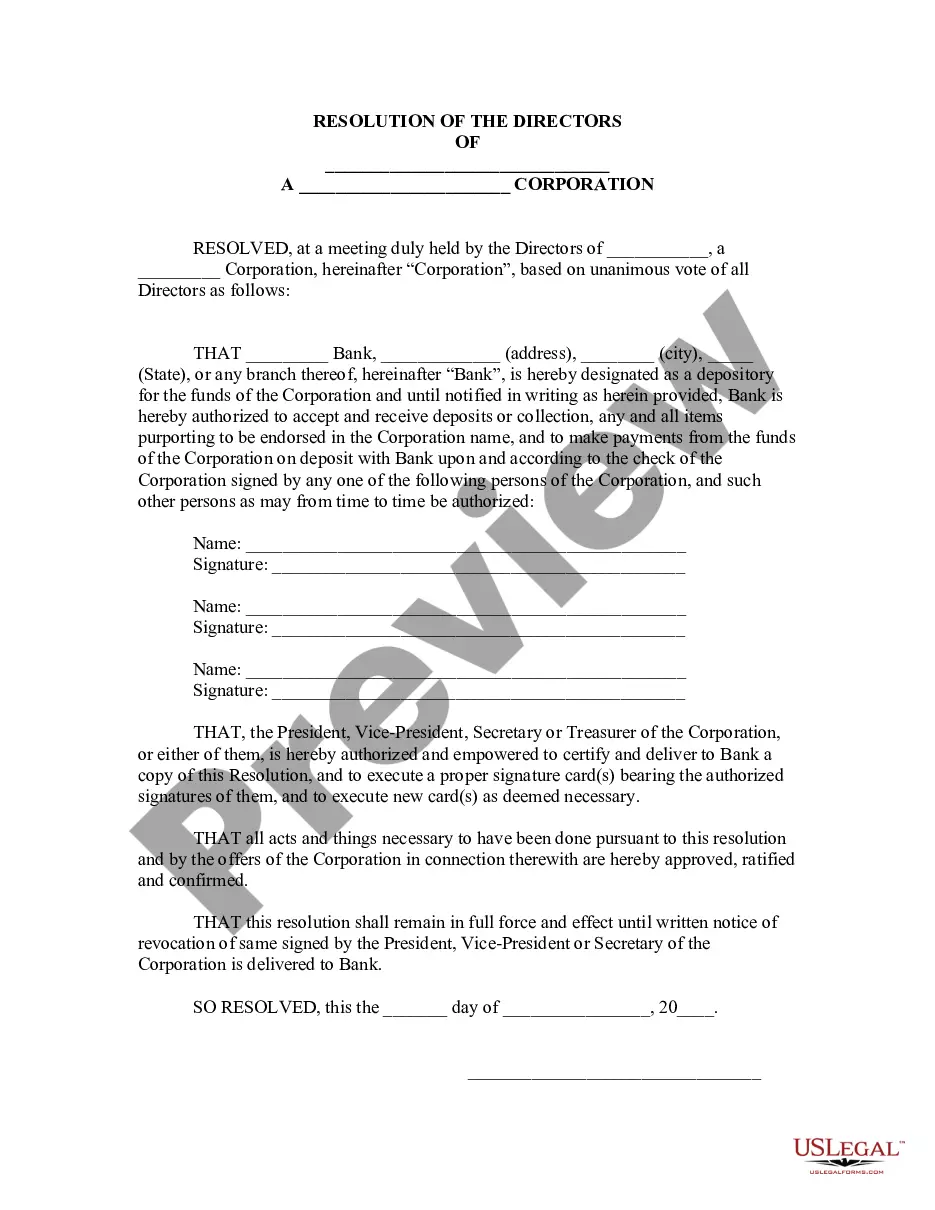
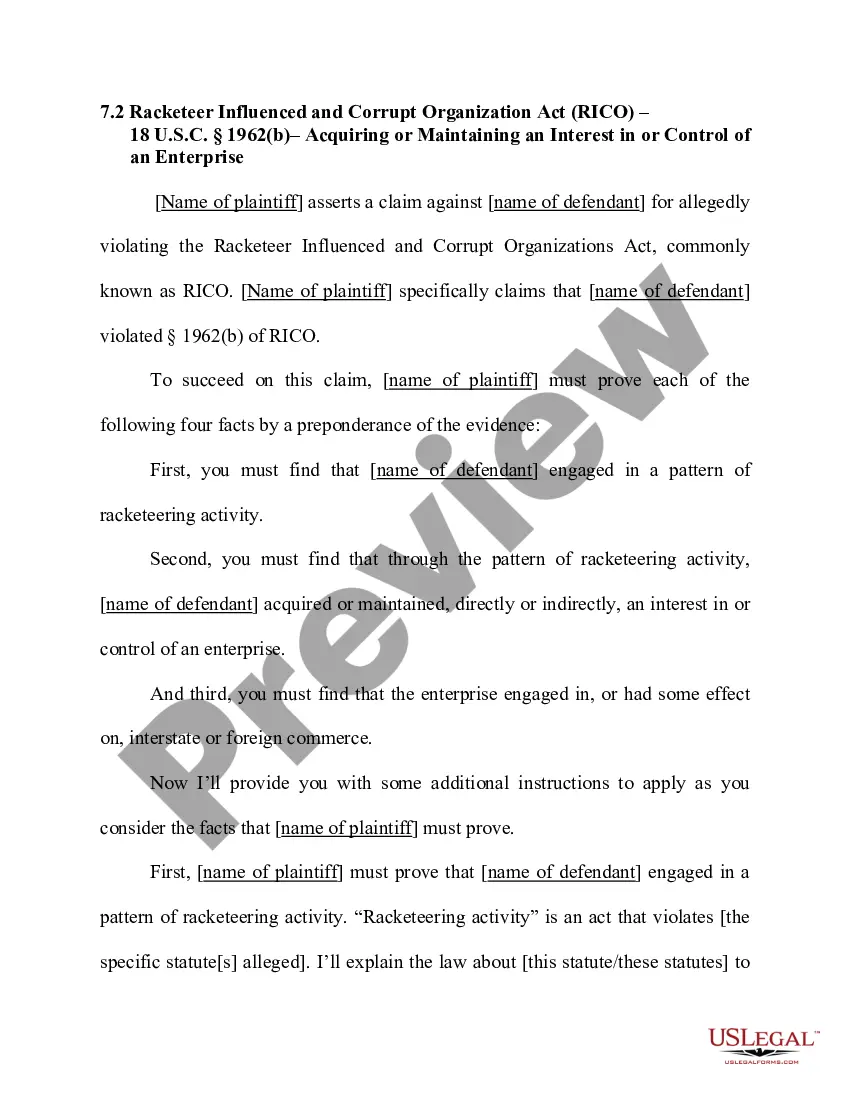
If available, take advantage of the Preview button to review the document template as well.
- If you already have an account with US Legal Forms, you can Log In and click the Acquire button.
- Afterward, you can complete, modify, print, or sign the Nebraska Medical Consent for Child.
- Every legal document template you purchase is yours for an extended period.
- To obtain another copy of the acquired form, navigate to the My documents tab and click the corresponding button.
- If you are using the US Legal Forms website for the first time, follow the straightforward instructions below.
- First, ensure you have selected the correct document template for your preferred area/city.
- Review the form description to confirm you have chosen the right type.
Form popularity
FAQ
The five requirements for informed consent include capacity, knowledge, voluntariness, disclosure, and comprehension. First, the person providing consent must have the legal authority to do so. Next, they should be adequately informed about the procedure's risks and benefits. Consent must be given voluntarily, without coercion. Finally, it’s essential that everyone involved comprehends the information provided. Knowing these requirements can enhance your understanding of Nebraska Medical Consent for Child, ensuring all parties are well-informed.
Typically, informed consent for children is provided by their parents or legal guardians. These individuals are responsible for making decisions about medical treatment and research participation on behalf of the child. In some cases, older minors may have the ability to provide their own informed consent depending on the type of medical services. Familiarizing yourself with Nebraska Medical Consent for Child principles can aid in understanding these scenarios.
To get informed consent from your child, start by discussing the medical procedure or study in simple terms they can understand. Make sure to explain why it is necessary and what it will involve, allowing for questions. Listening to your child's concerns and providing reassurance can build their comfort and confidence. Utilize platforms like uslegalforms to access helpful documents that can formalize the Nebraska Medical Consent for Child process.
The best way to obtain informed consent is through clear communication that respects both the child and the guardian. It involves explaining the benefits, risks, and expectations of the procedure or study in a straightforward manner. Using forms that outline key details and having an open dialogue helps build trust. By providing reliable resources, such as those from uslegalforms, you can facilitate a smoother consent process concerning Nebraska Medical Consent for Child.
To obtain informed consent from a child, researchers must first secure permission from a parent or guardian. Following this, they should ensure that the child comprehends the study's purpose, procedures, and any potential risks. Researchers often use simple language and engaging explanations to ensure children understand what participation entails. This approach reinforces the ethos of Nebraska Medical Consent for Child and upholds ethical research standards.
In Nebraska, the age of medical consent for a child is generally 19 years old. However, minors may have the ability to consent to certain treatments without parental permission under specific circumstances. This includes situations involving mental health services, substance abuse treatment, and reproductive health services. Understanding Nebraska Medical Consent for Child is crucial for parents navigating these legal nuances.
The minimum age to consent to medical treatment varies by state. In Nebraska, the law allows minors aged 12 and older to consent to certain treatments without parental permission. This principle is a vital part of the Nebraska Medical Consent for Child framework. Knowing these laws helps parents and guardians support their children's health needs appropriately.
The ability for a child to make their own medical decisions differs across the United States. Typically, a child must be 18 to make all medical decisions without parental consent. However, varying state laws, like those in Nebraska, provide opportunities for minors, particularly those over 12, to consent to specific treatments. Familiarizing yourself with the Nebraska Medical Consent for Child can clarify these opportunities.
Yes, a 17 year old can refuse medical treatment in South Carolina due to the state's laws regarding medical consent. This age allows for some level of autonomy in medical decision-making. It's essential to consult the Nebraska Medical Consent for Child resources for clarity, as laws can differ significantly between states. Always discuss these topics openly with your child.
The lowest age for consent to medical treatment varies by state, including Nebraska. Generally, many states recognize that minors aged 12 and older can consent to certain medical treatments. However, the Nebraska Medical Consent for Child outlines specific guidelines for when a child can independently make medical decisions. Parents should familiarize themselves with these laws to better understand their child's rights.