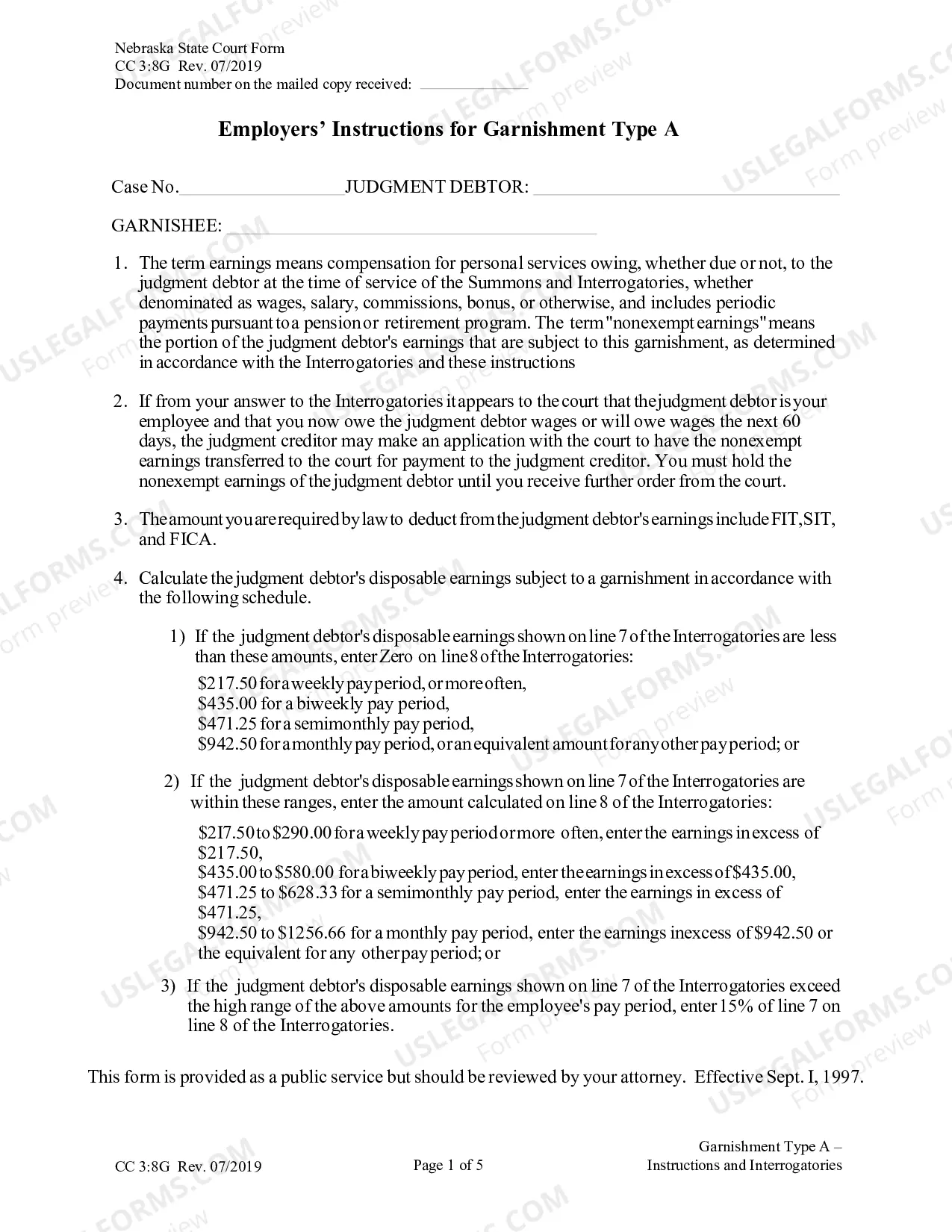
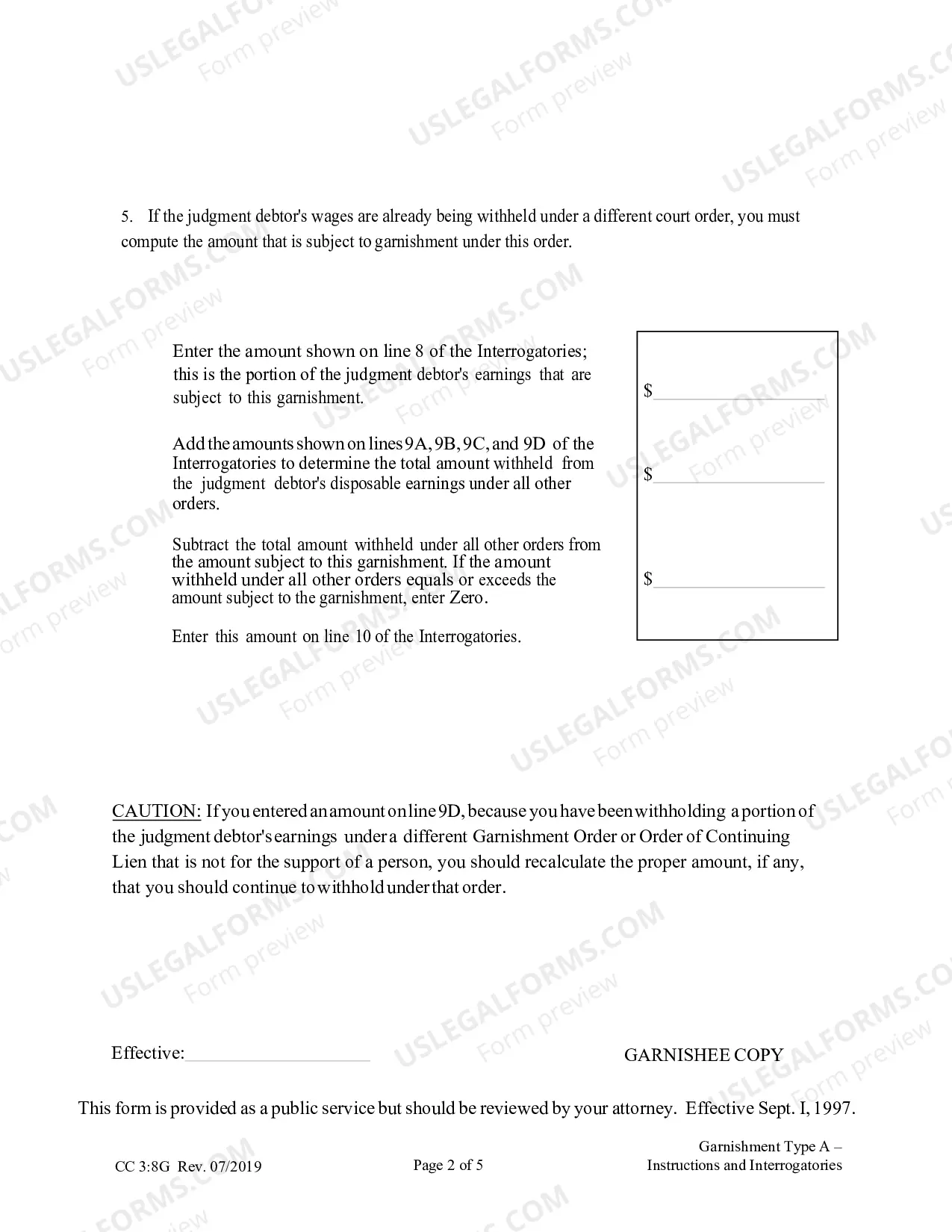
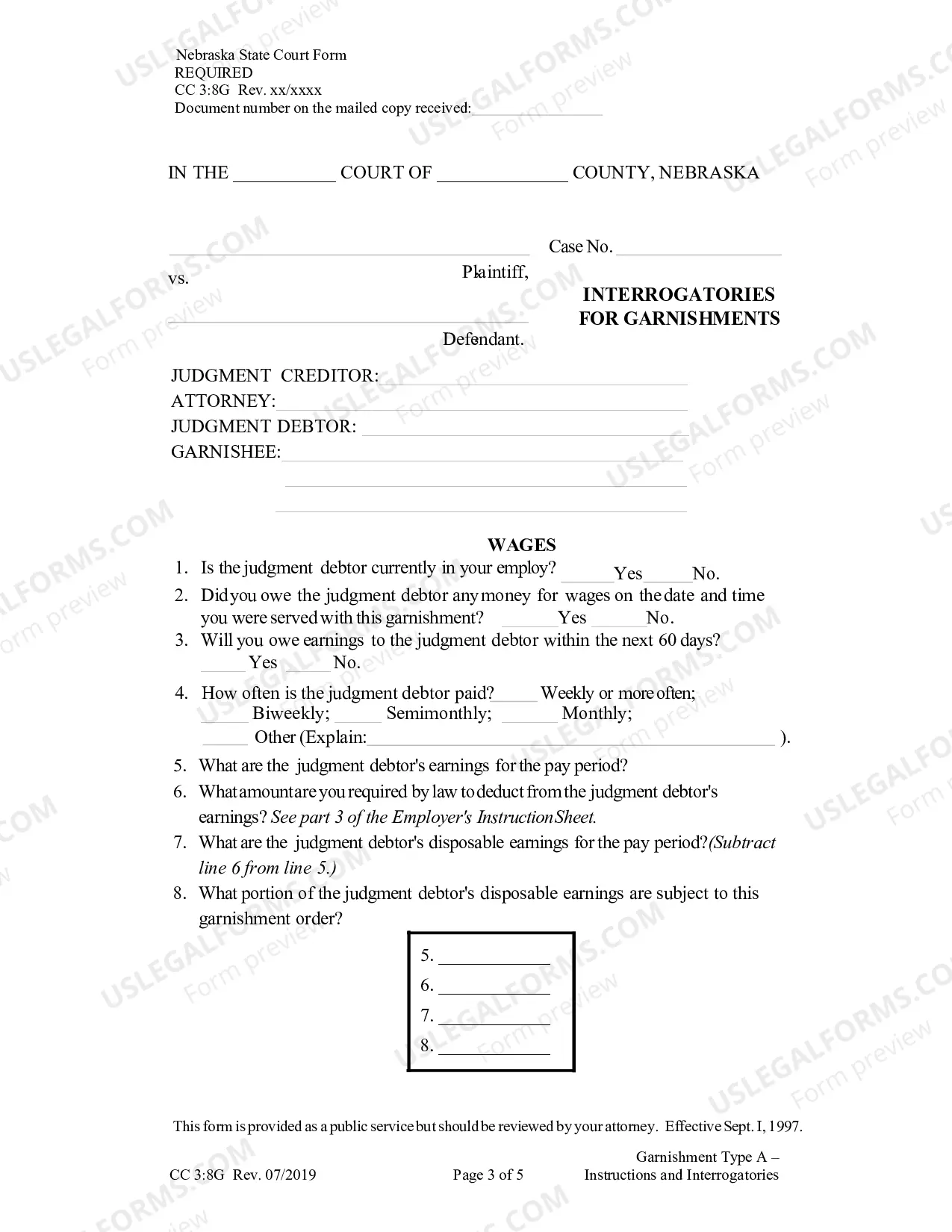
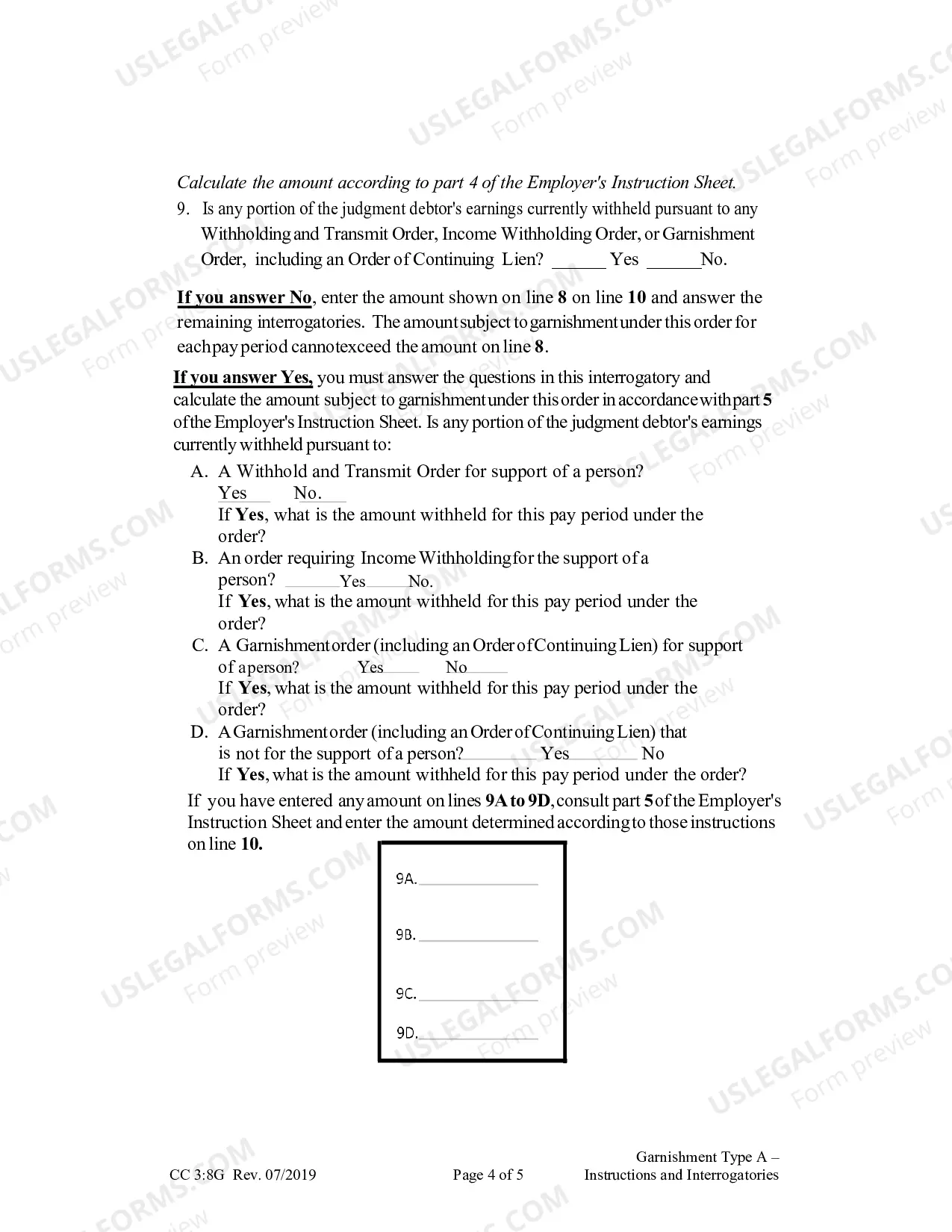
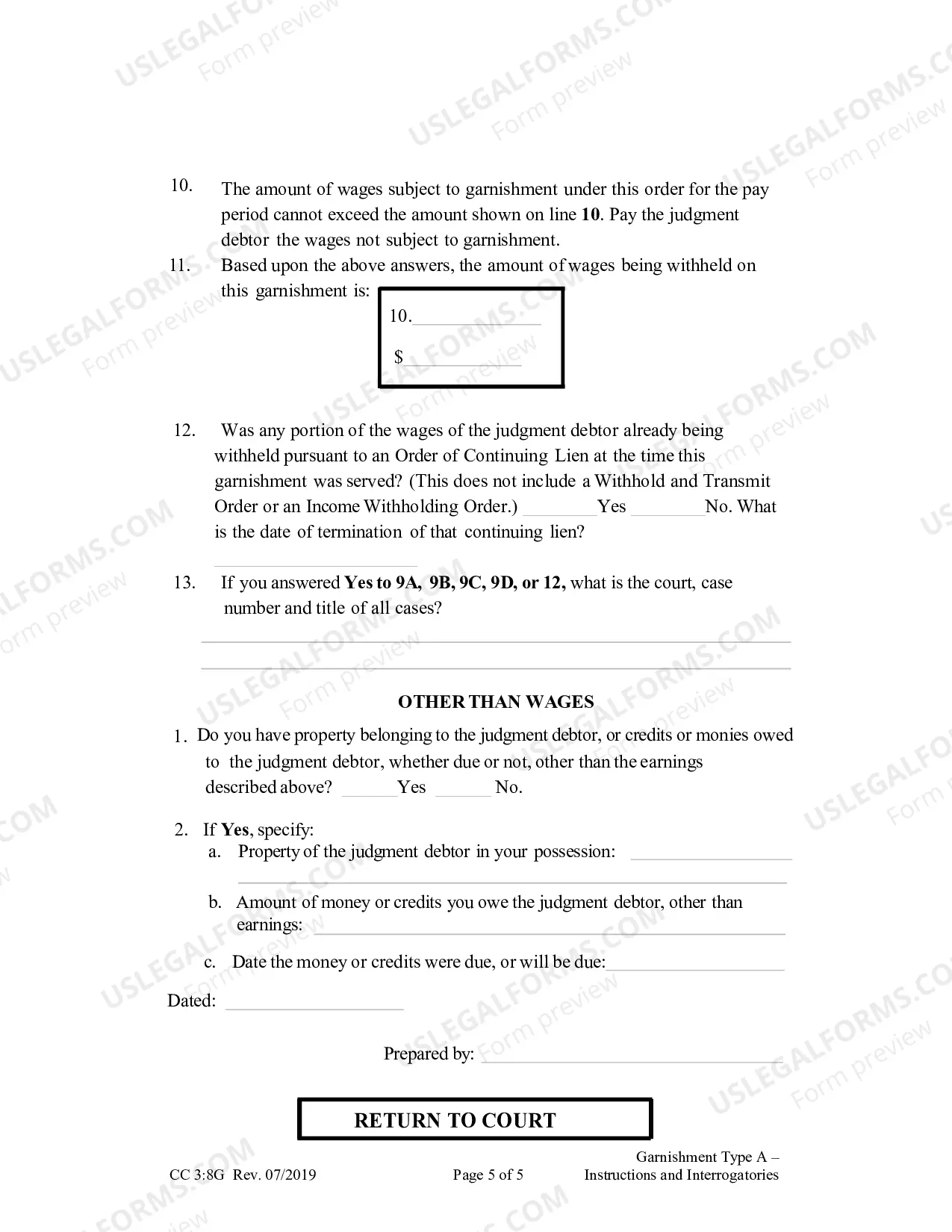
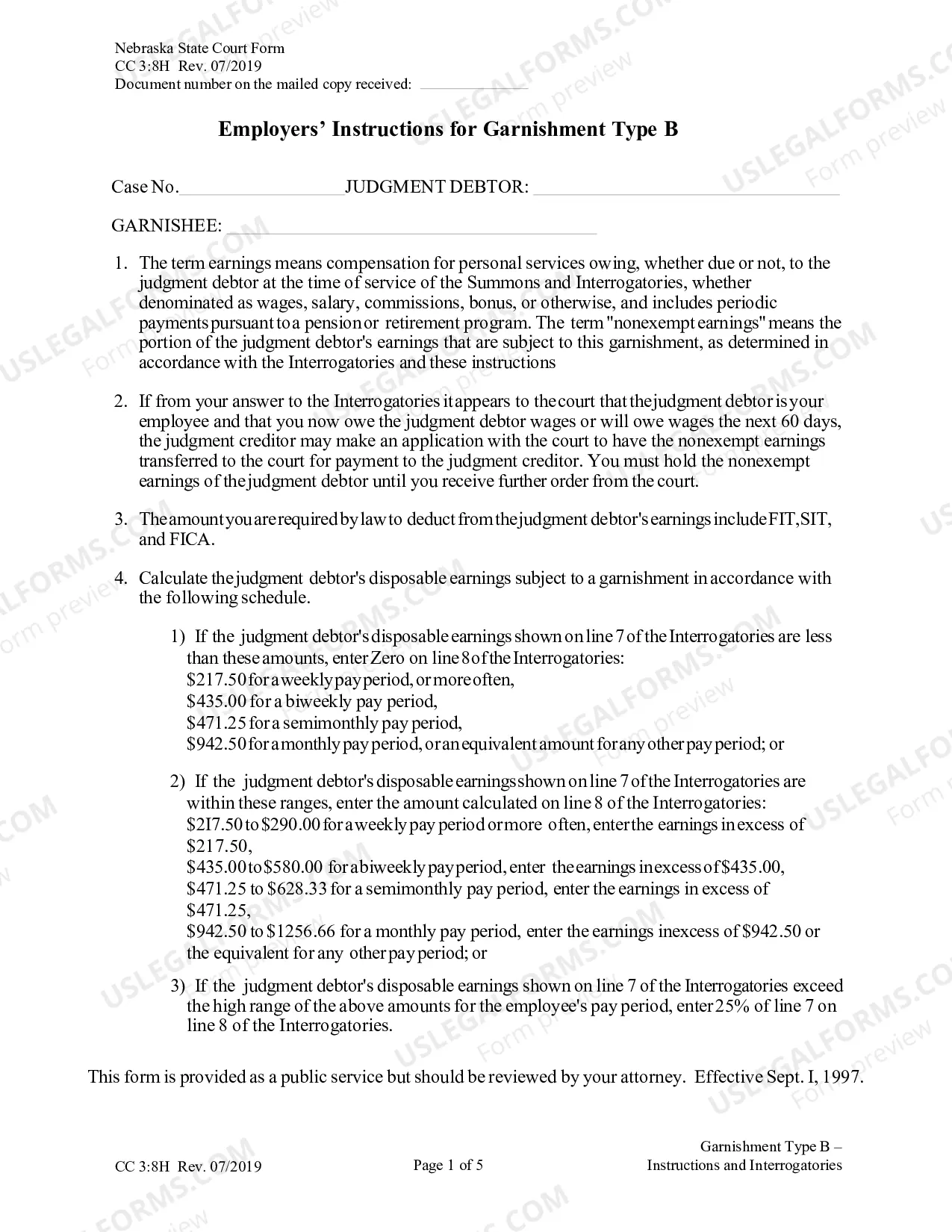
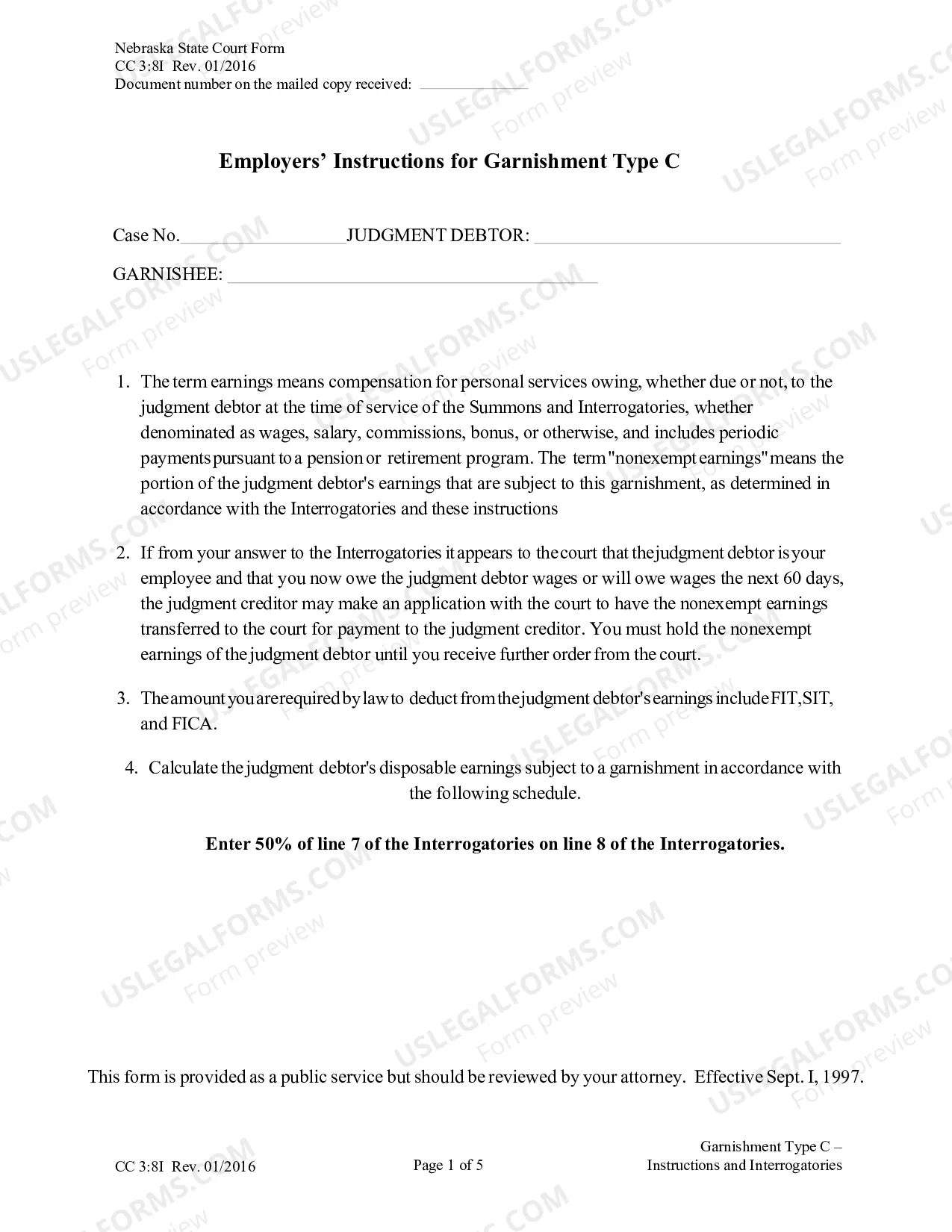
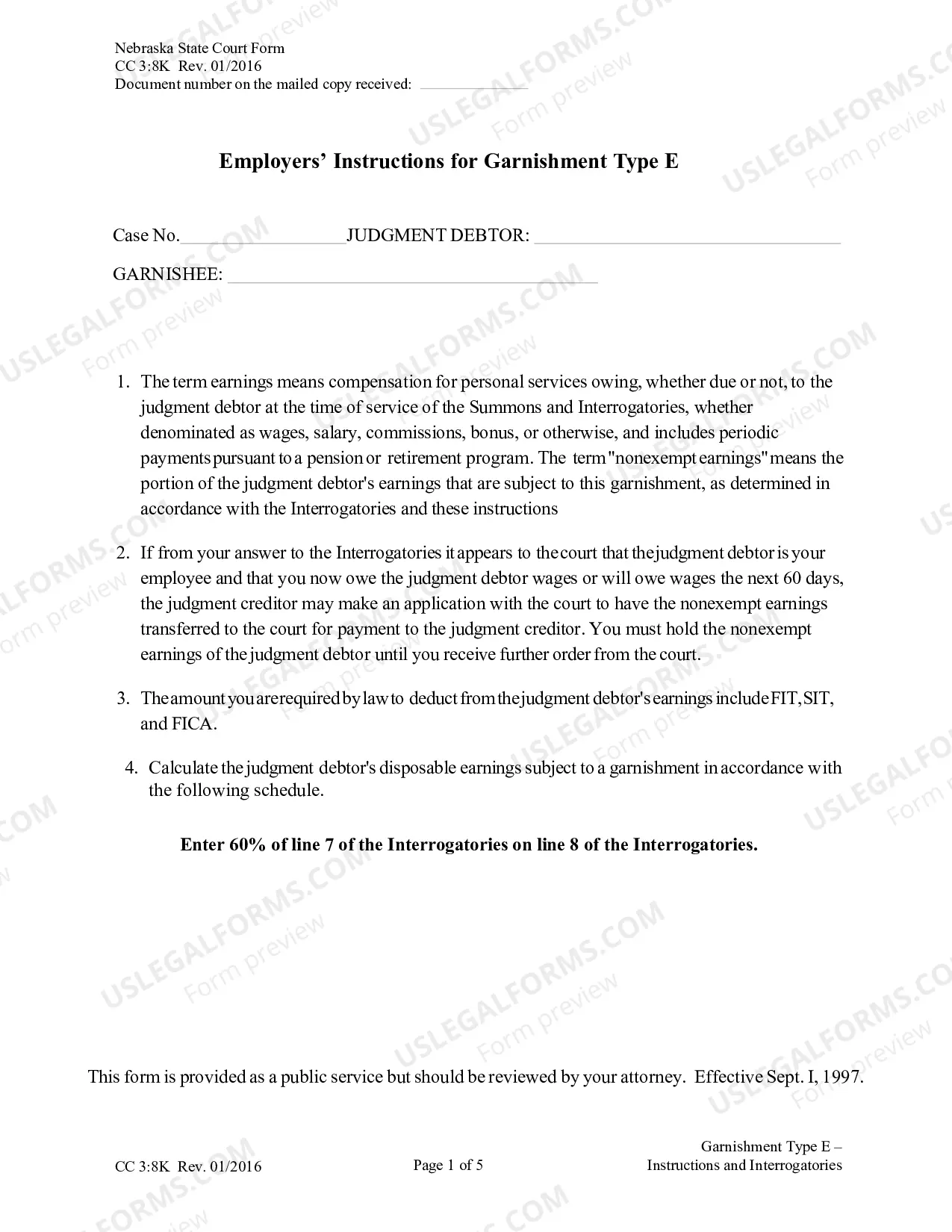
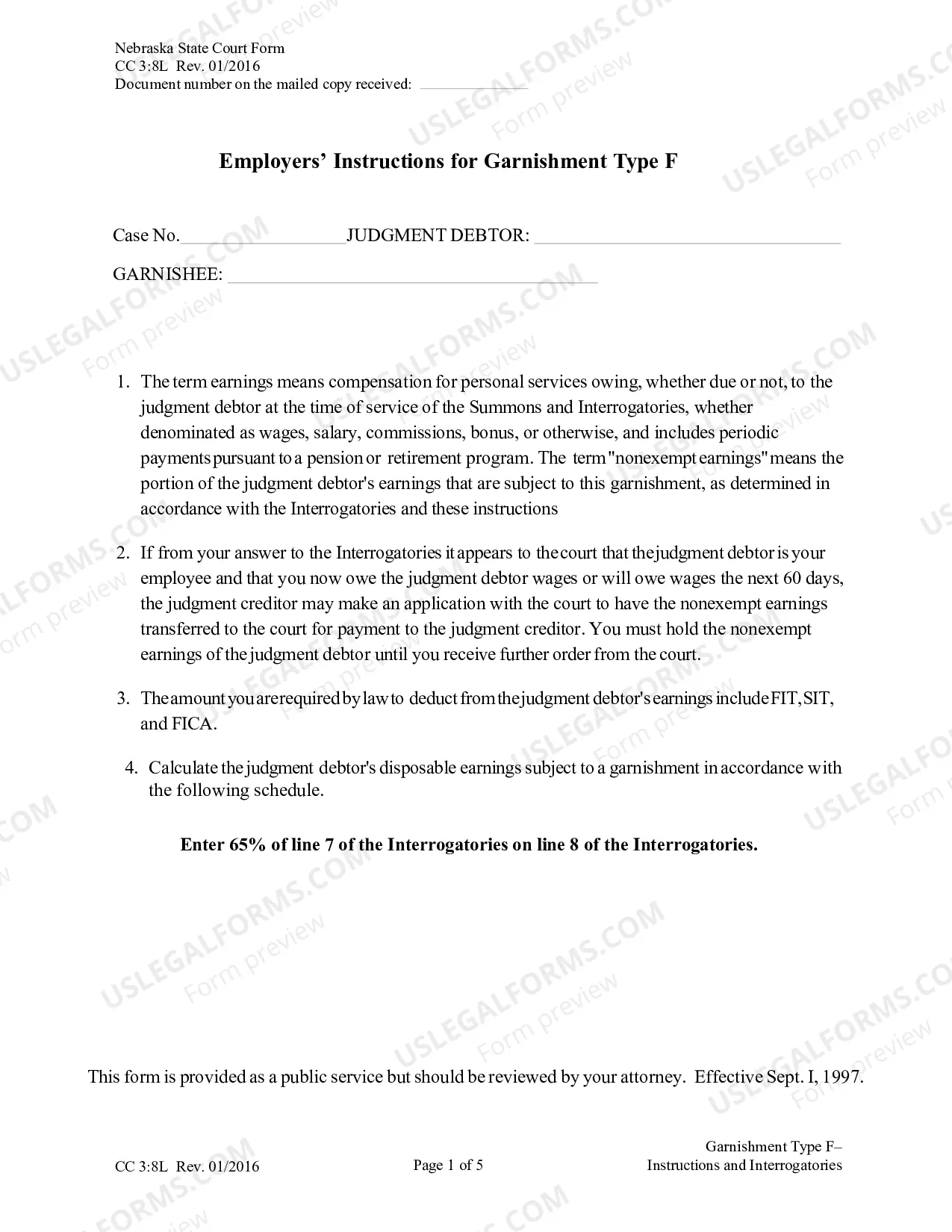
Nebraska Employers Instructions For Garnishment Type A
Description
Get your form ready online
Our built-in tools help you complete, sign, share, and store your documents in one place.
Make edits, fill in missing information, and update formatting in US Legal Forms—just like you would in MS Word.
Download a copy, print it, send it by email, or mail it via USPS—whatever works best for your next step.
Sign and collect signatures with our SignNow integration. Send to multiple recipients, set reminders, and more. Go Premium to unlock E-Sign.
If this form requires notarization, complete it online through a secure video call—no need to meet a notary in person or wait for an appointment.
We protect your documents and personal data by following strict security and privacy standards.

Make edits, fill in missing information, and update formatting in US Legal Forms—just like you would in MS Word.

Download a copy, print it, send it by email, or mail it via USPS—whatever works best for your next step.

Sign and collect signatures with our SignNow integration. Send to multiple recipients, set reminders, and more. Go Premium to unlock E-Sign.

If this form requires notarization, complete it online through a secure video call—no need to meet a notary in person or wait for an appointment.

We protect your documents and personal data by following strict security and privacy standards.
Looking for another form?

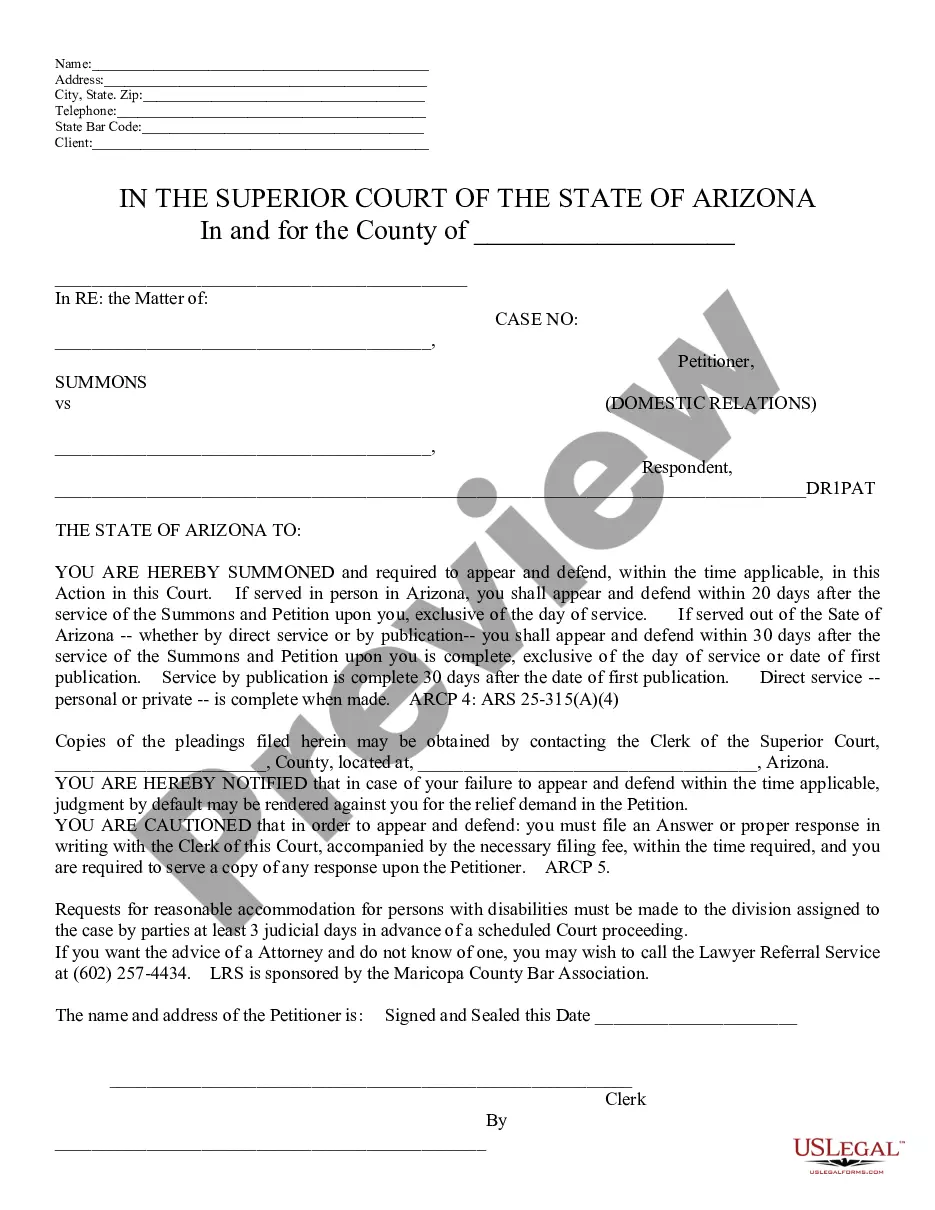
How to fill out Nebraska Employers Instructions For Garnishment Type A?
Preparing official paperwork can be a real burden if you don’t have ready-to-use fillable templates. With the US Legal Forms online library of formal documentation, you can be confident in the blanks you find, as all of them comply with federal and state laws and are checked by our specialists. So if you need to complete Nebraska Employers Instructions For Garnishment Type A, our service is the best place to download it.
Getting your Nebraska Employers Instructions For Garnishment Type A from our service is as simple as ABC. Previously registered users with a valid subscription need only sign in and click the Download button after they find the correct template. Later, if they need to, users can use the same blank from the My Forms tab of their profile. However, even if you are unfamiliar with our service, registering with a valid subscription will take only a few moments. Here’s a quick guide for you:
- Document compliance verification. You should carefully review the content of the form you want and make sure whether it satisfies your needs and complies with your state law requirements. Previewing your document and looking through its general description will help you do just that.
- Alternative search (optional). If there are any inconsistencies, browse the library through the Search tab on the top of the page until you find a suitable blank, and click Buy Now once you see the one you want.
- Account registration and form purchase. Create an account with US Legal Forms. After account verification, log in and select your most suitable subscription plan. Make a payment to proceed (PayPal and credit card options are available).
- Template download and further usage. Select the file format for your Nebraska Employers Instructions For Garnishment Type A and click Download to save it on your device. Print it to fill out your paperwork manually, or take advantage of a multi-featured online editor to prepare an electronic version faster and more efficiently.
Haven’t you tried US Legal Forms yet? Subscribe to our service now to get any official document quickly and easily every time you need to, and keep your paperwork in order!
Form popularity
FAQ
If wage garnishment means that you can't pay for your family's basic needs, you can ask the court to order the debt collector to stop garnishing your wages or reduce the amount. This is called a Claim of Exemption.
In Nebraska, most creditors can't garnish your wages unless they have a valid judgment from the court. To get a judgment, a creditor must file a lawsuit against you, go to court, and present evidence that proves you owe the creditor money.
In Nebraska, for any workweek, a creditor may garnish the lesser of: 25% of your disposable earnings, or 15% of your disposable earnings if you're the head of a family, or. the amount by which your weekly disposable earnings exceed 30 times the federal hourly minimum wage.
A. If you are the head of a family, a judgment creditor can garnish up to 15% of your disposable wages. If you are not the head of a family, a judgment creditor can garnish up to 25% of your disposable wages. If you believe your status as ?not the head of a family? is incorrect, you may request a hearing.
The fact that an old debt, either a credit debt or a tax debt, is being paid through a garnishment doesn't usually show up on most credit reports. What does show up is the fact that the debt was delinquent and that there is a judgment against you for the unpaid debt.