Nebraska Severance Agreement
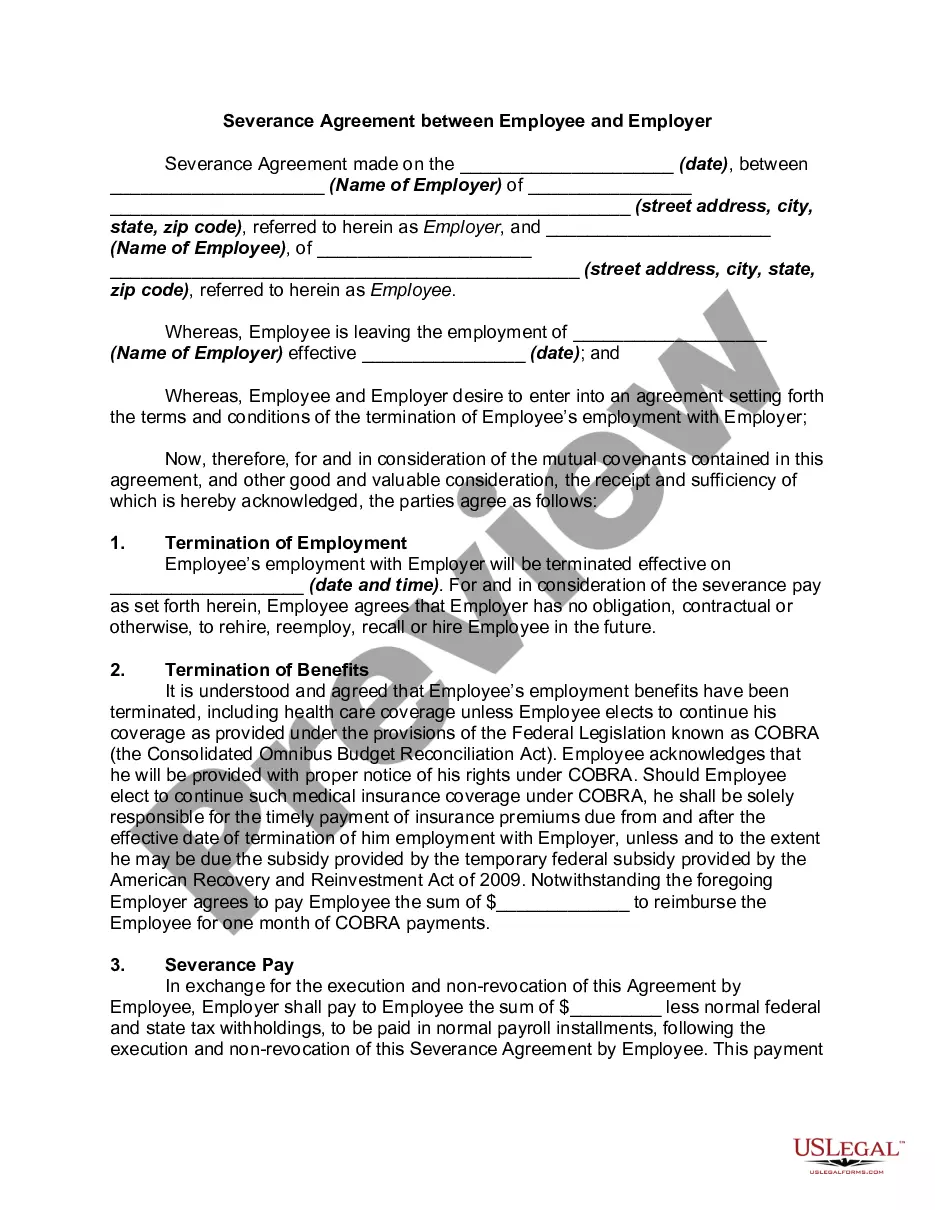
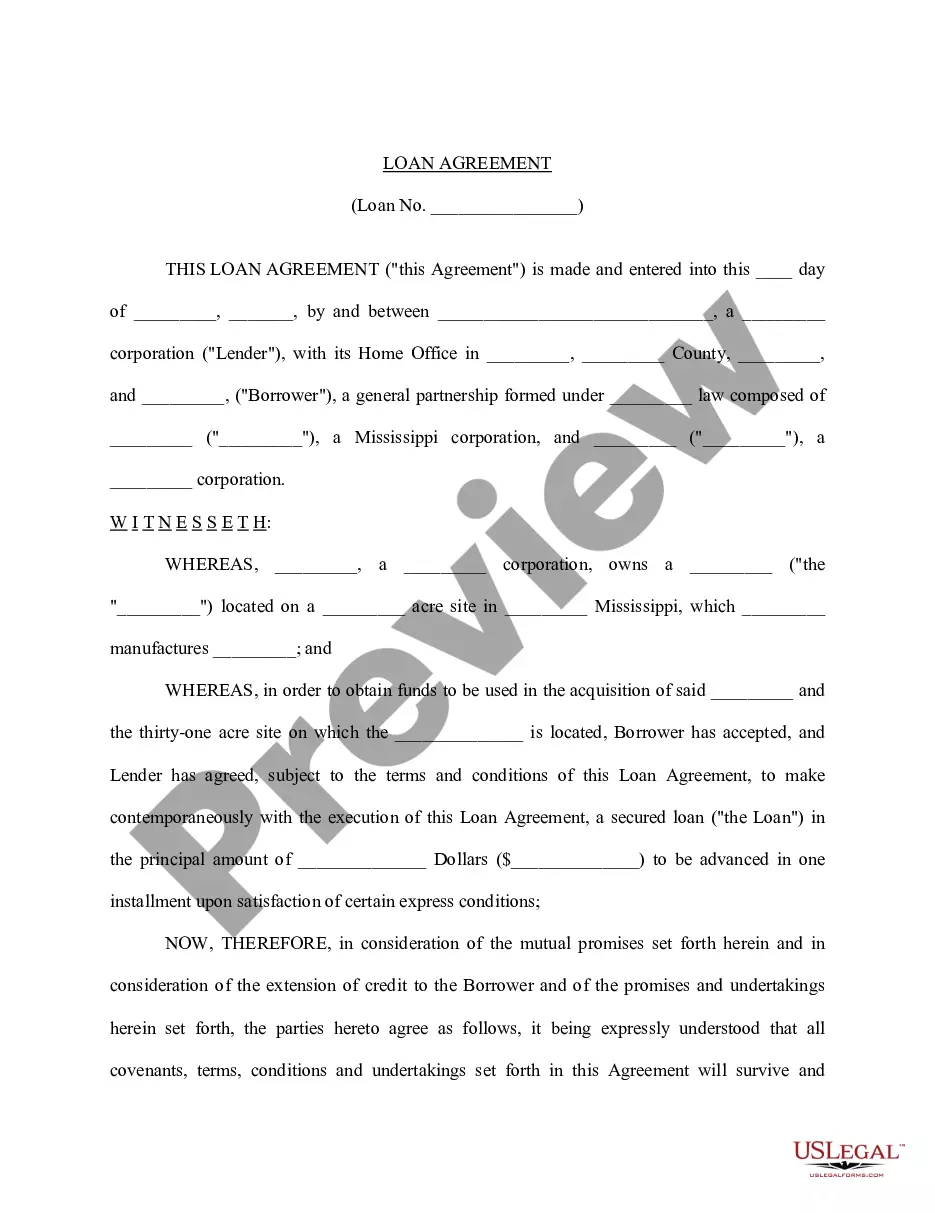
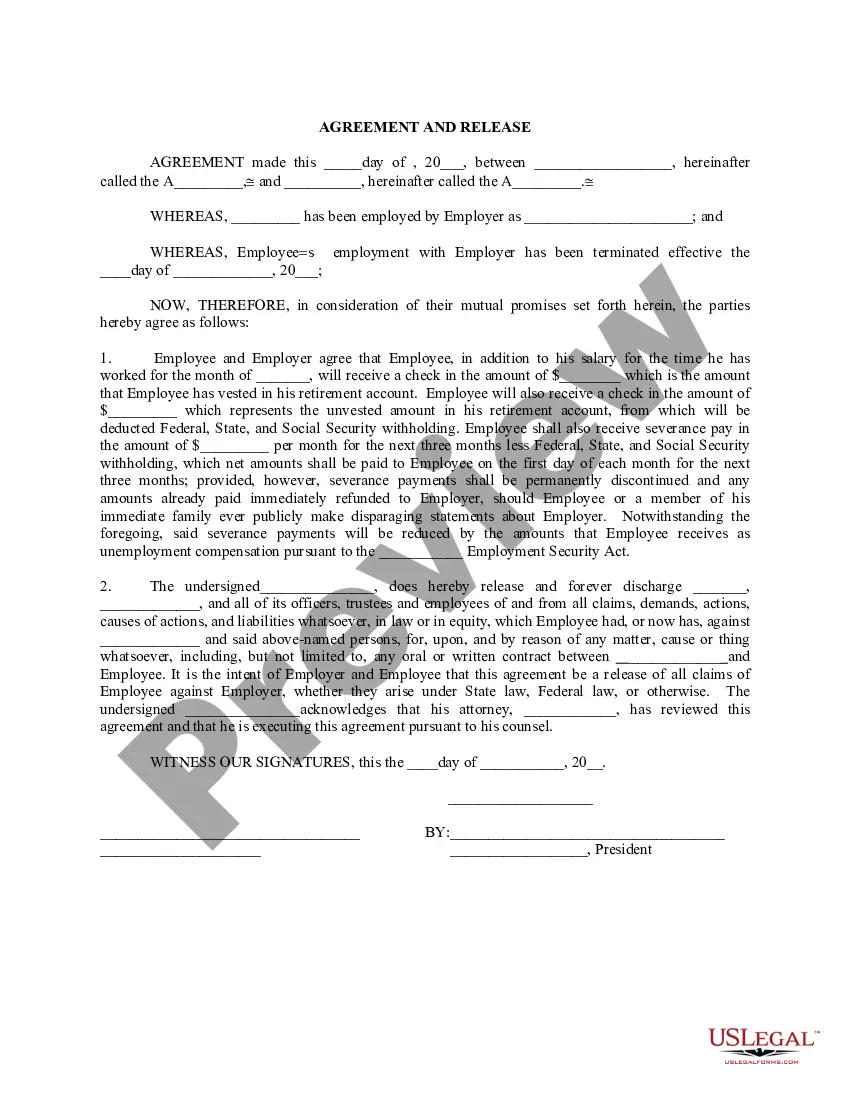
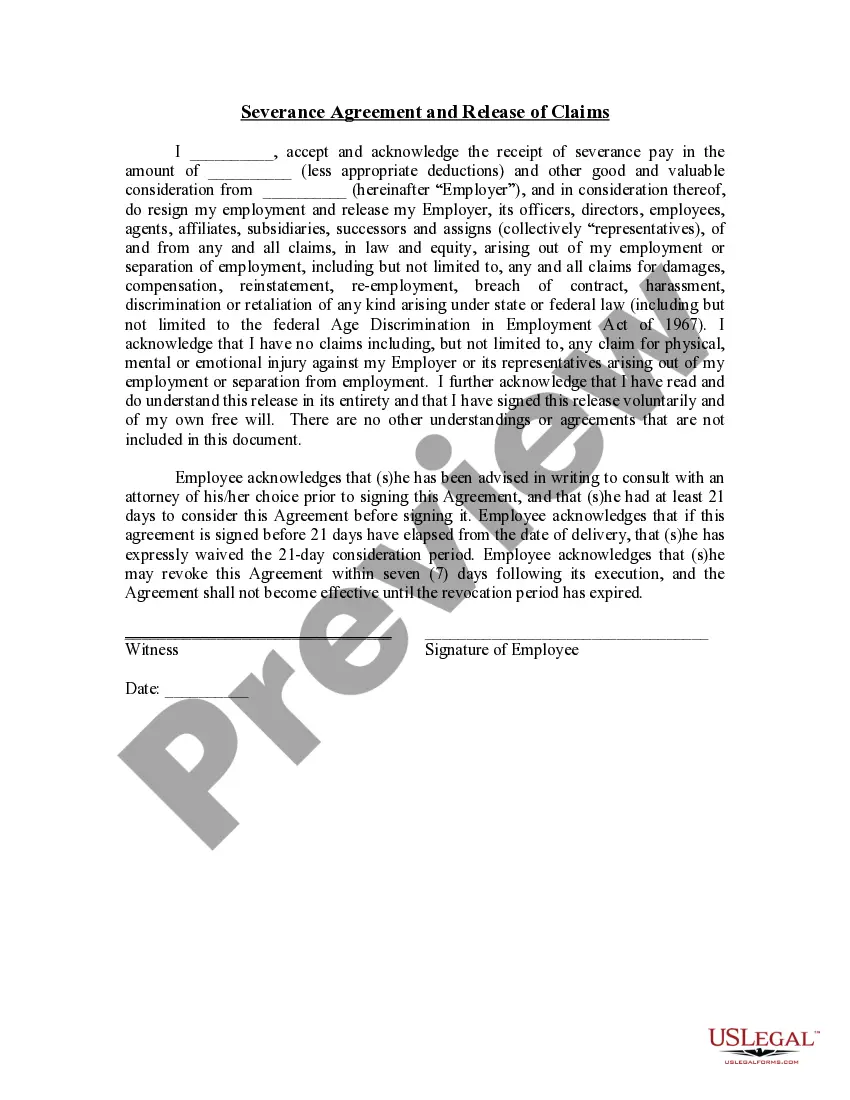
Overview of this form
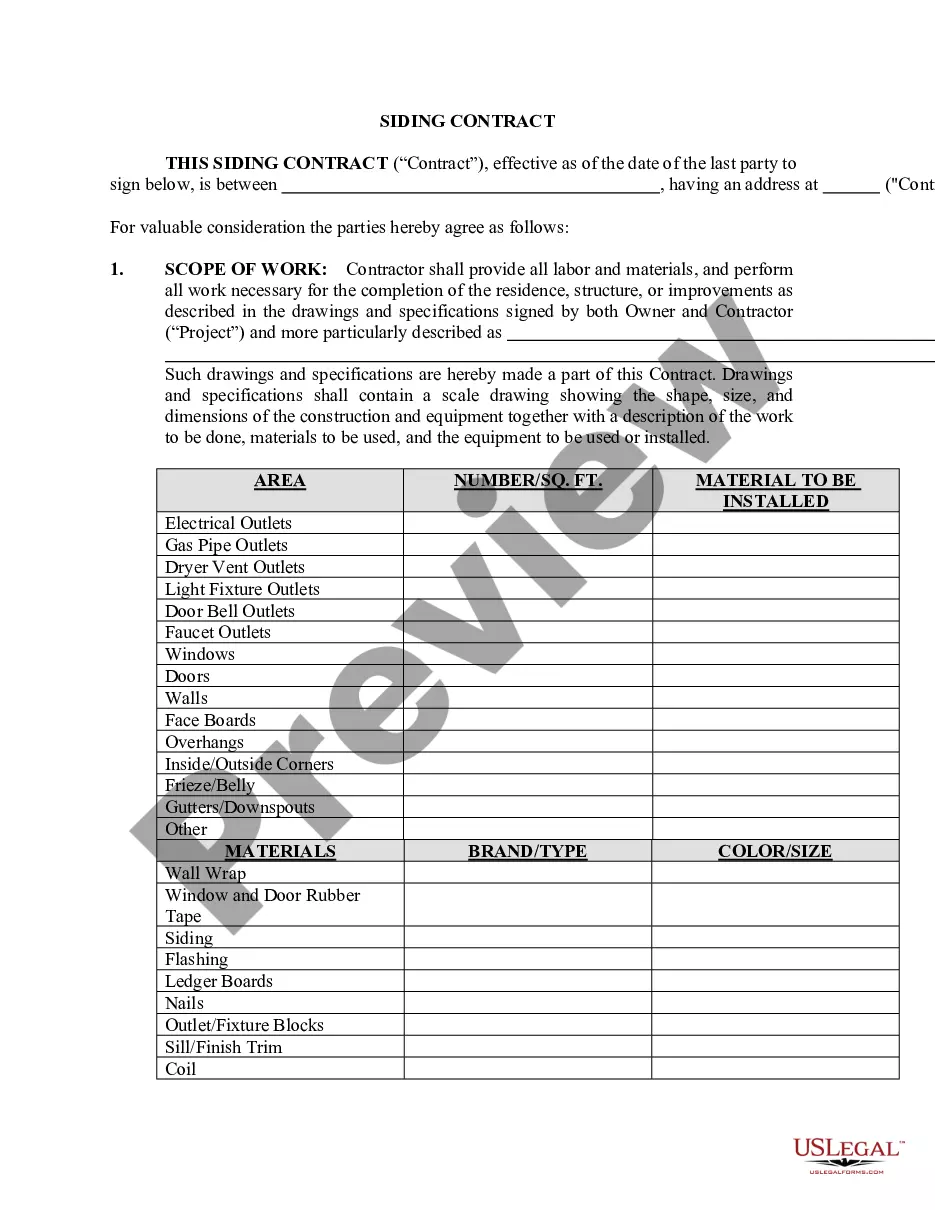
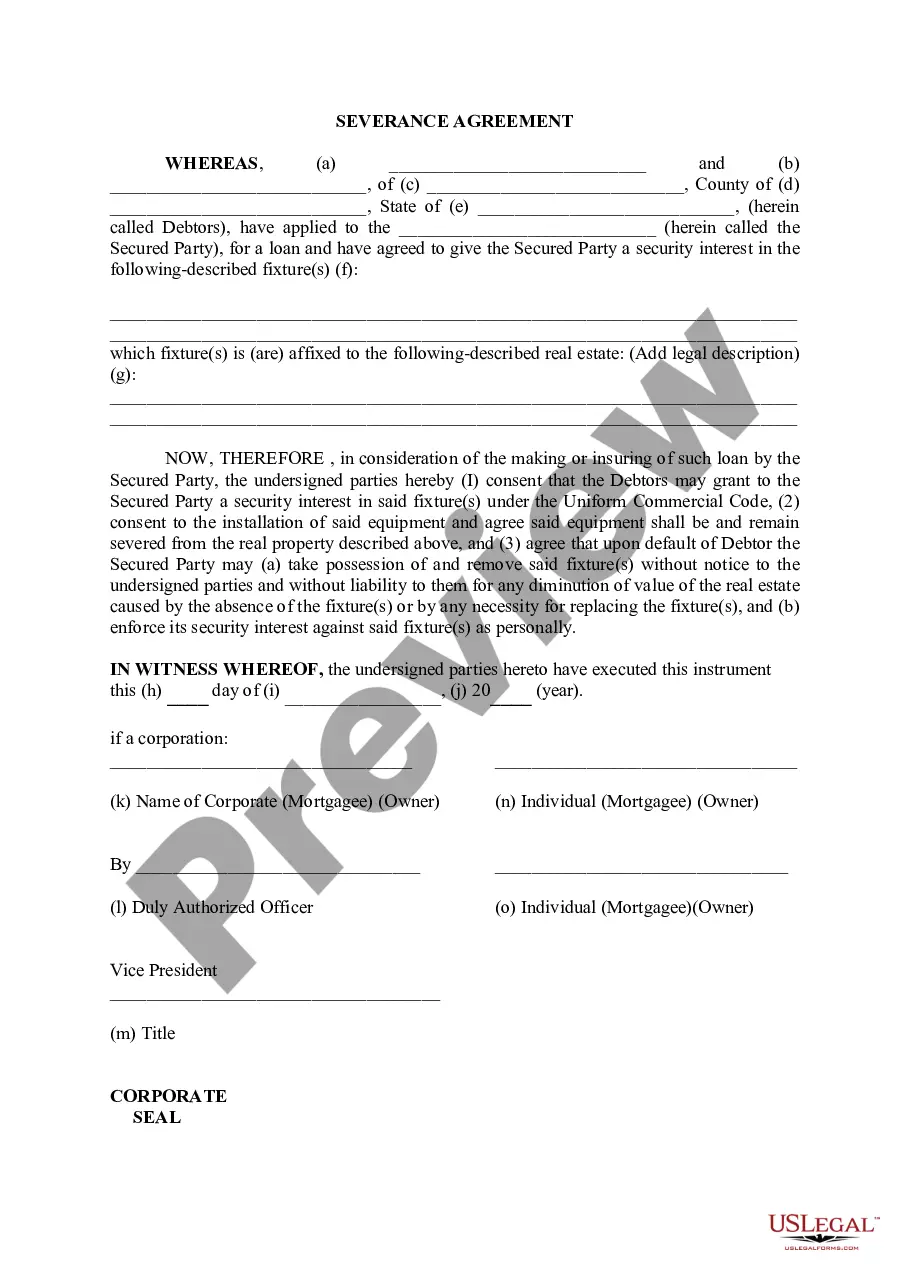
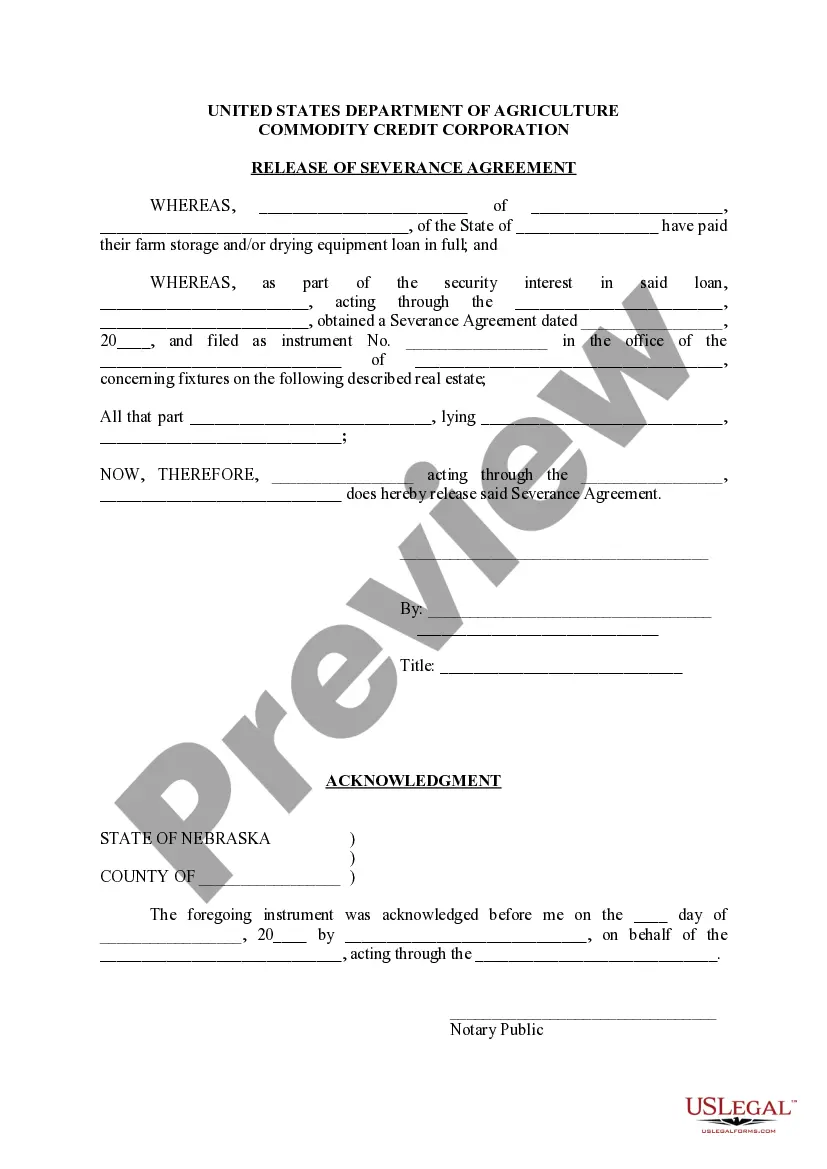
A severance agreement is a legal document used when debtors agree to grant a secured party a security interest in specific fixtures related to a loan. This form ensures that the secured party can enforce its interest in the fixtures, such as equipment or installations, should the debtors default on their loan. It differs from other loan agreements as it specifically addresses the relationship between tangible personal property and real estate, ensuring clarity about ownership and rights over the fixtures involved.
Main sections of this form
- Parties involved: Identifies the debtors and secured party.
- Description of fixtures: Details the specific fixture(s) being secured.
- Legal description of property: Provides a legal description of the real estate where fixtures are attached.
- Consent clauses: States the debtors' consent for the secured party to have a security interest.
- Default provisions: Outlines actions the secured party can take in case of default.
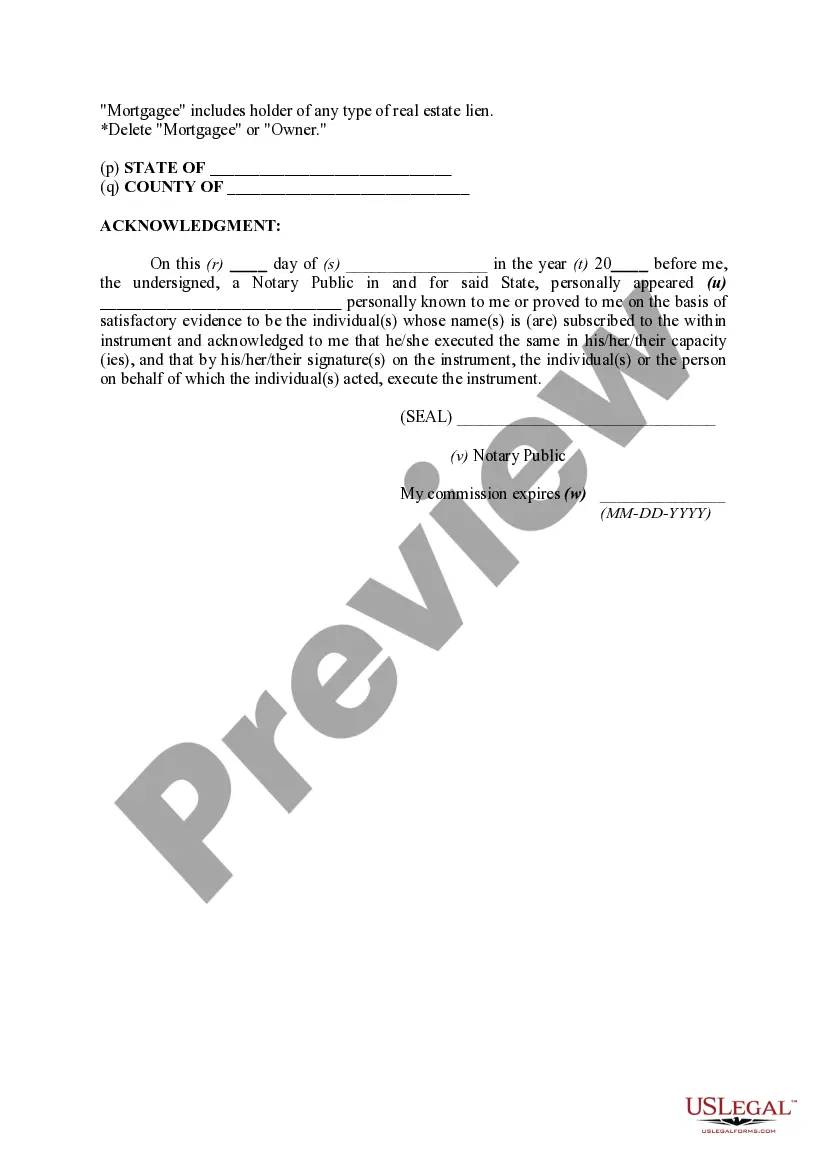
- Notary acknowledgment: Space for notarization to validate the agreement.
Common use cases
This severance agreement should be used when a debtor is requesting a loan and is willing to provide security in the form of fixtures affixed to a property. It is essential in situations where the lender needs assurance that the fixtures may be claimed or removed in case of default, offering protection for the investment made in the loan.
Who this form is for
- Debtors seeking financing who need to secure a loan with fixtures.
- Lenders or secured parties who want to establish a legal claim over property fixtures.
- Property owners and businesses that regularly engage in secured financing arrangements.
Instructions for completing this form
- Identify the parties: Fill in the names and addresses of the debtors and the secured party.
- Describe the fixtures: Clearly outline the fixtures being used as collateral in the loan.
- Provide property details: Insert the legal description of the real estate where the fixtures are located.
- Enter consent terms: Make sure all parties agree to the terms for the security interest.
- Sign and date: Ensure all parties sign and add the date and notarization where required.
Does this form need to be notarized?
Yes, this form must be notarized to be legally valid. Having a notary public witness the signing of the severance agreement adds a layer of authenticity and can help prevent disputes over its execution. US Legal Forms offers integrated online notarization services, making it easy to complete this process securely and efficiently.
Get your form ready online
Our built-in tools help you complete, sign, share, and store your documents in one place.
Make edits, fill in missing information, and update formatting in US Legal Forms—just like you would in MS Word.
Download a copy, print it, send it by email, or mail it via USPS—whatever works best for your next step.
Sign and collect signatures with our SignNow integration. Send to multiple recipients, set reminders, and more. Go Premium to unlock E-Sign.
If this form requires notarization, complete it online through a secure video call—no need to meet a notary in person or wait for an appointment.
We protect your documents and personal data by following strict security and privacy standards.

Make edits, fill in missing information, and update formatting in US Legal Forms—just like you would in MS Word.

Download a copy, print it, send it by email, or mail it via USPS—whatever works best for your next step.

Sign and collect signatures with our SignNow integration. Send to multiple recipients, set reminders, and more. Go Premium to unlock E-Sign.

If this form requires notarization, complete it online through a secure video call—no need to meet a notary in person or wait for an appointment.

We protect your documents and personal data by following strict security and privacy standards.
Mistakes to watch out for
- Failing to include a complete legal description of the property.
- Not specifying all fixtures being secured.
- Omitting necessary signatures or dates, which can invalidate the agreement.
- Not having the document notarized if required by state law.
Benefits of completing this form online
- Convenient access to legal forms anytime and from anywhere.
- Easy to edit and customize based on specific transaction needs.
- Reliable templates drafted by licensed attorneys, ensuring legal compliance.
Looking for another form?
Form popularity
FAQ
Understand the components of a severance package. Wait before signing paperwork. Read everything carefully. Get an expert opinion. Understand your priorities. Negotiate for more than money. Decide on a reasonable request. Leverage your success.
The severance pay offered is typically one to two weeks for every year worked, but can be more.The general practice is to try to get four weeks of severance pay for each year worked. Middle managers and executives usually receive a higher amount. Some executives, for example, may receive pay for more than a year.
Amount of severance pay. How severance is paid (installments or lump sum) Coverage of healthcare plan costs. Exact date of termination. Vesting in a retirement plan or stock options. Outplacement or job-training services.
A lump sum payment is a one-time payment in full of the amount of severance pay that you and your employer have agreed to. A lump sum payment gives you immediate funds to invest or use. If you receive a lump sum, your other fringe benefits will usually cease as of the date of the payment.
Accordingly, you would divide your yearly salary by 52 to get the weekly pay rate. Then, multiply this pay rate by the number of weeks. If you earn $39,000 a year, then you make $750 a week. If you worked for the company for 10 years, then you would get $7,500 in severance.
This is because all Canadian employees are entitled to common law severance, which provides a range of around two and half months' severance up to thirty-six months' severance depending on several factors.
If your severance agreement included a release, you may have given up the right to sue your former employer. Some employers offer severance to employees who lose their jobs. Often, however, employees who want a severance package have to sign a release or waiver, by which they give up their right to sue the company.
An individual is not required to sign a severance agreement. You may not like the terms being offered and want to negotiate for better ones. You may decide against signing the agreement if you intend to file a lawsuit and do not want to accept the benefits offered in exchange for agreeing not to sue.
Compensation details. Confidentiality rules following termination. Date of employee's termination. Agreement from both parties in the form of a signature. Details about how long the employee will continue to have access to benefits.