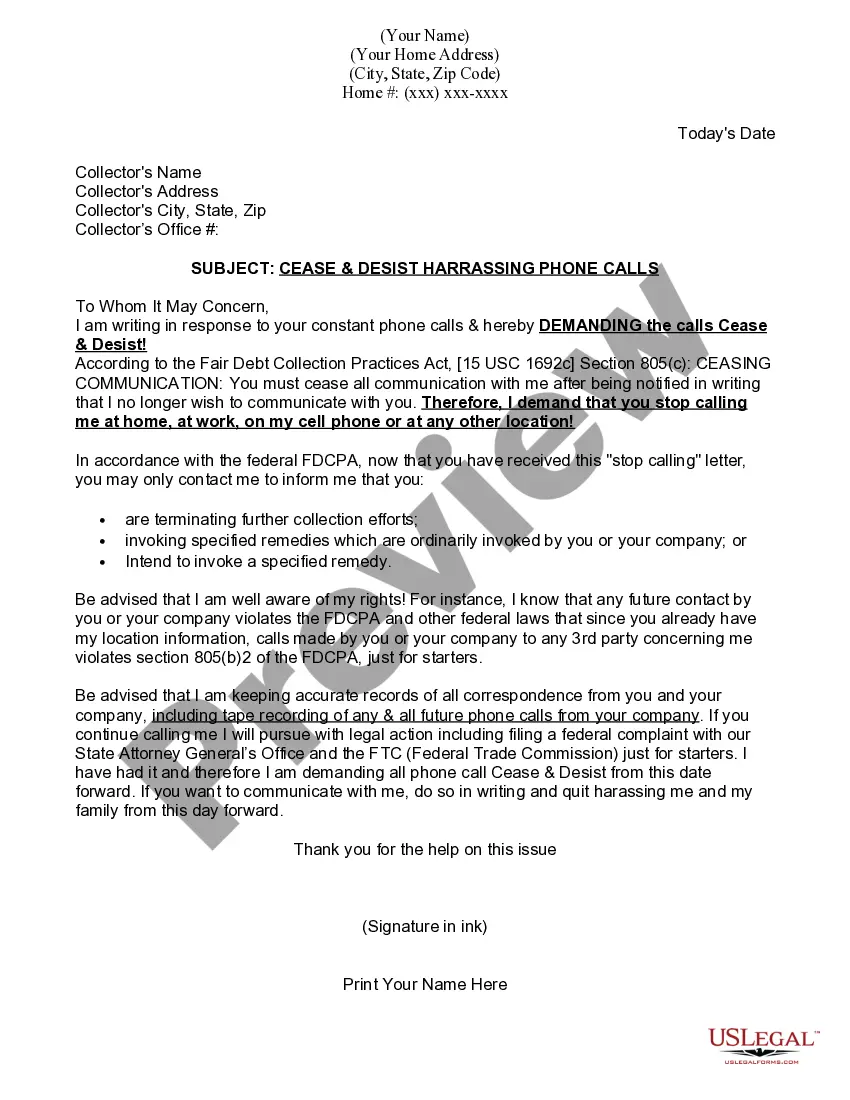
North Dakota Cease and Desist for Stalking
Description
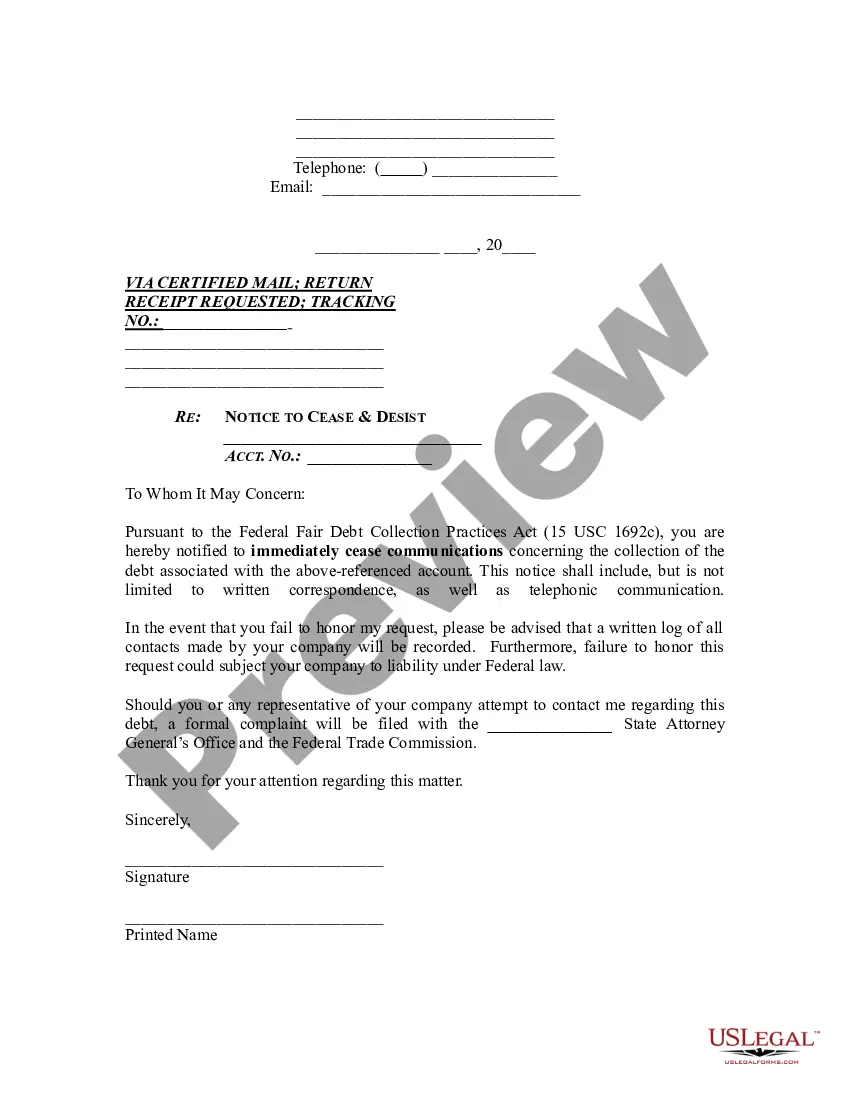
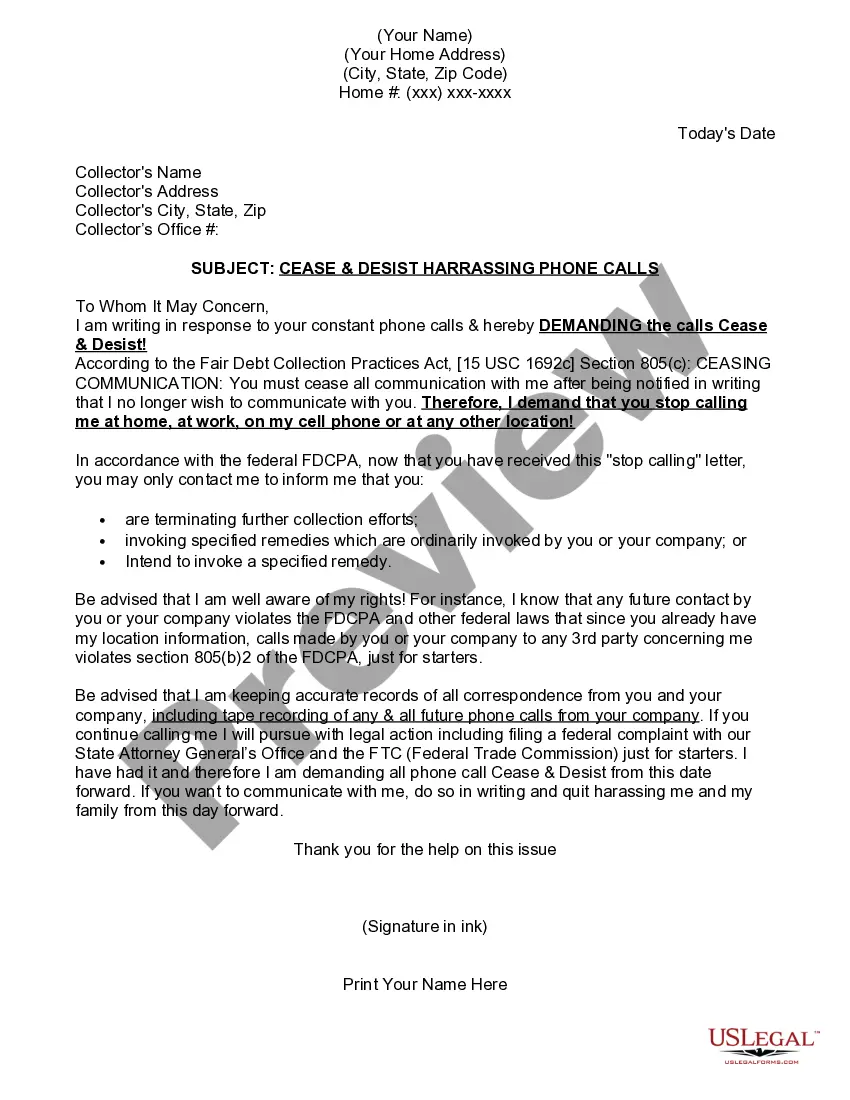
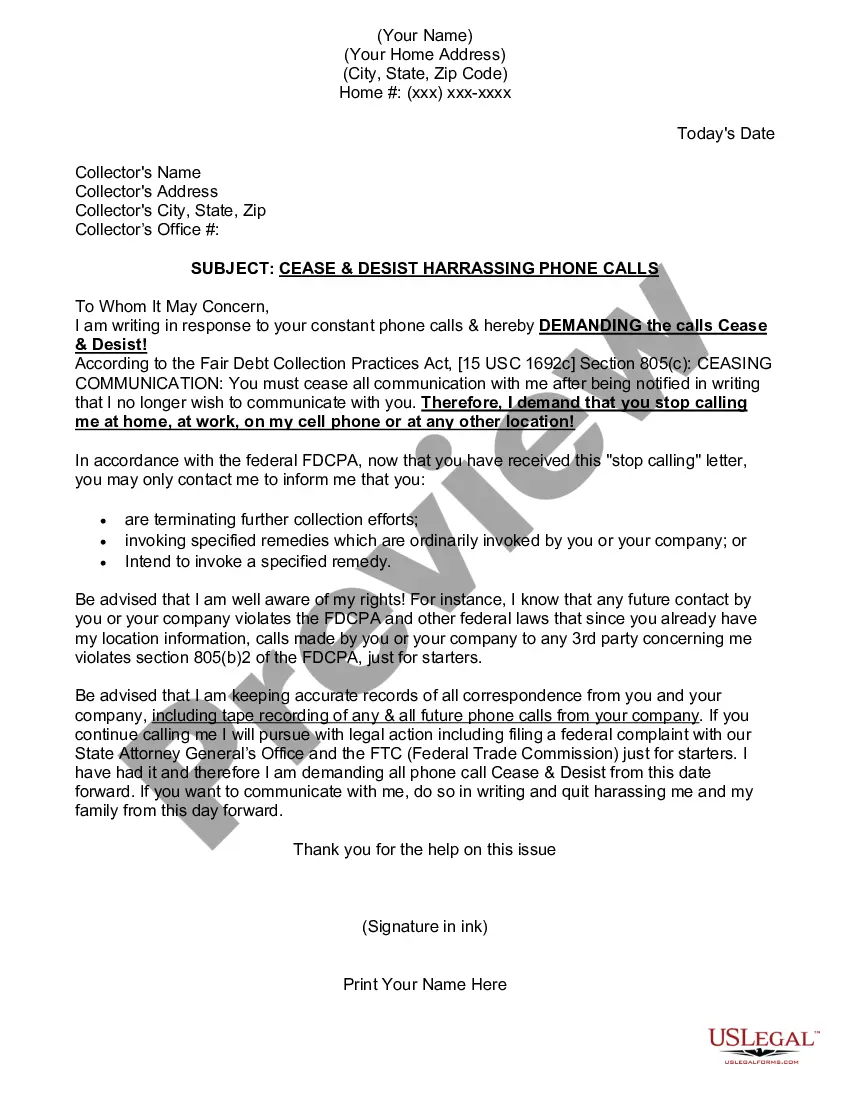
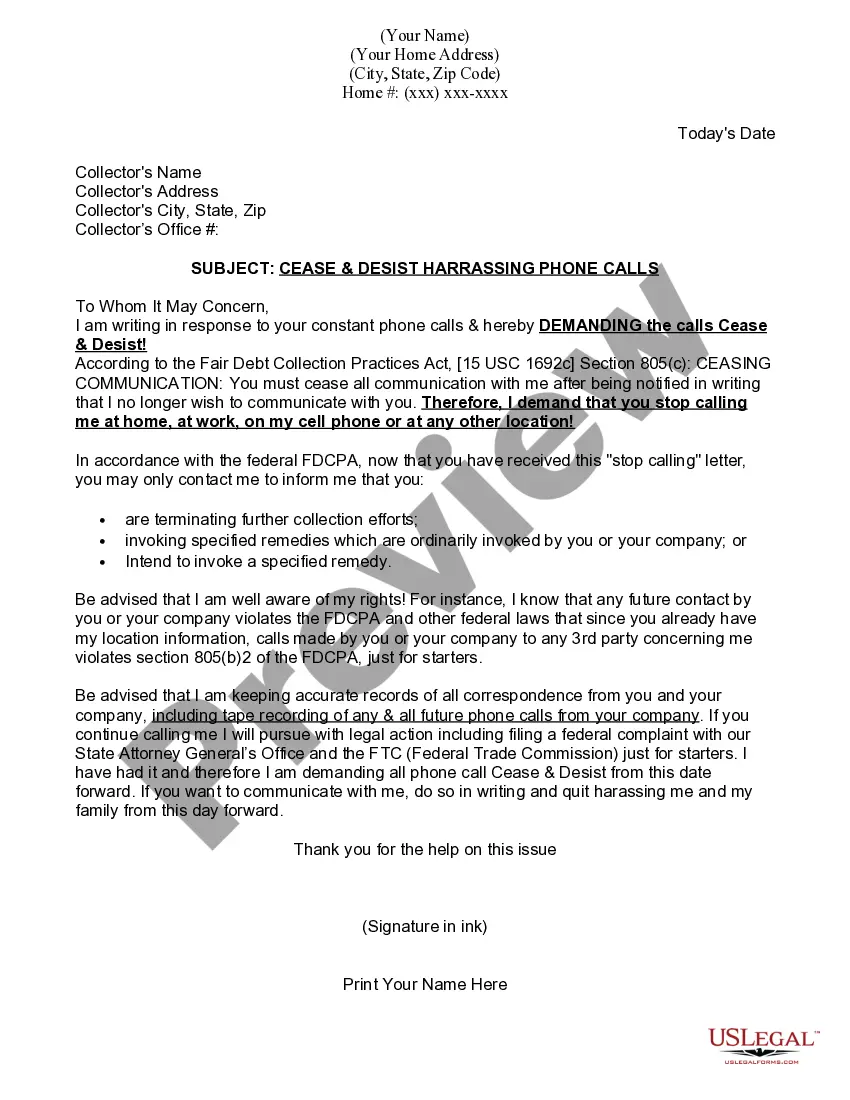
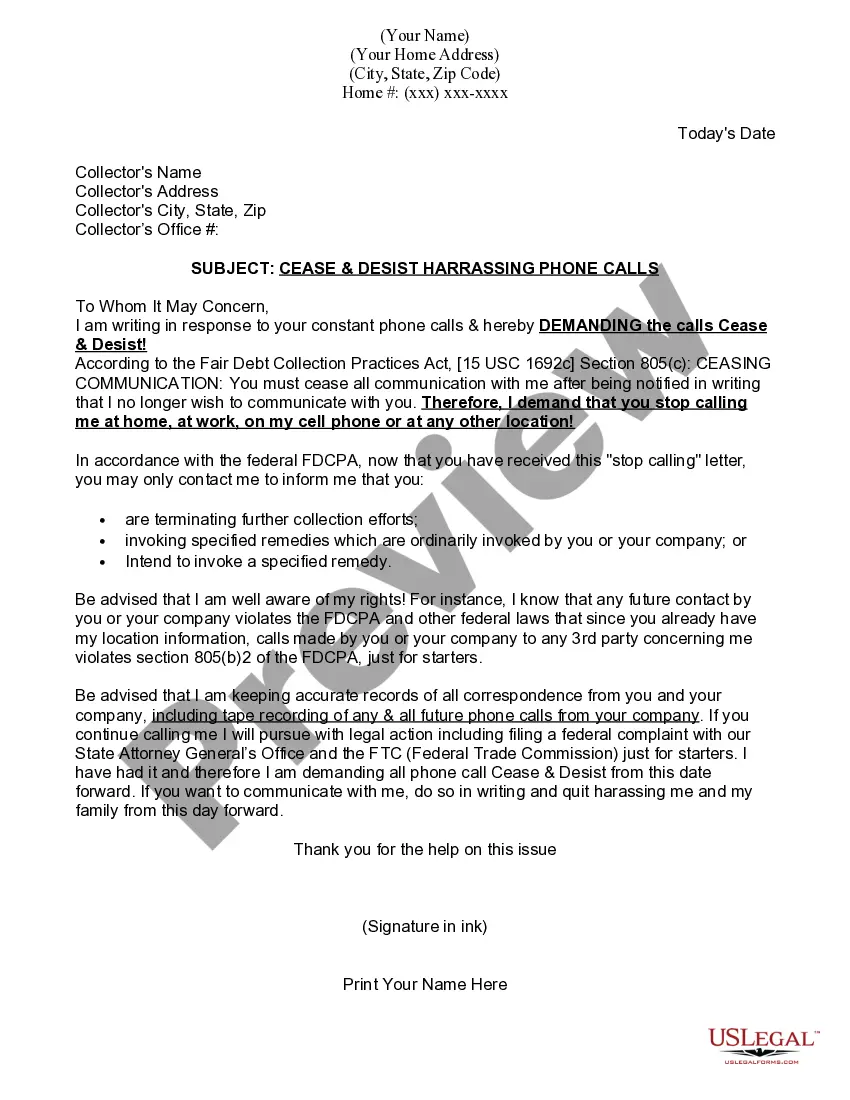
How to fill out Cease And Desist For Stalking?
Have you ever found yourself needing documents for either professional or personal occasions almost constantly.
There are numerous legal document templates available online, but finding reliable ones is challenging.
US Legal Forms offers a vast array of template forms, including the North Dakota Cease and Desist for Stalking, which can be completed to meet federal and state requirements.
You can view all the document templates you have purchased in the My documents section.
You can obtain an additional copy of the North Dakota Cease and Desist for Stalking whenever necessary; just click on the desired form to download or print the document template.
- If you are already familiar with the US Legal Forms website and have an account, simply Log In.
- Then, you can download the North Dakota Cease and Desist for Stalking template.
- If you do not have an account and wish to start using US Legal Forms, follow these steps.
- Locate the form you need and ensure it is for the correct city/region.
- Utilize the Preview button to examine the form.
- Read the description to confirm that you have selected the correct template.
- If the form is not what you are looking for, use the Search field to find the template that fits your needs.
- Once you find the right form, click Acquire now.
- Select the pricing plan you prefer, fill in the required information to create your account, and pay for your order using PayPal or credit card.
- Choose a convenient document format and download your copy.
Form popularity
FAQ
Writing a cease and desist letter for harassment in North Dakota requires clear communication of your concerns. Start by stating the specific behaviors that constitute harassment, and reference the impact these actions have on your well-being. Be sure to include a request for the behavior to stop immediately. Using a professional platform like US Legal Forms can help you create a formal letter that adheres to legal standards.
To establish a North Dakota Cease and Desist for Stalking, you need to gather evidence that supports your claims. This may include documented incidents of stalking, such as messages, emails, or witness statements. Additionally, maintaining a record of dates and times when stalking occurred can strengthen your case. Collecting this information is crucial to present a compelling argument.
Rule 32 in court refers to the guidelines that govern how evidence is introduced and evaluated. This rule aims to ensure a fair trial by setting standards for evidence admissibility. If you're facing stalking issues, understanding this rule can enhance your strategy when filing a North Dakota Cease and Desist for Stalking. It equips you with the knowledge to present your case effectively and protect your legal rights.
In a divorce in North Dakota, a wife is entitled to a fair division of marital property, which includes assets and debts acquired during the marriage. Additionally, she may seek alimony, depending on the circumstances of the marriage and financial needs. If stalking or harassment occurs during the divorce process, filing a North Dakota Cease and Desist for Stalking can provide protection and ensure her rights are upheld. It’s important to consult with a legal expert to navigate these situations effectively.
Rule 32 in North Dakota refers to the rules governing the admissibility of evidence in court proceedings. This rule outlines how evidence should be presented and evaluated during legal cases. For those dealing with issues like stalking, understanding Rule 32 can be crucial when filing a North Dakota Cease and Desist for Stalking. It ensures that your evidence is properly recognized and can strengthen your case.
When seeking a cease and desist, you must provide proof that demonstrates the stalking behavior has occurred. This may include a combination of written records, photographs, and witness accounts. By gathering this information, you strengthen your case and enhance your chances of successfully obtaining a North Dakota Cease and Desist for Stalking.
Harassment in North Dakota includes any actions that create a hostile environment through unwanted contact or communication. This encompasses behaviors such as stalking, threats, or any repetitive actions intended to intimidate or annoy another person. Knowing what constitutes harassment is essential when considering a North Dakota Cease and Desist for Stalking.
In North Dakota, a cease and desist order for stalking is warranted when an individual engages in repeated, unwanted contact or behavior that causes fear or distress. This can include threats, following, or other forms of intimidation. Understanding your rights can help you take the necessary steps to protect yourself and seek relief through the legal process.
To effectively pursue a North Dakota Cease and Desist for Stalking, you need clear evidence of the stalking behavior. This includes logs of communications, witness statements, photographs, or any other relevant documentation. Collecting this evidence helps establish a pattern of behavior that supports your request for the cease and desist order.