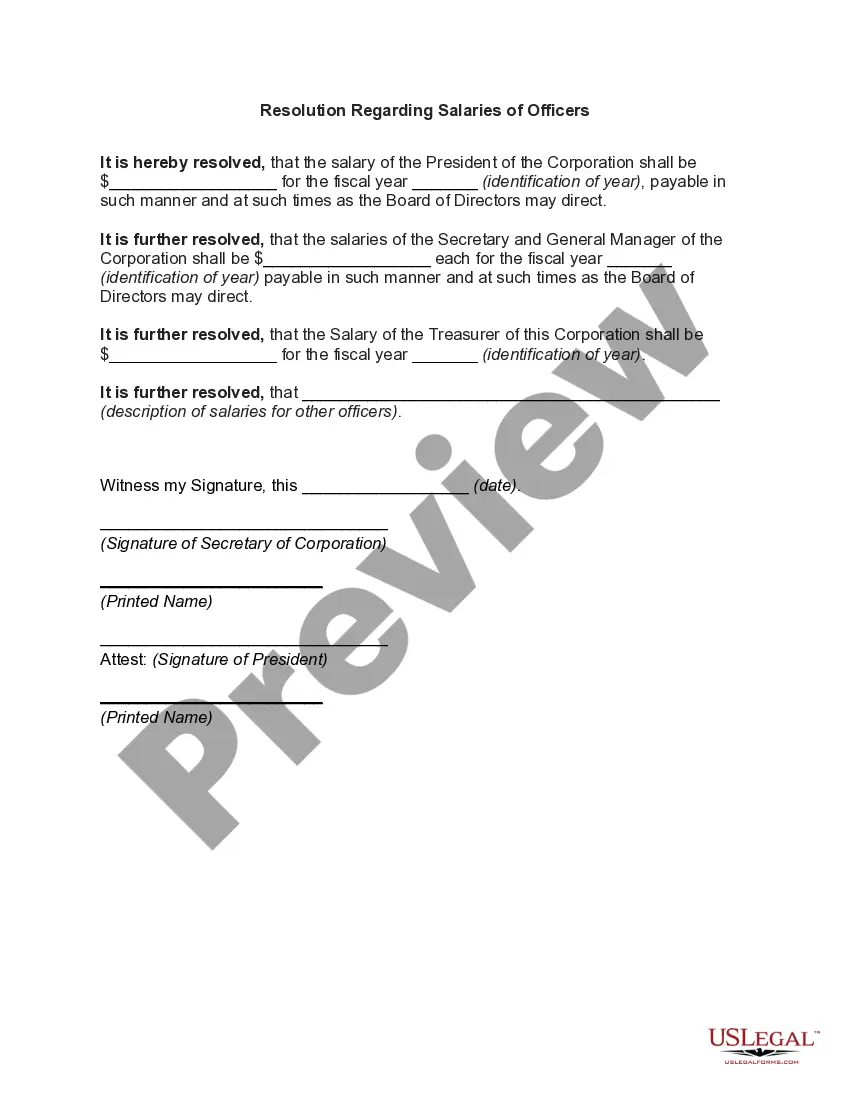
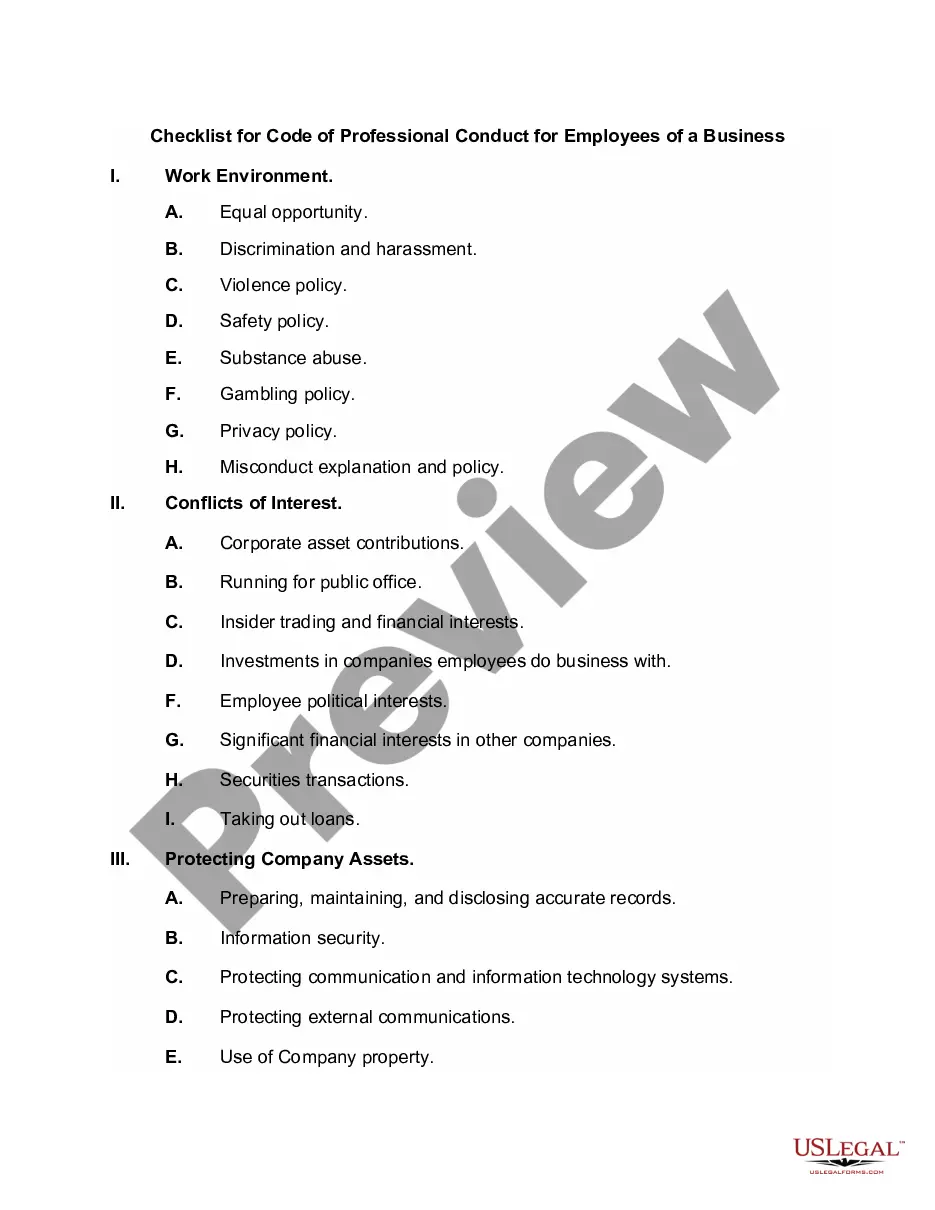
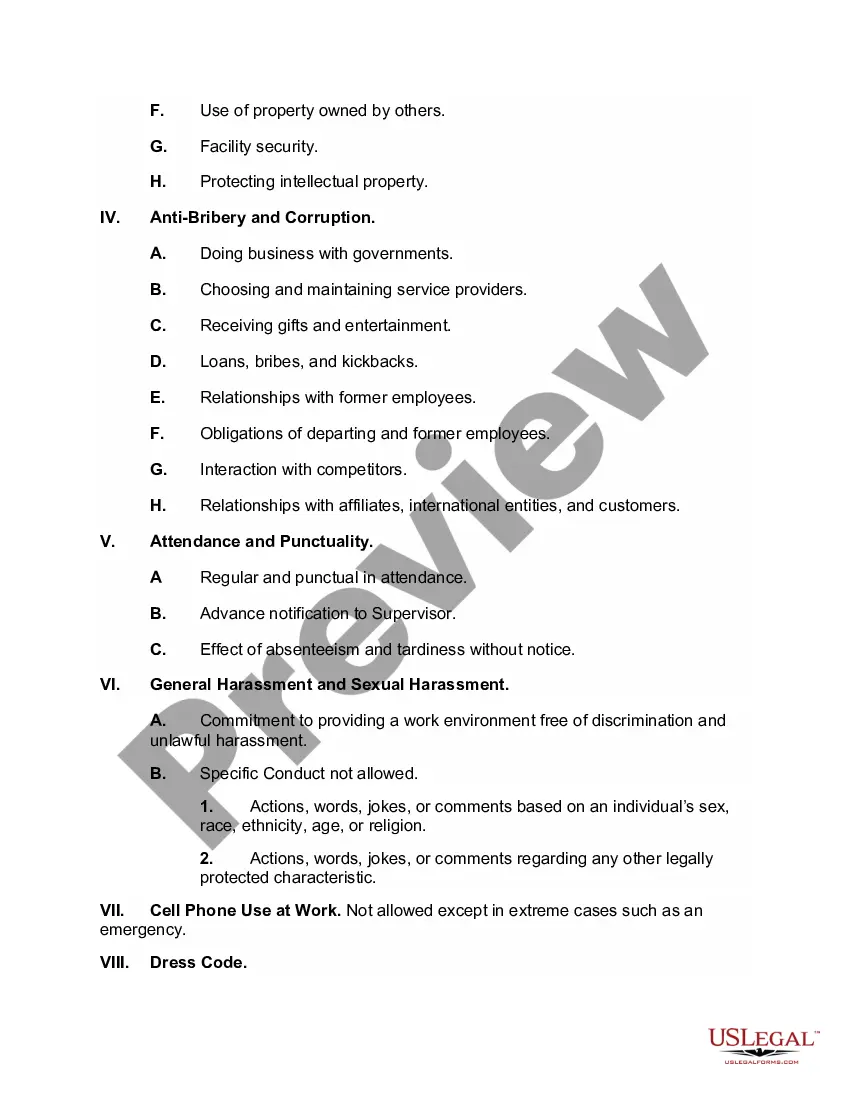
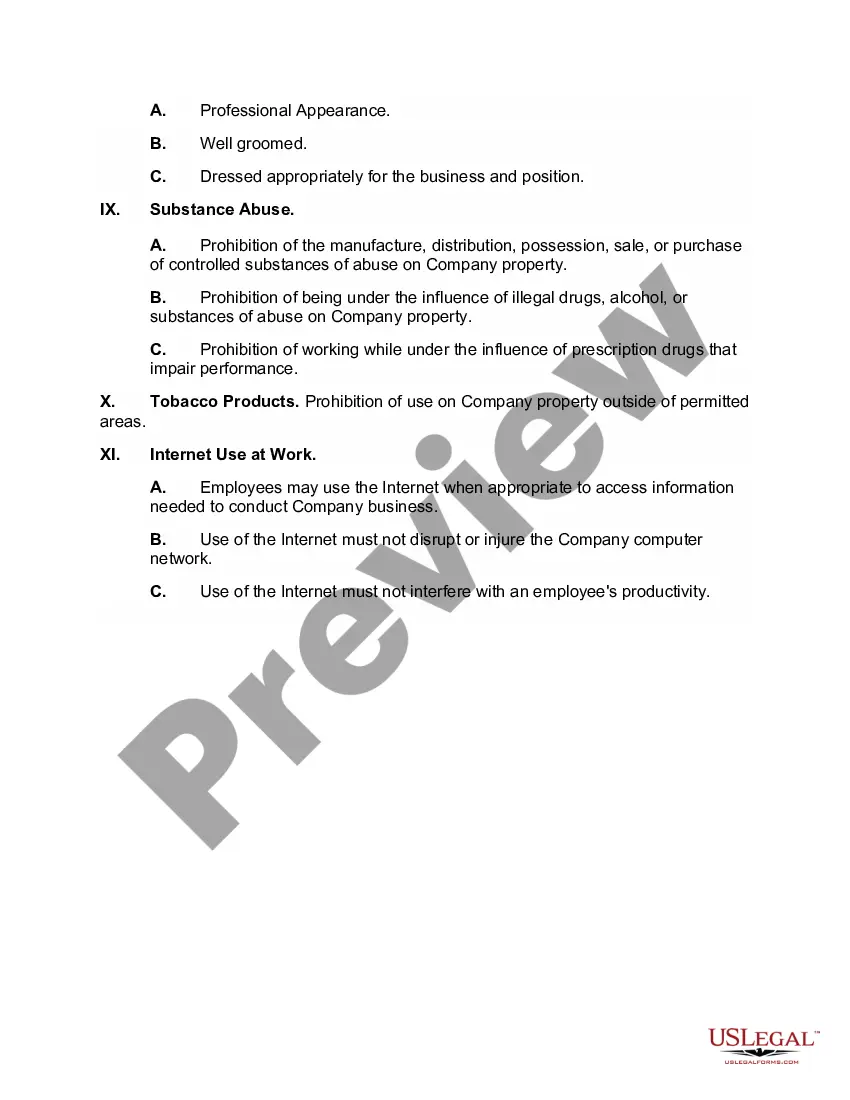
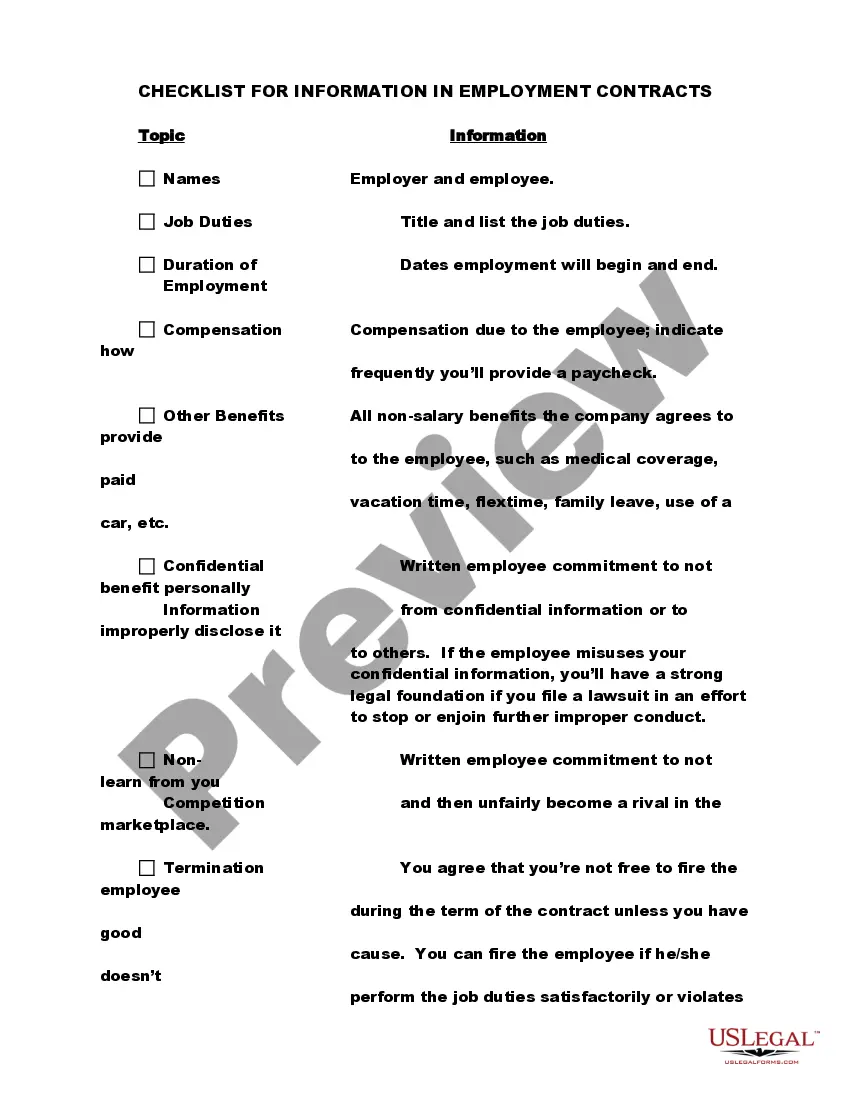
North Dakota Checklist for Code of Professional Conduct for Employees of a Business
Description
Get your form ready online
Our built-in tools help you complete, sign, share, and store your documents in one place.
Make edits, fill in missing information, and update formatting in US Legal Forms—just like you would in MS Word.
Download a copy, print it, send it by email, or mail it via USPS—whatever works best for your next step.
Sign and collect signatures with our SignNow integration. Send to multiple recipients, set reminders, and more. Go Premium to unlock E-Sign.
If this form requires notarization, complete it online through a secure video call—no need to meet a notary in person or wait for an appointment.
We protect your documents and personal data by following strict security and privacy standards.

Make edits, fill in missing information, and update formatting in US Legal Forms—just like you would in MS Word.

Download a copy, print it, send it by email, or mail it via USPS—whatever works best for your next step.

Sign and collect signatures with our SignNow integration. Send to multiple recipients, set reminders, and more. Go Premium to unlock E-Sign.

If this form requires notarization, complete it online through a secure video call—no need to meet a notary in person or wait for an appointment.

We protect your documents and personal data by following strict security and privacy standards.
Looking for another form?



How to fill out Checklist For Code Of Professional Conduct For Employees Of A Business?
You might invest hours online attempting to discover the authentic documents format that satisfies the state and federal standards you require.
US Legal Forms offers numerous authentic forms that have been reviewed by professionals.
You can download or print the North Dakota Checklist for Code of Professional Conduct for Employees of a Business from the service.
If available, use the Preview button to look through the document format as well.
- If you already possess a US Legal Forms account, you may Log In and then click the Download button.
- Subsequently, you can complete, modify, print, or sign the North Dakota Checklist for Code of Professional Conduct for Employees of a Business.
- Each authentic document format you purchase is yours indefinitely.
- To obtain another copy of any acquired form, navigate to the My documents tab and click the relevant button.
- If you are using the US Legal Forms website for the first time, follow the straightforward instructions below.
- First, ensure that you have selected the correct document format for the county/region of your choice.
- Review the form specifications to confirm you have chosen the correct document.
Form popularity
FAQ
What are the five codes of ethics?Integrity.Objectivity.Professional competence.Confidentiality.Professional behavior.
A code of conduct is a set of rules and standards set by a company that instruct employees on how to behave in the workplace. These guides establish how employers expect team members to interact with clients, fellow staff members and company leadership.
The employee code of conduct defines acceptable behavior and social norms that individuals in an organization should adopt on a day-to-day basis. It should reflect a company's vision, core values and the overall culture of a company.
The most common sections to include in a code of conduct are: ethical principles - includes workplace behaviour and respect for all people. values - includes an honest, unbiased and unprejudiced work environment.
How to create a personal code of ethicsDetermine your purpose for writing a personal code of ethics. Establish your personal reasons for developing this code.Make a list of your traits.Consider your relationships.Create a set of statements to follow.Develop guidelines.
Set the wrong tone, perhaps one that is too legalistic or too vague. Contain the wrong degree of detail regarding expectations. Do not address the realities of conducting business. Do not provide employees with effective ways to address business challenges.
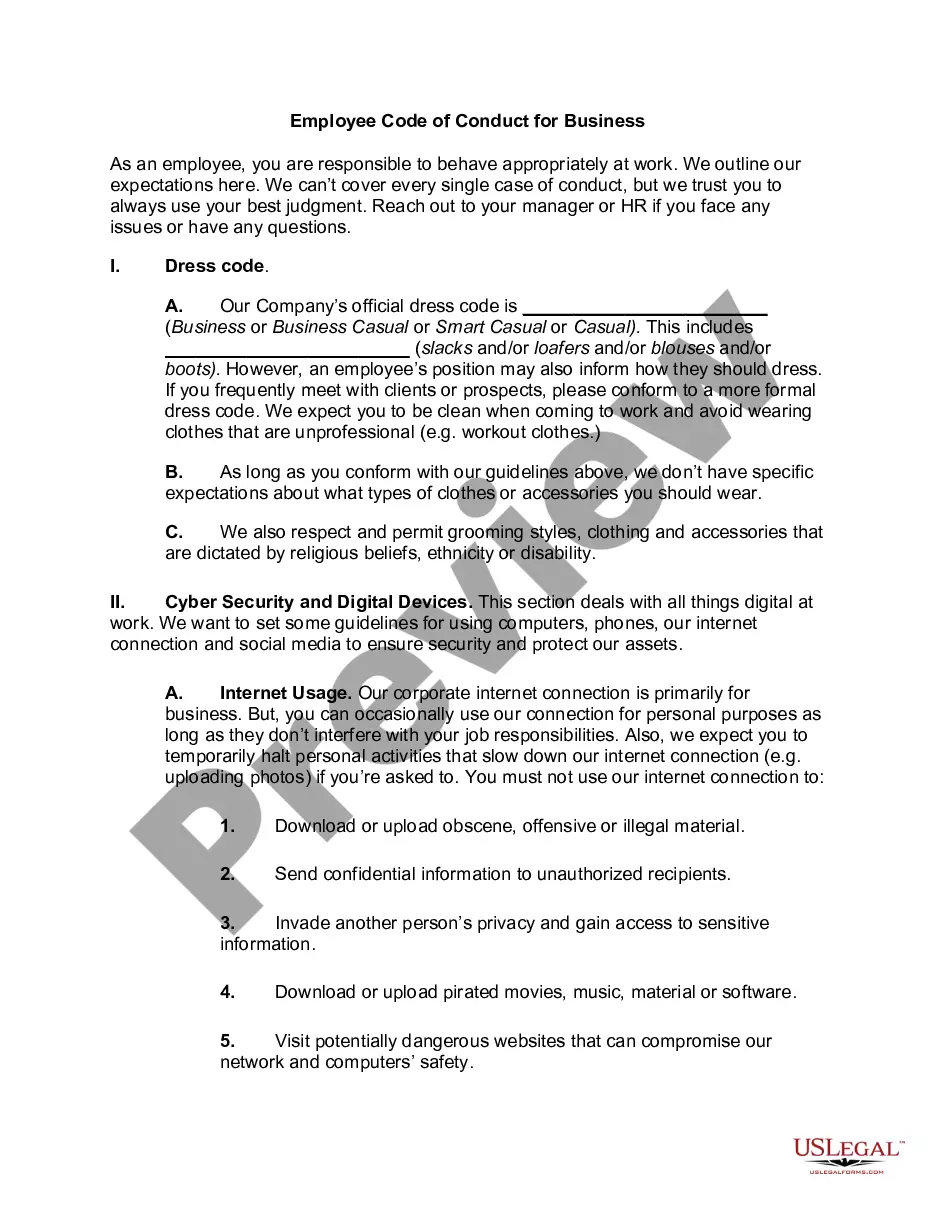
There are many types of code of conduct that an employer should include in their employee handbook....Here are some of the most important areas an employer should address:Company's values.Employee behaviors.Dress code.Tardiness/absenteeism.Leave policy.Employee break policy.Conflicts of interest.Communication.More items...?
Here is a list of elements you might include in your code of conduct: Mission statement and values. Workplace policies and procedures. Industry compliance and regulations.
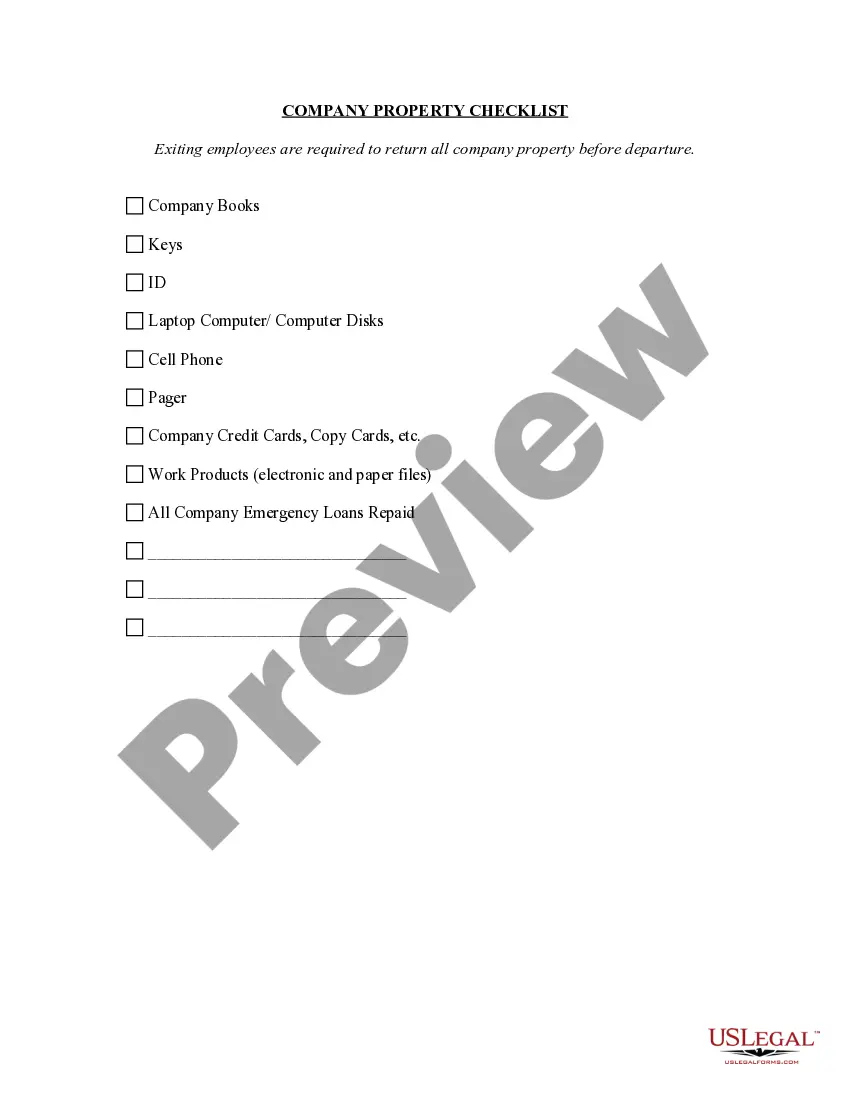
How to write a code of conductYour company's core values.Compliance with laws.Rules and policies for: Respect (including harassment, discrimination, and more) Use of company property. Personal appearance (including cleanliness and dress code) Absenteeism and lateness.Disciplinary actions.Signature page.