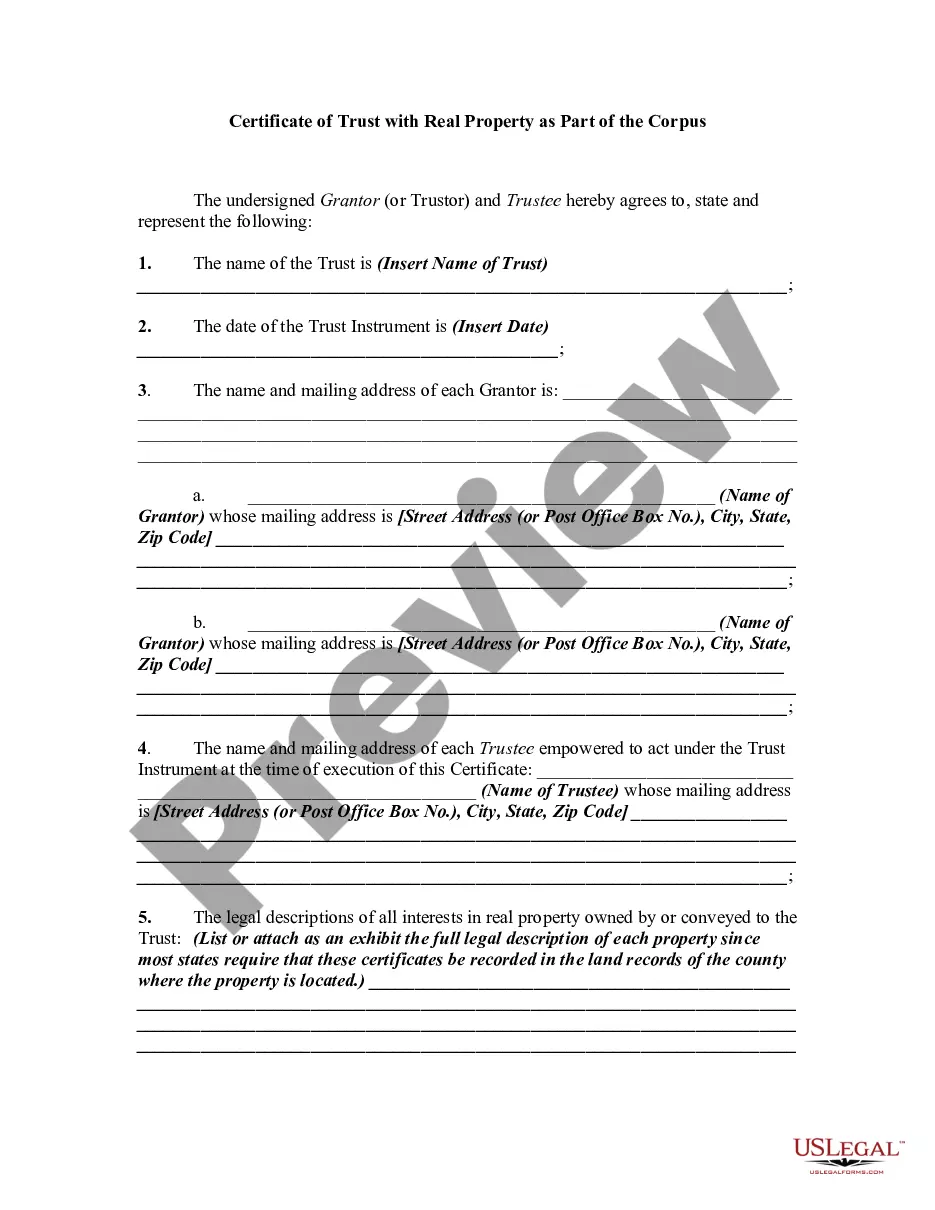
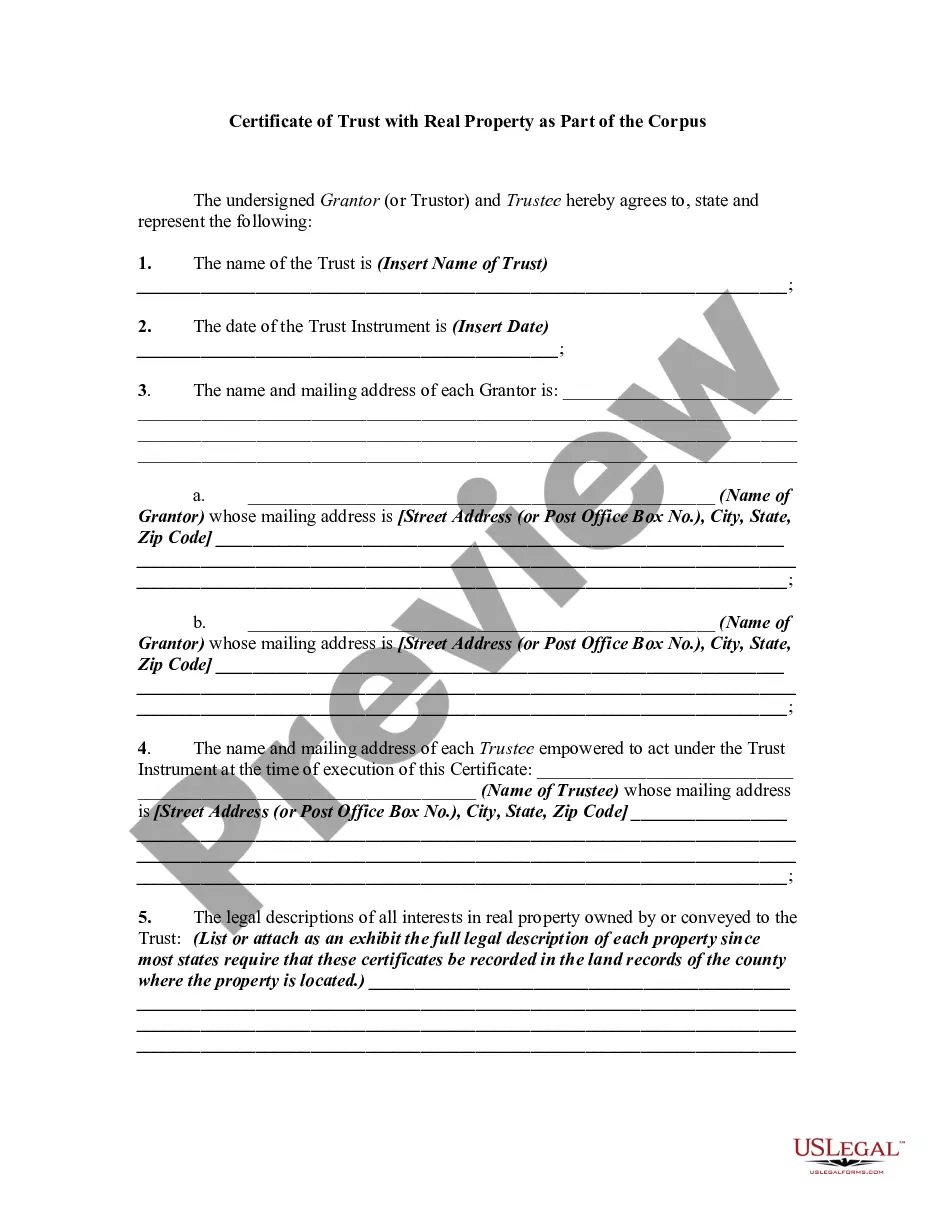
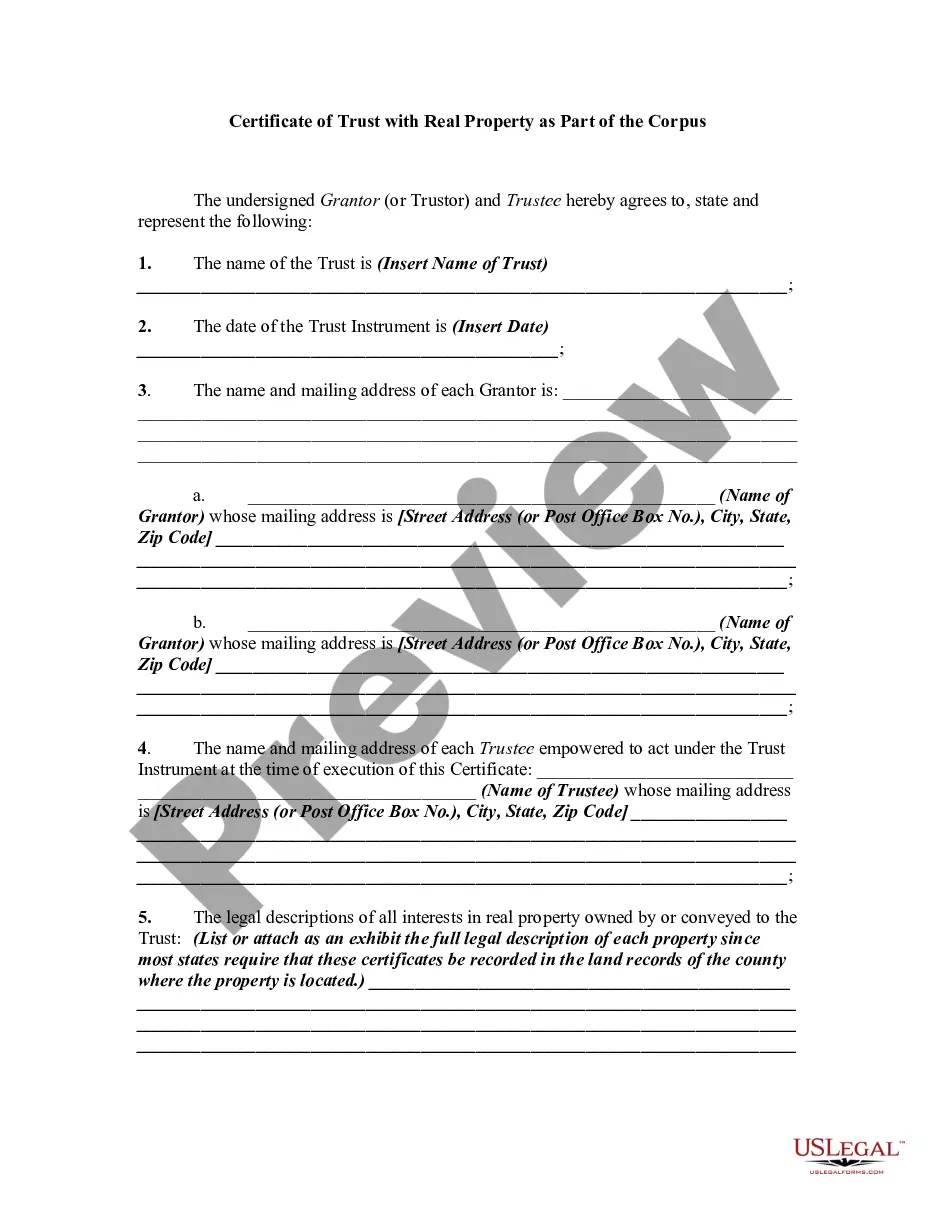
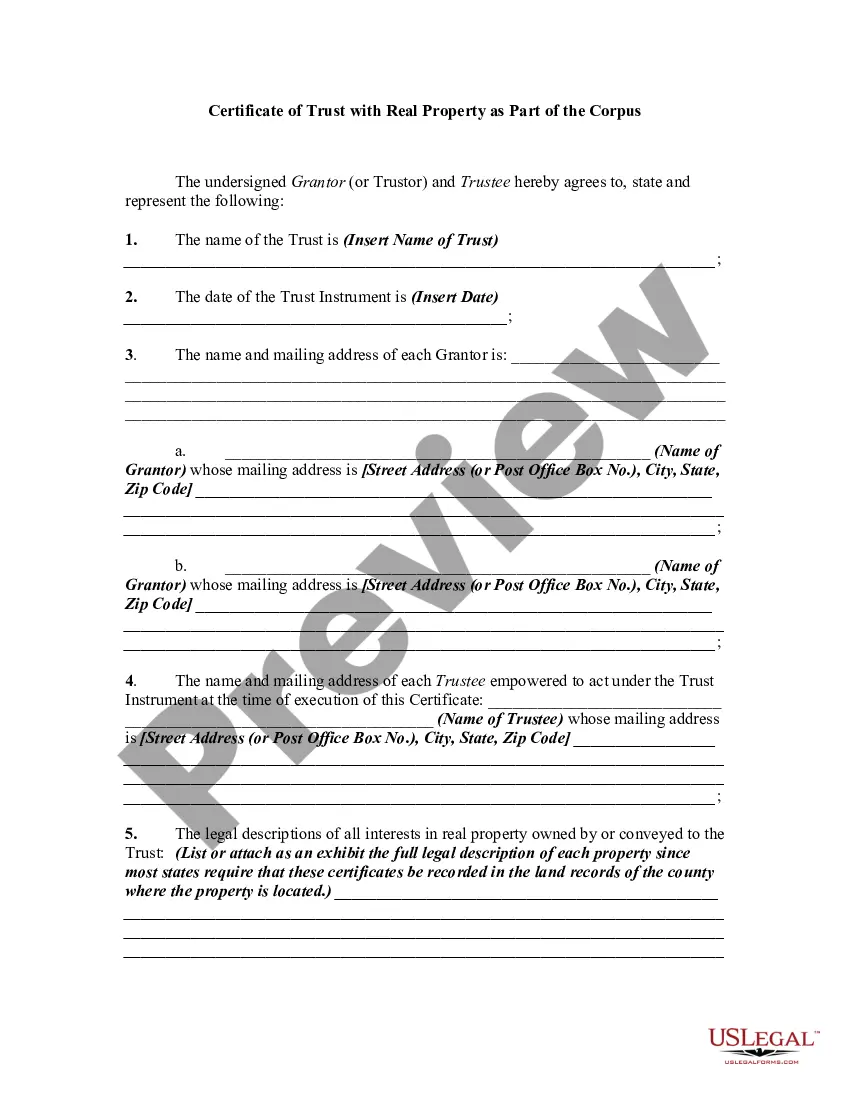
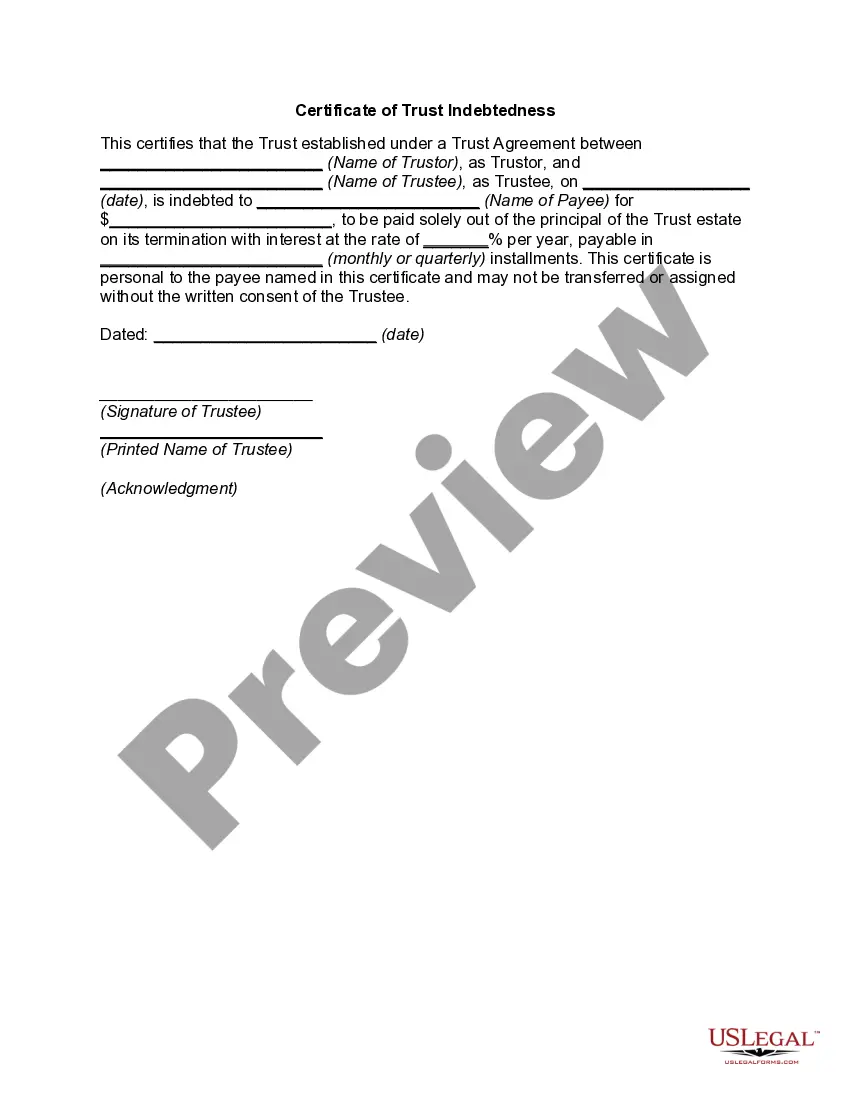
North Carolina Certificate of Trust - Indebtedness
Description
Get your form ready online
Our built-in tools help you complete, sign, share, and store your documents in one place.
Make edits, fill in missing information, and update formatting in US Legal Forms—just like you would in MS Word.
Download a copy, print it, send it by email, or mail it via USPS—whatever works best for your next step.
Sign and collect signatures with our SignNow integration. Send to multiple recipients, set reminders, and more. Go Premium to unlock E-Sign.
If this form requires notarization, complete it online through a secure video call—no need to meet a notary in person or wait for an appointment.
We protect your documents and personal data by following strict security and privacy standards.

Make edits, fill in missing information, and update formatting in US Legal Forms—just like you would in MS Word.

Download a copy, print it, send it by email, or mail it via USPS—whatever works best for your next step.

Sign and collect signatures with our SignNow integration. Send to multiple recipients, set reminders, and more. Go Premium to unlock E-Sign.

If this form requires notarization, complete it online through a secure video call—no need to meet a notary in person or wait for an appointment.

We protect your documents and personal data by following strict security and privacy standards.
Looking for another form?


How to fill out Certificate Of Trust - Indebtedness?
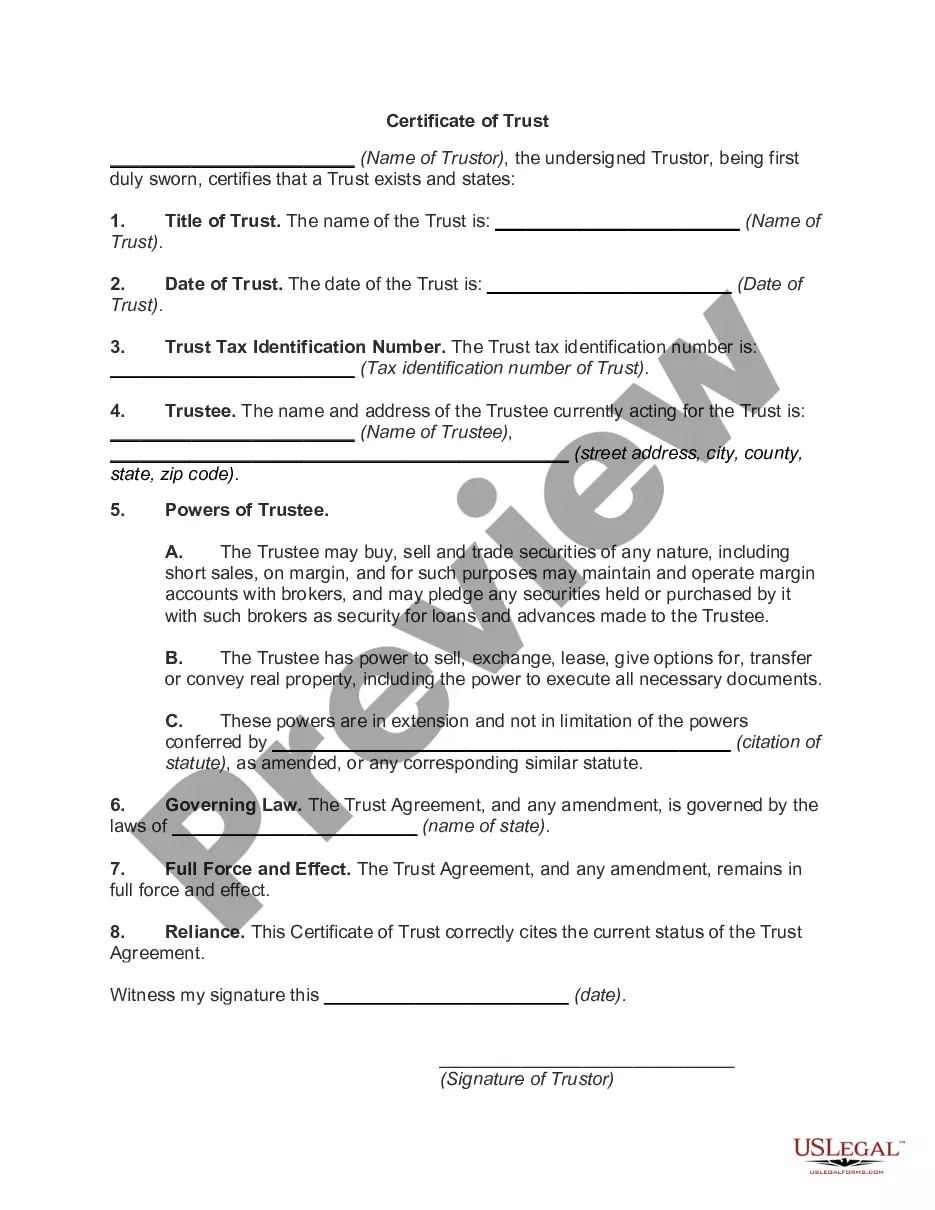
Selecting the appropriate authorized document format can be quite challenging. Clearly, there are numerous templates accessible online, but how do you acquire the authorized version you need? Utilize the US Legal Forms website. The service provides thousands of templates, including the North Carolina Certificate of Trust for Property, that you can employ for business and personal purposes. All the documents are reviewed by professionals and meet state and federal regulations.
If you are currently authorized, Log In to your account and click the Obtain button to get the North Carolina Certificate of Trust for Property. Use your account to search through the authorized documents you may have requested previously. Navigate to the My documents section of your account to get another copy of the document you need.
If you are a new user of US Legal Forms, here are simple instructions for you to follow: First, ensure you have chosen the correct form for your city/region. You can review the form using the Review button and examine the form details to confirm this is indeed the right one for you. If the form does not meet your requirements, utilize the Search field to find the correct form. Once you are confident the form is accurate, click the Purchase now button to obtain the form. Choose the pricing plan you want and fill in the required details. Create your account and finalize your order using your PayPal account or credit card. Select the document format and download the authorized document for your device. Complete, modify, print, and sign the acquired North Carolina Certificate of Trust for Property.
- US Legal Forms is the largest repository of authorized documents where you can find various document templates.
- Utilize the service to acquire professionally crafted documents that adhere to state regulations.
- The platform offers comprehensive resources for both business and personal use.
- All templates are thoroughly vetted to ensure compliance with legal standards.
- Easily access and manage your previously acquired forms through your account.
- Enjoy a user-friendly experience while navigating document selections.
Form popularity
FAQ
A North Carolina deed of trust is a real estate transfer instrument between a lender, borrower, and a trustee whereby a property title is transferred as collateral for a loan to purchase real estate. The title is maintained by the trustee until the borrower (property owner) returns the entire loan amount to the lender.
The trust agreement is the parent document that details anything and everything regarding the trust, including its agreements. Meanwhile, the certificate of trust is used in tandem to keep nonessential information confidential.
Is a Deed of Trust the Same as a Title? Deed of Trust and Title are both terms you'll likely hear when purchasing property, but they actually are different in purpose and meaning. A Deed of Trust is the loan on the property, and a Title expresses the actual ownership of a property.
There are three ways to get a certificate of trust made: With a lawyer. An estate planning attorney can draft a certificate of trust for you to accompany your trust. With estate planning software. ... With a state-specific form from a financial institution or notary public.
N.C. Gen. § 45-36.24(b) provides that, for deeds of trust recorded after October 1, 2011, the lien of the deed of trust will automatically expire 15 years from maturity date, if the maturity date of the secured obligation is stated in the deed of trust.
A Trust Certification gives a Trustee the ability to provide anyone who needs it (think: financial institutions or other third parties) important information about the Trust - like the date it was formed, the legal/formal name of the Trust, who the Trustee is (or Trustees are) and other information institutions may ...
The main difference between a deed and a deed of trust is that a deed is a transfer of ownership, while a deed of trust is a security interest. A deed of trust is used to secure a loan, while a deed is used to transfer ownership of a property.
Deeds of trust are the most common instrument used in the financing of real estate purchases in Alaska, Arizona, California, Colorado, the District of Columbia, Idaho, Maryland, Mississippi, Missouri, Montana, Nebraska, Nevada, North Carolina, Oregon, Tennessee, Texas, Utah, Virginia, Washington, and West Virginia, ...