North Carolina Burden of Proof - Physical Evidence Not Produced
Description
How to fill out Burden Of Proof - Physical Evidence Not Produced?
Selecting the optimal legal document format can be quite challenging. Naturally, there are numerous templates accessible online, but how can you find the legal form you require? Utilize the US Legal Forms website. The service provides thousands of templates, including the North Carolina Burden of Proof - Physical Evidence Not Produced, which you can use for business and personal needs. All of the forms are verified by experts and comply with state and federal regulations.
If you are already registered, Log In to your account and click the Obtain button to acquire the North Carolina Burden of Proof - Physical Evidence Not Produced. Use your account to search through the legal forms you have previously purchased. Visit the My documents tab of your account and download another copy of the document you need.
If you are a new user of US Legal Forms, here are simple instructions that you should follow: First, ensure you have selected the right form for your region/state. You may browse the document using the Preview button and read the form description to make sure this is the correct one for you. If the form does not fulfill your requirements, use the Search field to find the appropriate form. Once you are confident that the document is suitable, click the Purchase now button to obtain the form. Choose the pricing plan you prefer and enter the necessary information. Create your account and pay for your order using your PayPal account or credit card. Select the file format and download the legal document template to your device. Complete, modify, print, and sign the acquired North Carolina Burden of Proof - Physical Evidence Not Produced.
Take advantage of US Legal Forms to simplify your legal documentation process.
- US Legal Forms is the largest collection of legal forms where you can find a variety of document templates.
- Use the service to download professionally-created papers that adhere to state requirements.
- The templates cover numerous legal needs for both personal and business use.
- Each form is carefully reviewed to ensure compliance with current laws.
- The platform also offers user-friendly navigation for easy access to your documents.
- You can manage your orders and access your forms efficiently through your account.
Form popularity
FAQ
- For the purpose of attacking the credibility of a witness, evidence that the witness has been convicted of a felony, or of a Class A1, Class 1, or Class 2 misdemeanor, shall be admitted if elicited from the witness or established by public record during cross-examination or thereafter.
Relevant evidence generally admissible; irrelevant evidence inadmissible. All relevant evidence is admissible, except as otherwise provided by the Constitution of the United States, by the Constitution of North Carolina, by Act of Congress, by Act of the General Assembly or by these rules.
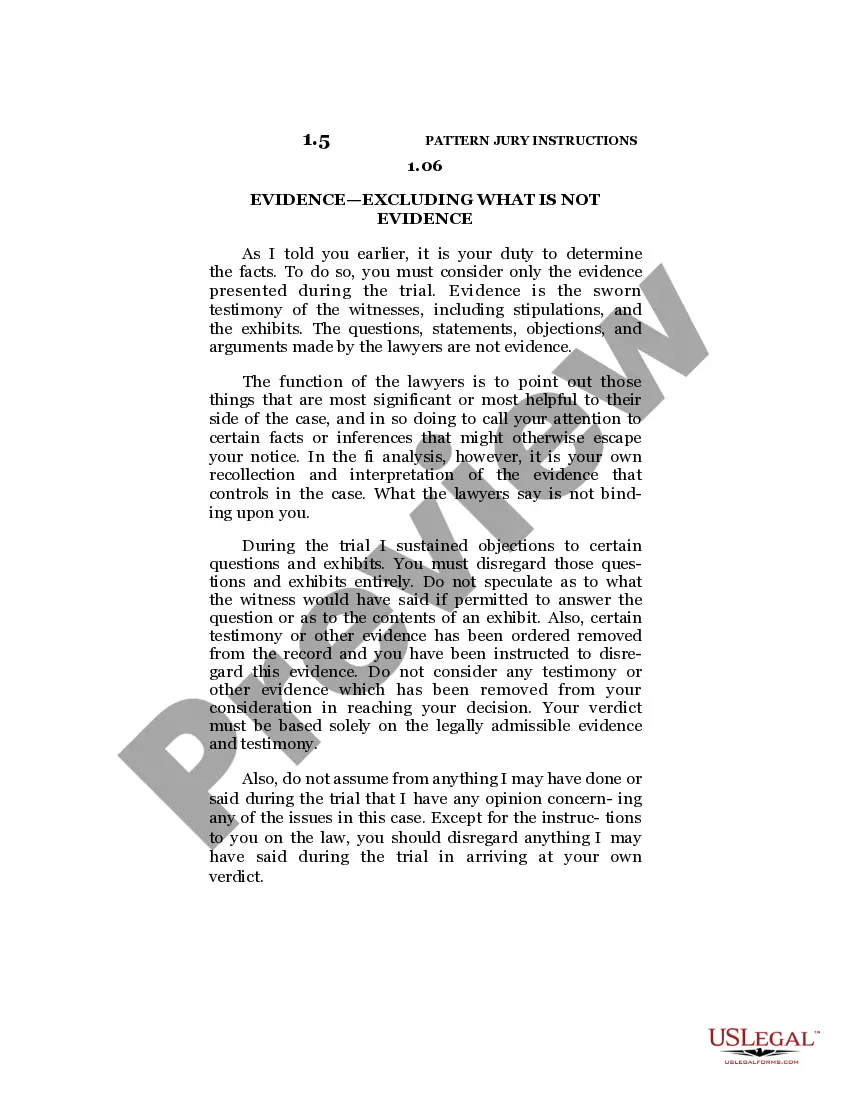
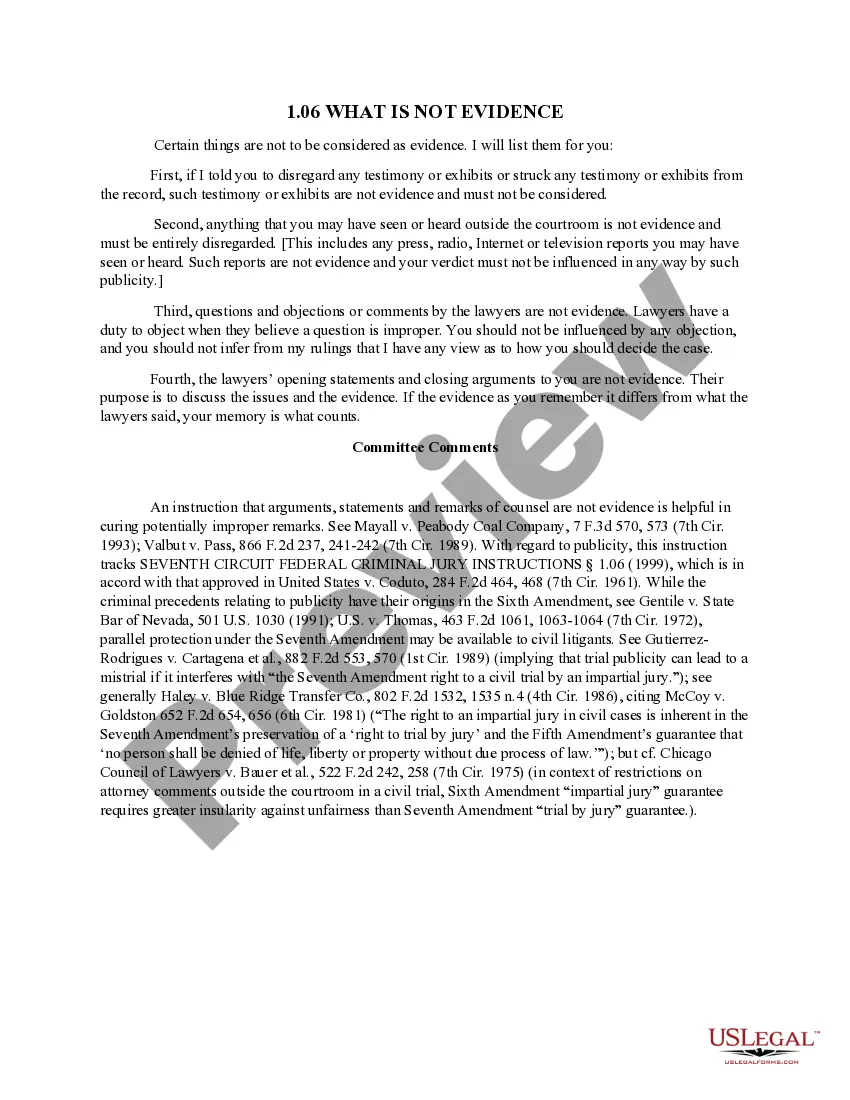
Having the ?burden of proof? means it is one parties' responsibility to prove his case; it is not the other party's responsibility to disprove the claimant's case. In NC injury law, as in most civil cases in America, the plaintiff (that's the person who says he was injured by the other guy) has the burden of proof.
Having the ?burden of proof? means it is one parties' responsibility to prove his case; it is not the other party's responsibility to disprove the claimant's case. In NC injury law, as in most civil cases in America, the plaintiff (that's the person who says he was injured by the other guy) has the burden of proof.
In a trial, if the prosecution finishes presenting their case and the judge finds they have not met their burden of proof, the judge may dismiss the case (even before the defense presents their side) for insufficient evidence.
All relevant evidence is admissible, except as otherwise provided by the Constitution of the United States, by the Constitution of North Carolina, by Act of Congress, by Act of the General Assembly or by these rules. Evidence which is not relevant is not admissible.
Rule 611. ? A witness may be cross-examined on any matter relevant to any issue in the case, including credibility. (c) Leading questions. ? Leading questions should not be used on the direct examination of a witness except as may be necessary to develop his testimony.
- For the purpose of attacking the credibility of a witness, evidence that the witness has been convicted of a felony, or of a Class A1, Class 1, or Class 2 misdemeanor, shall be admitted if elicited from the witness or established by public record during cross-examination or thereafter.
(2) for any crime regardless of the punishment, the evidence must be admitted if the court can readily determine that establishing the elements of the crime required proving - or the witness's admitting - a dishonest act or false statement.