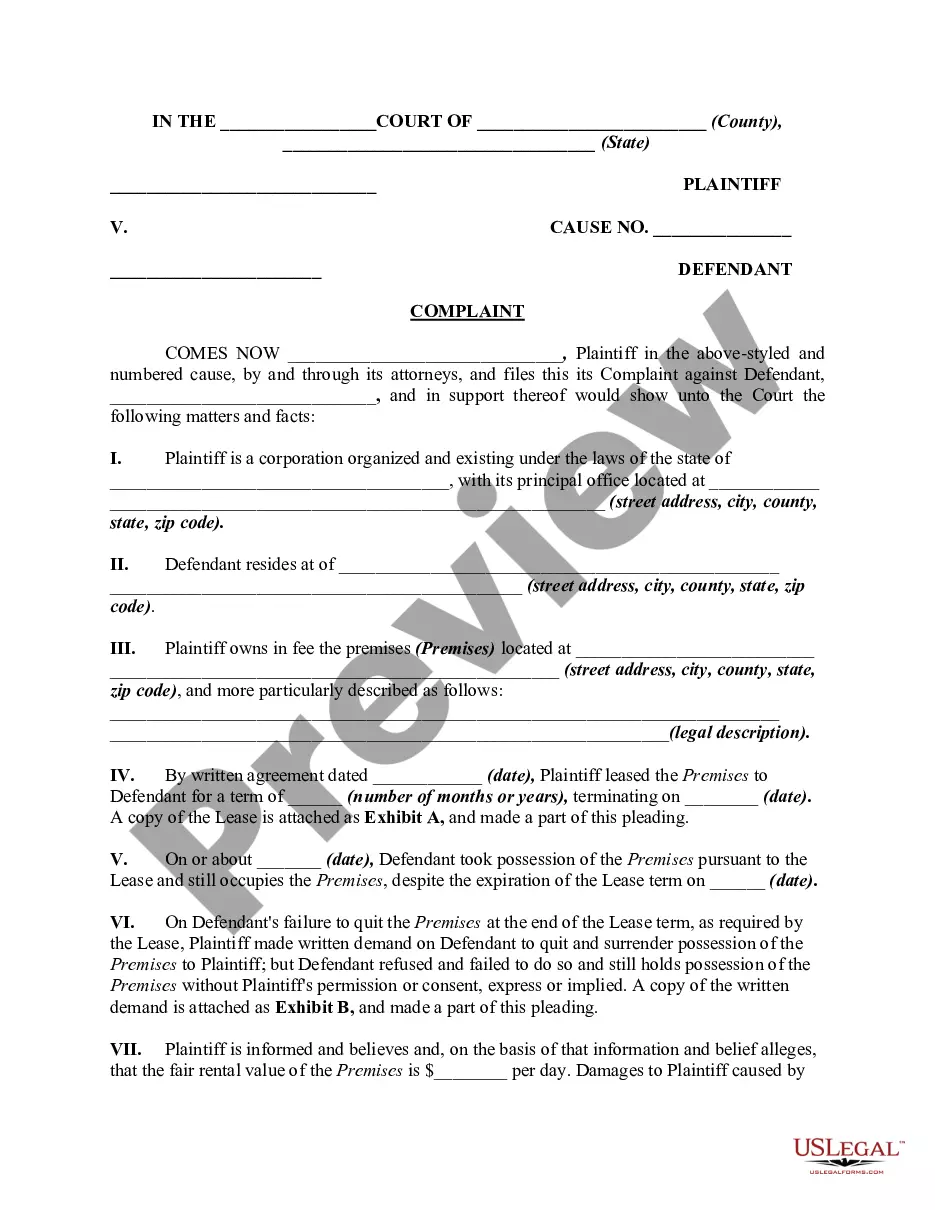
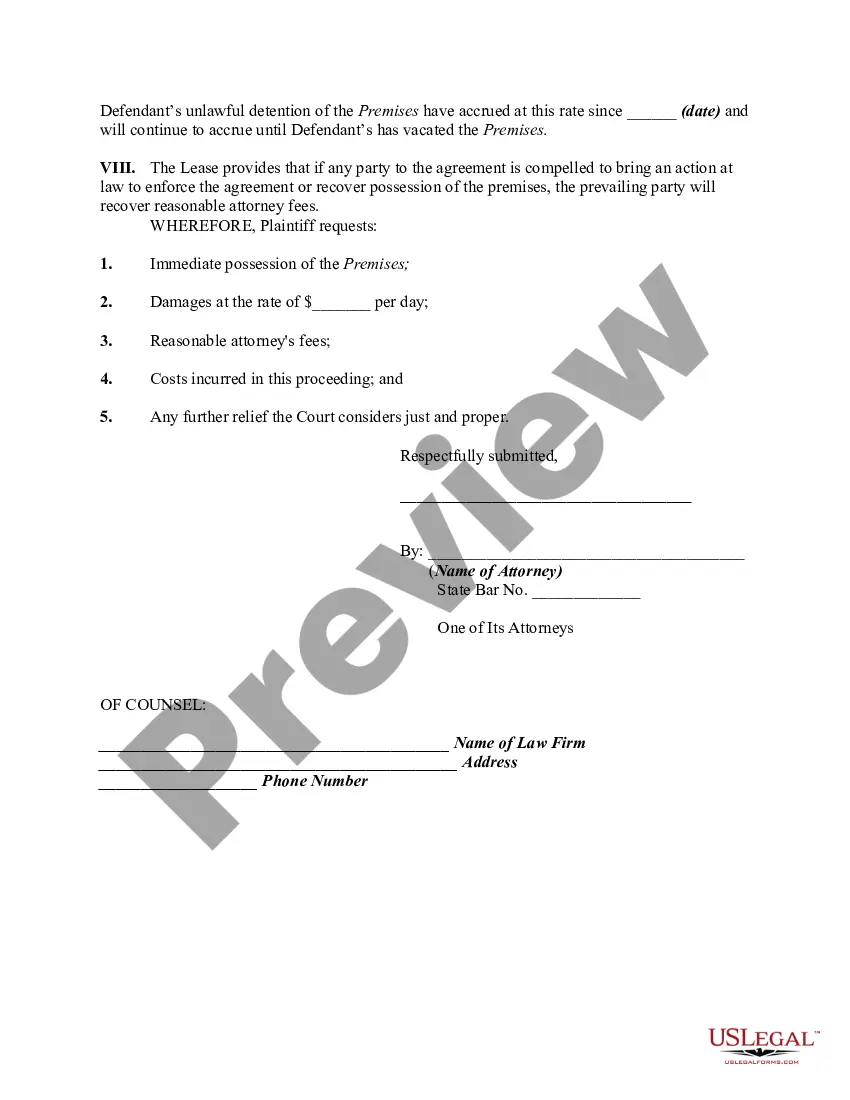
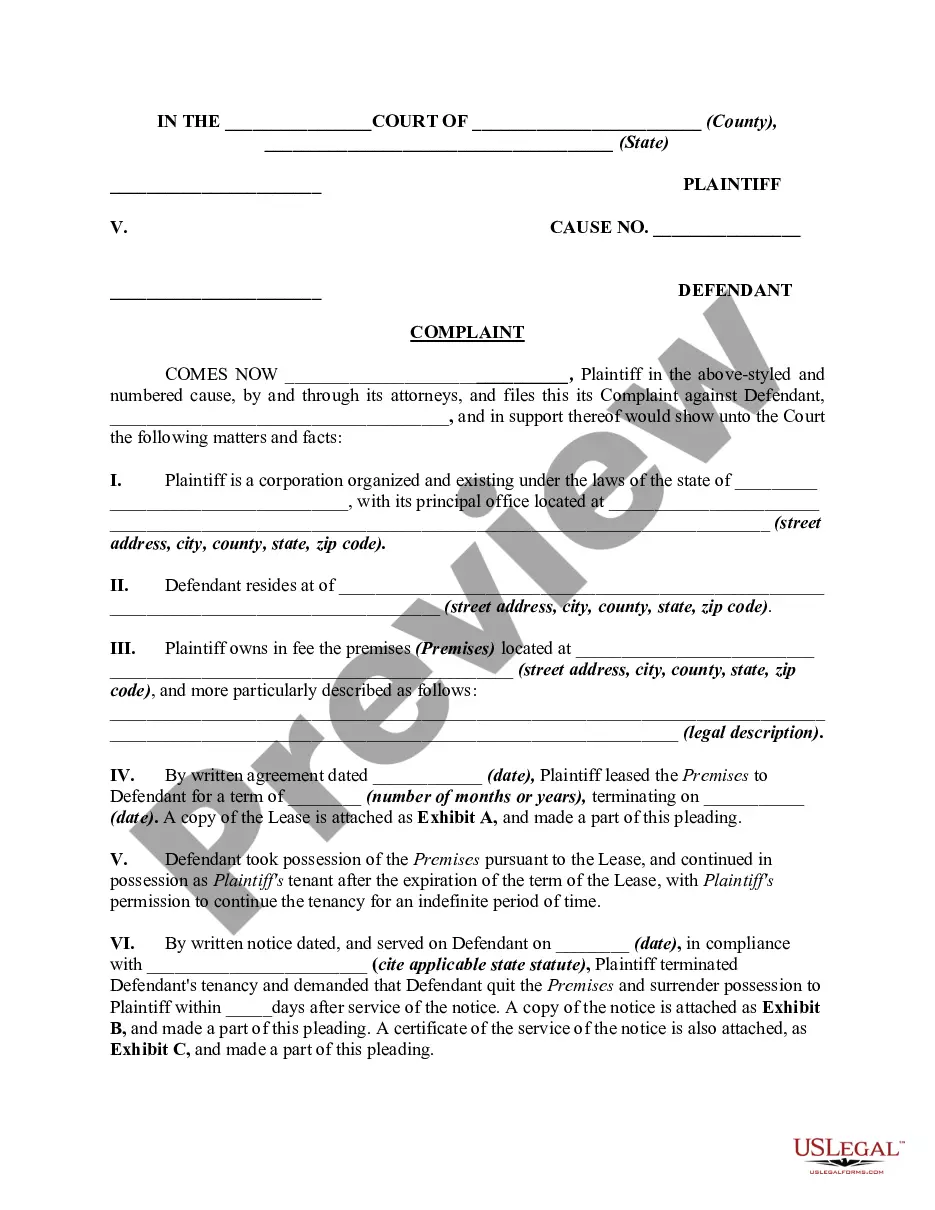
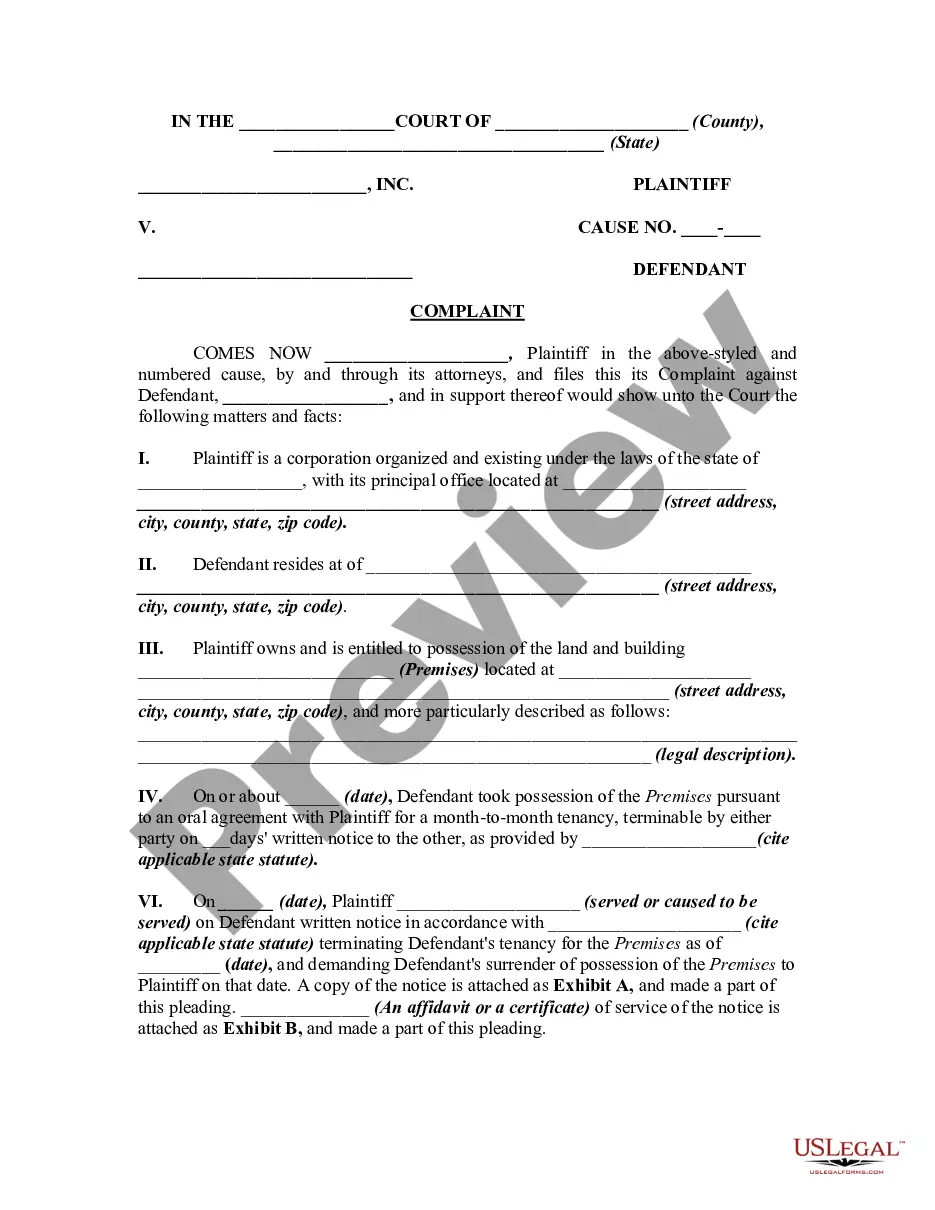
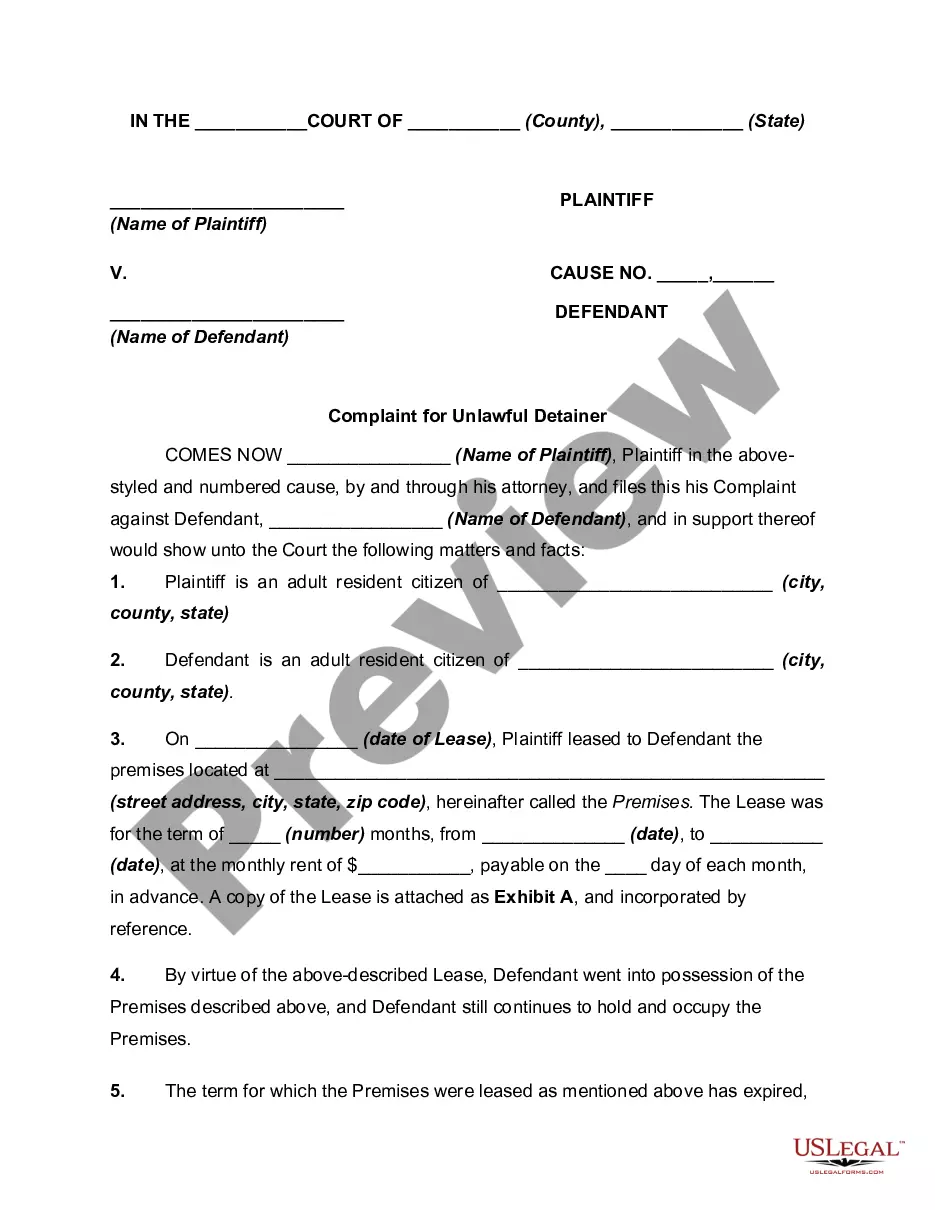
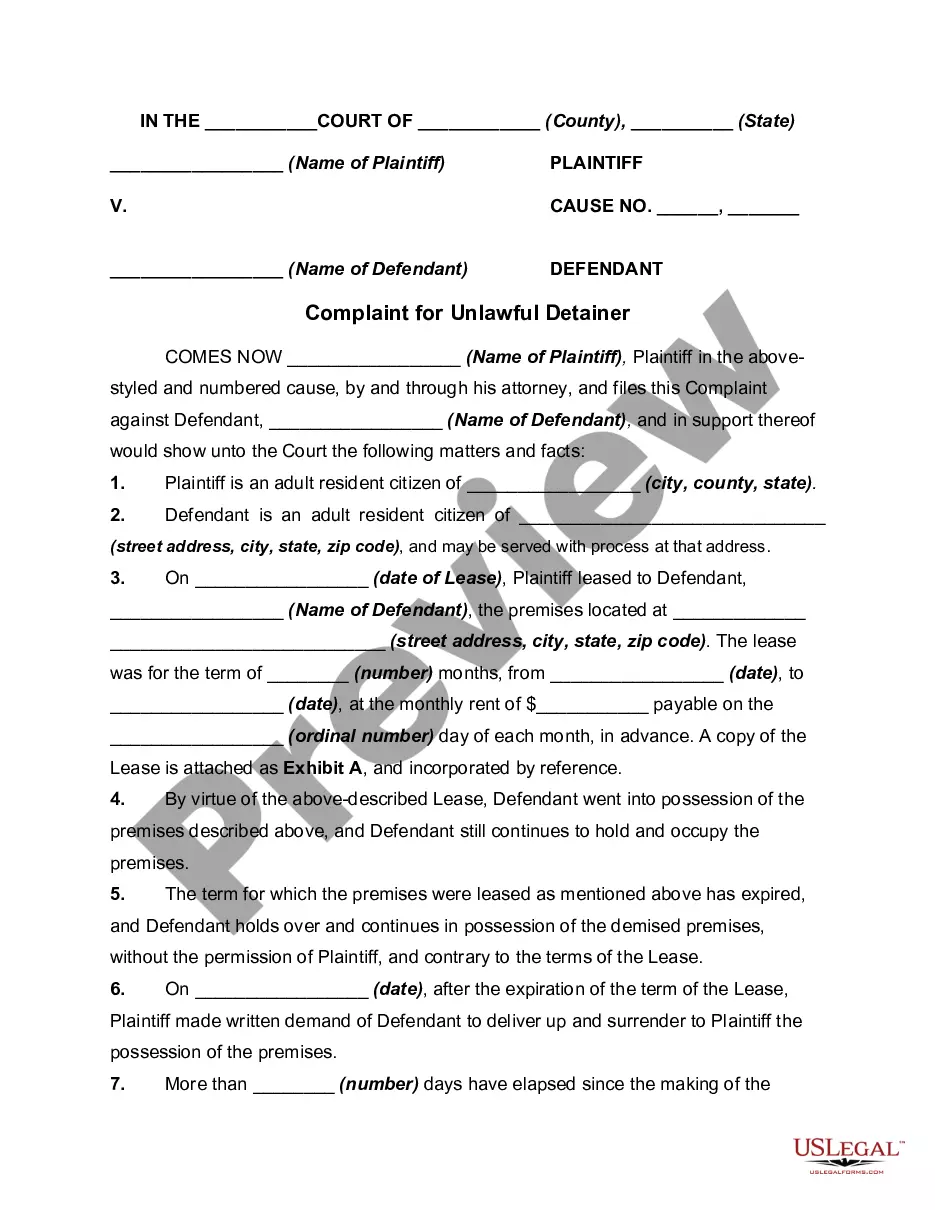
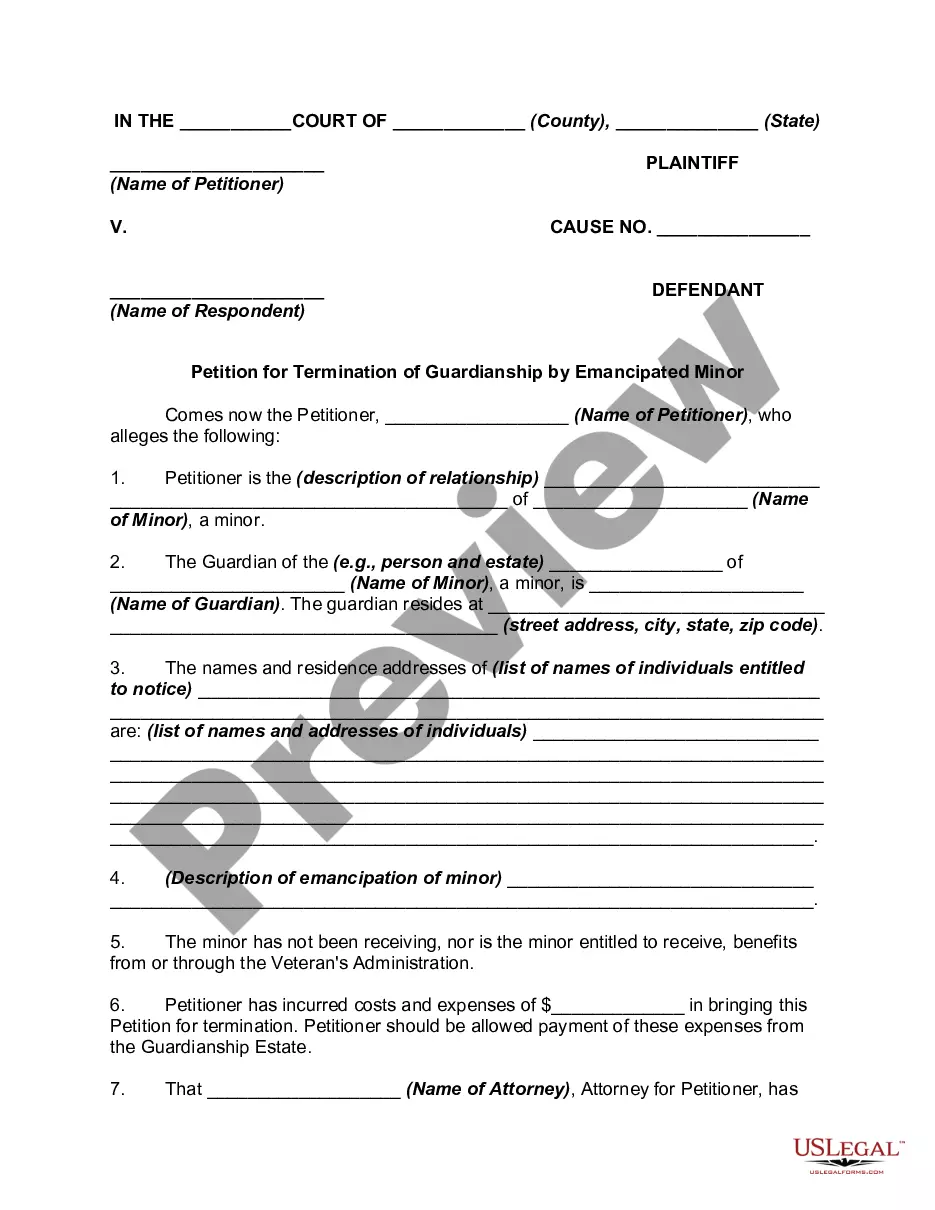
This form is a generic pleading that may be referred to when ousting a tenant who has breached the terms of a lease or rental agreement by a tenant who has stayed (held over) after the term of the lease has expired.
North Carolina Complaint or Petition to Recover Possession of Leased Premises after Expiration of the Term of the Lease
State:
Multi-State
Category:
Control #:
US-00867BG
Format:
Word;
Rich Text
65 downloads
Description
Free preview
Get your form ready online
Our built-in tools help you complete, sign, share, and store your documents in one place.
Built-in online Word editor
Make edits, fill in missing information, and update formatting in US Legal Forms—just like you would in MS Word.
Export easily
Download a copy, print it, send it by email, or mail it via USPS—whatever works best for your next step.
E-sign your document
Sign and collect signatures with our SignNow integration. Send to multiple recipients, set reminders, and more. Go Premium to unlock E-Sign.
Notarize online 24/7
If this form requires notarization, complete it online through a secure video call—no need to meet a notary in person or wait for an appointment.
Store your document securely
We protect your documents and personal data by following strict security and privacy standards.

Make edits, fill in missing information, and update formatting in US Legal Forms—just like you would in MS Word.

Download a copy, print it, send it by email, or mail it via USPS—whatever works best for your next step.

Sign and collect signatures with our SignNow integration. Send to multiple recipients, set reminders, and more. Go Premium to unlock E-Sign.

If this form requires notarization, complete it online through a secure video call—no need to meet a notary in person or wait for an appointment.

We protect your documents and personal data by following strict security and privacy standards.
Looking for another form?
How to fill out Complaint Or Petition To Recover Possession Of Leased Premises After Expiration Of The Term Of The Lease?
Have you ever been in a situation where you require documents for various business or specific purposes almost every day.
There are numerous valid document templates available online, but locating ones you can rely on is not easy.
US Legal Forms offers a vast array of form templates, such as the North Carolina Complaint or Petition to Recover Possession of Leased Premises after Expiration of the Term of the Lease, which are designed to comply with federal and state regulations.
Choose the pricing plan you prefer, provide the necessary information to create your account, and complete the purchase using your PayPal or credit card.
Select a convenient file format and download your copy.
- If you are already familiar with the US Legal Forms website and have an account, simply Log In.
- Then, you can download the North Carolina Complaint or Petition to Recover Possession of Leased Premises after Expiration of the Term of the Lease template.
- If you do not have an account and wish to start using US Legal Forms, follow these steps.
- Find the form you need and ensure it is for your specific area/county.
- Use the Preview option to review the document.
- Check the details to ensure you have selected the correct form.
- If the form is not what you are looking for, use the Search field to find the form that meets your needs.
- Once you find the right form, click on Buy now.
Form popularity
FAQ
§ 42-14. A tenancy from year to year may be terminated by a notice to quit given one month or more before the end of the current year of the tenancy; a tenancy from month to month by a like notice of seven days; a tenancy from week to week, of two days.
Upon the tenant's request prior to the day of sale, the landlord shall release possession of the property to the tenant during regular business hours or at a time agreed upon. The landlord may apply the proceeds of the sale to the unpaid rents, damages, storage fees, and sale costs.
Unconditional quit notice: You will receive this notice because you violated the lease or rental agreement. This notice will state that you must move out of the rental unit immediately or the landlord will file an eviction lawsuit against you (see N.C. Gen. Stat. § 42-26).
As long as the tenant does not violate any rules, they can stay until their rental period ends. However, if the tenant becomes a "holdover" tenant, the summary ejectment may begin after the appropriate notice period.
If your landlord will not accept rent, document your attempt to pay. Keep the money in your account or retain the money order. If there's an issue with a property manager not accepting the rent, contact your landlord to find out why. A landlord may refuse to accept rent if they are trying to evict you.
In North Carolina, an eviction case is called ?summary ejectment.? Landlords can file to legally remove a tenant rented property if the tenant has failed to pay rent, violated the lease agreement, or if other conditions apply.
The first and perhaps simplest ground for summary ejectment is holding over, described in GS 42- 26(1) as occurring ?[w]hen a tenant in possession of real estate holds over after his term has expired.? Today, this allegation simply means that the lease has ended but the tenant remains in possession.
If, in any action brought to recover the possession of demised premises upon a forfeiture for the nonpayment of rent, the tenant, before judgment given in such action, pays or tenders the rent due and the costs of the action, all further proceedings in such action shall cease.