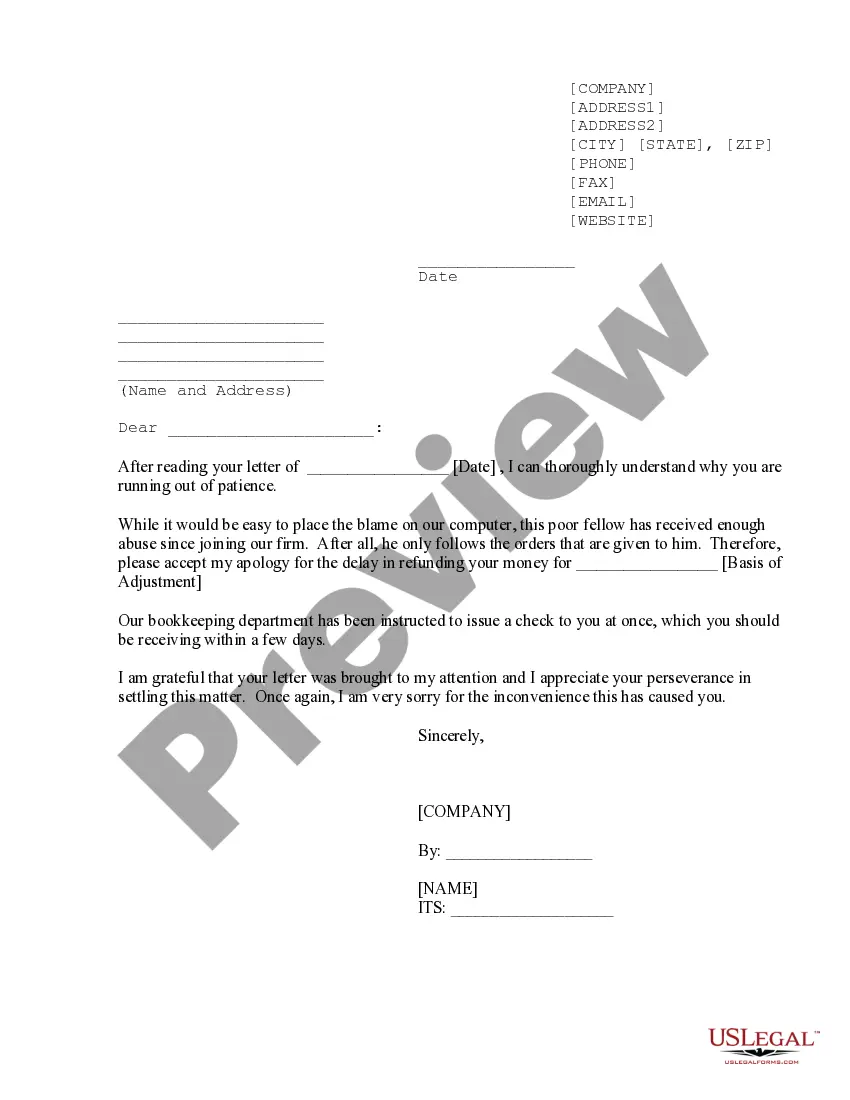
This is a Complaint pleading for use in litigation of the title matter. Adapt this form to comply with your facts and circumstances, and with your specific state law. Not recommended for use by non-attorneys.
North Carolina Complaint For False Arrest and Imprisonment - 4th and 14th Amendment, US Constitution - Jury Trial Demand
Category:
State:
Multi-State
Control #:
US-000280
Format:
Word;
Rich Text
Instant download
Description
Free preview






Get your form ready online
Our built-in tools help you complete, sign, share, and store your documents in one place.
Built-in online Word editor
Make edits, fill in missing information, and update formatting in US Legal Forms—just like you would in MS Word.
Export easily
Download a copy, print it, send it by email, or mail it via USPS—whatever works best for your next step.
E-sign your document
Sign and collect signatures with our SignNow integration. Send to multiple recipients, set reminders, and more. Go Premium to unlock E-Sign.
Notarize online 24/7
If this form requires notarization, complete it online through a secure video call—no need to meet a notary in person or wait for an appointment.
Store your document securely
We protect your documents and personal data by following strict security and privacy standards.

Make edits, fill in missing information, and update formatting in US Legal Forms—just like you would in MS Word.

Download a copy, print it, send it by email, or mail it via USPS—whatever works best for your next step.

Sign and collect signatures with our SignNow integration. Send to multiple recipients, set reminders, and more. Go Premium to unlock E-Sign.

If this form requires notarization, complete it online through a secure video call—no need to meet a notary in person or wait for an appointment.

We protect your documents and personal data by following strict security and privacy standards.
Looking for another form?


How to fill out Complaint For False Arrest And Imprisonment - 4th And 14th Amendment, US Constitution - Jury Trial Demand?
US Legal Forms - one of the largest repositories of legal documents in the United States - offers a broad selection of legal document templates that you can download or print. By using the website, you can access numerous forms for business and personal needs, categorized by type, state, or keywords. You can find the latest versions of forms such as the North Carolina Complaint For False Arrest and Imprisonment - 4th and 14th Amendment, US Constitution - Jury Trial Demand in just a few minutes.
If you already have an account, Log In and download the North Carolina Complaint For False Arrest and Imprisonment - 4th and 14th Amendment, US Constitution - Jury Trial Demand from the US Legal Forms library. The Download option will appear for every form you view. You have access to all previously downloaded forms in the My documents section of your account.
If you are using US Legal Forms for the first time, here are some simple steps to get you started: Ensure you have selected the correct form for your city/state. Click the Review button to examine the content of the form. Read the form description to confirm you have chosen the right document. If the form does not meet your needs, utilize the Search field at the top of the screen to find one that does. If you are satisfied with the form, confirm your choice by clicking the Purchase now button. Then, select the payment plan you prefer and provide your details to register for an account. Complete the transaction. Use a credit card or PayPal account to finalize the payment. Choose the format and download the form to your device. Make edits. Complete, modify, print, and sign the downloaded North Carolina Complaint For False Arrest and Imprisonment - 4th and 14th Amendment, US Constitution - Jury Trial Demand. Each template you add to your account has no expiration date and is yours permanently. Therefore, if you wish to download or print another copy, simply go to the My documents section and click on the form you need.
- Access the North Carolina Complaint For False Arrest and Imprisonment - 4th and 14th Amendment, US Constitution - Jury Trial Demand with US Legal Forms, one of the most extensive collections of legal document templates.
- Utilize a vast array of professional and state-specific templates that cater to your business or personal needs and requirements.
Form popularity
FAQ
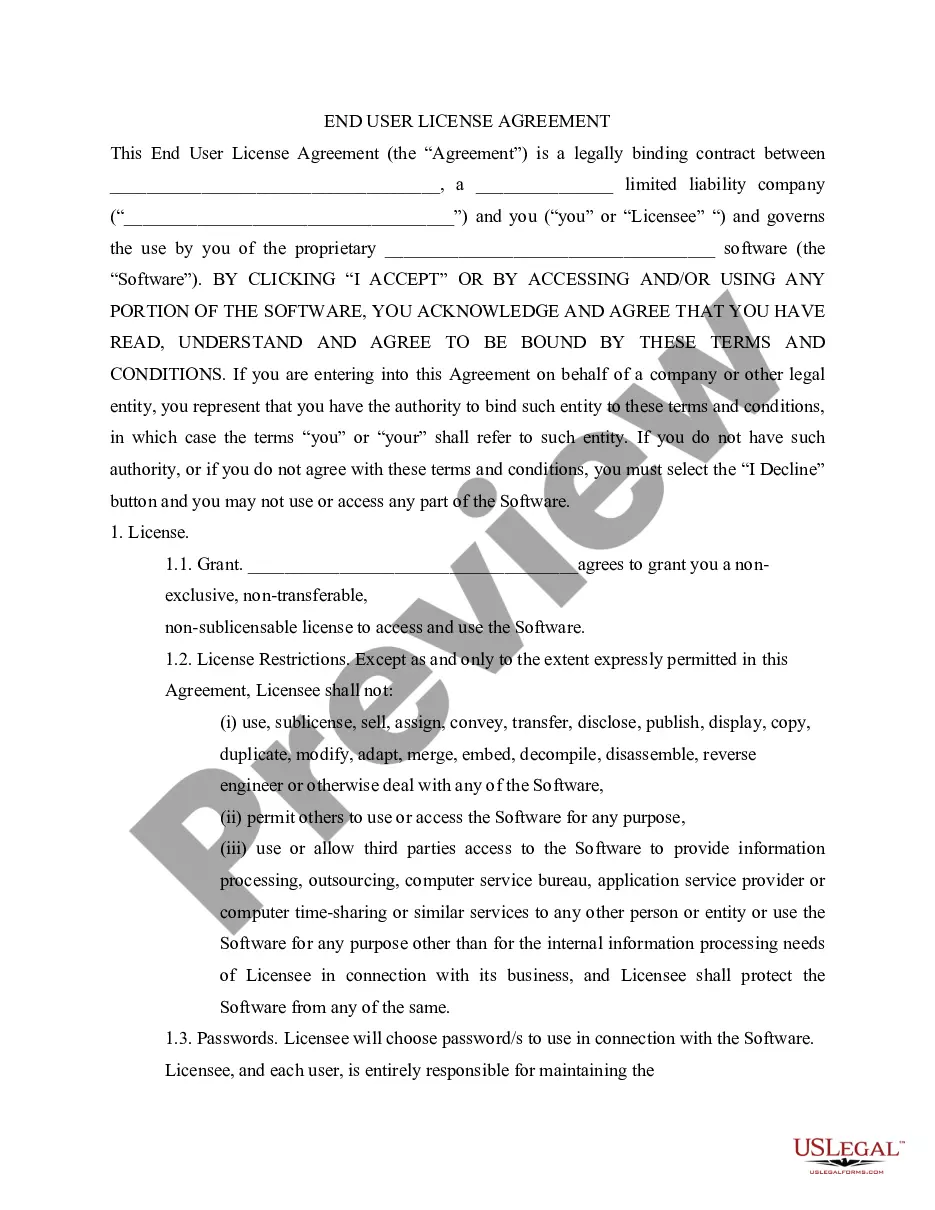
In North Carolina, the elements of false imprisonment include unlawful physical restraint, lack of consent, and the awareness of the confinement by the individual. It is important to establish that the confinement was intentional and not merely accidental. For those pursuing justice, utilizing a North Carolina Complaint For False Arrest and Imprisonment - 4th and 14th Amendment, US Constitution - Jury Trial Demand can provide a structured approach to your legal claim.
Yes, you can sue for false arrest in North Carolina. If law enforcement detains you without probable cause, you have the right to seek legal action. This is essential for upholding your rights under the North Carolina Complaint For False Arrest and Imprisonment - 4th and 14th Amendment, US Constitution - Jury Trial Demand, which ensures that your case is thoroughly evaluated in a court of law.
To prove a case of false imprisonment in North Carolina, you must demonstrate that a person intentionally confined you without legal justification. This means showing that you were restrained against your will and that there was no lawful reason for this confinement. Understanding the nuances of your situation is crucial, and a North Carolina Complaint For False Arrest and Imprisonment - 4th and 14th Amendment, US Constitution - Jury Trial Demand can help clarify these elements.
18 U.S. Code § 3161 generally allows 30 days from the time someone is arrested or served with a summons for their arrest for the federal government to charge them with a crime and, if they plead not guilty, an additional 70 days beyond that or beyond the date the defendant has appeared before a judicial officer of the ...
Becker, 53 MJ 229 (test for violations of the Sixth Amendment right to a speedy trial includes four factors: (1) length of delay; (2) reasons for the delay; (3) appellant's demand for speedy trial; and (4) prejudice to appellant).
When an individual believes that either the federal government or a state government has violated their guaranteed equal rights, that individual is able to bring a lawsuit against that governmental body for relief.
If the defendant is not tried within the prescribed time period, the charges against him or her must be dismissed with prejudice. G.S. 15A-761 (Article III). However, the trial court may grant continuances where reasonable or necessary, thereby extending the 180-day period.
Unlike the federal system and a number of other states, North Carolina no longer has a true "speedy trial" statute that mandates bringing criminal cases to trial within a specified amount of time. See 18 U.S.C.
Right to a Speedy Trial Under the Sixth Amendment avoiding lengthy unfounded imprisonment (being held in jail pretrial) minimizing the anxiety of awaiting case resolution, and. protecting the defendant's ability to defend against charges (for example, evidence may disappear and witnesses' memories can fade over time).
(in determining whether an appellant has been denied his right to a speedy trial under the Sixth Amendment, an appellate court considers the following factors: (1) the length of the delay; (2) the reasons for the delay; (3) whether the appellant made a demand for a speedy trial; and (4) prejudice to the appellant).