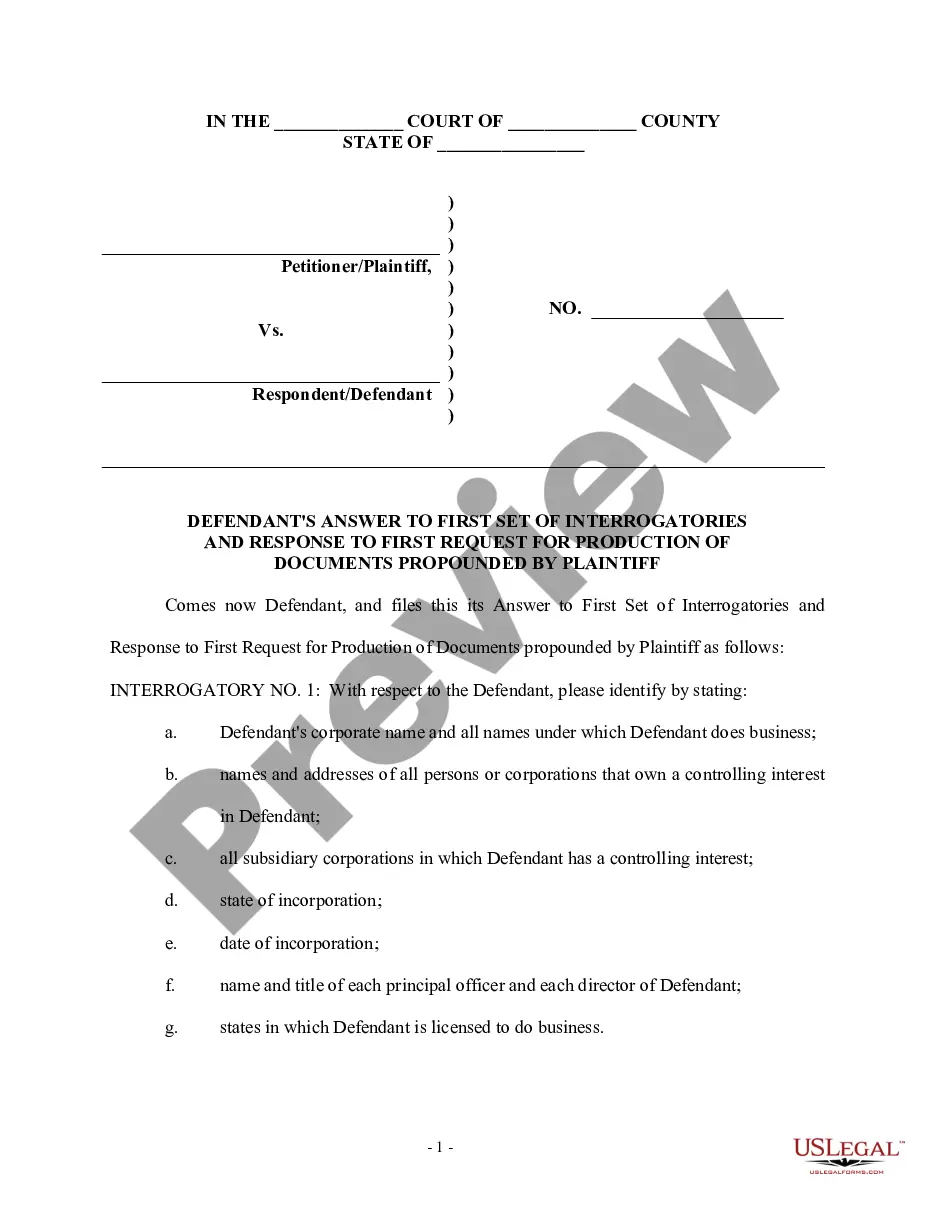
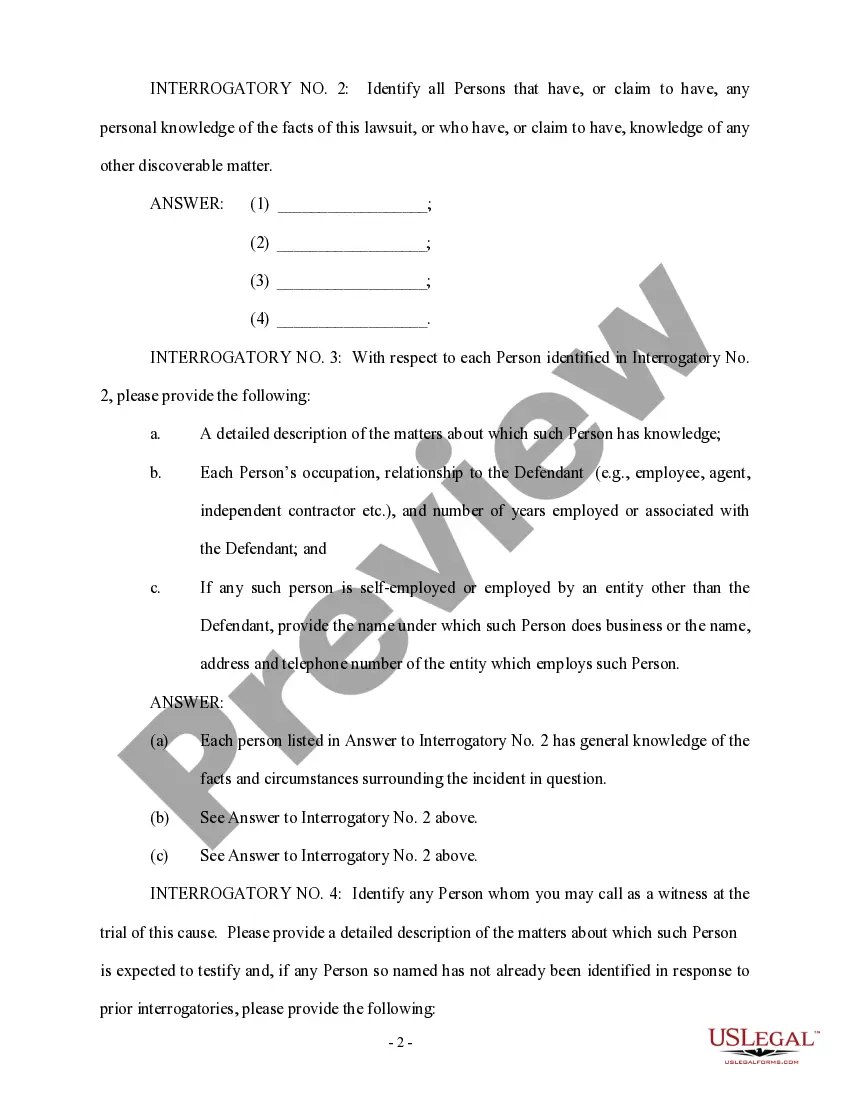
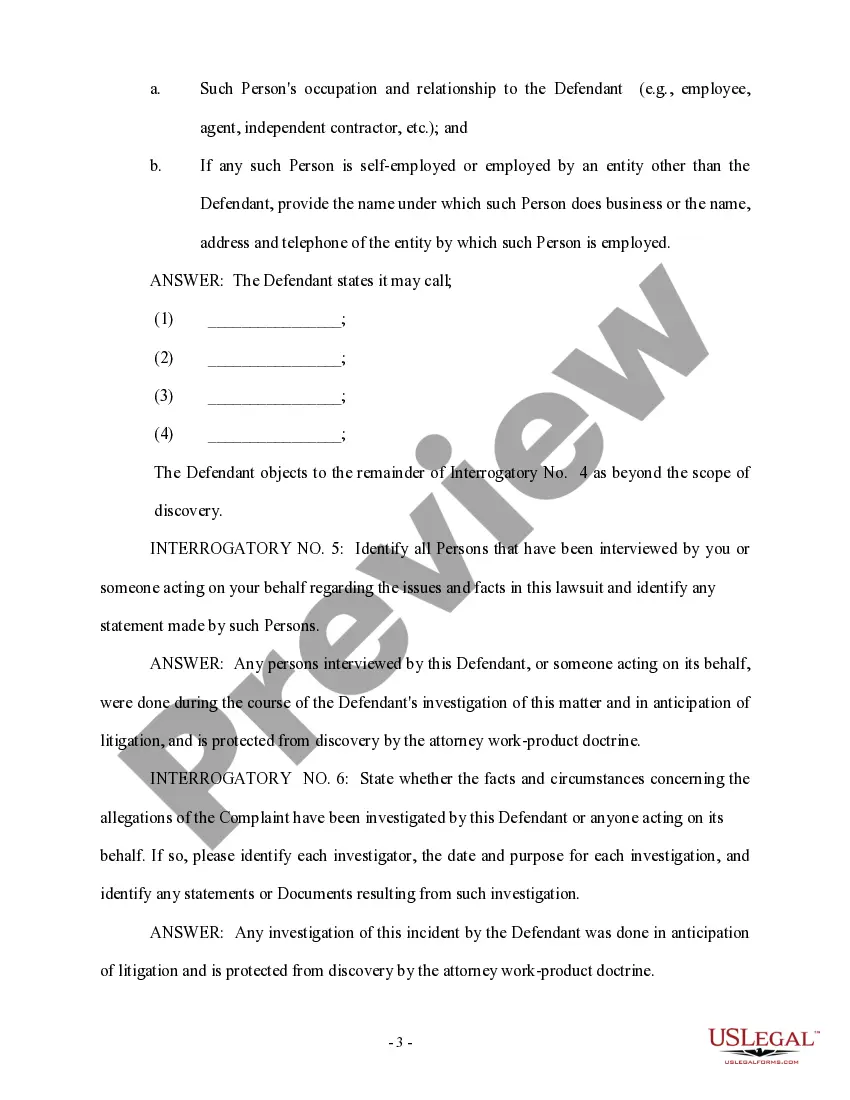
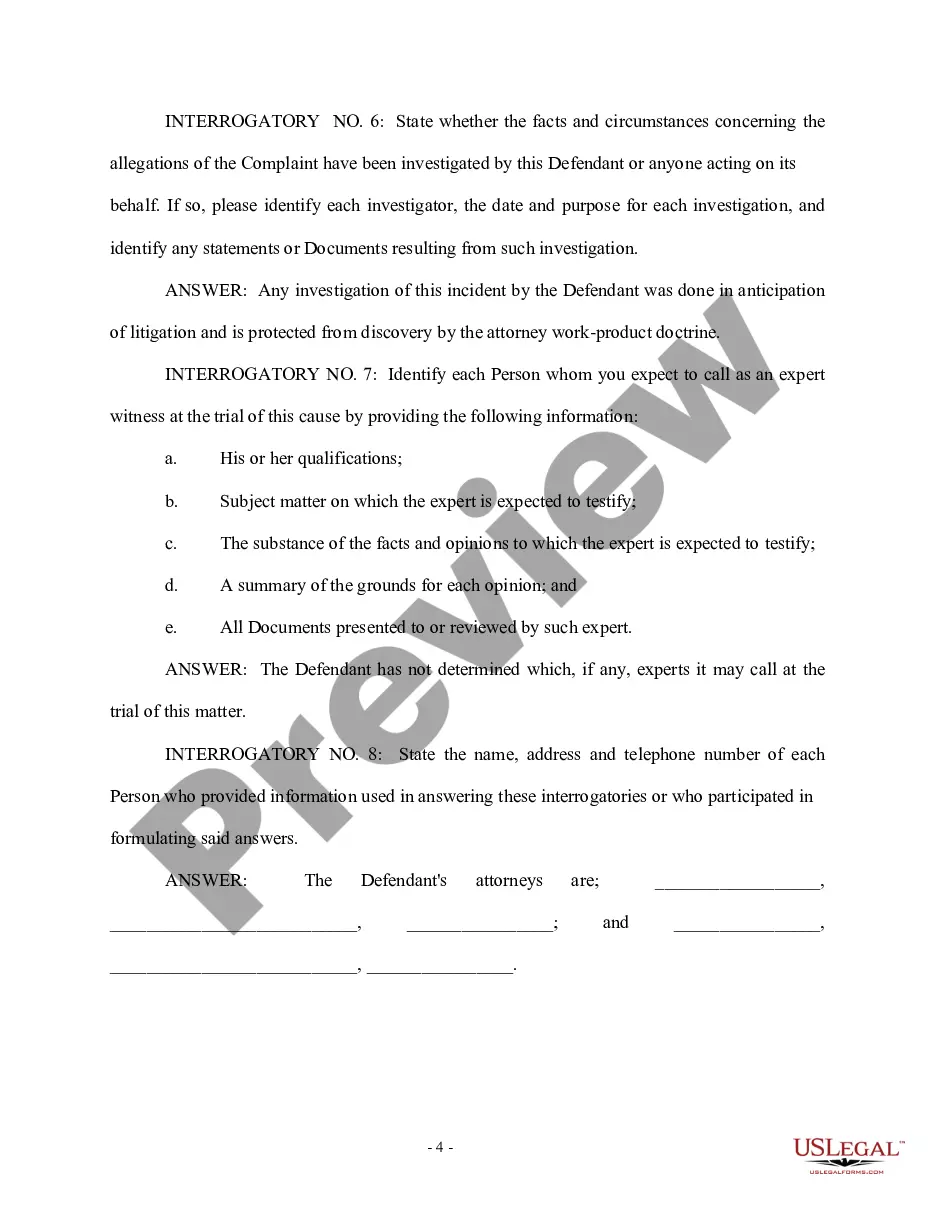
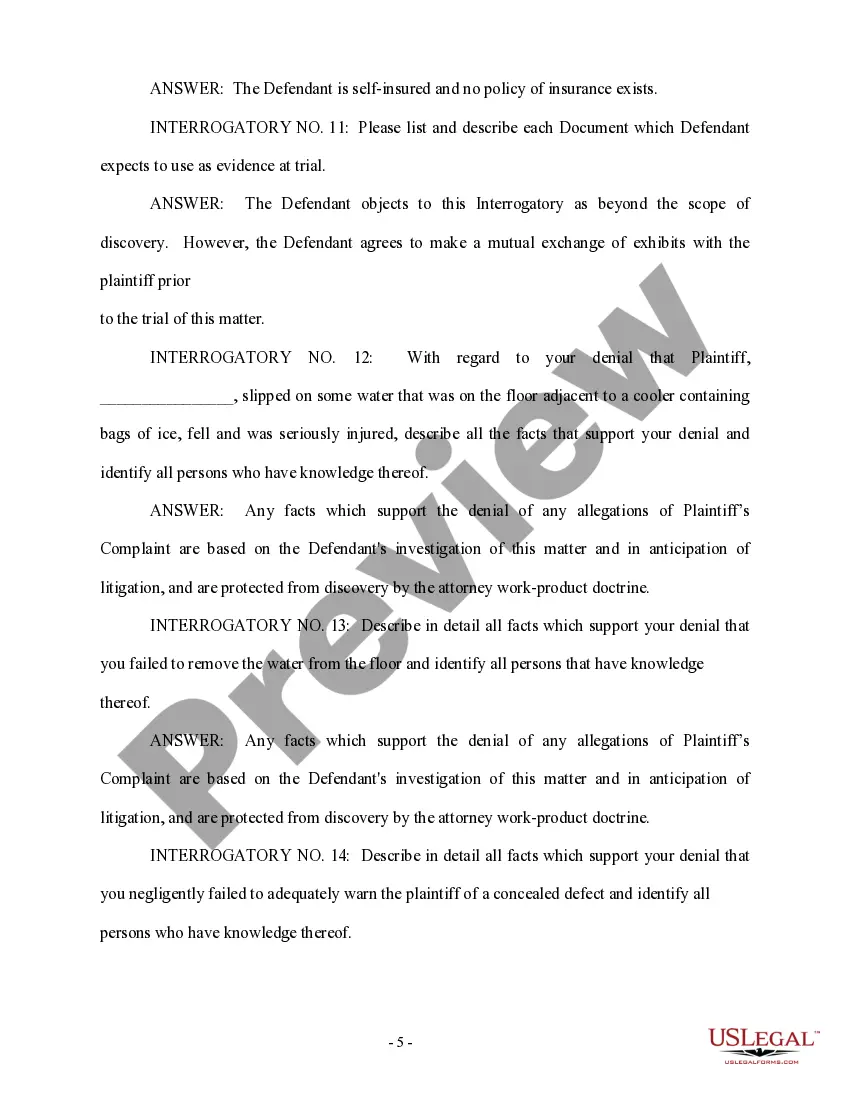
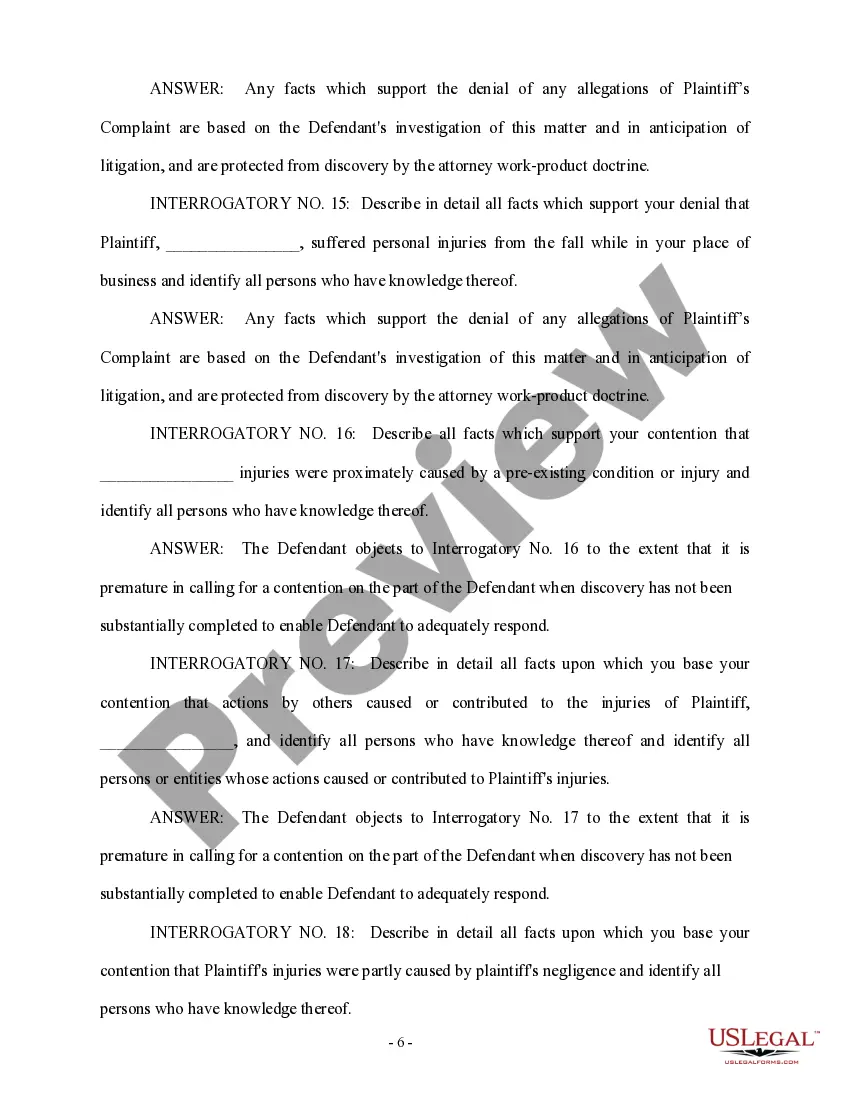
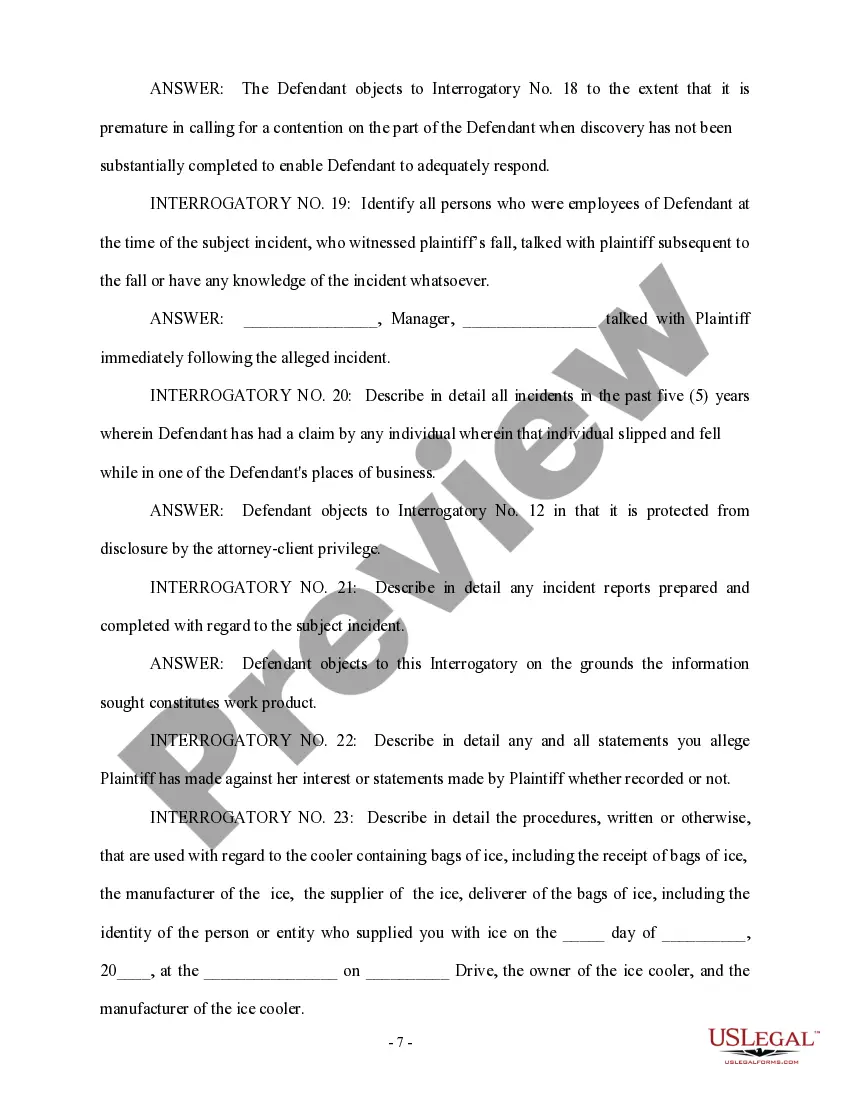
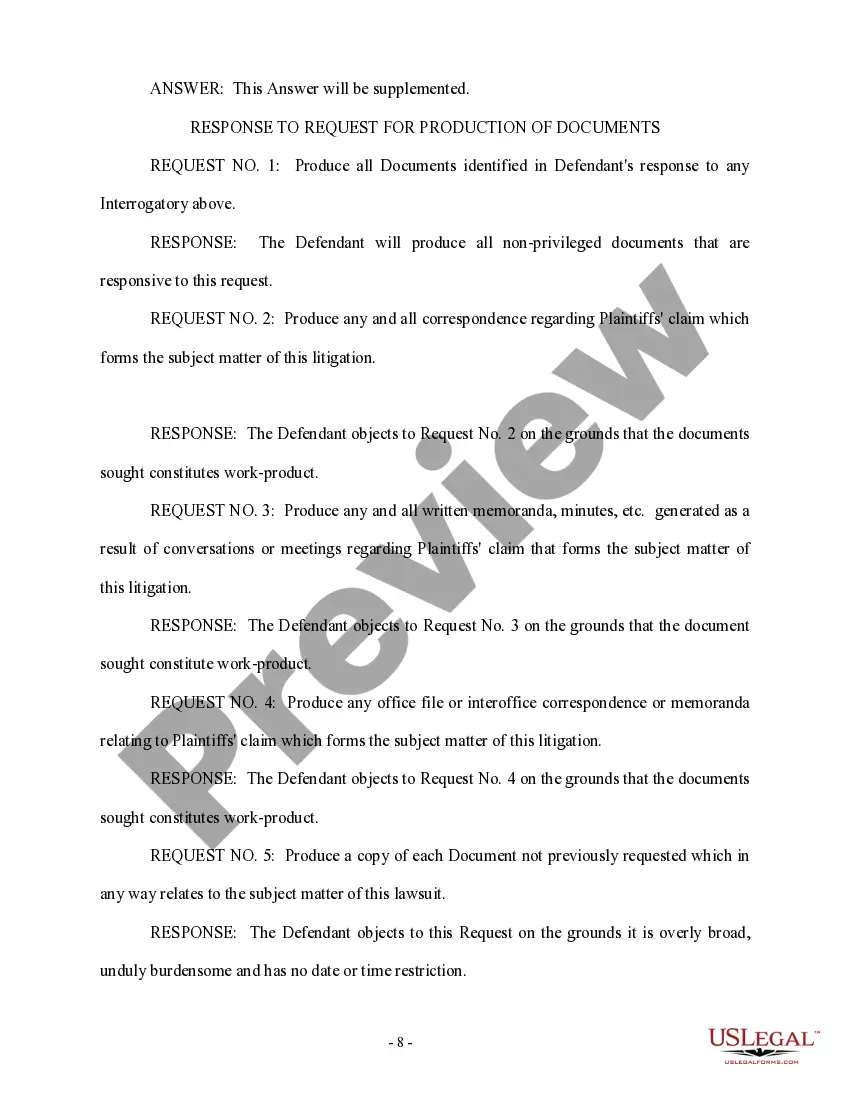
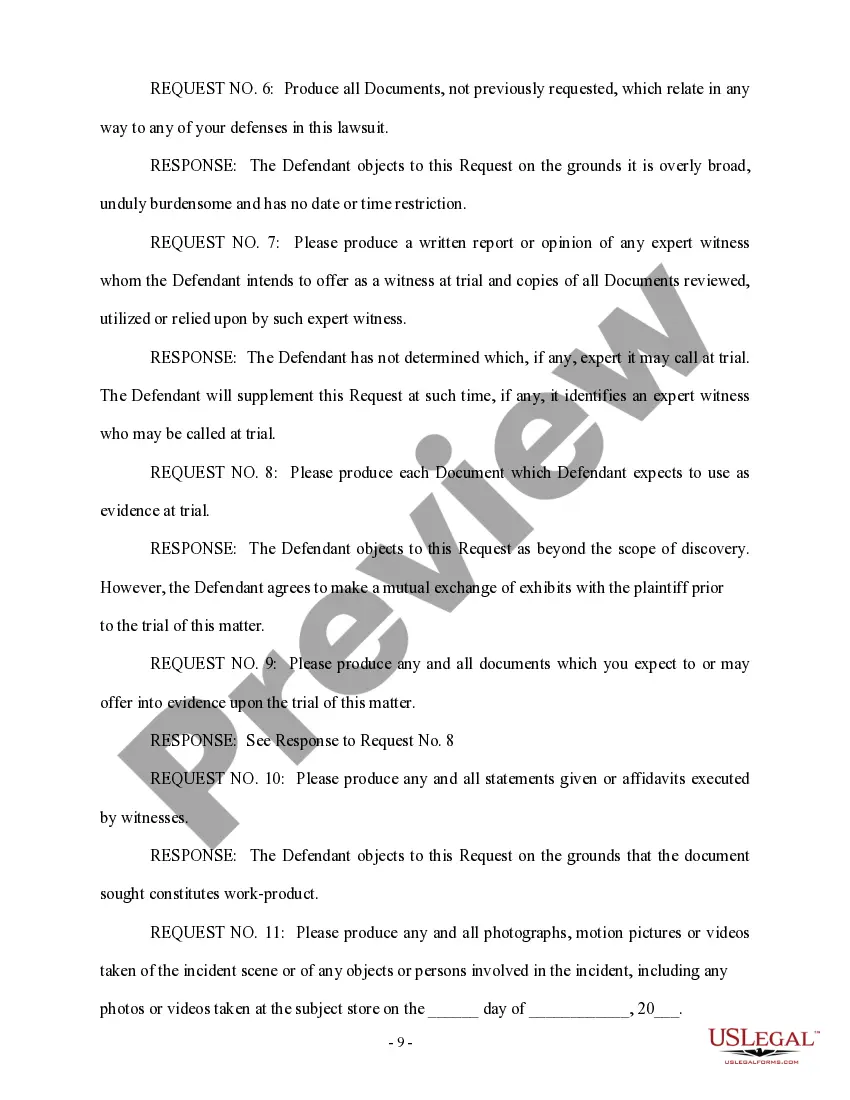
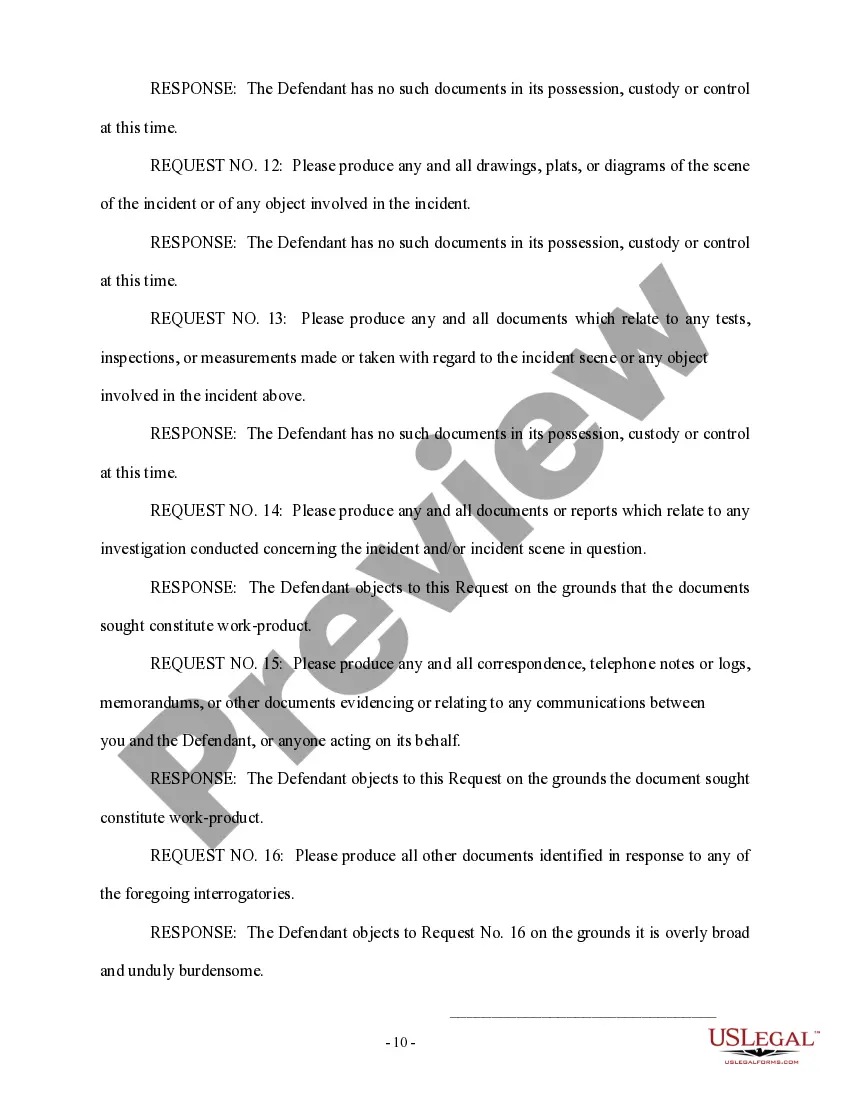
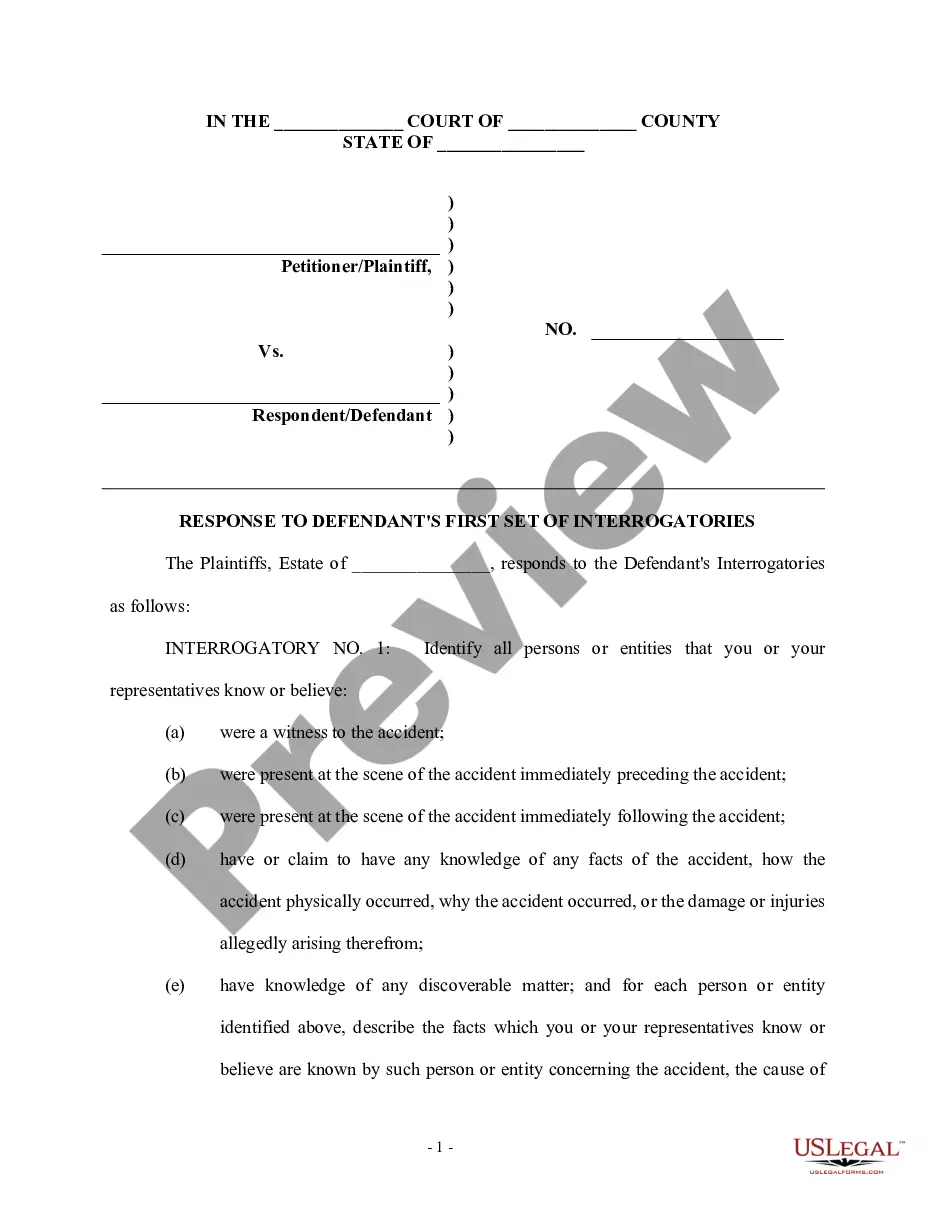
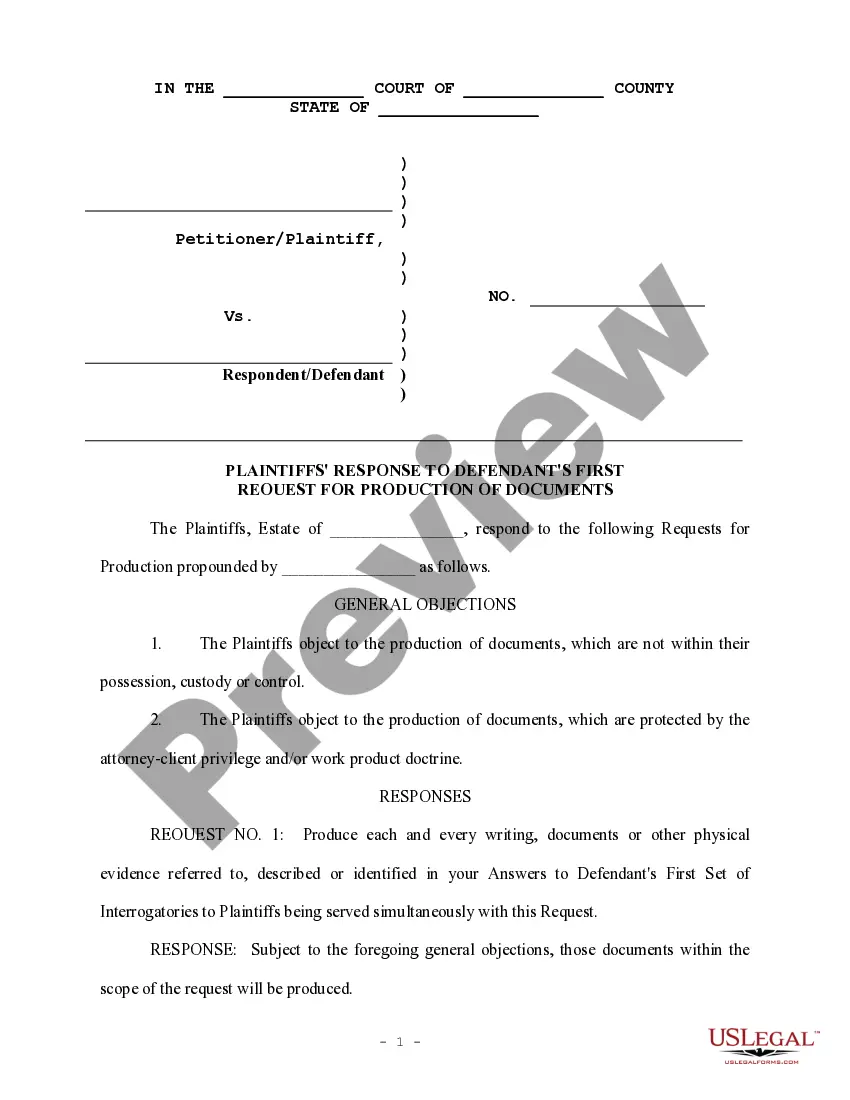
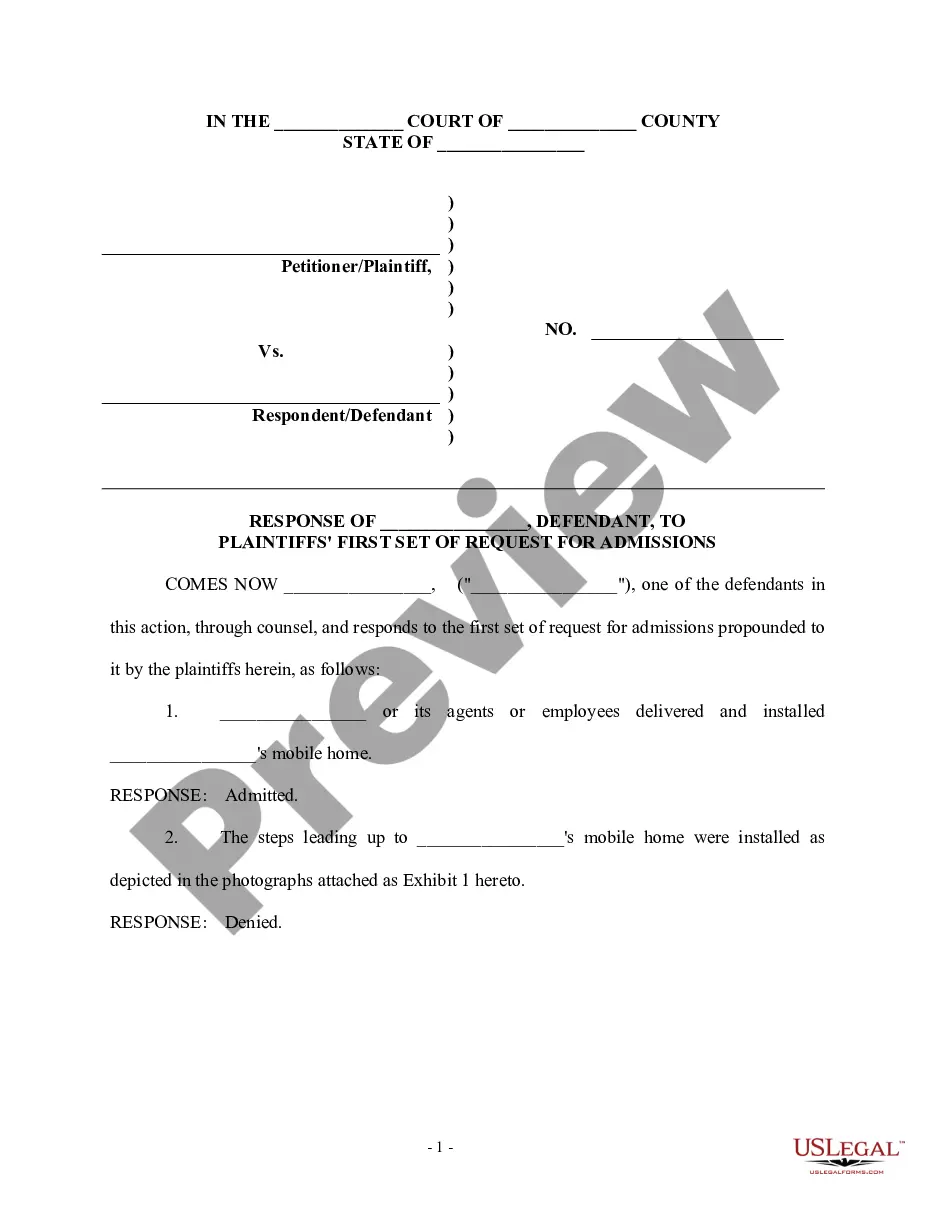
This form is a sample answer of defendant in response to plaintiff's first set of interrogatories and request for production of documents.
Montana Defendant's Answers to Plaintiff's First Set of Interrogatories and Requests for Production of Documents
State:
Multi-State
Control #:
US-PI-0181
Format:
Word;
Rich Text
644 downloads
Description
Free preview


Get your form ready online
Our built-in tools help you complete, sign, share, and store your documents in one place.
Built-in online Word editor
Make edits, fill in missing information, and update formatting in US Legal Forms—just like you would in MS Word.
Export easily
Download a copy, print it, send it by email, or mail it via USPS—whatever works best for your next step.
E-sign your document
Sign and collect signatures with our SignNow integration. Send to multiple recipients, set reminders, and more. Go Premium to unlock E-Sign.
Notarize online 24/7
If this form requires notarization, complete it online through a secure video call—no need to meet a notary in person or wait for an appointment.
Store your document securely
We protect your documents and personal data by following strict security and privacy standards.

Make edits, fill in missing information, and update formatting in US Legal Forms—just like you would in MS Word.

Download a copy, print it, send it by email, or mail it via USPS—whatever works best for your next step.

Sign and collect signatures with our SignNow integration. Send to multiple recipients, set reminders, and more. Go Premium to unlock E-Sign.

If this form requires notarization, complete it online through a secure video call—no need to meet a notary in person or wait for an appointment.

We protect your documents and personal data by following strict security and privacy standards.
Looking for another form?
How to fill out Defendant's Answers To Plaintiff's First Set Of Interrogatories And Requests For Production Of Documents?
If you want to complete, down load, or print out legal document layouts, use US Legal Forms, the biggest variety of legal types, which can be found on-line. Use the site`s simple and easy convenient research to find the paperwork you require. Different layouts for company and individual reasons are sorted by categories and suggests, or keywords and phrases. Use US Legal Forms to find the Montana Defendant's Answers to Plaintiff's First Set of Interrogatories and Requests for Production of Documents in a few mouse clicks.
Should you be already a US Legal Forms buyer, log in to the account and then click the Obtain switch to find the Montana Defendant's Answers to Plaintiff's First Set of Interrogatories and Requests for Production of Documents. You can even access types you formerly downloaded within the My Forms tab of your respective account.
If you are using US Legal Forms for the first time, follow the instructions below:
- Step 1. Be sure you have chosen the shape to the right city/region.
- Step 2. Take advantage of the Review option to look over the form`s information. Do not forget to see the outline.
- Step 3. Should you be unsatisfied with all the type, make use of the Search field near the top of the screen to get other variations of the legal type format.
- Step 4. After you have located the shape you require, select the Get now switch. Opt for the rates plan you like and put your credentials to sign up for the account.
- Step 5. Approach the financial transaction. You can utilize your credit card or PayPal account to accomplish the financial transaction.
- Step 6. Find the format of the legal type and down load it on your own gadget.
- Step 7. Complete, modify and print out or indicator the Montana Defendant's Answers to Plaintiff's First Set of Interrogatories and Requests for Production of Documents.
Every legal document format you get is the one you have for a long time. You have acces to every single type you downloaded in your acccount. Click on the My Forms segment and select a type to print out or down load yet again.
Remain competitive and down load, and print out the Montana Defendant's Answers to Plaintiff's First Set of Interrogatories and Requests for Production of Documents with US Legal Forms. There are many specialist and status-specific types you can utilize to your company or individual needs.
Form popularity
FAQ
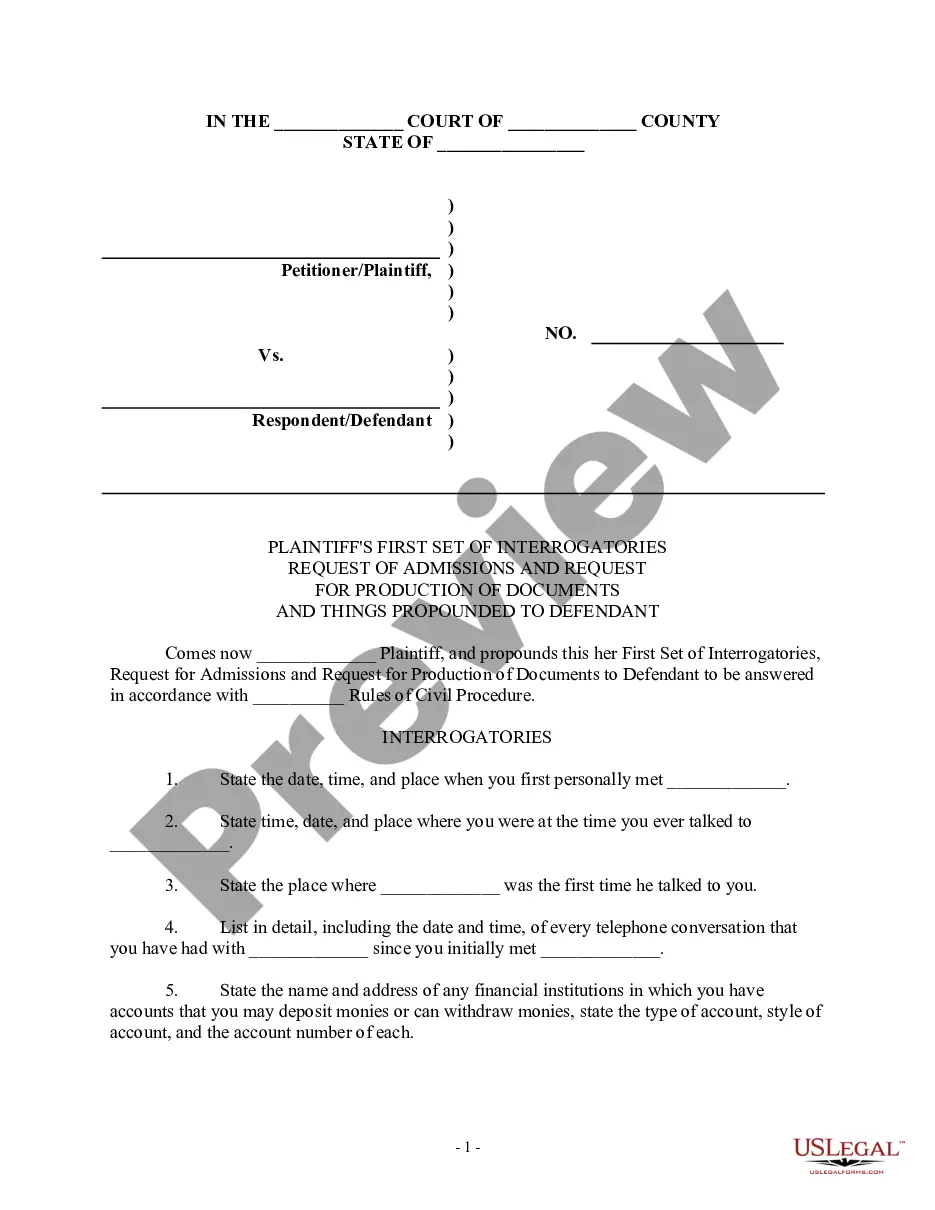
Interrogatories are written questions sent by one party to another as part of discovery?i.e. the gathering of information in preparation for trial. (The compilation of questions and the individual questions themselves may be referred to as interrogatories.)
First Set of Interrogatories means the Applicant's first set of interrogatories served on Opposer contemporaneously with these Requests.
In civil procedure, an interrogatory is a list of written questions one party sends to another as part of the discovery process. The recipient must answer in writing under oath and ing to the case's schedule.
Interrogatories, which are written questions about things that are relevant or important to the case. (NRCP 33; JCRCP 33) Requests for production of documents or things, which are written requests that demand the other side provide particular documents or items.
They are provided for your information. There is no form for your answer, but you typically have to respond in a specified format, using paper with numbers down the left-hand side, with your name and address at the top left, the name of the court and of the case, and the case number.
Your answers to the interrogatories should usually be short, clear, and direct and should answer only the question that is being asked.
Interrogatories are written questions sent by one party to another, which the responding party must answer under penalty of perjury. Interrogatories allow the parties to ask who, what, when, where and why questions, making them a good method for obtaining new information.