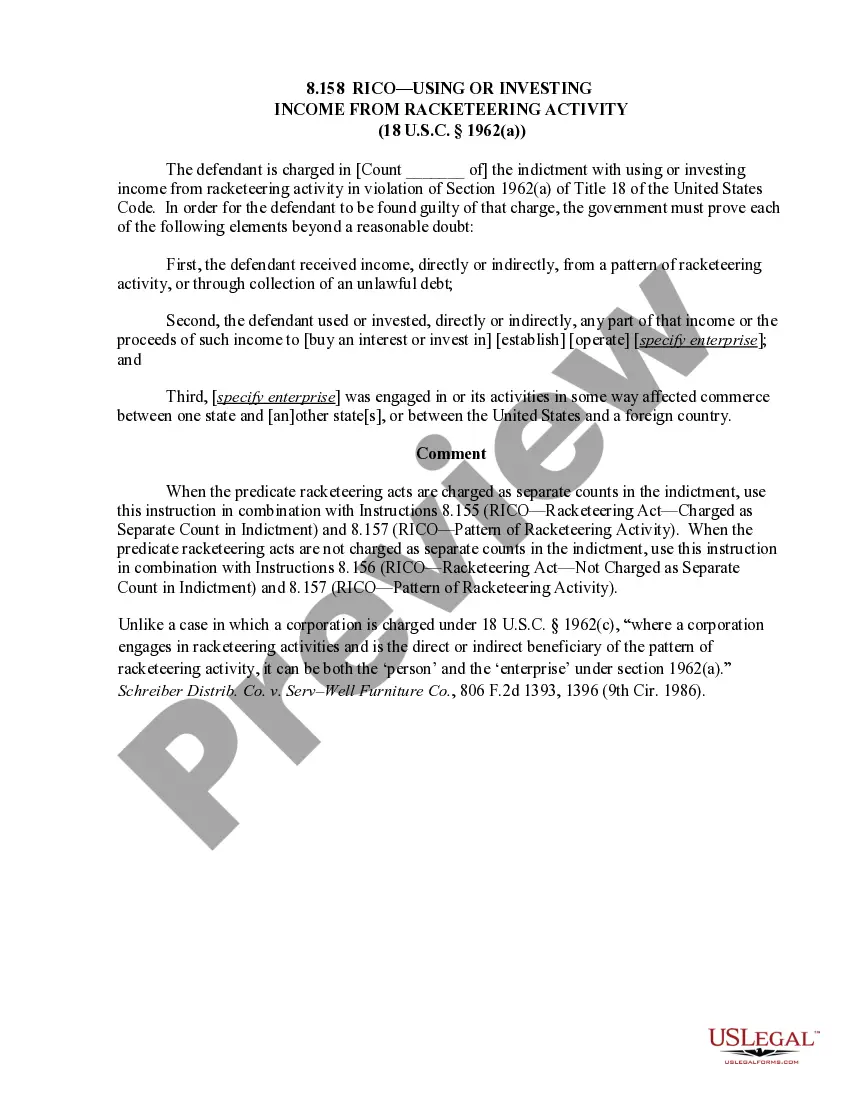
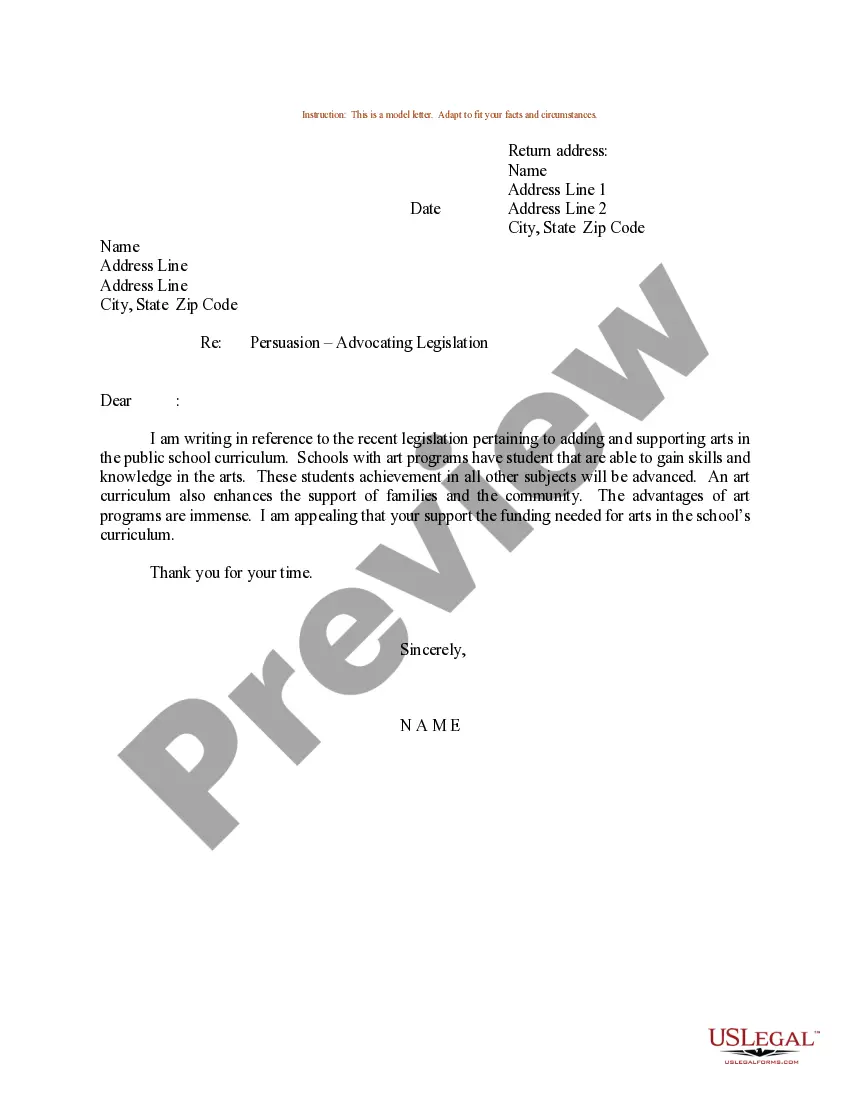
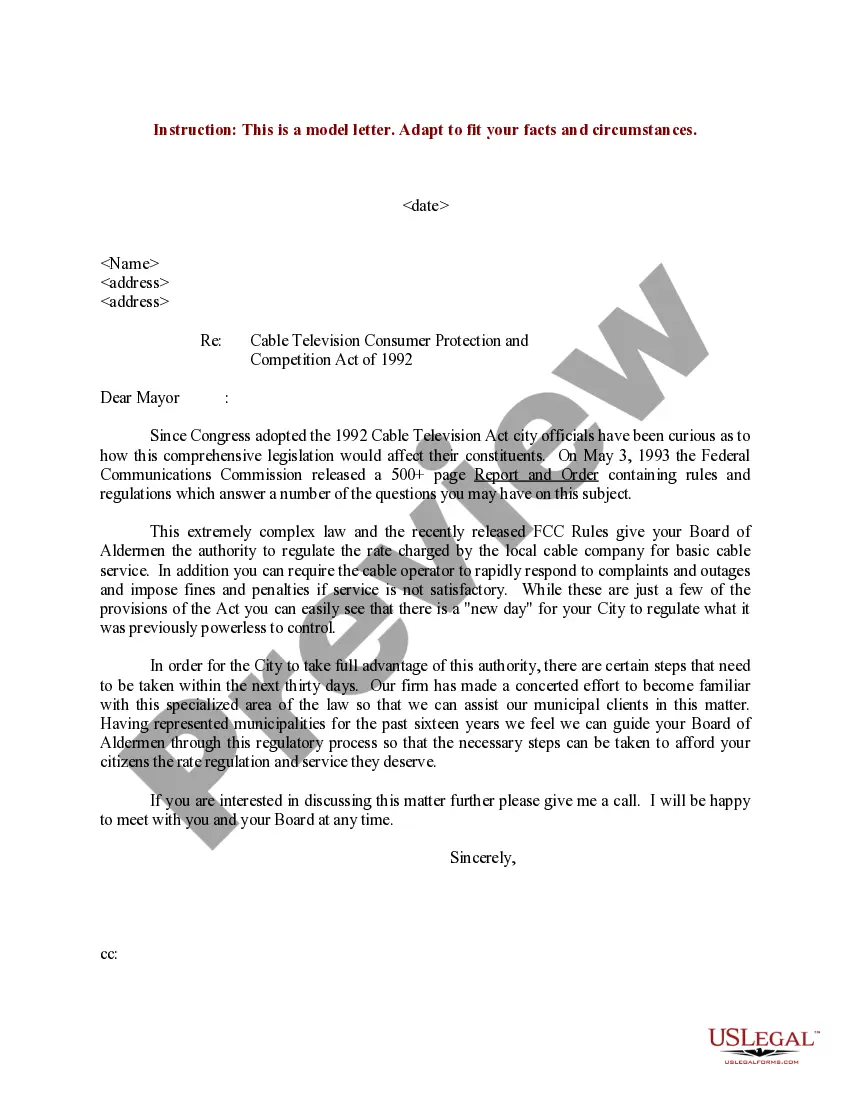
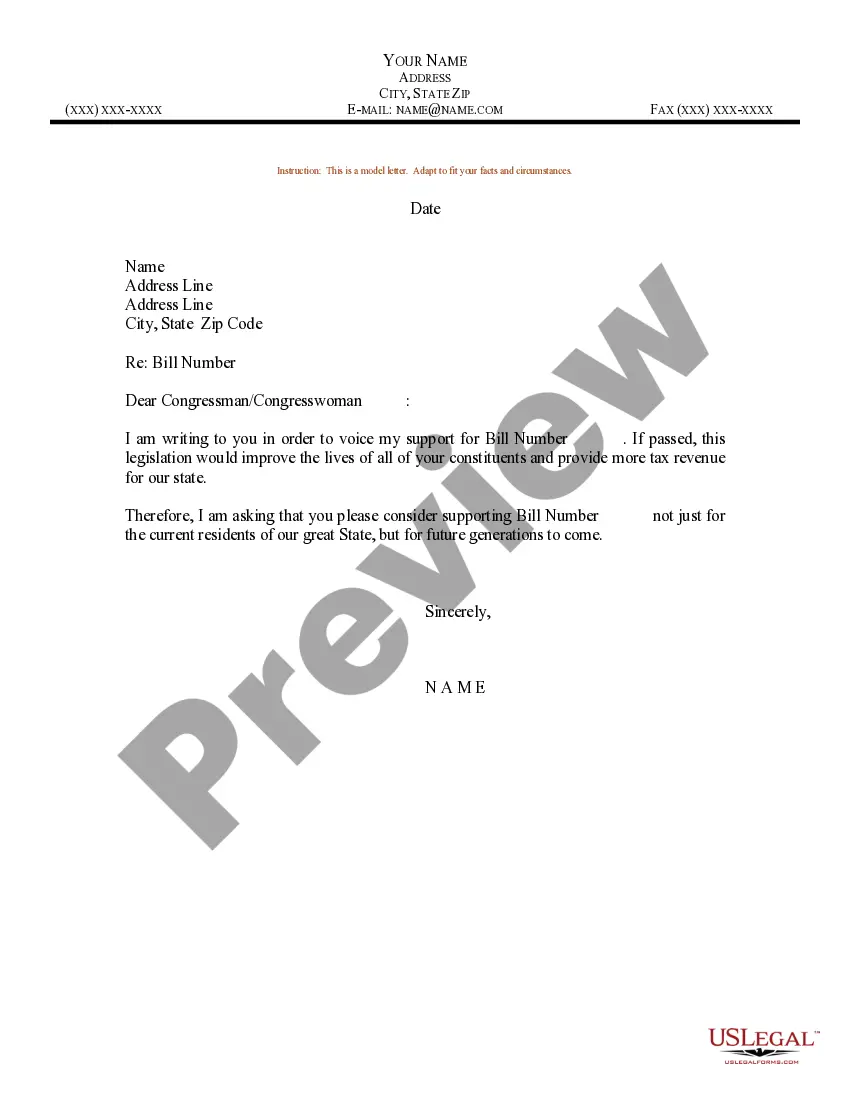
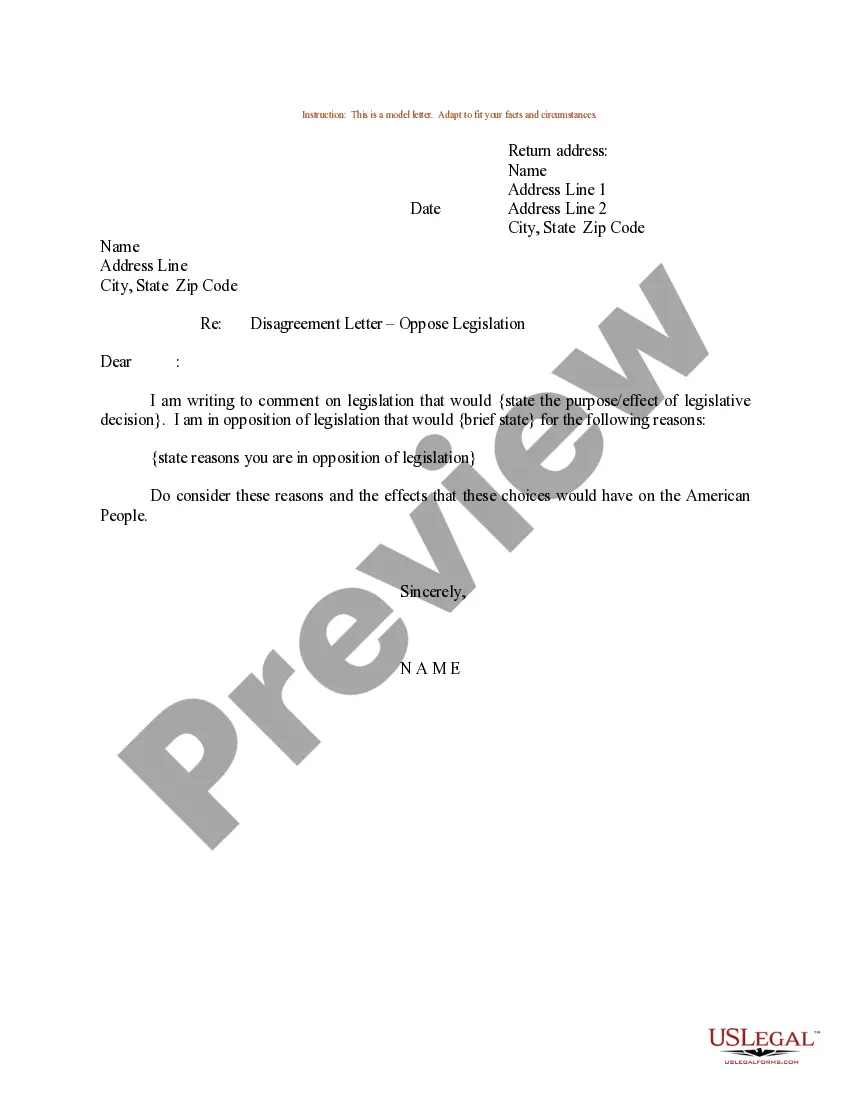
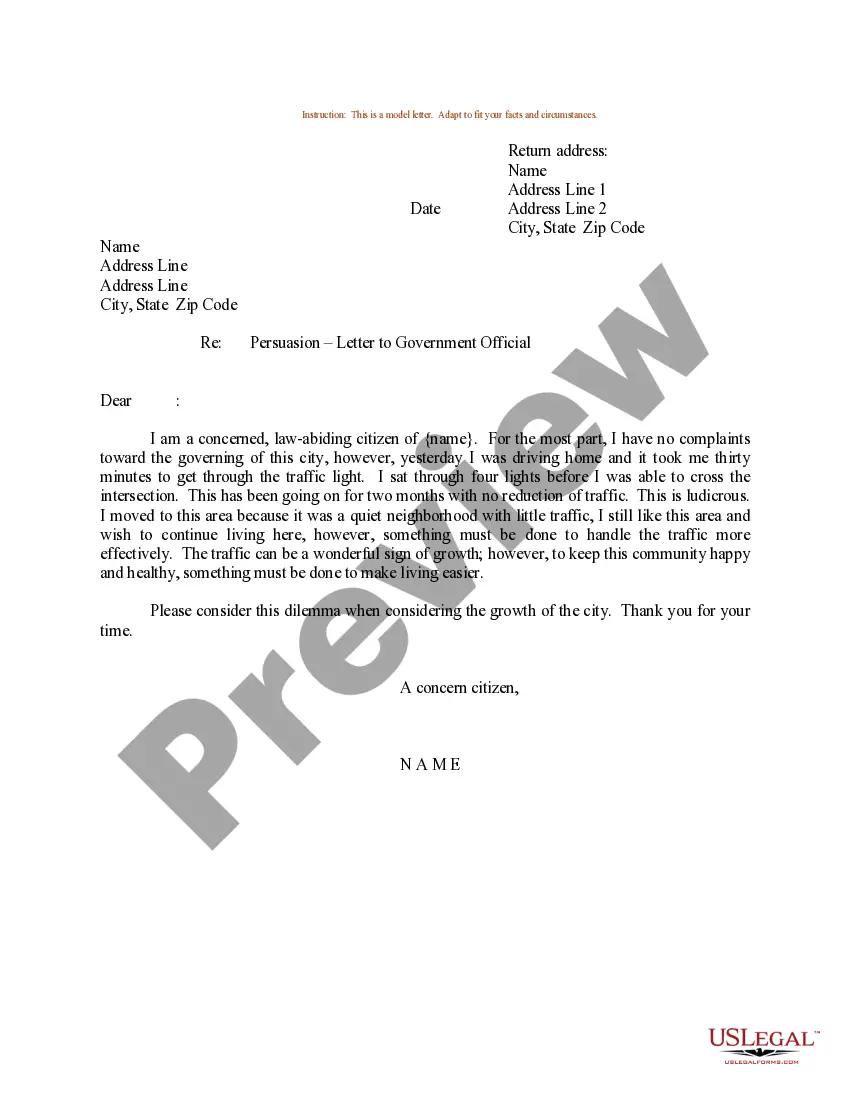
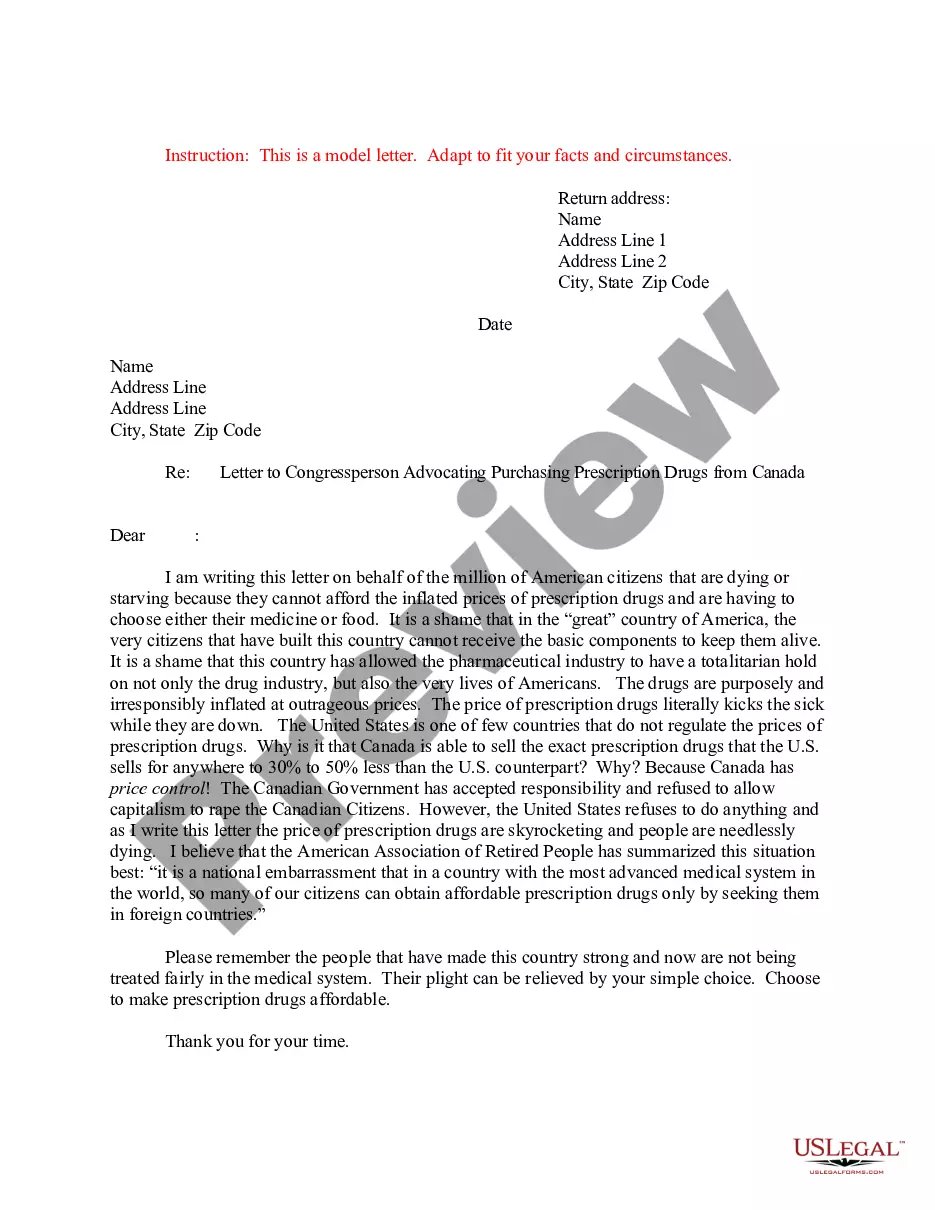
Montana Sample Letter for Advocation of Legislation
Description
Get your form ready online
Our built-in tools help you complete, sign, share, and store your documents in one place.
Make edits, fill in missing information, and update formatting in US Legal Forms—just like you would in MS Word.
Download a copy, print it, send it by email, or mail it via USPS—whatever works best for your next step.
Sign and collect signatures with our SignNow integration. Send to multiple recipients, set reminders, and more. Go Premium to unlock E-Sign.
If this form requires notarization, complete it online through a secure video call—no need to meet a notary in person or wait for an appointment.
We protect your documents and personal data by following strict security and privacy standards.

Make edits, fill in missing information, and update formatting in US Legal Forms—just like you would in MS Word.

Download a copy, print it, send it by email, or mail it via USPS—whatever works best for your next step.

Sign and collect signatures with our SignNow integration. Send to multiple recipients, set reminders, and more. Go Premium to unlock E-Sign.

If this form requires notarization, complete it online through a secure video call—no need to meet a notary in person or wait for an appointment.

We protect your documents and personal data by following strict security and privacy standards.
Looking for another form?
How to fill out Sample Letter For Advocation Of Legislation?
Have you ever found yourself in a situation where you require documentation for business or personal purposes almost all the time.
There are numerous legal document templates accessible online, but obtaining forms you can trust isn’t easy.
US Legal Forms offers a vast selection of document templates, including the Montana Sample Letter for Advocacy of Legislation, designed to comply with state and federal regulations.
Once you find the appropriate form, click Get now.
Select the subscription plan you want, complete the necessary information to create your account, and make the purchase using your PayPal or Visa or Mastercard.
- If you are already familiar with the US Legal Forms website and have an account, simply Log In.
- Once logged in, you can download the Montana Sample Letter for Advocacy of Legislation template.
- If you do not have an account and wish to begin using US Legal Forms, follow these steps.
- Obtain the form you need and ensure it corresponds to the correct city/region.
- Utilize the Review button to evaluate the form.
- Check the description to confirm you have selected the correct document.
- If the form isn’t exactly what you’re looking for, use the Search field to find the form that meets your needs.
Form popularity
FAQ
Follow these 6 steps to create a concise, strong advocacy message for any audience.Open with a statement that engages your audience.Present the problem.Share a story or give an example of the problem.Connect the issue to the audience's values, concerns or self-interest.Make your request (the ask).
Use your personal or. business address.Address your. legislator properly.State your. relafionship to the.Be factual. Be personal.Request a response. Include your fitle.Concentrate on a. single issue.Be specific about. what you want.Keep your letter. to one page.
Follow these 6 steps to create a concise, strong advocacy message for any audience.Open with a statement that engages your audience.Present the problem.Share a story or give an example of the problem.Connect the issue to the audience's values, concerns or self-interest.Make your request (the ask).
Use Proper Salutation. The salutation should be "Dear Representative Smith" or Dear Senator Smith" or "Dear Assemblyman Smith" depending on the office held. The address should read: Honorable Jim Smith, Address, City, State, Zip.
Follow these 6 steps to create a concise, strong advocacy message for any audience.Open with a statement that engages your audience.Present the problem.Share a story or give an example of the problem.Connect the issue to the audience's values, concerns or self-interest.Make your request (the ask).
First Paragraph: My name is Your Name and I'm writing to ask that you Action.Establish the relationship. Introduce yourself and how you're related to the recipient.State your what and your why. Limit yourself to one specific action so as to not draw attention away from the issues you may find more important!
Here are some important tips for your letter:Use letterhead.Verify the correct spelling of the legislator's name.Verify the correct title to use when addressing the legislator.Keep it short (one page maximum).Identify the issue.If the issue is a particular bill, verify the full name and bill number.More items...
First Paragraph: My name is Your Name and I'm writing to ask that you Action.Establish the relationship. Introduce yourself and how you're related to the recipient.State your what and your why. Limit yourself to one specific action so as to not draw attention away from the issues you may find more important!
You must make a Freedom of Information ( FOI ) request in writing....You should give:your name (not needed if you're asking for environmental information)a contact postal or email address.a detailed description of the information you want - for example, you might want all information held on a subject, or just a summary.